Style without heat
Compare curl-setting methods, loose everyday styles and temporary additions.
Choose your starting point
First decide whether you want to set damp hair into a shape or arrange hair that is already dry. For a set, compare the hand movement, tools and waiting time: braids, twists, knots, rollers and rods are different choices. Everyday buns, clips and ponytails serve a different purpose.
Compare the methods
Explore the methods below. Open a guide for when to use it, what you’ll need and the full steps.
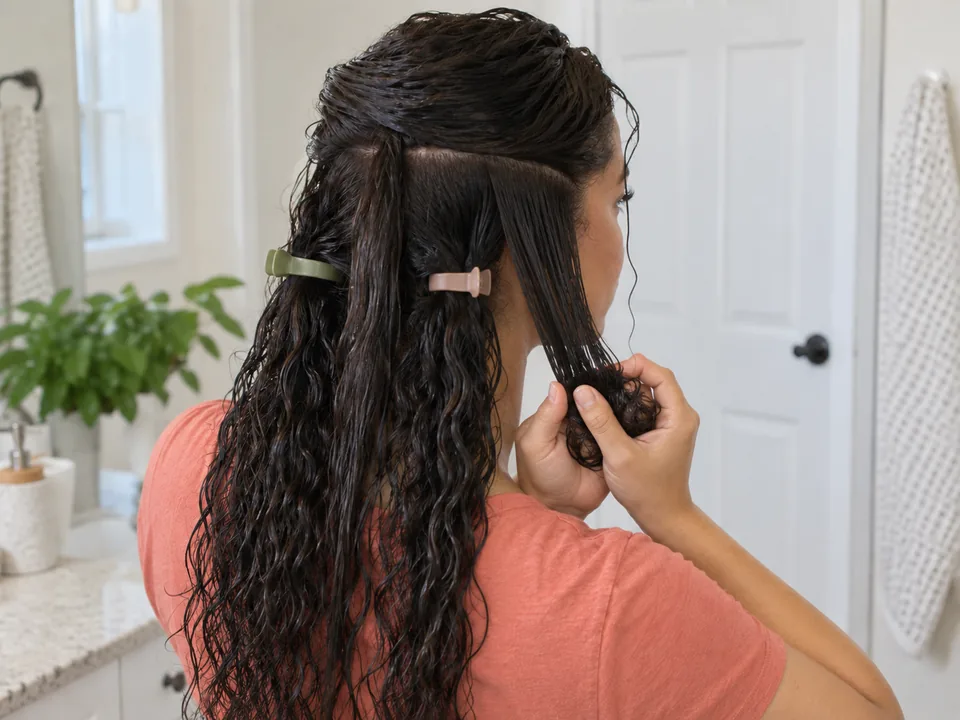
Blend a straighter top layer with wavier underlayers
Mixed-pattern blending wet-sets only the straighter canopy so it dries closer to the wave pattern underneath.
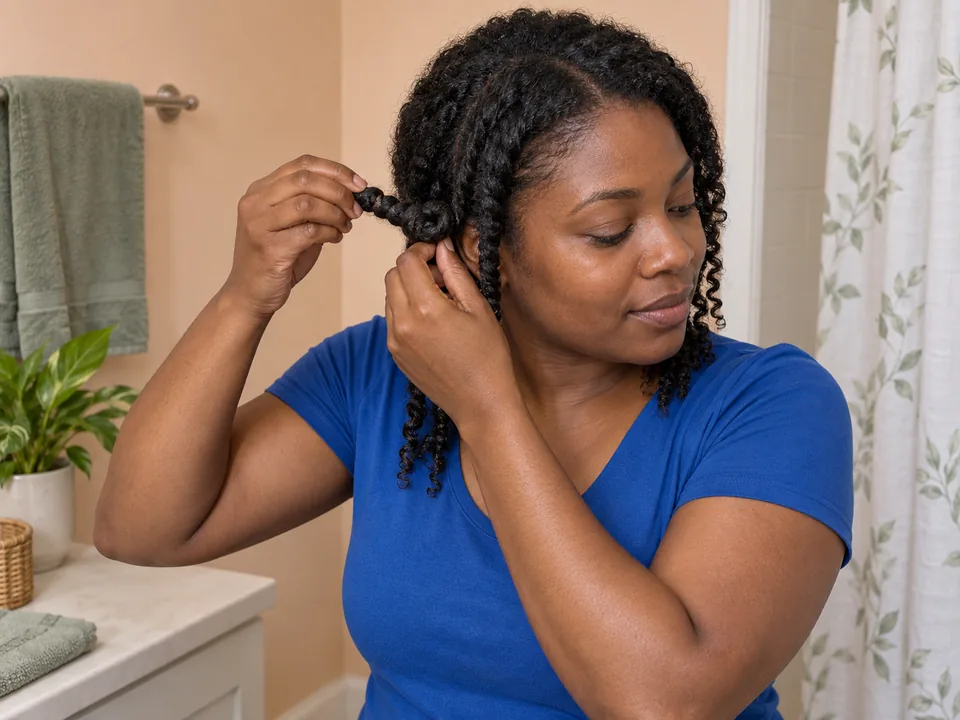
Create a Bantu-knot set and knot-out
A Bantu-knot set twists damp sections into compact coiled knots, then unwinds them only after they are fully dry for a knot-out style.
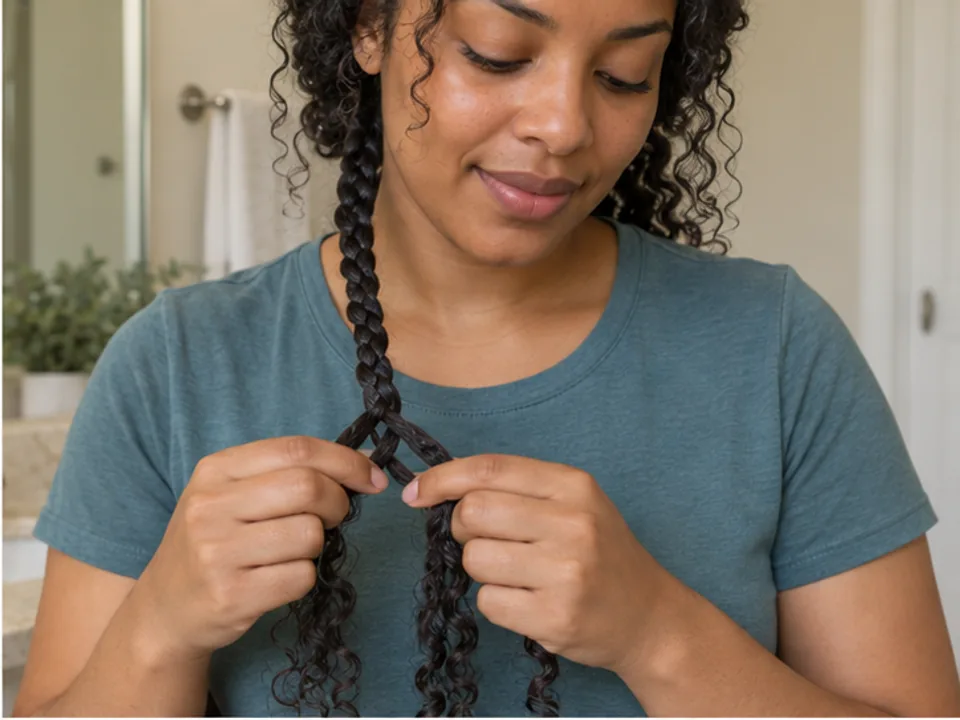
Create a braid-out
A braid-out sets damp loose hair in simple three-strand braids, then releases the braids after they have dried to create a shaped style.
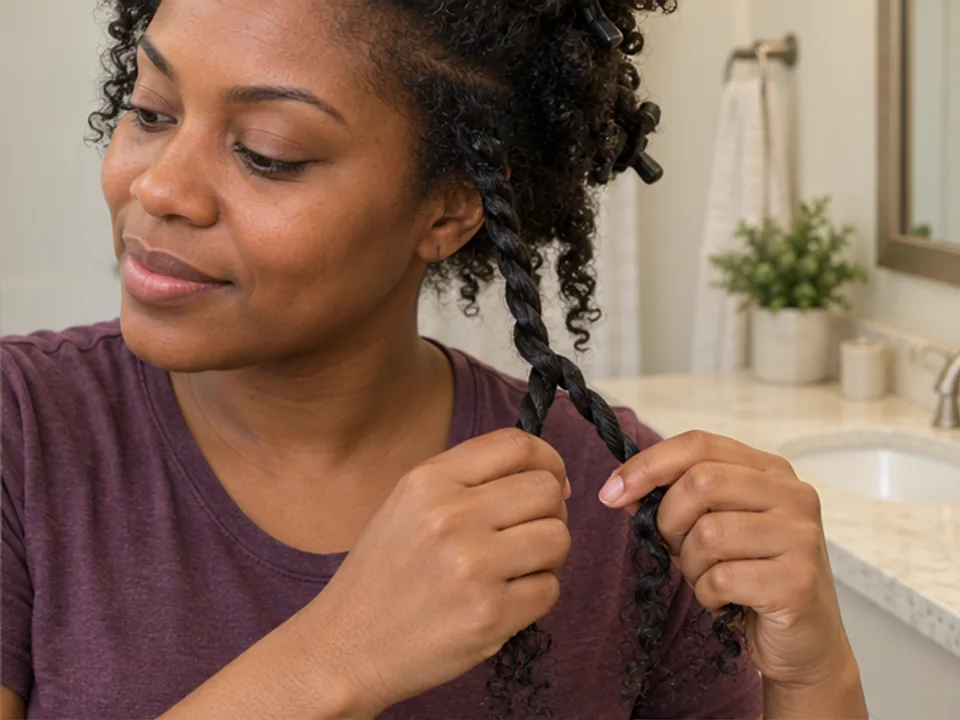
Create a twist-out
A twist-out sets damp loose hair in two-strand twists, then releases the twists after they have dried to create a shaped style.
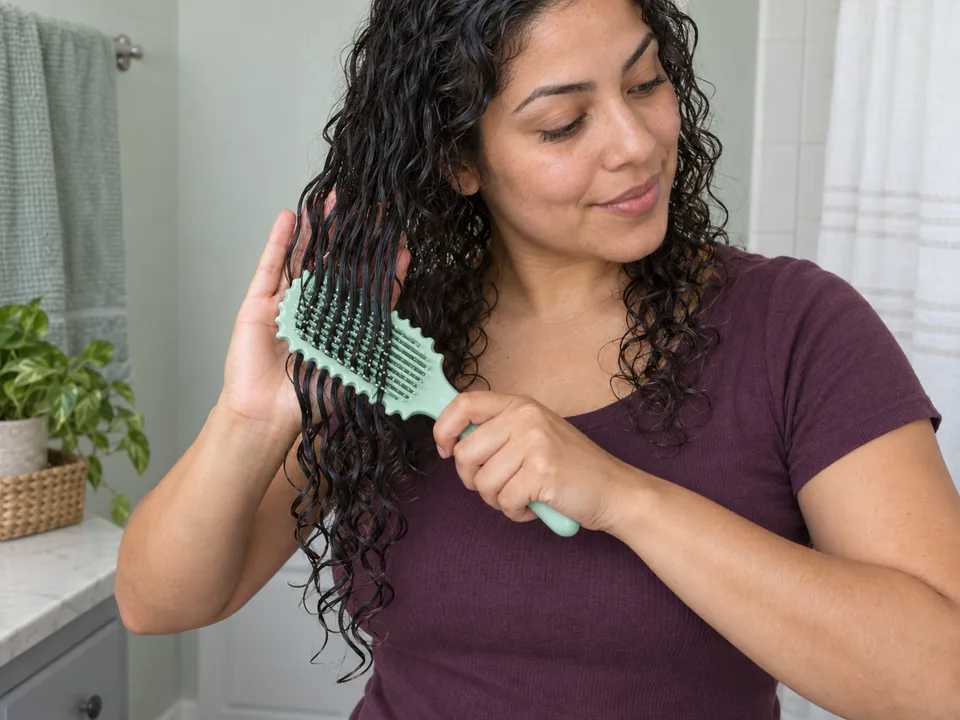
Define curls with a styling brush
Styling-brush curl definition uses a shaped brush pass on a detangled wet section, followed by release and scrunching before drying.
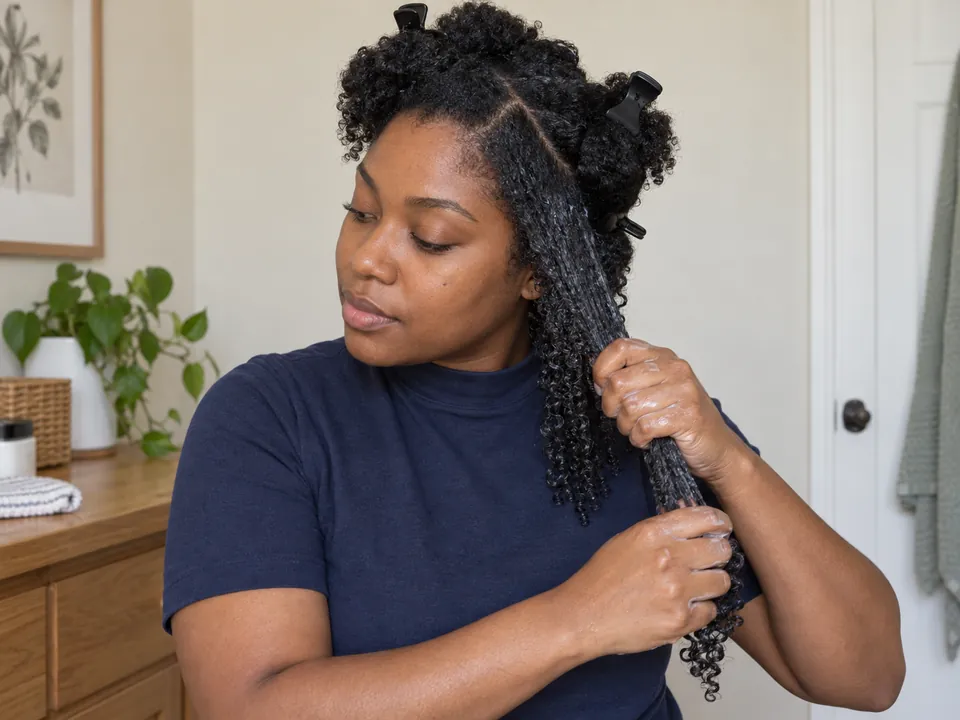
Do a wash-and-go on coily hair
A coily wash-and-go styles conditioned wet coils in sections, then dries them without setting twists, braids or rollers.
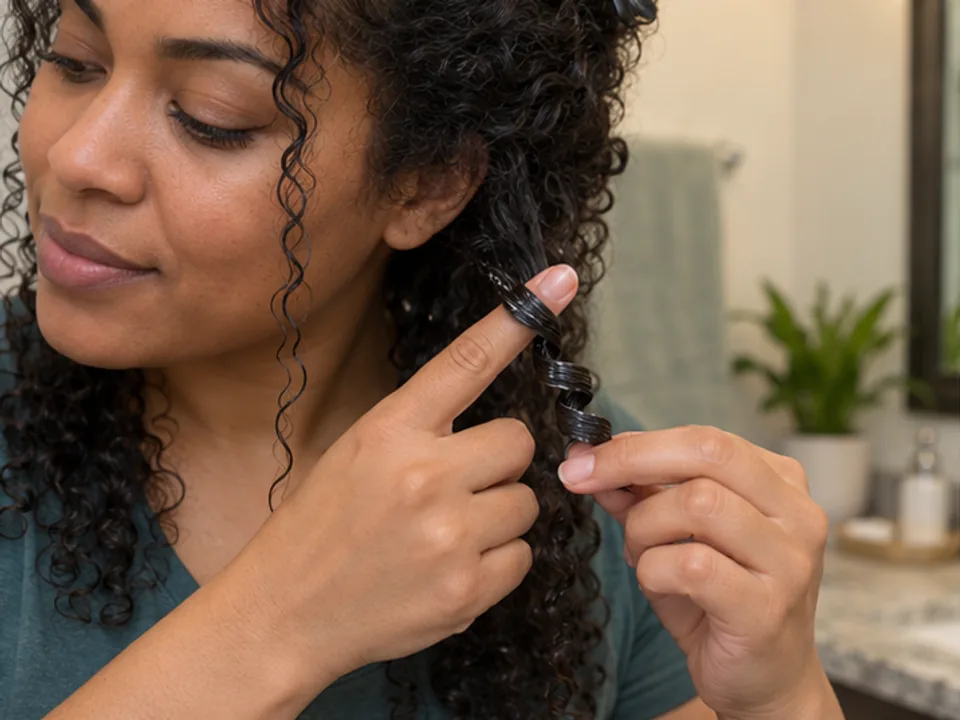
Finger-coil curls
Finger coiling winds small damp or wet curl sections around one finger to shape individual spirals before drying.
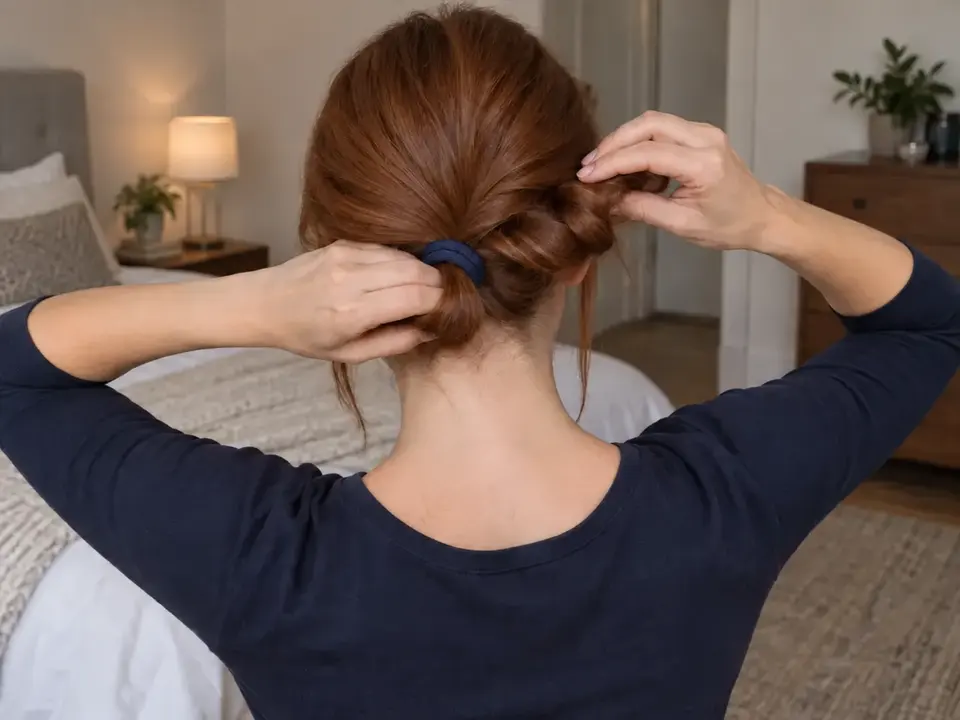
Make a loose bun
A dry-hair updo that gathers a low ponytail into a loose coil held by a soft fabric-covered tie.
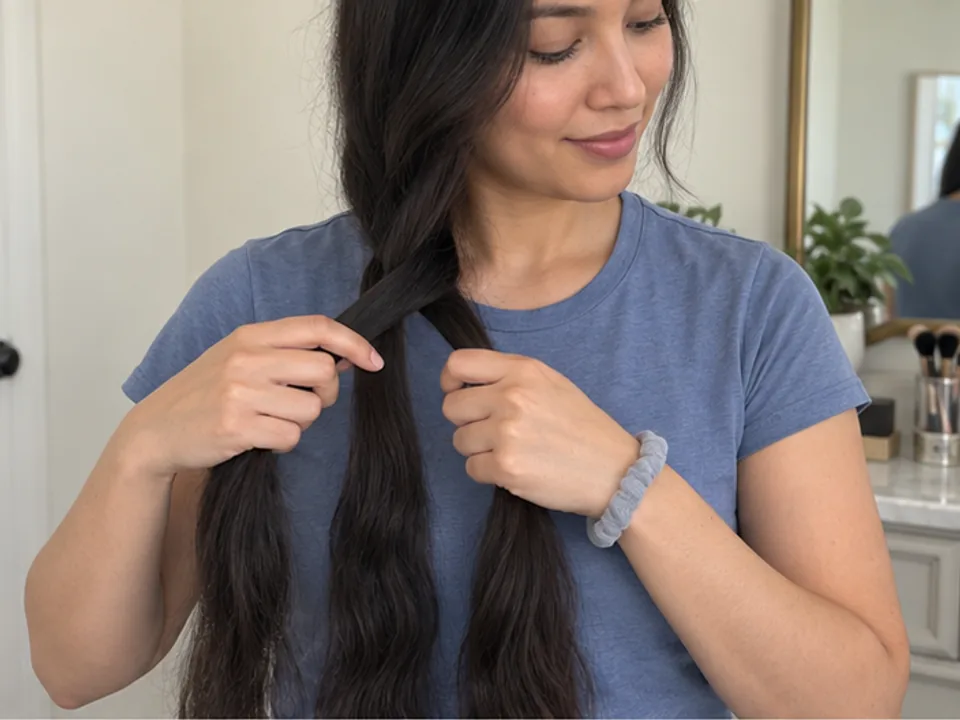
Make a loose everyday braid
A loose three-strand braid alternates each outside section over the center to contain dry hair without tightening the roots.
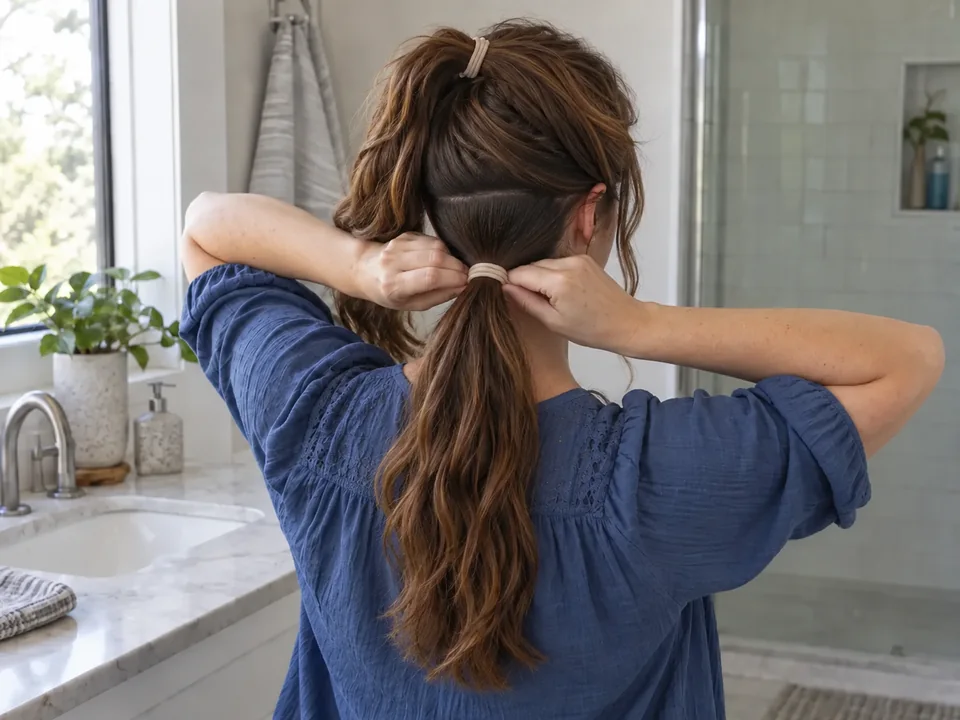
Make a stacked loose ponytail
A stacked ponytail places two loose tails vertically so the upper tail overlaps the lower one.
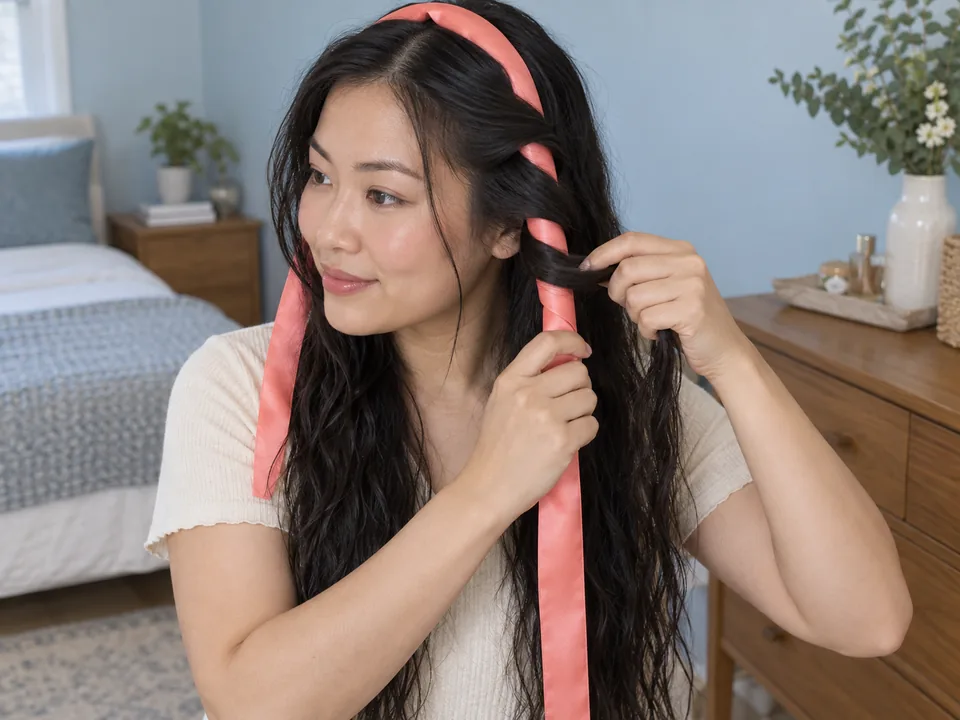
Make heatless curls with a soft curling ribbon
Soft-ribbon curling wraps two sides of damp hair around a padded form and secures the ends while the hair dries without a heated tool.
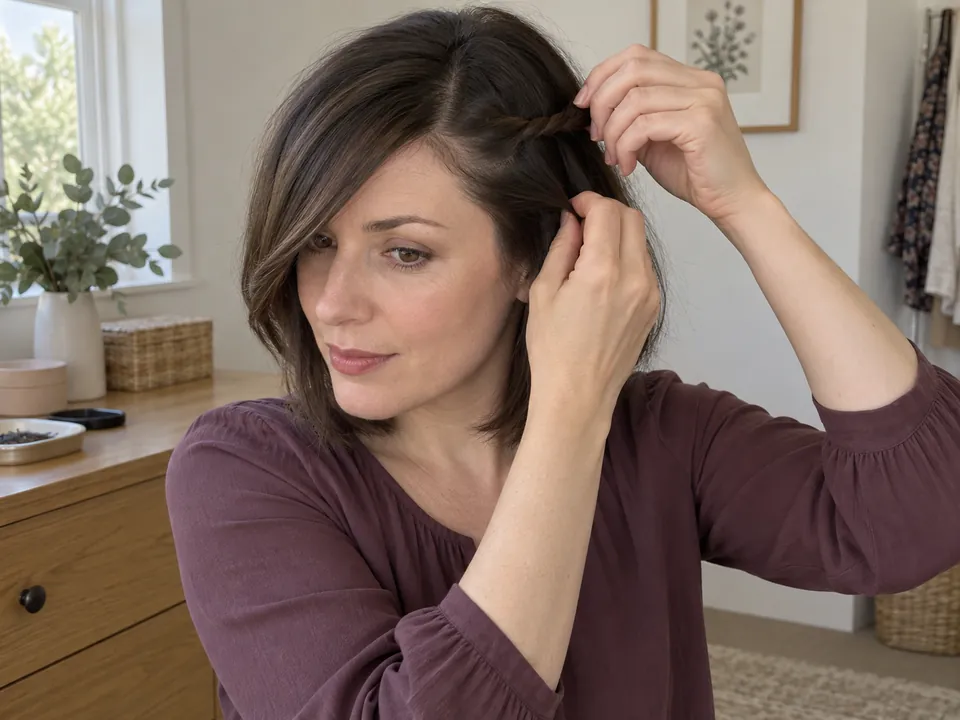
Pin back a growing-out fringe
Growing-fringe pinning twists or sweeps one front section away from the face and secures it with a smooth pin.
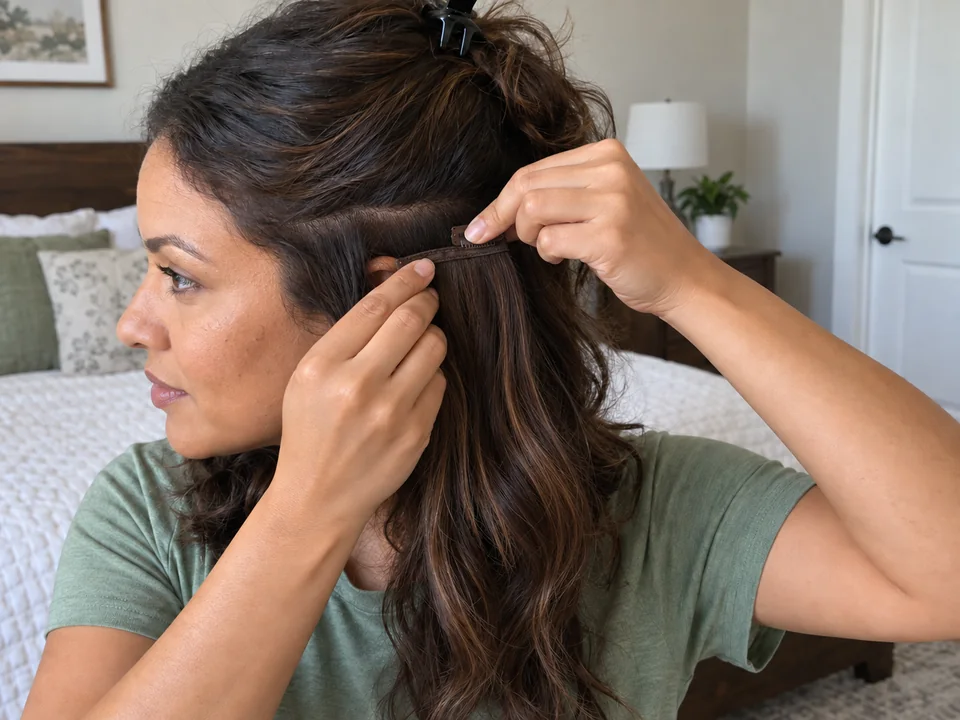
Put in and remove clip-in extensions
Clip-in placement attaches removable wefts to sections of your own hair for temporary wear.
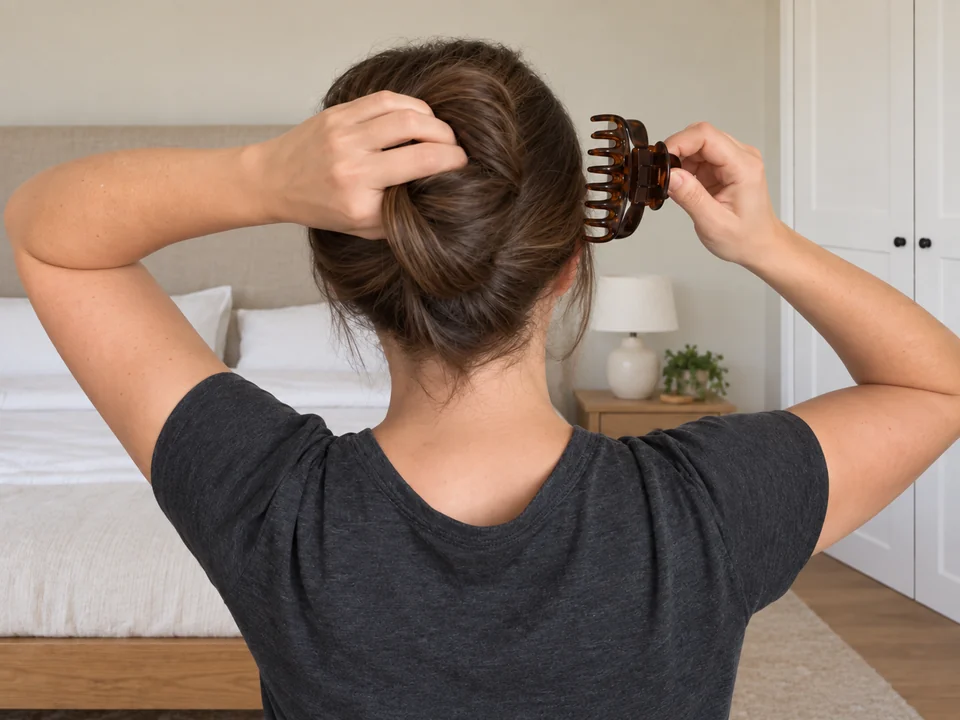
Put your hair up with a claw clip
A dry-hair updo that uses a claw clip to hold a low folded bundle off the neck.
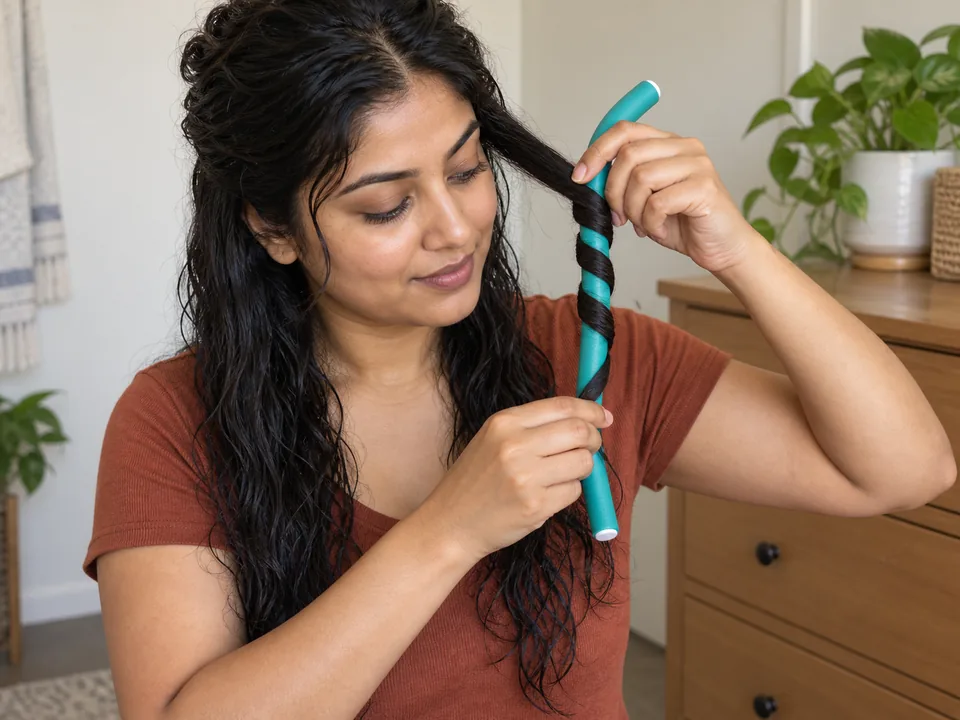
Set curls with flexi rods
A flexi-rod set spirals damp sections around bendable rods, then bends the rod ends to hold the sections while they dry.
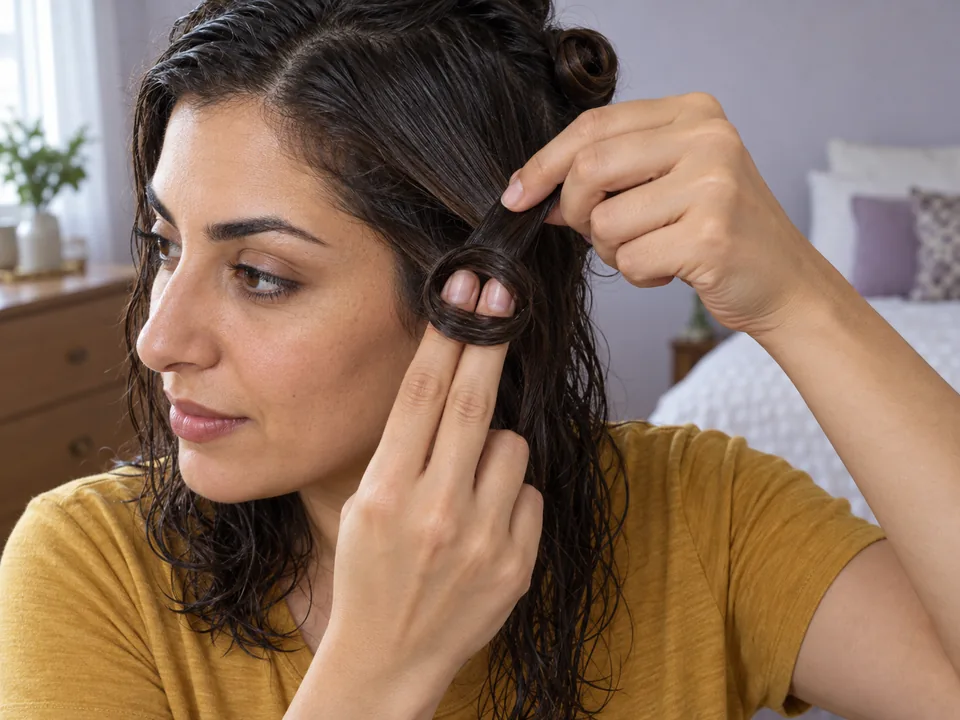
Set pin curls without heat
A pin-curl set rolls damp sections into flat circles, clips them in place and releases them only after the roots and centers are fully dry.
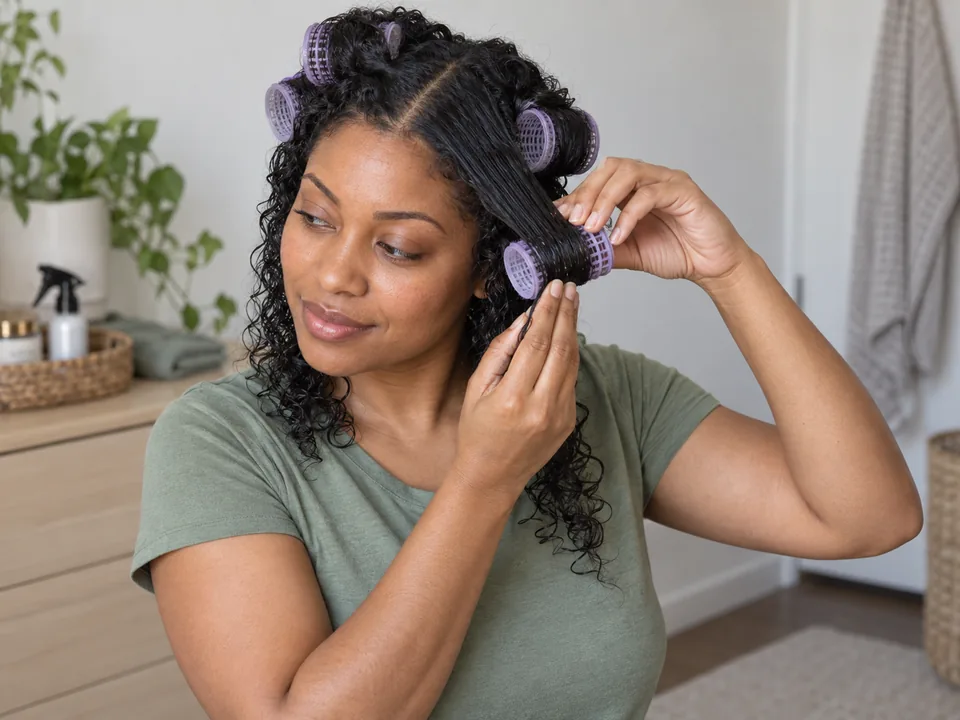
Set your hair on rollers without heat
A no-heat roller set winds damp sections around nonheated rollers and leaves them in place until the hair is fully dry.
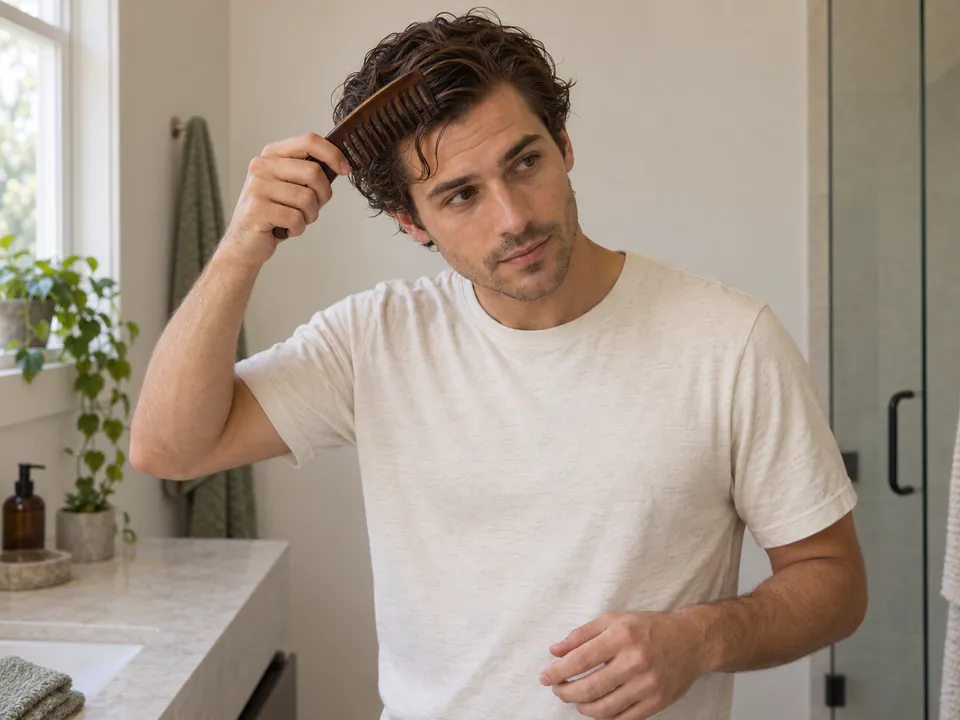
Shape growing-out short hair
Grow-out shaping directs existing short hair into a comfortable temporary side or backward shape.
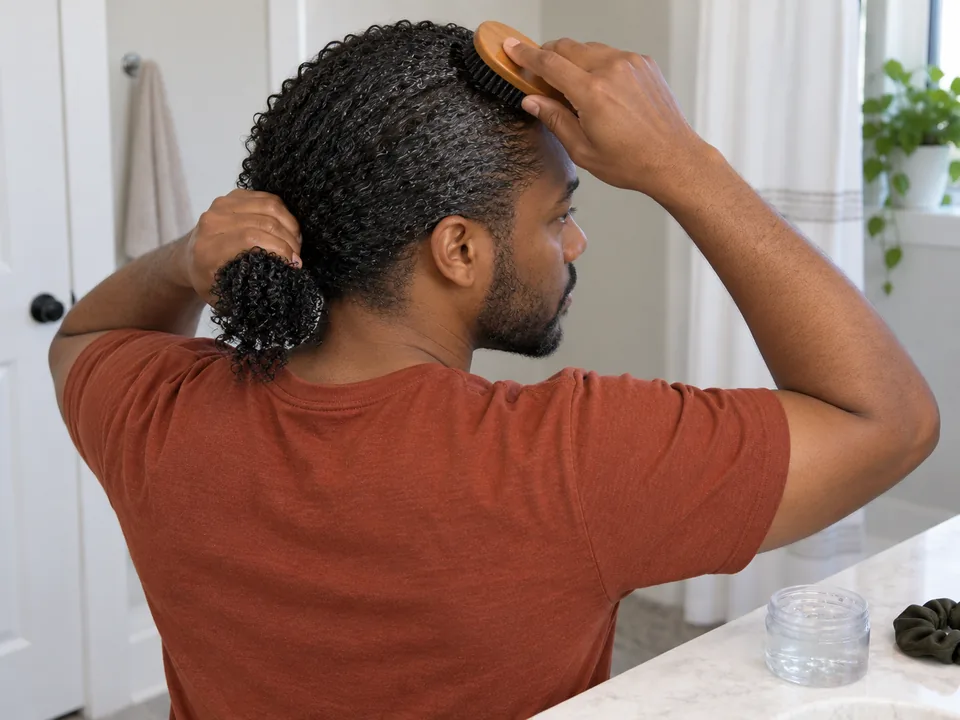
Slick hair back with low tension
A low-tension slick-back guides the surface hair backward with product and a soft brush while keeping the hairline comfortable.
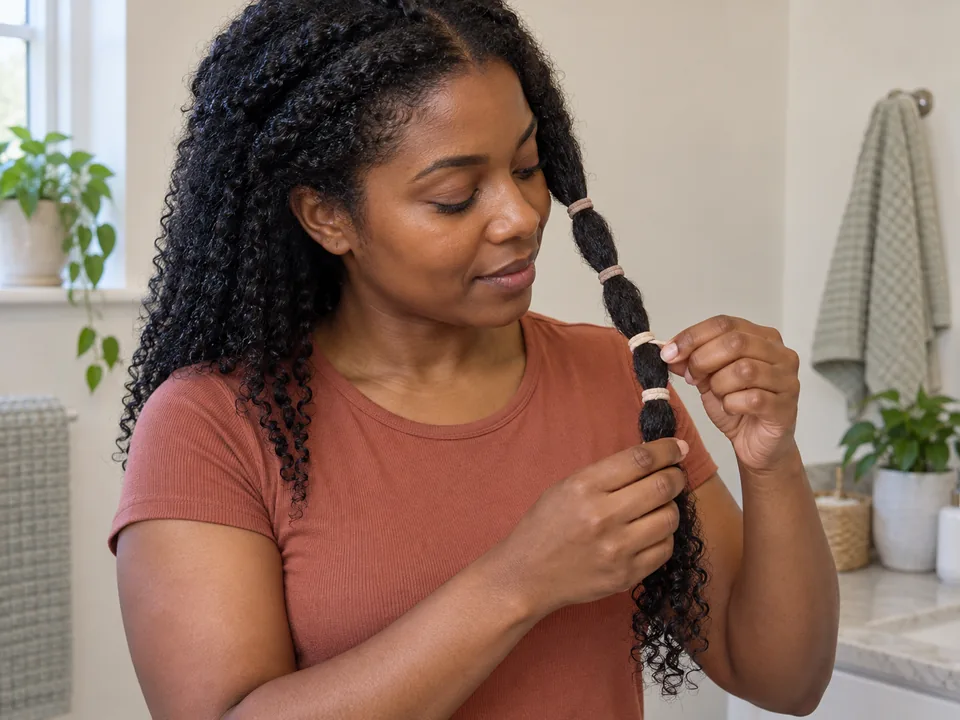
Stretch coils with loose bands
Loose-band stretching places soft bands at spaced intervals down damp curly or coily sections, then removes them after drying for a temporary stretched shape.
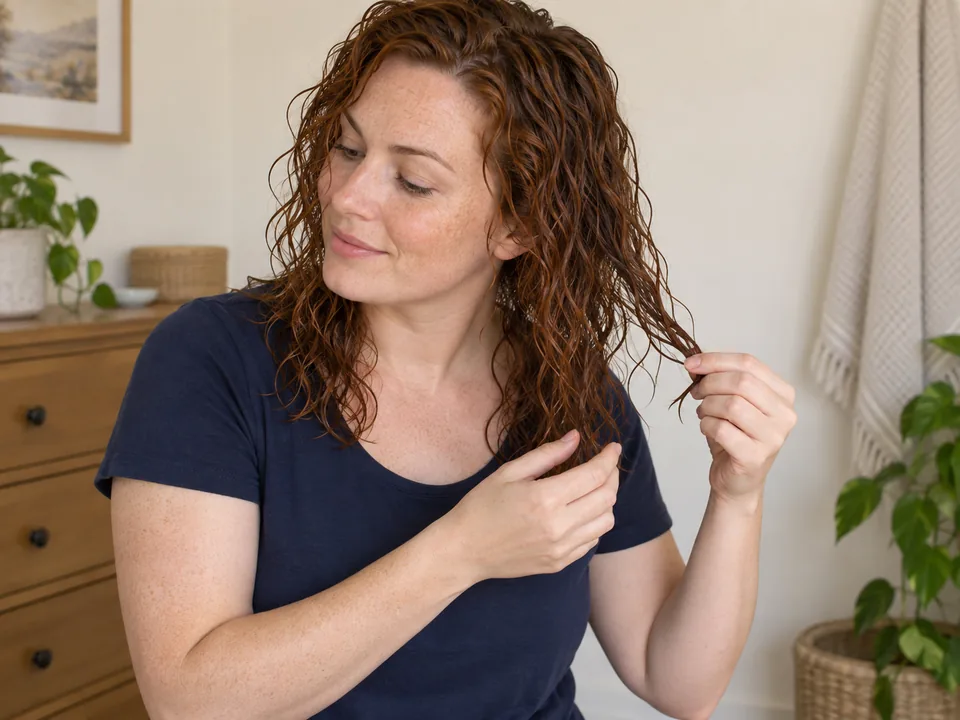
Style curls with rake-and-shake
Rake-and-shake distributes styling product through a wet section with the fingers, then uses a small end-held shake before the curl group is released to dry.
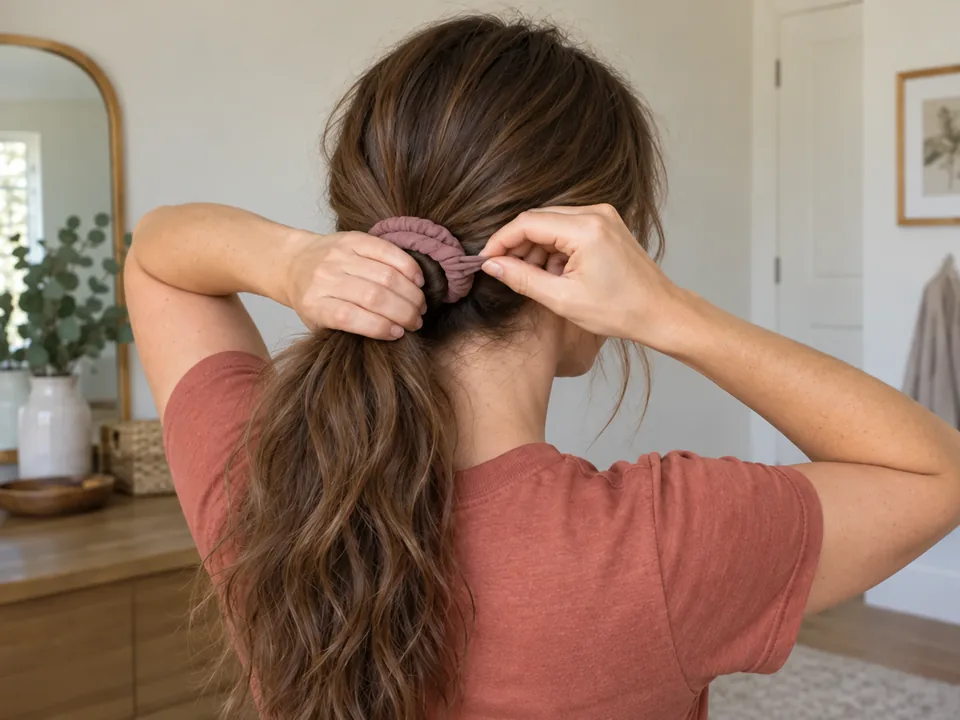
Tie a loose ponytail
A loose ponytail gathers dry hair at one point with a soft tie that holds without pulling at the roots.
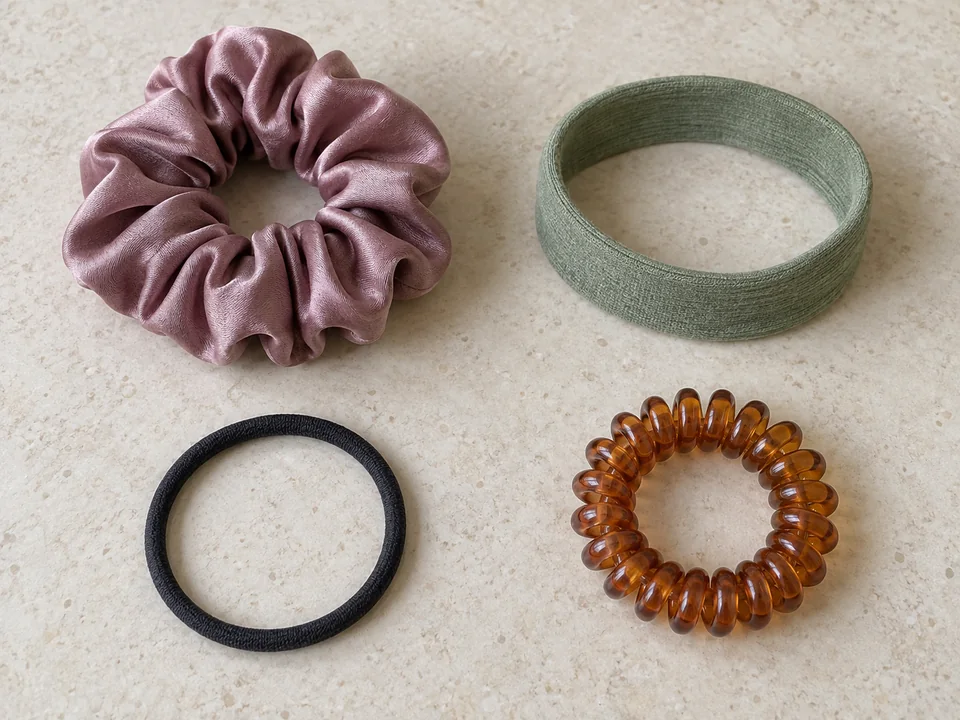
Tie choice and tension
Tie choice and tension means matching a hair tie’s material, size and number of wraps to the gathered hair for a comfortable hold.
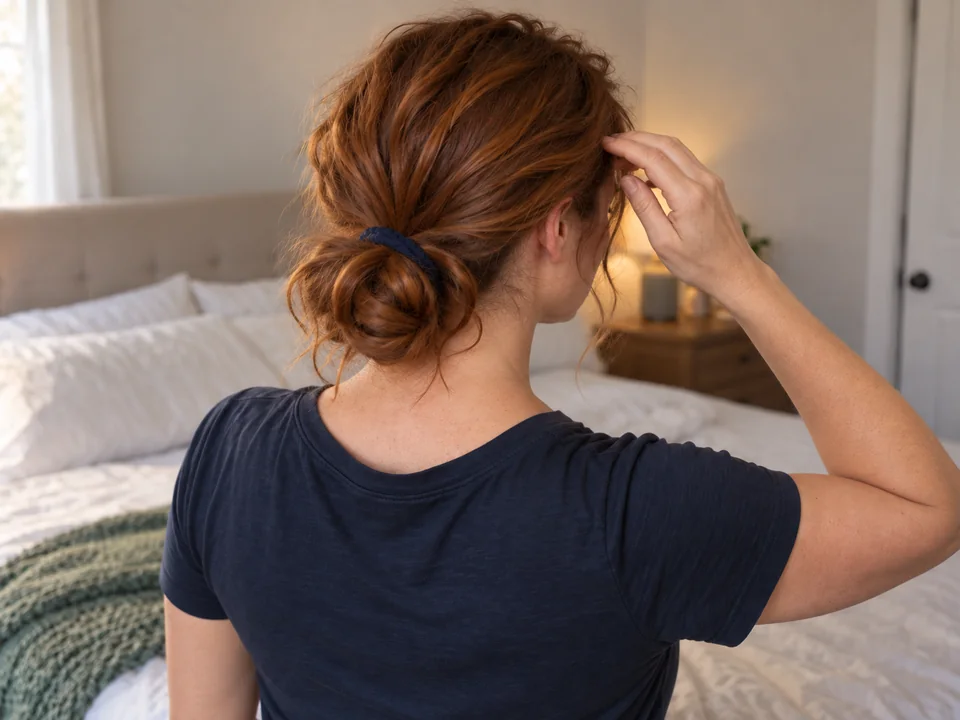
Vary bun position
Varying bun position means changing where a loose bun is anchored between wears, so the hair is not always gathered and held in the same place.