Detangle & section
Choose a way to separate tangles, organize sections or take down braids.
Choose your starting point
For ordinary tangles, compare using your fingers with using a wide-tooth comb. The pre-poo guide covers dry loose curls or coils with a product explicitly made for detangling before shampoo, followed by its full wash sequence. Sectioning organizes hair for the next task. Removing extension braids is a separate process with its own limits; read that guide before starting a takedown.
Compare the methods
Explore the methods below. Open a guide for when to use it, what you’ll need and the full steps.
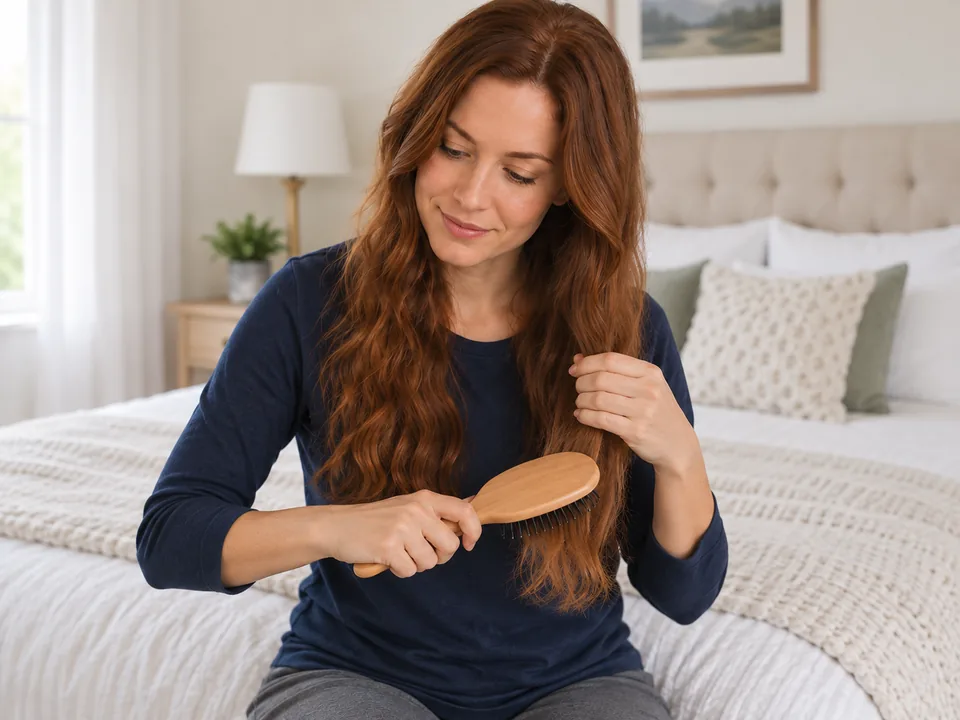
Brush dry straight or wavy hair without pulling
Gentle dry brushing loosens tangles and smooths dry, loose straight or wavy hair. It uses supported sections to limit pulling at the roots.
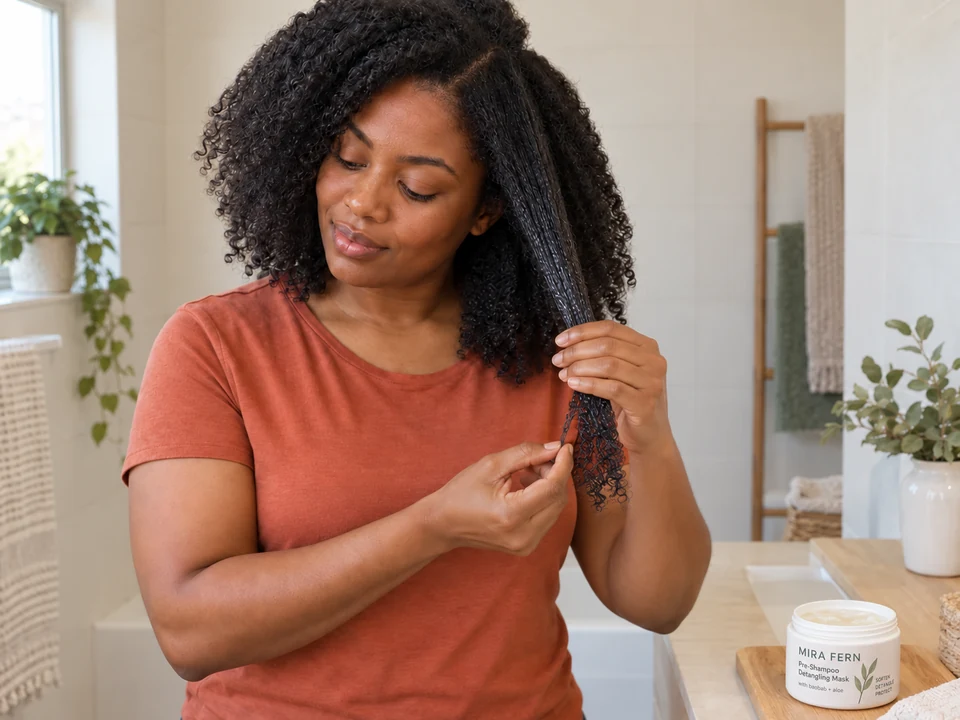
Detangle before shampoo with a pre-poo
Pre-poo detangling uses a product made for use before shampoo to help fingers or a comb move through ordinary tangles.
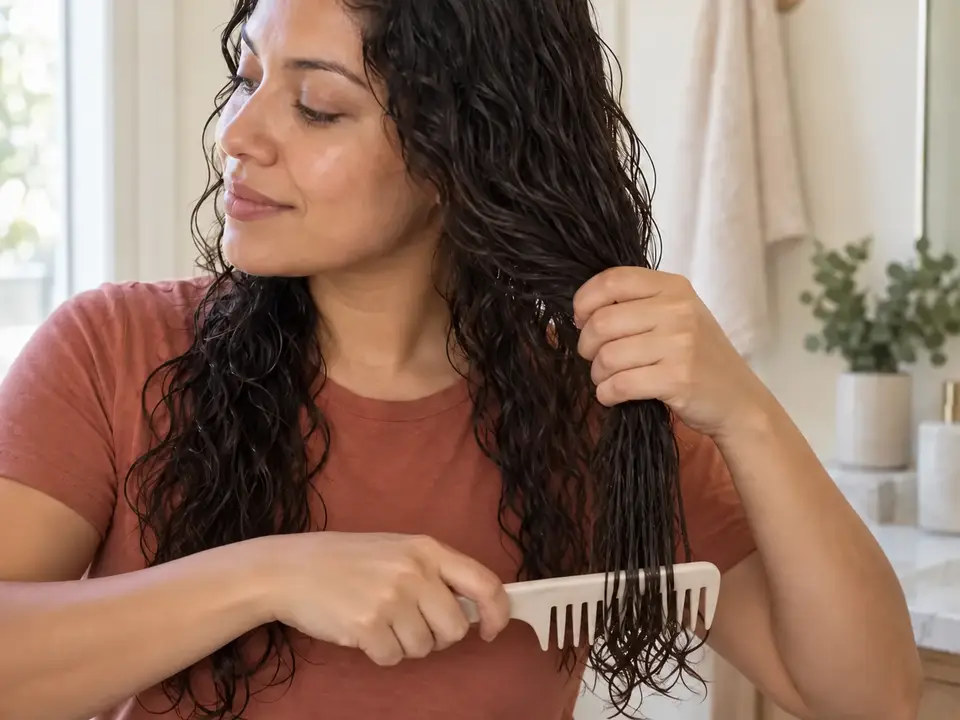
Detangle with a wide-tooth comb
A wide-tooth comb separates tangled hair with widely spaced teeth. Starting at the ends lets you clear one small part of a tangle at a time.
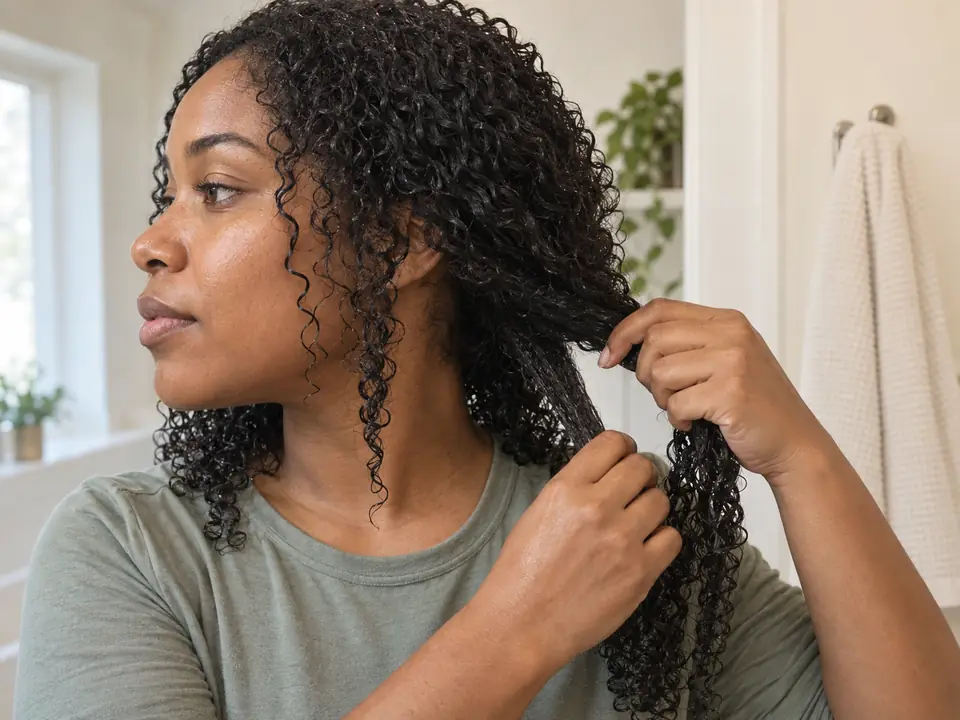
Detangle with your fingers
Finger detangling means easing tangled strands apart by hand. It lets you feel a snag and work on a few strands at a time.
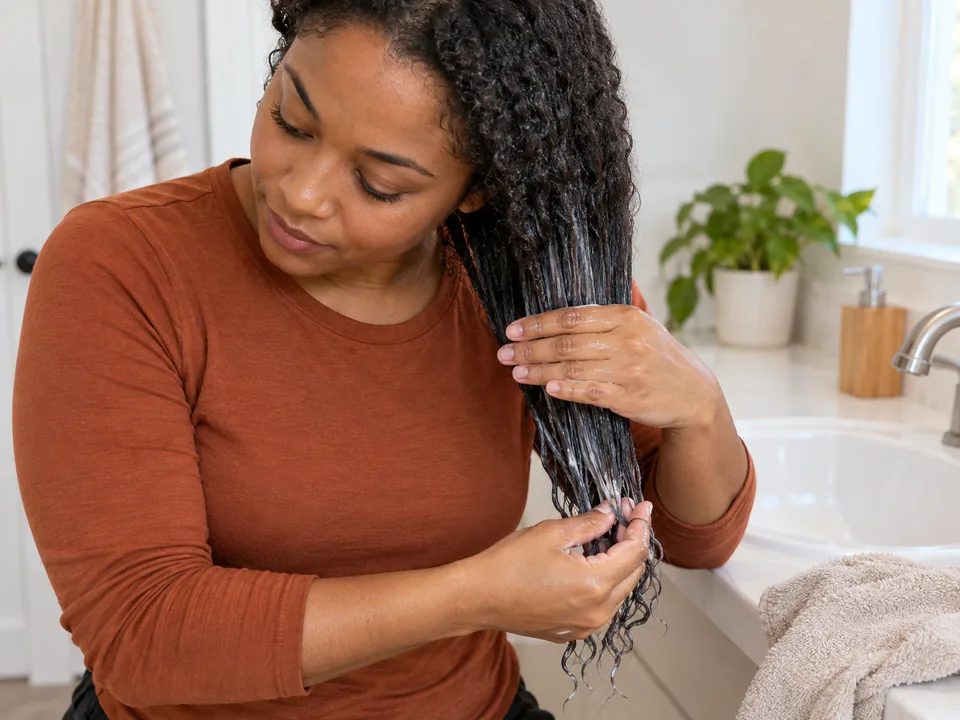
Handle the line between new growth and treated lengths
Demarcation-line handling supports the boundary between new growth and chemically treated lengths during conditioned ends-up detangling.

Prevent nape tangles while wearing long hair down
Nape-tangle prevention keeps the underside of long hair smooth, dry and loosely contained during higher-friction periods.
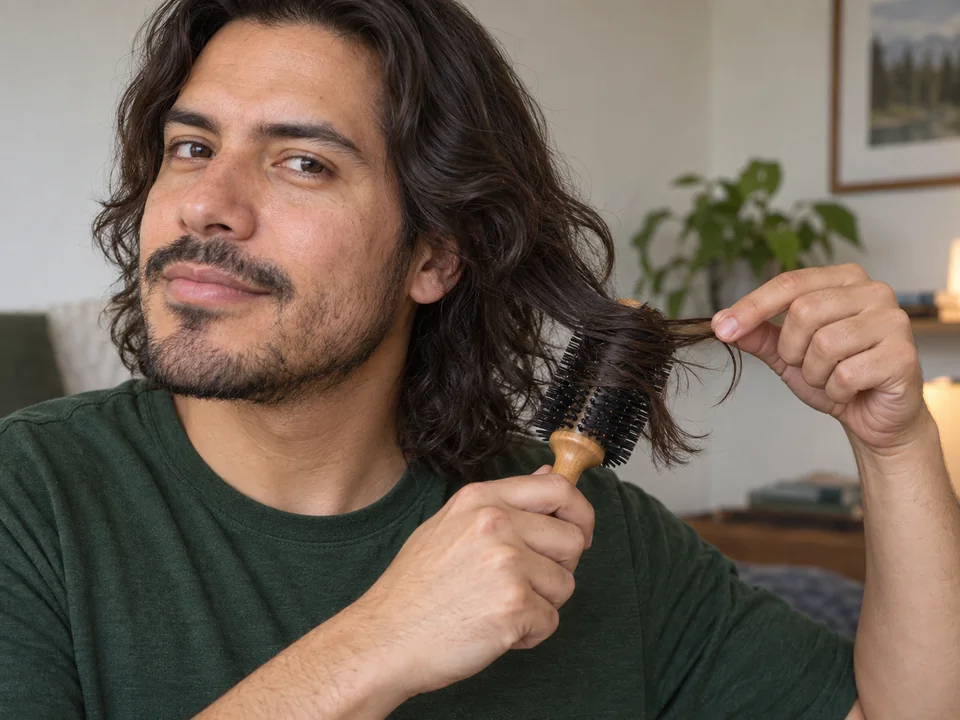
Release a small snag from a round brush
Round-brush snag release separates caught outer strands and reverses the wrap so a manual brush can leave a small accessible hair section without being dragged out.
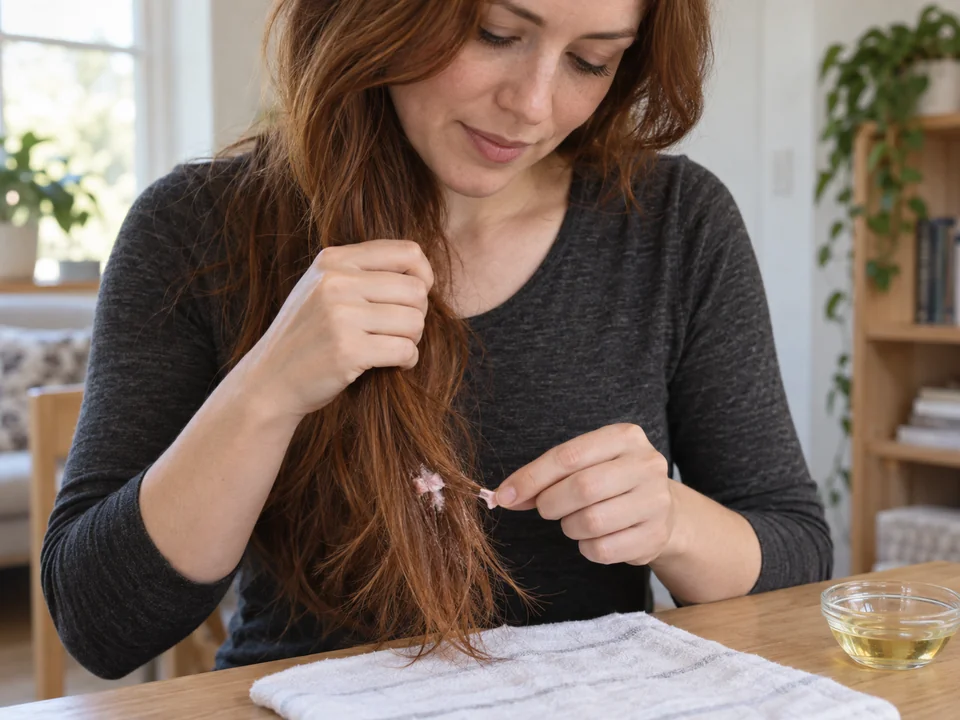
Remove chewing gum from hair
A small amount of plain vegetable oil coats chewing gum caught in loose hair so it can be eased away before normal washing.
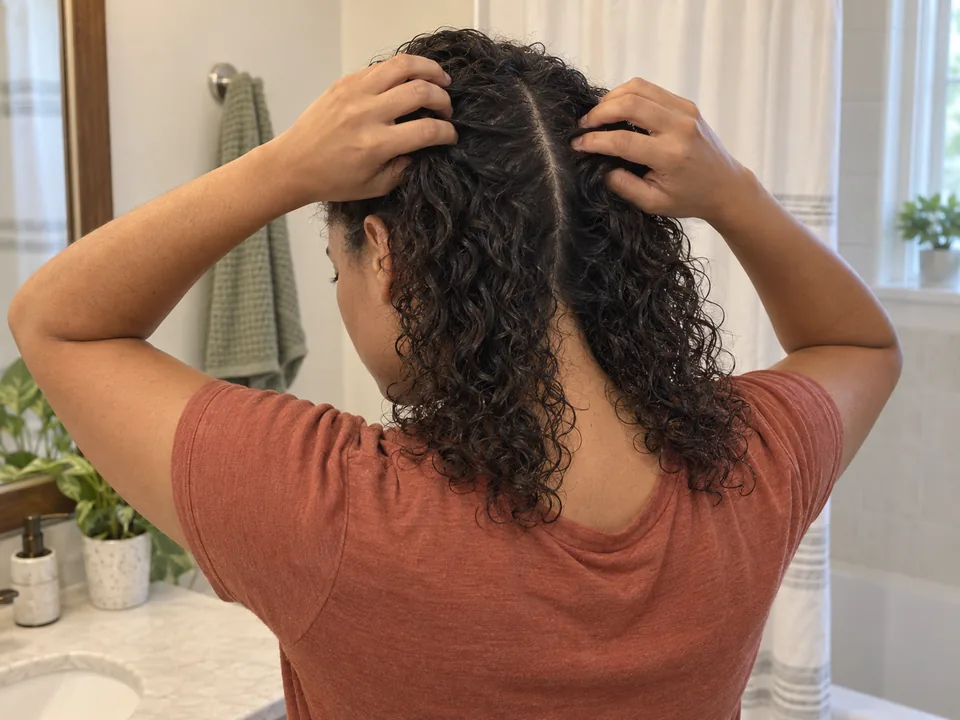
Section your hair for washing and styling
Sectioning divides loose hair into manageable portions so you can reach one area at a time while washing or styling.
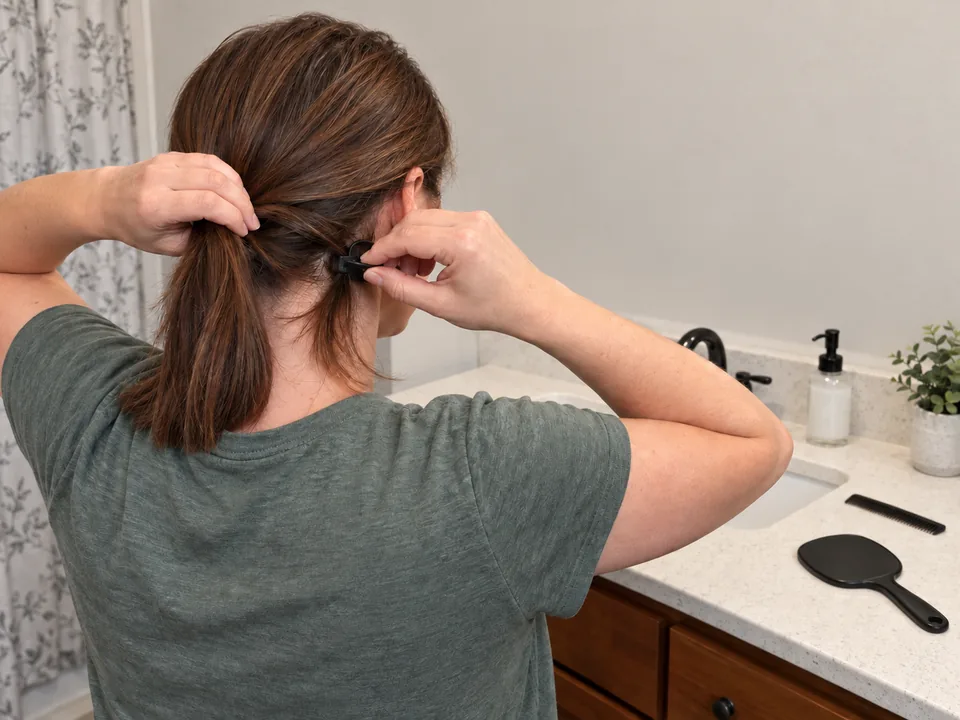
Style the back of your head with two mirrors
Two-mirror styling alternates a rear-view check with hands-on work after the hand mirror is set down.
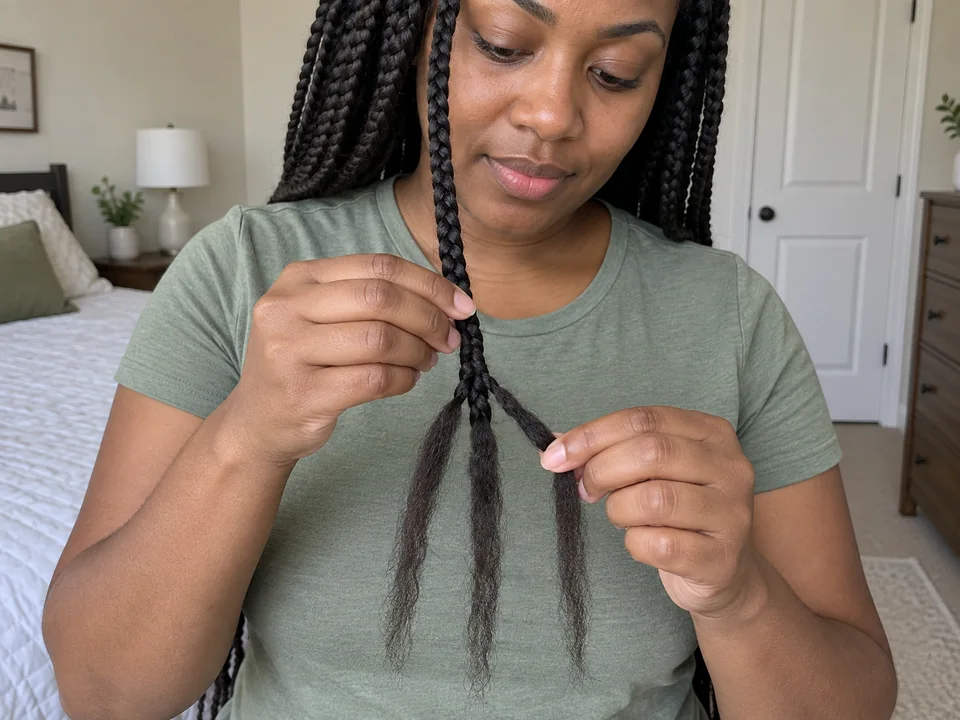
Take down extension braids at home
Braid takedown reverses a braided installation and separates the released hair for subsequent care.