Tie choice and tension
When a hair tie slips, squeezes or catches, changing its size or wraps can make everyday tying more comfortable. Prefer a wide, soft tie with no metal join, and use only the wraps needed to hold.
Step by step
- STEP 1 OF 4
Compare the tie types
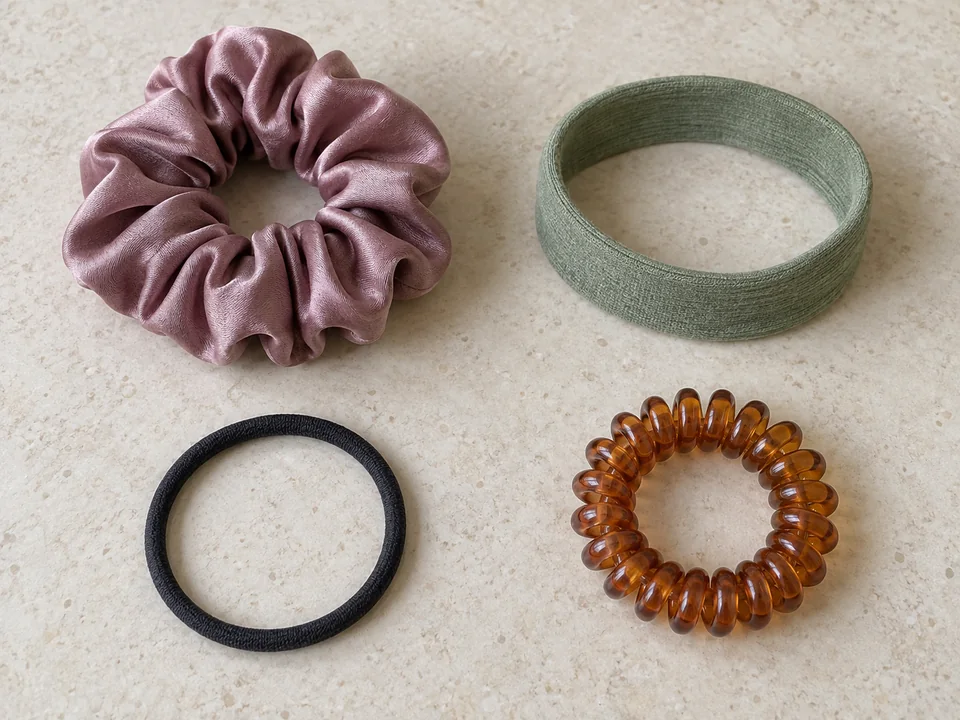
- Scrunchie (top left): the gathered fabric covers elastic. Remove a wrap to loosen it; choose a larger inner loop if it still squeezes.
- Wide fabric ring (top right): let the knit band sit flat. Remove a wrap or try a larger ring if it rolls into a tight cord.
- Slim covered elastic (bottom left): choose a smooth, metal-free join. Use fewer wraps; if it digs in, switch to a wider, softer tie.
- Spiral or coil (bottom right): unwind a pass to loosen it. If the next pass pulls or the coils catch, choose another size or a soft fabric tie.
 STEP 2 OF 4
Add wraps one at a time
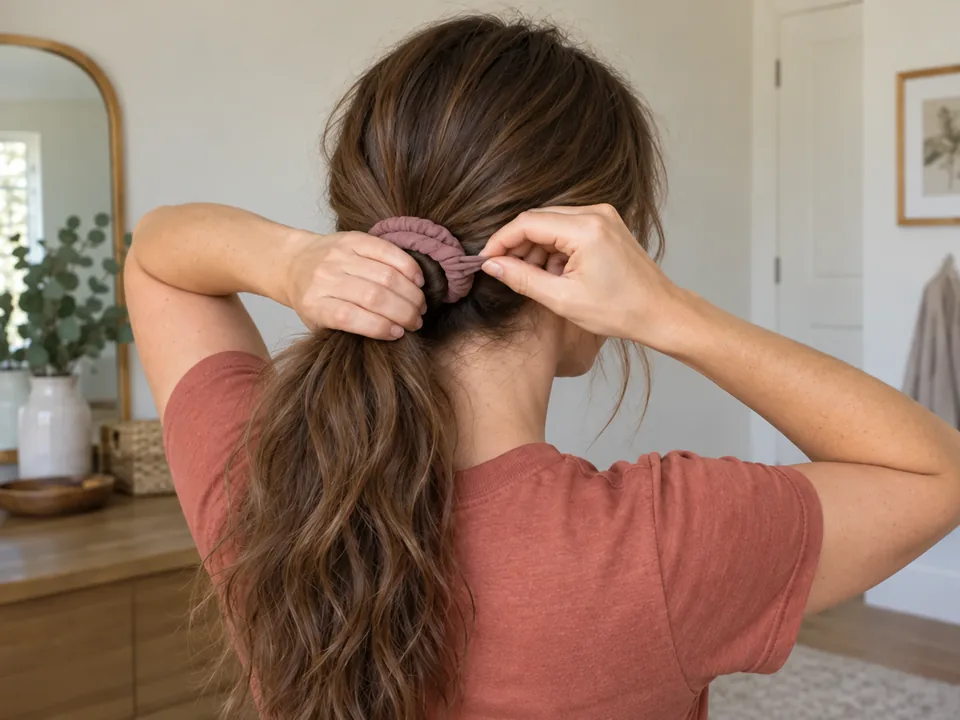
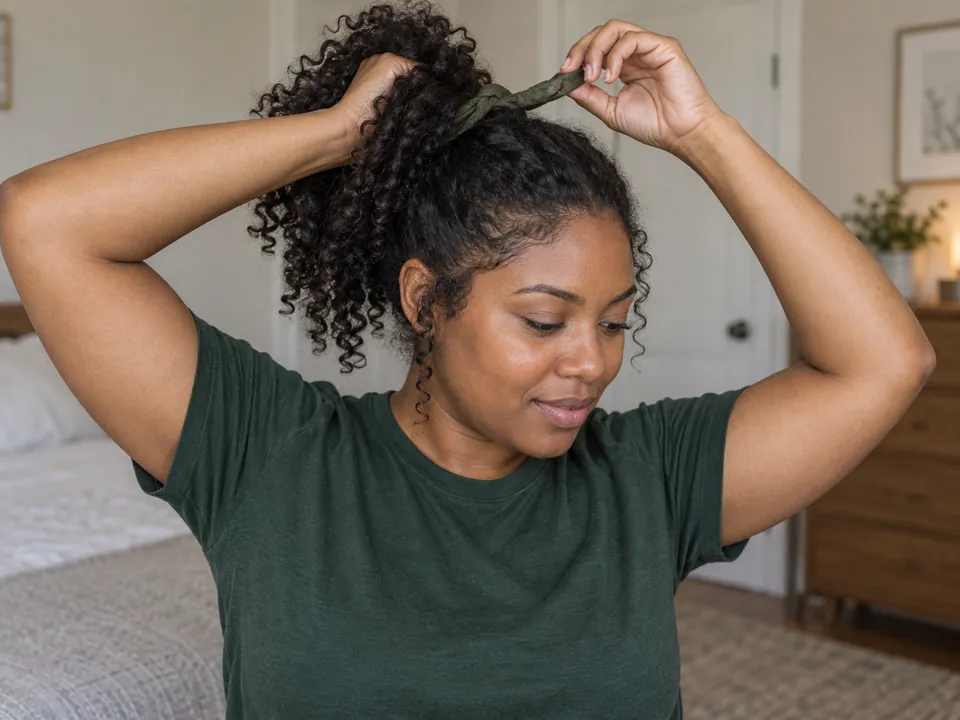
- Put the tie on one wrist. Gather dry, detangled hair low with both hands, leaving short layers free.
- Hold the bundle with one hand. Use the other to stretch the tie off your wrist and pass the whole tail through its open loop.
- If it slips, twist the empty loop once and pass the whole tail through again. Release your hands and check the hold after each wrap.
- Stop at a gentle hold. Do not split the ponytail and pull its halves apart to cinch the tie toward the scalp.
 STEP 3 OF 4
Check the hold and reset the fit
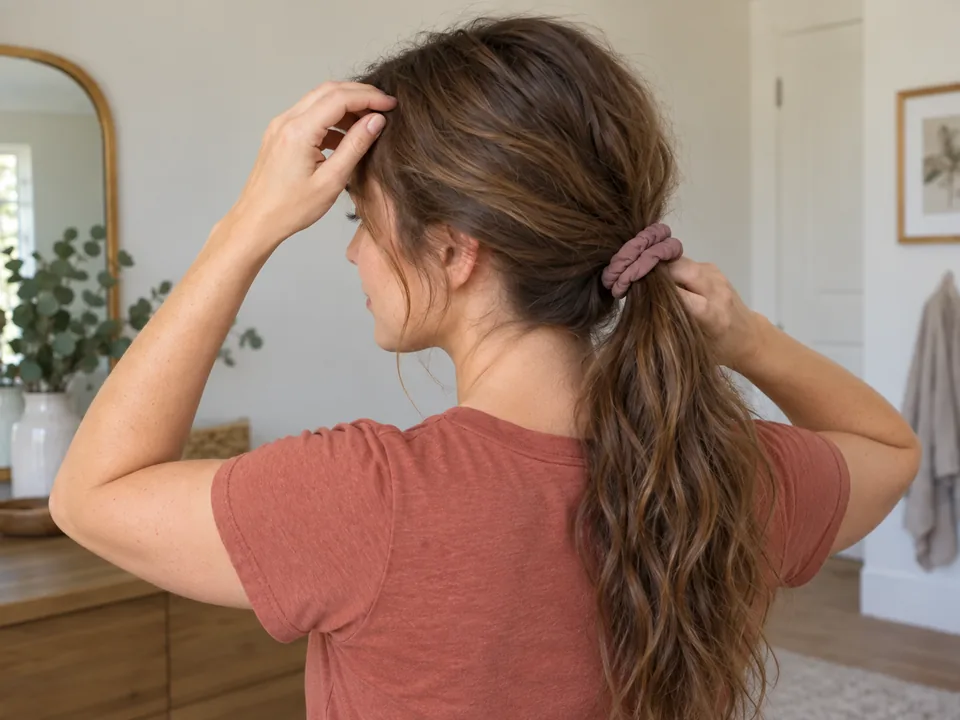
- Let go and turn your head gently. Check the front, sides and nape for pulling, stinging or lifted skin; do not wait for pain to adjust it.
- Too tight: support the bundle, undo the last wrap and check again. If it still pulls, remove the tie and regather more loosely or lower.
- Too loose: try one more wrap only if it stays comfortable. If that squeezes, undo it and change tie size or type instead.
 STEP 4 OF 4
Unwind before taking the tie out
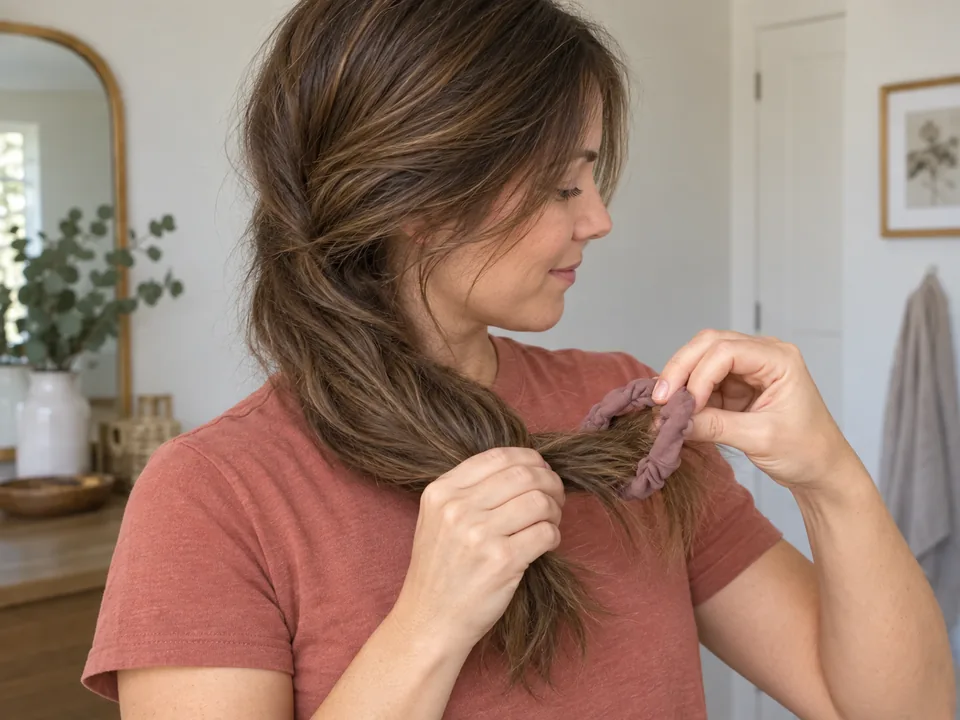
- Support the hair near the tie with one hand. Open the outer loop with the other and guide the tail back through it, reversing each wrap.
- Once one open loop remains, widen it and ease it off the free ends. For coils, free any caught strands with your fingers before continuing.
- Do not drag a tight tie down the hair. Remove shed strands from the empty tie and set it aside; replace it if the covering or join is damaged.
About 1–3 minutes hands-on to inspect one tie, gather, fit and check it, and later unwind it. Drying and detangling are separate.
You’re done when…
With your hands released, the tie holds the hair without pulling at the front, sides or nape. You can turn your head comfortably; later, the opened tie comes away without dragging caught strands.
Related techniques
Connected steps for your routine.
Tie a loose ponytail
For the complete everyday ponytail method, including gathering and placement, use the loose-ponytail guide alongside this tie-fitting reference.
Check and release style tension
If a style already feels uncomfortable, the tension-check guide helps you release the pulling and recognize when to seek further advice.