Create a Bantu-knot set and knot-out
Choose a Bantu-knot set when you want each damp curly or coily section to set in its own compact coil before takedown. The page covers both making the knots and releasing them.
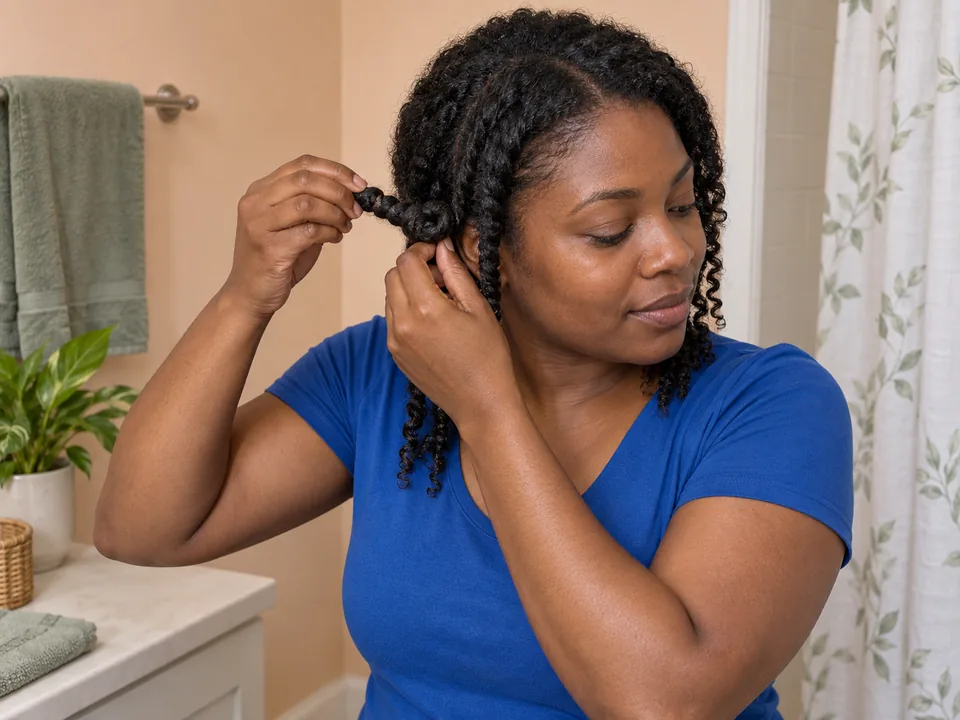
Step by step
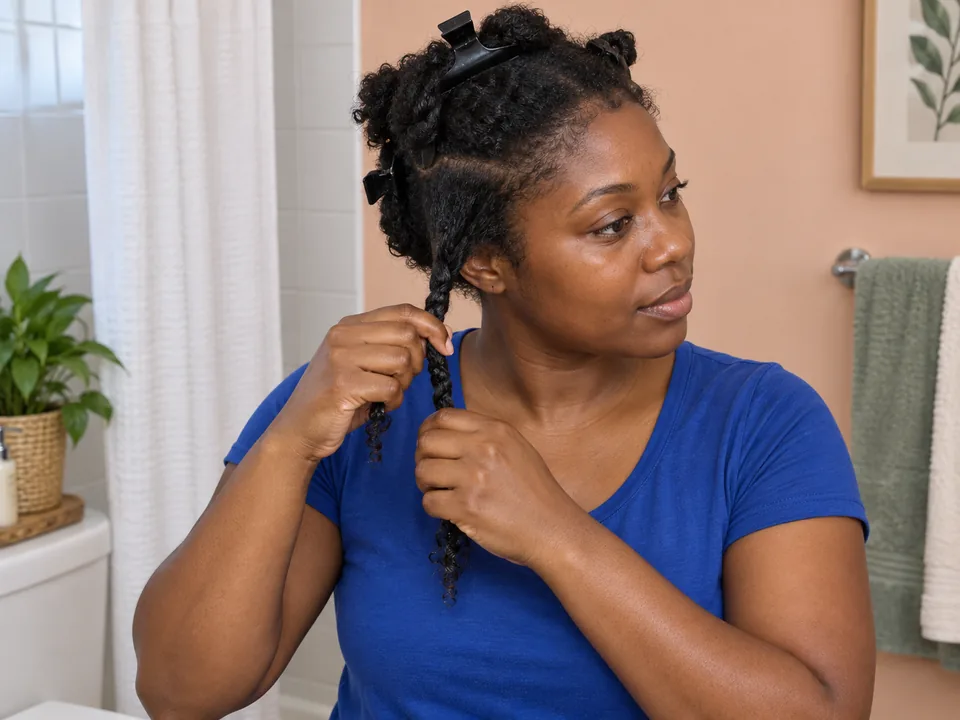 STEP 1 OF 4
Twist one section
- Clip away the hair you are not handling and bring one damp section within reach.
- Hold near the base without pulling and turn the section into one smooth rope toward the ends.
- STEP 2 OF 4
Coil it around the base
- Hold the base with one hand and circle the twisted length around it with the other.
- Build the coil outward rather than stacking it tightly against the scalp.
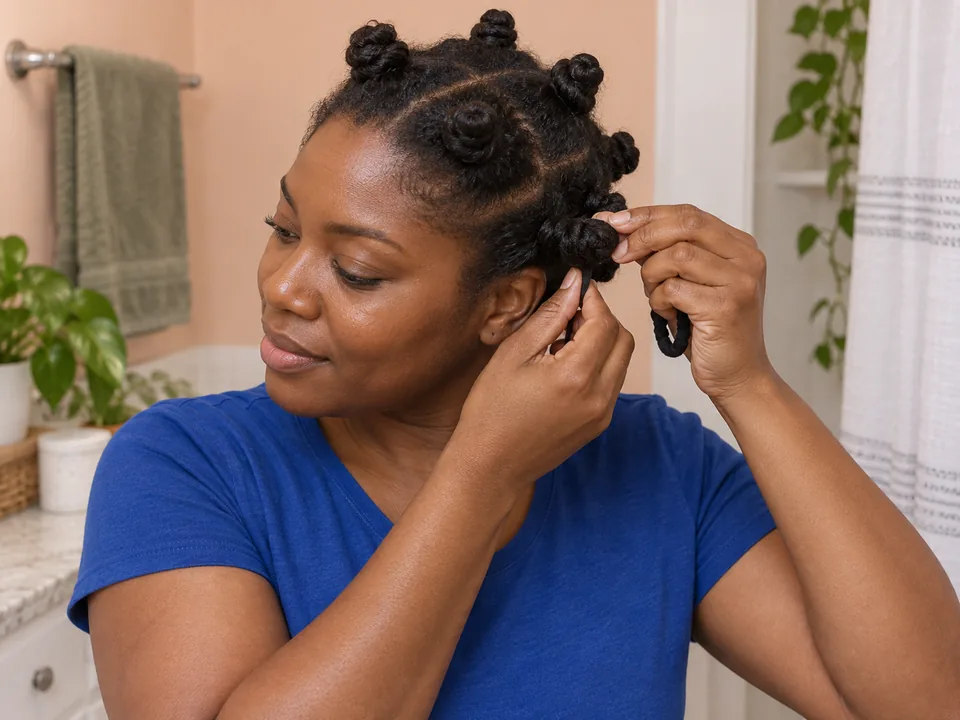 STEP 3 OF 4
Tuck and check
- Tuck the end under the outer turn, or add one smooth fastener if the knot will not hold.
- Press lightly around the base; undo and reset if the scalp pulls or the fastener pinches.
- Repeat the twist, coil and secure steps until every intended section forms a comfortable knot.
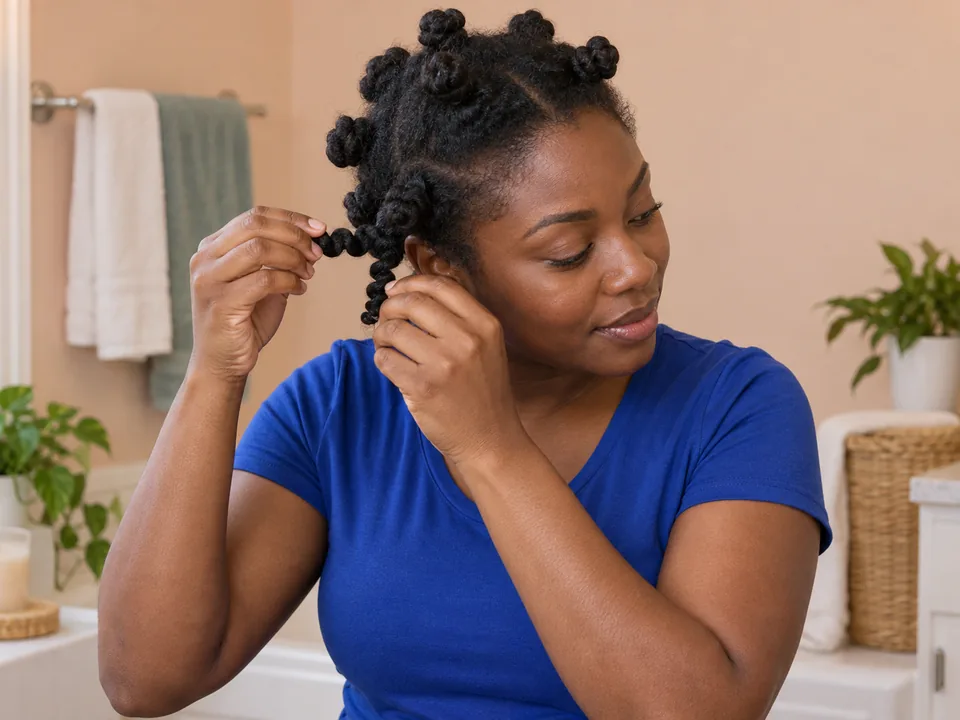 STEP 4 OF 4
Dry and unwind
- Check the root and center of every knot and wait longer if either feels damp.
- Remove any fastener, free the tucked end and reverse the coil slowly; separate further only after every knot is down.
- After every knot is down, arrange the dry sections lightly with your fingers and collect all ties and sectioning clips.
About 25–60 min hands-on for sectioning, forming a full set of knots, later unwinding and arranging them. Start with damp, detangled hair. Add complete air-drying and breaks.
You’re done when…
Every knot and fastener is removed, the roots and centers were dry before release, and the sections hang free without snags.
Related techniques
Connected steps for your routine.
Detangle & section · 1–3 min hands-on
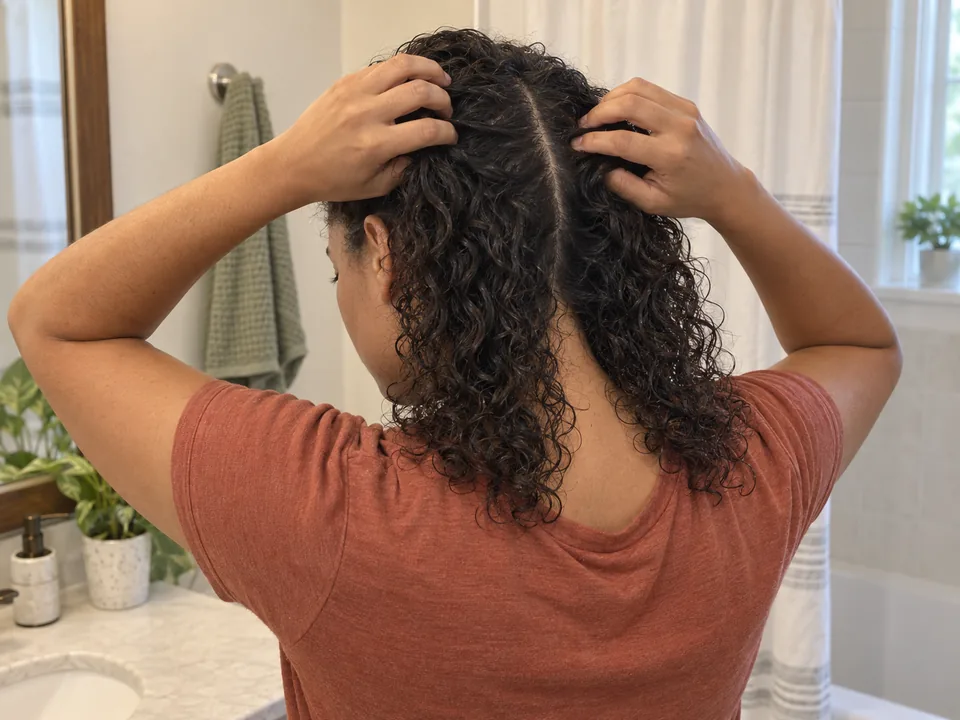
Section your hair for washing and styling
Working sections keep loose hair separated while each compact knot is formed and checked.
Style without heat · 25–60 min hands-on
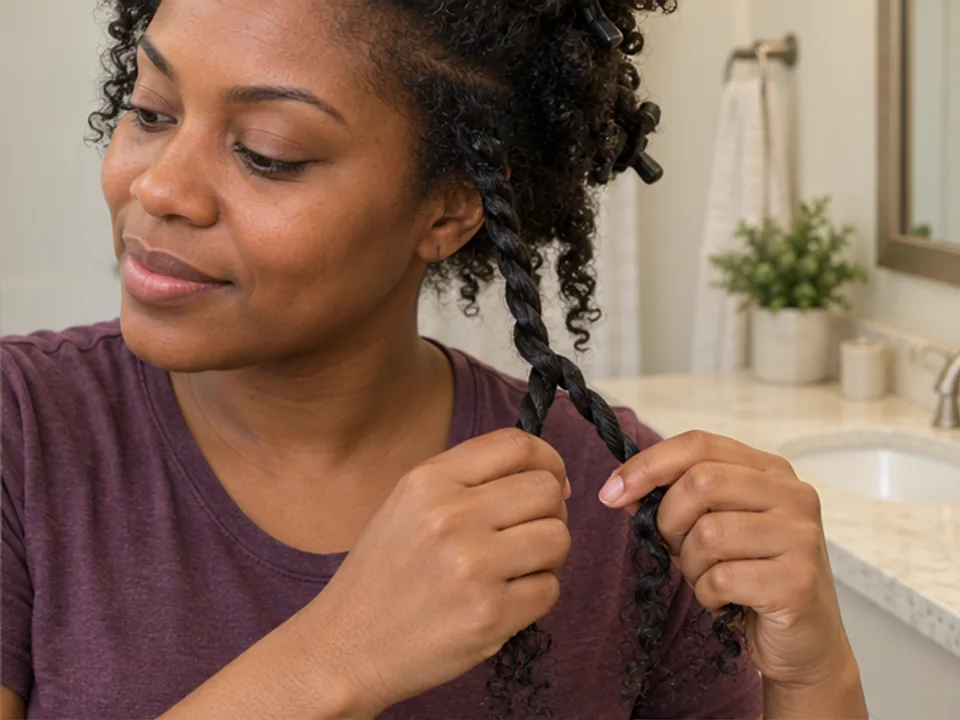
Create a twist-out
Choose a two-strand twist-out when you prefer hanging twists instead of coiling each twist around its base.