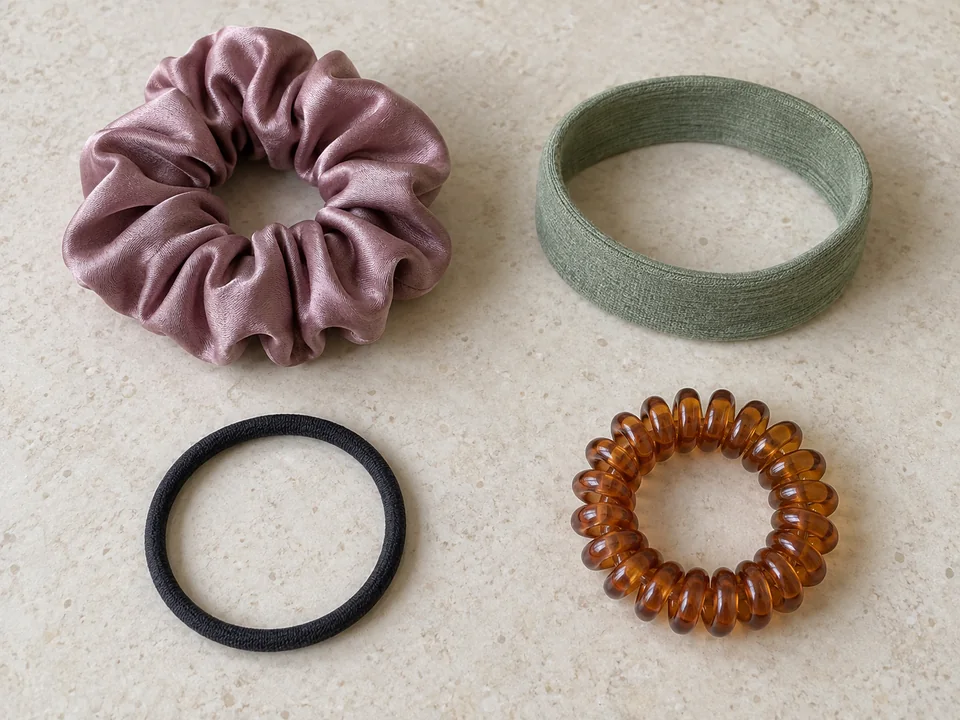
Fasten and release a ponytail with a one-handed aid
A purpose-made sliding-lock aid can help when a standard elastic needs more hand control than you have available. This method uses one working hand and a movable residual forearm to anchor the tail; it requires comfortable overhead reach.
Step by step
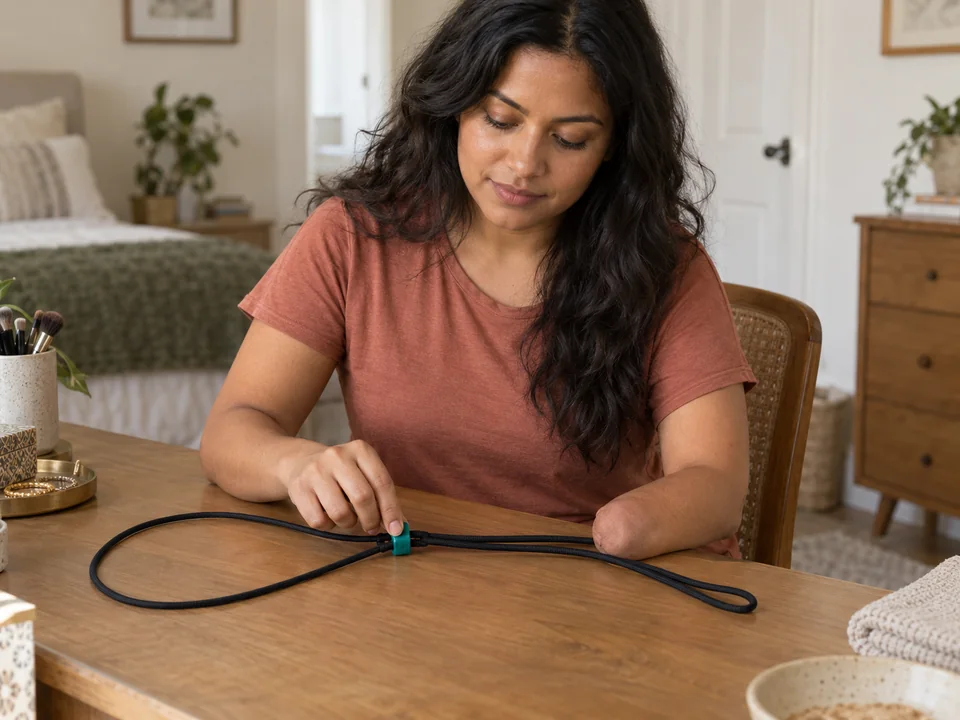 STEP 1 OF 5
Practice the lock at the table
- Set your purpose-made aid on a table. Check that its cord and lock are intact; follow the maker’s directions to enlarge the hair loop.
- Anchor the long tail gently with your residual forearm while your working hand operates the lock. Practice reopening the loop before using it.
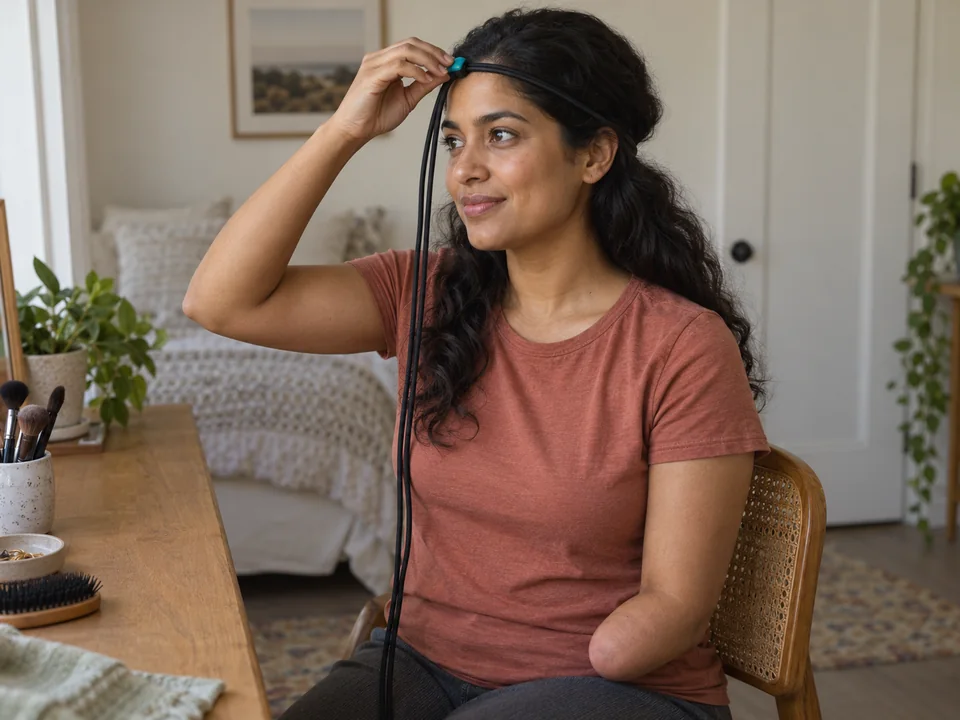 STEP 2 OF 5
Set the loop above your ears
- With your working hand, pass the enlarged loop over your head. Lift all your hair clear so the loop rests at the nape, under the lengths.
- Bring the front up above your ears like a headband, with the sliding lock at your forehead. Keep the long tail in front and clear of your neck.
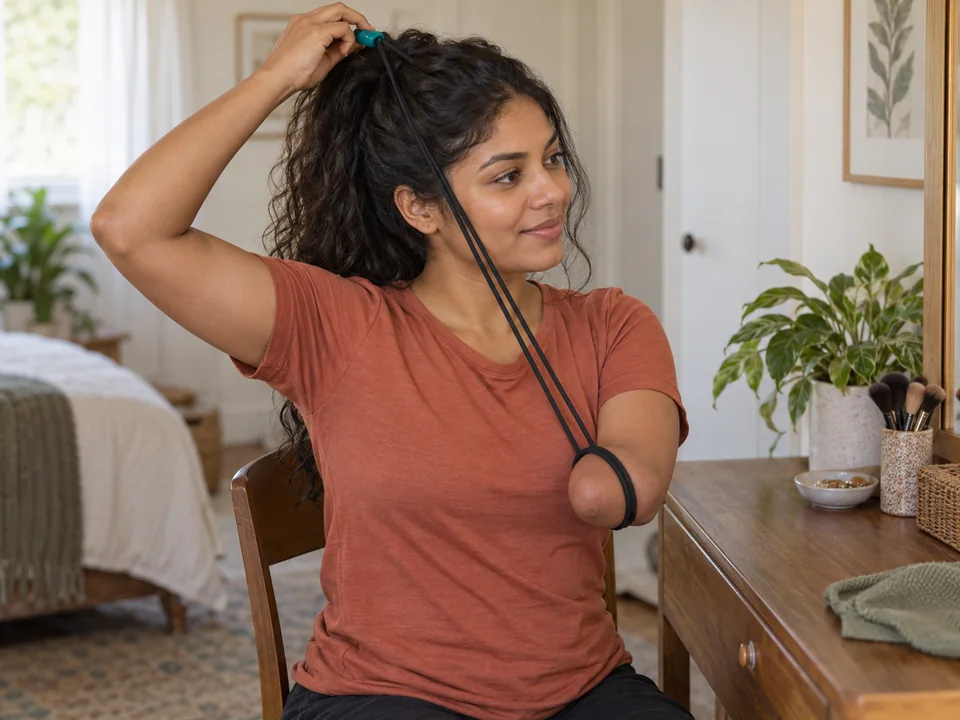 STEP 3 OF 5
Anchor the tail and guide the lock
- Loop the long tail around your residual forearm as your aid’s instructions show. Move that forearm to keep gentle tension; keep your shoulders comfortable.
- Use your working hand to move the lock back over your head, closing the loop around the hair. Operate its button as your aid requires.
- Guide it to a reachable ponytail position. Stop once it holds comfortably; do not pull harder to overcome a jam or an awkward reach.
 STEP 4 OF 5
Release the anchor and secure the tail
- Check the hold, then gently free the long tail from your residual forearm. Keep control of it with your working hand.
- Wind the remaining tail around the ponytail base as your aid directs. Keep the lock accessible and take down a ponytail that pulls.
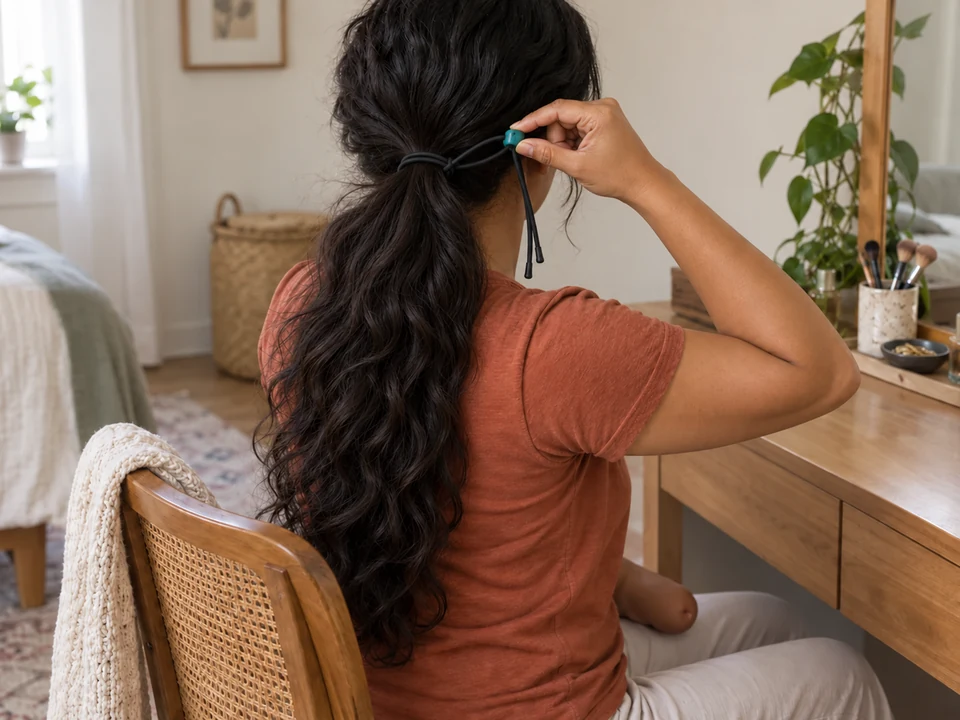 STEP 5 OF 5
Unwind and open before removal
- Unwind the tail with your working hand. Press the lock’s release and ease the hair loop larger using the method you practiced off your hair.
- Free any caught strands before sliding the enlarged loop off. Do not drag a tight lock through your lengths.
- Set the aid down, check for trapped hair and store it as directed. If the release cannot move freely, stop rather than force it.
One fit, adjustment, tail winding, later release and storage. This is a planning estimate, not a speed or independence target.
You’re done when…
The ponytail holds comfortably with the tail secured and the lock reachable; you can unwind and reopen it without pulling a tight loop through hair.
Related techniques
Connected steps for your routine.