Handle the line between new growth and treated lengths
Support the point where new growth meets chemically treated length, add ordinary conditioning slip, and detangle from the ends without pulling across the transition.
Step by step
 STEP 1 OF 3
Find and support the transition area
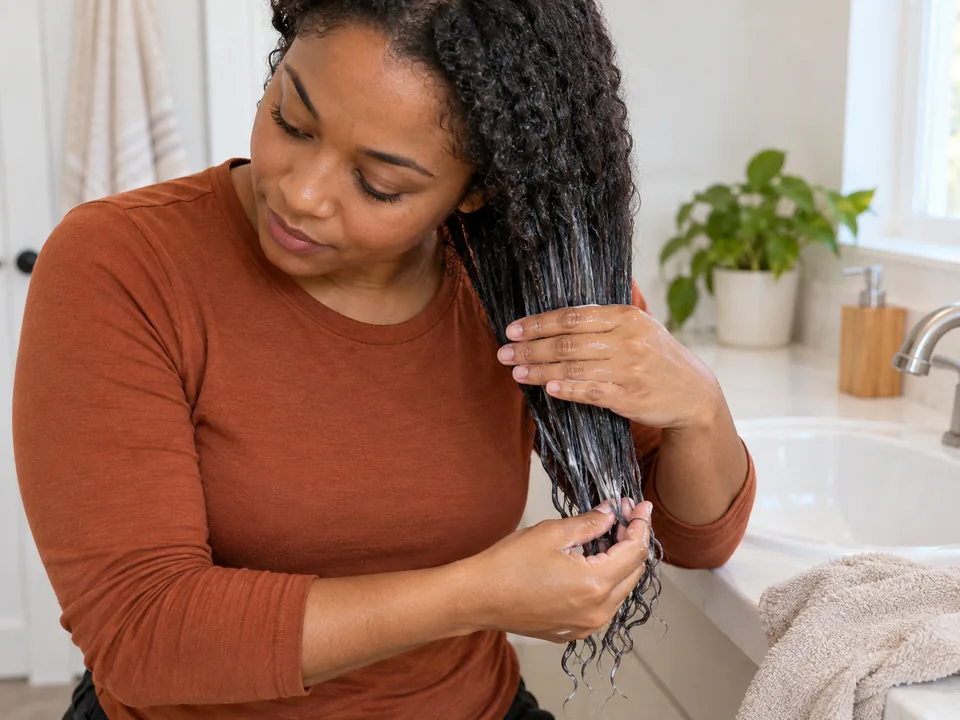
- On conditioned damp hair, bring one small section forward in good light.
- Feel or observe where the texture or processed appearance changes; do not tug to test strength.
- Place one hand flat around the section just above that area to absorb pulling.
- STEP 2 OF 3
Detangle from the ends upward
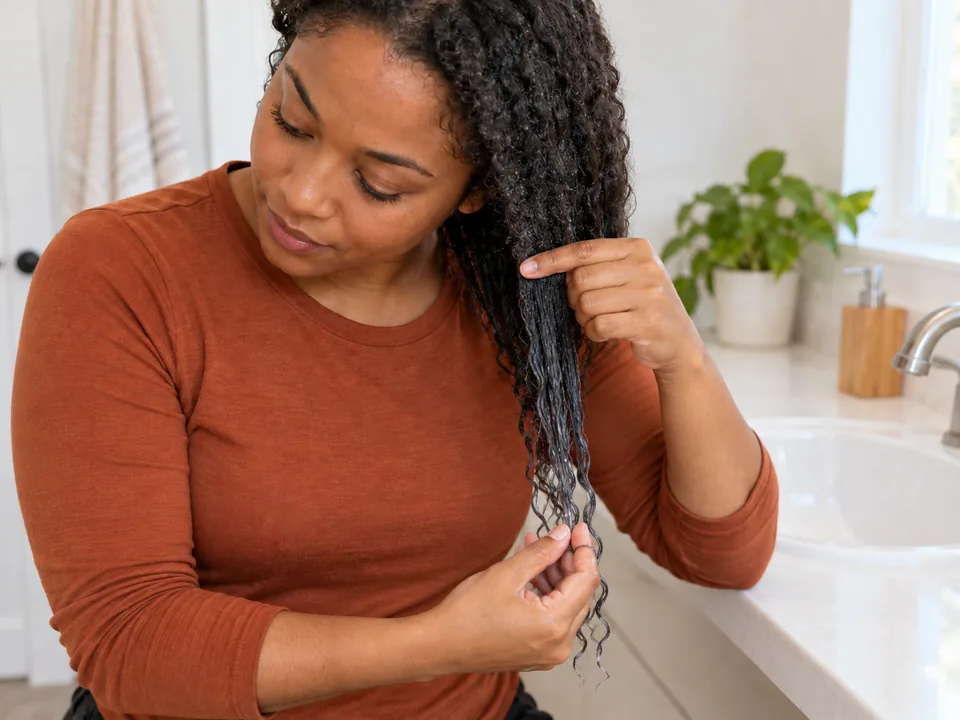
- With ordinary conditioner providing slip, use fingers at the free ends first.
- Move upward in short passes while the support hand stays above the transition.
- When a snag reaches the boundary, stop, add slip and loosen a few hairs instead of pulling through.
 STEP 3 OF 3
Rinse and blot without tension
- Rinse conditioner according to its label while supporting the section.
- Press the section in a clean absorbent towel without twisting.
- Leave the transition free of a tight tie and record repeated snagging or breakage for a stylist.
About 3–10 min hands-on for supporting and detangling one small transition area, then rinsing and blotting it. Add conditioner dwell; a full-head detangle and later drying are separate.
You’re done when…
The section is detangled without a forceful pass across the transition, the area stayed supported, and no chemical treatment advice was added.