Release a small snag from a round brush
Stop heat and rotation, support the trapped section and create slack. Free the accessible snag before gently reversing the brush’s wrap; stop for pain or a tangle you cannot trace.
Step by step
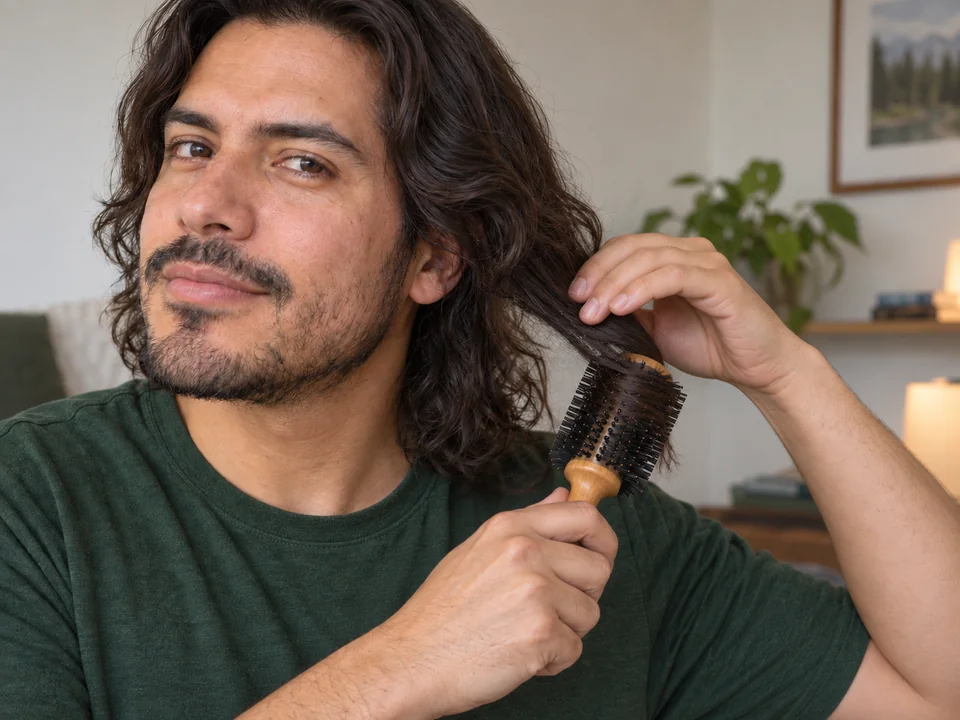 STEP 1 OF 3
Stop heat and take tension off
- Switch off and set the dryer safely aside. Stop turning the manual brush, and allow its barrel to cool before touching it.
- Support the brush near the section’s entry direction to create slack instead of pulling away from your head. Keep the roots relaxed.
- Identify the wrapped section and any small local catch. Stop for pain, severe tangling or a wrap you cannot follow; ask a hairstylist for help.
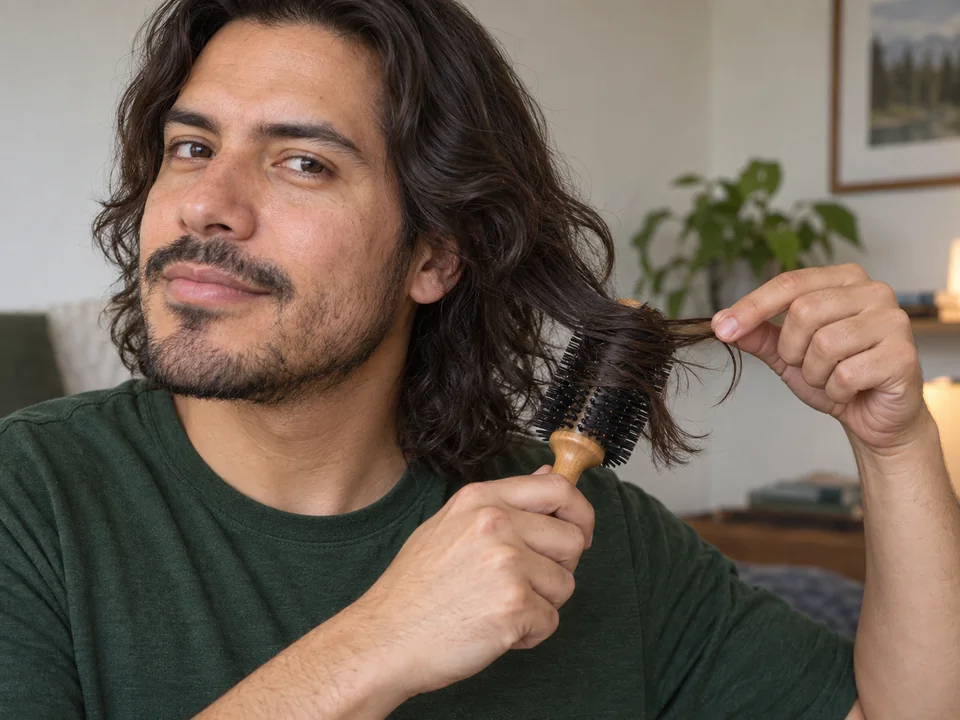 STEP 2 OF 3
Free strands, then reverse the wrap
- Hold the brush steady with one hand. With the other, gently separate the most accessible outer strands from the bristles, leaving a stubborn strand while freeing its neighbors.
- Once the snag loosens, turn the brush a little opposite to its original winding direction. Guide the newly freed hair away before the next small turn.
- Repeat only while each movement releases hair comfortably. Stop if it tightens, hurts or stays unclear; do not yank, keep spinning, cut blindly or add heat.
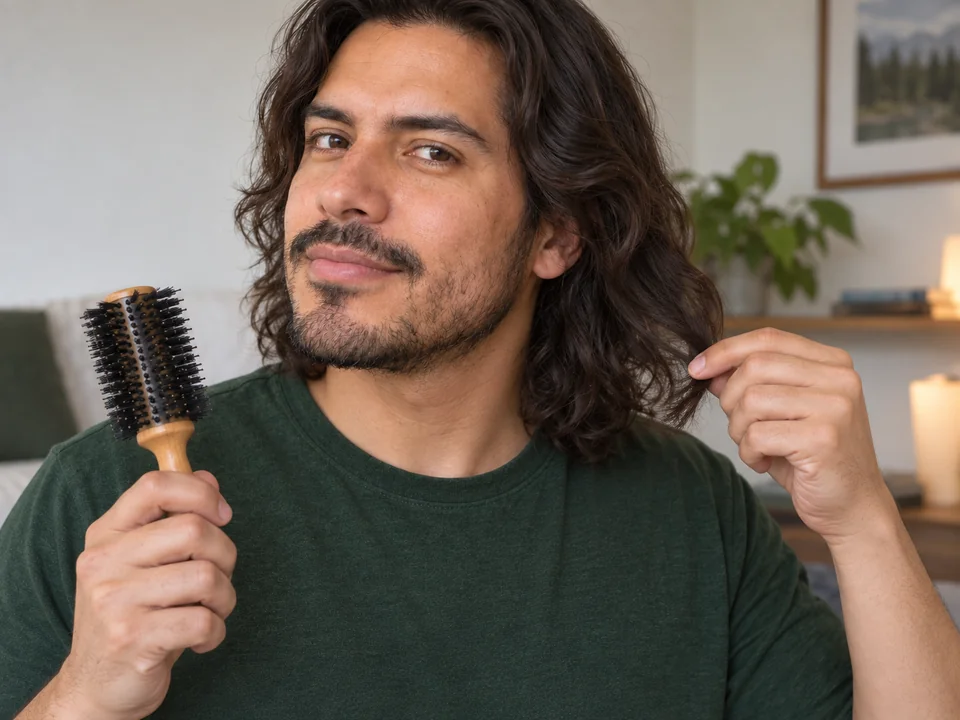 STEP 3 OF 3
Check hair and brush after release
- When every wrapped section is free, lift the brush away. Use your fingers gently to check the affected length for a remaining knot before any further styling.
- Remove shed strands from the empty brush and look for bent, loose or damaged bristles. Set a damaged brush aside rather than putting it straight back into hair.
- Pause to review why it snagged. Smaller manageable sections and detangling before round-brush styling can help you avoid repeating the same wrap.
An initial gentle attempt on one small accessible snag, not a promise that any tangle will release within this time.
You’re done when…
The brush is completely separate, the affected section has been checked gently for remaining knots and the brush is set aside if its bristles are damaged.