Brush dry straight or wavy hair without pulling
Use gentle dry brushing to loosen ordinary tangles or smooth straight or wavy hair between washes. Work on one small section at a time so you can stop as soon as the brush catches.
Step by step
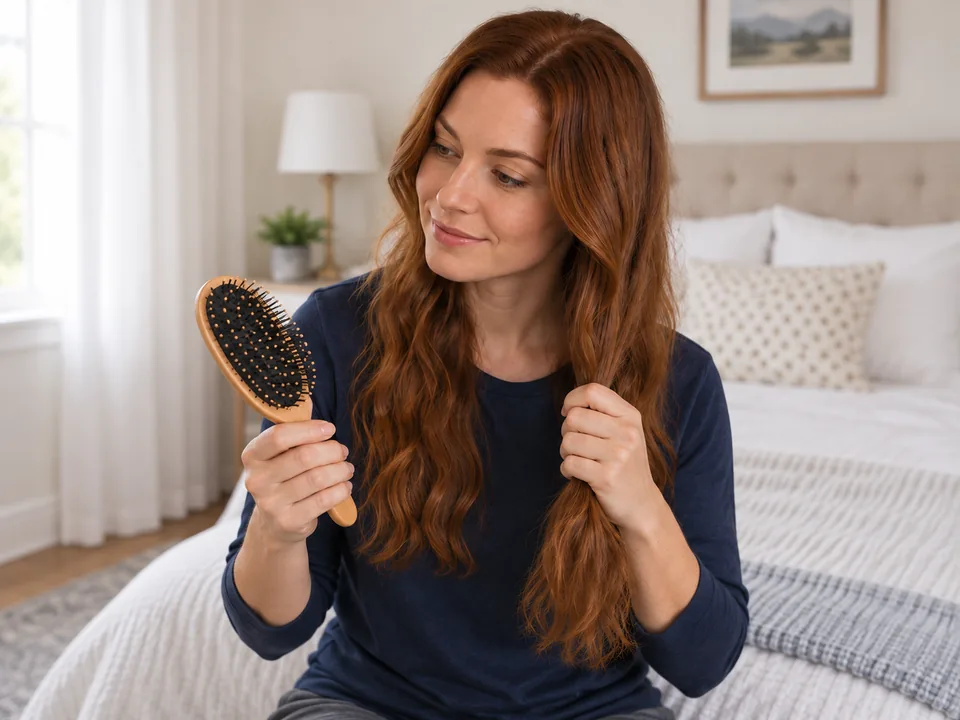 STEP 1 OF 7
Check your brush
- Start with dry hair. Put your brush within reach and look over its pins or bristles for trapped hair, broken tips and rough edges.
- Lift out loose shed hair. If the brush feels rough or has damaged pins, use another brush.
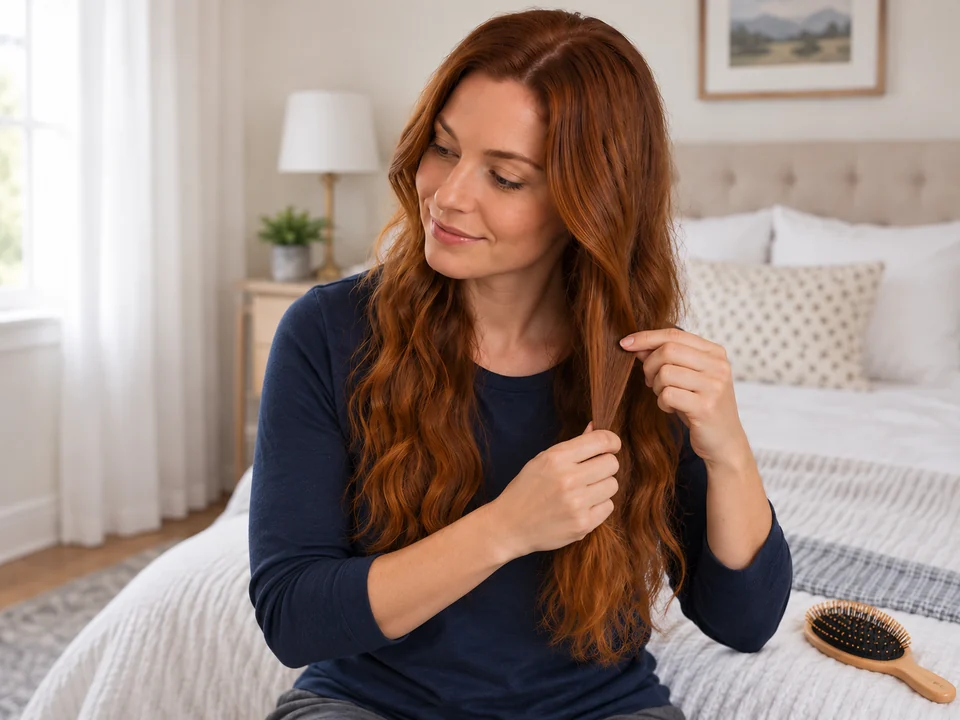 STEP 2 OF 7
Separate a small section
- Set the brush down. Bring a small section forward over your shoulder and ease it away from the neighboring hair with your fingers.
- Hold the section above the ends with one hand. Keep the roots relaxed, then pick up the brush with your other hand.
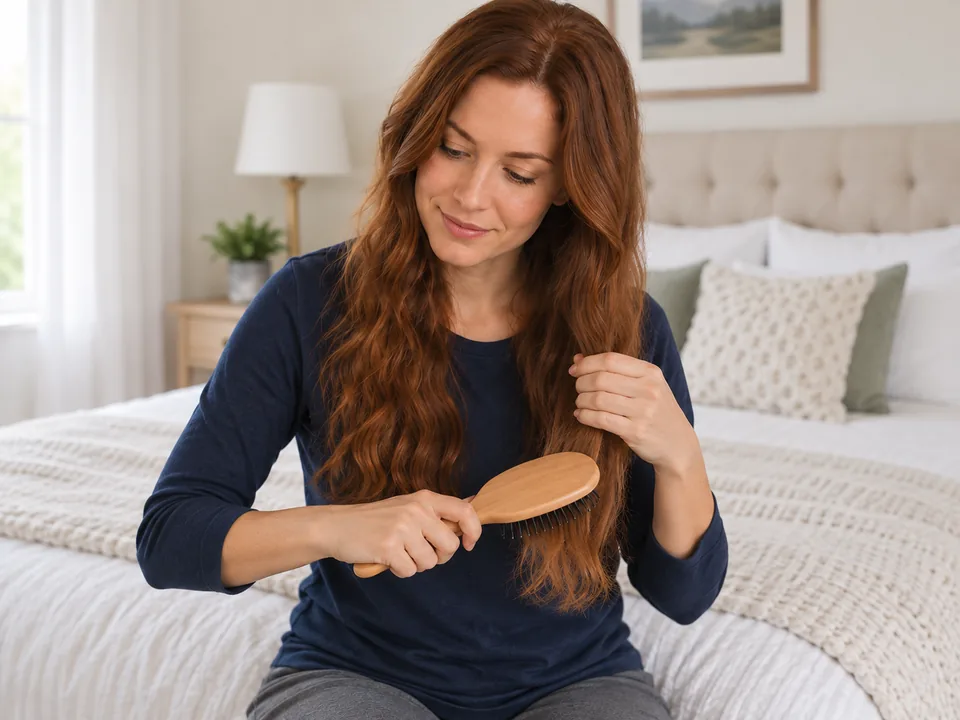 STEP 3 OF 7
Brush the ends first
- Hold the hair above the area you are brushing, without tugging it away from your scalp.
- Place the brush near the tips and make a short downward pass until it leaves the hair. Repeat only until those ends are clear.
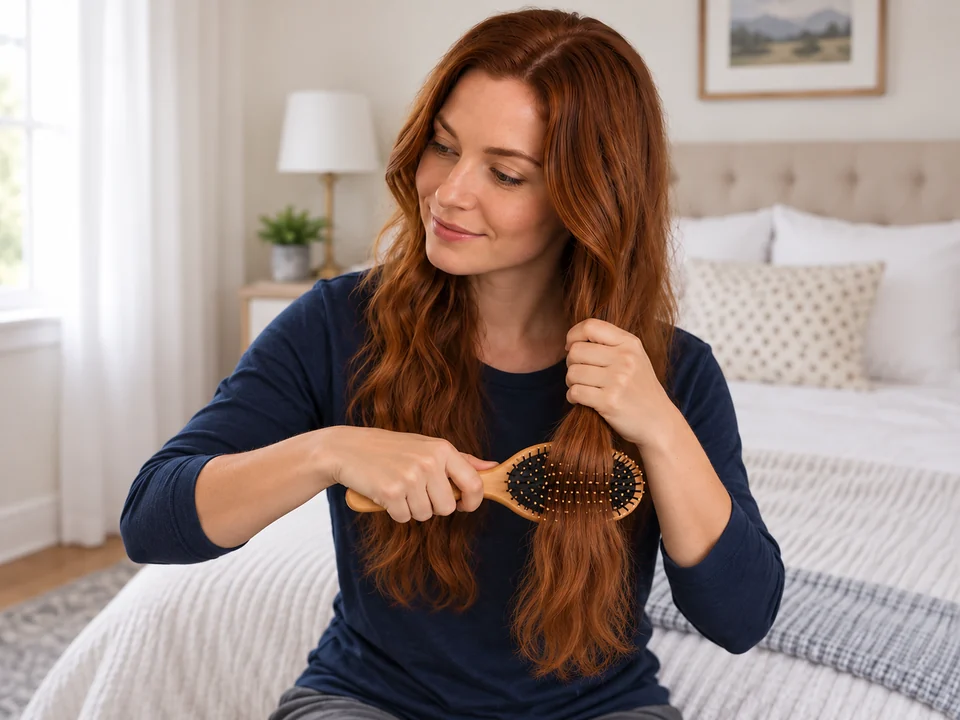 STEP 4 OF 7
Start each pass a little higher
- Once the ends are clear, place the brush a little higher on the same section and brush down through the cleared lengths.
- Move your supporting hand higher as needed, keeping it above the brush. Work toward the roots only as each lower part becomes easy to brush.
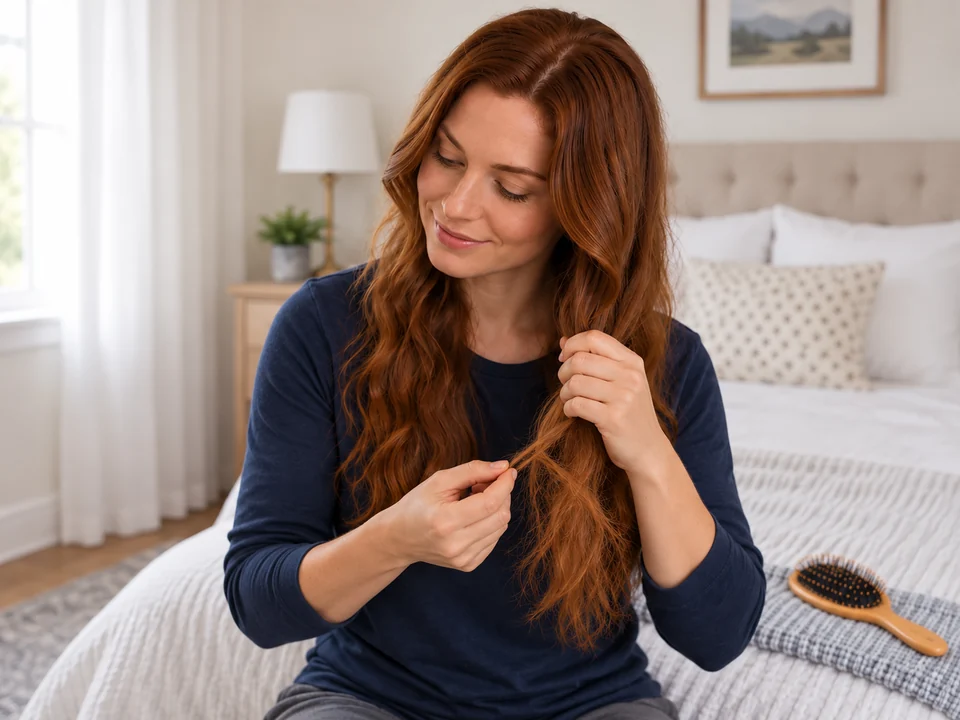 STEP 5 OF 7
Pause if the brush catches
- Stop and gently ease the brush out instead of dragging it through. Set it down so both hands are free.
- Hold above the snag with one hand. Use the other fingertips to tease apart a few loose crossed strands, then restart brushing below that spot.
- If it hurts or the knot stays firm, stop. Leave it for a separate detangling session or a stylist rather than using more force.
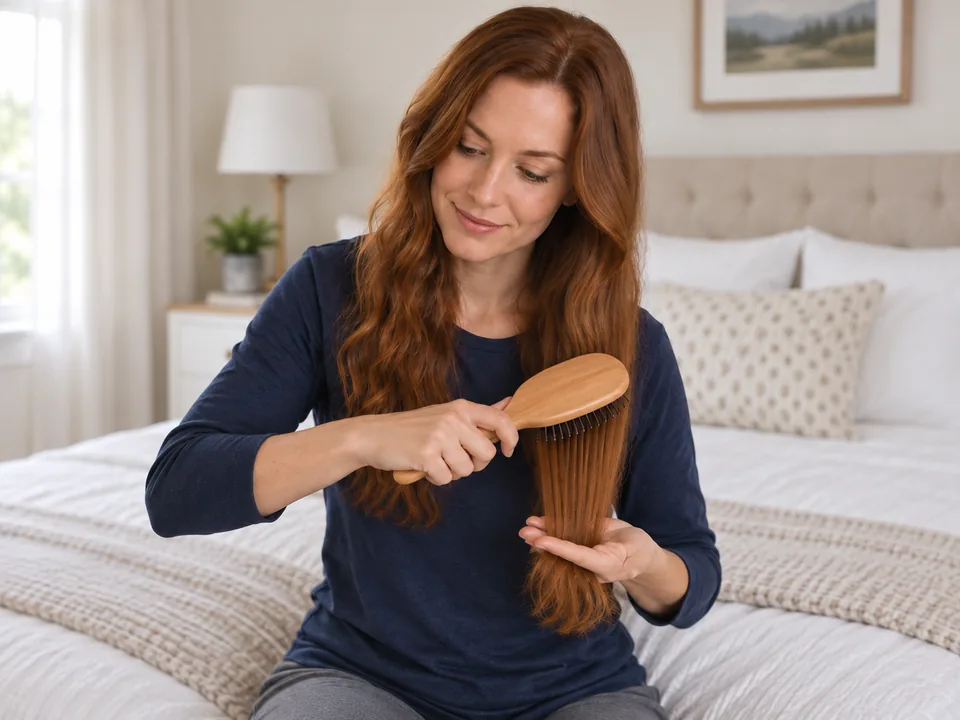 STEP 6 OF 7
Finish the cleared section
- When the section is free of tangles, make a light pass down its length if you want to smooth it. Stop once the brush glides through.
- Repeat on the other sections you want to brush. Bring each side forward and lower your arms between sections.
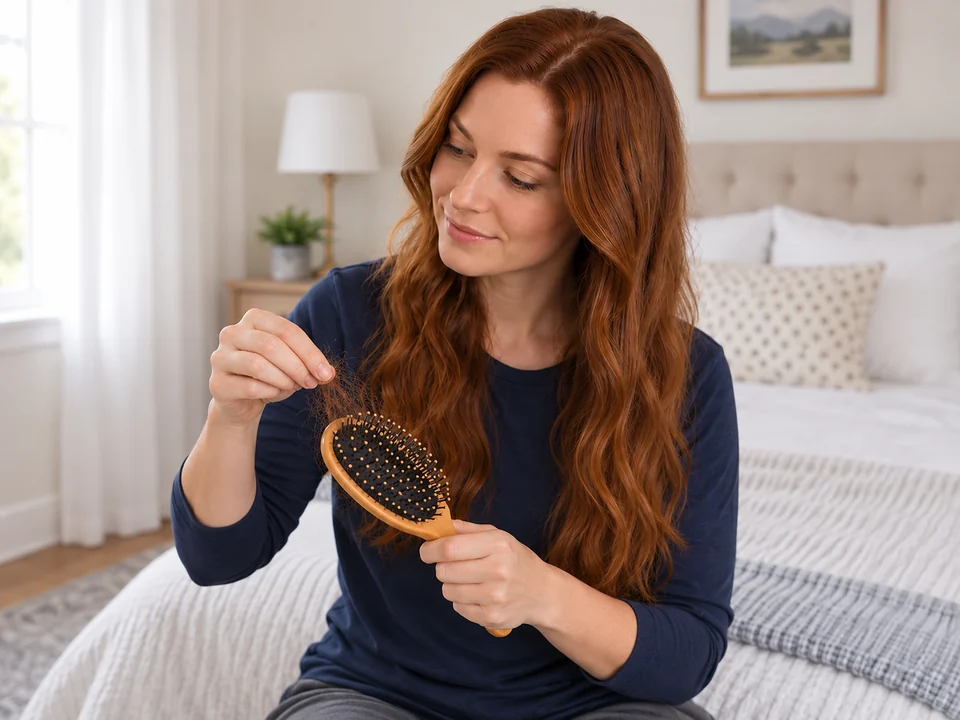 STEP 7 OF 7
Lift shed hair out of the brush
- Set your hair free. Hold the brush away from your head and lift loose shed strands from between its pins with your fingertips.
- Put the hair in the trash and store the brush dry. If product residue remains, clean the brush separately using its care instructions.
About 1–5 minutes for ordinary dry brushing, including checking the brush, working through reachable sections and clearing shed hair. Firm knots or a full detangling session are separate.
You’re done when…
The sections you wanted to brush feel free of ordinary tangles, without pulling or repeated catching. Shed hair is removed from the brush and it is put away dry.