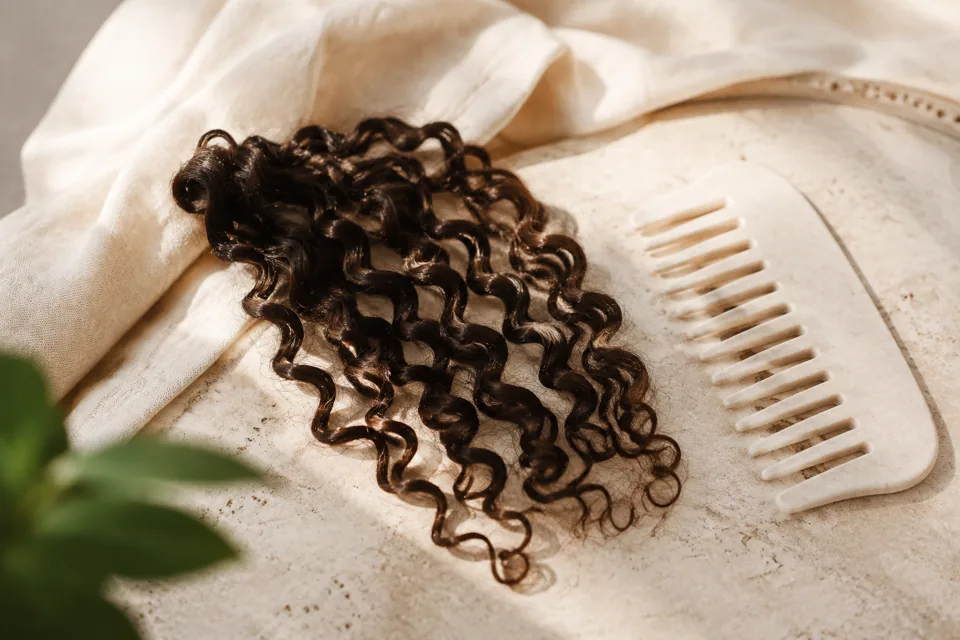
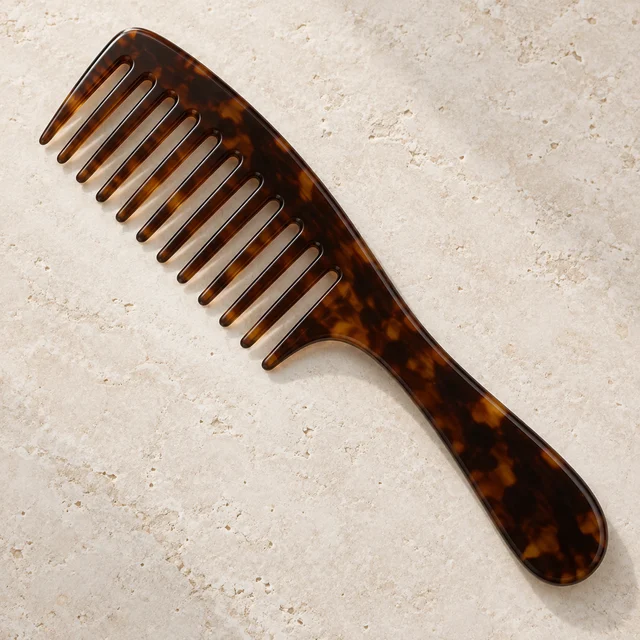
Classic wide-tooth comb
A flat comb with one row of broad, widely spaced teeth, often with a handle. The everyday choice for detangling and spreading product.
Best for: Detangling most loose hair on wash day and between washes.
Reach for a wide-tooth comb to work through ordinary tangles in stages and to spread product evenly. Curly and coily hair usually combs best wet with conditioner; straight hair combs more easily once it has partly dried.
The basic method. Your model’s own directions come first for heat, attachments and starting state.
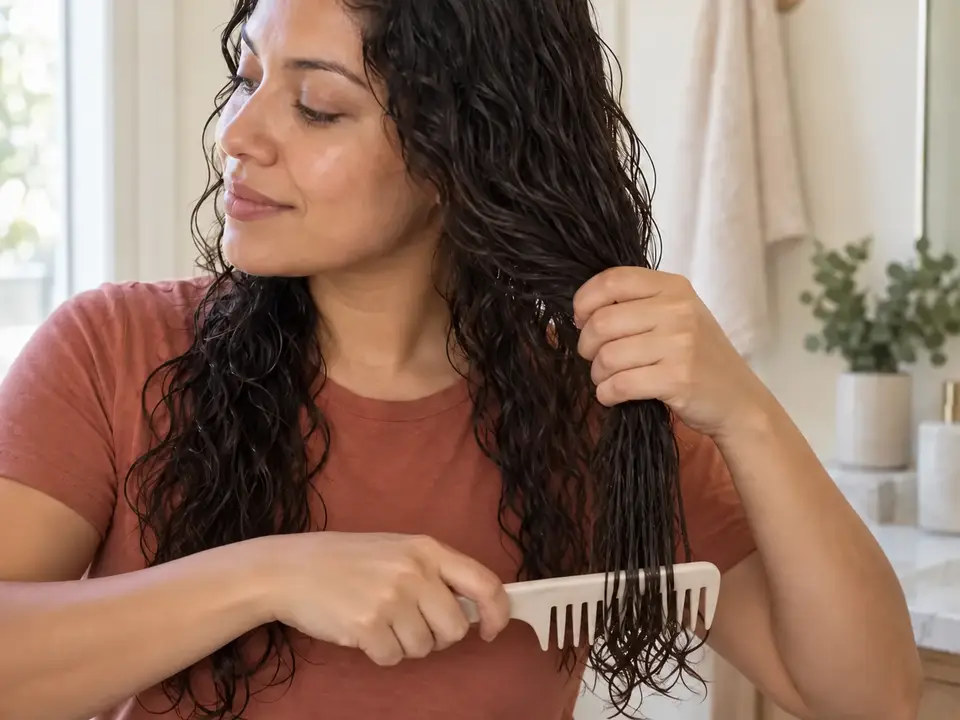
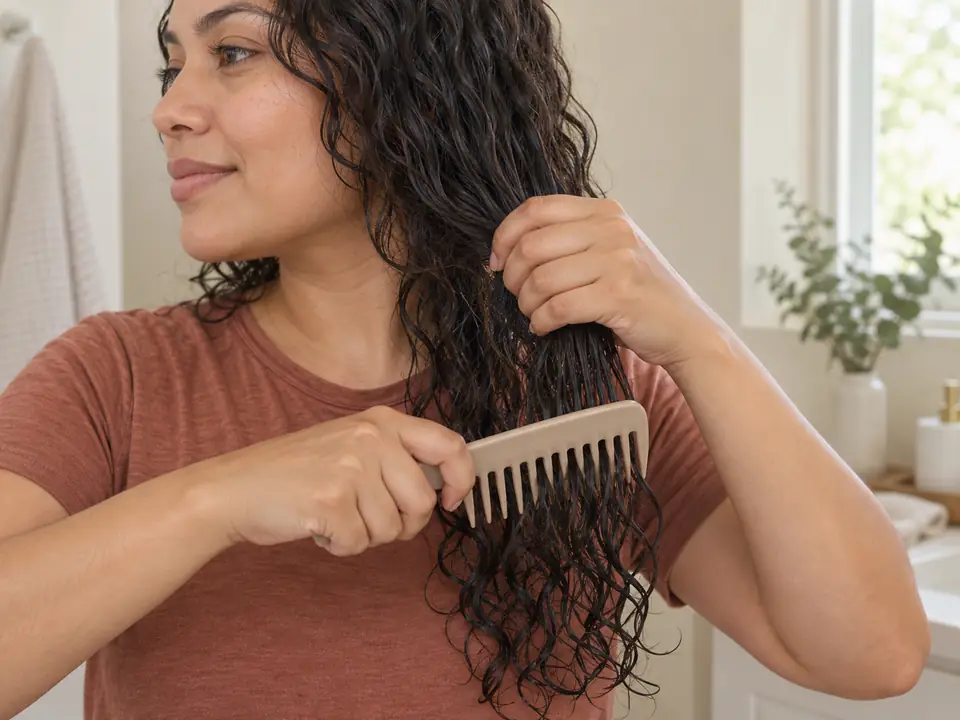
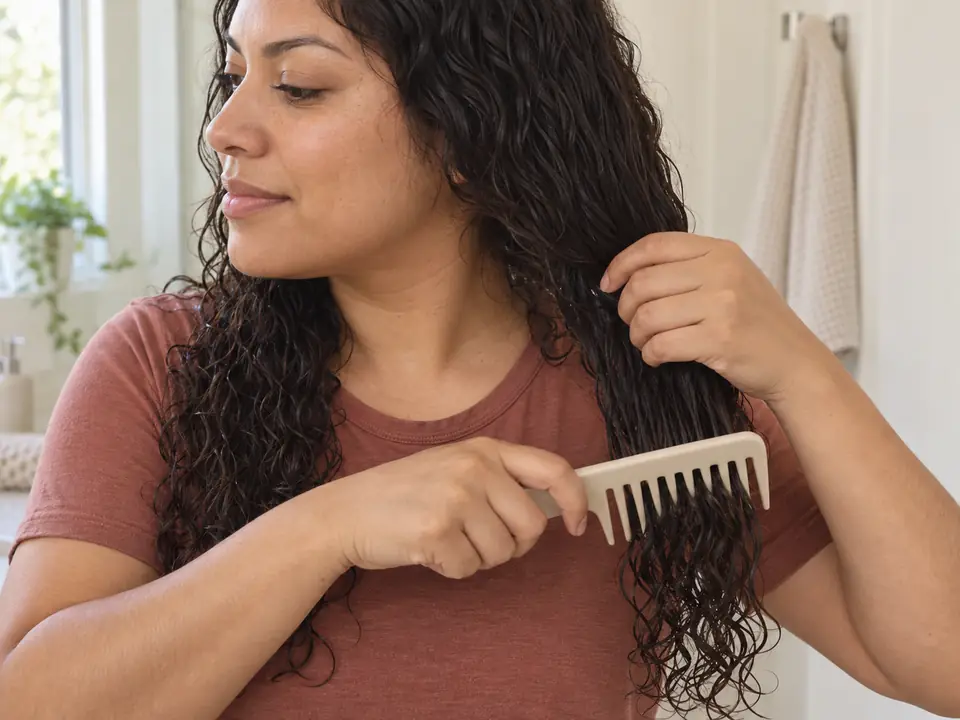
The comb passes through each section in one gentle pass without catching, you paused to use your fingers at every snag, and mostly long shed strands are left in the teeth.
What each kind does, and who it suits.
A flat comb with one row of broad, widely spaced teeth, often with a handle. The everyday choice for detangling and spreading product.
Best for: Detangling most loose hair on wash day and between washes.
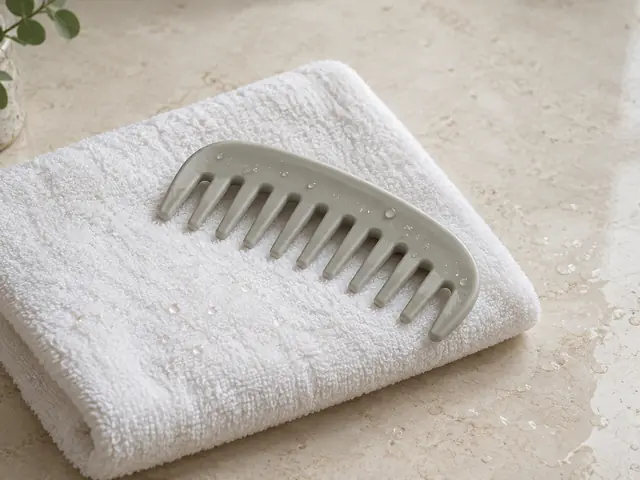
Very wide, short and sometimes slightly flexible teeth made for use with conditioner in the shower. Check the maker says it can be used wet and let it dry between uses.
Best for: Conditioner-assisted detangling of thick, curly or coily hair in the shower.
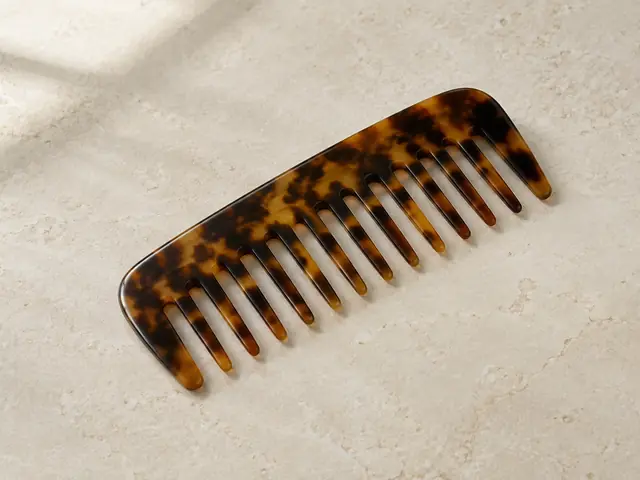
Teeth are cut from a solid sheet of acetate, horn-look resin or wood, then polished, so there is no mould line. Smoother to touch, though a well-finished moulded comb works too.
Best for: Anyone whose current comb snags, and long or easily roughened lengths.
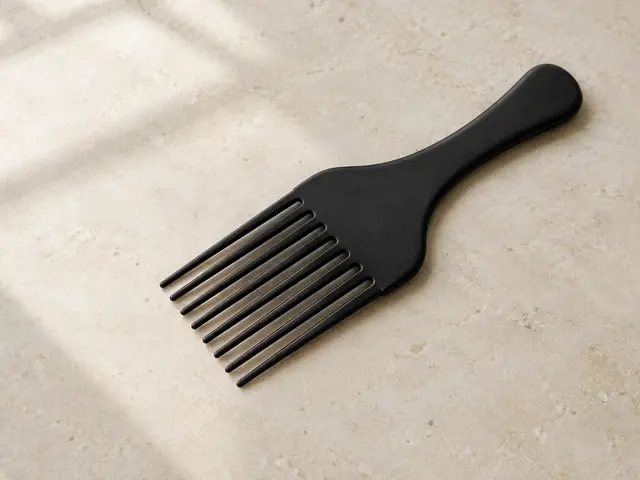
Long, widely spaced teeth on a handle, slid in near the roots and lifted outward to add shape and volume. It is a shaping tool for dry or stretched hair, not a knot remover.
Best for: Lifting and shaping dry coily hair, afros, twist-outs and braid-outs.
The controls worth understanding before you change anything.
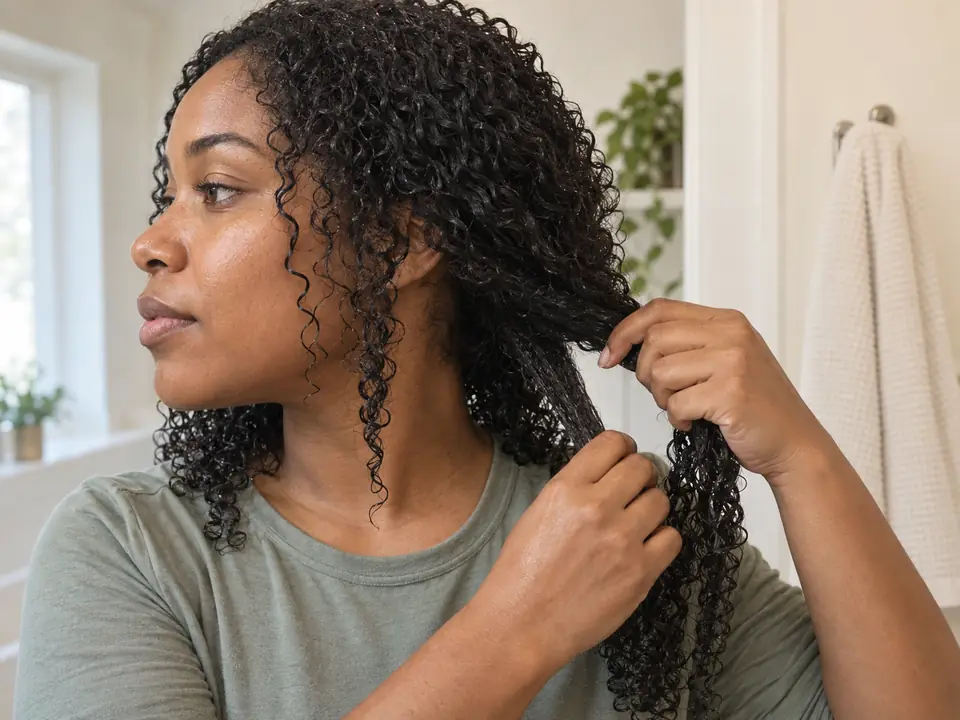
Make each section small enough that the teeth reach all the way through it. If the comb keeps stopping, halve the section before changing anything else.
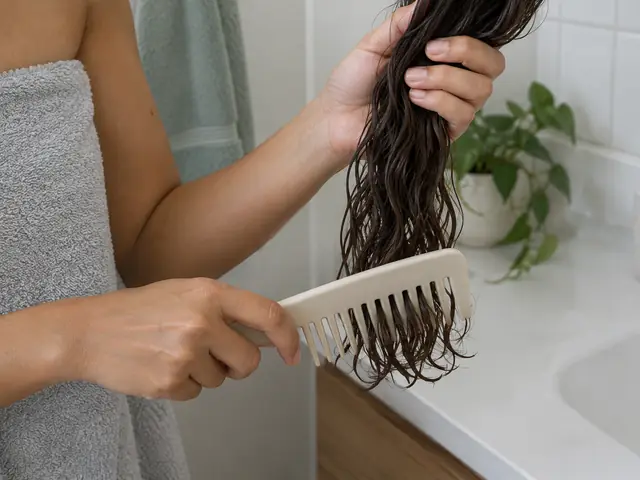
Tangles collect at the ends, so begin with short passes through only the tips. Lengthen the pass as each stage clears; a root-to-tip pass is the finish, not the start.
Let the comb move with the weight of your hand. Slow, light passes let you feel a snag early; speed and force are what turn a snag into a snapped strand.
Once the basics feel easy, these moves change the result.
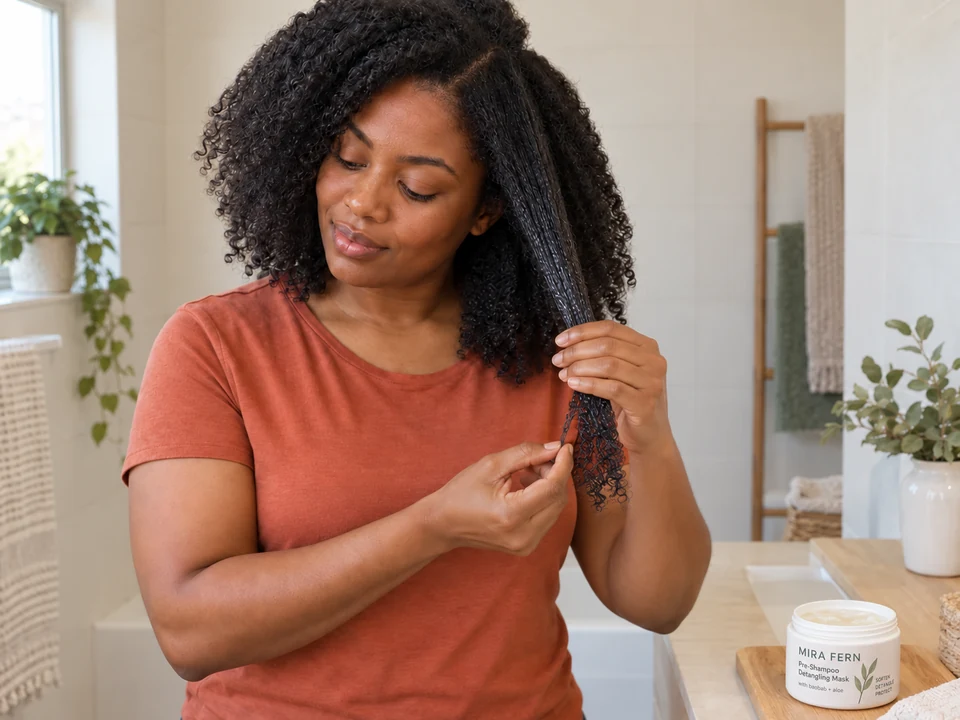
Working knots out under a pre-wash conditioner or oil coat means fewer tangles meet the shampoo. Ease snags with fingers first, then use the comb for a final clearing pass.
Full guide: Detangle before shampoo with a pre-poo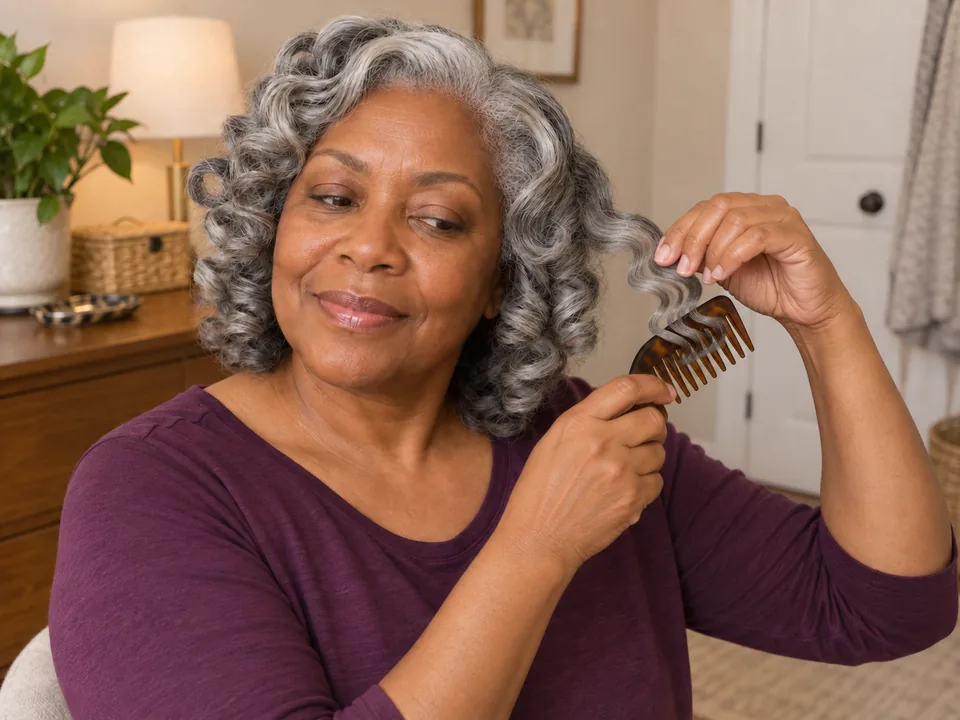
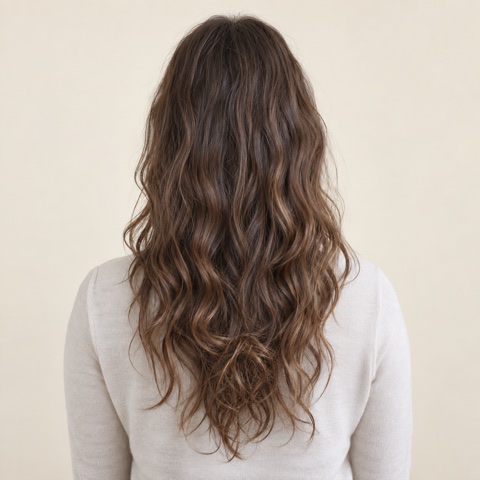
After a fully dry, cool curl or pin set, the wide teeth open each curl into a softer wave with less frizz than a brush. Work one set section at a time, ends first.
Full guide: Brush out a curl set into soft waves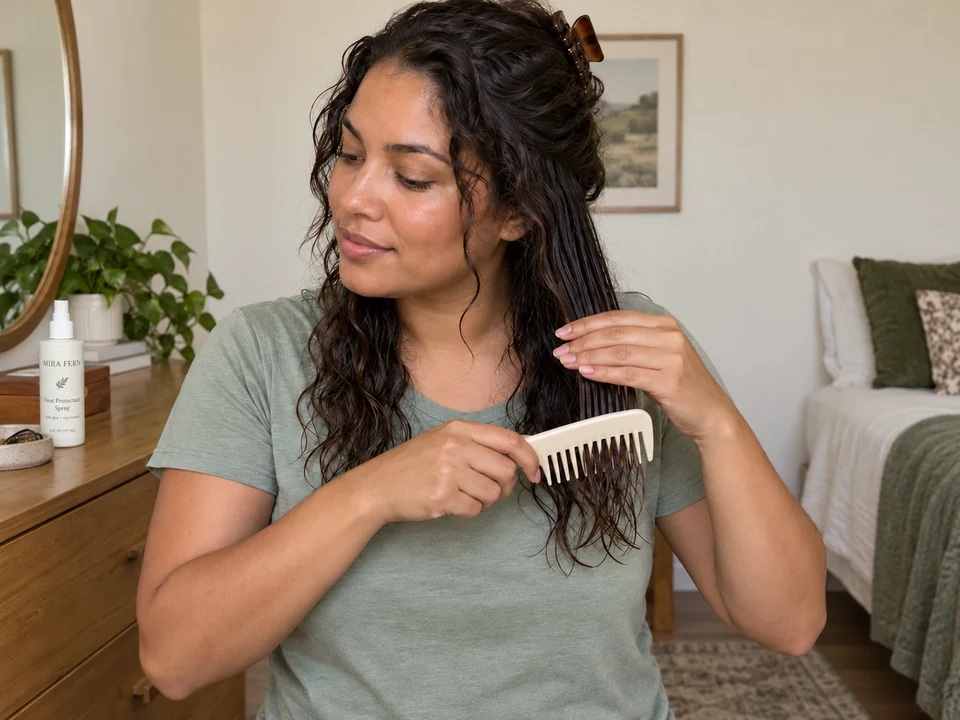
One slow pass through a damp section carries a leave-in or styling cream evenly from mid-lengths to ends. Stop at one pass if you want curls to stay grouped.
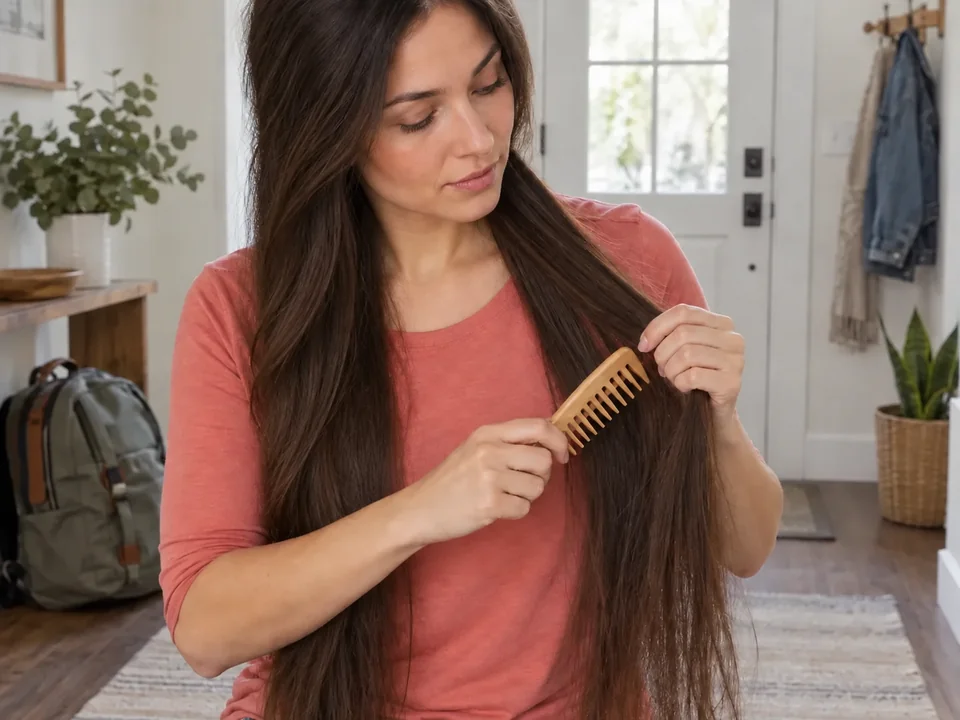
Collars, straps and seatbelts rub long hair at the nape into small knots by evening. A quick ends-first comb there before you go out stops them building.
Full guide: Prevent nape tangles while wearing long hair downWhat goes wrong most often, and what to do instead.
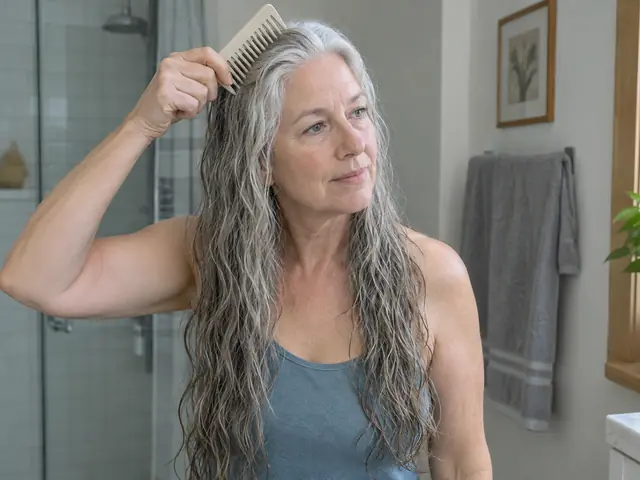
Combing down from the scalp pushes every small snag into one tight knot near the ends. Start at the tips and work upward instead.
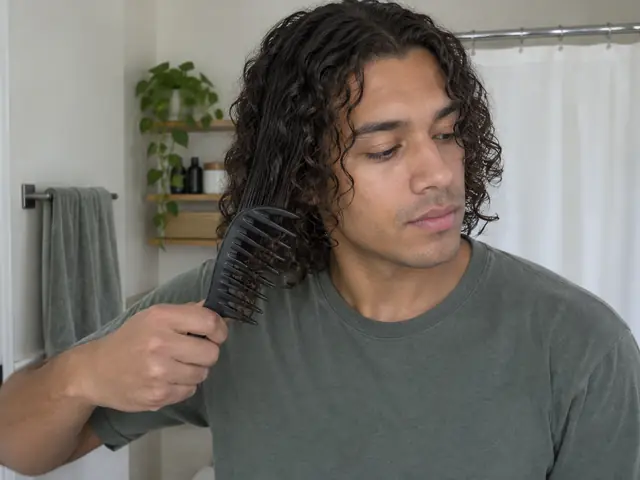
Laboratory combing studies trace breakage to the sudden tug at a snag. When the comb stops, lift it out, loosen the knot with your fingers and restart below it.
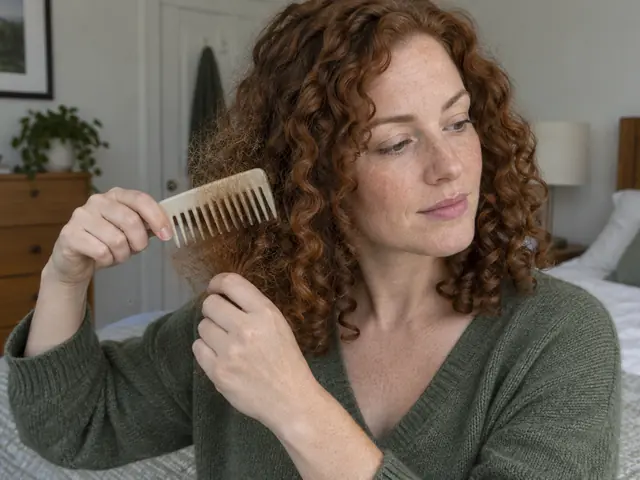
Dry combing pulls curl groups apart and invites frizz and snapping. Re-wet the section and add slip, or leave the tangle for wash day.
Claims you’ll see online, answered plainly.
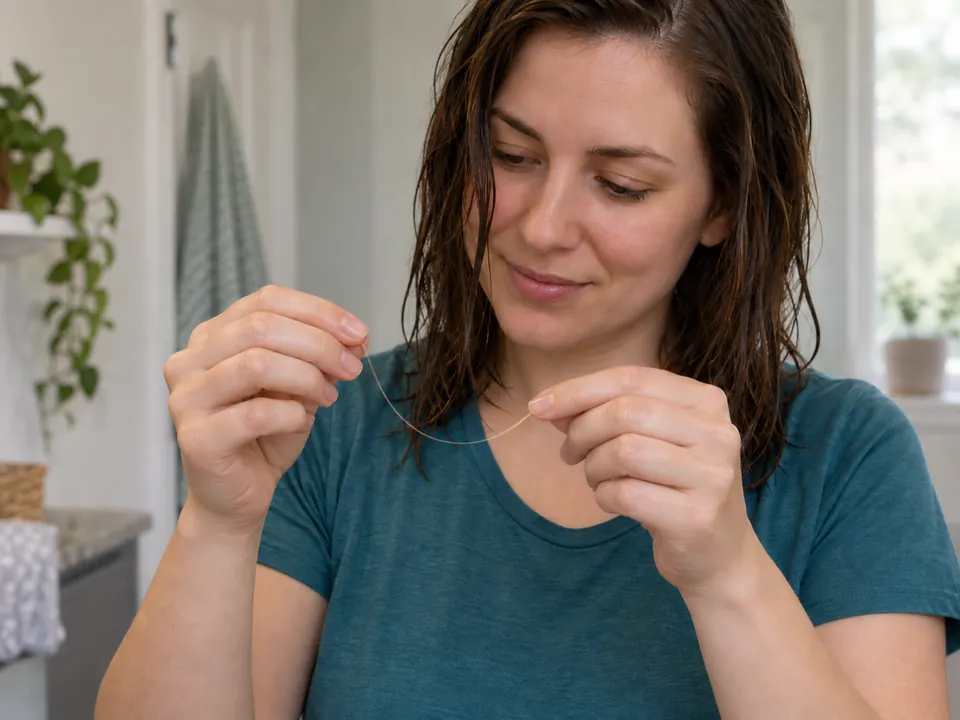
It depends on your pattern. Curly and coily hair usually detangles best wet with conditioner; straight hair is easier partly dry. Lab studies found wet combing snapped fewer ends but snagged higher up, so go slowly.
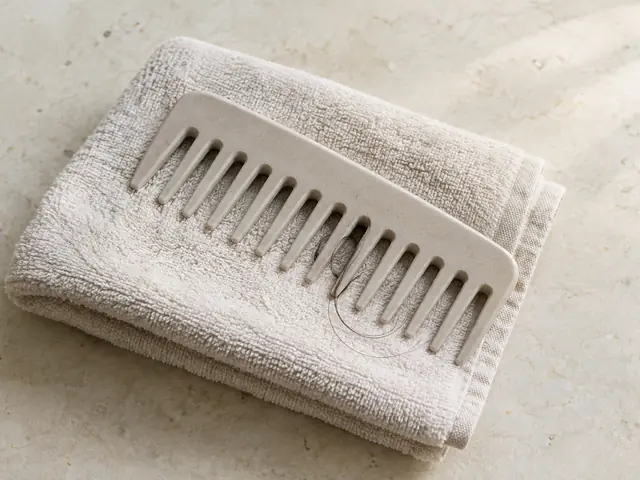
Any comb can. Breakage happens where hairs loop round each other and a tooth, then take a sudden tug. Wide teeth make fewer snags, as long as you stop when the comb catches.
Partly. A rough mould seam can catch hair, and saw-cut combs avoid that line. We found no controlled study comparing the two, and a moulded comb that feels smooth to a fingernail does the same job.
No. Conditioner adds slip, and lab work shows it reduces combing breakage, but it does not untie a knot. Short passes from the ends upward still matter.
Keep it clean, safe and working the way it should.
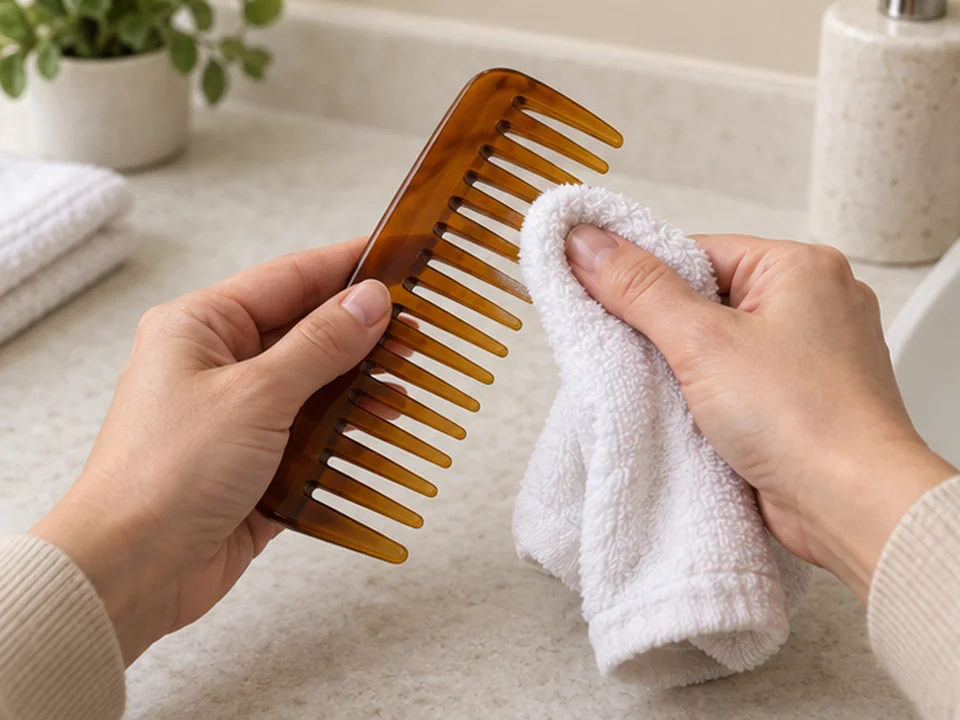
Lift caught hairs out after each use and wipe or wash product from between the teeth, following the comb's own care directions. Wood and horn-look combs usually should not soak.
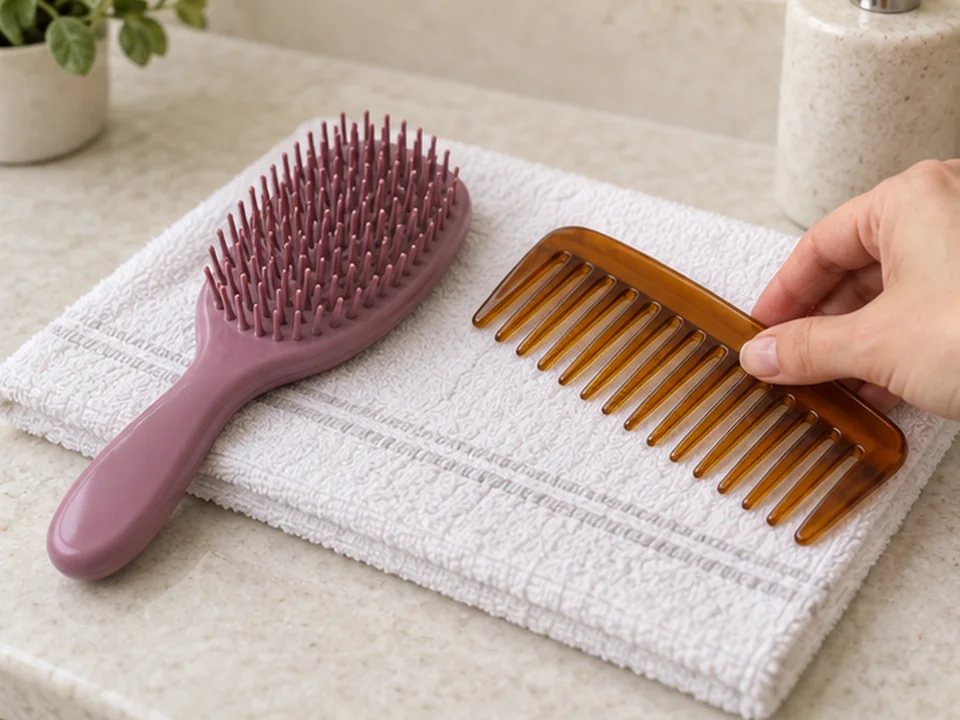
Let a washed comb air-dry completely on a towel, away from a heater, before it goes back in a drawer or shower caddy.
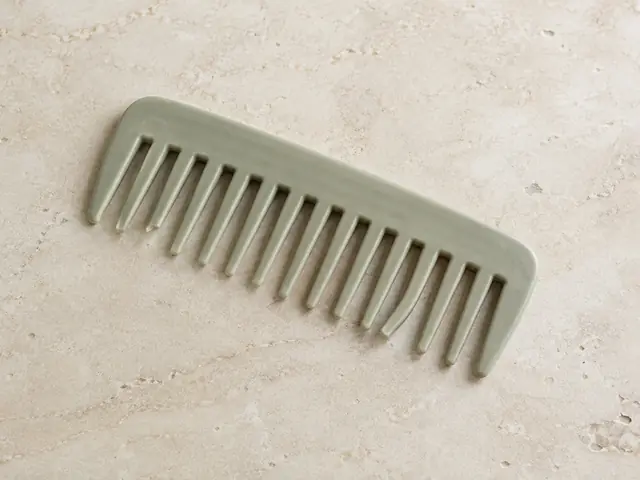
Check the teeth now and then. A crack, chip or bent tooth that catches hair cannot be smoothed away at home; replace that comb with a smooth one.
Photo-by-photo techniques that use this tool.
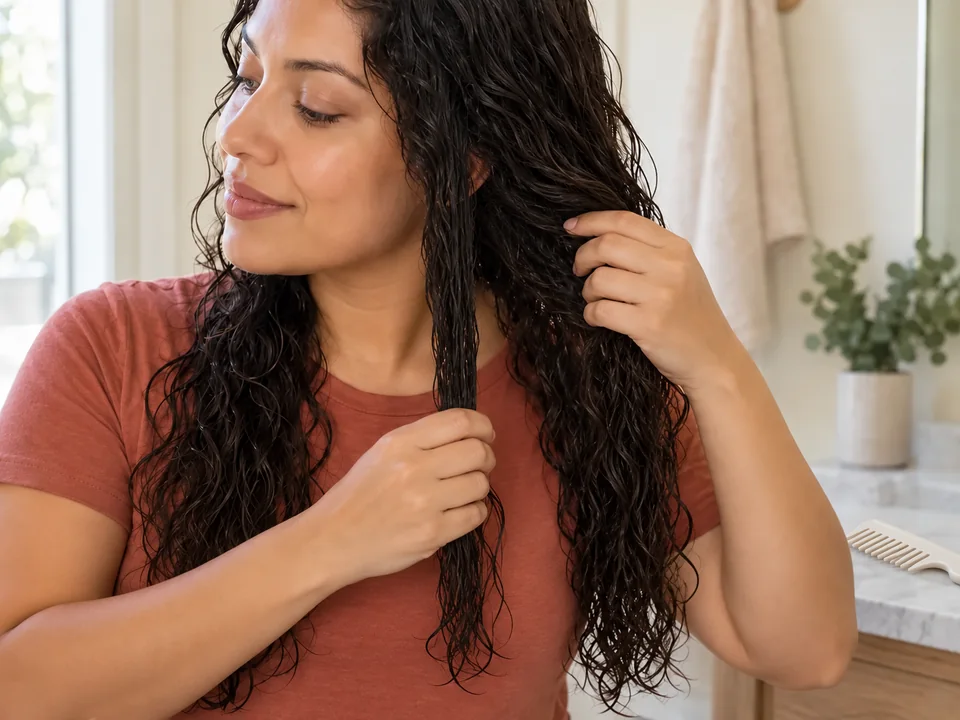
A wide-tooth comb separates tangled hair with widely spaced teeth. Starting at the ends lets you clear one small part of a tangle at a time.
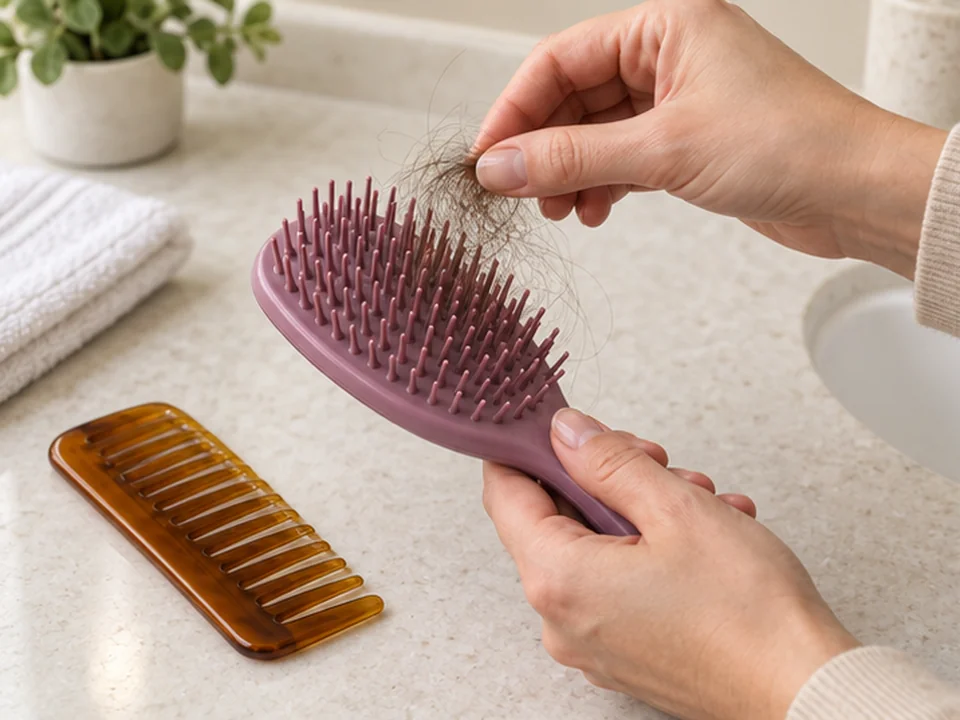
Brush and comb cleaning removes shed hair, oil and styling residue from the teeth or bristles. The tool’s care instructions determine whether to wash it or wipe it.
Add it to your tools and your routine will use what you own.
More in brushes and combs.
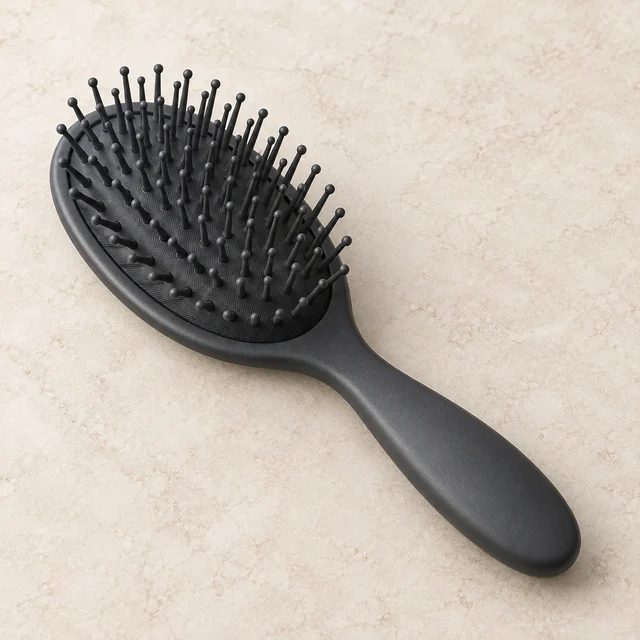
A hairbrush with flexible, spaced bristles that bend around tangles instead of hooking them. Paddle, cushion and loop brushes are related shapes with different jobs.
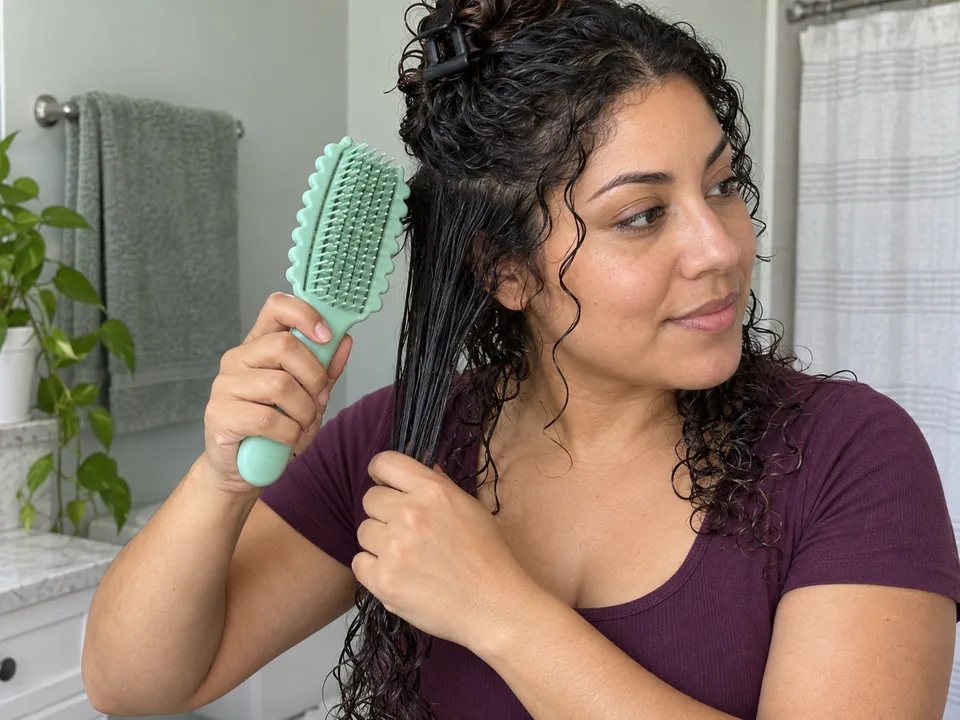
A brush with rows of smooth bristles or a shaped edge that you glide through wet, product-coated sections so the hair falls into curl groups before drying.
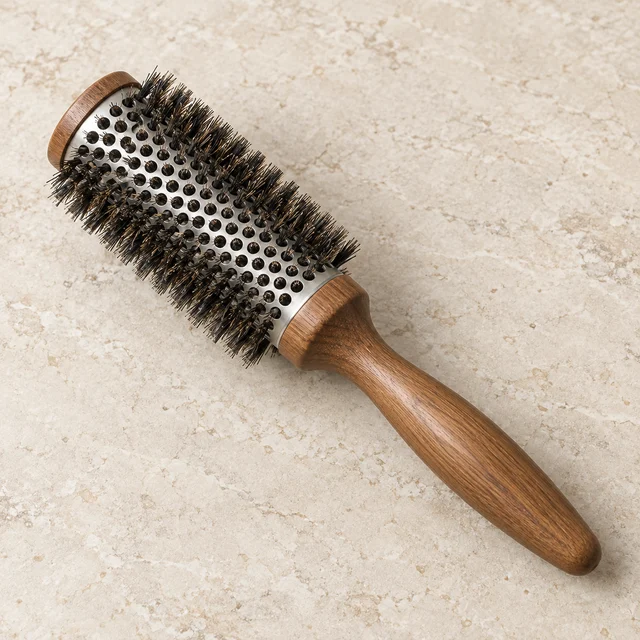
A brush with bristles set all the way around a cylindrical barrel. Held under a section while a dryer's airflow passes over it, it guides hair smooth or into a gentle bend.