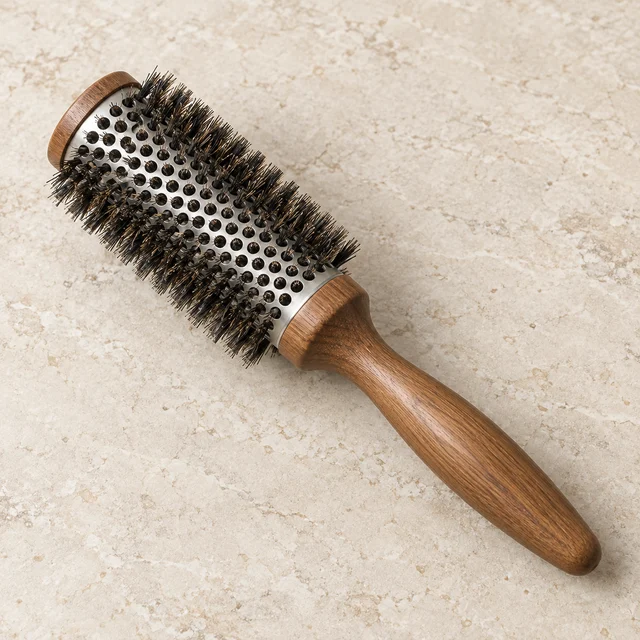
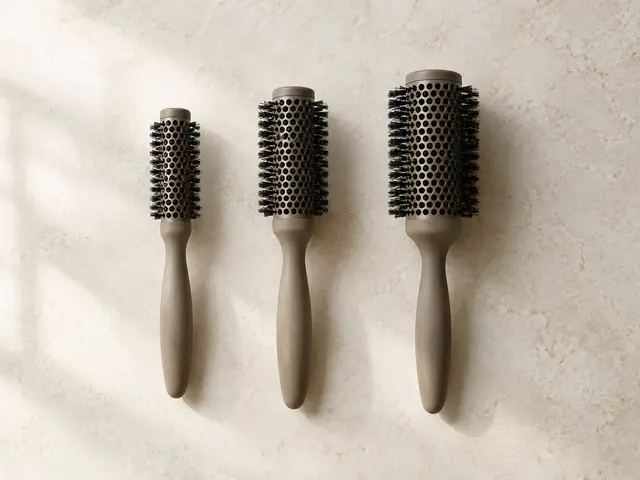
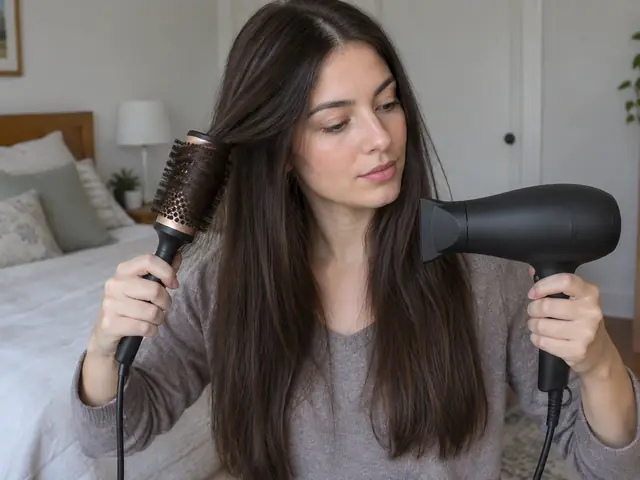
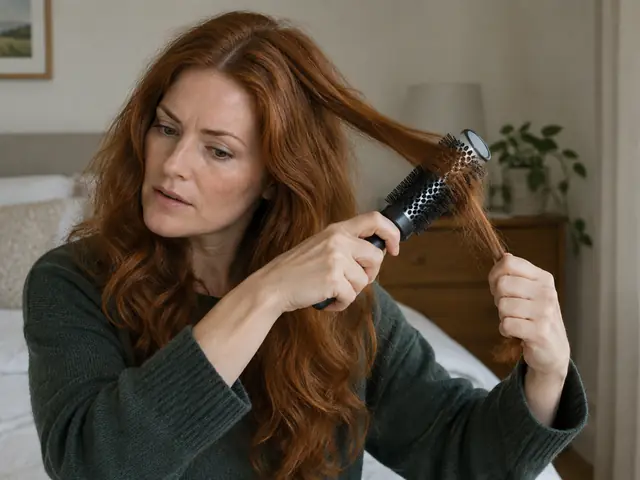
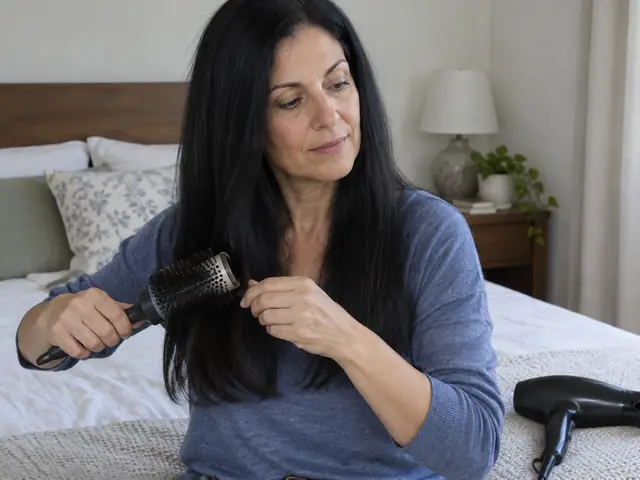
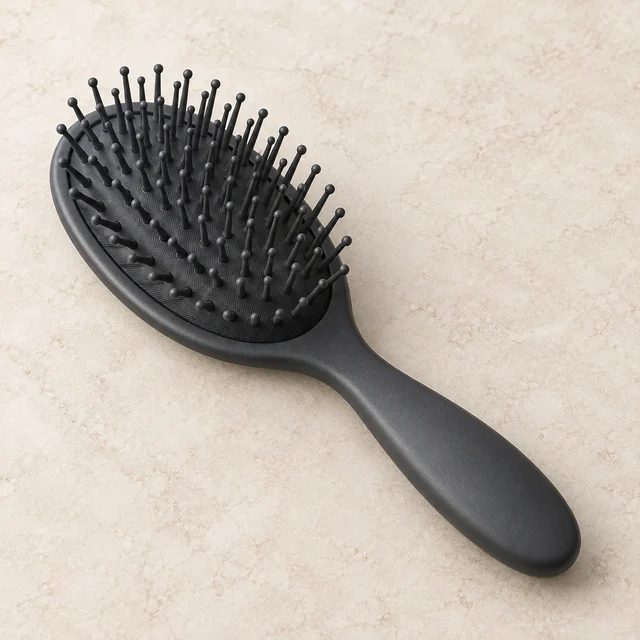
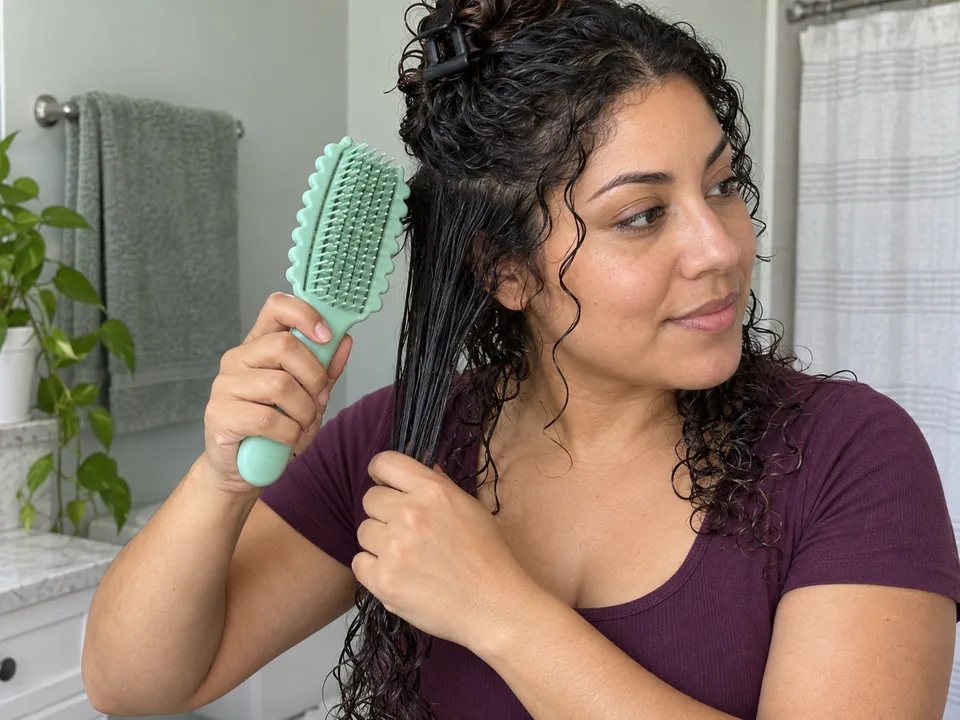
Reach for a round brush when a mostly dry section needs to lie smoother than fingers alone can get it. It supports the hair while airflow passes over it, so you control the direction and tension.
How to use it
The basic method. Your model’s own directions come first for heat, attachments and starting state.
STEP 1 OF 3
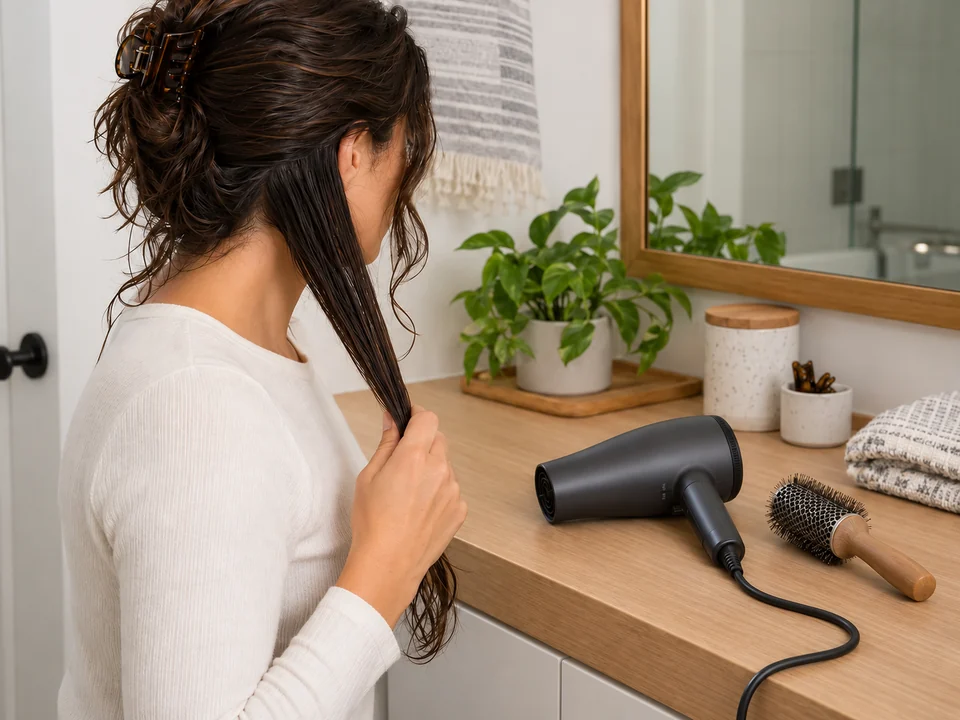
Prepare one mostly dry section
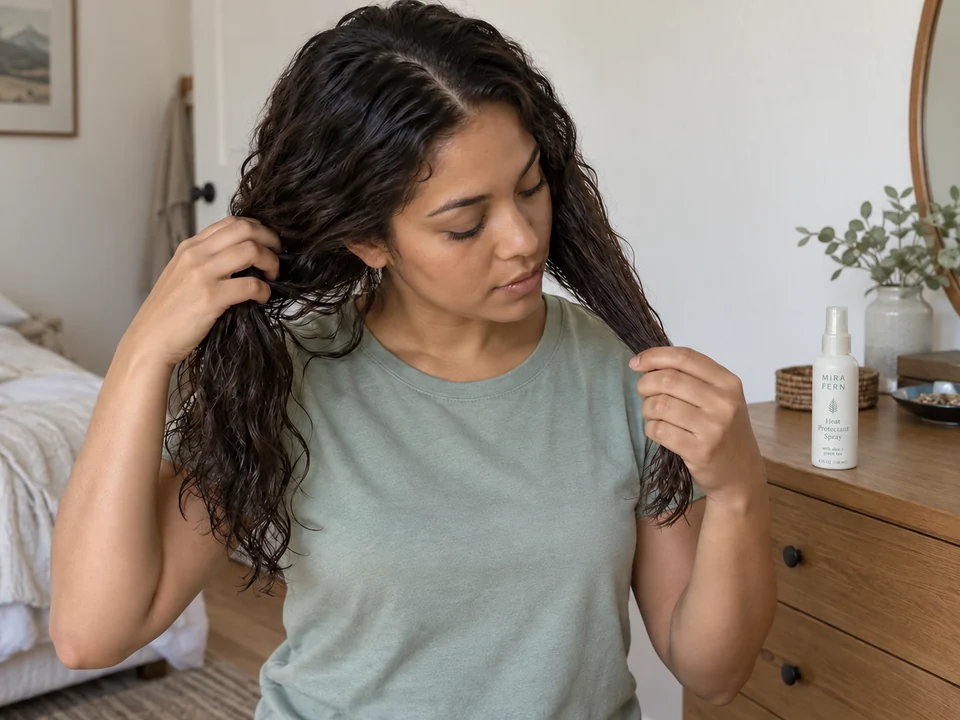
Start with detangled, mostly dry hair in a dry spot away from water.
Bring one small section forward where you can see it; clip the rest away.
Confirm your dryer's cool setting is unheated, and fit a narrow nozzle while it is off.
STEP 2 OF 3
Make one straight cool pass
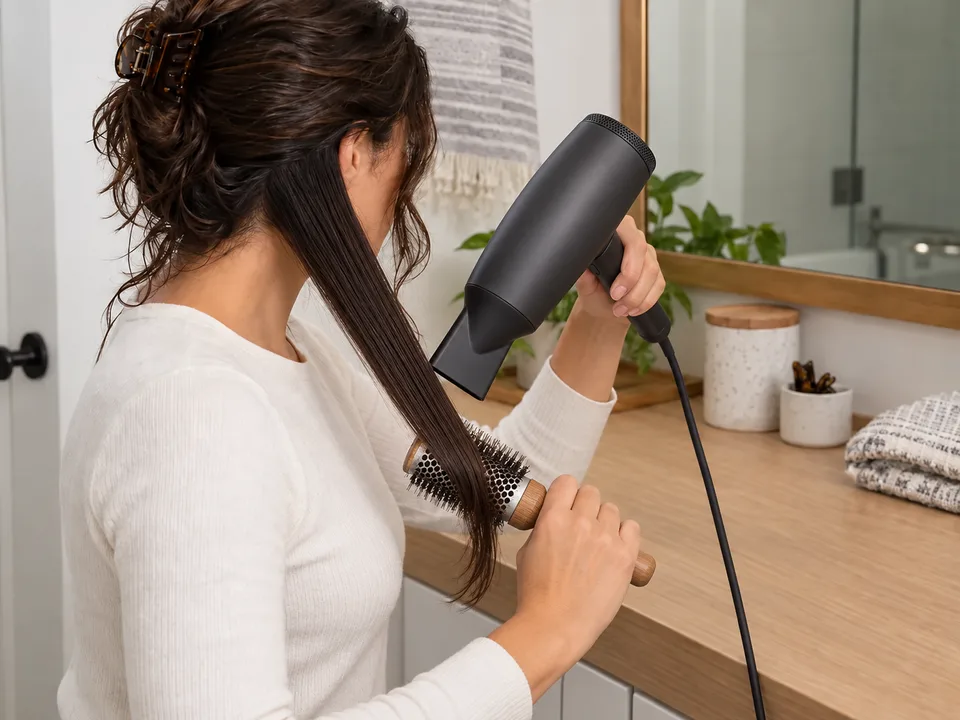
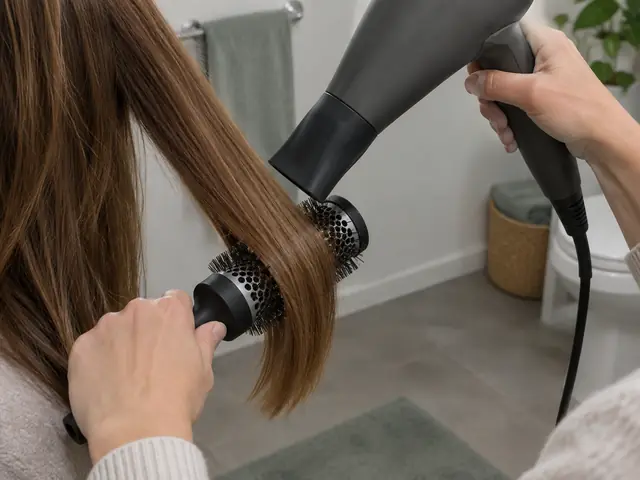
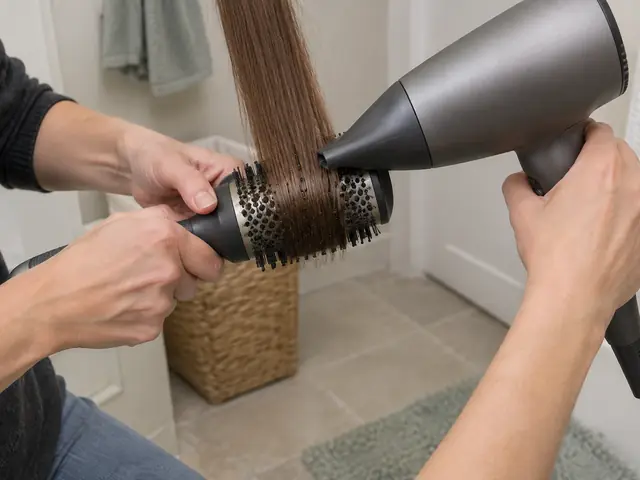
Place the brush under the section at the mids or ends, not at the scalp.
With cool air running, move brush and dryer together toward the ends in one straight pass.
Let the ends leave the bristles; do not wind the section around the barrel.
STEP 3 OF 3
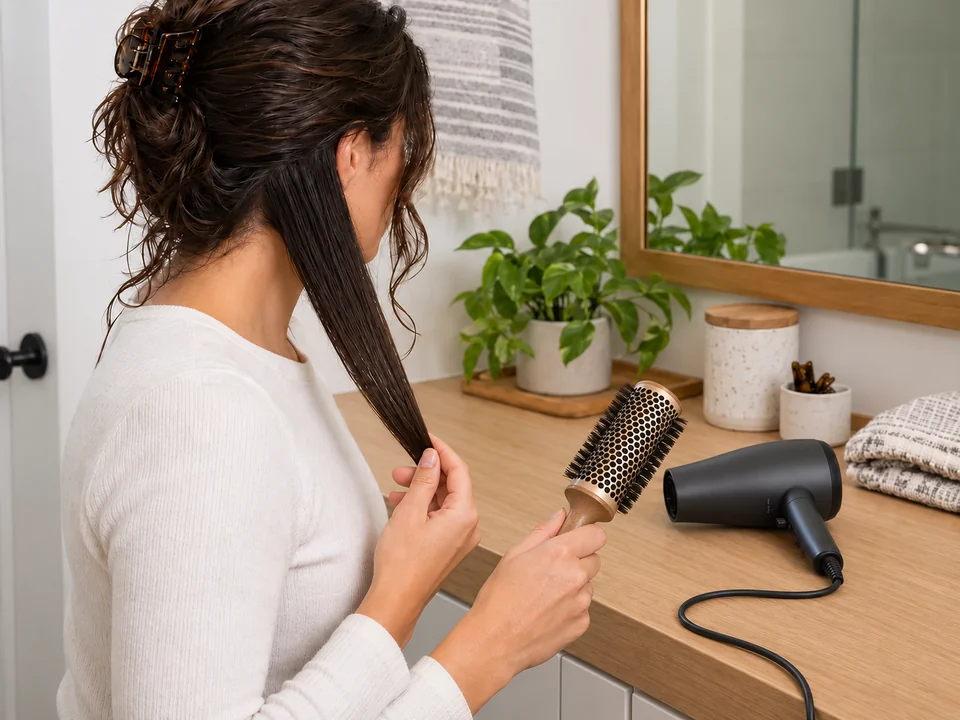
Clear the brush and check
Switch the dryer off before changing sections, setting it down or freeing a snag.
Check the section lies loose and dry. Repeat light passes only where it needs them.
If hair catches, stop, put the dryer down and ease the strands free rather than pulling.
You’re using it well when…
Each section slides off the barrel without winding or pulling, the surface lies smoother than before, your scalp never felt a tug, and the dryer was switched off before every change of section.
Types, sizes and attachments
What each kind does, and who it suits.
Barrel diameter
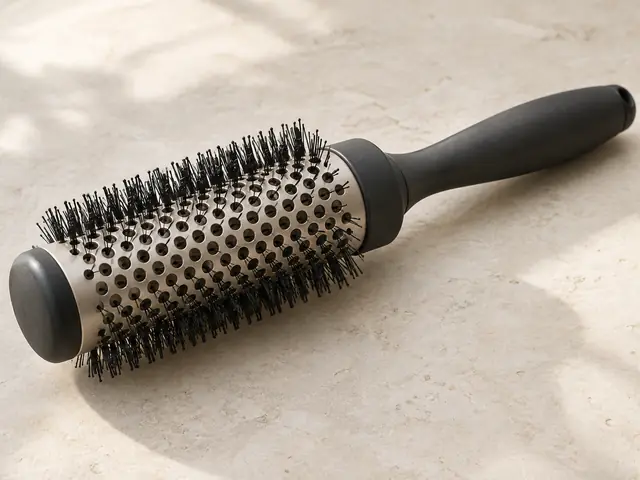
Small barrels make a tighter bend and give lift on shorter lengths. Large barrels hold more hair and give a smoother, straighter finish with a softer bend.
Best for: Small for short hair and fringes; large for long hair and smoothing.
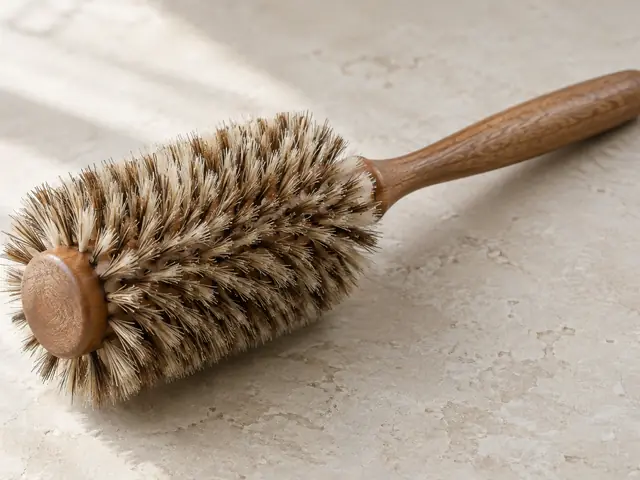
Boar bristle
Dense natural bristles that grip fine hair well and give a polished surface. They can struggle to get through thick hair.
Best for: Fine to medium hair and a polished, smooth surface.
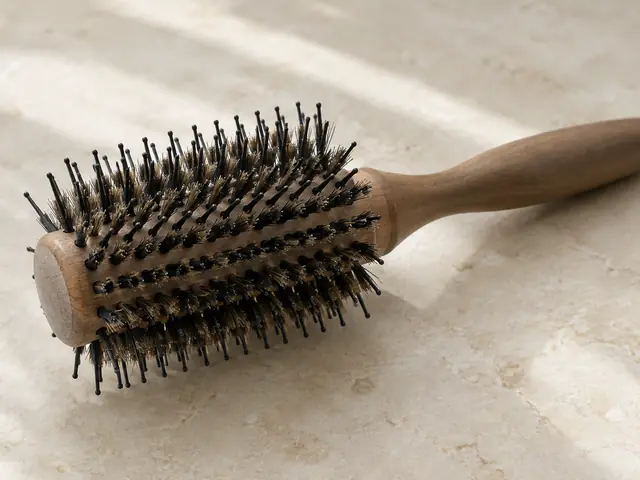
Nylon or mixed bristle
Stiffer nylon pins separate and hold more hair; mixed brushes pair them with shorter natural bristles for grip and smoothness.
Best for: Thick or coarse hair, or an all-round first round brush.
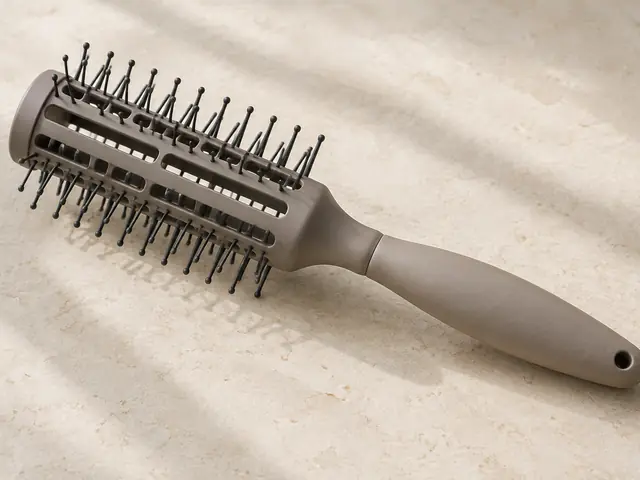
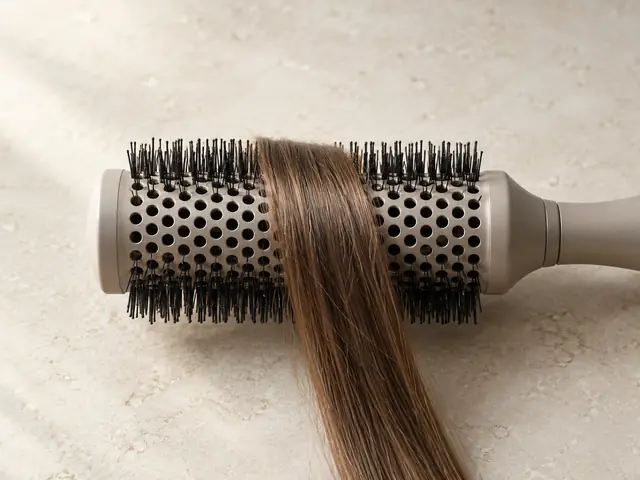
Vented barrel
An open, slotted barrel that lets air pass through the section. It dries faster and holds hair more loosely, so it bends less.
Best for: Quick drying and light smoothing rather than a defined bend.
Thermal metal or ceramic barrel
A barrel that warms in the airflow and holds that heat against the section, so it sets shape faster. It adds heat contact; our step-by-step guide does not teach heated use.
Best for: Experienced warm-air blow-drying; not part of our cool-air method.
Settings that matter
The controls worth understanding before you change anything.
Section size
Take a section no wider than the barrel and thin enough that you can see bristles through it. Bigger sections dry unevenly and are the ones that tangle.
Tension
Use just enough grip to keep the section smooth over the brush. If your scalp feels a pull or the brush drags, loosen your hold or take a smaller section.
Airflow direction
Fit a narrow nozzle and aim it along the section toward the ends, over the outside of the brush. Keep a gap between nozzle and brush and keep both moving.
Advanced techniques
Once the basics feel easy, these moves change the result.
Over-direction, explained
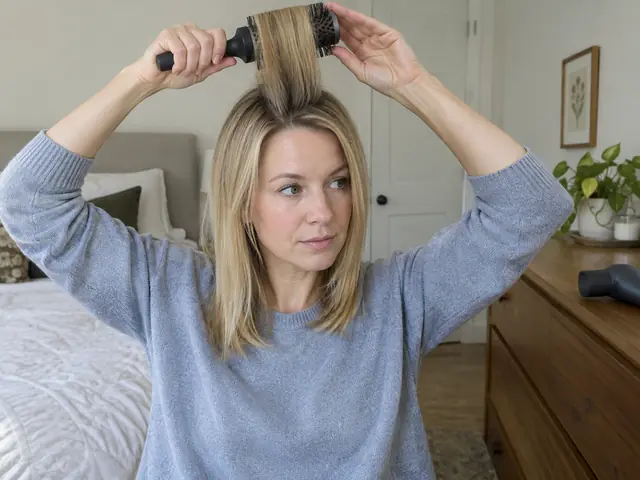
Stylists lift a section up and away from where it naturally falls before brushing it, which adds lift at the root. It brings the barrel near the scalp and usually uses warm air, so it goes beyond our cool-air guide.
Get a bend without a hot barrel
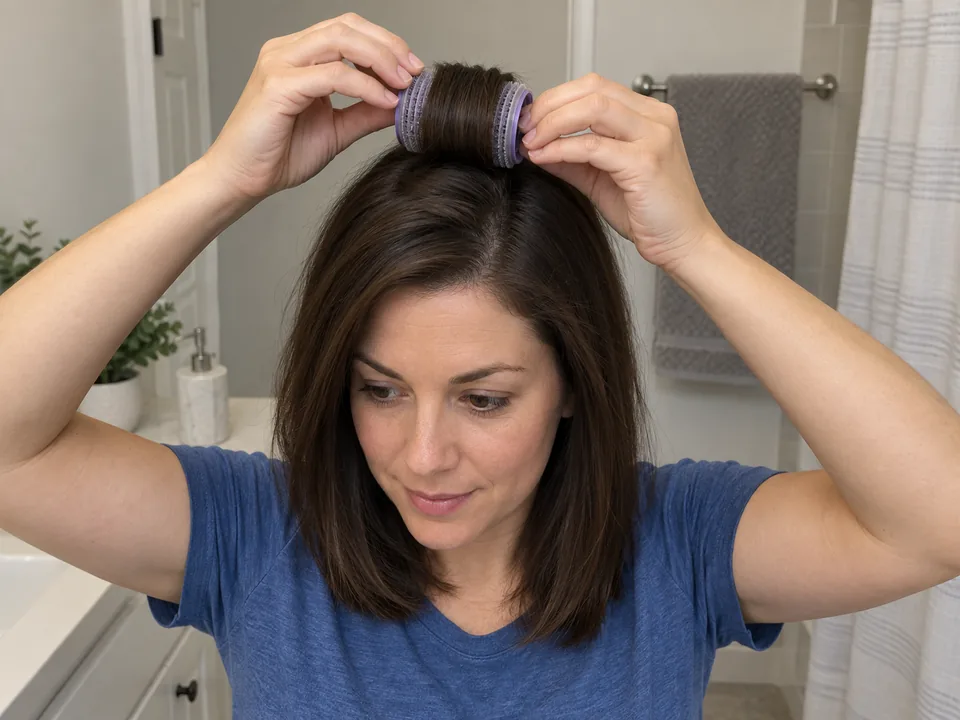
If you want lift or a bend that a straight pass will not give, roll a dry section onto a self-gripping roller and let it cool before unwinding.
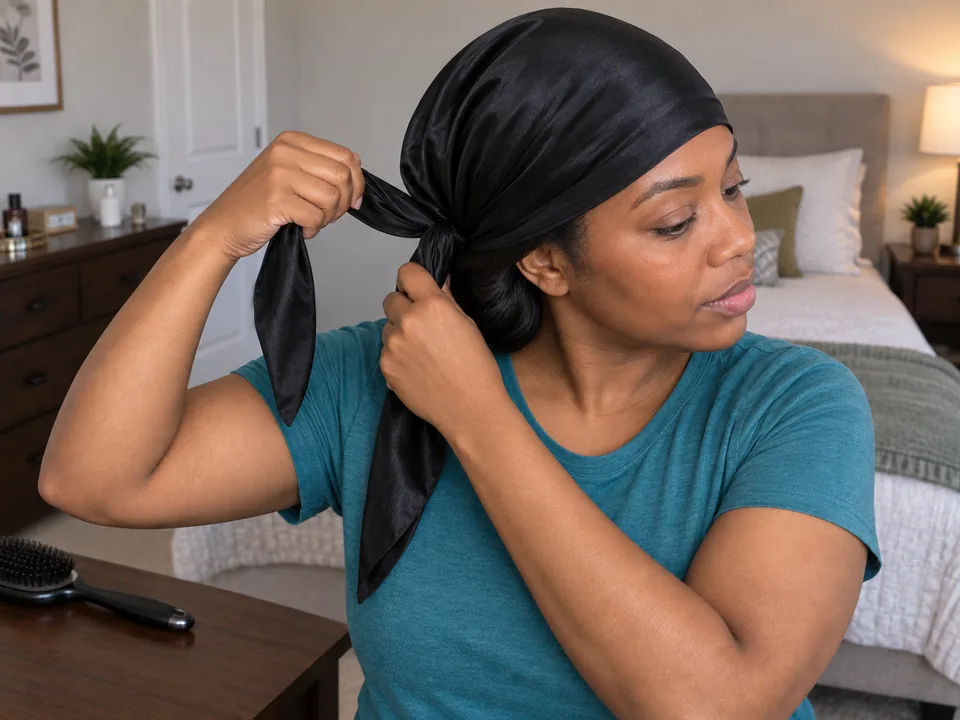
A smoothed style lasts longer if it is fully dry before you wrap it loosely under a smooth scarf for sleep, instead of being brushed out again the next morning.
What goes wrong most often, and what to do instead.
Winding the section round and round
Each turn buries the layer beneath it, so the hair has no clear way off. Keep the pass straight over the outside of the barrel and let the ends slide off.
Yanking a brush that has caught
Pulling tightens the tangle and can snap hair. Switch the dryer off, set it down, and unwind the outermost strands first, working inward.
Pressing the nozzle onto the brush
A nozzle held against the bristles blasts one spot and can warm the barrel. Keep a small gap and move the dryer along with the brush.
Myths and what’s actually true
Claims you’ll see online, answered plainly.
It depends
“A bigger round brush gives more volume.”
It depends on your length and the angle. Smaller barrels usually give more lift and bend on shorter hair; larger barrels smooth long hair with a softer bend. Lifting the section matters more than size.
Myth
“Ceramic barrels dry your hair from the inside out.”
Myth. A ceramic or metal barrel warms in the airflow and holds that heat against the section, which can speed a heated blow-dry. Hair still dries from the surface; inside-out and ion claims are marketing, not independent findings.
Partly true
“Boar bristles spread scalp oil, so more brushing means shinier hair.”
Partly true. Natural bristles can carry some scalp oil down the lengths and give a polished surface. But more is not better: dermatologists warn that 100 strokes a day can cause split ends.
Myth
“If a round brush gets stuck, you will have to cut it out.”
Usually a myth. With the dryer off and set down, free the outermost strands first and work inward; pulling through the middle tightens it. If it will not loosen without pain, ask someone to help before cutting.
Care and when to replace it
Keep it clean, safe and working the way it should.
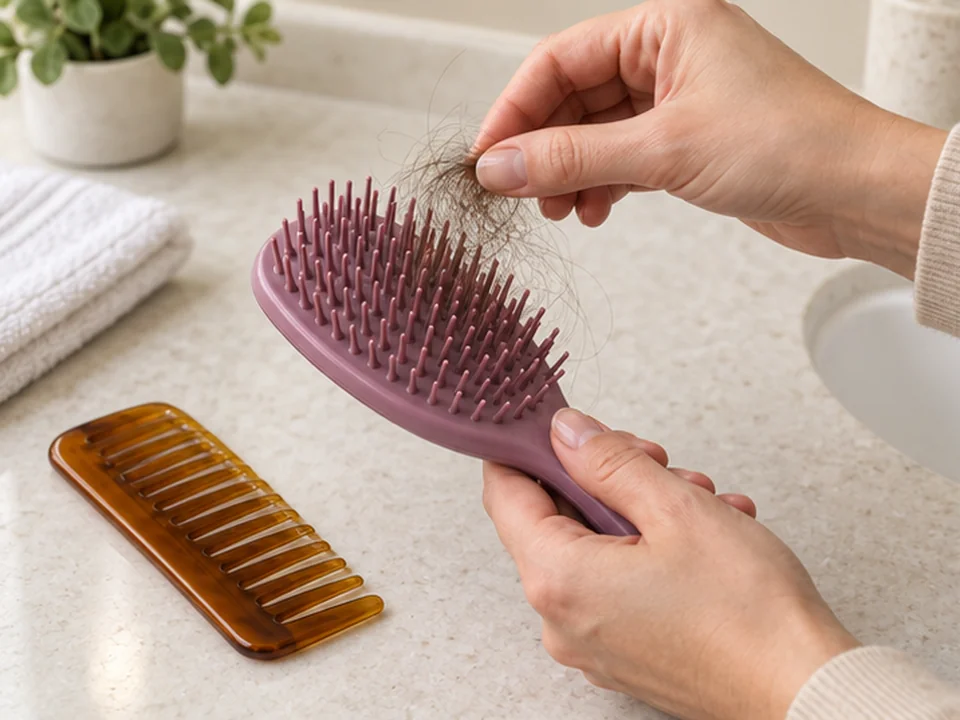
Lift out trapped hair after each use
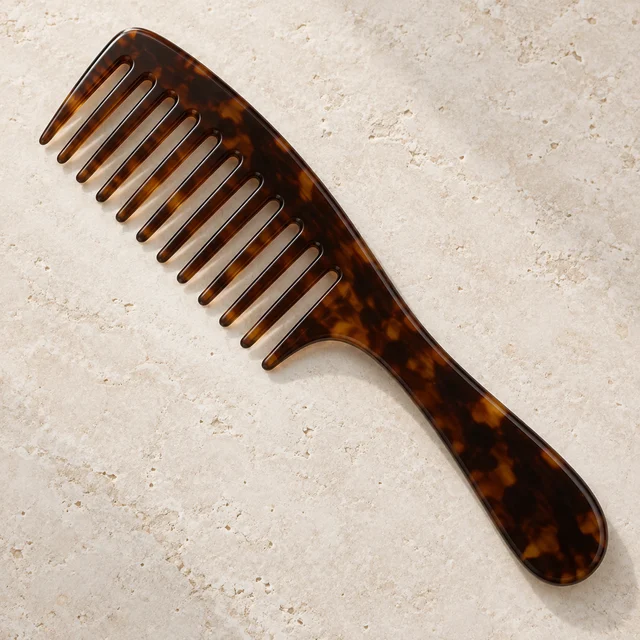
Hair left in the bristles makes the next section more likely to catch. Lift it out gently with your fingers or a comb tail once the brush is cool.
Wash as the materials allow
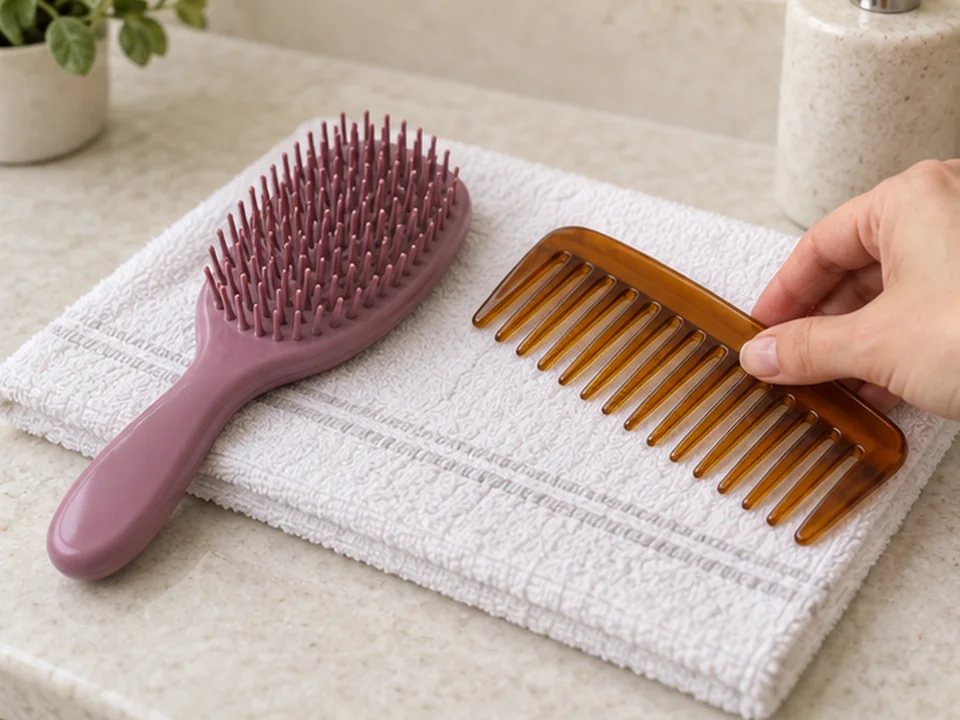
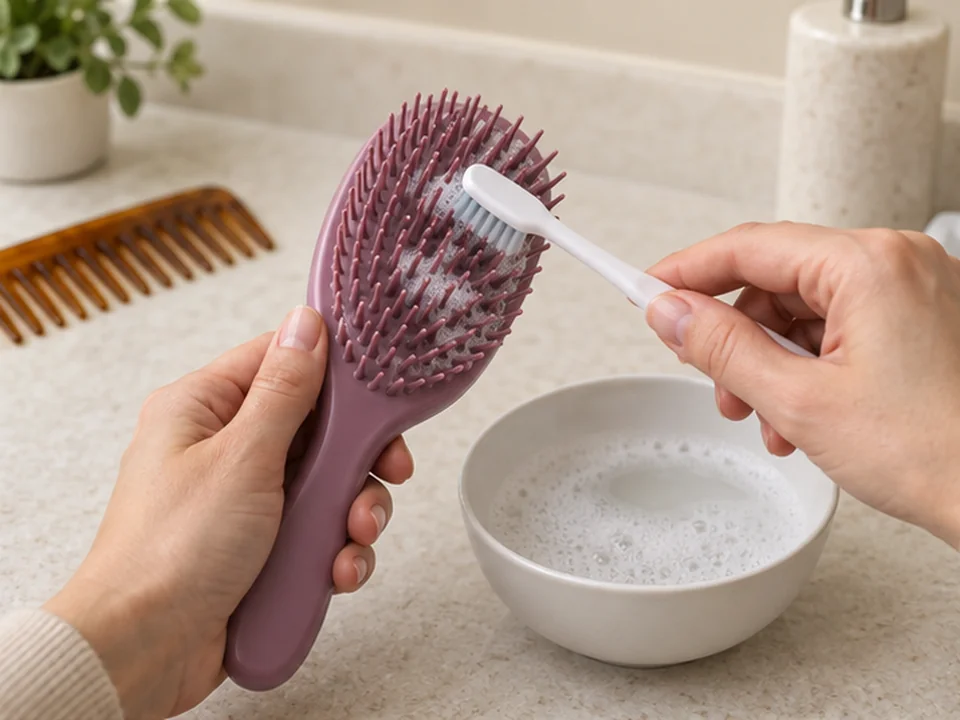
Nylon and plastic usually tolerate a wash; natural bristles and wooden handles dislike soaking. Follow the brush's care directions and let it dry fully, bristles down or on a towel.
Retire it when the bristles fail
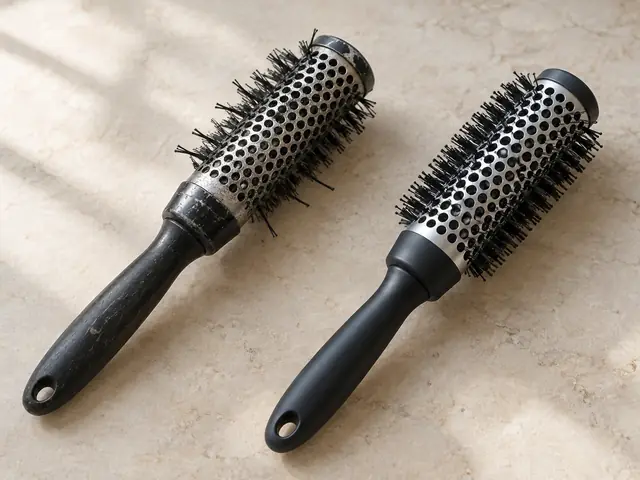
Replace a round brush once bristles are bent, melted, loose or missing, or the barrel coating is chipped. Damaged bristles catch and snag instead of guiding hair.
A material label is one piece of information. The setting, repeated exposure, surface condition and how comfortably you can use the tool matter too.
Ceramic and ceramic coatings
A ceramic label can describe a coating over a different base material, on plates, barrels, bristles or a dryer’s heating element. Check the actual construction in the specifications. It does not establish a suitable setting for fine or treated hair.
Tourmaline and ionic claims
Treat these as features to check in the model’s specifications, not evidence that a tool repairs damage or guarantees hydration. Choose for the job, controls and handling before a material label.
Have one already?
Add it to your tools and your routine will use what you own.