Hair Care Guides · A simpler routine

Make your hair routine easier to repeat.
Keep what helps and set extras aside.

A crowded shelf and a long wash day can make hair care feel like a project. Start with the products you already use, make room for gentle detangling, and choose a finish you have time to maintain.

Your personal hair-care planProduct choices and a routine that fit your hair, time and budget.$49one-timeStart my consultation
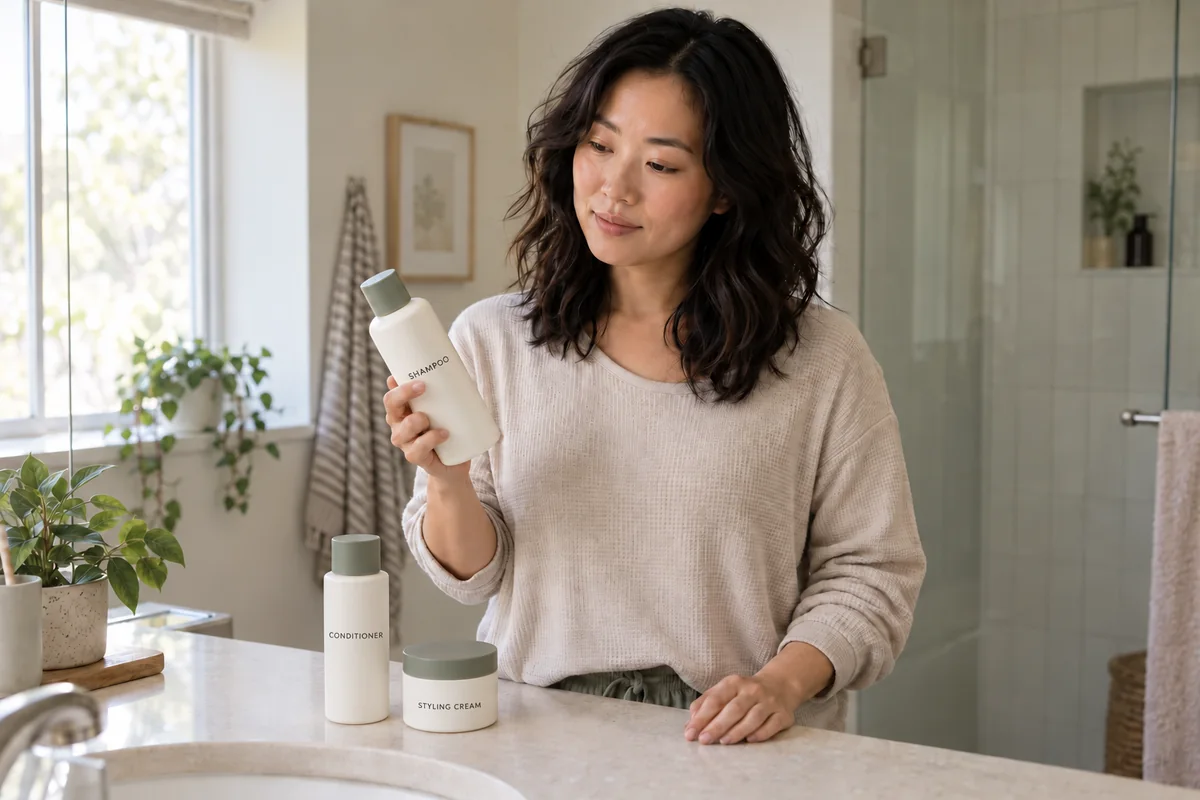
A woman holds a shampoo bottle beside a conditioner bottle and styling-cream jar.
Keep your everyday products together and extras out of the way.

Keep washing, conditioning and styling distinct

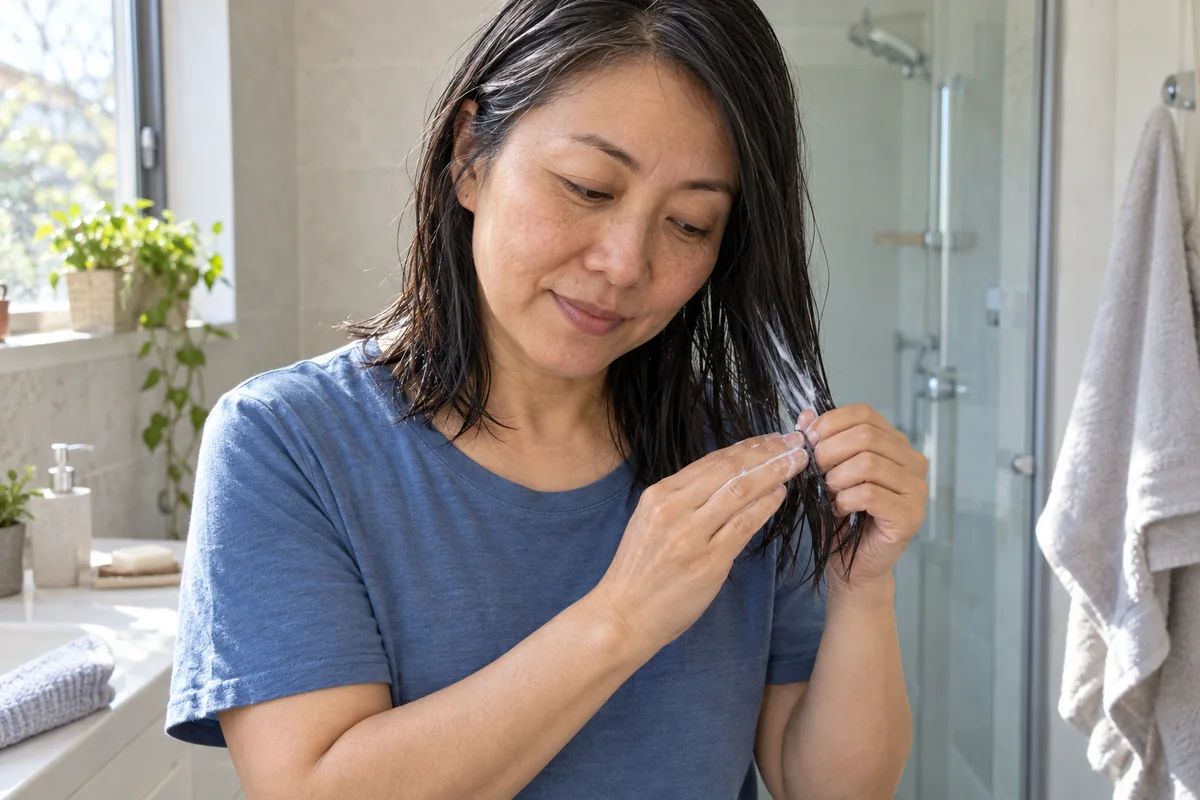
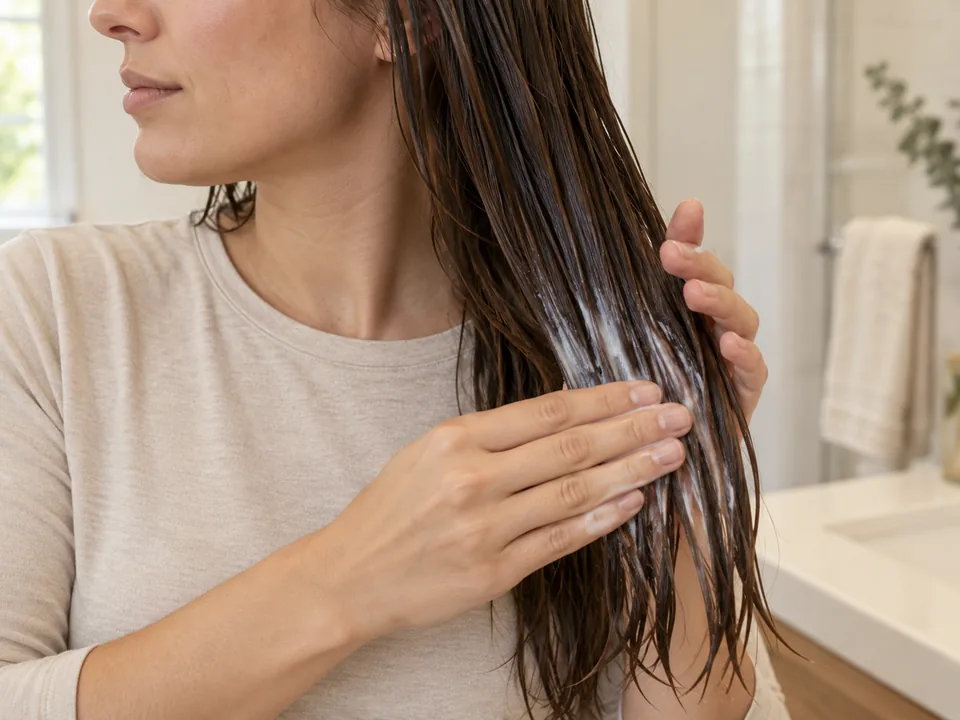
A woman applying conditioner to her damp lengths and ends.

Begin with shampoo and conditioner

  • Use shampoo to clean the scalp, then rinse it out. Follow with rinse-out conditioner on the lengths and rinse again.
  • Keep a wash schedule if it helps you plan. Adjust it when your scalp gets oily or dirty sooner, rather than stretching it to match someone else’s routine.
  • Add a leave-in or styler for a specific job, such as rough ends or curls you want to hold. Keep any prescribed scalp treatment on its own schedule.
A woman arranging her damp hair before letting it air dry.

Choose drying you have time for

Air-drying leaves your hands free, but roots and inner lengths may take a while to dry. Choose it when you can leave the hair loose until dry. On busy mornings, skip elaborate finishing or move wash day to a less rushed time.

Guide: Air-dry your hair

Reduce the part that takes too much effort

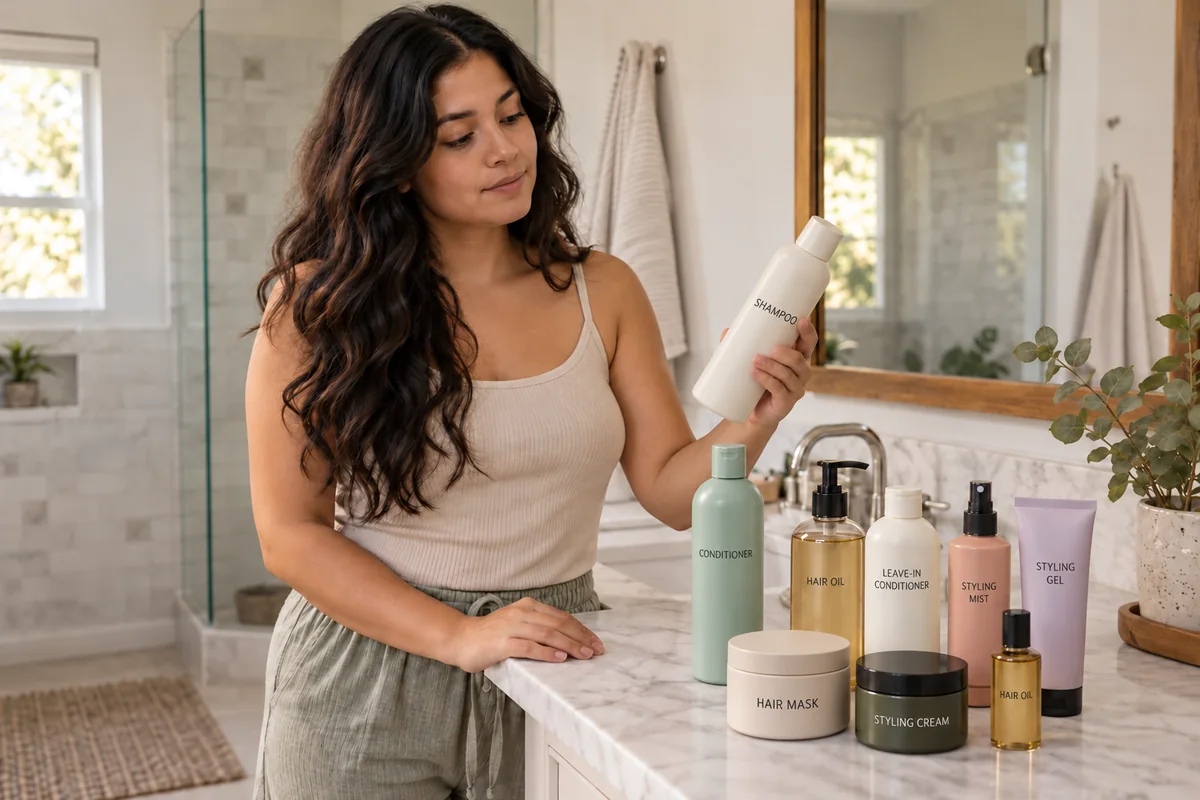
A woman holds a shampoo bottle beside eight other hair-care bottles and jars.

You’re unsure which bottles to use

  • Group what you own into shampoo, conditioner, leave-ins and stylers. Put products for the same job beside each other so duplicates are easy to spot.
  • Choose one familiar shampoo and conditioner for your next wash. Keep an optional product if you can say what you want it to do, such as hold curls or soften rough ends.
  • Set the other cosmetic extras aside without throwing them away. Put your chosen bottles, comb and towel within reach before washing.
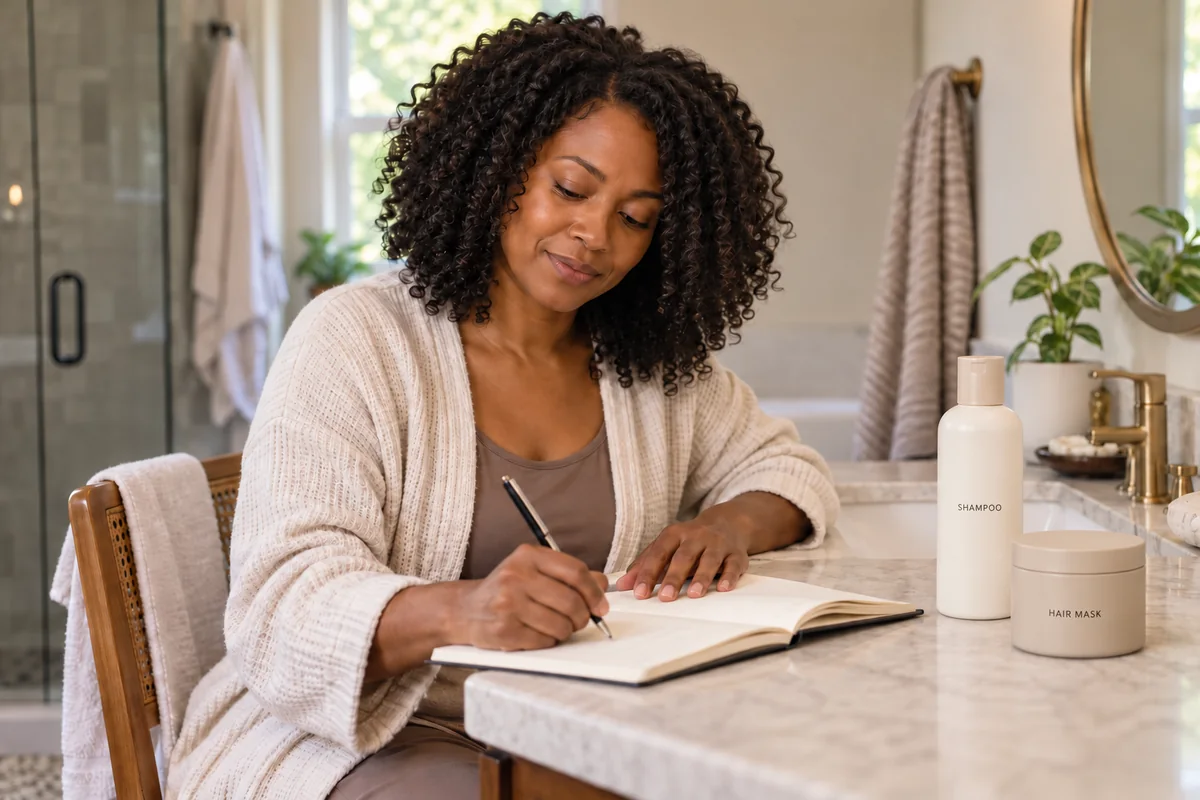
A seated woman writes a note beside shampoo and hair-mask containers.

You change everything and lose track

  • Choose one problem to work on. For tangled ends, first check whether conditioner reaches the underneath as well as the outer surface before buying another bottle.
  • At the next wash, change just that placement while keeping the products and other steps familiar. Check whether the ends comb through more easily and feel comfortable once dry.
  • A short note can help you remember what you tried. If a product stings or burns, rinse it off and stop using it rather than completing a trial.
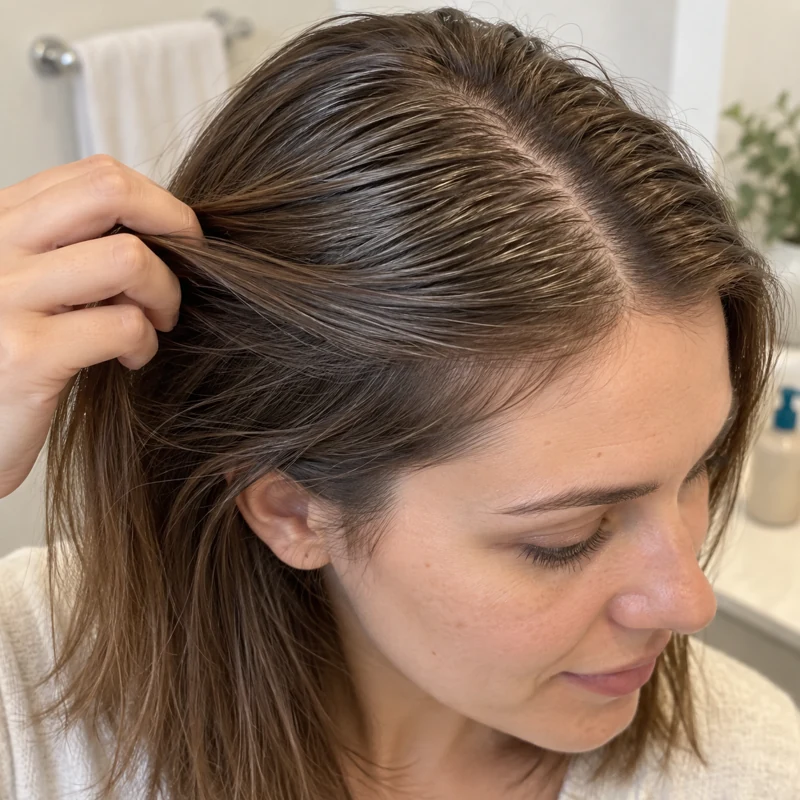
A woman lifting a section beside a part with shiny, grouped roots.

Your roots get oily while the ends feel dry

  • Clean the scalp with shampoo, using your finger pads and reaching the back as well as the front. Let the rinse run down the lengths without rubbing them together.
  • Concentrate conditioner on rough lengths and ends, keeping easily flattened roots clear. Curlier sections can need it farther up the lengths.
  • Adjust washing and conditioner placement separately. Care for oily hair covers greasy roots, while care for dry hair covers rough lengths and heavy-feeling products.
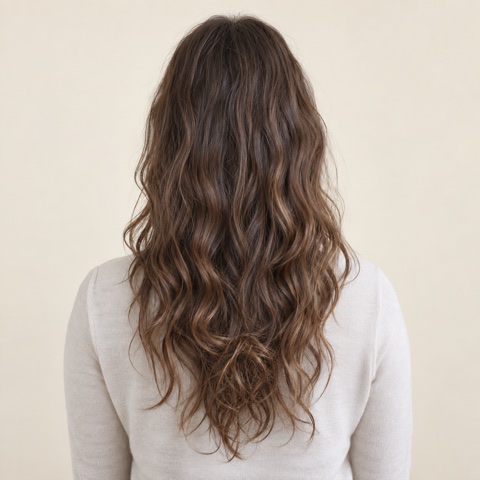
Wavy hair with tangles concentrated near the ends.

Detangling takes most of wash day

  • Separate the hair into sections small enough to hold comfortably. Support one above the knot. With your other hand, loosen the tips before starting a little higher. Each comb stroke travels down toward the ends.
  • Work curls or coils damp with conditioner for slip. Let freshly washed straight or loosely wavy hair partly dry first. Put the comb down before using both hands on a snag.
  • Stop if the knot tightens or pulling hurts. Take a break and try a smaller section. Ask a stylist about a tight mat that will not loosen gently.

Choose products by the difference they make

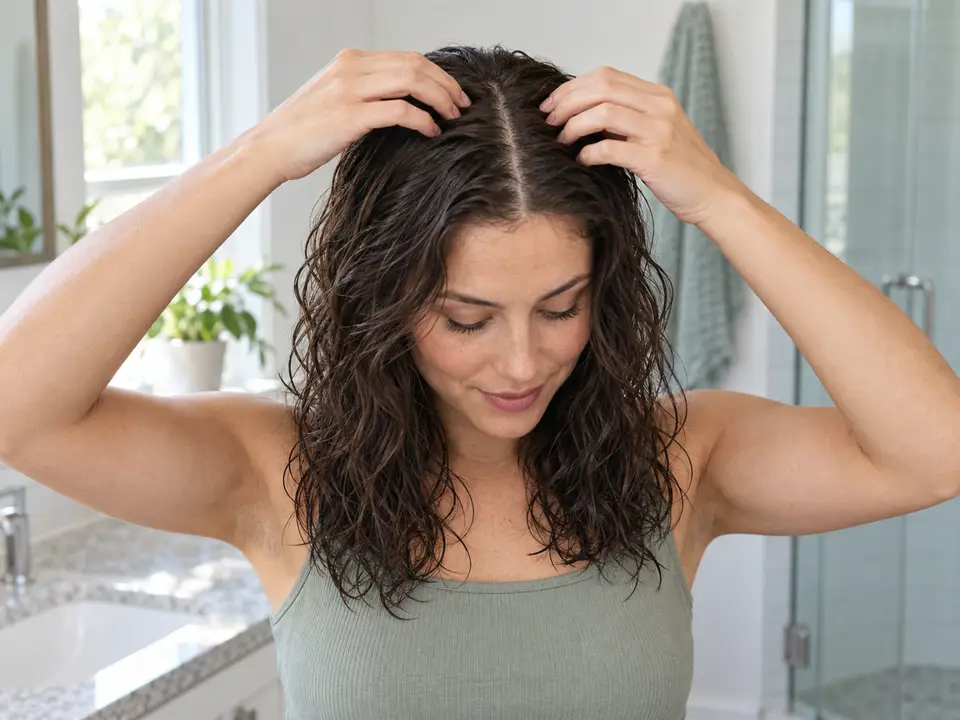
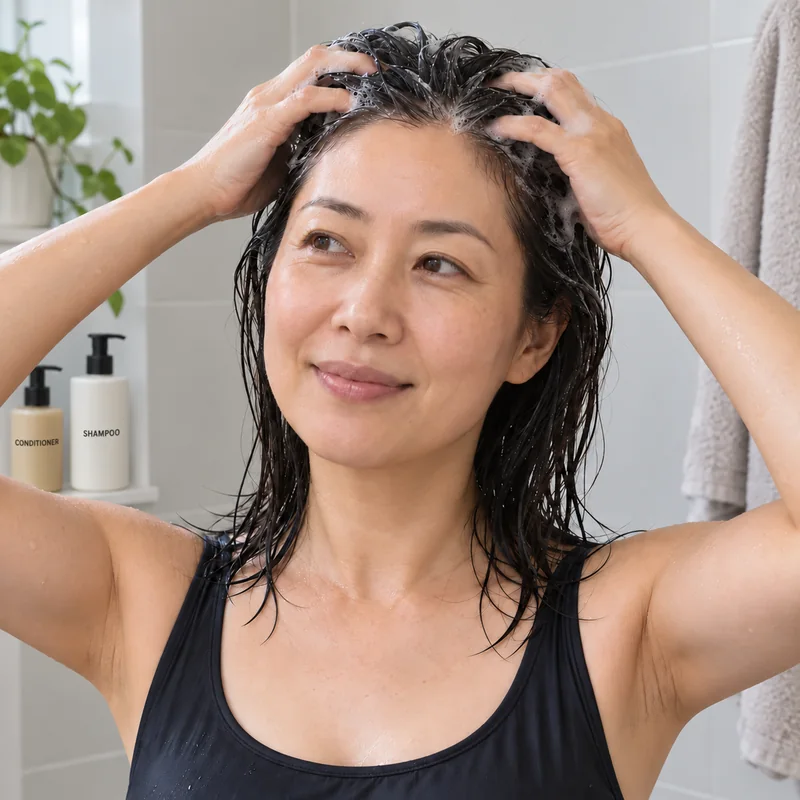
A woman works lather over her scalp with both hands beside shampoo and conditioner bottles.

Keep a shampoo that cleans comfortably

  • Start with a shampoo you already use without irritation. Give it a thorough rinse before deciding it leaves residue.
  • If you are choosing between two you own, compare how your scalp feels after washing and how soon oil or dirt makes another wash necessary.
  • Your consultation can help choose between them using your scalp needs, wash frequency and experience with each bottle.
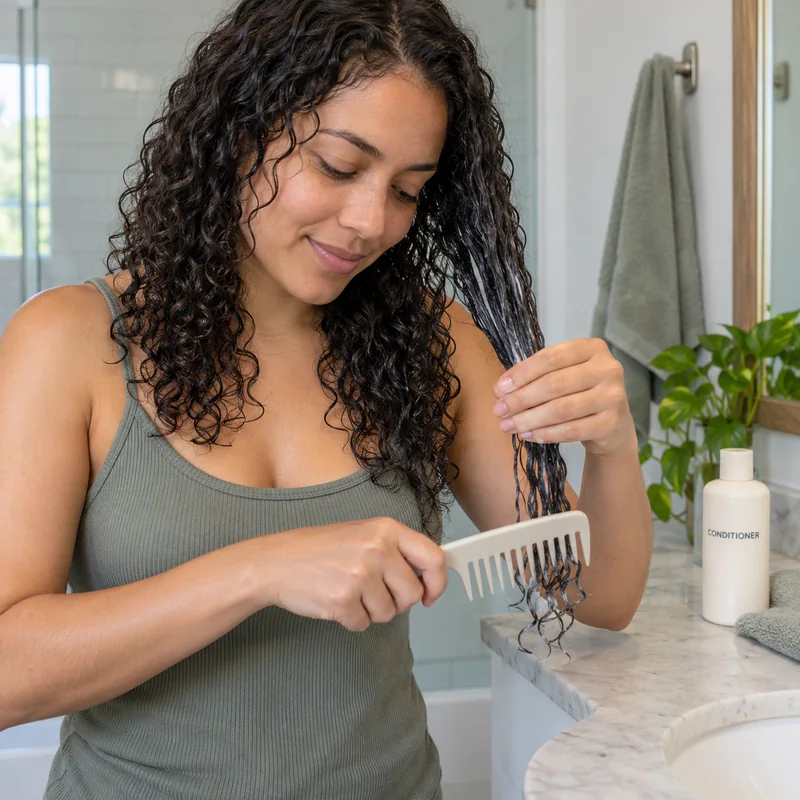
A woman supports one damp curl section above a wide-tooth comb at the tips beside a conditioner bottle.

Keep conditioner where it helps

  • Spread rinse-out conditioner through the lengths that catch, including the underside of each section. Allow any waiting time on the bottle, then rinse it out.
  • If the ends still feel rough once dry, try a small amount of leave-in conditioner there. Check whether it goes on wet, damp or dry hair. Skip it if the lengths already feel comfortable.
  • If dried hair feels coated or flat, try less of that extra layer next time before replacing several products.
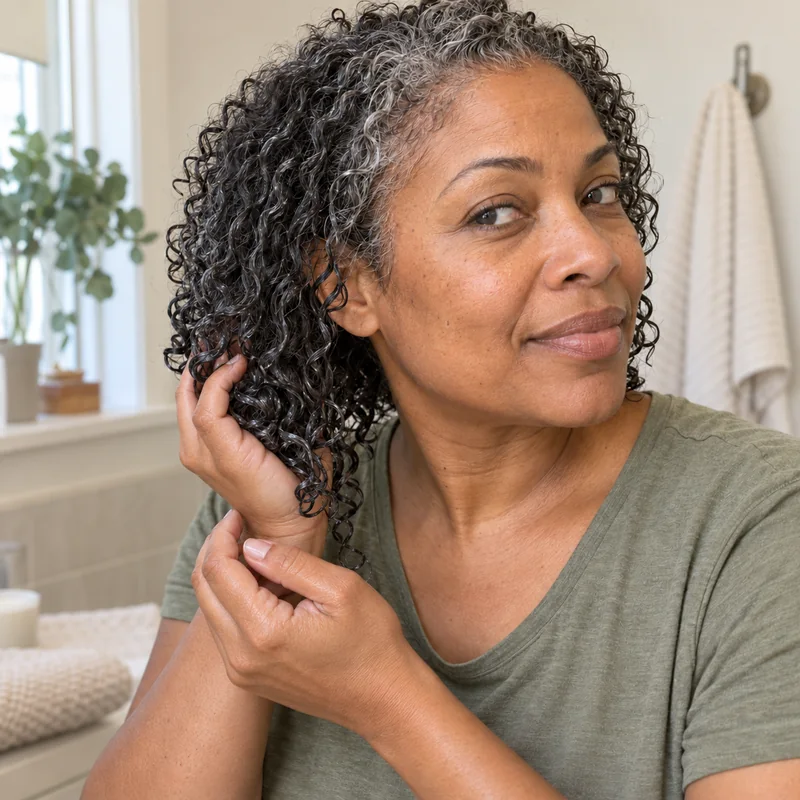
A woman cups a damp curl section in one hand while her other hand supports her wrist.

Use a styler when you want more hold

  • Choose one gel or mousse if you want waves or curls to hold their shape. Use its hold and finish description to choose. The dictionary explains styling polymers.
  • Check the amount and whether it goes on wet, damp or dry hair. Spread it through the areas you want to style, then let the hair dry before judging the result.
  • If you prefer the finish without a styler, leave it out. A separate styling product can stay an occasional choice rather than part of every wash.

Illustrated methods for the care you keep

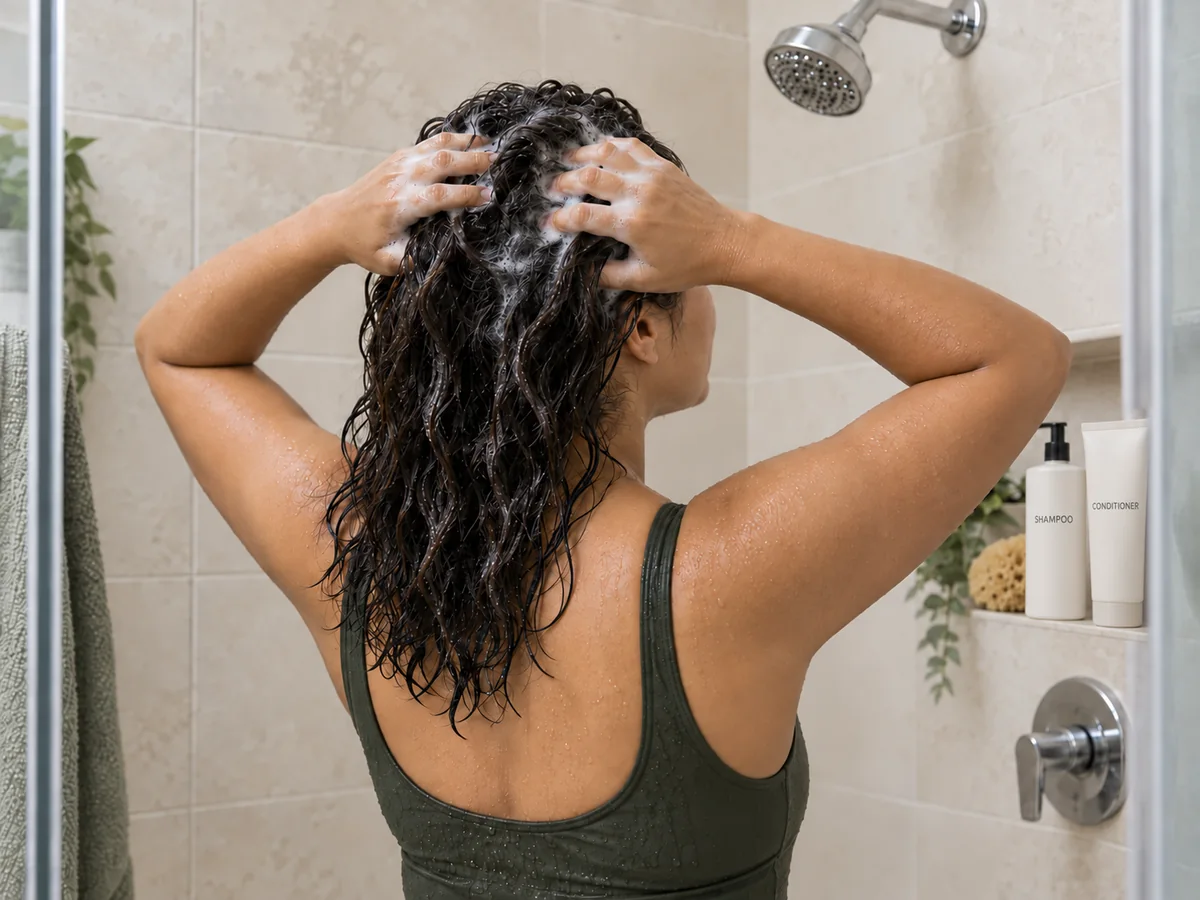
A woman works shampoo lather over her scalp while the wet lengths hang loose in an ordinary shower.

Reach the scalp without tangling the lengths

Wet the scalp and hair, then work ordinary shampoo over the front, sides, crown and nape with finger pads. Keep the lengths loose. This home-shower method separates wetting, shampooing and rinsing. Follow your shampoo’s amount and any contact time.

Guide: Shampoo your scalp
Conditioner smoothed onto the lower lengths and ends, away from the scalp.

Cover the underneath as well as the ends

After rinsing out shampoo, bring wet lengths forward in small sections. Smooth rinse-out conditioner through the areas that catch and gently turn each section to reach underneath. Use the method with a conditioner that permits wet hand application to lengths and ends.

Guide: Apply conditioner to the lengths and ends
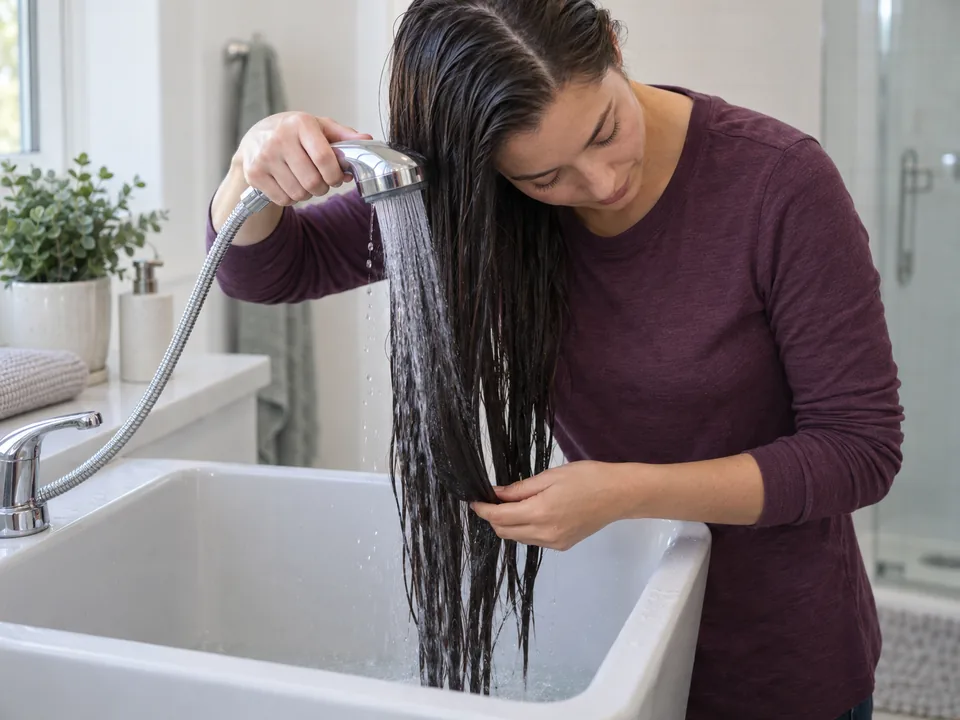
One hand holds a sprayer above long wet hair while the other supports the lengths over a deep basin.

Use the separate basin method if it suits you

This method needs a deep basin, a handheld sprayer and a comfortable forward lean. It shows ordinary shampoo and conditioner rinsing. In your usual shower, rinse each product before the next. Smooth conditioned hair does not need to feel squeaky.

Guide: Rinse shampoo and conditioner completely
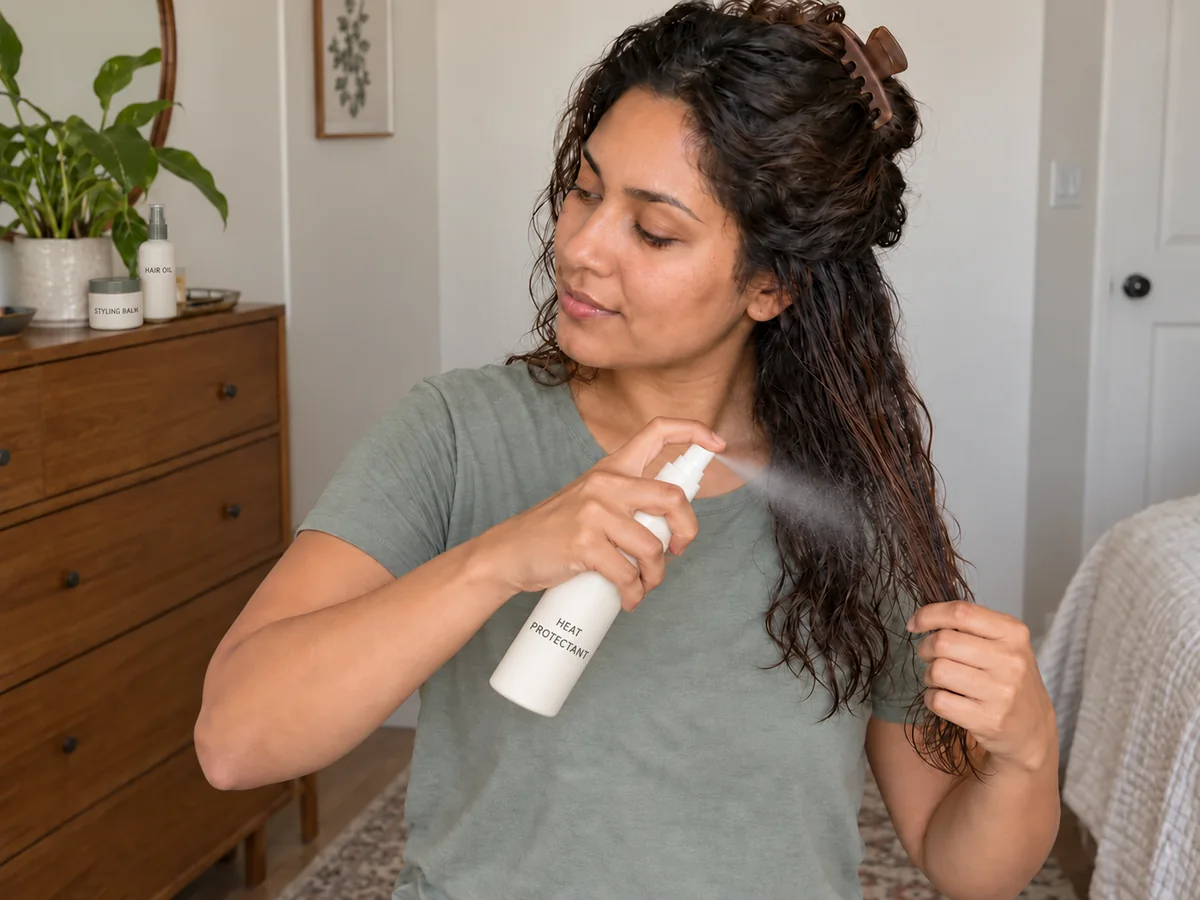
A woman pumps heat-protectant spray toward a held damp section, away from her face.

Apply protection before blow-drying

If you choose blow-drying, this method shows a pump heat-protectant spray on damp, detangled loose hair. Choose one made for that use. Flat or curling irons need their own preparation, with any dampness fully dried before the tool touches hair.

Guide: Apply heat protectant evenly

Illustrated care examples: before & after

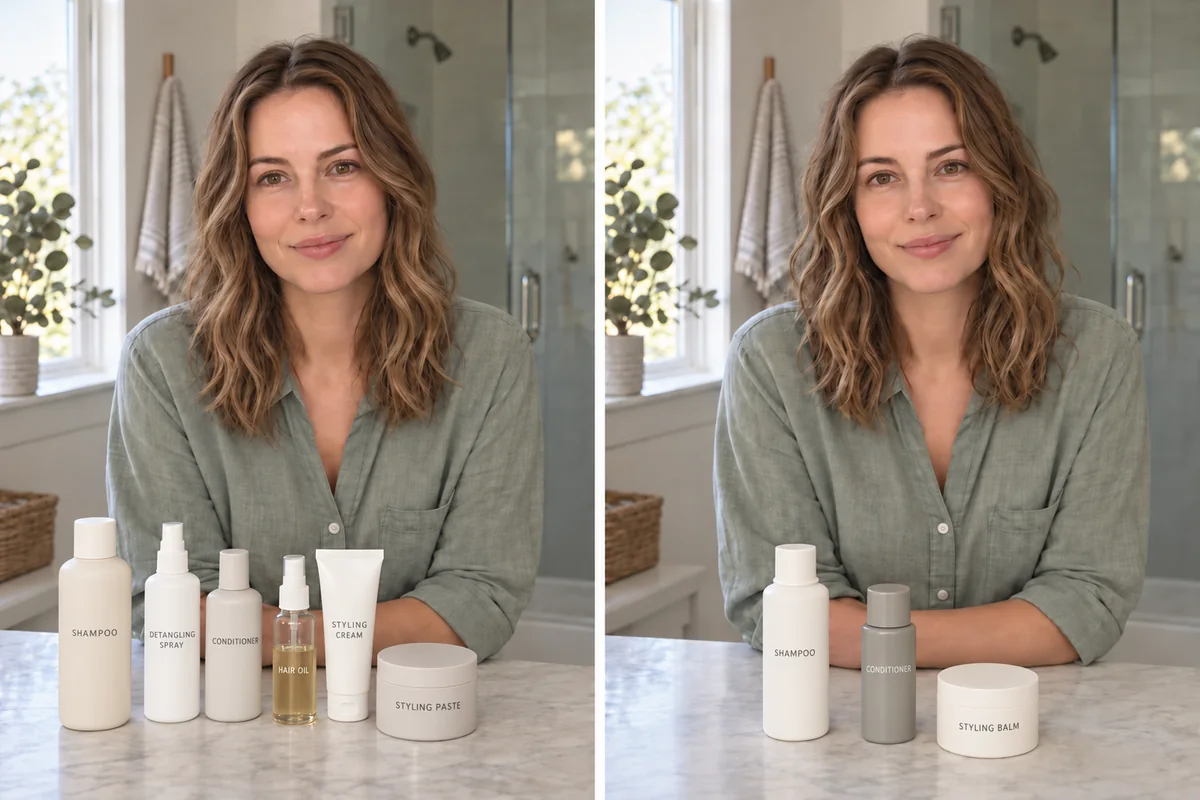
A smaller everyday product set

Illustrative styling comparison: six containers and separated waves beside three containers and broader wave groups.
Before · more bottles and separated wavesAfter care · fewer bottles and grouped waves
The right-hand setup has fewer bottles, alongside waves that sit in broader groups. The hair keeps its loose finish.

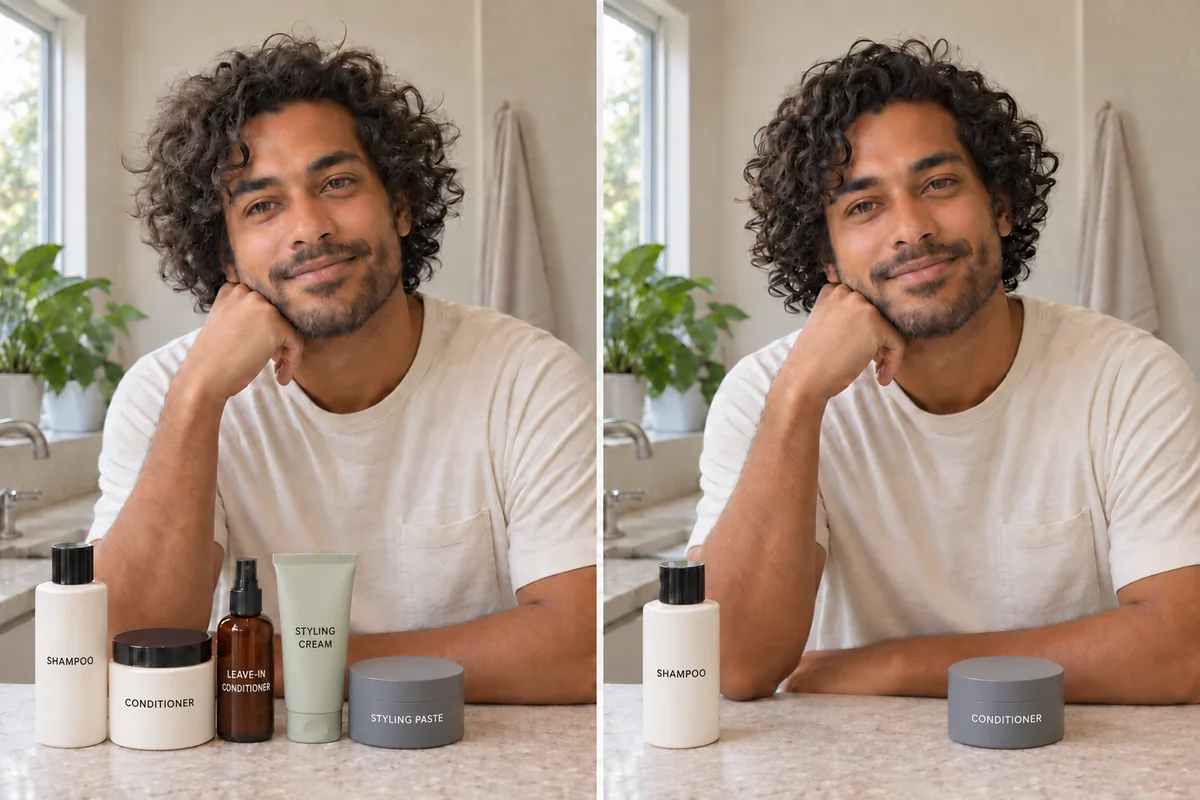
Fewer bottles beside grouped curls

Illustrative styling comparison: five containers and fluffy curls beside two containers and more grouped curls.
Before · more bottles and fluffy curlsAfter styling · fewer bottles and grouped curls
The product set is smaller on the right, and the curls sit in more distinct groups.
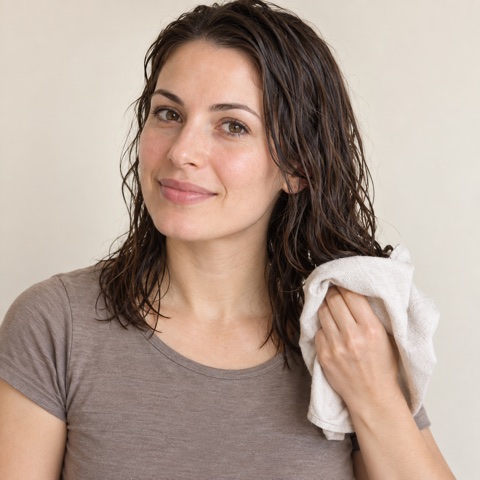
A woman gently squeezing damp hair with a towel.

Work out what your routine needs.

Tell us which steps take too long and which products you are unsure about. Your consultation can help you choose what to keep and where a different technique would make care easier.

  • Which of my products are doing the same job?
  • Can I skip leave-in without making detangling harder?
  • How can I fit washing and drying around my week?
  • What can I drop while keeping the finish I like?

Your plan can account for your texture, scalp needs, treated lengths and previous product results, along with your time and budget. Bring what you use and describe how you wash, detangle and dry your hair.

The Hair Care Consultation gives you a personal plan with product recommendations, routines and guidance on your hair-care questions.

$49 with 60 days of follow-ups, or $99 with 12 months. Pay once; the year renews only if you choose.