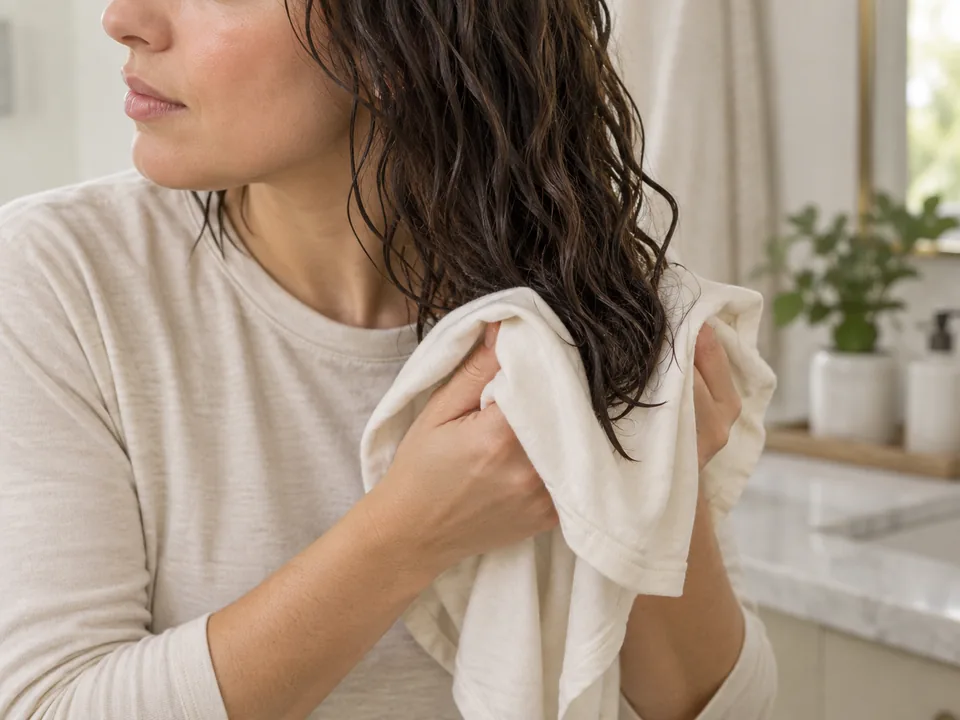
Air-dry your hair
When you have time to let loose hair dry naturally, air-drying offers a finish without a heated styling tool. It is a practical option after a damp-hair routine when you can leave the hair loose until it is dry.
Step by step
 STEP 1 OF 4
Finish your damp-hair steps
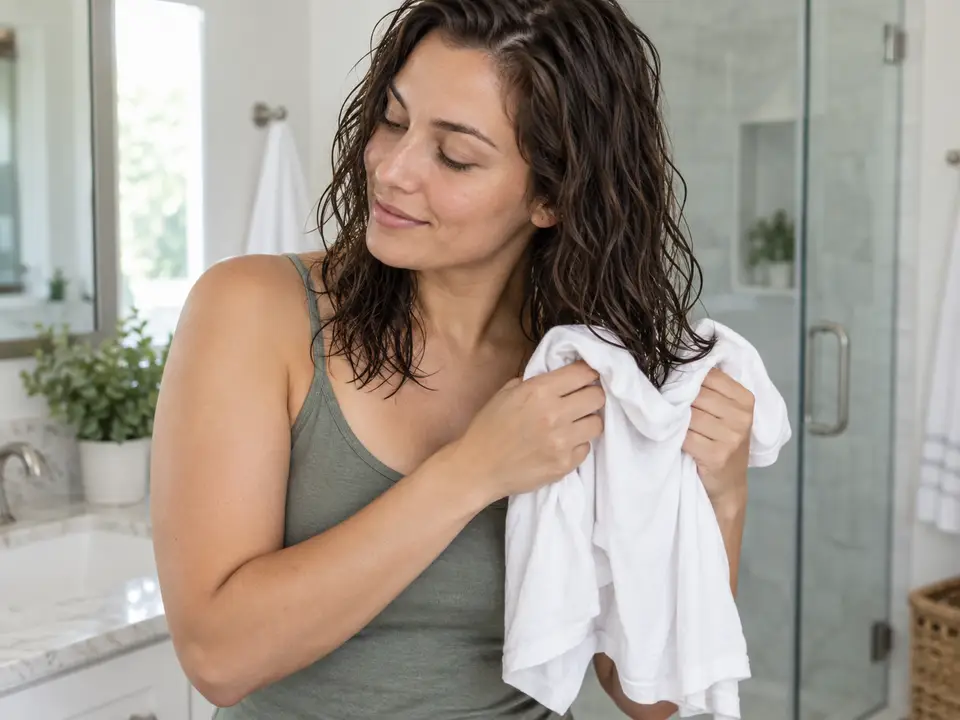
- Gently remove excess water if that fits your routine and the directions on your next product.
- Finish any wet- or damp-hair product steps already in your routine, following each label.
- Keep the hair loose; do not pull it into a tight tie while it dries.
- STEP 2 OF 4
Set the part and let the hair fall
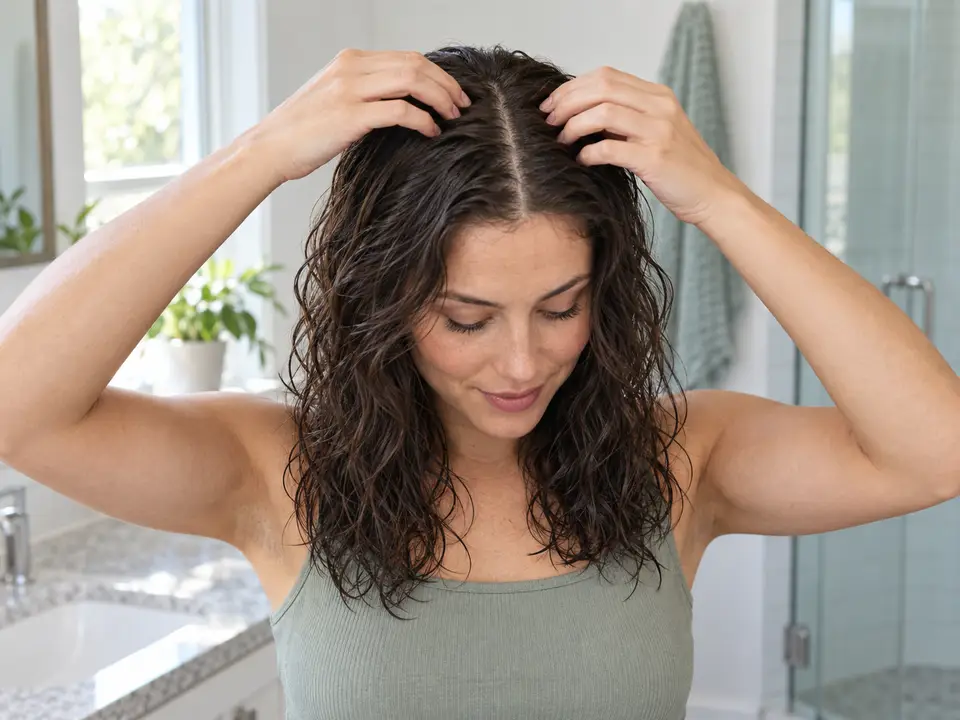
- Use your fingers to place the part and bring each side into the shape you want to wear.
- Let the roots and lengths fall freely instead of tucking them behind your ears or under a cover.
- Once it is arranged, handle wet hair as little as you can.
 STEP 3 OF 4
Leave it loose while it dries
- Choose a comfortable home setting and leave the hair down while you wait.
- Avoid repeatedly combing, brushing or restyling it while it is still damp.
- If you used a cotton T-shirt to blot, hang it to dry or wash it before you use it again.
 STEP 4 OF 4
Check roots and inner lengths before you finish
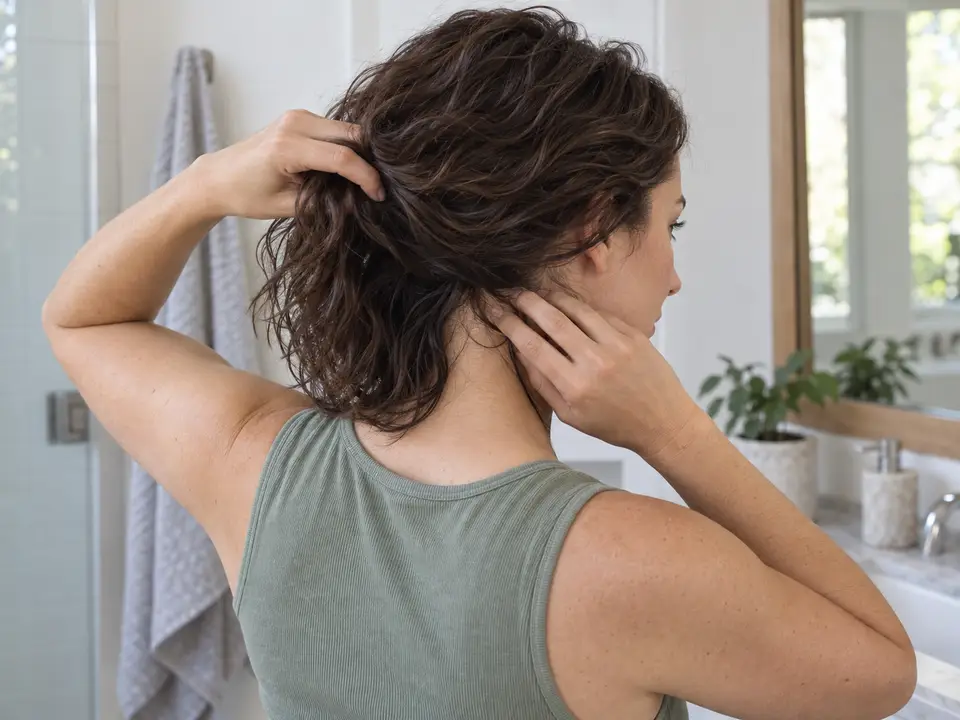
- Touch the roots at the crown and nape with clean fingers, then feel inside each side of the lengths.
- If an area still feels damp, leave it loose to dry longer and check it again before moving on.
- There is no single drying time: hair length, density and your surroundings change the wait.
About 1–3 min hands-on for blotting if needed, arranging loose hair and brief dryness checks. Add the full air-drying wait. Washing and product application are separate.
You’re done when…
The roots and inner lengths feel dry as well as the surface, and the hair is ready for the next dry-hair step in your routine.
Related techniques
Connected steps for your routine.