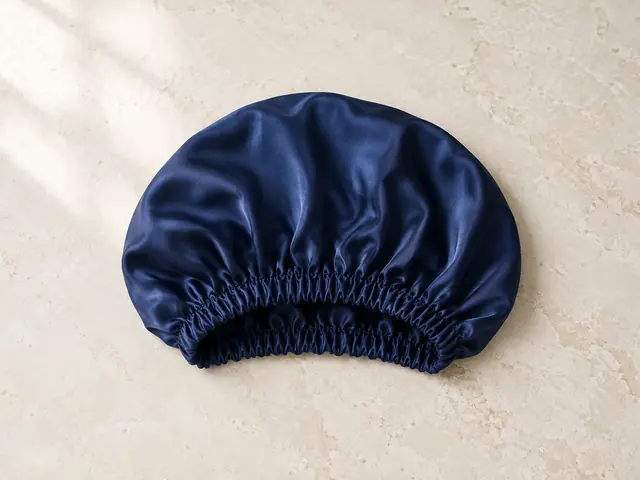
Elastic-band bonnet
The classic slip-on cap with a sewn-in elastic band. Quickest to put on, but the band's fit is fixed, so it can press on one head and slide off another.
Best for: Quick bedtimes when the band fits comfortably and leaves no marks.
Reach for a sleep bonnet at bedtime when dry hair tangles, frizzes or loses its shape against the pillow. A roomy bonnet with a smooth inside holds the lengths loosely overnight, so your style can need less work in the morning.
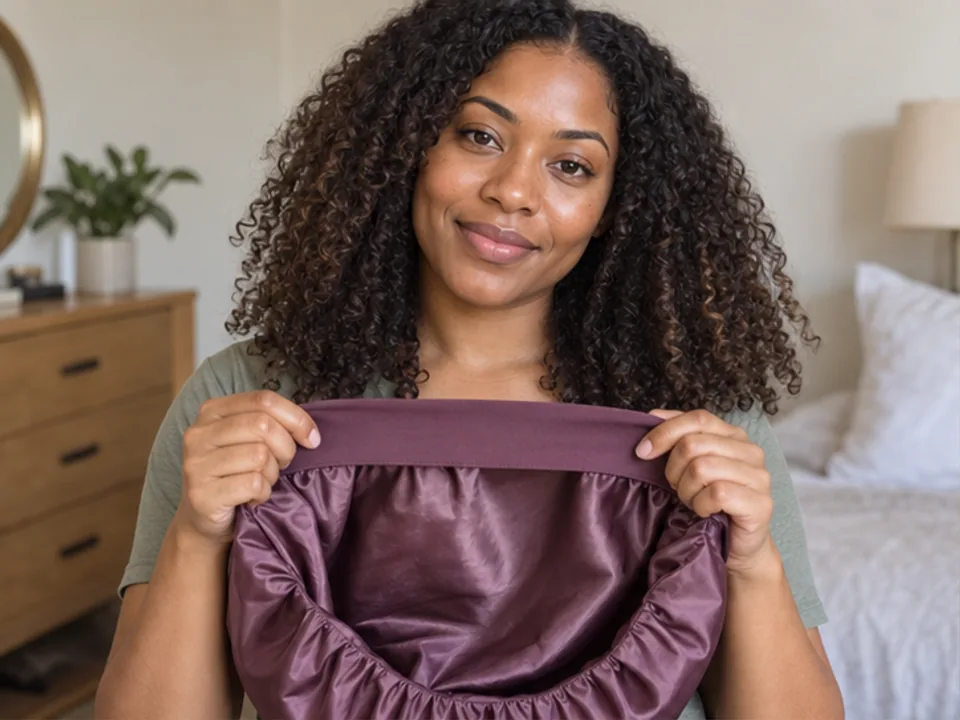
The basic method. Your model’s own directions come first for heat, attachments and starting state.
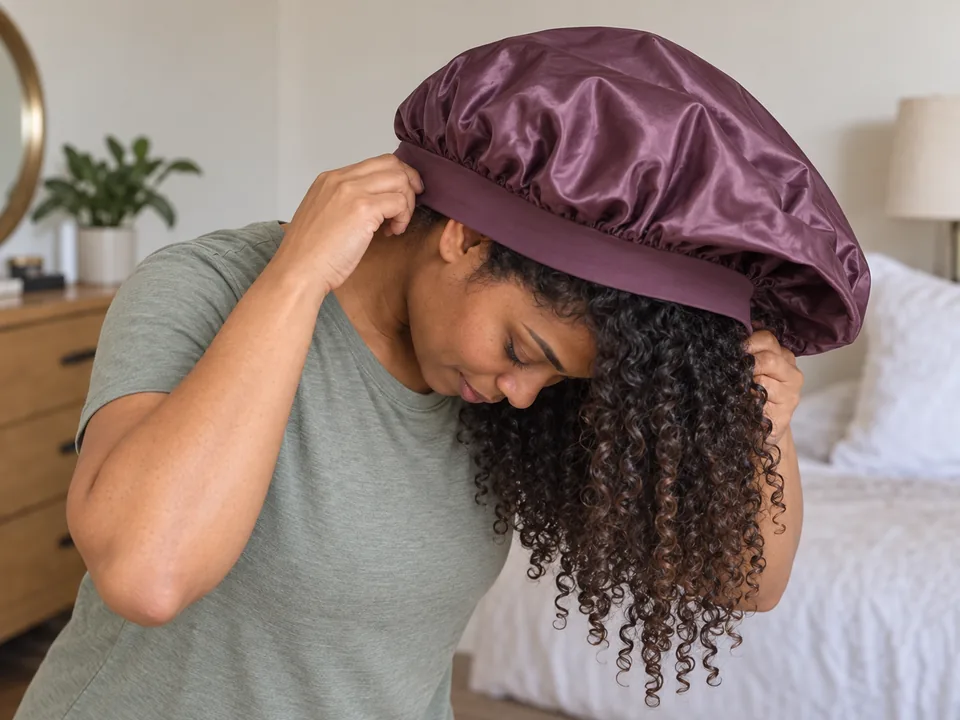
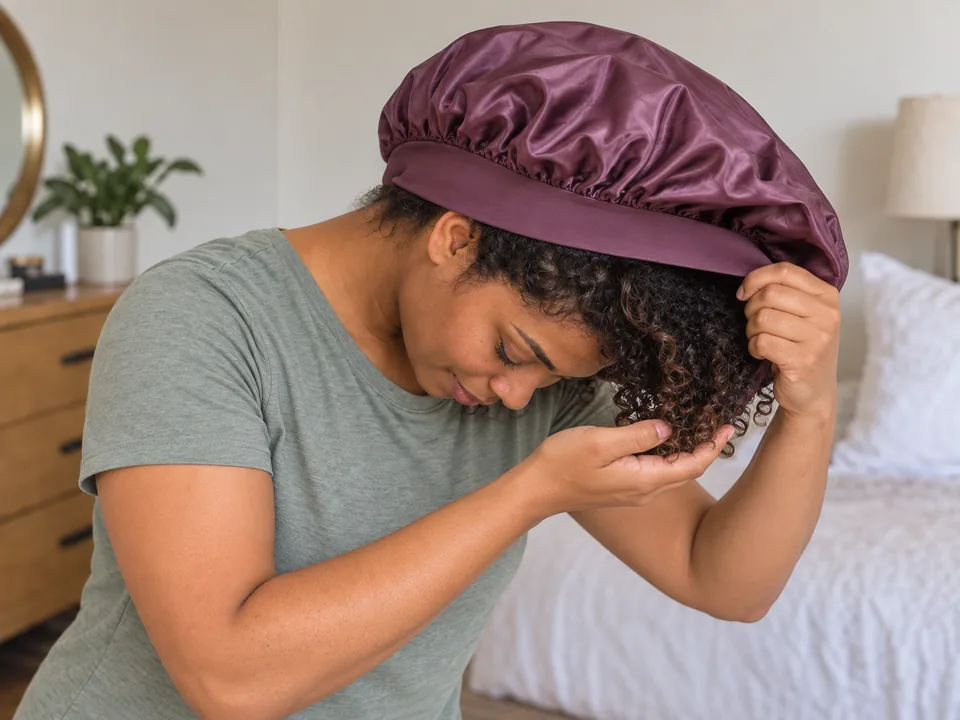
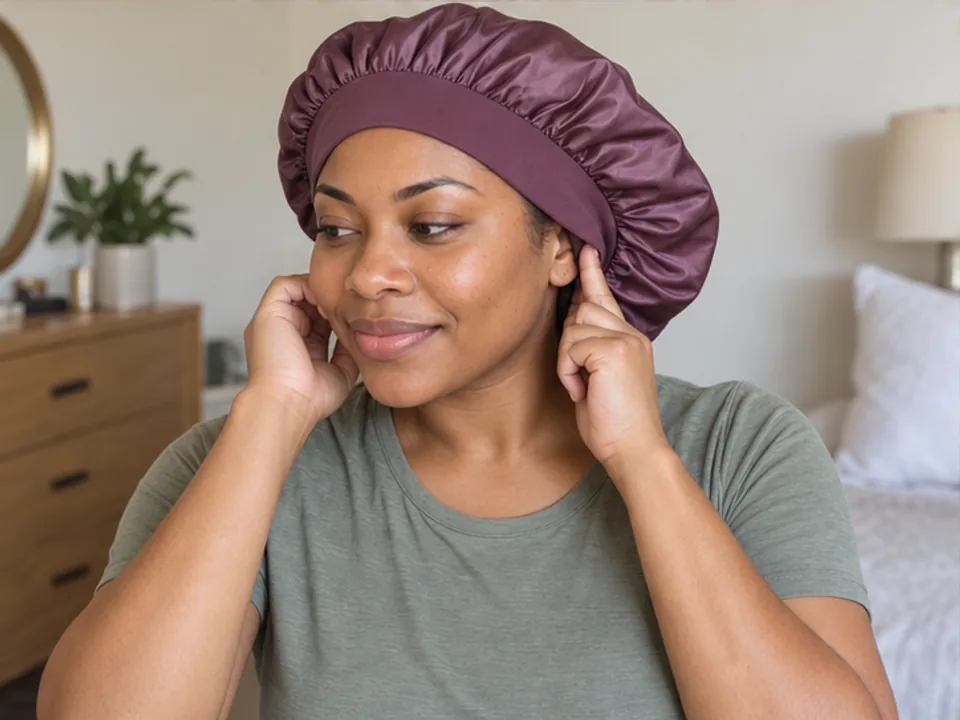
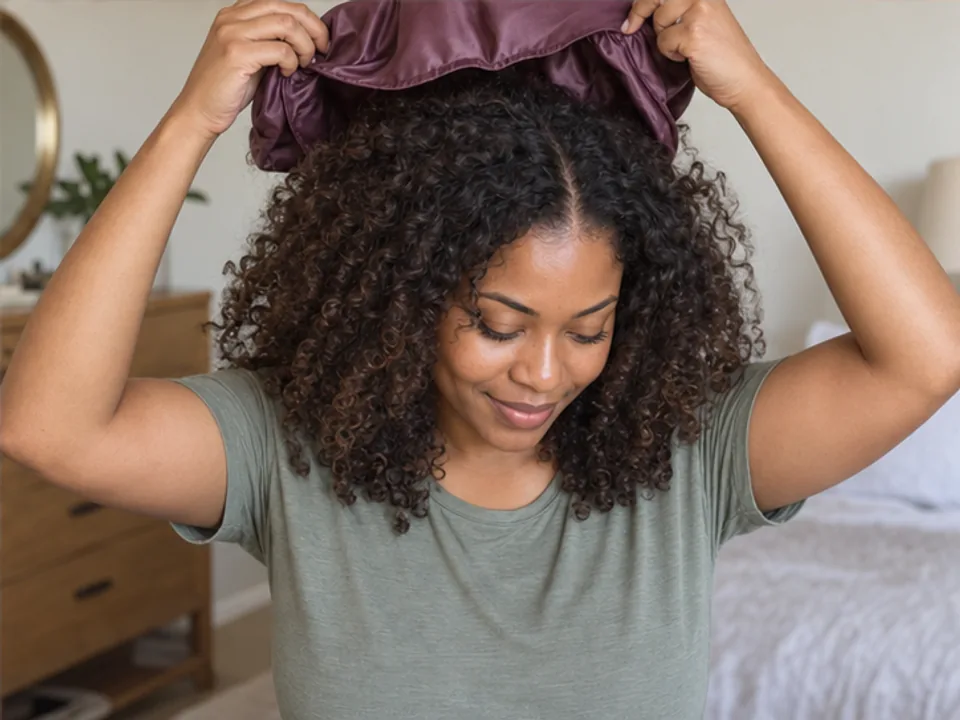
Your dry hair sits loosely inside, the band lies flat with no marks or soreness, the bonnet is still on in the morning, and your hair comes out with fewer knots and less rearranging needed.
What each kind does, and who it suits.
The classic slip-on cap with a sewn-in elastic band. Quickest to put on, but the band's fit is fixed, so it can press on one head and slide off another.
Best for: Quick bedtimes when the band fits comfortably and leaves no marks.
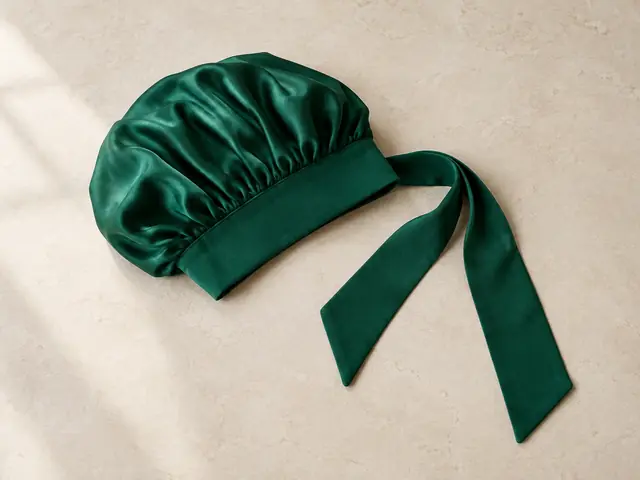
A wide fabric band that ties or fastens at the nape, so you set the fit yourself. Many sleepers find it stays on better without extra pressure at the front.
Best for: Anyone whose elastic bonnets slip, pinch or leave marks.
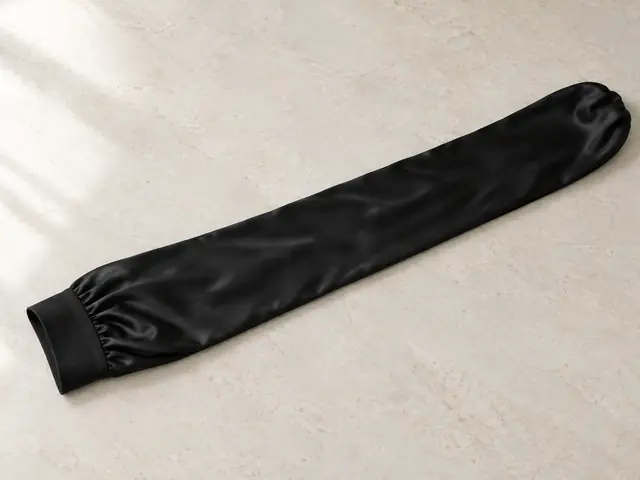
A deeper crown or long tube shape for hair a standard cap can't hold without squashing it: long or dense lengths, a big pineapple, braids, twists, locs or extensions.
Best for: Long or dense hair, braids, locs and extensions that shouldn't be packed down.
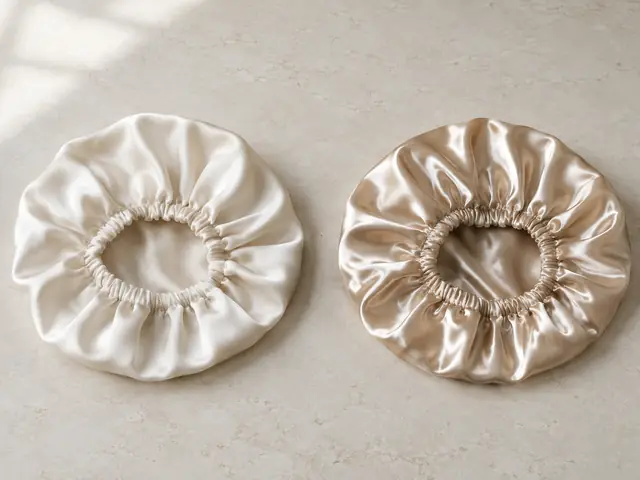
Silk bonnets usually cost more and more often need gentle hand washing. Polyester satin gives a similarly smooth surface at lower cost and often tolerates machine washing. Both are smooth; the care differs.
Best for: Silk if you prefer a natural fiber; polyester satin for easy, frequent washing.
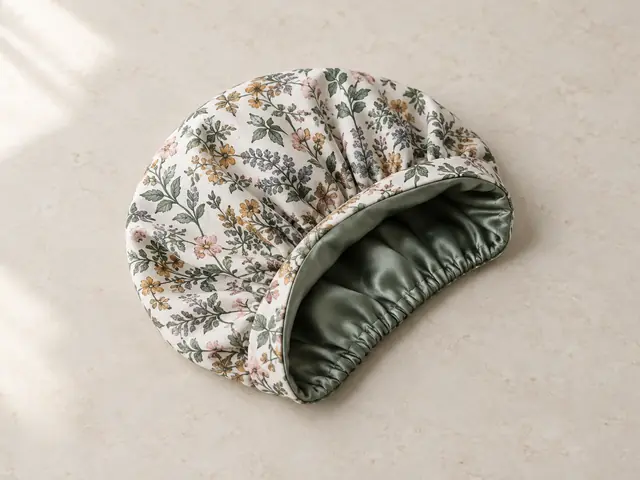
A smooth lining inside a cotton, knit or patterned outer. What matters is the surface touching your hair: a smooth lining works; a smooth outer over a rough lining does not.
Best for: Anyone who wants a different outer fabric with a smooth inside.
The controls worth understanding before you change anything.
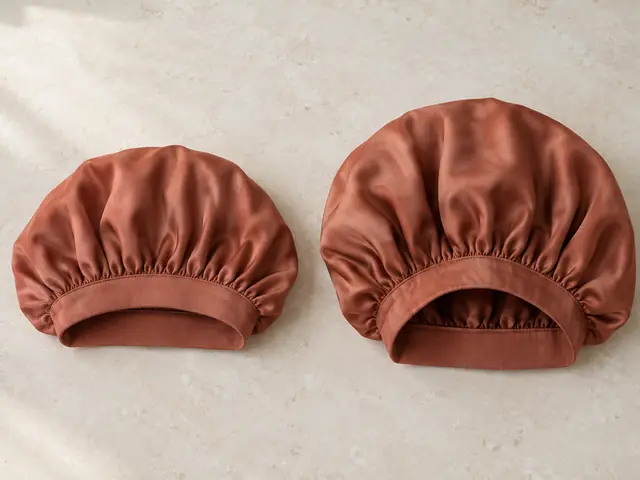
Head size sets the band; hair volume sets the depth. If the band fits but your hair is squashed, go deeper, not tighter. If it's baggy and slides, try a smaller or adjustable band.
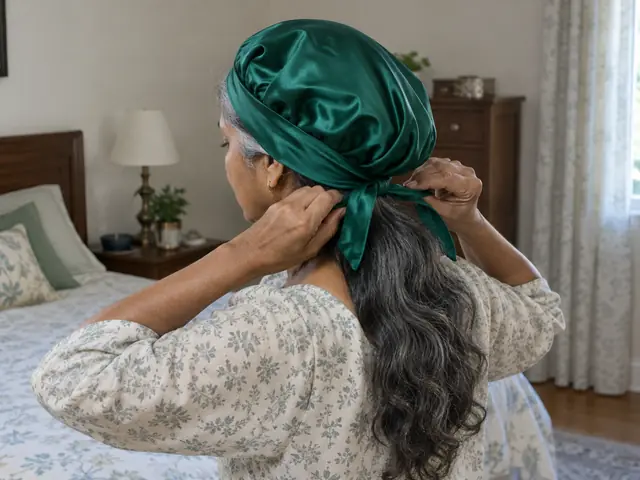
Fasten just firmly enough to stay on when you turn your head. Rest the band on or just behind the hairline, not dragged low across the forehead. A fingertip should slide under it all the way round.
Once the basics feel easy, these moves change the result.
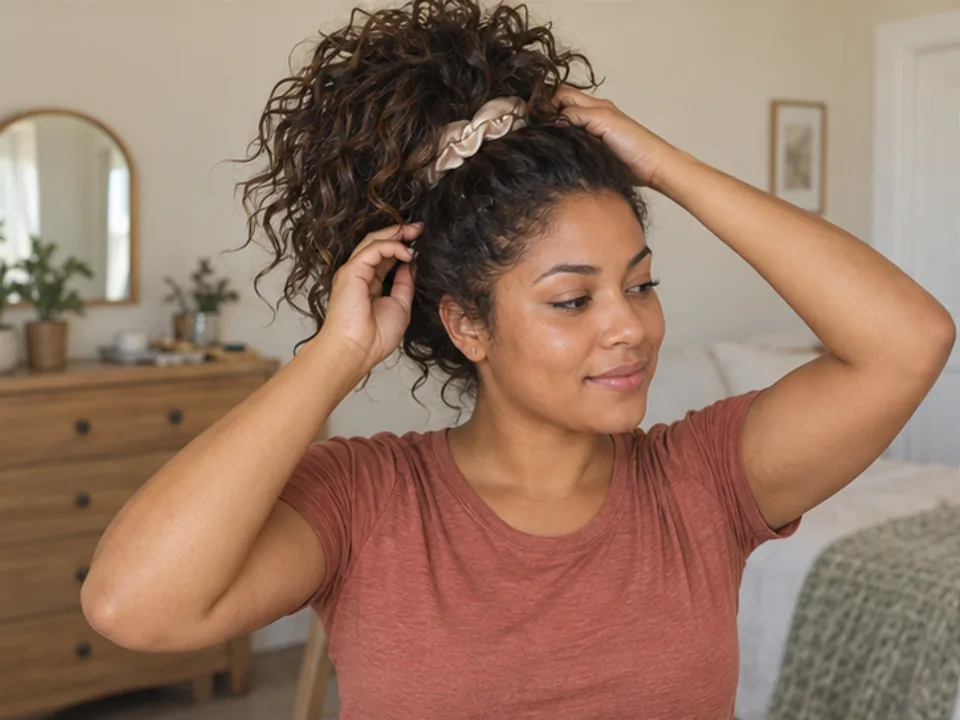
For long curls, gather the dry lengths loosely at the crown with one relaxed pass of a soft tie, then cover with a jumbo bonnet. The curls rest on top instead of being flattened at the back.
Full guide: Put waves or curls in a loose pineapple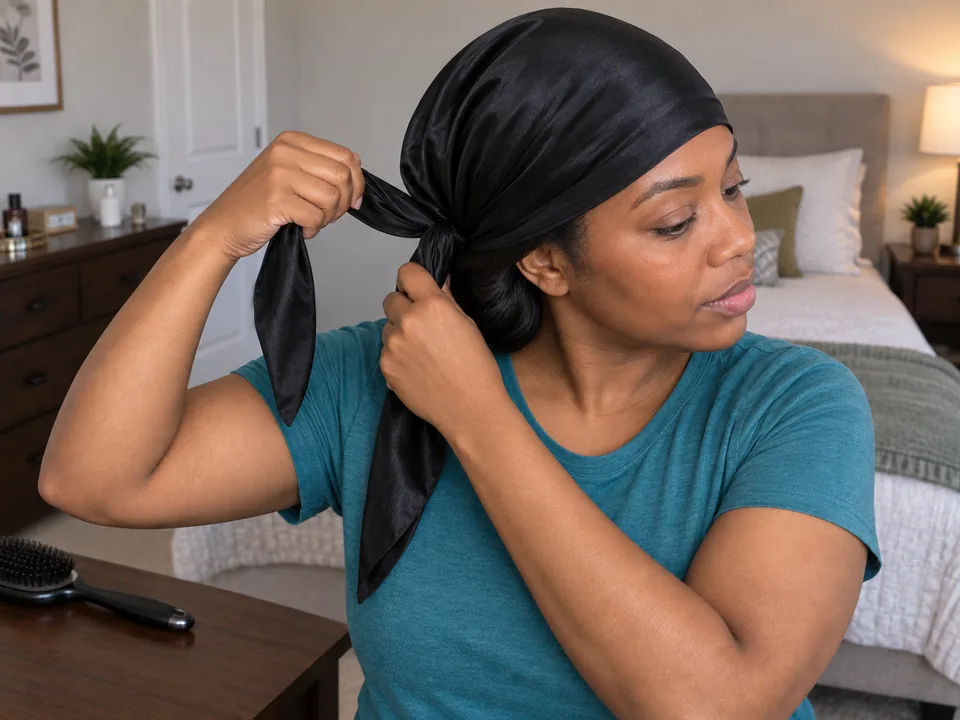
After a blowout or silk press, wrap dry hair flat around your head under a sleep scarf. If the scarf tends to slide off, add a roomy bonnet over it so the wrap stays covered.
Full guide: Wrap a straight style for sleepWhat goes wrong most often, and what to do instead.
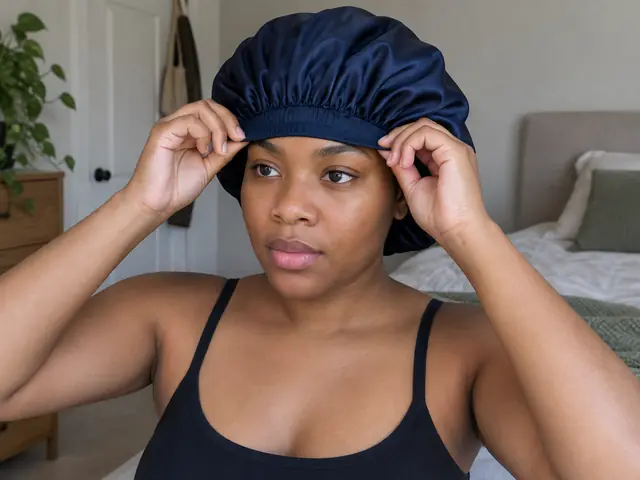
A band dragged across the forehead to stop slipping rubs and tugs the same edge hairs every night. Set it on the hairline instead, and fix slipping with a tie band or better size.
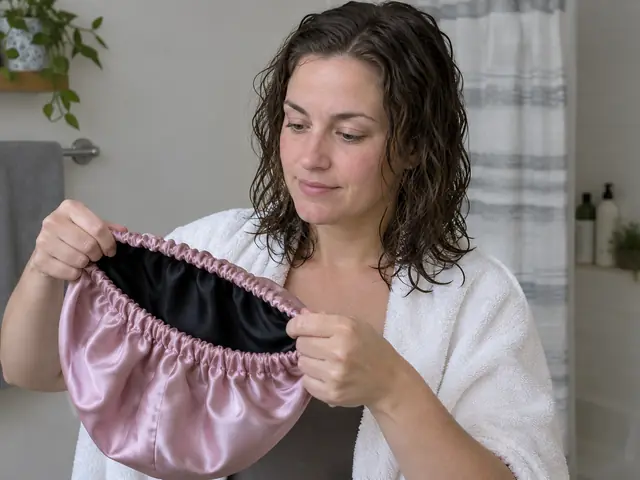
Hair packed damp under fabric stays damp much longer and dries in whatever shape it was squashed into. Let hair dry first, or use a method made for damp hair at bedtime.
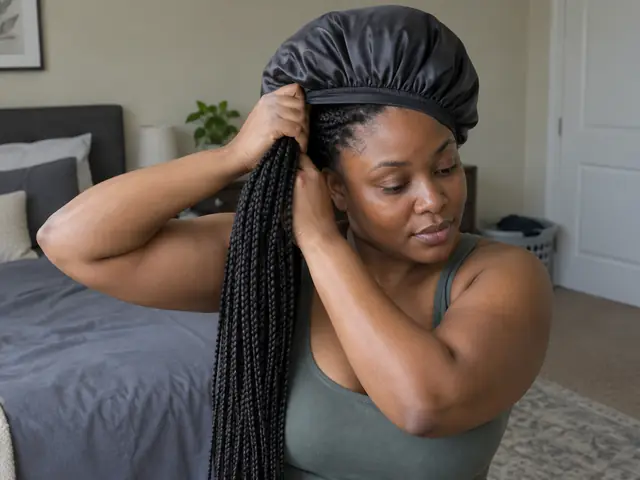
Winding lengths into a tight bun or twisting braids to force them in adds tension at the roots and creases the style. Choose a deeper or extra-long bonnet so the hair folds loosely.
Claims you’ll see online, answered plainly.
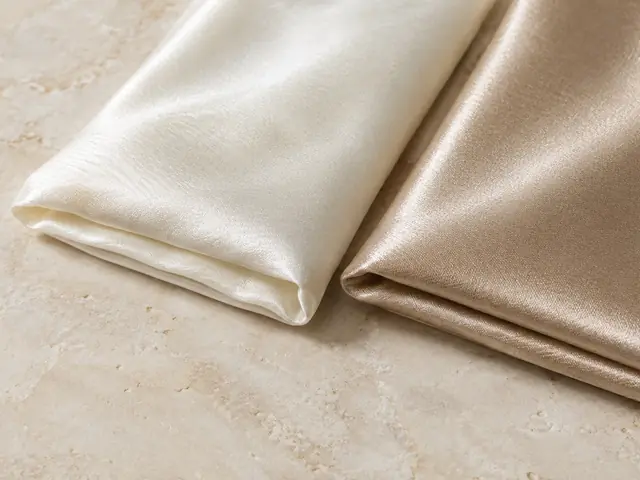
Silk is a fiber; satin is a way of weaving that makes one face glossy. A satin bonnet is often polyester. Both give a smooth surface, but they differ in cost, feel and washing directions.
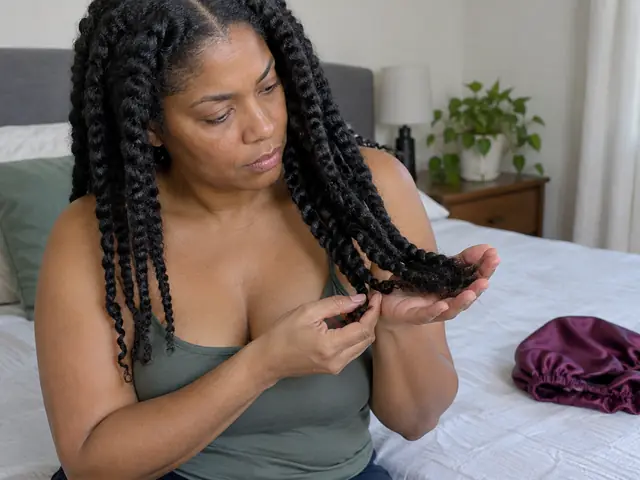
Hair grows from the follicle under the scalp, and a bonnet doesn't touch that. What it can do is cut overnight rubbing on the lengths, which can mean fewer snapped ends — keeping length, not growing it.
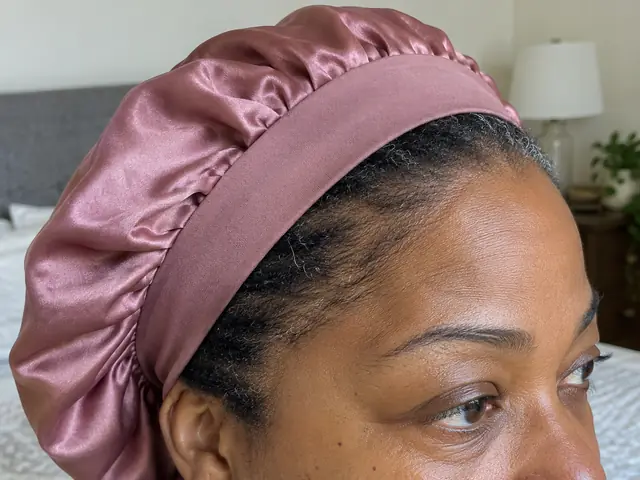
A roomy bonnet with a comfortable band is a gentle covering. A band that's tight, bare elastic or dragged low can pull at the hairline night after night. Pain, stinging or broken edge hairs mean change the fit.
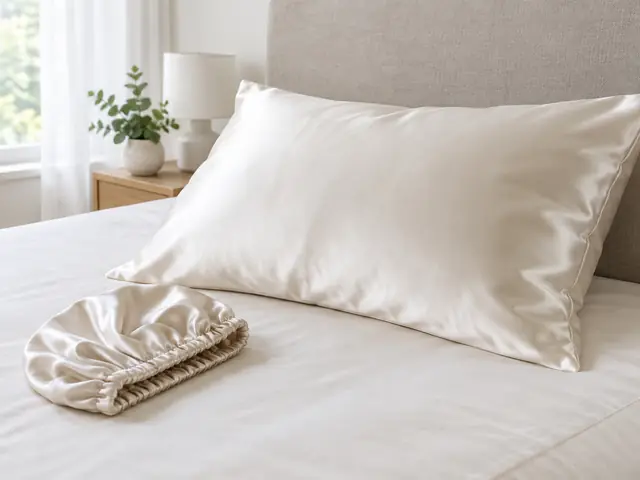
Both give your hair a smooth surface to lie on. A pillowcase doesn't hold the hair together, so lengths still move and can tangle — but it works when bonnets slip off or feel uncomfortable.
Keep it clean, safe and working the way it should.
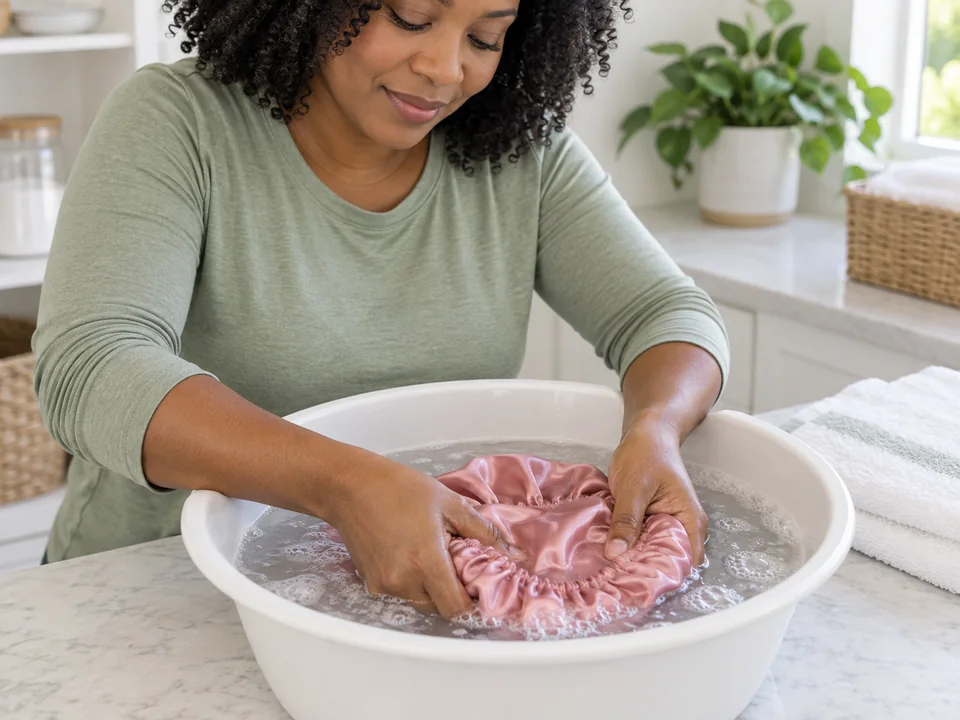
Hair oils, products and skin build up in the lining. Wash by the exact item's directions — hand or machine, water temperature, cleanser — because silk, satin, elastic and trims each change what's allowed.
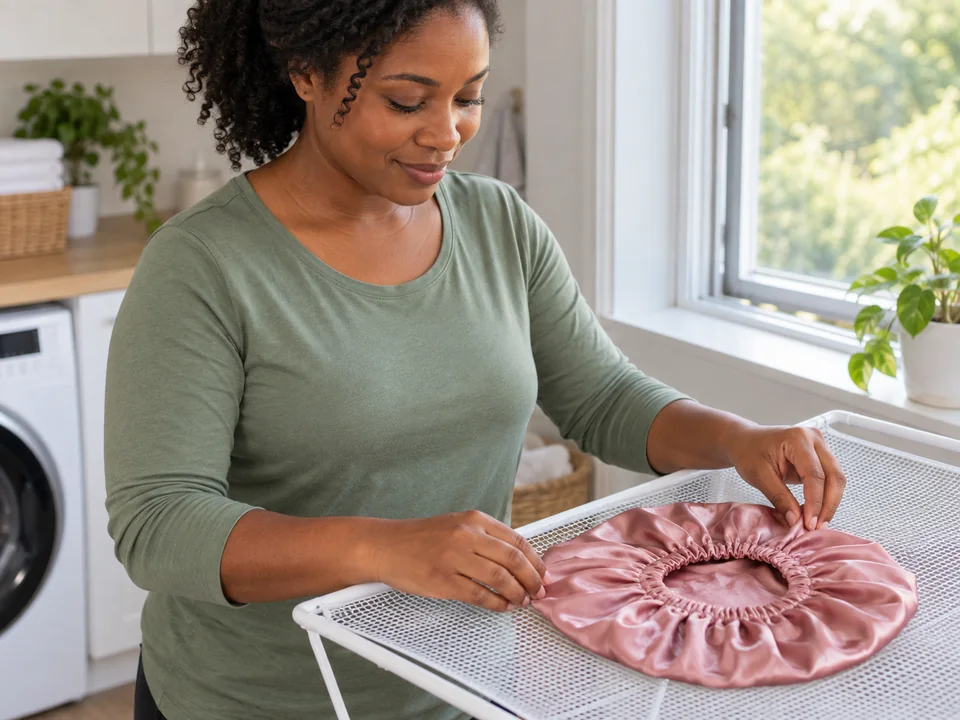
Reshape and dry the bonnet as directed — flat, hung or tumbled only if the label allows — and wear it again only when completely dry.
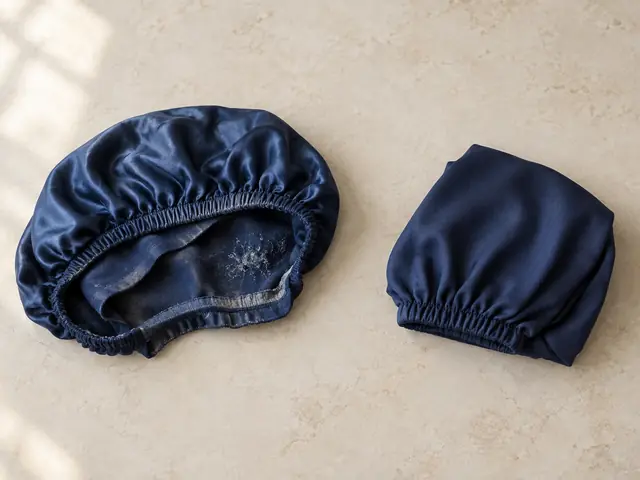
A band that's gone slack, elastic poking through, or a lining that's pilled, snagged or split no longer does its job. Replace the bonnet rather than tightening a tired band.
Photo-by-photo techniques that use this tool.
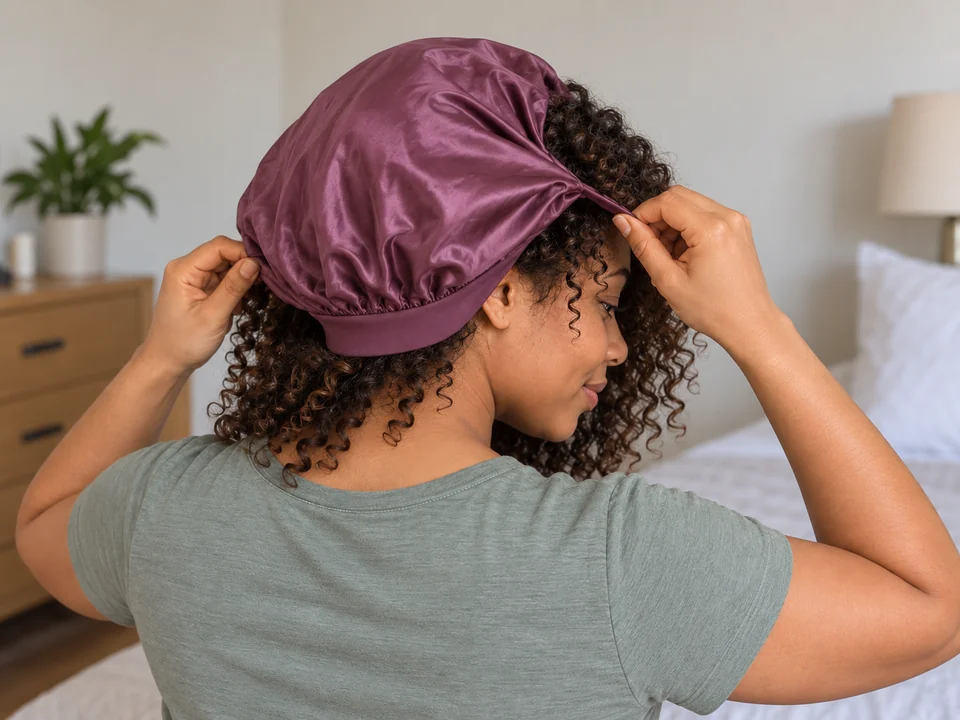
A sleep bonnet is a fabric cap that holds loose hair inside while you rest. Its depth and band need to leave room for your hair without pressing or pulling.
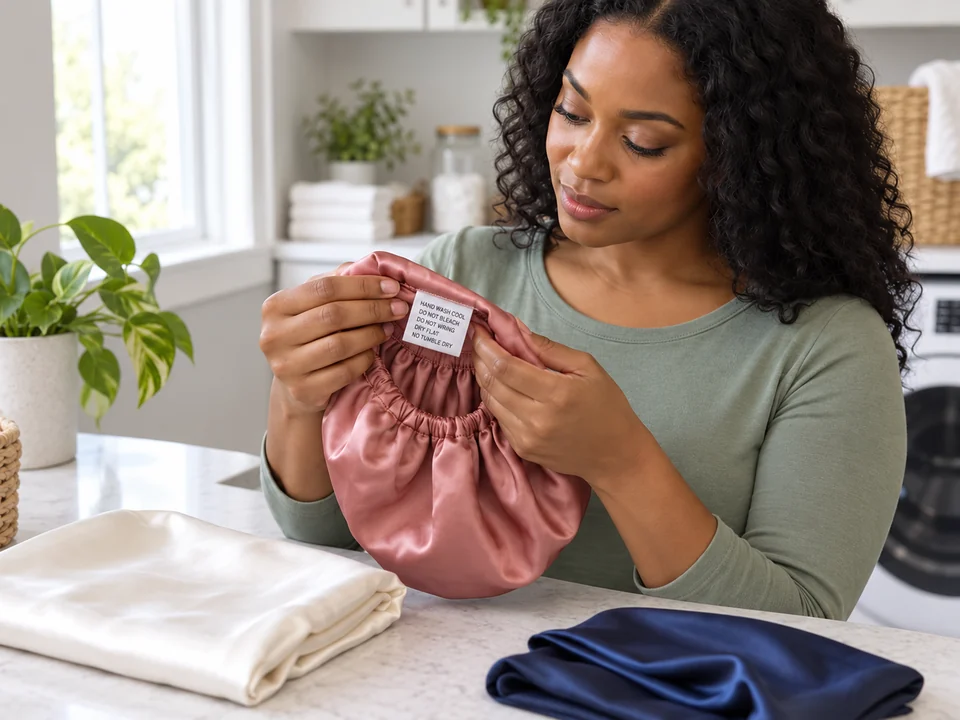
Washing a bonnet, sleep scarf or pillowcase removes dirt and residue using the hand or machine method allowed for that item.
Check the actual fiber, seams, fit and care directions.
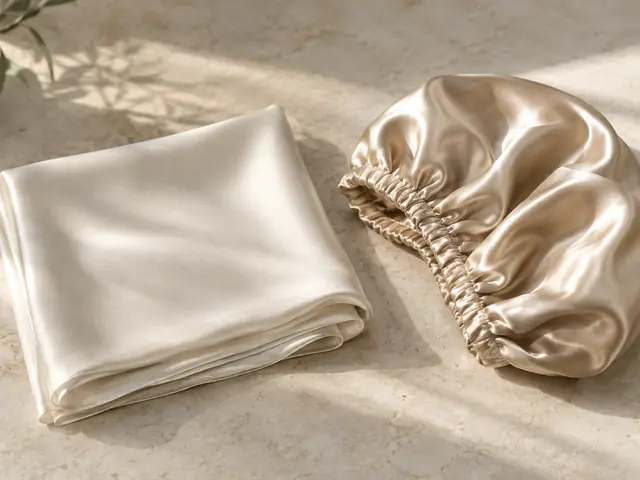
Silk describes a fiber; satin describes a weave and can use different fibers. Check softness, seams, fit at the hairline and the care label. A material name cannot make a tight wrap or a rough seam gentle.
Add it to your tools and your routine will use what you own.
More in sectioning and overnight.
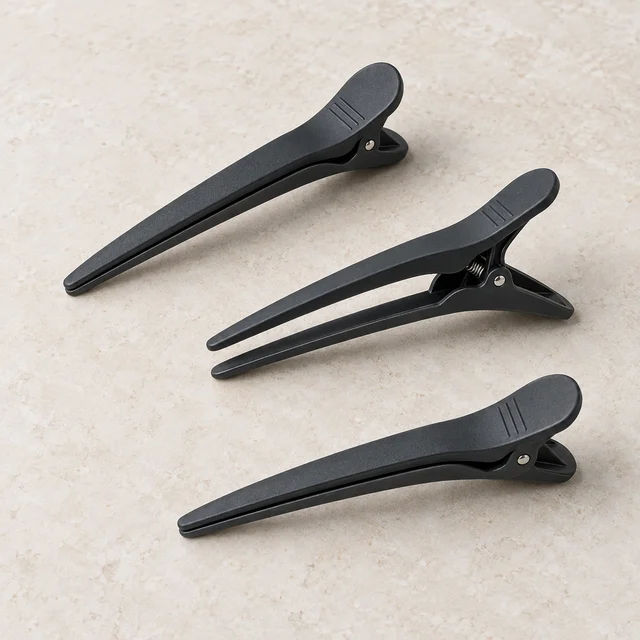
Hinged clips that hold a folded portion of hair out of the way while you work on another. Common kinds include duckbill, alligator, claw and snap clips.
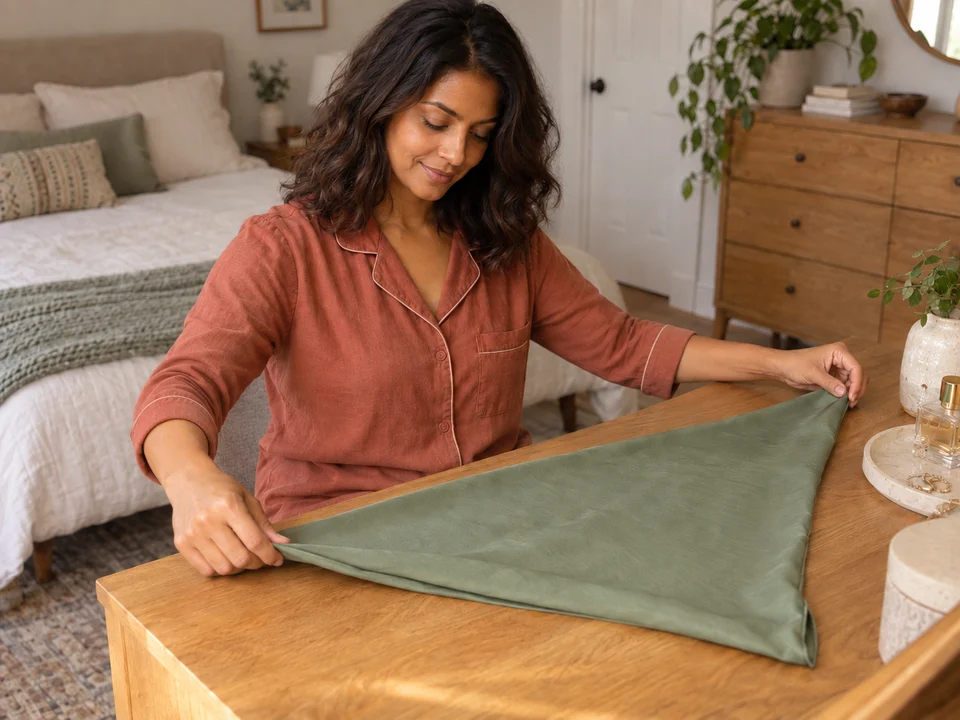
A square or long rectangle of smooth fabric, often silk or satin, folded and tied around the head to cover dry hair during sleep, usually knotted at the nape.