
Paul Mitchell · Color Protect

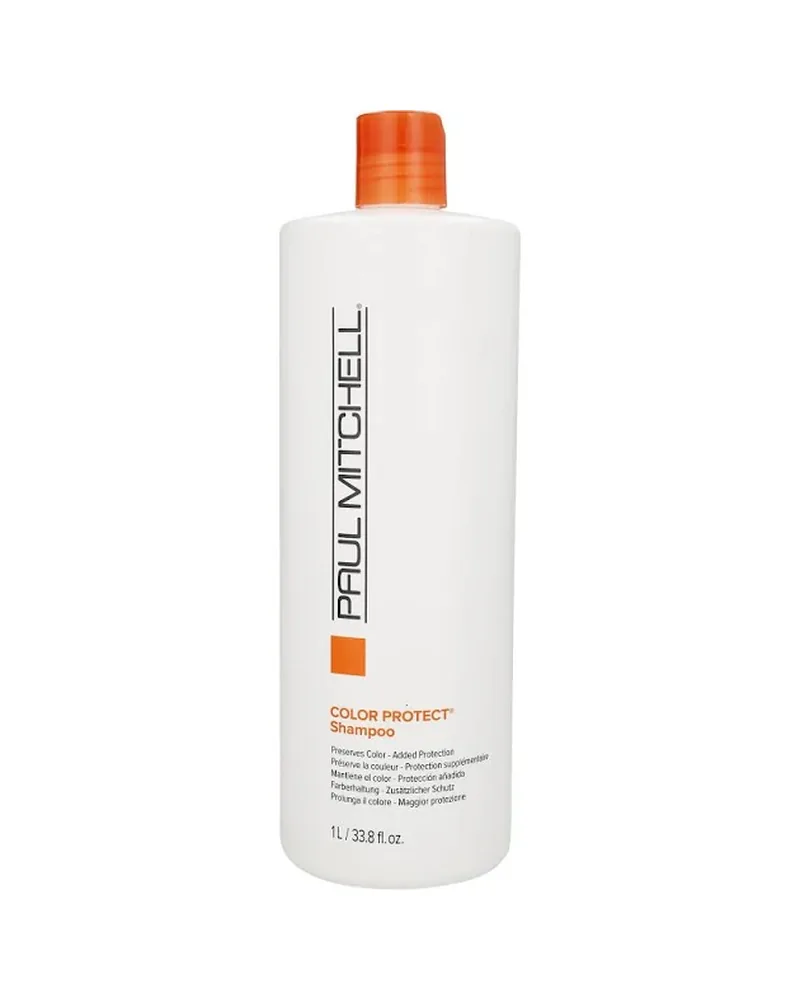
Color Protect Shampoo

Shampoo / Clarifying, deep-cleaning

  • Shampoo
  • Silicone-free
  • Lightweight
  • Cruelty-free · PETA-listed
Size33.8 fl ozmost listed · 2 sizes
Price$14.47 Good valueseen at one store · 33.8 oz
Price / oz$1.22/ozat 33.8 oz
Where to buy2 stores · 2 sizes

Scent:

The ingredient list declares fragrance. What it smells of is not stated, and we do not guess.

Manufacturer page: paulmitchell.com

Personal fit

Is this right for you?

Complete the consultation to see exactly how well this product fits your hair and your goals. With 2,400+ products in our library we can match exactly the right products to you.

  • In 10 minutes we can identify your exact hair condition and traits.
  • Every product matched against your hair across the 22 factors we check.
  • A personalized routine for your daily life — your schedule, styling habits, and local weather.
  • Find products that do the same job at a lower cost.
  • Your goals, scalp, damage history, water, budget, and scent preferences all shape your plan.

$49.00 one-time consultation, no subscription

Add the optional $49/year membership for unlimited adjustments for changes in weather and lifestyle.

Start your consultation

Priced with its peers

$1.22/oz at 33.8 oz — less than 58% of the 817 shampoos , which mostly run $0.81–3.01/oz.

Price and stores

Great for

Fast-oiling scalpsthat need a real reset wash
Hard waterand swimmers dealing with mineral deposit
Fine hairthat flattens under most products
Silicone-free routinesno silicones appear in the list
Very dry hairno fast-drying alcohol in the list
Cuticle-smoothing pHa pH adjuster brings it to the acidic range hair prefers

Maybe skip if

this product carries a scent
Sulfate-free routinesit uses a sulfate detergent
Dry or damaged haira strong detergent system strips as it cleans
Tight budgetsit sits in the upper price tiers

Whether this much cleansing is right for you depends on how fast your scalp oils, how much product you layer, and your water — that is what the consultation works out.

What the formula actually does

Read from the label, not the marketing

Each row says where it comes from: F means we derived it from this product’s own ingredient list, S means it is a claim the brand makes that the formula neither confirms nor contradicts.

Cleansing strength Strong

Removes oil, buildup, and most residue — a reset wash.

Expected lather High

Thick foam that spreads quickly through the hair.

Slip and detangling Moderate

Conditioning agents are present, lower in the list.

Water-binding (humectants) Moderate

Humectants in the working part of the formula.

Scalp active None

No over-the-counter scalp active.

Hard-water defence Chelators present

Chelators are present — they bind hard-water and pool minerals.

Needs detergent to remove No

Nothing here needs a detergent wash to remove.

Protein Minor

Protein appears, low enough to be a supporting ingredient.

Fragrance Present

Fragrance is listed; it sits below the working ingredients.

from the formula stated by the brand reported by reviewers Scale: 1 dot low · 5 dots high, within this product type.

Ingredients that matter

The ingredients that change a decision

The workhorse ingredients plus anything lower down that changes a decision. These chips name what an ingredient does — they are not safety scores, and no ingredient here is rated good or bad on its own.

IngredientWhat it doesWhy it mattersChip
WaterWater (Aqua, Eau) solvent The base everything else is dissolved in Neutral
Ammonium Lauryl Sulfate sulfate cleanser Cleanses
Sodium C14-16 Olefin Sulfonate olefin sulfonate cleanser Cleanses
Cocamide MIPA secondary cleanser Softens the main detergent Cleanses
Cocamidopropyl Betaine amphoteric cleanser Cleanses
Helianthus Annuus (Sunflower) Seed Extract botanical extract A trace plant extract Stabilizes
Panthenol humectant Adds a little water-binding Detangles
Hydrolyzed Wheat Protein film former A supporting film former Protein
FragranceFragrance (Parfum) fragrance The scent Fragrance
Benzyl Salicylate fragrance The scent Fragrance
Geraniol fragrance The scent Fragrance
Hexyl Cinnamal fragrance The scent Fragrance
What the list leaves out, and what it carriesNo silicones or drying alcohols. Contains fragrance. Chelators for hard water.
Full ingredient list (39)

US labelling rules put ingredients above 1% in descending order of amount; below 1% they may be listed in any order. Annotations keep three readings separate: the ingredient's general function, its role in this product type, and what its position can support.

  • 1 Water · Water (Aqua, Eau)
    General function

    The base of almost every rinse-off and cream hair product. It carries everything else and is normally the first ingredient on the label.

    Leading ingredient

    Listed in the first three ingredients, it is likely a structural part of this formula.

    • solvent
  • 2 Ammonium Lauryl Sulfate
    General function

    A sulfate detergent similar in strength to sodium lauryl sulfate, used for fast, high foam.

    Leading ingredient

    Listed in the first three ingredients, it is likely a structural part of this formula.

    May suitBuild-up-sensitive routines

    A sulfate detergent removes deposited silicone, wax and styling films in one wash, which is what resets a routine before build-up is visible.

    May suitFine or easily flattened hair

    Fine hair that goes limp under conditioning films usually reads a full detergent wash as volume returning.

    May not suitDry, coarse, or high-porosity hair

    Coarse and high-porosity hair loses water quickly on its own; an efficient detergent removes the surface oils that were slowing that down.

    PubChem
    • sulfate cleanser
    • cleanser
  • 3 Sodium C14-16 Olefin Sulfonate
    General function

    A strong non-sulfate detergent used in "sulfate-free" shampoos. It cleans about as thoroughly as a sulfate despite the label difference.

    Leading ingredient

    Listed in the first three ingredients, it is likely a structural part of this formula.

    May suitBuild-up-sensitive routines

    A strong detergent with no sulfate on the label. It removes deposited films about as completely as a sulfate does.

    May not suitVery dry or highly damaged hair

    Sulfate-free on the label is a naming fact, not a mildness one: this is an efficient detergent, and hair short of moisture can feel it.

    PubChem
    • olefin sulfonate cleanser
    • cleanser
  • 4 Cocamide MIPA
    General function

    A coconut-derived thickener that stabilises shampoo foam and gives the liquid its body.

    Supporting ingredient

    Listed in positions 4–8, it likely makes a meaningful contribution alongside the formula's main ingredients.

    May suitDry, coarse, or high-porosity hair

    Mild cleansing leaves more surface lubrication in place on hair that dries out quickly.

    May suitVery dry or highly damaged hair

    A sugar-derived non-ionic detergent, among the gentlest in use. It cleanses with little foam of its own and little sebum removal.

    May not suitBuild-up-sensitive routines

    Gentle cleansing leaves water-insoluble deposits largely in place; they come off with a stronger wash, not this one.

    • secondary cleanser
    • nonionic cleanser
    • thickener
  • 5 Cocamidopropyl Betaine
    General function

    A mild coconut-derived co-cleanser that boosts foam and softens the effect of stronger detergents. It appears in most shampoos, gentle or not.

    Supporting ingredient

    Listed in positions 4–8, it likely makes a meaningful contribution alongside the formula's main ingredients.

    May suitDry, coarse, or high-porosity hair

    Mild cleansing leaves more surface lubrication in place on hair that dries out quickly.

    May not suitBuild-up-sensitive routines

    The mildest detergents are also the least complete: a routine that deposits films needs something stronger periodically.

    DependsVery dry or highly damaged hair

    Among the mildest detergents in use — it is what baby shampoos are built on — but it is almost always the second detergent in a formula. How much a wash strips is still decided by the primary detergent listed above it.

    Indian Journal of Dermatology
    • amphoteric cleanser
    • secondary cleanser
    • cleanser
  • Below about this point, order stops being meaningful — these are typically used at 1% or less.
  • 6 Helianthus Annuus (Sunflower) Seed Extract
    General function

    A sunflower seed extract used at low levels for antioxidants and label appeal.

    Estimated lower-concentration zone

    It appears around or below the estimated 1% line, where label order no longer indicates relative amount; its role may be minor or technical.

    • botanical extract
    • antioxidant
  • 7 Panthenol
    General function

    Provitamin B5. It draws in water and penetrates the strand a little, which is why it is the standard ingredient for softness and shine claims.

    Estimated lower-concentration zone

    It appears around or below the estimated 1% line, where label order no longer indicates relative amount; its role may be minor or technical.

    May suitFine or easily flattened hair

    It hydrates without adding oil or a film, which is the combination fine hair usually needs.

    May suitFrizz-prone, damaged, or high-friction hair

    Deposits a lubricating layer that makes combing easier, which is most of what stops mechanical damage adding to frizz.

    May suitVery dry or highly damaged hair

    A humectant that also penetrates the cuticle, so it holds water inside the strand rather than only on the surface.

    PubChem
    • humectant
    • conditioning agent
    • vitamin
  • 8 Hydrolyzed Wheat Protein
    General function

    Wheat protein broken into fragments small enough to cling to the hair. It adds temporary strength and body; too much can feel stiff.

    Estimated lower-concentration zone

    It appears around or below the estimated 1% line, where label order no longer indicates relative amount; its role may be minor or technical.

    May suitFrizz-prone, damaged, or high-friction hair

    Filling surface gaps evens out the cuticle, which is part of what makes damaged hair comb and reflect light more like undamaged hair.

    May suitMaximum-hold styling

    Film formers are what hold a style: they dry into a connected film across the strands so the shape resists movement.

    May suitVery dry or highly damaged hair

    Hydrolysed fragments are small enough to sit in the gaps of a worn cuticle for a wash or two, temporarily restoring stiffness and cutting breakage in combing.

    • film former
    • protein
    • hydrolysed protein
  • 9 Rice Starch · Triticum Vulgare (Wheat) Starch
    General function

    A fine starch that soaks up oil at the roots and adds grip.

    Estimated lower-concentration zone

    It appears around or below the estimated 1% line, where label order no longer indicates relative amount; its role may be minor or technical.

    May suitFine or easily flattened hair

    Adds grip and body with no oil attached, which is what lifts fine hair at the root instead of weighing it down.

    DependsMaximum-hold styling

    Starch gives texture and grip rather than a set film; firm hold usually needs a polymer alongside it.

    • starch
    • powder
  • 10 Polyquaternium-44
    General function

    A positively charged conditioning polymer. It leaves a thin film that cuts static and eases combing, and it survives rinsing better than a simple conditioner.

    Estimated lower-concentration zone

    It appears around or below the estimated 1% line, where label order no longer indicates relative amount; its role may be minor or technical.

    May suitCurls or waves needing flexible hold

    Cationic polymers hold a curl loosely and stay soft, which is why they turn up in definition products rather than firm-hold ones.

    May suitFrizz-prone, damaged, or high-friction hair

    A cationic polymer stays on the hair through rinsing, which is what keeps static and combing friction down after the wash.

    May suitMaximum-hold styling

    Film formers are what hold a style: they dry into a connected film across the strands so the shape resists movement.

    • conditioning agent
    • film former
    • polymer
  • 11 PEG-6 Caprylic/Capric Glycerides
    General function

    A coconut-derived emulsifier that softens a cleanser and helps oils disperse.

    Estimated lower-concentration zone

    It appears around or below the estimated 1% line, where label order no longer indicates relative amount; its role may be minor or technical.

    May suitFrizz-prone, damaged, or high-friction hair

    Emollients fill and smooth the surface of the strand, which lowers the friction that lifts the cuticle and reads as roughness.

    • emulsifier
    • emollient
  • 12 PEG-150 Pentaerythrityl Tetrastearate
    • thickener
    • emulsifier
  • 13 Guar Hydroxypropyltrimonium Chloride
    General function

    A conditioning polymer made from guar bean gum. It deposits during rinsing, which is why sulfate shampoos can still leave hair soft.

    Estimated lower-concentration zone

    It appears around or below the estimated 1% line, where label order no longer indicates relative amount; its role may be minor or technical.

    May suitCurls or waves needing flexible hold

    Gums thicken and set soft, which gives definition that bends rather than a rigid cast.

    May suitFrizz-prone, damaged, or high-friction hair

    Cationic conditioners bind to the negatively charged damaged cuticle, laying it flat and cutting the friction that causes combing breakage.

    May suitMaximum-hold styling

    A styling polymer dries into a film across the strands, which is what makes a shape hold instead of relax.

    • conditioning agent
    • polymer
    • gum
  • 14 Glycerin
    General function

    A small water-loving molecule that draws moisture into the hair and holds it there. It is the most common softening ingredient in conditioners and leave-ins.

    Estimated lower-concentration zone

    It appears around or below the estimated 1% line, where label order no longer indicates relative amount; its role may be minor or technical.

    May suitDry, coarse, or high-porosity hair

    High-porosity hair loses water fast; a humectant holds some of it in place for longer than the wash itself would.

    May suitVery dry or highly damaged hair

    Binds water into the outer layers of the strand, and water is what makes dry hair flexible again rather than brittle.

    DependsClimate-sensitive or frizz-prone hair

    Water moves both ways. Measured across concentrations, glycerin solutions give water up in some conditions and take it from the air in others. What it does for you depends on how much of it is there and on the air around it.

    Scientific Reports
    • humectant
  • 15 Ethylhexylglycerin
    General function

    A preservative booster that also adds a little softness. Almost always paired with phenoxyethanol.

    Estimated lower-concentration zone

    It appears around or below the estimated 1% line, where label order no longer indicates relative amount; its role may be minor or technical.

    May suitFrizz-prone, damaged, or high-friction hair

    Emollients fill and smooth the surface of the strand, which lowers the friction that lifts the cuticle and reads as roughness.

    PubChem
    • preservative
    • emollient
  • 16 Glycol Stearate
    General function

    A wax that makes shampoo look pearly and adds a slightly richer feel.

    Estimated lower-concentration zone

    It appears around or below the estimated 1% line, where label order no longer indicates relative amount; its role may be minor or technical.

    May suitFrizz-prone, damaged, or high-friction hair

    Emollients fill and smooth the surface of the strand, which lowers the friction that lifts the cuticle and reads as roughness.

    PubChem
    • opacifier
    • emollient
  • 17 Glycol Distearate
    General function

    A wax that gives shampoo its pearly look and a slightly richer feel.

    Estimated lower-concentration zone

    It appears around or below the estimated 1% line, where label order no longer indicates relative amount; its role may be minor or technical.

    May suitFrizz-prone, damaged, or high-friction hair

    Emollients fill and smooth the surface of the strand, which lowers the friction that lifts the cuticle and reads as roughness.

    PubChem
    • opacifier
    • emollient
  • 18 Steareth-4
    • emulsifier
  • 19 Butylene Glycol
    General function

    A light humectant and carrier that helps extracts dissolve.

    Estimated lower-concentration zone

    It appears around or below the estimated 1% line, where label order no longer indicates relative amount; its role may be minor or technical.

    May suitFine or easily flattened hair

    Light and water-binding rather than oily, so it hydrates without contributing weight.

    May suitVery dry or highly damaged hair

    A small water-binding solvent. It holds moisture and helps the rest of the formula spread evenly over the strand.

    DependsClimate-sensitive or frizz-prone hair

    A humectant follows the air: it holds water in humid conditions and can give it up in very dry ones. Climate decides what it does more than the label does.

    PubChem
    • humectant
    • solvent
  • 20 Propylene Glycol
    General function

    A small humectant and solvent that keeps formulas stable and helps active ingredients spread.

    Estimated lower-concentration zone

    It appears around or below the estimated 1% line, where label order no longer indicates relative amount; its role may be minor or technical.

    May suitFine or easily flattened hair

    Light and water-binding rather than oily, so it hydrates without contributing weight.

    May suitVery dry or highly damaged hair

    A small water-binding solvent. It holds moisture and helps the rest of the formula spread evenly over the strand.

    DependsClimate-sensitive or frizz-prone hair

    A humectant follows the air: it holds water in humid conditions and can give it up in very dry ones. Climate decides what it does more than the label does.

    PubChem
    • humectant
    • solvent
  • 21 Sodium Chloride
    • salt
    • thickener
  • 22 Citric Acid
    General function

    Used to bring the product to a slightly acidic pH, which helps the cuticle lie flat. It is almost always near the end of the list.

    Estimated lower-concentration zone

    It appears around or below the estimated 1% line, where label order no longer indicates relative amount; its role may be minor or technical.

    May suitBuild-up-sensitive routines

    Holds hard-water minerals in solution so they rinse away instead of depositing on the hair.

    May suitFrizz-prone, damaged, or high-friction hair

    The acid side of pH adjustment, and the reason it matters is measured: alkaline formulas raise the fibre's surface negative charge, increase friction between strands and lift the scales, while lower-pH ones do the reverse.

    May suitGray, silver, or brass-prone hair

    Where a warm cast comes from water minerals rather than from the hair itself, holding those metals in solution is what removes it.

    International Journal of Trichology
    • pH adjuster
    • hard-water chelator
  • 23 Magnesium Nitrate
    • salt
  • 24 Magnesium Chloride
    • salt
  • 25 Tetrasodium EDTA
    General function

    Binds the metal ions in hard water so they cannot dull hair or destabilise the formula.

    Estimated lower-concentration zone

    It appears around or below the estimated 1% line, where label order no longer indicates relative amount; its role may be minor or technical.

    May suitBuild-up-sensitive routines

    Binds the calcium and magnesium in hard water, which is what stops mineral deposits accumulating on the strand wash after wash.

    May suitGray, silver, or brass-prone hair

    Copper and iron carried in tap water deposit on the strand and read as a dull, warm cast on gray or light hair. A chelator holds those metals in solution so the wash carries them off.

    PubChem
    • hard-water chelator
  • 26 Sodium Hydroxide
    General function

    A strong base used in trace amounts to raise pH; fully neutralised in the finished product.

    Estimated lower-concentration zone

    It appears around or below the estimated 1% line, where label order no longer indicates relative amount; its role may be minor or technical.

    DependsFrizz-prone, damaged, or high-friction hair

    The alkali half of a pH-adjusting pair, used in small amounts to bring a formula up to its target rather than to make it alkaline. Alkaline conditions raise the fibre's surface charge and lift the scales — but the finished pH is not on the label.

    International Journal of Trichology
    • pH adjuster
  • 27 Phenoxyethanol
    • preservative
  • 28 Sodium Benzoate
    • preservative
  • 29 Benzyl Alcohol
    • preservative
    • solvent
  • 30 Potassium Sorbate
    • preservative
  • 31 Methylchloroisothiazolinone
    • isothiazolinone
    • preservative
  • 32 Methylisothiazolinone
    • isothiazolinone
    • preservative
  • 33 BHT
    • antioxidant
  • 34 Fragrance · Fragrance (Parfum)
    General function

    An undisclosed blend of scent ingredients. Regulations let it stay unlisted, so a fragrance-free product is the only way to be certain what is not in it.

    Estimated lower-concentration zone

    It appears around or below the estimated 1% line, where label order no longer indicates relative amount; its role may be minor or technical.

    May not suitFragrance-sensitive routines

    Declared fragrance. On a fragrance-sensitive routine this is the line that decides it, wherever it sits on the label.

    • fragrance
    • declared fragrance
  • 35 Benzyl Salicylate
    General function

    A soft floral fragrance component listed separately as a recognised allergen.

    Estimated lower-concentration zone

    It appears around or below the estimated 1% line, where label order no longer indicates relative amount; its role may be minor or technical.

    May not suitFragrance-sensitive routines

    One of the 26 scent components the EU requires to be named individually above a threshold. It is named because it is a known contact allergen, not because it is unusual.

    PubChem
    • fragrance
    • named fragrance allergen
  • 36 Geraniol
    General function

    A rose-scented fragrance component, listed on its own because some people react to it.

    Estimated lower-concentration zone

    It appears around or below the estimated 1% line, where label order no longer indicates relative amount; its role may be minor or technical.

    May not suitFragrance-sensitive routines

    One of the 26 scent components the EU requires to be named individually above a threshold. It is named because it is a known contact allergen, not because it is unusual.

    • fragrance
    • named fragrance allergen
  • 37 Hexyl Cinnamal
    General function

    A jasmine-like fragrance component named separately as a recognised allergen.

    Estimated lower-concentration zone

    It appears around or below the estimated 1% line, where label order no longer indicates relative amount; its role may be minor or technical.

    May not suitFragrance-sensitive routines

    One of the 26 scent components the EU requires to be named individually above a threshold. It is named because it is a known contact allergen, not because it is unusual.

    PubChem
    • fragrance
    • named fragrance allergen
  • 38 Hydroxycitronellal
    General function

    A soft floral fragrance component named separately as a recognised allergen.

    Estimated lower-concentration zone

    It appears around or below the estimated 1% line, where label order no longer indicates relative amount; its role may be minor or technical.

    May not suitFragrance-sensitive routines

    One of the 26 scent components the EU requires to be named individually above a threshold. It is named because it is a known contact allergen, not because it is unusual.

    PubChem
    • fragrance
    • named fragrance allergen
  • 39 Linalool
    General function

    A floral fragrance component listed separately as a recognised contact allergen.

    Estimated lower-concentration zone

    It appears around or below the estimated 1% line, where label order no longer indicates relative amount; its role may be minor or technical.

    May not suitFragrance-sensitive routines

    One of the 26 scent components the EU requires to be named individually above a threshold. It is named because it is a known contact allergen, not because it is unusual.

    PubChem
    • fragrance
    • named fragrance allergen

What the whole list adds up to

  • 7 preservatives
  • 6 fragrances
  • 5 named fragrance allergens
  • 4 solvents
  • 4 humectants
  • 4 emollients
  • 3 cleansers
  • 3 thickeners
  • 3 emulsifiers
  • 3 salts
  • 2 secondary cleansers
  • 2 antioxidants
  • 2 film formers
  • 2 conditioning agents

Ingredient list captured 2026-08-22. Formulas change — check the package in your hand when an ingredient matters to you.

Price · 33.8 oz

Seen at $14.47 1 store · checked Aug 30
Good value under $49 Under $1.45/oz it costs less than three-quarters of the 8 products we score as doing the same job

Usually a good value. Most stores sell it under the $49 line, and products that do this job typically go for about $63 at this size.

Sizes

10.14 oz
$14.47
$1.43/oz
33.8 ozmost listed
$34
$1.01/oz

The 33.8 oz costs 29% less per ounce than the 10.14 oz.

Show the price ladder
Where we’ve seen it2 listings · 2 stores

33.8 ozmost listedBest per ounce

  • Ulta
    $34.00
    33.8 oz · $1.01/oz
    Aug 22Lowest per oz

10.14 oz

  • Walmart
    $14.47
    10.14 oz · $1.43/oz
    Aug 30Lowest per oz

Sorted by price per ounce. Dated observations from our research, not live prices. Direct store pages, no affiliate links. We don’t sell this product.

How we work this out
  1. 33.8 oz is the size stores list most often; every comparison on this page is made at it. Other sizes are shown in the Sizes row and the store list.
  2. Seen at $14.47 is the price we have observed for the 33.8 oz. We need three stores before we call a price commonly seen.
  3. Good value under $49 comes from the 8 products we score as doing the same job as this one. A quarter of them cost less than $1.45/oz; at 33.8 oz that is $49. Under that line you are paying less than most of them.
  4. Each size is guarded on its own, so a multipack or a marketplace listing at one size cannot move another.
  5. About $63 is what those same products typically cost at this size — the midpoint of their prices per ounce, scaled to 33.8 oz.

Formula

Formula score
10 of 10

The formula carries the systems a shampoo is built around, and it sits in the middle of the range for shampoos per ounce.

How the score is counted
  • 1 products we score as doing the same job cost less per ounce
  • Costs less per ounce than 58% of the 817 shampoos we’ve priced
  • Covers 7 of the 7 things a shampoo should do
  • Reviewers mention 2 things they like about how it performs
  • A working detergent systemWhat actually removes oil and product.3 pts
  • Slip for detanglingReduces the force it takes to comb wet hair.2 pts
  • A humectantBinds water into the hair.1 pt
  • A hard-water chelatorBinds the minerals that dull hair in hard water.1 pt
  • A pH adjusterBrings the formula to the acidic pH hair prefers.1 pt
  • No detergent-dependent filmNothing that needs a clarifying wash to remove.1 pt
  • Fragrance kept out of the top eightScent as a finishing touch, not a major share.1 pt

The formula score is completeness for the job: the share of the systems this product type is normally built around that we can find in this list, weighted. It is not efficacy, not quality, and it never compares across product types.

Does the same job, for less

Same derived functions — what it cleans, conditions, coats or holds — at a lower cost per ounce. Scent, texture and where you buy it can still differ.

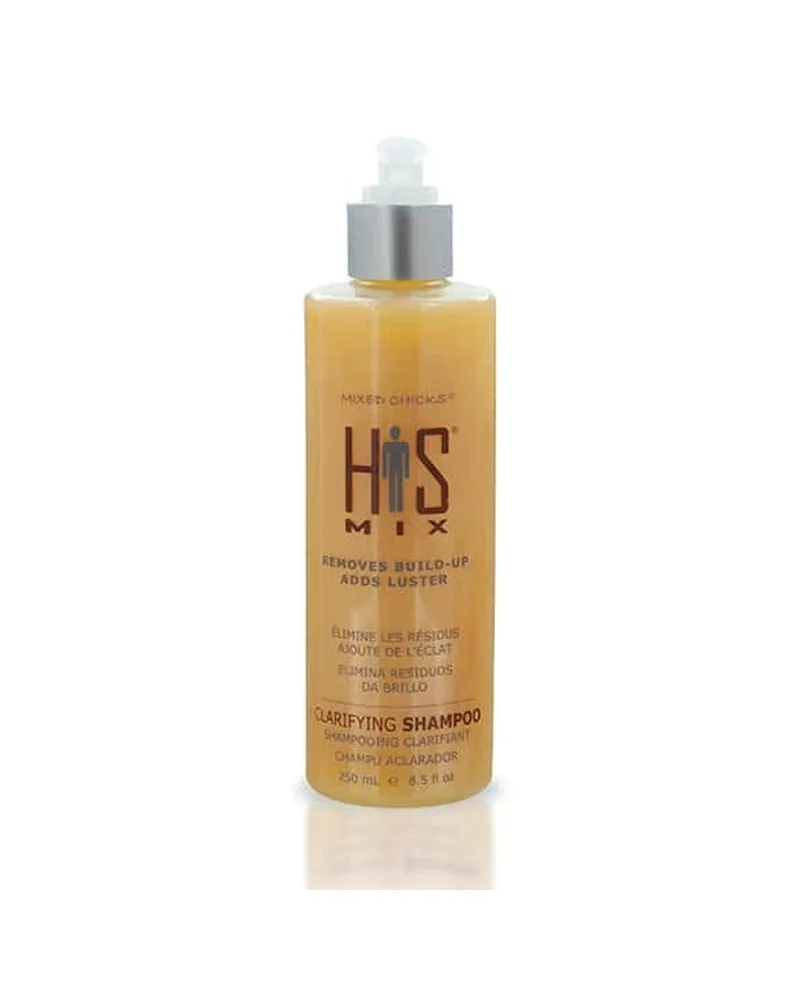
Mixed ChicksLowest cost per oz His Mix Shine-Starter Clarifying Shampoo $0.68/oz $0.54/oz less
  • Deep clean
  • Hard water
  • Lightweight
· Close function
Function
  • Oils and butters
  • Film formers
Also
  • Drugstore tier
  • 6 oz bottle
Compare

See more alternatives in the product library

These are functional neighbours, not personal recommendations — they are close on formula, not chosen for anyone. Get the one that fits your hair, routine, and budget

Suits every hair pattern

Final decision

Should you buy it?

A solid pick for the hair it suits
Best user

Scalps that oil up within a day — for a proper reset wash and a hard-water chelator

Biggest tradeoff

Not ideal for anyone sensitive to fragrance, sulfate-free routines and fresh keratin treatments, or dry or damaged hair

We do not sell products or take placement fees. This page states what the formula and the prices show; the consultation is what matches it to a person.

Claims check

What the brand says, against what the formula shows

Claims are quoted from the brand. We only mark one supported, partly supported, or conflicting when the ingredient list actually speaks to it; everything else stays "stated by the brand", which is not a criticism — most claims simply cannot be read off a label.

0
SupportedBacked by ingredients
0
Partly supportedSome supporting logic
1
Stated by brandNo clear evidence
1
Potential conflictFormula works against claim
Daily shampoo for color-treated hair helps protect hair from sun damage, prevent color fade and boost shine

It uses a sulfate detergent, which is the usual cause of fast fade.

  • Ammonium Lauryl Sulfate
  • Sodium C14-16 Olefin Sulfonate
  • Cocamidopropyl Betaine
Potential conflict

Likely to pull colour faster.

Helps extend the life of hair color

This is a marketing claim; an ingredient list cannot speak to it.

Stated by brand

Can’t be confirmed from label.

How to read this

We look at the first 10–15 ingredients and what they do in a formula — not marketing. If the list doesn't speak to a claim, we don't assume.

Reviewers

What people report

Recurring themes our researchers wrote in their own words from sourced reviews. We do not store or scrape star ratings.

Praised as effective for color-treated hair and versatile as a clarifying/travel shampoo

color-treated hair users

Reported to work well on red hair color specifically

red-hair-color users

Some reviewers report a greasy or waxy residue despite thorough rinsing

general users

Reviewers who scrutinize ingredients criticize the sulfate content as contrary to the "color protect" claim, reporting faster color fade/brassiness

ingredient-conscious/colored-hair users

More from Paul Mitchell

How this page was made

  • Everything above is generated from our researched product record — identity, the ingredient list as printed, the brand's own claims, dated price observations, and review themes written in our researchers' own words. No part of this page is written per product.
  • The value band is a fixed label over two stored numbers: this product’s cost per ounce as a percentile of every product of this type we have priced, each at the size it is most often sold in, and how many products we score as doing the same job cost at least a quarter less per ounce.
  • Both scores out of ten are defined on this page. The formula score is completeness for the job, computed from a fixed per-format checklist shown beneath the gauge; the price score is cost per ounce against every product of this type we have priced.
  • The "Is this right for you?" panel reads only your own consultation answers, and it applies exactly the filters our recommendation engine applies. It is computed when you load the page and is never stored on it.
  • 5 sources consulted for this product (3 manufacturer or regulatory, 2 retailer, 0 editorial), last checked 2026-08-25.
  • Ingredient references are linked for 17 of 25 product-aware annotations on this page. Fit notes are conditional formulation guidance, not a conclusion about the finished product or about you.
  • We have not tested this product in a lab and we do not physically test your hair. Formula readings come from the ingredient list; behaviour claims are labelled as the brand's.
  • Ingredient order tells you relative amount only above roughly 1%. Prices are observations on the dates shown and change without notice.
  • Ingredient names link to our ingredient library, where each entry shows what it does, which product types use it, and where it usually sits on a label across everything we have researched.
  • This is cosmetic information, not medical advice, and nothing here diagnoses or treats a health condition.
  • Formula readings: derivation v22. Record last updated 2026-08-25.