Hair Care Guides · Frizz & flyaways

Make frizz easier to manage.
Choose the finish without piling on products.

It’s frustrating when waves turn fluffy after brushing or flyaways return as soon as you go outside. Separating curls, rough ends and heavy products each need a slightly different change.

Your personal hair-care planProducts and styling for your texture and the finish you like.$49one-timeStart my consultation
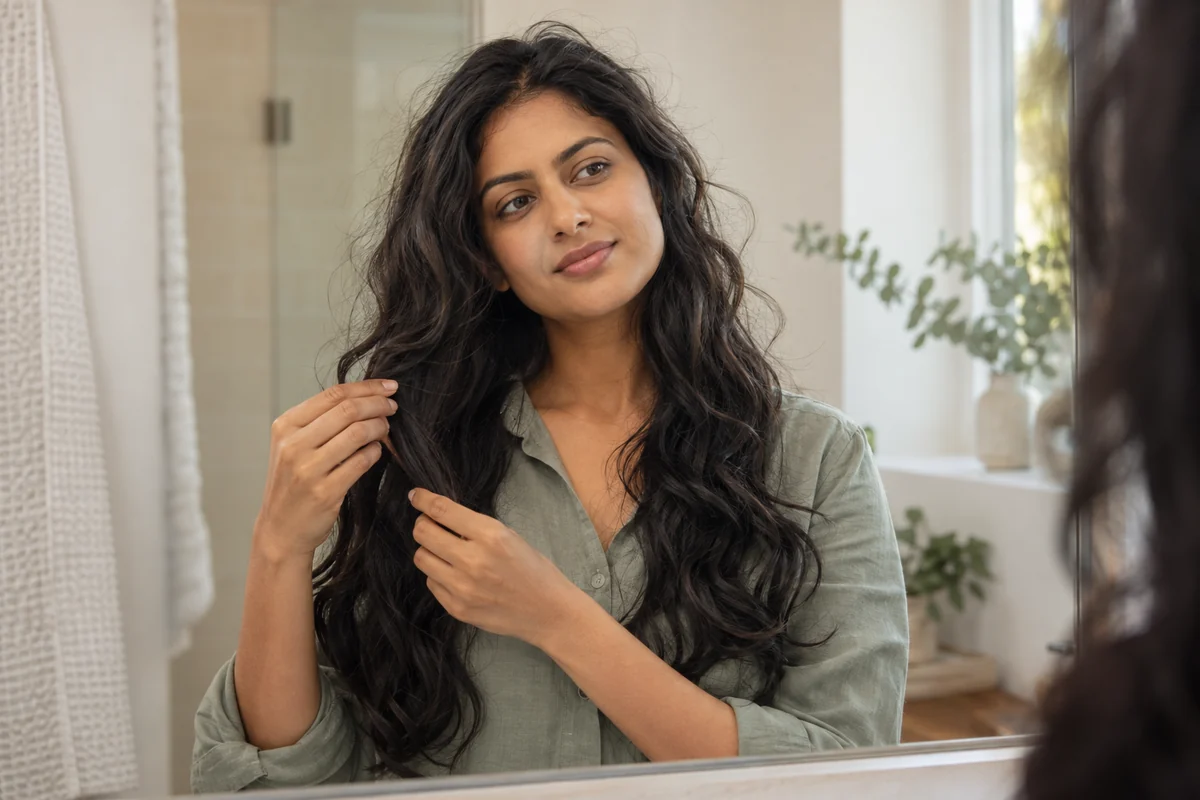
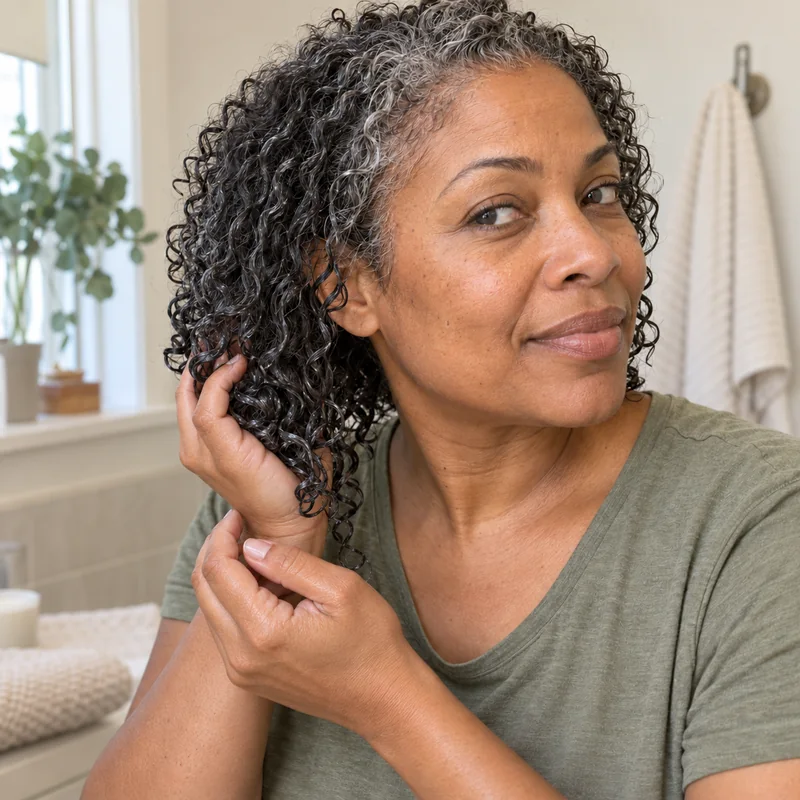
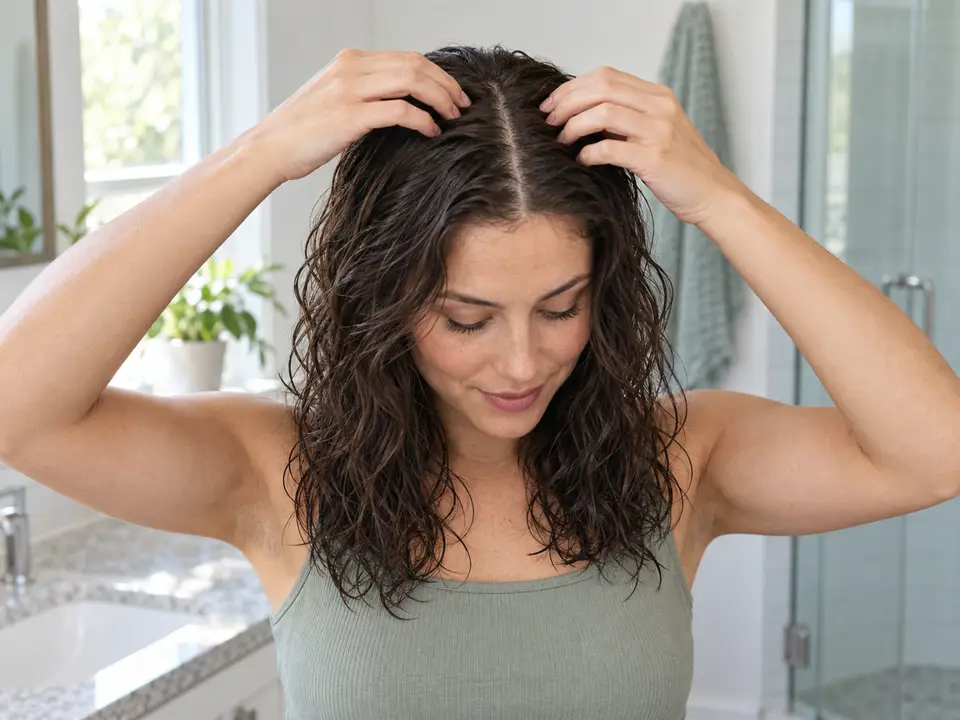
A woman gently feeling her wavy hair with natural flyaways.
Keep as much fullness or curl definition as you like.

Work out what needs to change

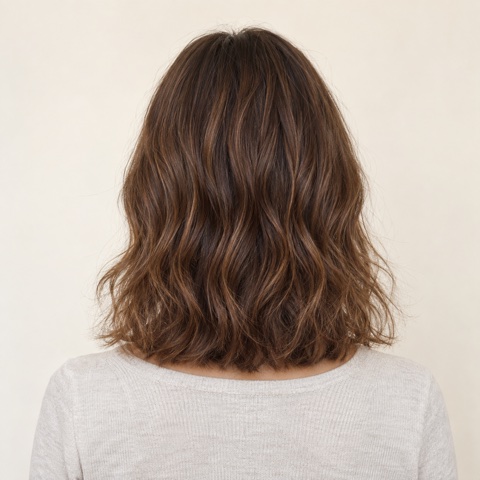
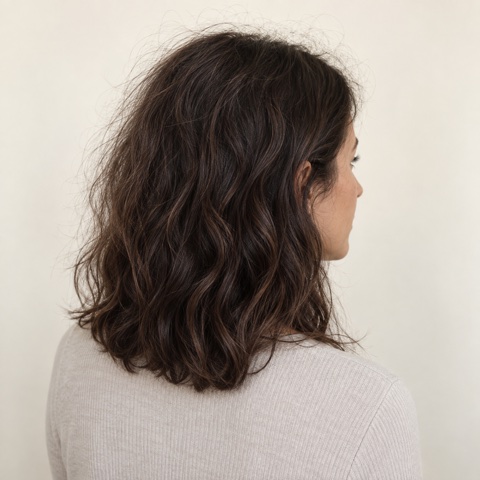
A rear view of wavy hair with flyaways near the ends.

Loose strands and curl groups look different

Brushing curls separates strands that were sitting together, giving a fuller, fluffier finish. Some strands also sit outside the main groups naturally. If you want more definition, work on grouping the hair before it dries.

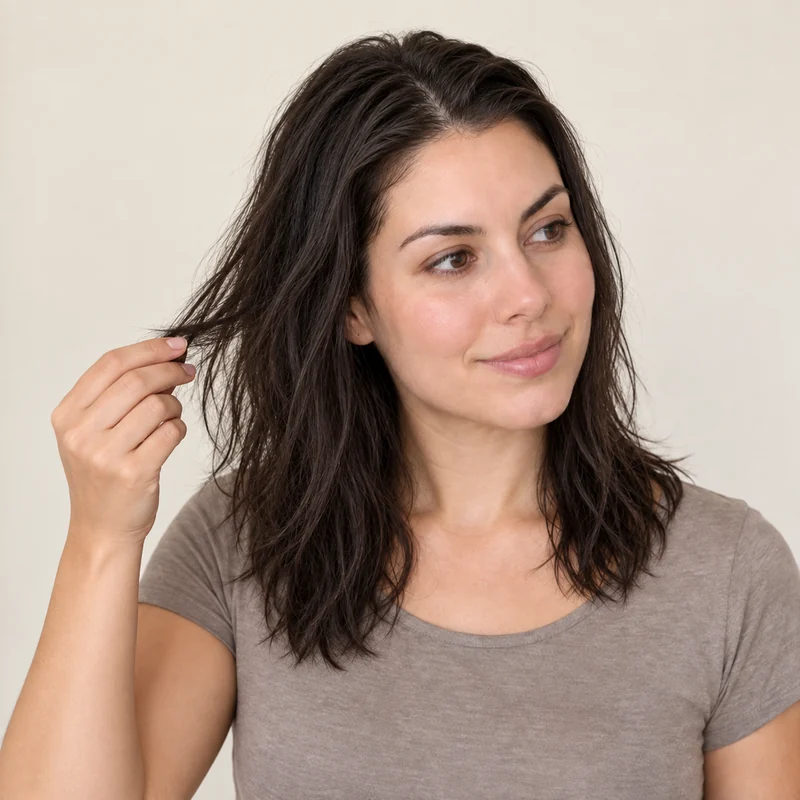
A woman gently feeling a section of her loose hair with her fingers, with no visible product.

Roughness and tangles need care too

If the hair also catches, knots or snaps, add gentler detangling and conditioning to your styling changes. Care for dry hair covers rough lengths. Care for colored hair covers bleach and dye history.

Choose a change for the problem you have

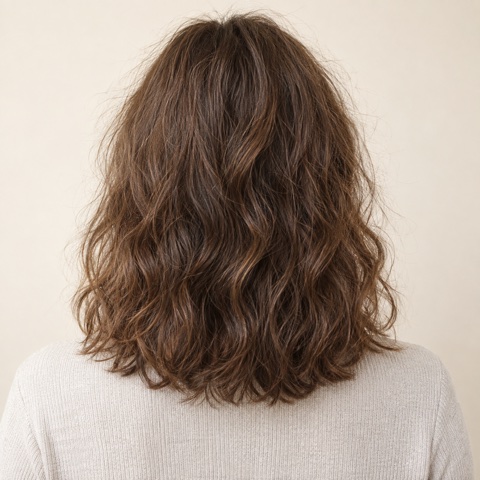
A rear view of wavy hair with fluffy, separated groups.

Waves or curls turn fluffy after brushing

  • For curls, detangle while damp with conditioner for slip. Support a reachable section and clear the tips before moving the comb’s starting point higher. Every stroke travels down toward the ends.
  • If you want hold, spread styling gel through detangled lengths at the wetness its bottle specifies. Then cup the ends, lift gently and open your hands to release them. The illustrated scrunch method below separates those actions.
  • Leave the groups alone while they dry instead of brushing them again. A fuller brushed-out finish is also a choice if you prefer it.
A side view of wavy hair with flyaways around the crown.

The style changes when you go outside

  • Hair takes up moisture from humid air, and a set style can change with it. Before going out, check that the roots and inner lengths are dry as well as the outer layer.
  • Use an umbrella or a loose hood in rain. Lift the hood clear when removing it instead of dragging it across your hair.
  • For waves or curls you want to hold, try one gel or mousse before drying. If the finish feels coated, use less next time rather than layering more over the flyaways.
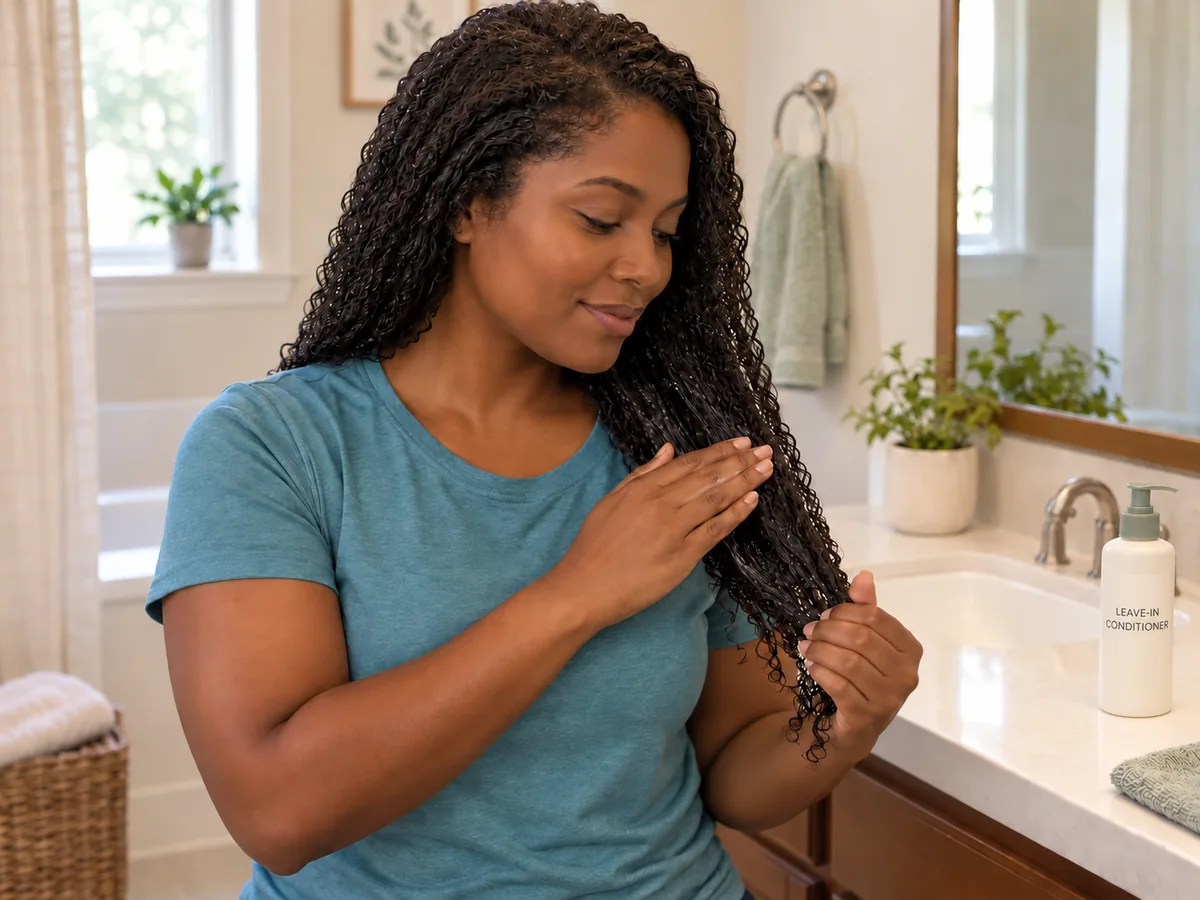
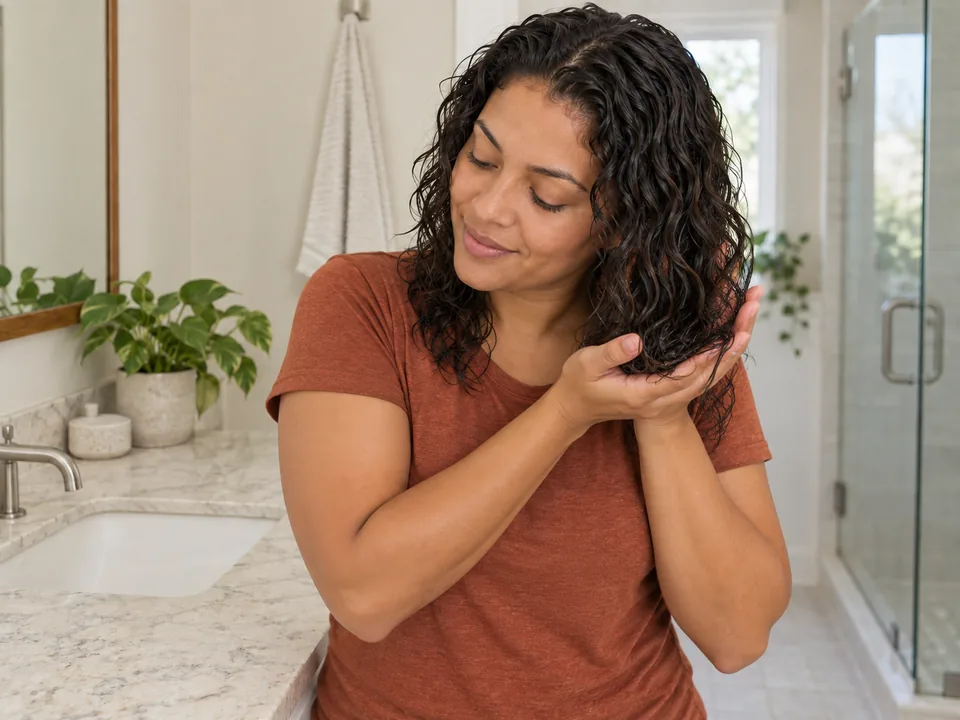
A woman smooths one damp curl section between her own hands beside a bottle labelled leave-in conditioner.

Extra product flattens the roots

  • At the next wash, keep your rinse-out conditioner but leave out one optional oil or cream. Check how easily the hair detangles and how it feels once dry.
  • If the ends still feel rough, try a small amount of leave-in conditioner on those lengths. Keep it off roots that flatten easily and check whether it goes on wet, damp or dry hair.
  • If the hair feels comfortable but the style falls apart, try a hold product at your next styling session instead of adding more conditioner.
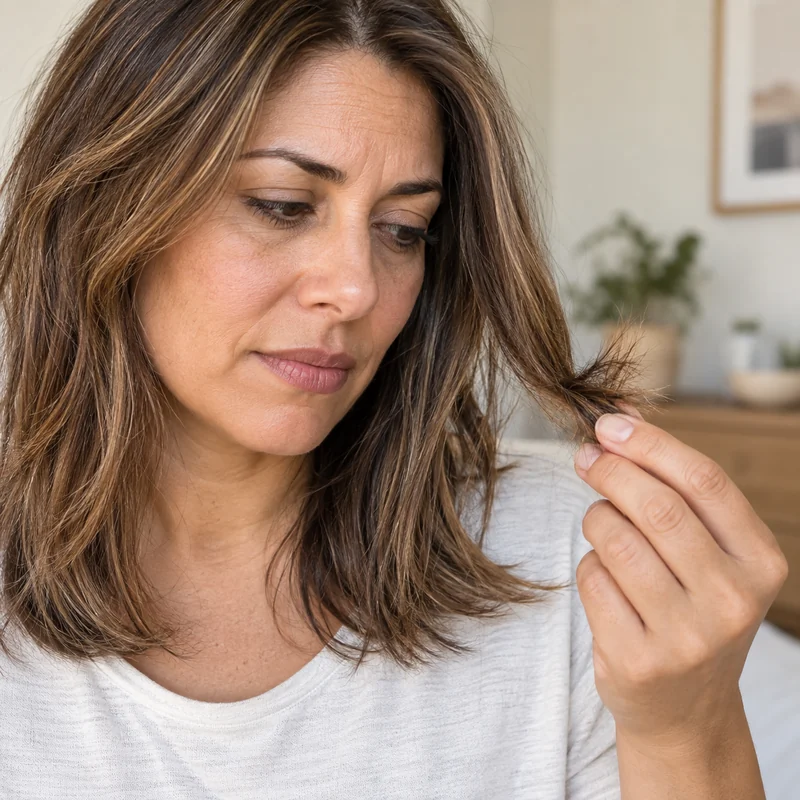
A woman examining rough, uneven ends in a section of highlighted hair.

The ends feel rough and keep snapping

  • Blot dripping water with a soft towel or cotton T-shirt. Avoid rubbing the lengths back and forth or pulling through a knot that resists.
  • Use hot tools less often and avoid repeatedly ironing the same flyaways. Discuss fragile lengths and previous chemical services with your stylist before more bleaching or straightening.
  • Trim split tips that keep catching and condition the remaining lengths. Lift hair clear of bag straps and rough collars to reduce repeated rubbing.

Give each product a clear job

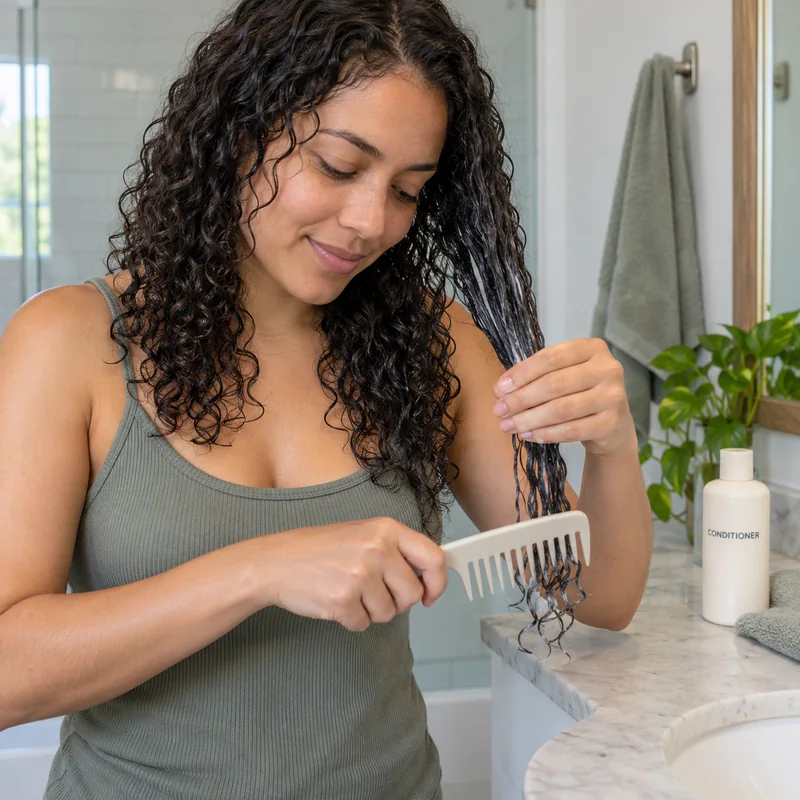
A woman supports one damp curl section above a wide-tooth comb at the tips beside a conditioner bottle.

Conditioner for easier detangling

  • Use rinse-out conditioner after shampooing. Reach the areas that catch, including underneath thick sections. Allow any waiting time on the bottle, then rinse it out.
  • For straight hair, concentrate on the ends and let it partly dry before combing. Curlier sections can need conditioner farther up the lengths and detangling before the rinse.
  • Your consultation can help choose a conditioner using where your hair tangles, your texture and what you have already tried.
A woman smooths the lower part of her loose wavy hair between her palms.

Leave-in for rough areas after washing

  • Try a lightweight leave-in if richer products flatten your hair. Begin with a small amount on the rough lengths and ends.
  • Use the wet, damp or dry starting state on its bottle. Spread it over the areas that need it, then judge the dried finish before adding more.
  • If a product stings or burns, rinse it off and stop using it.
A woman cups a damp curl section in one hand while her other hand supports her wrist.

Gel or mousse for the shape you want

  • Gel and mousse come in different holds and finishes. Pick one to start using its own description, rather than assuming every mousse is light or every gel is firm.
  • Spread it through the areas you want to style, including inner lengths, at the amount and wetness it specifies. The dictionary has more on styling polymers.
  • Let the hair dry before softening a firm gel cast. The scrunching guide below links that separate finishing method.

Illustrated methods for conditioning and styling

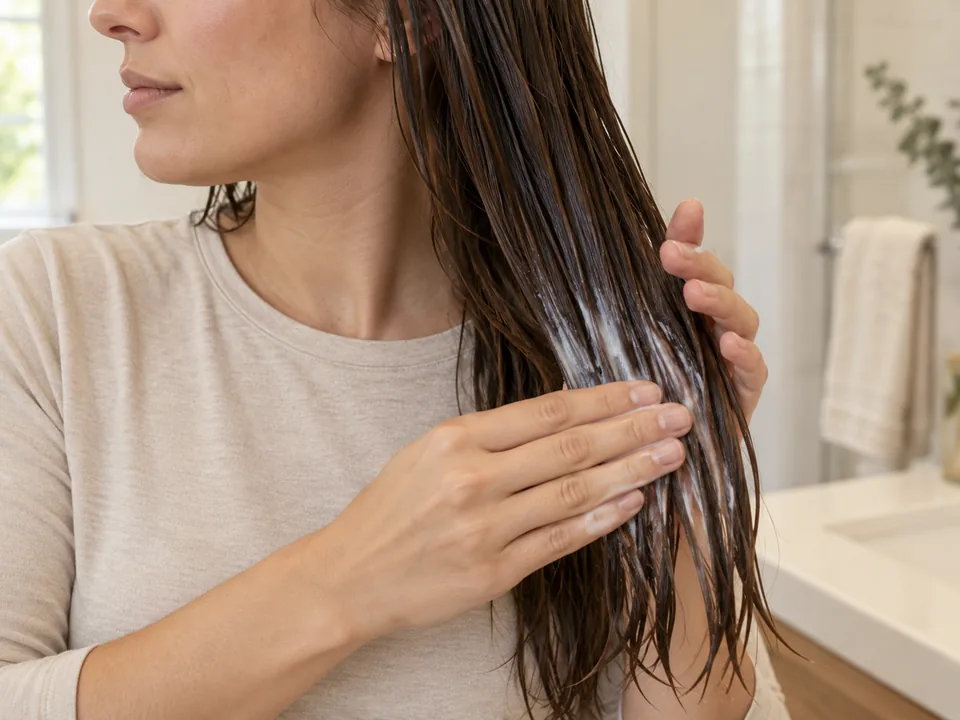
Conditioner smoothed onto the lower lengths and ends, away from the scalp.

Condition the areas that catch

After rinsing out shampoo, smooth rinse-out conditioner through wet lengths and ends. Keep easily flattened roots clear. The method shows sectioning, palm spreading and rinsing. Use an ordinary conditioner whose directions allow that wet-hair method.

Guide: Apply conditioner to the lengths and ends
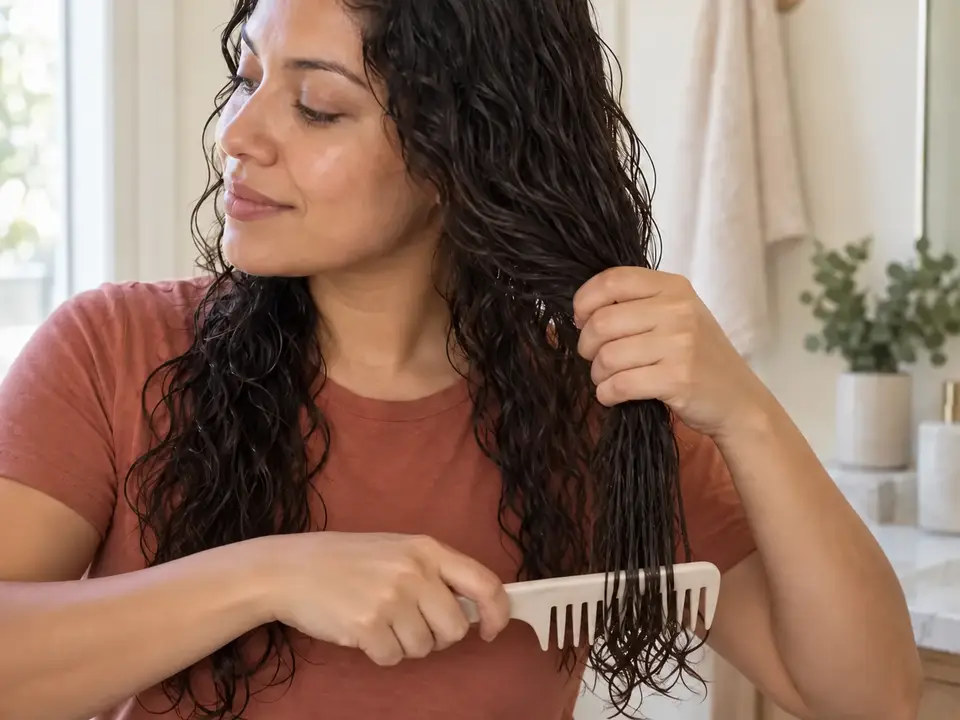
A woman supporting a damp hair section while combing its tips.

Loosen knots before setting curls

Support each section above the knot and comb downward through the tips first. Work curls damp with conditioner for slip. Let freshly washed straight or loosely wavy hair partly dry before combing. Stop when a knot resists.

Guide: Detangle with a wide-tooth comb
A woman cupping damp waves and curls upward while applying styling hold.

Spread, lift and release the curl groups

Start with detangled loose hair at the wetness your gel needs. Spread gel along reachable lengths before cupping the ends, lifting gently and opening your hands to release them. The method shows each movement and how to finish.

Guide: Scrunch gel into waves and curls
A woman arranging her damp hair before letting it air dry.

Leave the shape loose while it dries

Blot drips before styling only if the next product allows it. After applying any styler, set the part and leave the lengths loose. Check roots and inner layers before calling the hair dry. Allow the drying time your routine needs.

Guide: Air-dry your hair

Illustrated care examples: before & after

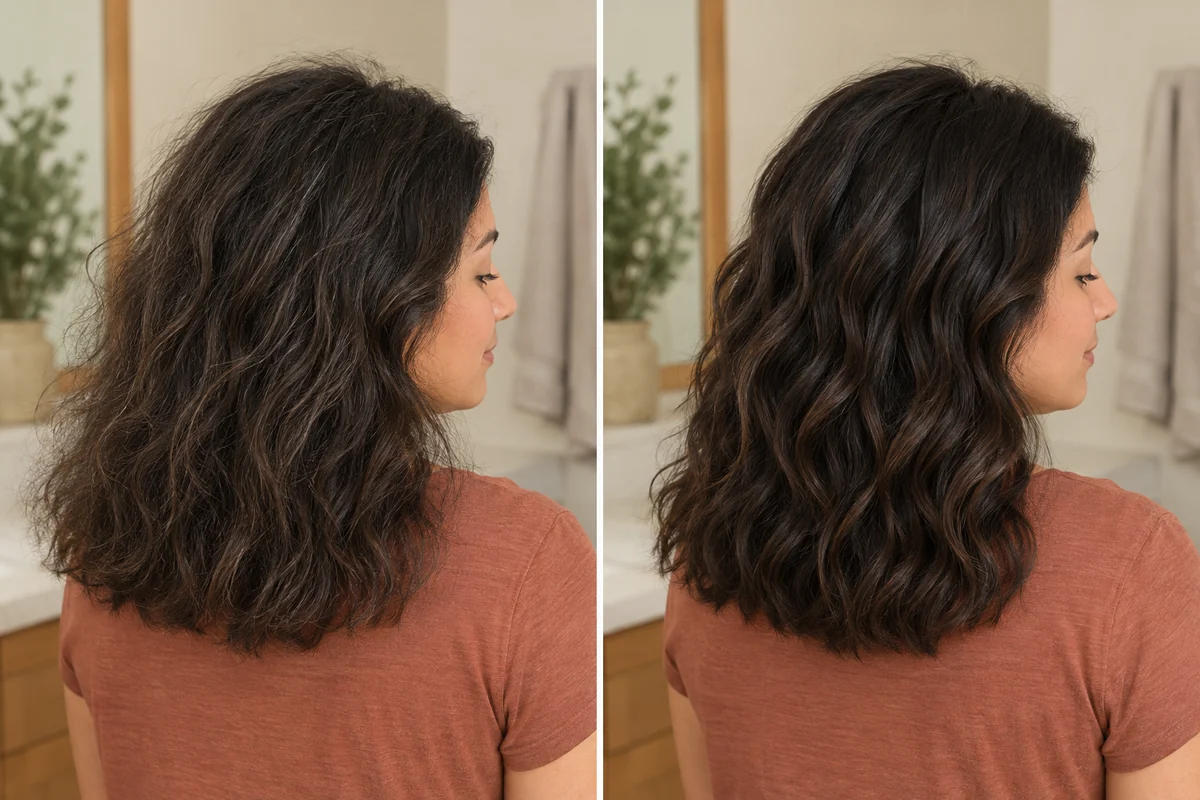
More grouped waves

Illustrative styling comparison: fluffy waves beside more coherent wave groups.
Before · fluffy, separated wavesAfter styling · more grouped waves
The waves sit in clearer groups on the right, with fewer loose strands around the outline. The hair keeps its movement.

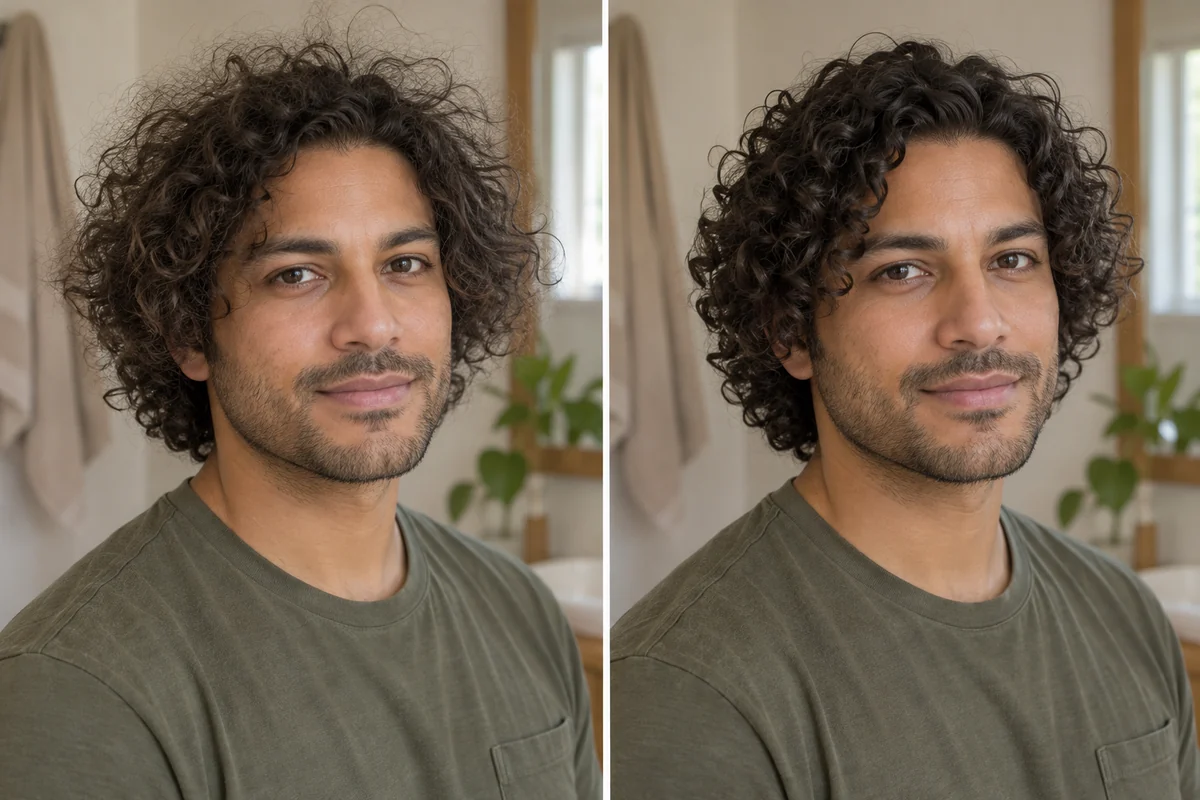
A softer curl halo

Illustrative styling comparison: a fuzzy curl halo beside more defined curls.
Before · fuzzy curl groupsAfter styling · clearer curl definition
The right-hand curls form more distinct groups. A few loose strands remain around the outline.
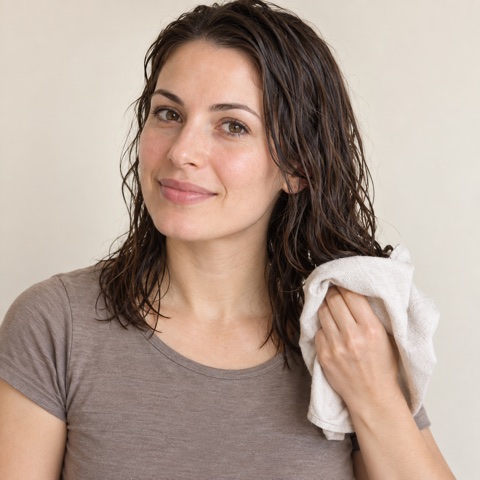
A woman gently squeezing damp hair with a towel.

Choose what to change in your own routine.

Bring the products you use and tell us when the finish changes. Your consultation can help you choose what to keep and which change to try first.

  • Would more hold help, or do my ends need conditioner?
  • What can I use without flattening my roots?
  • How can I keep my waves grouped after washing?

Your plan can account for your texture, scalp needs, treated lengths and the finish you prefer. Tell us how you dry your hair, what feels heavy and how much time you want to spend styling.

The Hair Care Consultation gives you a personal plan with product recommendations, routines and guidance on your hair-care questions.

$49 with 60 days of follow-ups, or $99 with 12 months. Pay once; the year renews only if you choose.