Hair Care Guides

Choose a sleep covering that feels comfortable.
Leave room for your hair and skip tight bands.

A bonnet that slips off or a scarf knot that presses can make bedtime more work. Choose by what you need: room to tuck your hair away, an adjustable wrap, or a smooth pillowcase with nothing on your head.

Your personal hair-care planProduct choices, routines and answers shaped around your hair.$49one-timeStart my consultation
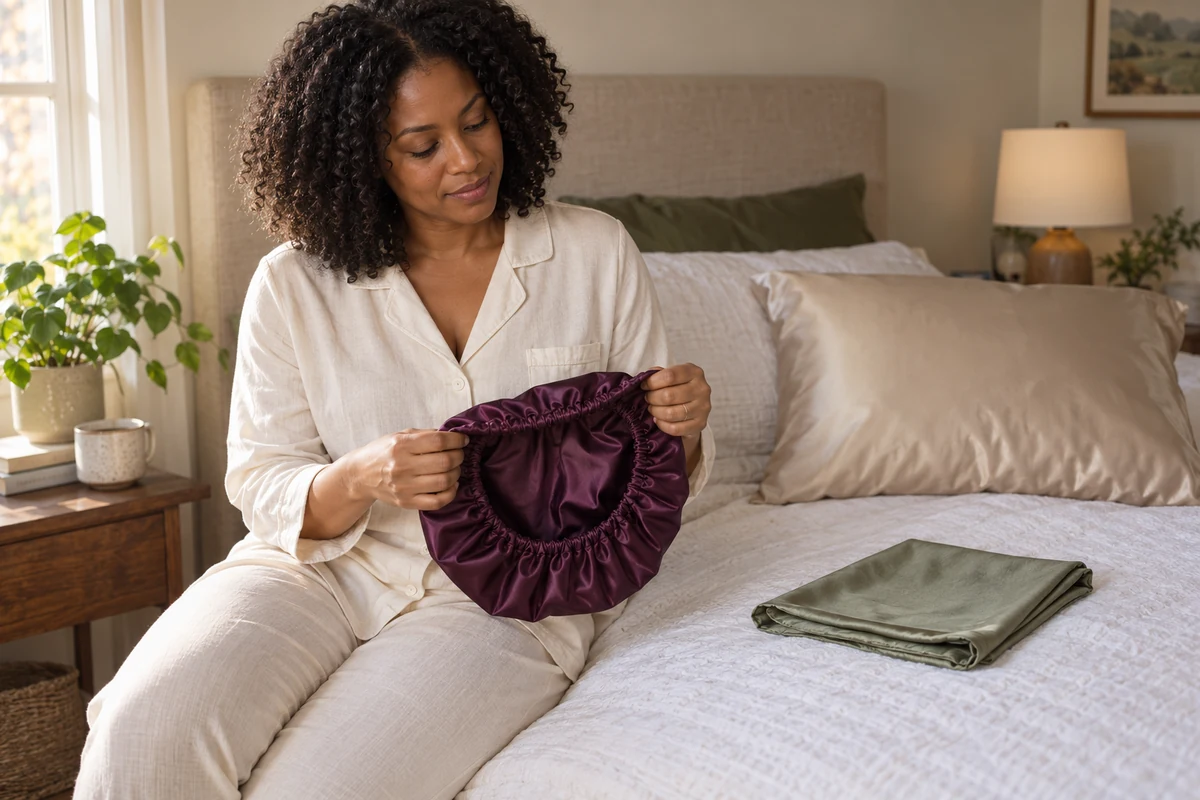
A woman considers a roomy bonnet beside a folded scarf and a pillow in a smooth pillowcase.
Leave room for your hair and skip tight bands.

What is going on

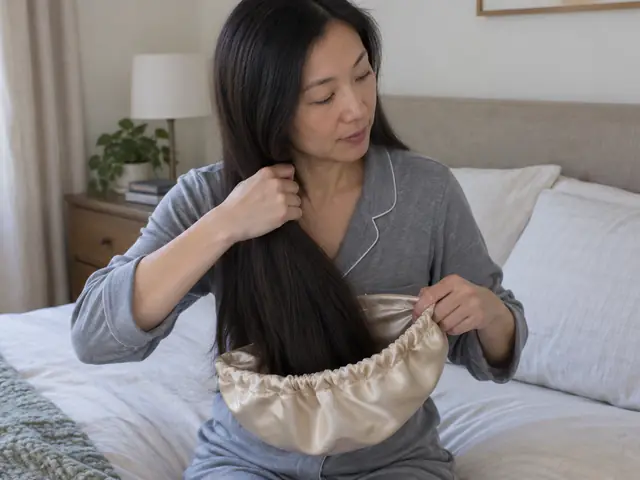
A woman holds her long hair over an open bonnet in her lap.

Choose a bonnet to tuck your hair away

A bonnet holds loose lengths inside without a nightly knot. Choose enough depth for your hair to rest loosely. If the hair pushes the band off or you have to squash it in, try a deeper bonnet rather than a tighter band.

A woman on the edge of her bed smooths the edge of a tied sage sleep scarf.

Choose a scarf if you can tie it comfortably

A scarf lets you adjust the wrap, but you need to reach and undo the knot. Choose enough fabric for the ends to meet without stretching. If tying behind your head is awkward, try a slip-on bonnet or use a pillowcase alone.

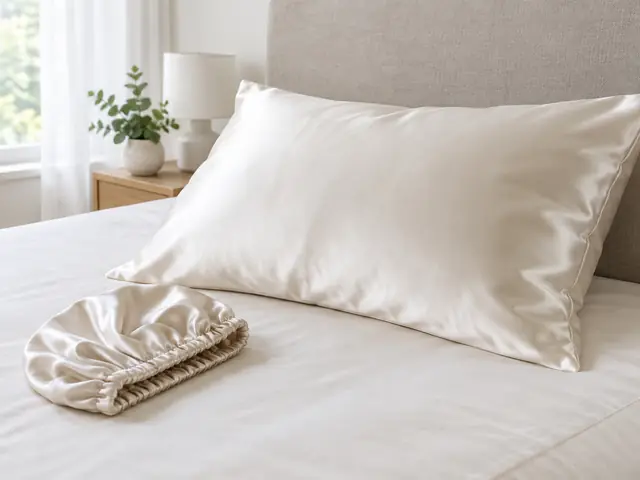
A satin pillowcase on a bed with a folded bonnet beside it.

Choose a pillowcase if you dislike head coverings

A smooth pillowcase gives your hair a surface to rest on while leaving it loose. Match the case to your pillow’s size and tuck in its envelope flap or close its zip. Position any fastening away from where your hair rests.

What helps, day to day

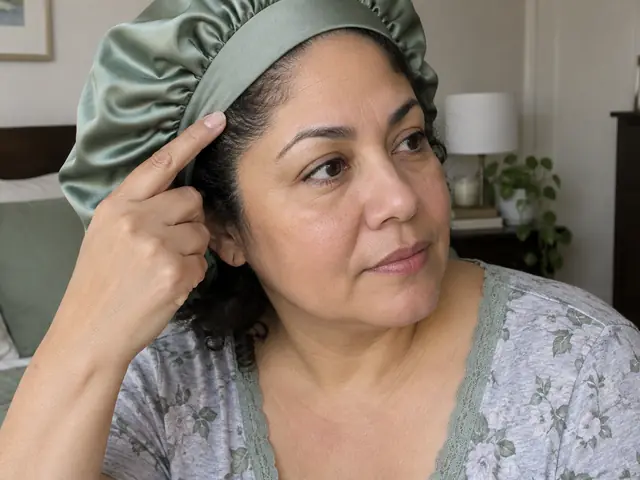
A woman touches the edge of her bonnet band at the temple.

The band or knot presses

  • Take the covering off if it pulls, pinches or hurts.
  • Check for a folded band, trapped hair or a bulky knot against the pillow.
  • Refit it loosely, then lie in your usual sleeping position and turn your head.
  • If it still presses, use a pillowcase alone.
A tied satin scarf lies on a rumpled pillow.

The scarf keeps slipping off

  • Open it fully and smooth out folds before wrapping again.
  • If the ends barely meet, use a larger scarf.
  • If spare fabric bunches under the knot, try a smaller one.
  • Keep the knot away from the spot you lie on.
  • Switch to a bonnet or pillowcase if it only stays on when tight.
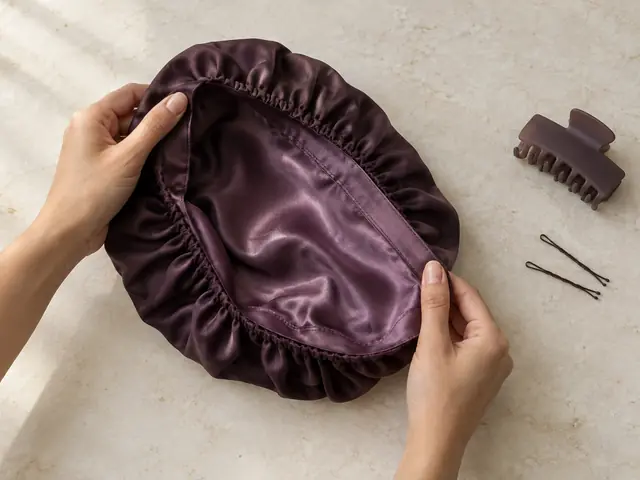
Two hands hold open a bonnet to show its lining and seams, with a hair clip and two pins set beside it.

Check the inside as well as the fabric name

  • Satin describes the weave, so read the fiber label too.
  • Feel the hair-facing surface and seams for rough edges or snags.
  • Choose a smooth hair-facing surface and a band that lies flat; follow the maker’s fitting directions.
  • Check washing and drying instructions before buying.
An adult places a folded dry pillowcase on a shelf while used fabric stays in a separate hamper.

Keep a clean, dry option ready

  • Wash a used covering or pillowcase when it smells stale or has visible product residue.
  • Use its care instructions and let it dry fully before reusing it.
  • Keep a clean, dry spare handy.
  • Choose an item whose care directions allow machine washing if hand washing will be hard to keep up with.

Products, by the job they do

A woman compares a conditioner tube and hair mask jar beside a leave-in bottle.

Keep conditioner in your wash routine

Rinse-out conditioner helps with slip and detangling on wash day. Choose one that leaves your hair manageable without feeling coated, then use its stated amount and rinse it out. A new bonnet is no reason to change a conditioner that already works.

Browse rinse-out conditioners. Tell the consultation what you want from a conditioner and what you disliked about previous ones.

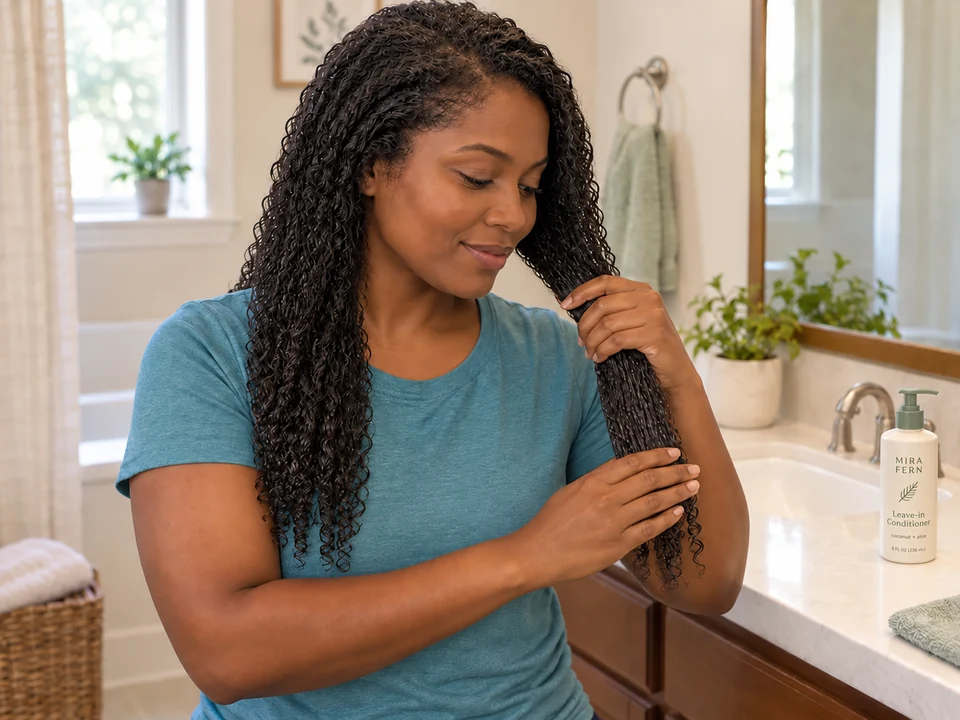
A woman supports one damp hair section while smoothing leave-in conditioner toward the tips.

Use leave-in where your hair needs it

If your lengths remain rough or tangled after washing, try a small amount of leave-in on those areas. Check whether yours goes on damp or dry hair, and let damp hair dry before covering. Skip extra product if your hair already feels comfortable.

Browse leave-in conditioners. Your drying routine and preferred finish help guide a leave-in recommendation.

Choose the method you need

A woman checks both sides of a sleep bonnet band resting flat around her hairline and ears.

Fit a bonnet around dry, loose hair

This method shows how to put loose hair inside a roomy bonnet and check the band. Keep the hair loose at the roots. In the morning, lift the band clear and support the lengths so they can fall out without catching.

Guide: Put on a loose sleep bonnet
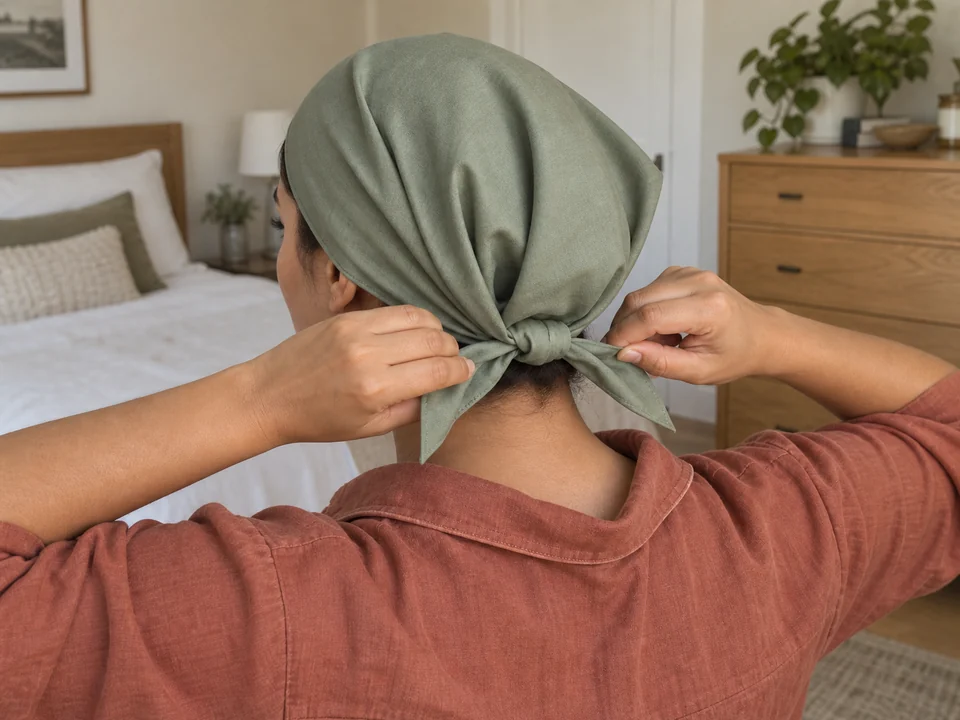
A woman ties the two side corners of a sage scarf at her nape over the central triangle flap.

Wrap and fully undo a square scarf

For adults wrapping dry, loose hair, use a plain square scarf and keep your face and neck clear. Skip pins and hard fasteners. Check the knot against your pillow, then untie it fully before lifting the scarf off in the morning.

Guide: Wrap your hair with a sleep scarf
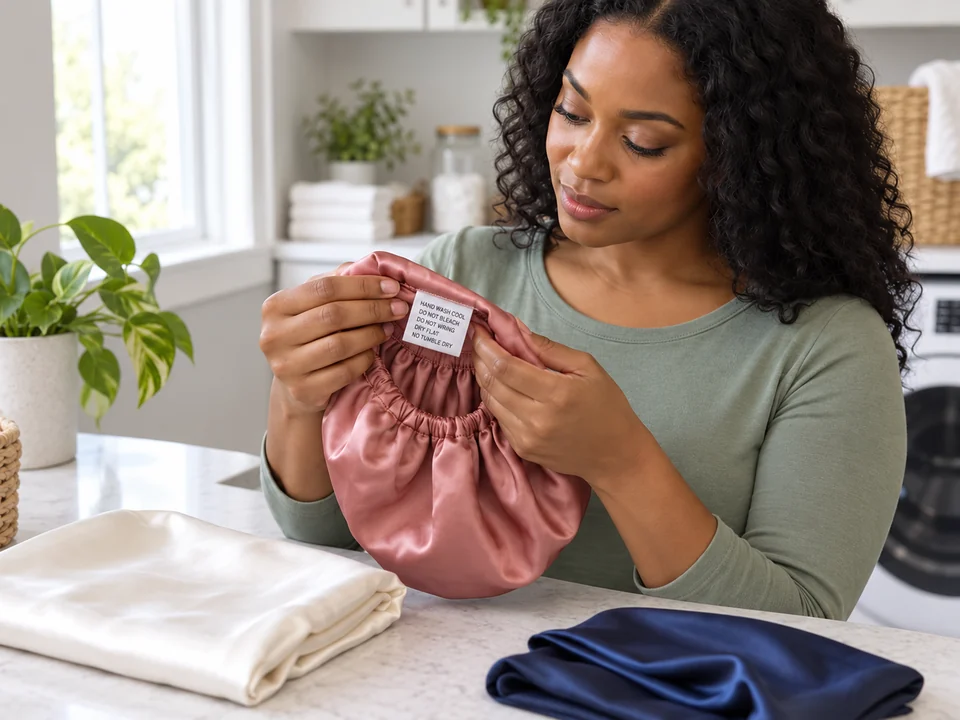
A woman reads the printed washing and drying directions on a sleep bonnet’s care label.

Wash and dry the fabric

Use the hand-wash or machine-wash method allowed for your item. Rinse away detergent and dry it by the permitted method. Feel the thicker seams and folded edges before putting it away or using it again.

Guide: Wash your bonnet, scarf or pillowcase
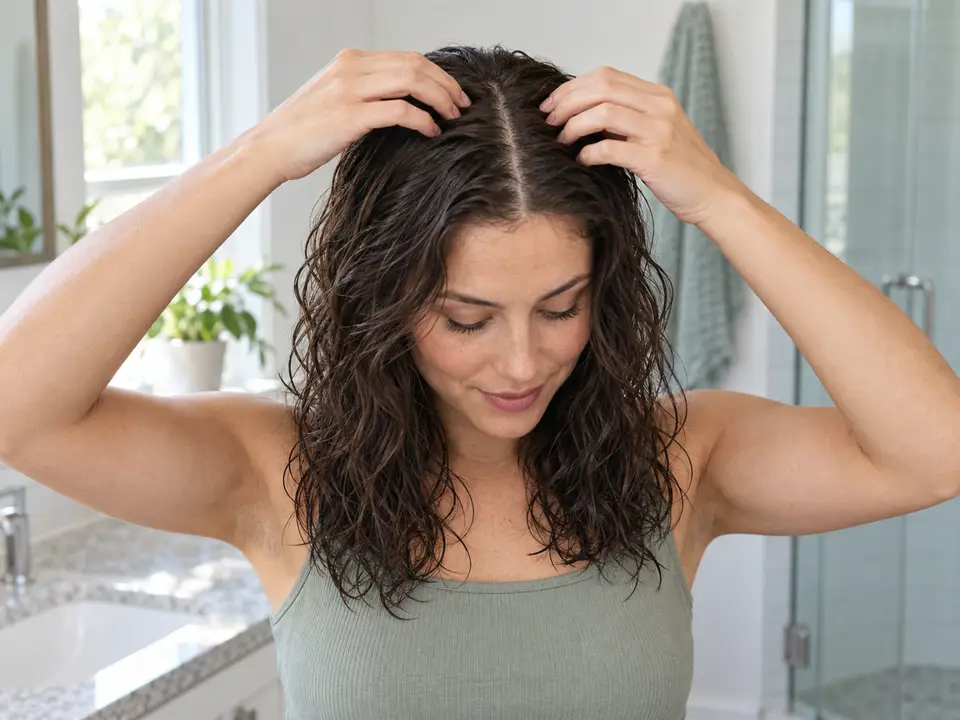
A woman places her fingertips on either side of the part in her damp hair, with the lengths hanging loose.

Finish drying before you cover your hair

Leave time after washing for the roots and inner lengths to dry as well as the surface. If they are still damp, keep the bonnet or scarf off and continue drying. This guide shows how to arrange loose hair for air drying.

Guide: Air-dry your hair

Illustrated care examples: before & after

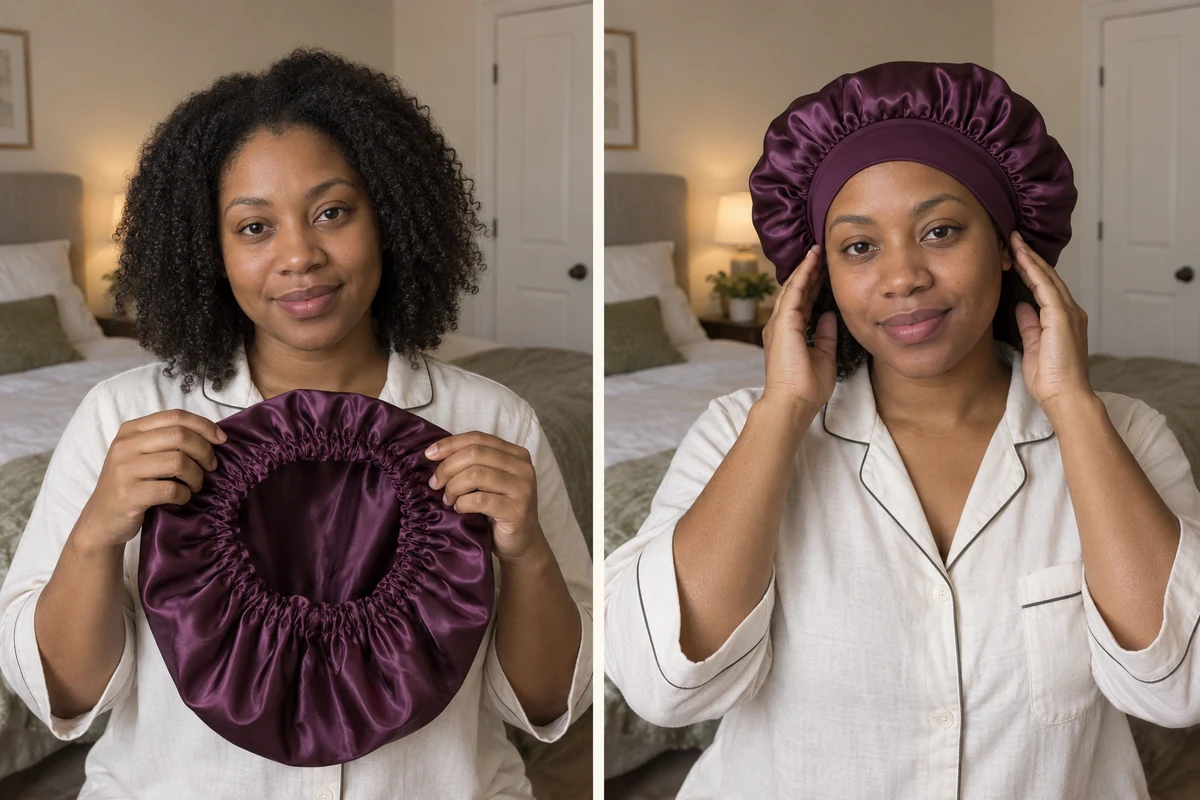
Check the band after tucking

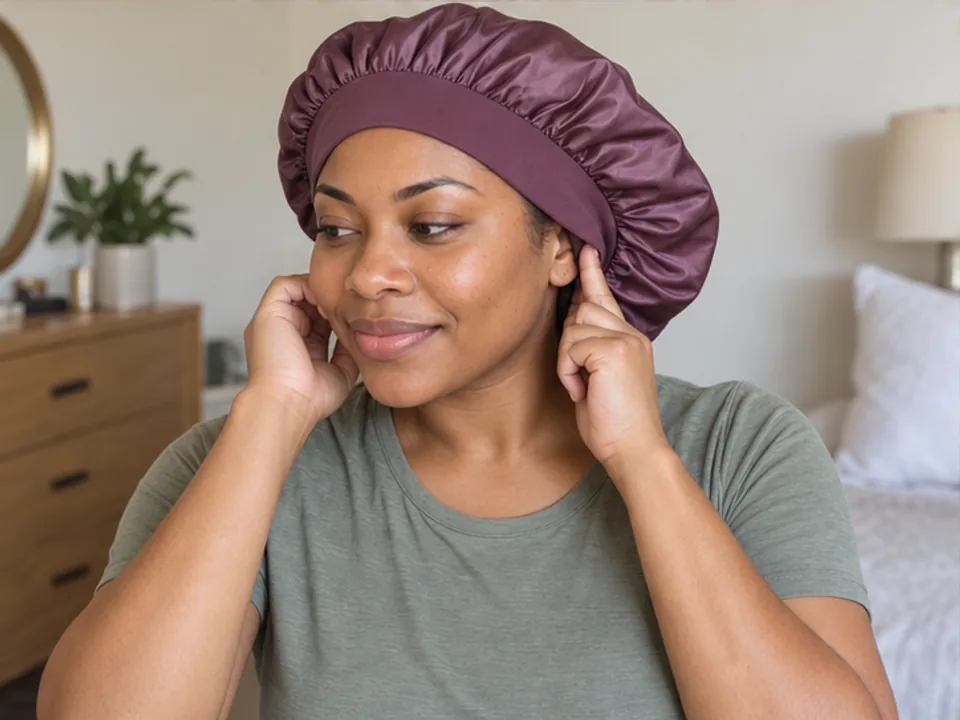
Two panels show a woman holding an open bonnet, then wearing it with both hands at the band near her ears.
Before · bonnet open, hair looseAfter care · bonnet on, band being checked
The bonnet holds the loose hair while she checks the band at both sides. Refit it if any hair feels caught or pulled.

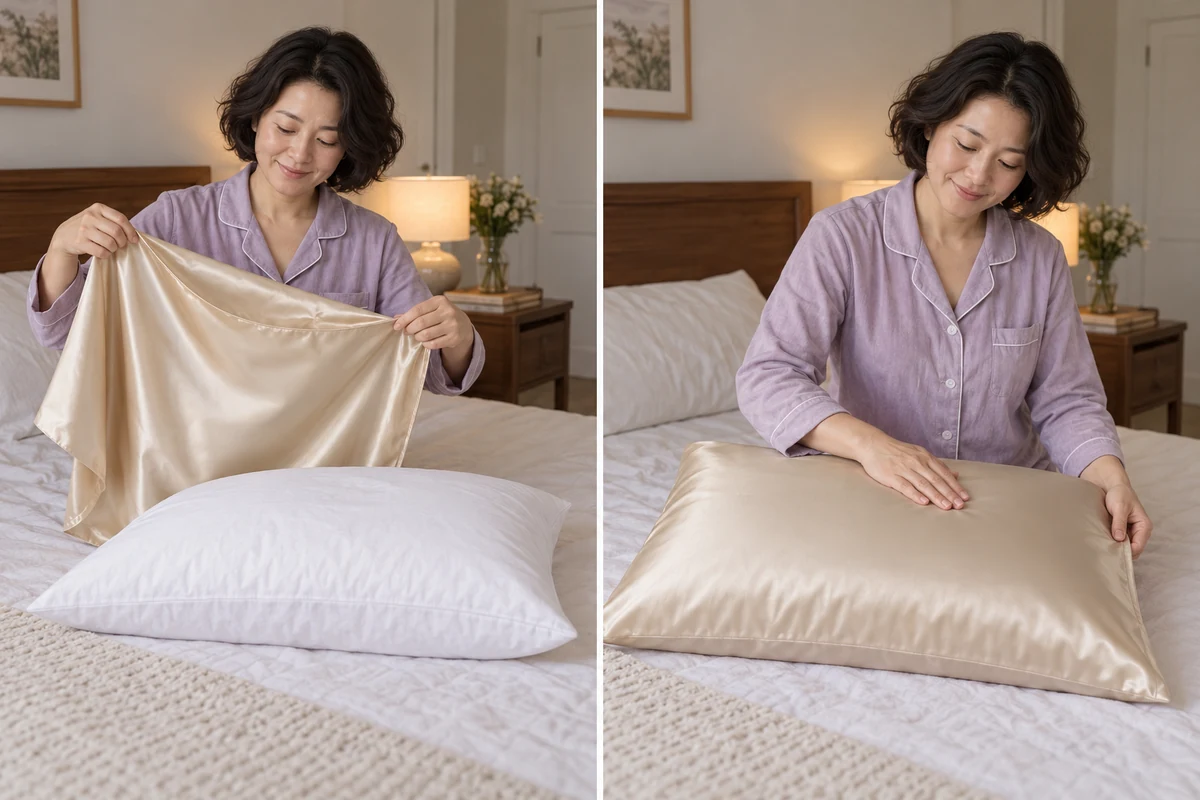
Fit the case to the pillow

Two panels show a woman holding an open pillowcase beside a pillow, then smoothing the pillow inside the case.
Before · pillowcase open beside the pillowAfter setup · pillow inside the smooth case
The pillow goes inside the case, then she smooths the surface where her head will rest. Choose a case that fits your pillow.
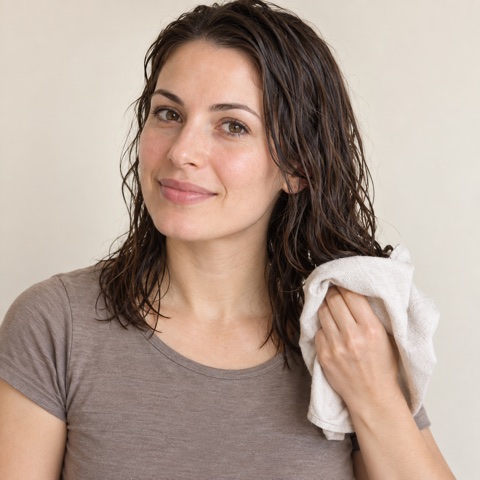
A woman gently squeezing damp hair with a towel.

Help with your hair-care routine

Bring your hair-care questions to the consultation. You can also read Care for breakage and split ends.

  • Which option will fit my hair without pressing on my head?
  • What can I change if my scarf slips off overnight?
  • Would a leave-in help the tangles I wake up with?

Tell us how you wear your hair at night, where it tangles and what feels uncomfortable. The consultation can help you choose a sleep routine and conditioning products that fit your hair and the time you have.

The Hair Care Consultation gives you a personal plan with product recommendations, routines and guidance on your hair-care questions.

$49 with 60 days of follow-ups, or $99 with 12 months. Pay once; the year renews only if you choose.