Wrap your hair with a sleep scarf
A square scarf lets you adjust a sleep covering around dry, loose hair. Choose this method if you can tie and fully undo a knot at the back of your head.
Step by step
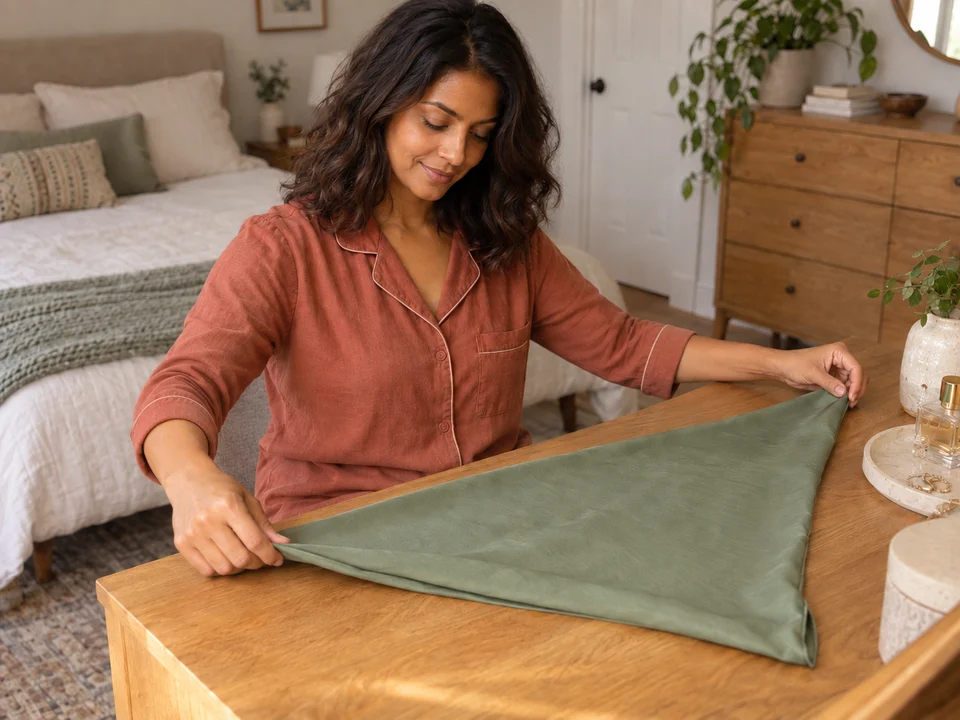 STEP 1 OF 12
Fold the square into a triangle
- Start with dry hair and scalp. Remove hard clips and lay a clean, dry square scarf on a reachable surface.
- Bring two opposite corners together and smooth the layers into a triangle. Choose the smoother surface to face your hair when you put it on.
- The scarf needs enough room for your hair and two corners long enough to tie without pulling. Follow any first-wash care directions.
 STEP 2 OF 12
Place the folded edge at your hairline
- Hold the two ends of the long folded edge, one in each hand. Rest that edge across your front hairline.
- Let the triangle cover the crown, with its point hanging down behind your head. Keep both side corners free and your face uncovered.
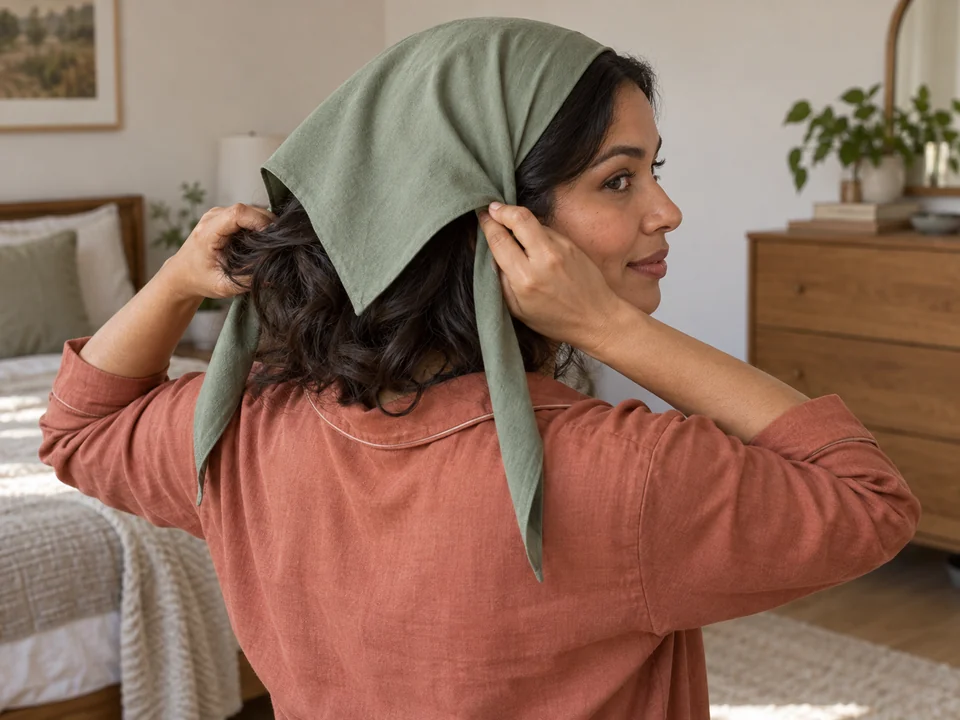 STEP 3 OF 12
Tuck the loose lengths inside
- Hold one side corner steady. With your other hand, cup a small portion of the loose ends and lift it under the back fabric.
- Switch hands and work around the remaining lengths. Fold longer hair loosely inside rather than twisting it into a tight bundle.
- Keep the side corners available for tying. If your hair will not fit loosely, start again with a larger scarf or a roomy bonnet.
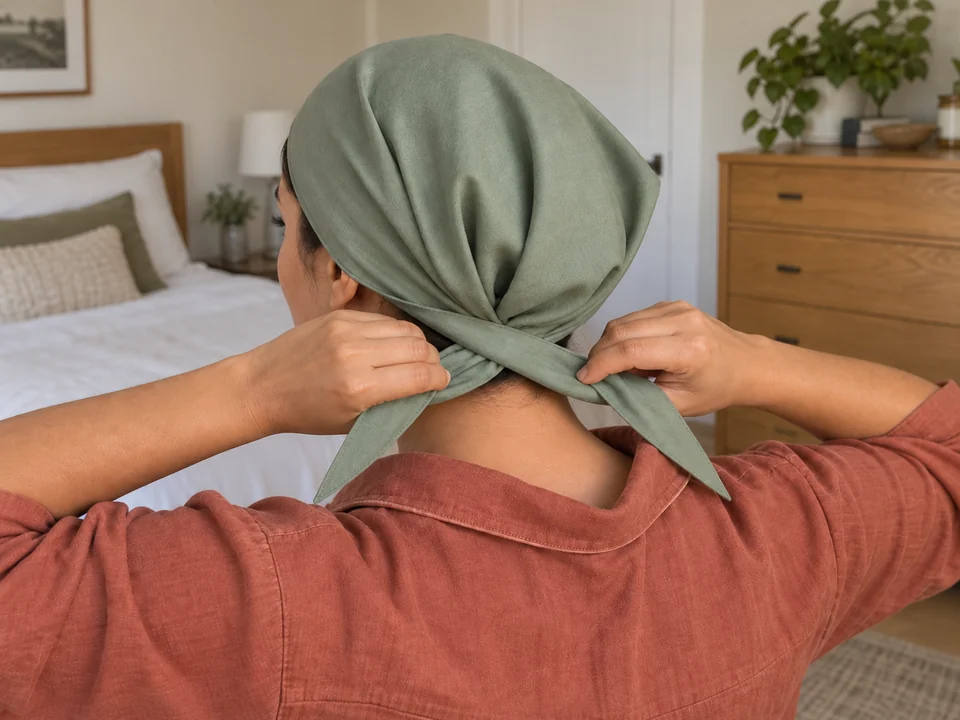 STEP 4 OF 12
Cross the two corners behind your head
- Bring the side corners to your nape, where your neck meets your hairline. Keep the central triangle flap beneath them.
- Cross the end in your right hand over the end in your left hand. Hold this crossing without pulling it tight; keep hair out of the fabric.
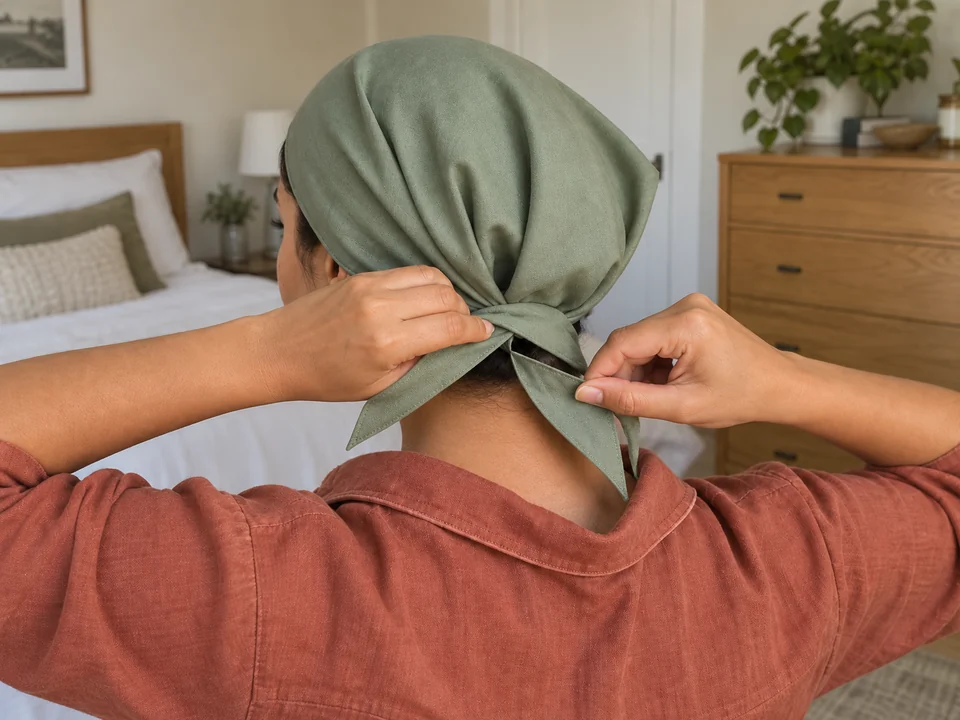 STEP 5 OF 12
Pass one end through the crossing
- Hold the crossing with one hand. Use the other to pass the upper end underneath and through the opening.
- Take one end in each hand and ease them apart until the first half of the knot rests against the scarf. Stop before it presses or pulls.
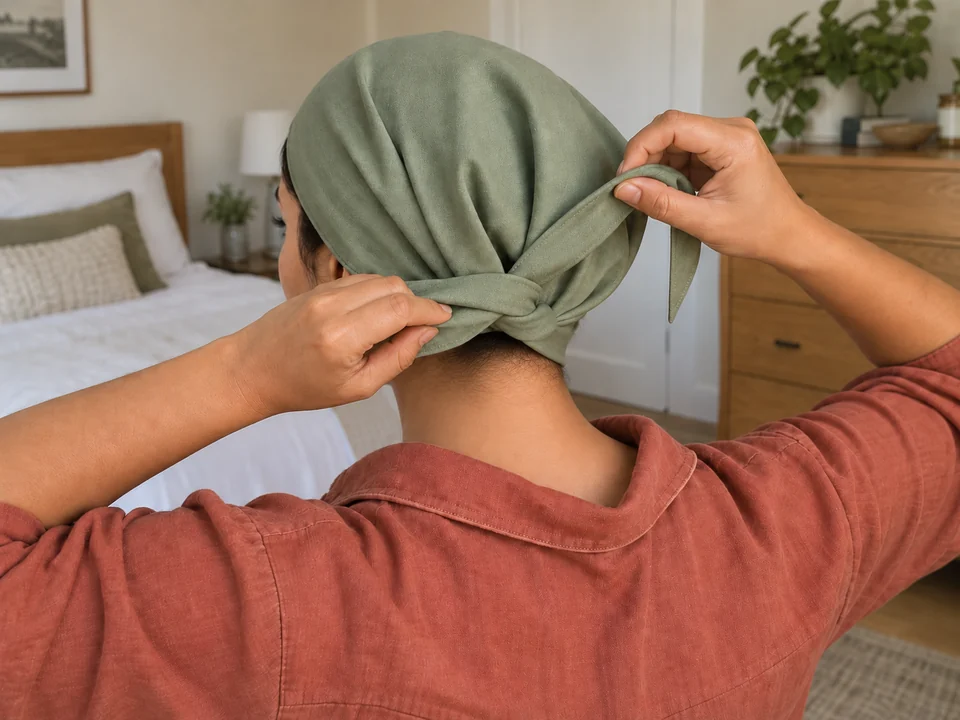 STEP 6 OF 12
Cross the ends the other way
- Cross the end now in your left hand over the end in your right hand, reversing the first crossing.
- Hold this new crossing above the first half of the knot. Keep the fabric loose enough to work without pulling at your hairline.
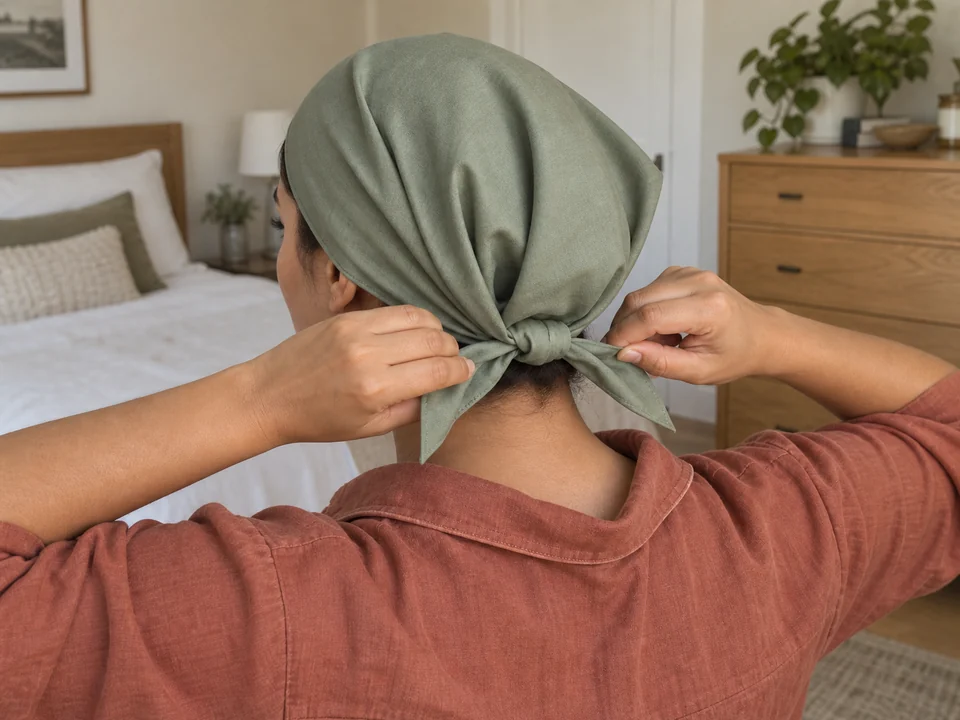 STEP 7 OF 12
Finish the knot
- Pass the upper end underneath and through the new opening, as you did for the first crossing.
- Take one end in each hand and ease them apart until the knot holds the scarf comfortably. Keep hair out of the knot and stop before the fabric presses.
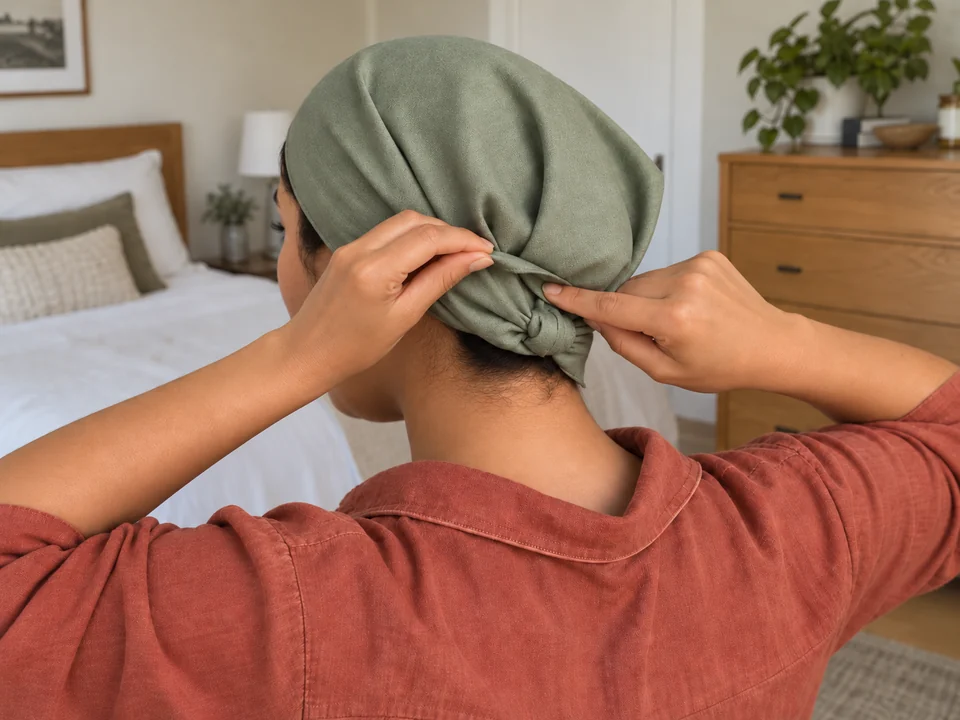 STEP 8 OF 12
Tuck the fabric tails away
- Lift the edge beside the knot slightly and fold each short tail upward underneath it. Tuck the central triangle point up too if it hangs down.
- Keep the ends reachable so you can pull them free later. Smooth bulky folds; no fabric should trail around your neck or cover your face.
 STEP 9 OF 12
Check the knot on your pillow
- Rest in your usual sleeping position and turn your head gently. Check for a pressing knot, folded edge, slipping or pulling at the hairline.
- Sit up and undo the knot to refit anything uncomfortable. If it still presses or slips, remove the scarf and try another size or a roomy bonnet.
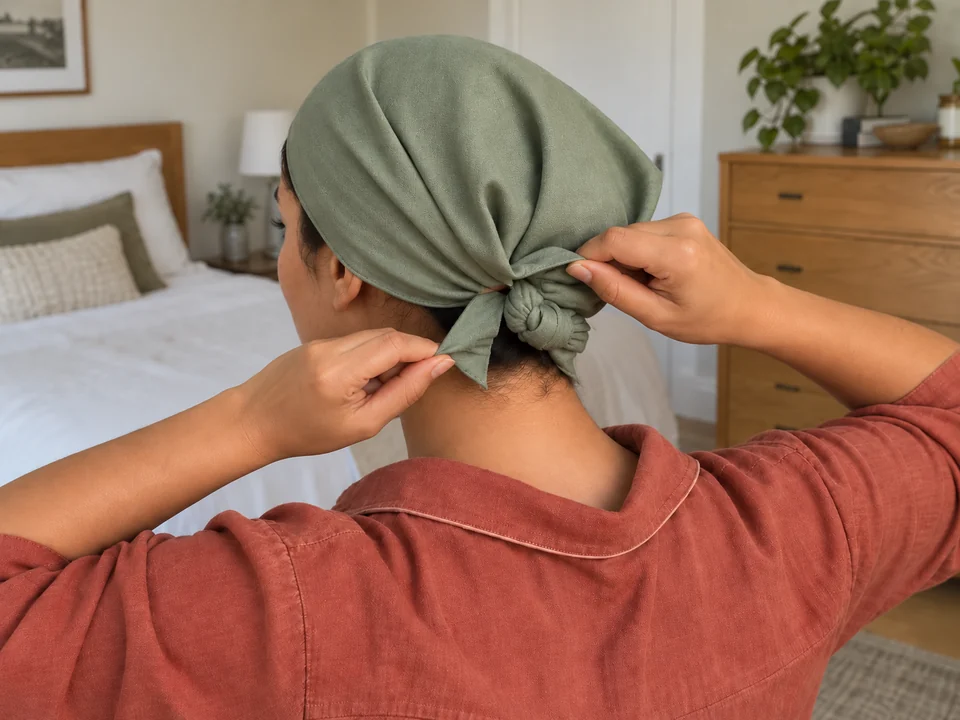 STEP 10 OF 12
In the morning, pull the tails free
- Steady the scarf beside the knot with one hand. Use the other to draw each tucked fabric end out from under the edge.
- Free the central flap too. Leave the scarf resting on your head while you untie it next.
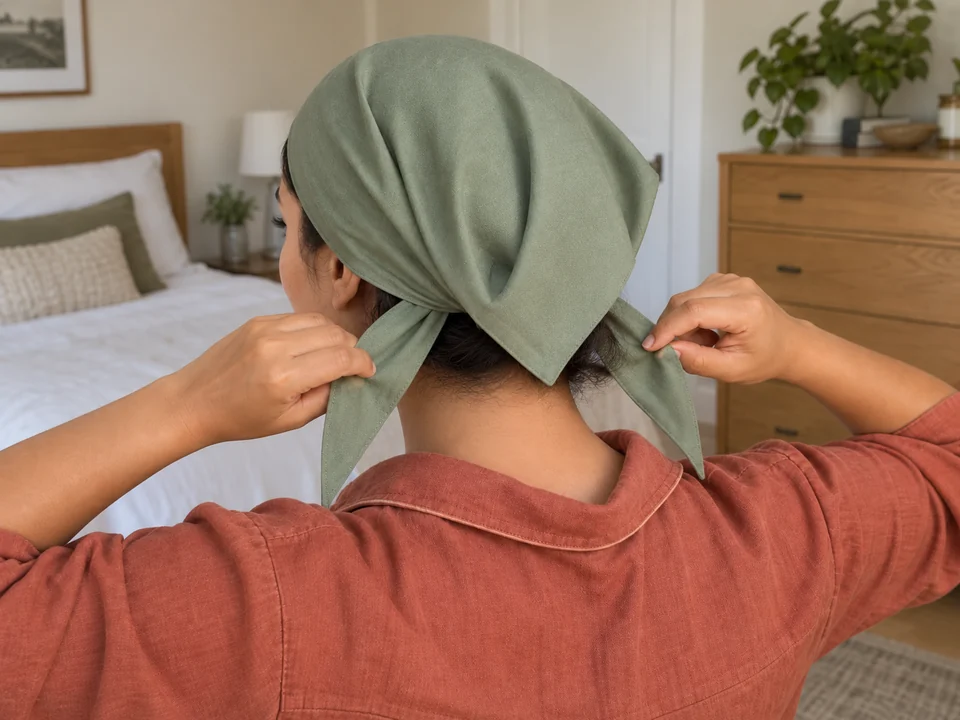 STEP 11 OF 12
Undo both crossings
- Hold the lower part of the knot. Use your fingertips to loosen the outer crossing, then draw one end back through its opening.
- Repeat with the remaining crossing until the corners are completely separate. If hair catches, stop and free it; do not pull the tied scarf off.
 STEP 12 OF 12
Lift the open scarf away
- Hold the open fabric with both hands and lift it clear of your hair. Let the lengths fall free rather than dragging the fabric across them.
- Set the scarf somewhere clean and dry. Wash it when it needs cleaning, following its care directions.
About 3–6 minutes of handling for folding, fitting, checking on your pillow and morning removal. Add sleep time; drying and laundering are separate.
You’re done when…
Your hair rests loosely inside, the fabric stays clear of your face and neck, and the knot feels comfortable on your pillow. In the morning, both crossings are fully undone before you lift the scarf off.
Related techniques
Connected steps for your routine.
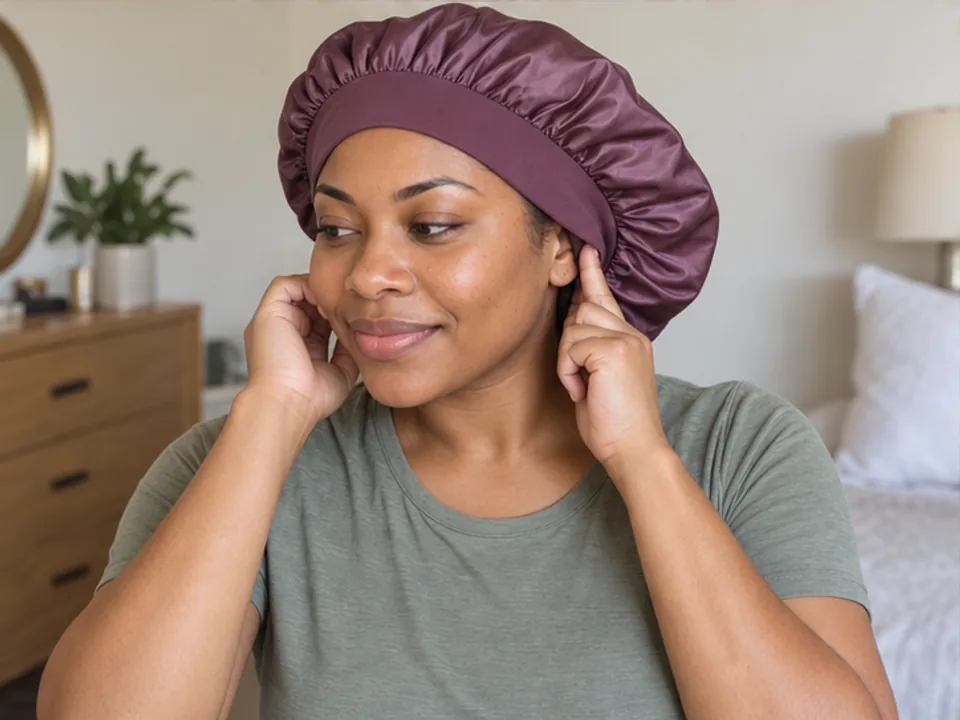
Put on a loose sleep bonnet
For a covering that needs no nape knot, a roomy bonnet offers another way to contain dry loose hair.
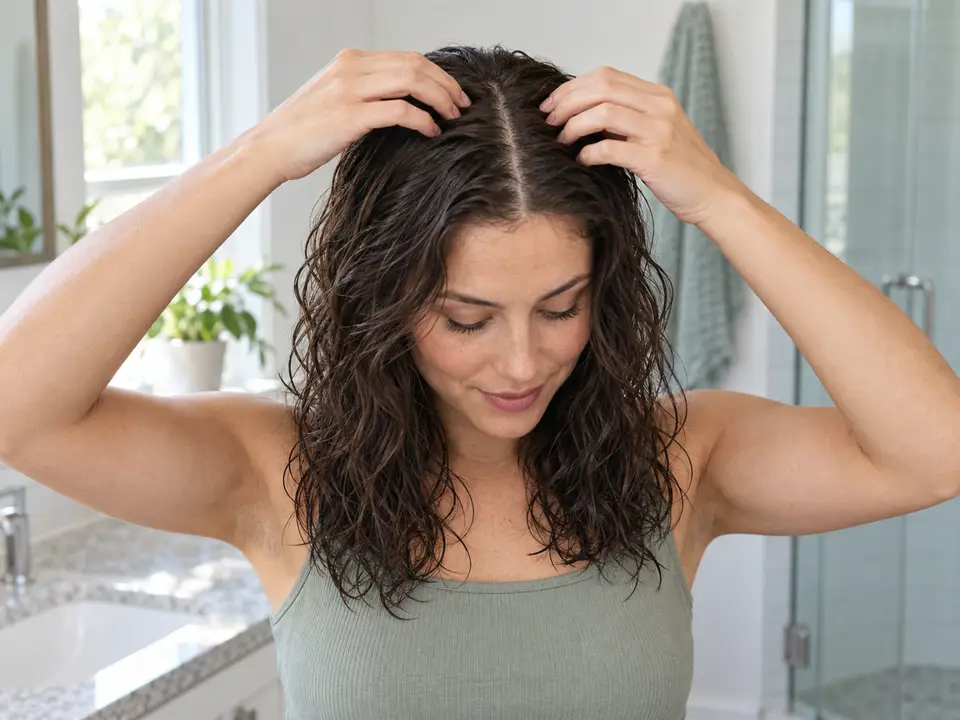
Air-dry your hair
For hair that is still damp, finish drying the roots and inner lengths before covering it for sleep.
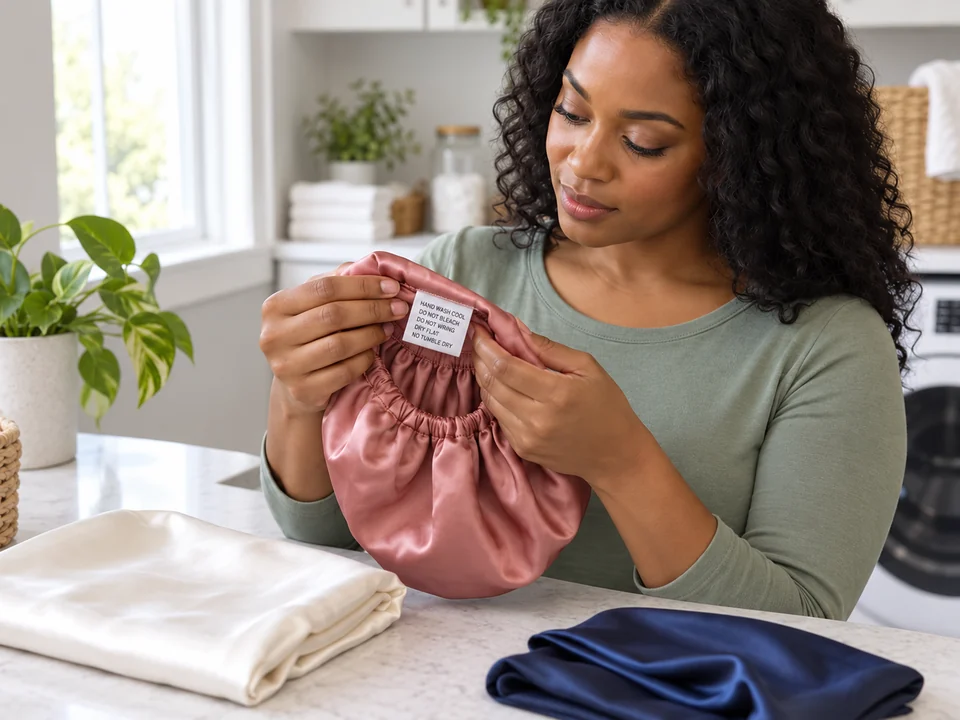
Wash your bonnet, scarf or pillowcase
Wash the scarf by its own fabric-care instructions and let it dry fully before wearing it again.