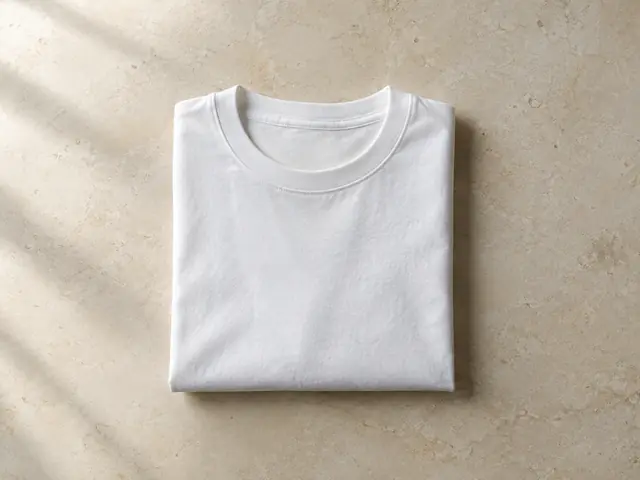
Cotton T-shirt
The one you already own. Soft cotton jersey absorbs water and is smooth against the hair, and the sleeves make handy ties for plopping.
Best for: Blotting any loose hair and plopping waves and curls, at no extra cost.
Reach for a clean cotton T-shirt right after washing: press dripping water out instead of rubbing it, or plop waves and curls for a while before you finish drying. The result is damp hair with less roughed-up frizz and clumps left intact.
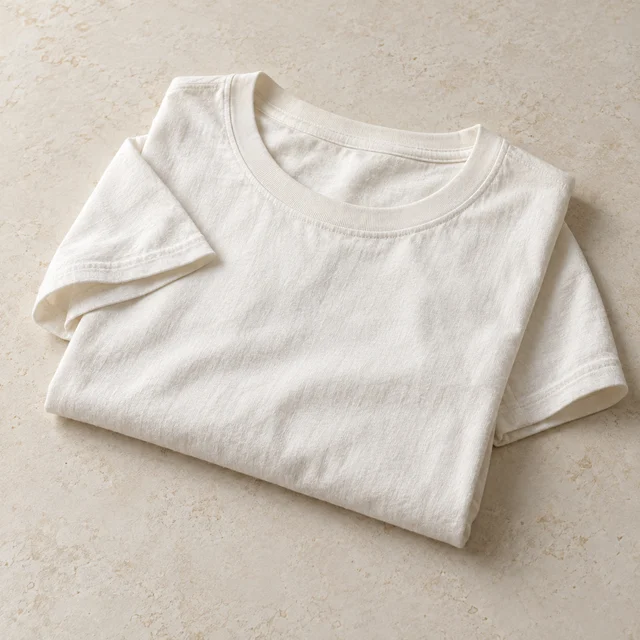
The basic method. Your model’s own directions come first for heat, attachments and starting state.
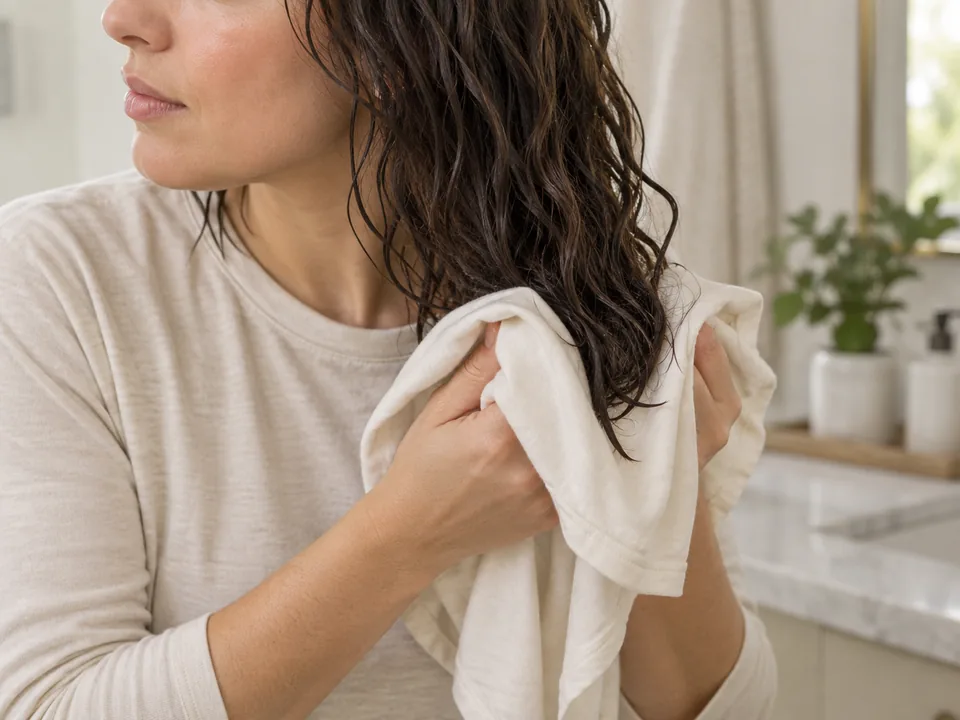
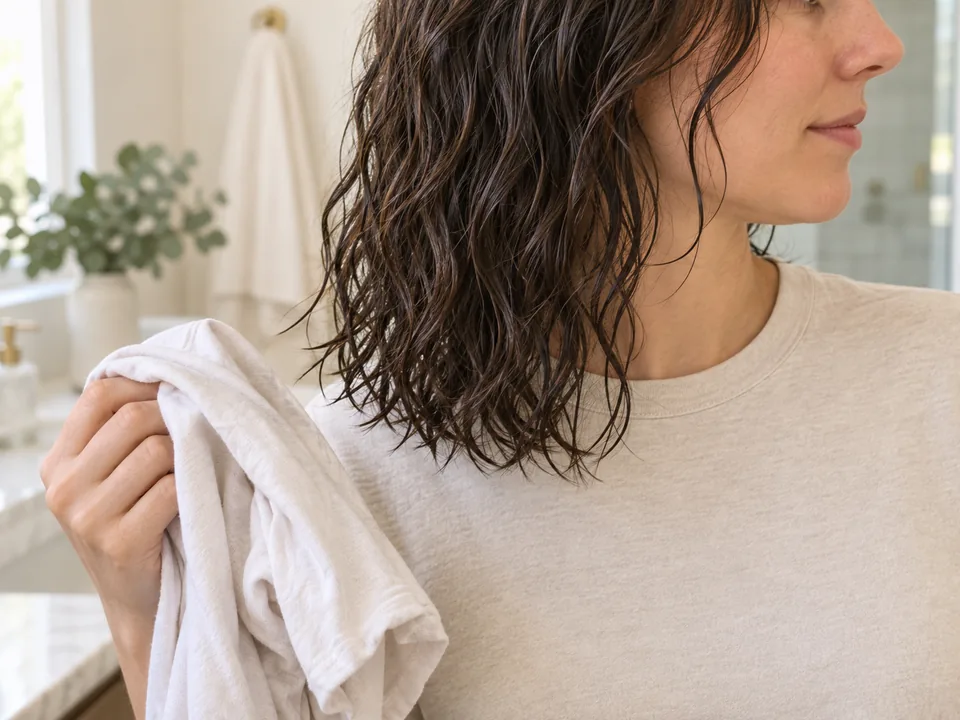
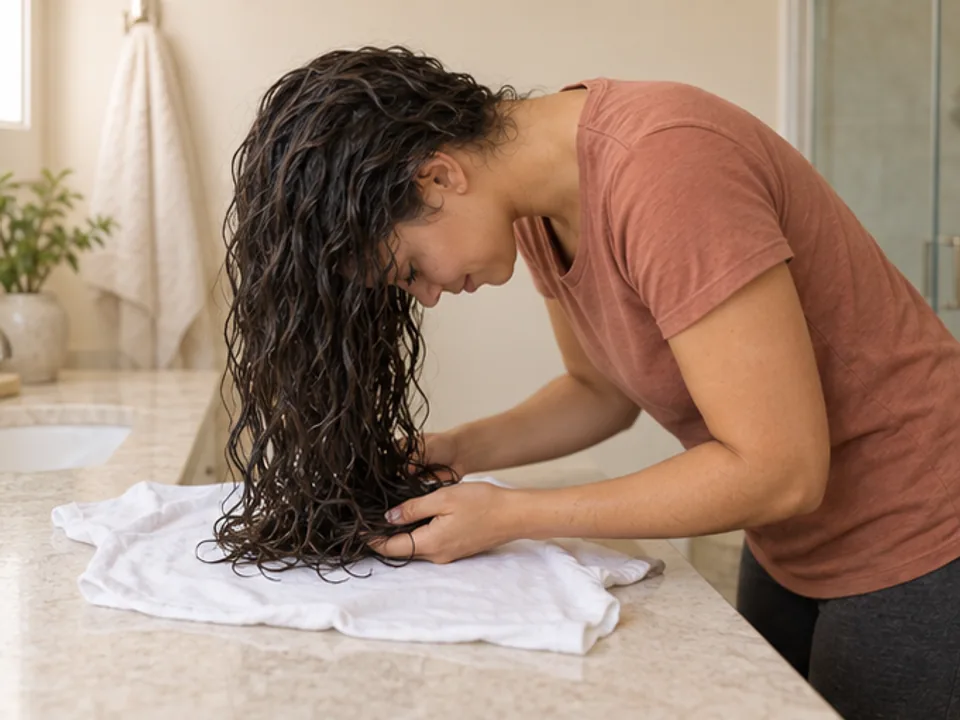
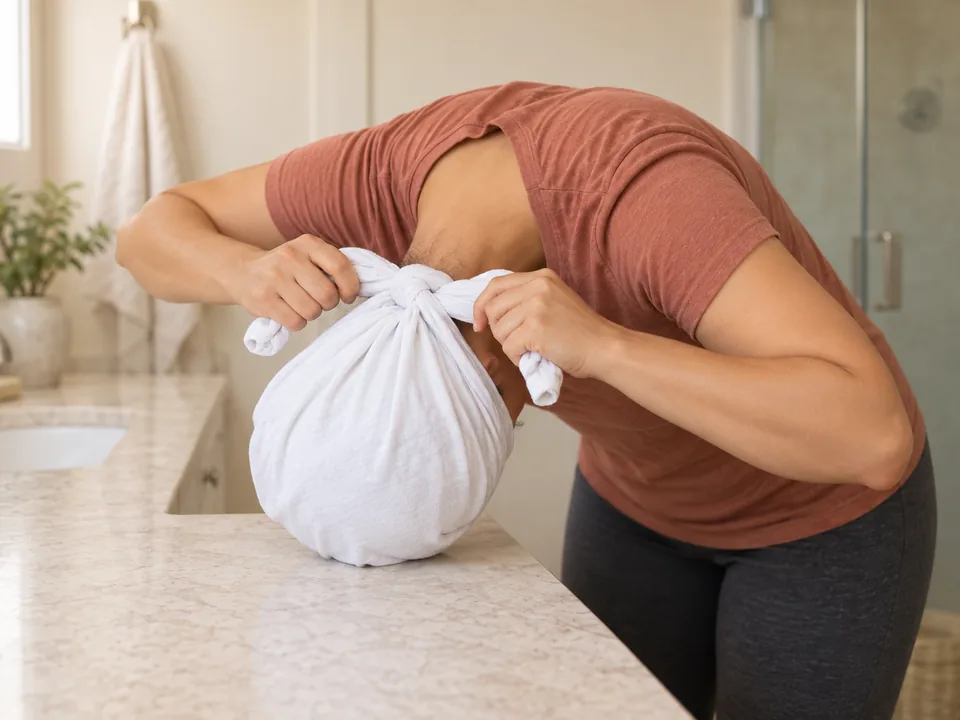
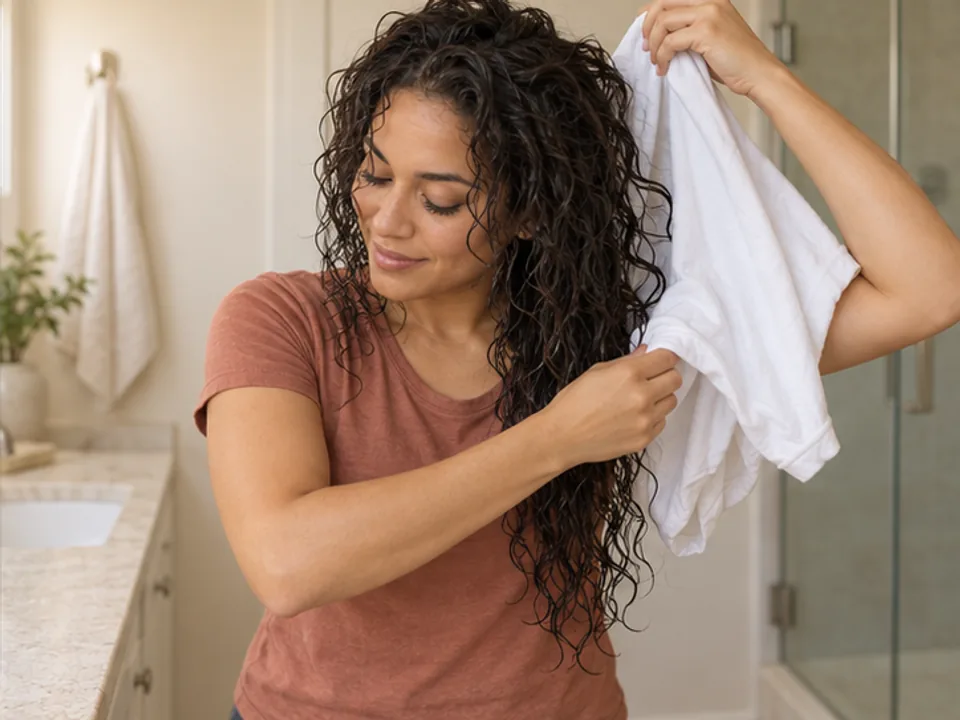
Your hair stops dripping, the curls or waves still hang in their groups with no fresh fuzz, nothing was rubbed or twisted, and a plop comes off with the roots unpulled and the pattern unstretched.
What each kind does, and who it suits.
The one you already own. Soft cotton jersey absorbs water and is smooth against the hair, and the sleeves make handy ties for plopping.
Best for: Blotting any loose hair and plopping waves and curls, at no extra cost.
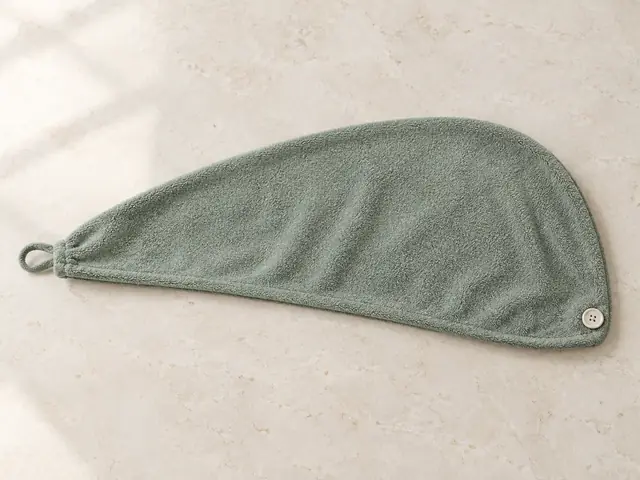
Very fine synthetic fibers, smooth and absorbent, often cut as a wrap with a loop and button. Works the same way: press, don't rub.
Best for: People who want a ready-made wrap that fastens without tying sleeves.
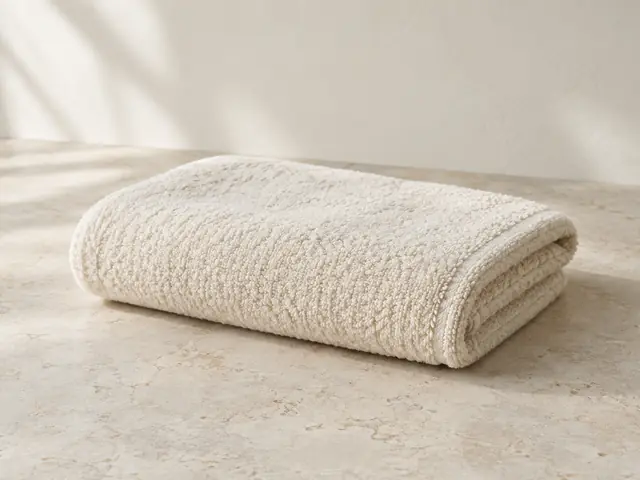
Looped cotton pile that absorbs a lot. The loops are what catch hair when you rub; pressed gently, a terry towel is fine for straight and wavy hair.
Best for: Pressing water from straight or wavy hair when used without rubbing.
The controls worth understanding before you change anything.

Start around 30 to 60 minutes and adjust. Unwrap sooner if waves look stretched or flat, or if it's uncomfortable. It's a stage before drying, not a full dry.
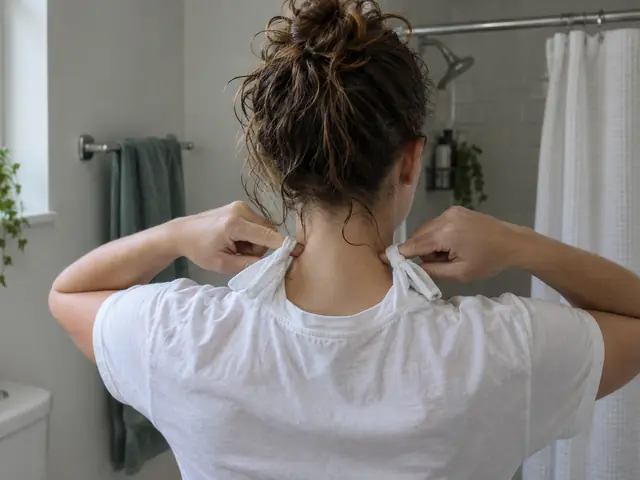
Snug enough to stay put when you stand up; loose enough that roots don't pull and curls aren't pressed flat against your head. Unwrap if it pinches your neck.
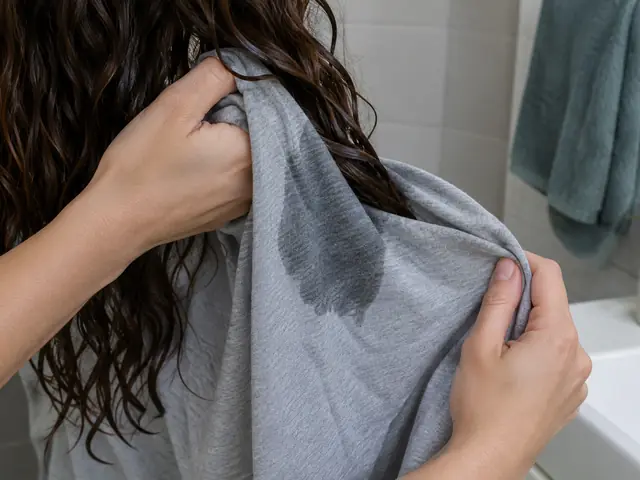
Firm enough that water moves into the fabric, gentle enough that clumps stay together. When a patch feels wet, move to a dry part of the shirt rather than pressing harder.
Once the basics feel easy, these moves change the result.
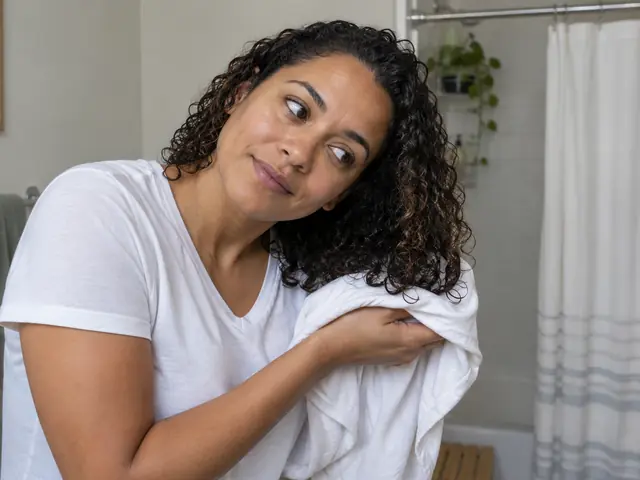
Drape the shirt over your cupped hands, scoop one section of styled curls up to the scalp, press gently, then release and lower. Work around the head — useful for touch-ups or if bending over for a full plop is hard.
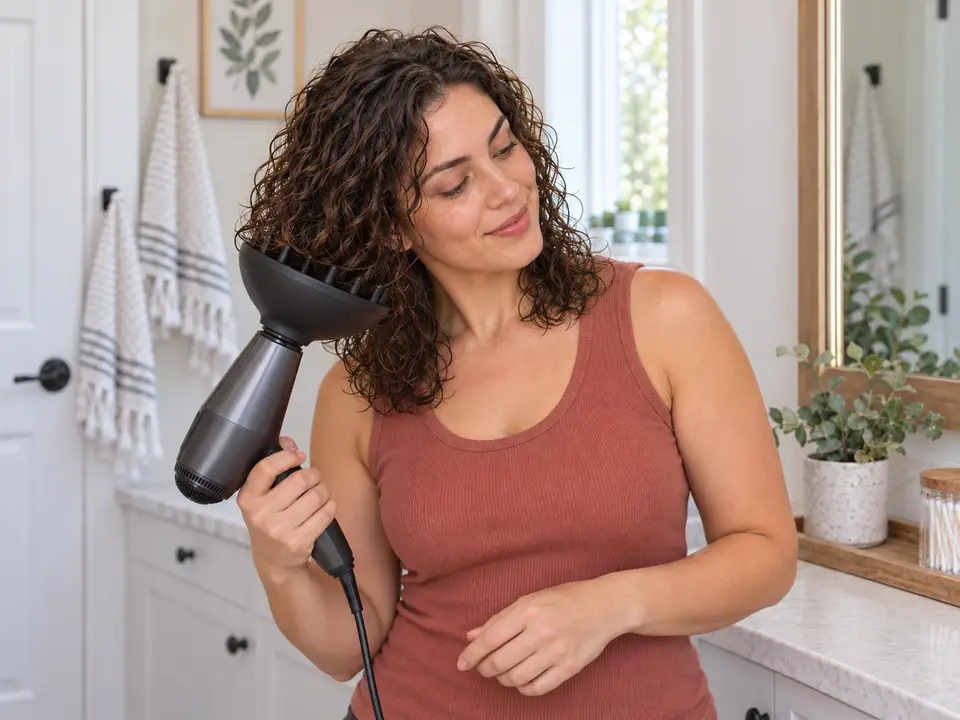
After unwrapping, hold a diffuser under the lengths on a low setting and cup the curls up. Because the plop already took out some water, the drying stage is shorter and there's less airflow on the hair.
Full guide: Dry waves and curls with a diffuserWhat goes wrong most often, and what to do instead.

Scrubbing wet hair with any fabric — shirt included — roughs up the surface and breaks up clumps, and wet hair snaps more easily. Press and release instead.
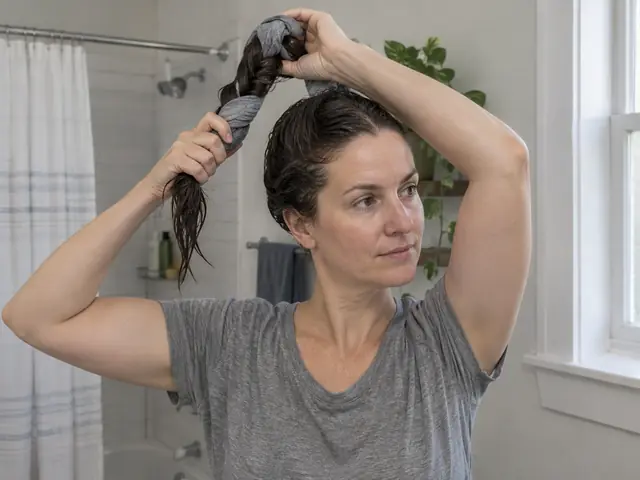
Twisting the hair into a rope and cranking the fabric tight pulls at the roots and flattens curls. For a wrap, pile the hair loosely and tie the sleeves without tension.
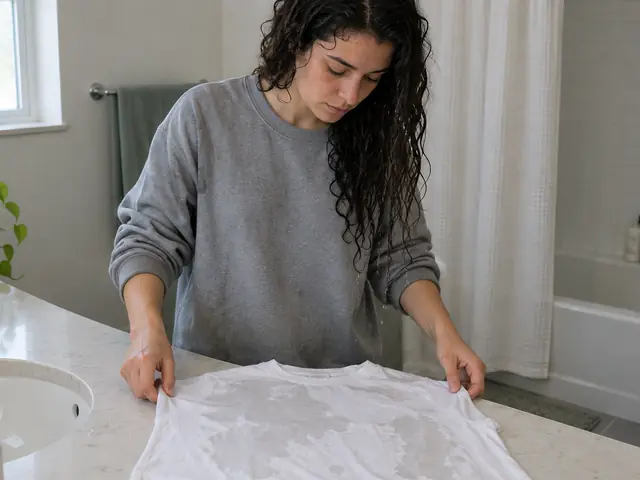
A dripping pile turns into a soggy plop that takes much longer to dry. Squeeze out the drip with your hands or blot first, then plop.
Claims you’ll see online, answered plainly.
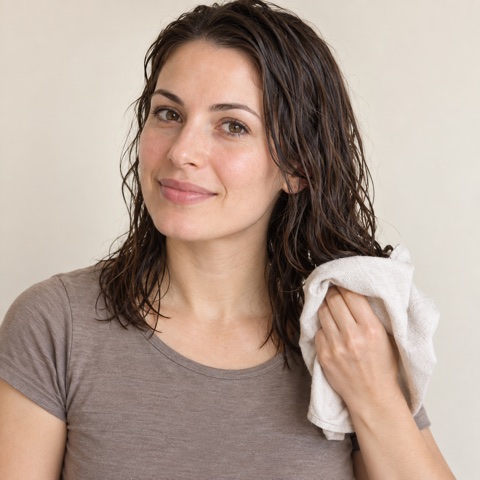
It's mainly the rubbing, not the towel. Scrubbing with rough looped pile causes the most frizz; pressing gently with any clean towel is fine. A T-shirt just makes gentle handling easier.
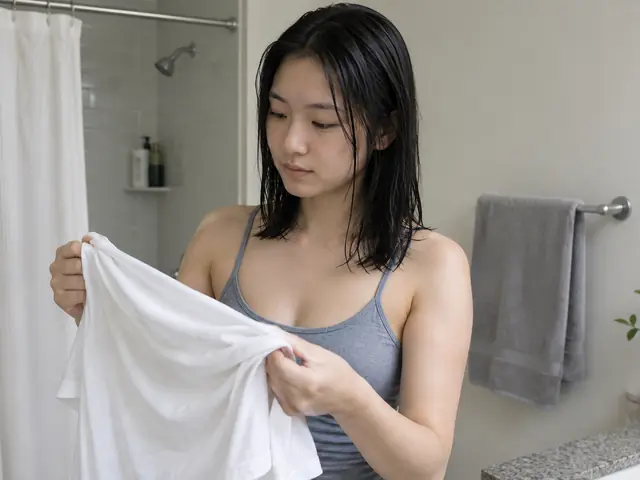
Plopping holds the shape your hair already has while it loses water. Straight hair may gain a slight bend, but a wrap doesn't create a curl pattern.
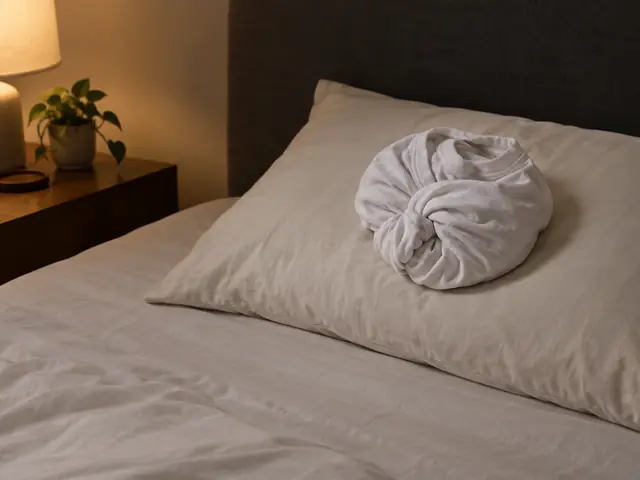
Some slow-drying hair tolerates a long plop, but many waves and fine curls come out flat or stretched, and you'd sleep with a damp scalp. Start with 30 to 60 minutes and only lengthen if it helps.
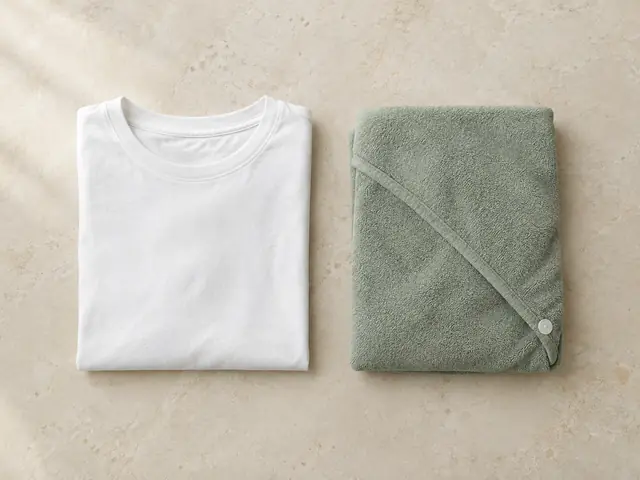
Both are smooth and both work for blotting and plopping. Use the one you have; a microfiber wrap is a convenience, not a requirement.
Keep it clean, safe and working the way it should.
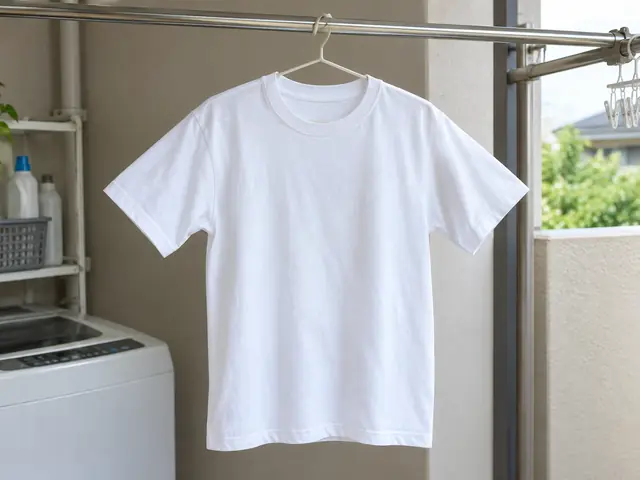
Styling product and water sit in the fabric. Wash the shirt regularly and hang it to dry completely between uses; don't leave it bundled damp.
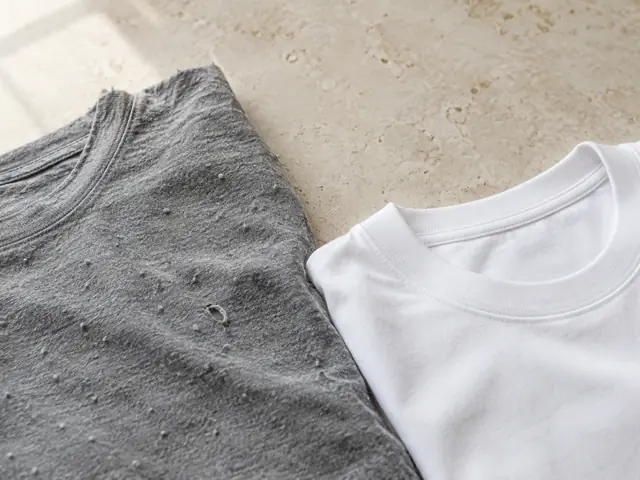
Pilled, stiff or snagged cotton isn't smooth any more. Swap in a softer shirt when the surface feels rough against your cheek.
Photo-by-photo techniques that use this tool.
Cotton T-shirt blotting uses soft fabric to absorb excess water from wet loose hair without rough rubbing.
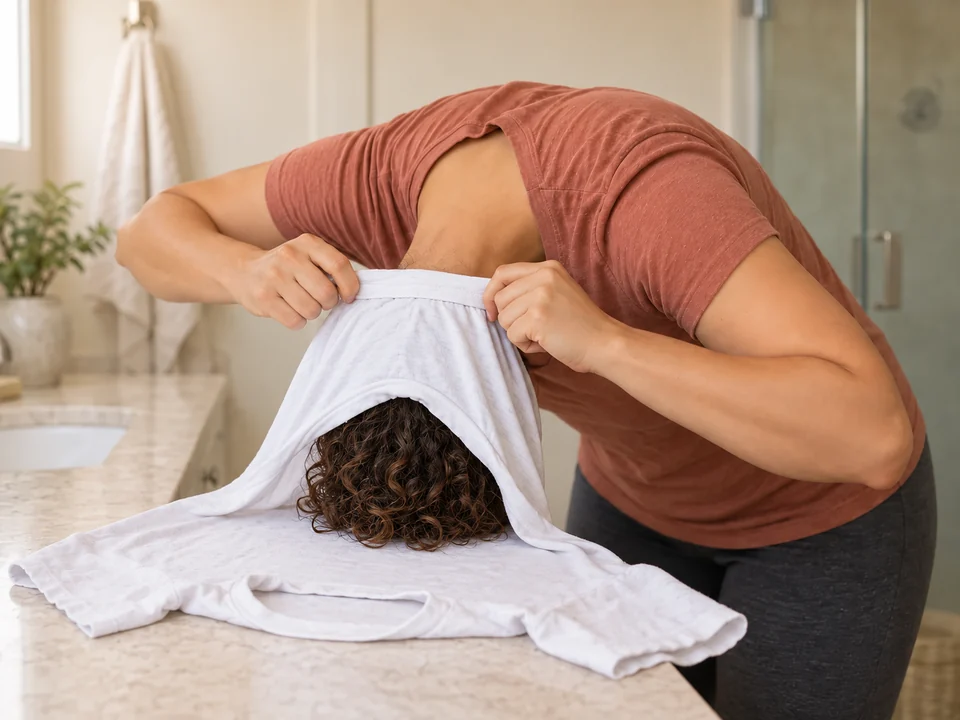
Plopping gathers damp waves, curls or coils in a loose pile on top of the head inside a cotton T-shirt. The fabric absorbs some water without rubbing the lengths.
Add it to your tools and your routine will use what you own.
More in drying.
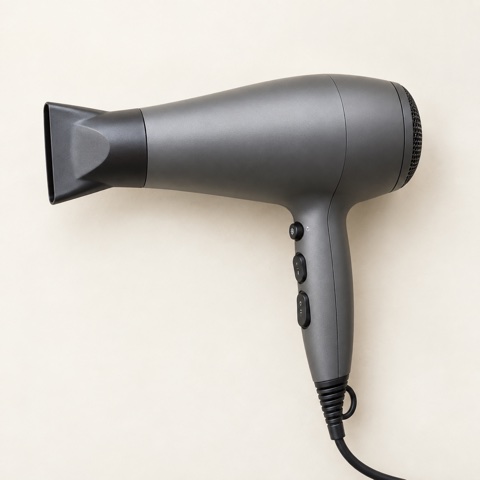
A handheld appliance that blows air, usually with separate heat and speed controls, to dry damp hair. Attachments such as nozzles, diffusers and combs change how that airflow reaches the hair.
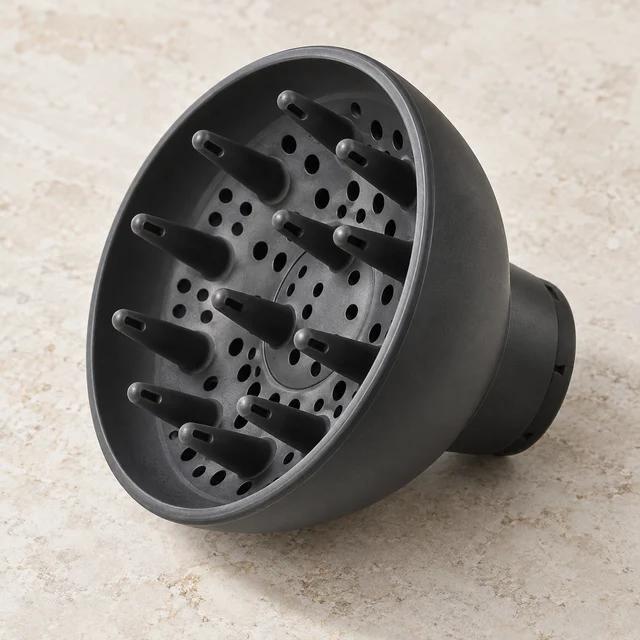
A bowl- or disc-shaped dryer attachment, often with fingers, that spreads and slows the airflow. It dries textured hair in its own shape instead of blowing it straight.