Hair Care Guides

Make room for the hair care you use.
Wet things and dry things live apart.

A tiny bathroom doesn’t mean giving up on your hair. It means keeping only what you use and giving each thing a sensible home. Work out where wet things can dry, where bottles stay closed and readable, and where a cooling tool can sit safely.

Your personal hair-care planProduct choices, routines and answers shaped around your hair.$49one-timeStart my consultation
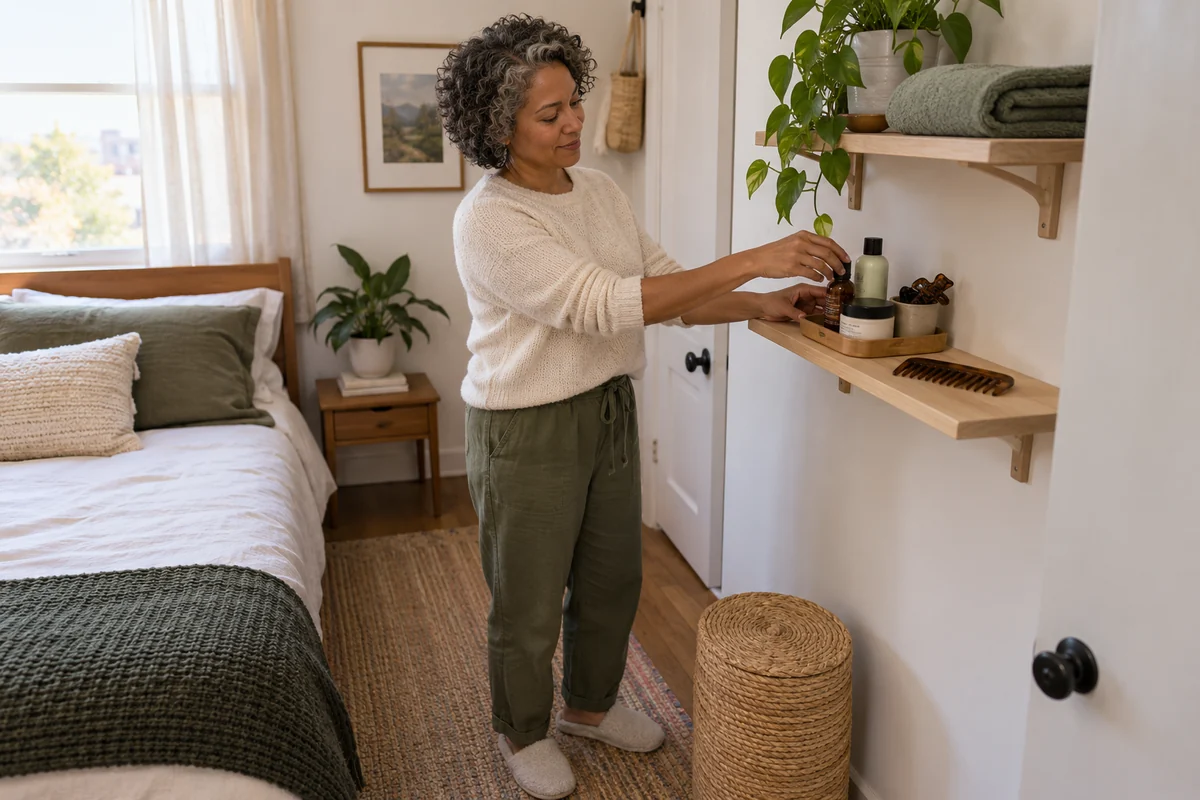
An adult with short gray curls arranges a small group of products on a narrow bedroom shelf beside a comb.
Wet things and dry things live apart.

What is going on

A woman considering several hair-care bottles and jars on her bathroom counter.

Measure the space you actually have

Look at the shelf, drawer or tray you’ve got before buying an organizer for it. You need to be able to lift one bottle out without knocking the rest over. A smaller collection is usually easier to use. Nobody needs a bathroom that looks styled.

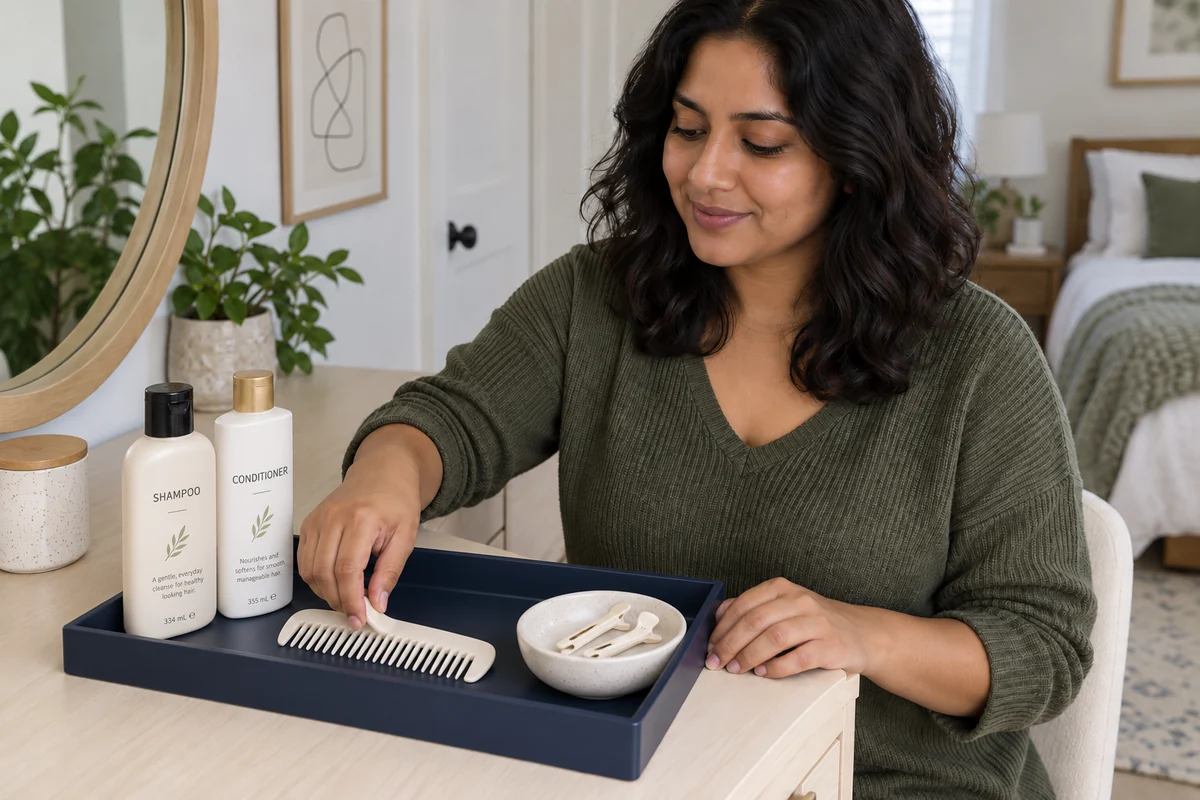
A woman returns a pale comb to a dark tray containing capped shampoo and conditioner bottles and a bowl of clips.

Give everything one place

Keep what you use most within easy reach and put it back in the same spot every time. Store the occasional things elsewhere only if you’ll still find them. A clear tray or a bit of tape on a lid helps you tell bottles apart.

What helps, day to day

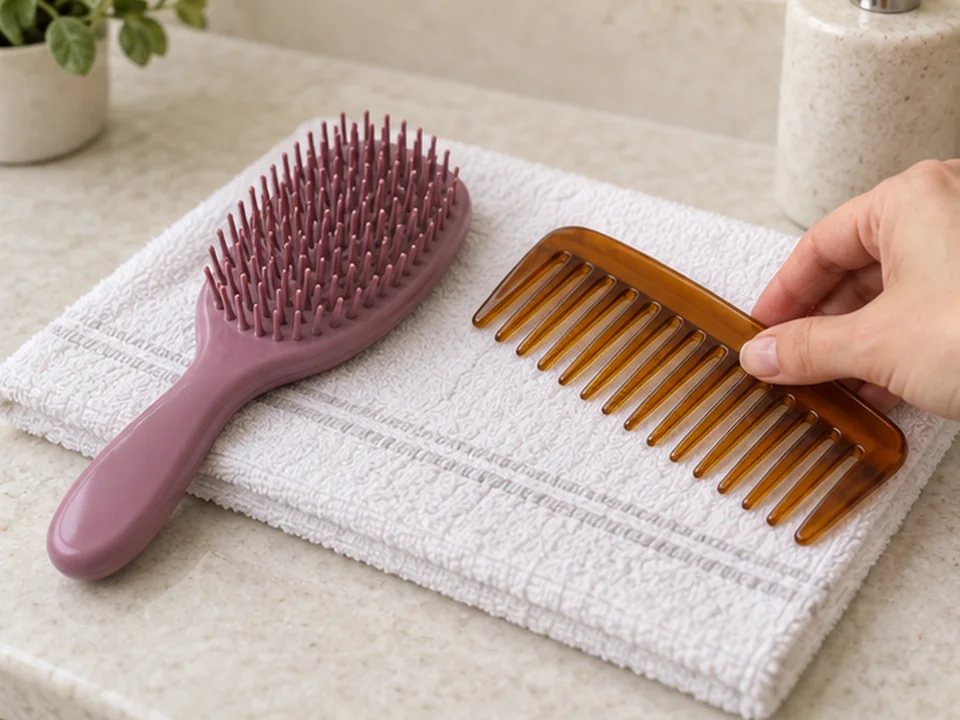
A clean plastic brush rests teeth-up beside a comb on a towel; a hand sets down the comb.

Wet things need somewhere to dry

  • Brushes, combs and clips dry fully before they go into a closed drawer or bag.
  • Pick a drying spot where they won’t drip onto bottles, plugs or a dryer.
  • Wash them the way their maker suggests so bristles and cushions aren’t ruined.
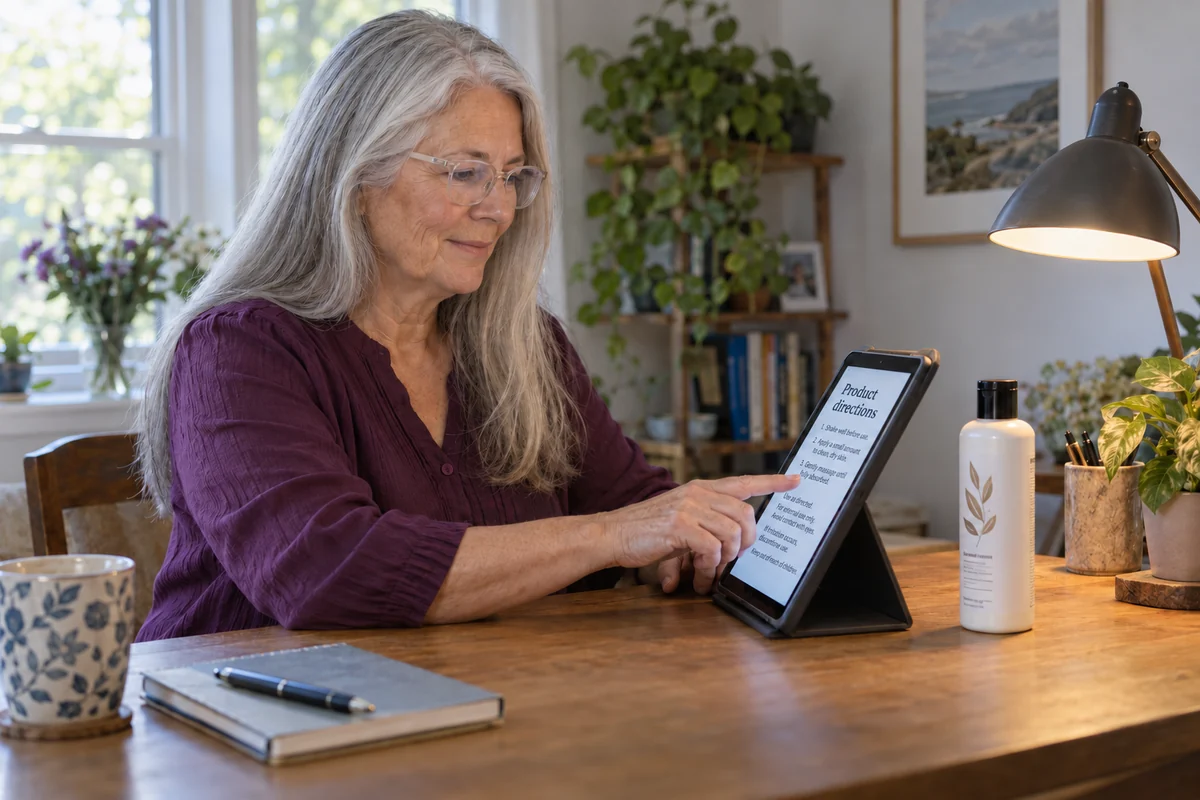
A woman uses a tablet displaying product directions beside a capped hair-care bottle at a dry desk.

Keep the bottles readable

  • Close containers and keep them out of heat and direct sun.
  • Leave the name and the directions on the bottle where you can read them.
  • Don’t pour leftovers together or decant into old containers just to make the shelf match.
An adult sets an unplugged hair appliance aside while noting its model for service advice.

A hot tool needs its own landing spot

  • Give it a dry, heat-safe place to rest while it cools, and let it cool completely before you put it away.
  • Keep the cord loose and away from water.
  • Never wedge a plugged-in tool into a gap that wasn’t made for it.

Products, by the job they do

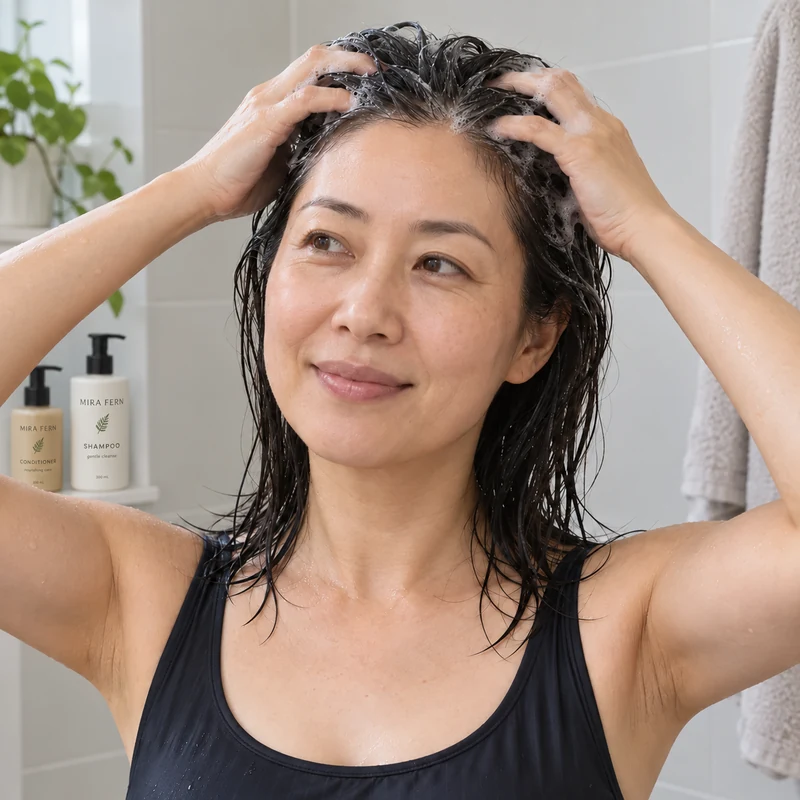
A woman massaging shampoo lather onto her scalp with her fingertips.

Think about where it will live, not just the bottle

A shampoo bar saves bottle space but needs a draining dish of its own. Choose the format that suits your scalp and the spot it will dry in.

Browse cleansing products. Your current shampoo, wash schedule and past treatments help guide a personal recommendation.

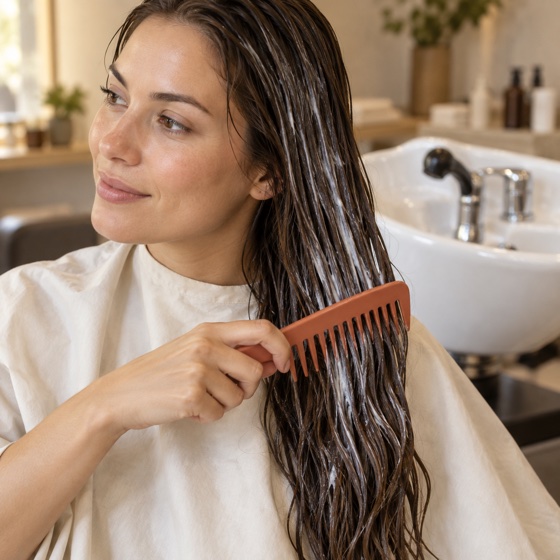
A woman detangling conditioned hair with a wide-tooth comb.

One conditioner that earns its shelf

A single good conditioner may be all your lengths need. See how your hair combs after rinsing before adding a mask that needs another spot on the shelf.

Browse rinse-out conditioners. Your tangles, past treatments and preferred finish help guide a personal conditioner recommendation.

How to do it

A woman massages lather over her scalp with finger pads while the shampoo bar rests on its draining dish.

1. Let the bar drain between washes

After washing, leave the bar somewhere it can drain and dry out. Close it into a tin only for travel, and only once it’s dry.

Guide: Wash with a shampoo bar
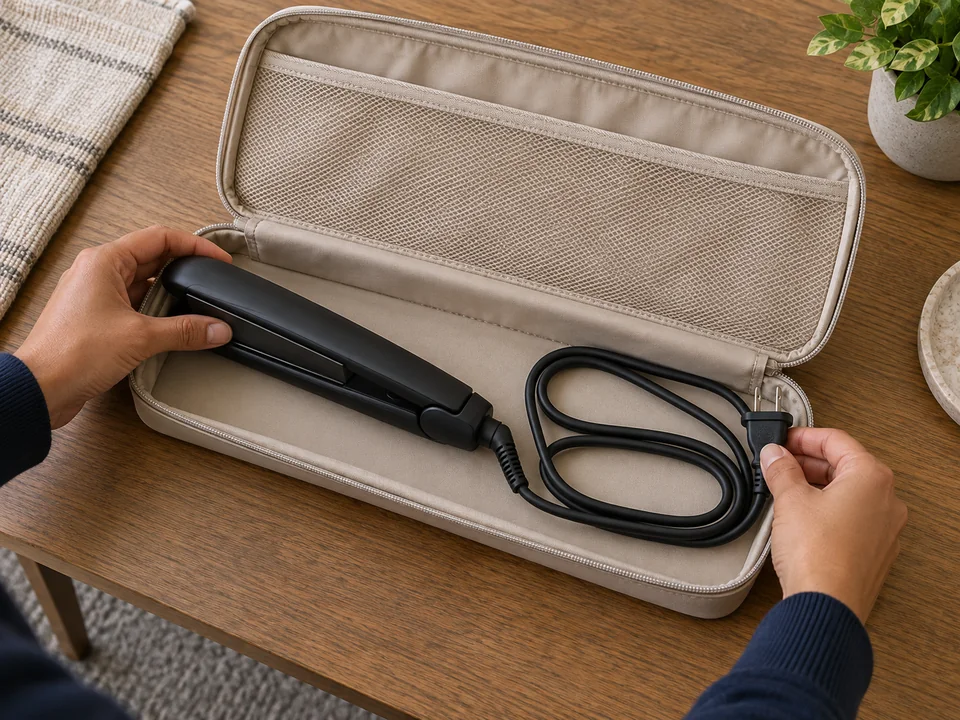
An adult places a cold hair appliance and its loosely folded lead in a roomy open case.

2. Put the tool away cold

Switch off, unplug and let it cool all the way before it goes in a drawer. Coil the lead loosely so it doesn’t kink at the plug end.

Guide: Pack a cooled hair tool and cord
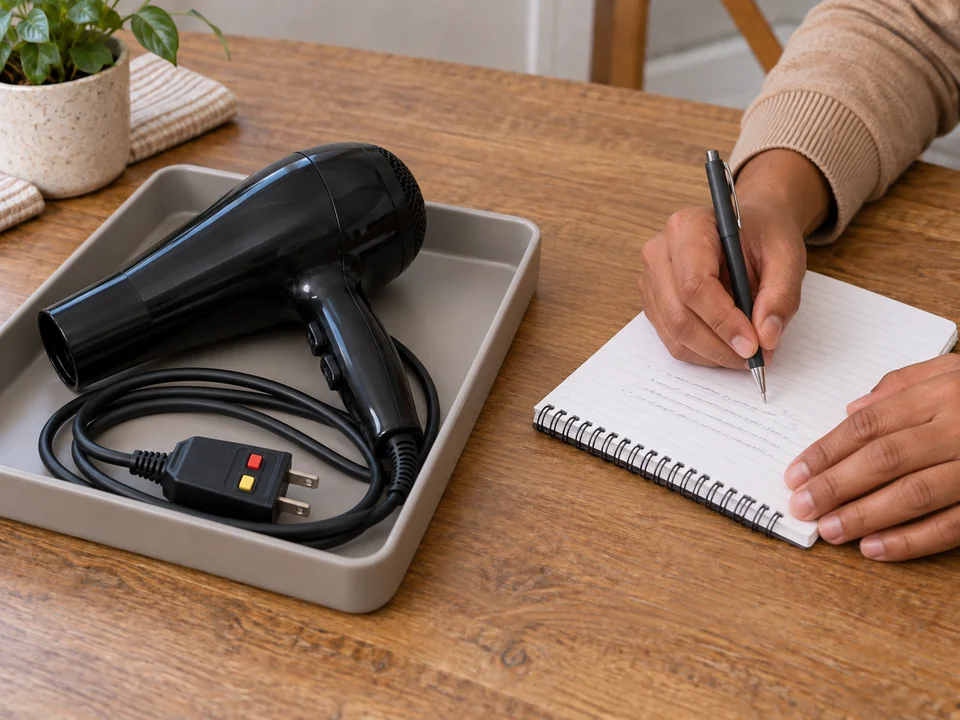
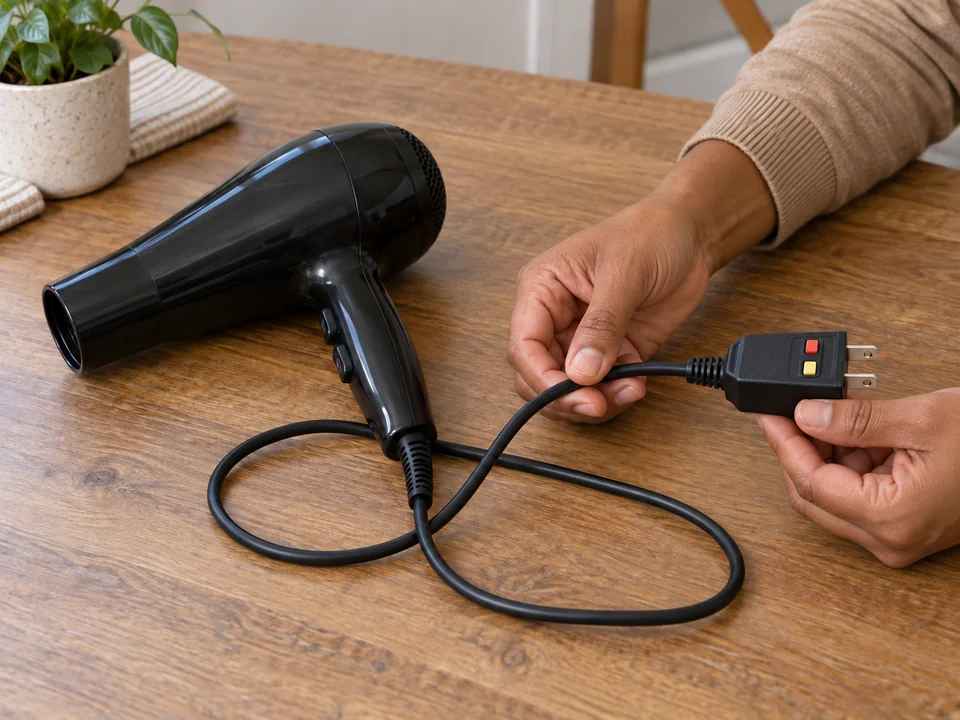
An adult examines the insulated cord and plug of a cool unplugged hair dryer on a dry table.

3. Give it a look before next time

With the tool unplugged, check the cord and plug. Anything frayed, cracked or behaving oddly stays out of use until it’s repaired or replaced.

Guide: Check a corded hair tool before use

Illustrated care examples: before & after

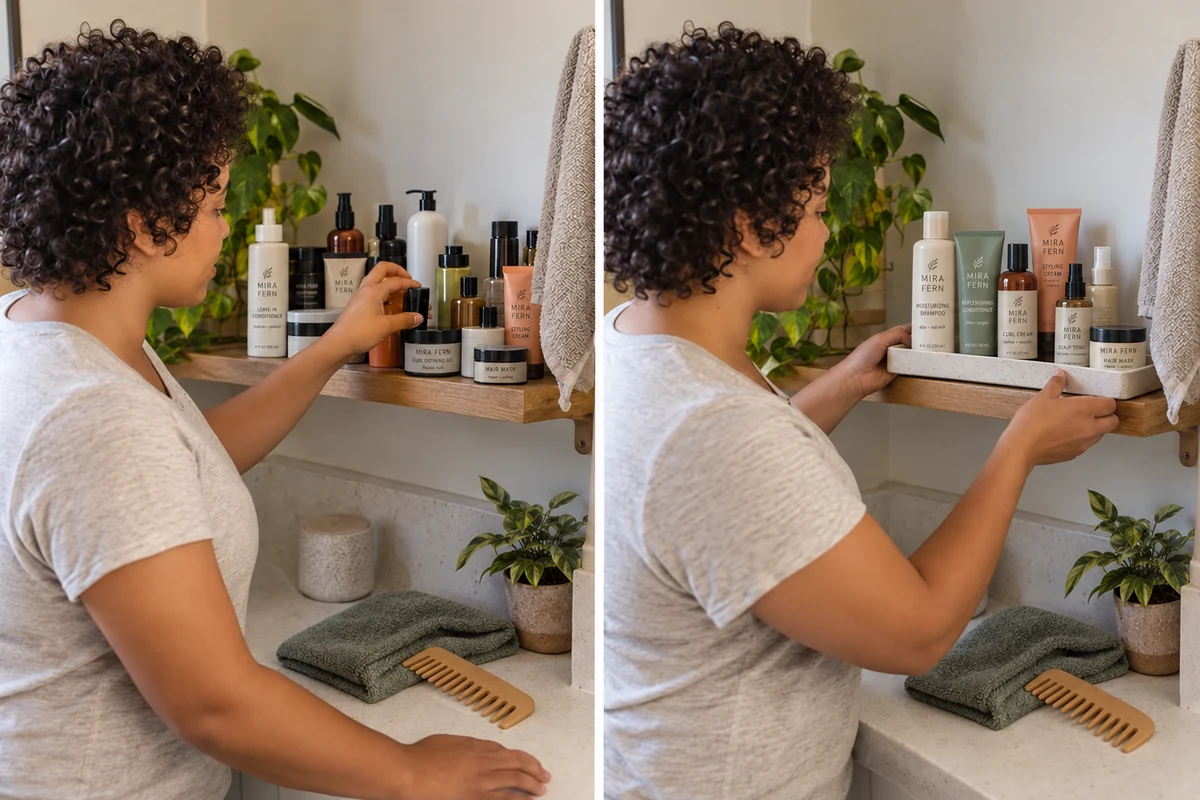
Everyday items on one tray

A person reaches among several bottles on a narrow shelf, then holds a tray containing a grouped set of bottles and jars.
Before · items scattered on the shelfAfter arranging · a group on a tray
The same items gathered on one tray so each is easy to reach. Use whatever grouping fits your space, not the number pictured here.

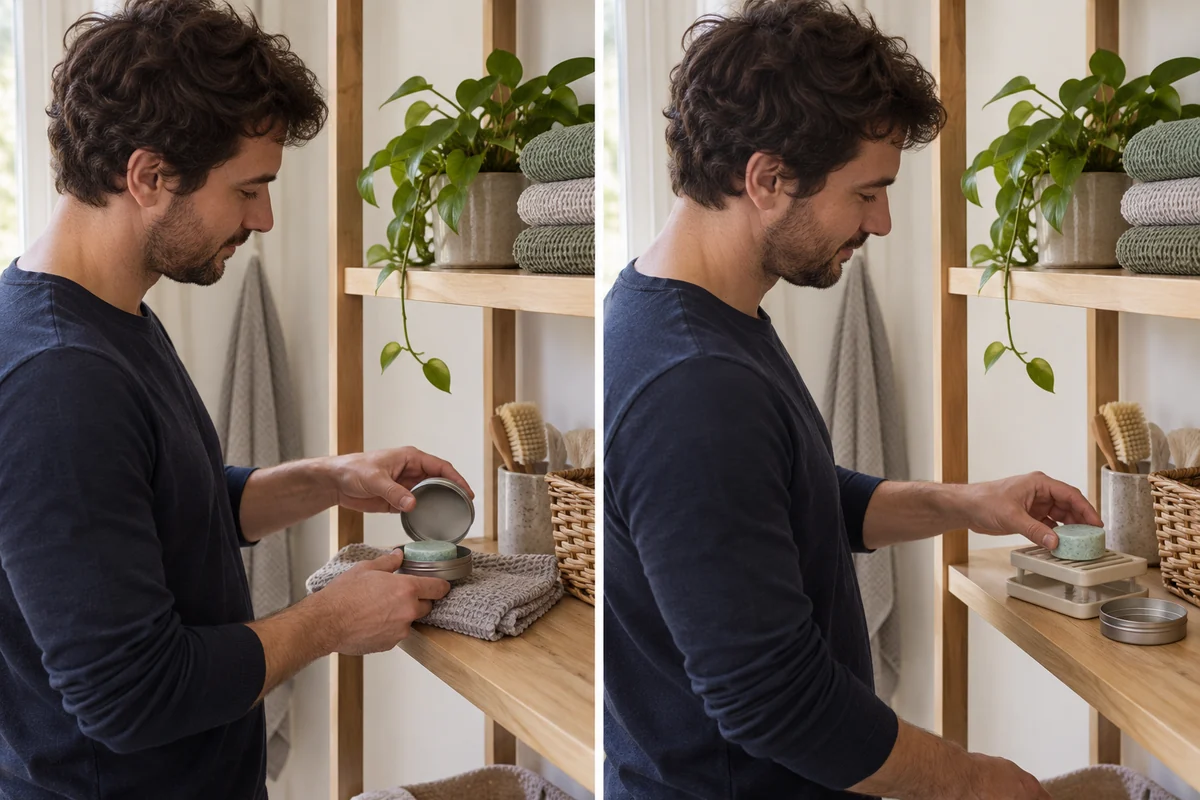
Somewhere for the bar to dry

A man opens a tin holding a green bar, then places the bar on a slotted draining dish with the open tin beside it.
Before · bar in its open tinAfter arranging · bar on a draining dish
A bar needs somewhere to drain before it goes back in a tin. Small packaging still wants a drying spot, so check what the bar and holder say.
A woman with curls writing a routine note beside her hair-care products.

Help with your hair-care routine

Bring your hair-care questions to the consultation. You can also read building a simpler everyday routine.

  • What do I own that has to dry before I can put it away?
  • Is there one product that could replace two I keep buying?
  • How do I keep the bottles readable and the tools within reach?

The plan uses the hair and scalp details you share, past treatments, current products, preferences and the time and budget you have.

The Hair Care Consultation gives you a personal plan with product recommendations, routines and guidance on your hair-care questions.

$49 with 60 days of follow-ups, or $99 with 12 months. Pay once; the year renews only if you choose.