Hair Care Guides

Your hair isn’t what it used to be.
Care for the hair you have now.

It’s unsettling when hair you’ve known your whole life starts behaving differently. Straight hair starts to bend, or familiar curls sit differently. Don’t fight it back into shape. Adjust where you put product, how you detangle and how you style, section by section.

Your personal hair-care planProduct choices, routines and answers shaped around your hair.$49one-timeStart my consultation
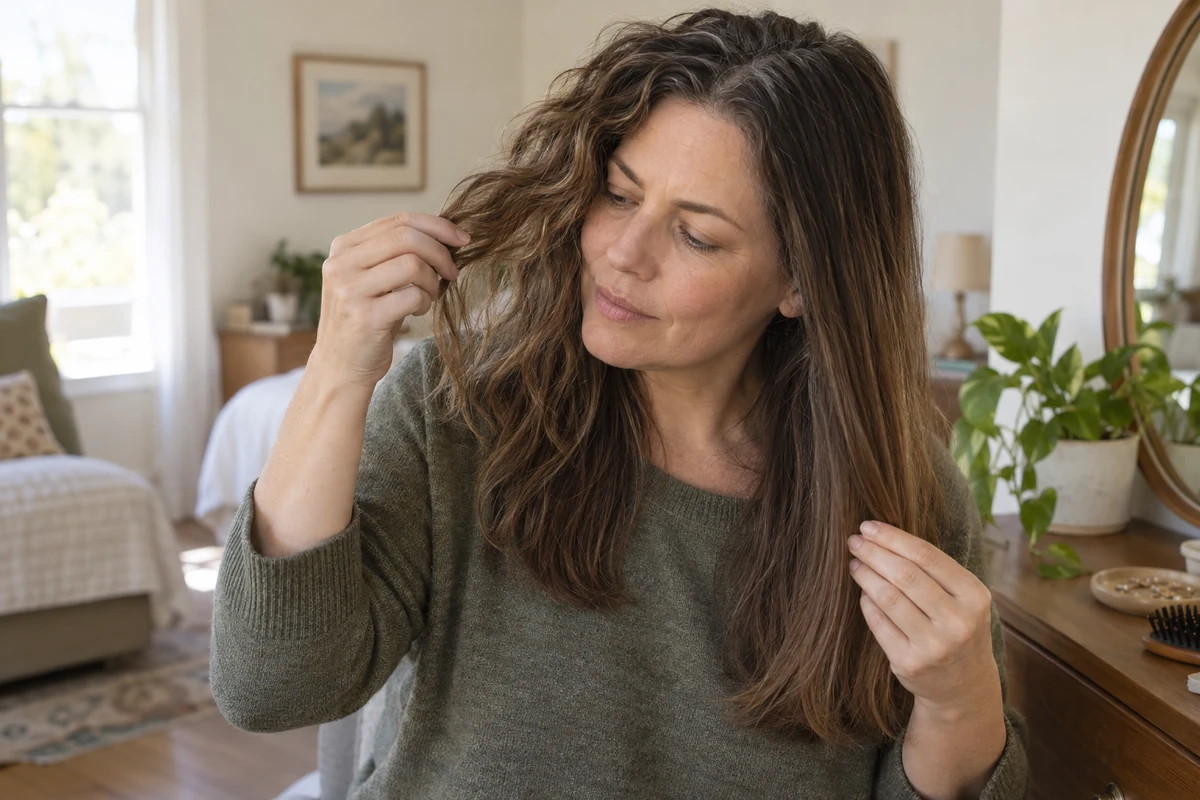
A woman gently comparing wavier roots with straighter lengths.
Care for the hair you have now.

What is going on

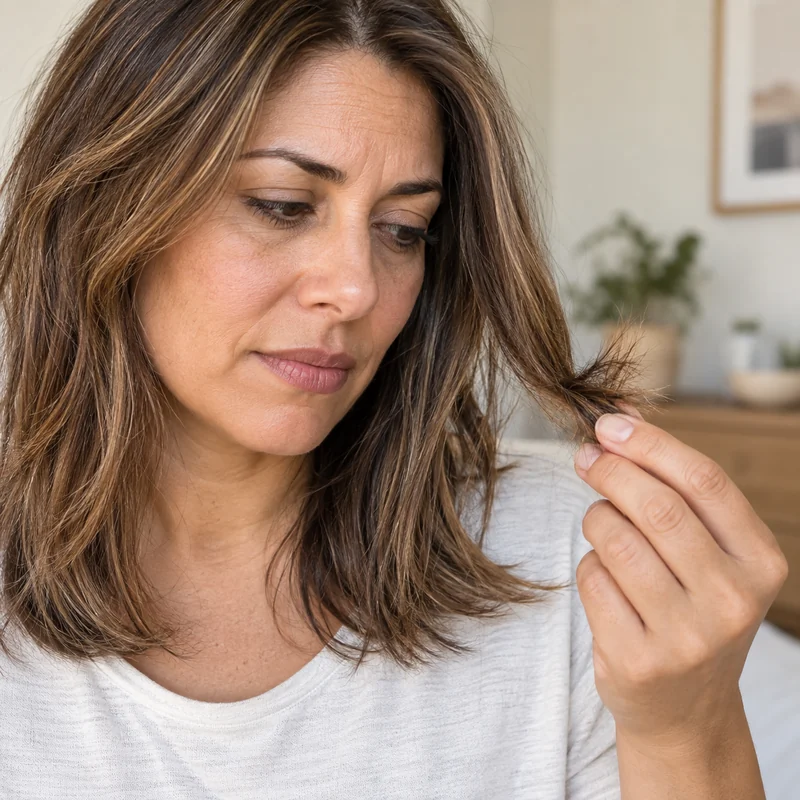
A woman examining rough, uneven ends in a section of highlighted hair.

New growth and old lengths are different hair

Treatments, years of wear and even a new haircut change how sections sit. Look at your roots and your ends as two separate areas instead of forcing them under one texture label. They may simply want different things.

A woman with curls writing a routine note beside her hair-care products.

Keep a short record of what changed

Note recent cuts, treatments, how much product you’re using and any change in drying. Wash as normal and let your hair dry fully before judging it. Keep what you notice about roots and ends separate, and resist replacing your whole routine in one go.

What helps, day to day

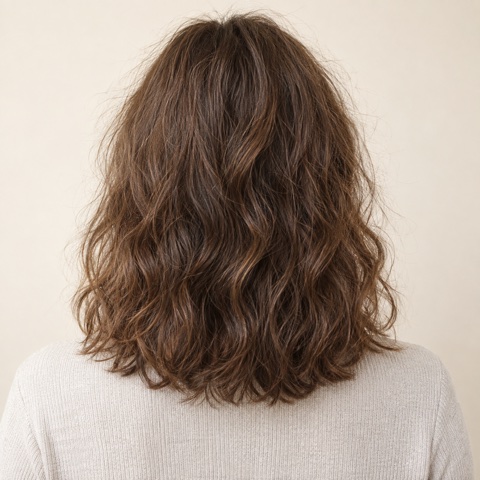
A rear view of wavy hair with fluffy, separated groups.

One layer bends more than another

  • While your hair is damp, arrange the layers gently and pick a finish that lets the mix be a mix.
  • A small amount of hold helps the wavier groups sit together without reaching for heat every day.
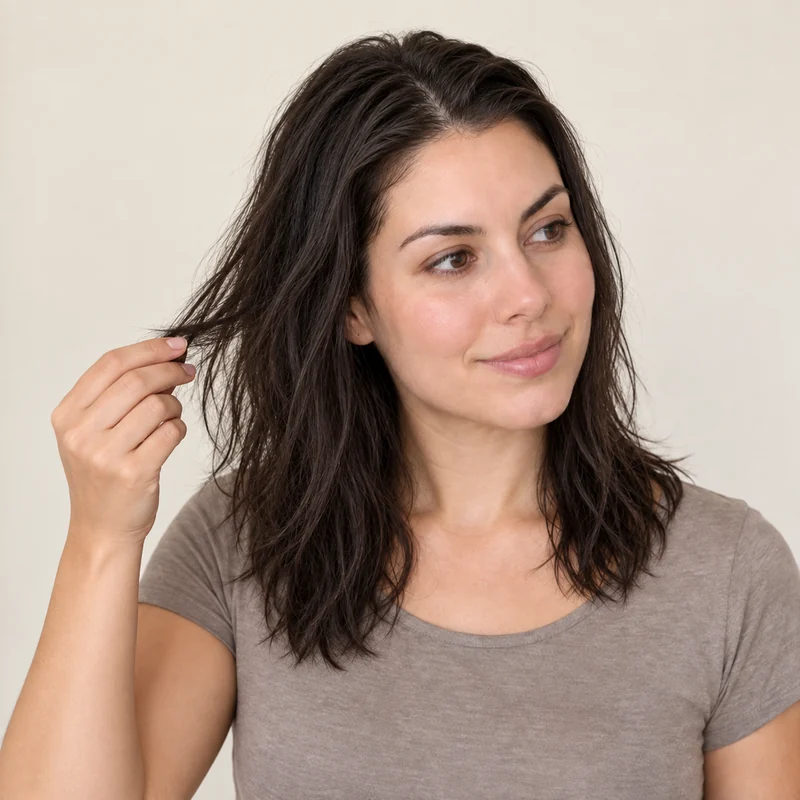
A woman gently feeling a section of her loose hair with her fingers, with no visible product.

Your old favorites feel heavy now

  • Start by using less, and check where you’re putting it.
  • If the result still isn’t right, swap one product rather than the whole shelf.
  • The one that stopped working is usually the richest one.
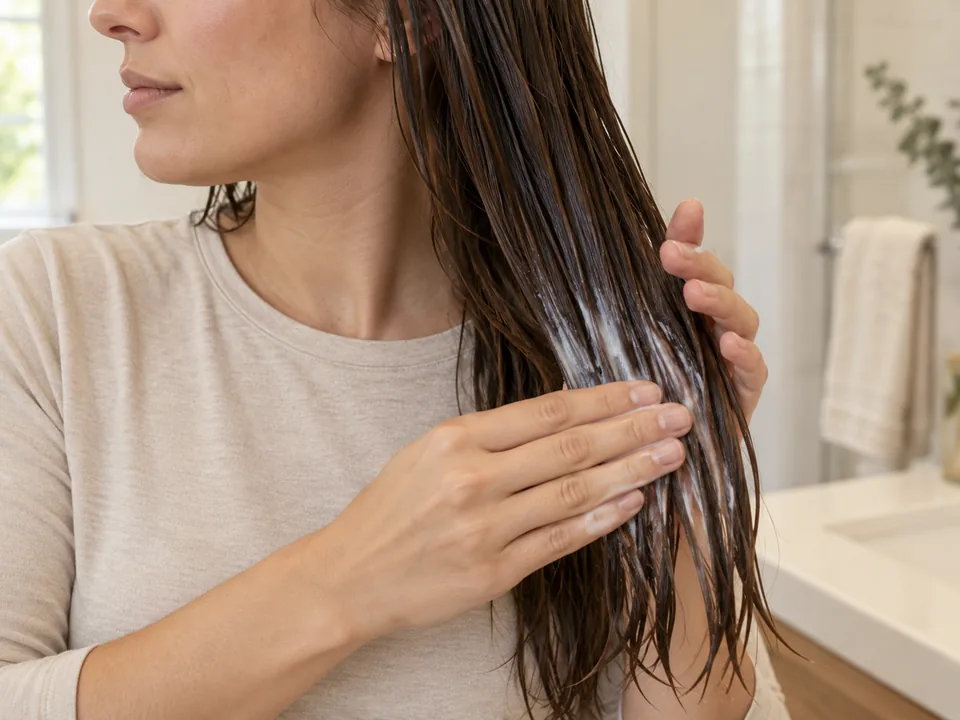
A woman smoothing conditioner through her mid-lengths and ends.

Straighter roots and curlier ends want different amounts

  • Put a light layer of hold where the bends need it and keep the richer conditioner on the rough ends.
  • Brushing everything repeatedly to make it match tends to backfire.
  • Let the style dry fully before deciding what needs another tweak.

Products, by the job they do

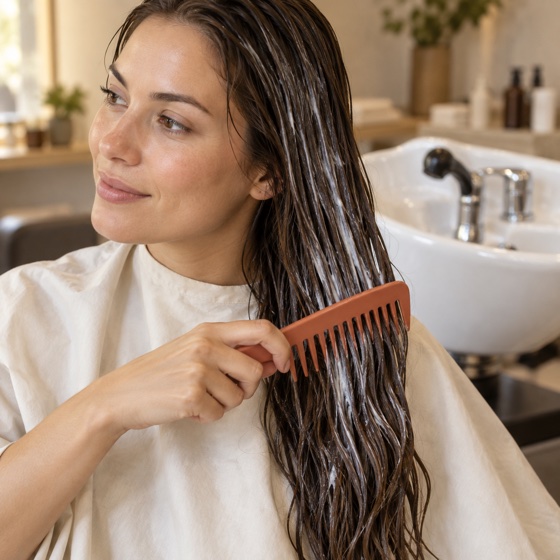
A woman detangling conditioned hair with a wide-tooth comb.

Slip for the hair you have now

Judge a conditioner by how your sections detangle and feel once dry. The hair type you used to be doesn’t get a vote in what you buy next.

Browse rinse-out conditioners. Tell the consultation what you want from a conditioner and what you disliked about previous ones.

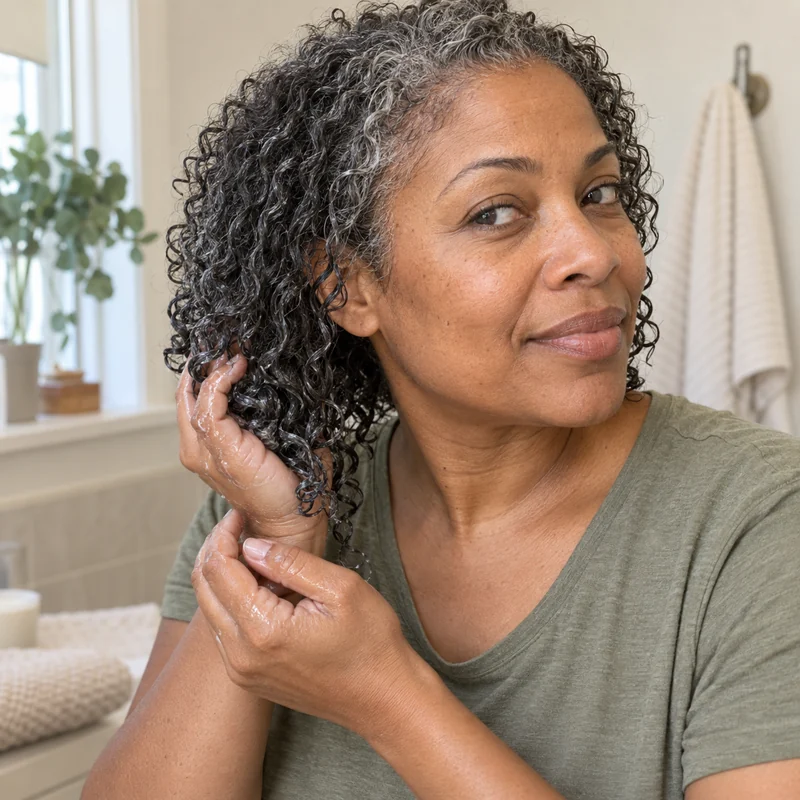
A woman cupping a damp curl section with styling gel on her hands.

Support the mixed pattern

Pick a styler for the finish you want today, and keep the amount light enough that the straighter areas don’t go stiff or stringy.

Browse styling products. Bring your styling questions and current products to the consultation for personal recommendations.

How to do it

A woman uses both hands to gently work shampoo at the back and sides of her scalp, with the lengths hanging loose.

1. Keep your wash the same for now

Change as little as you can while you watch the new finish. If the wash stays steady, you’ll know what the other changes did.

Guide: Shampoo your scalp
A woman places her fingertips on either side of the part in her damp hair, with the lengths hanging loose.

4. See it dry before you decide

Let the hair settle completely. Only then decide which adjustment matters next.

Guide: Air-dry your hair

When to get help

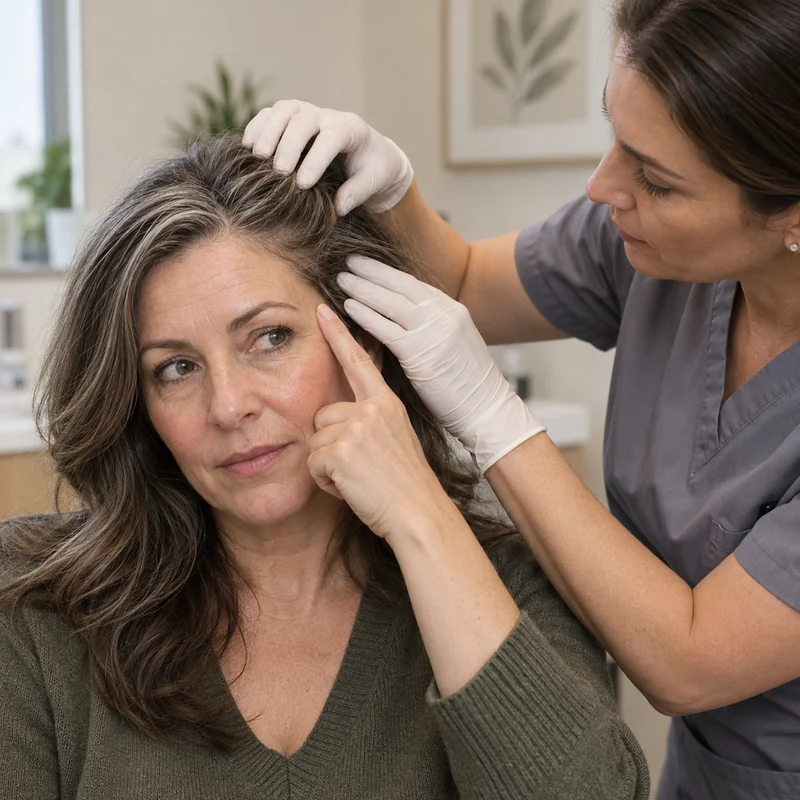
A medical professional examining the scalp where a woman points.

Signs that need more than routine care

  • A gradual shift in texture is usually just your hair changing with you. If it comes alongside sudden shedding, a patch, more scalp showing or a scalp that’s sore, it’s worth seeing a medical professional sooner rather than later, because those are easier to sort out early.

Illustrated care examples: before & after

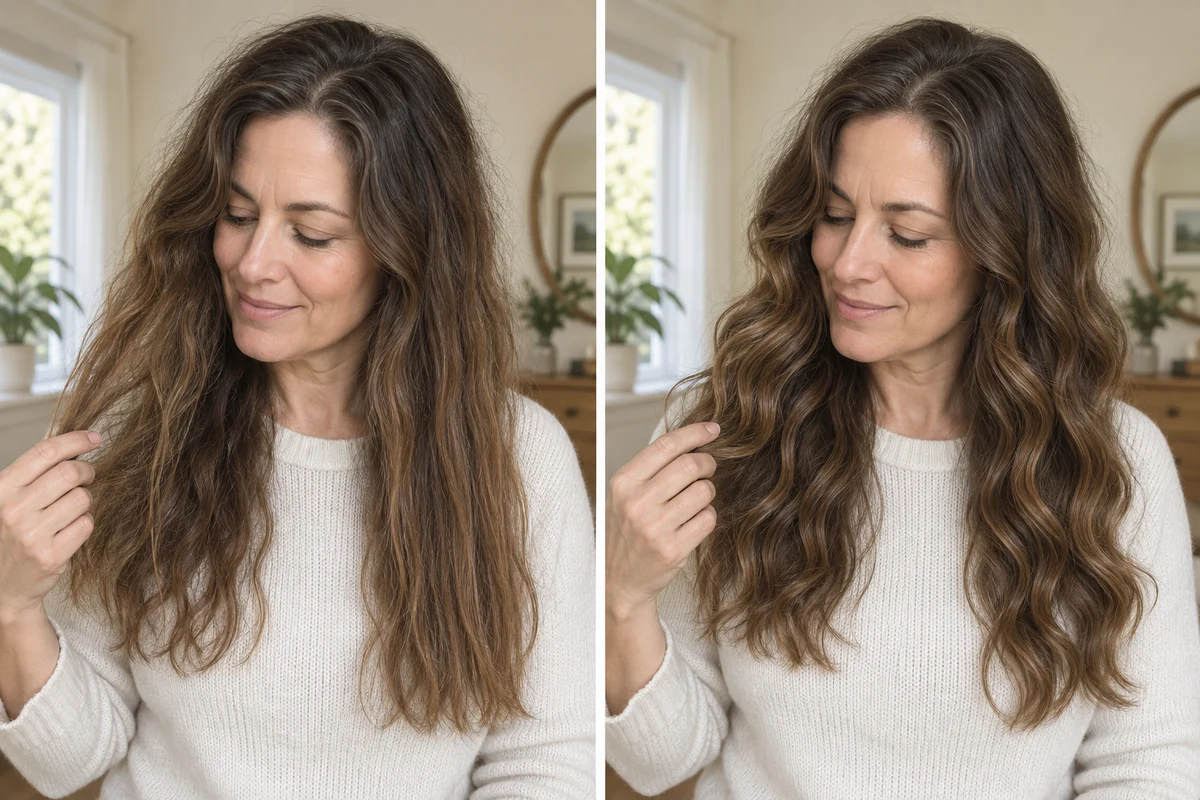
Mixed patterns, softly arranged

Illustrative care comparison: different bends by section beside softly arranged waves.
Before · different bends by sectionAfter care · softly arranged waves
Some sections bend one way and some another. Without heat, they can be arranged into soft waves you enjoy. The pattern underneath is just as mixed.

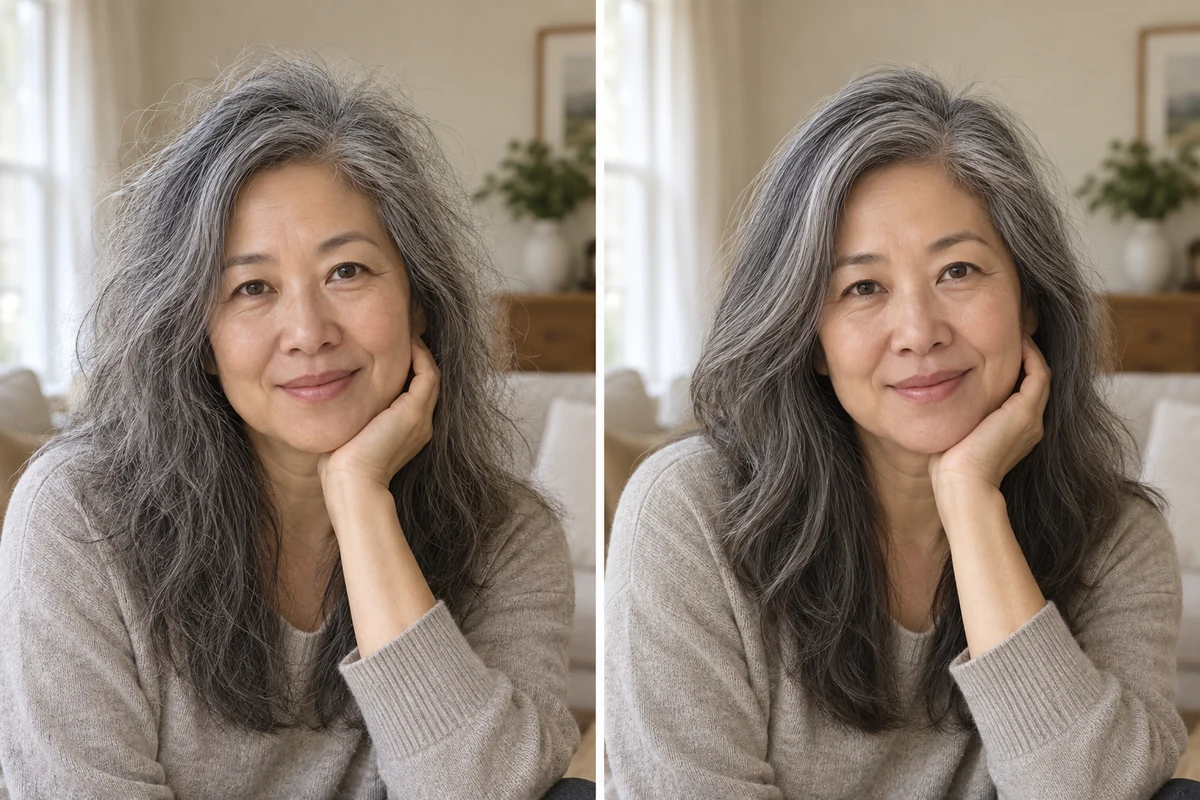
Guide the wiry strands

Illustrative care comparison: strands sitting apart beside softly directed strands.
Before · strands sitting apartAfter care · softly directed strands
Conditioner and a little styling guide the strands that stand apart back into the style. It works with the texture you have now, whatever changed it.
A woman gently squeezing damp hair with a towel.

Help with your hair-care routine

Bring your hair-care questions to the consultation. You can also read this related guide. If your hair is coming back after chemotherapy, start with care for hair after chemo instead.

  • How do I look after hair that’s now two textures?
  • Which of my old products are still worth using?
  • How do I style the change without so much heat?

The plan uses the hair and scalp details you share, past treatments, current products, preferences and the time and budget you have.

The Hair Care Consultation gives you a personal plan with product recommendations, routines and guidance on your hair-care questions.

$49 with 60 days of follow-ups, or $99 with 12 months. Pay once; the year renews only if you choose.