Hair Care Guides

Care for the texture you see now.
Bends and straighter bits, all in one head.

Stopping straightening often leaves a mix of bends and straighter lengths, and it can feel like your hair doesn’t know what it is yet. Start with washing, conditioning and a finish you can manage. Then decide which styling work to keep.

Your personal hair-care planProduct choices, routines and answers shaped around your hair.$49one-timeStart my consultation
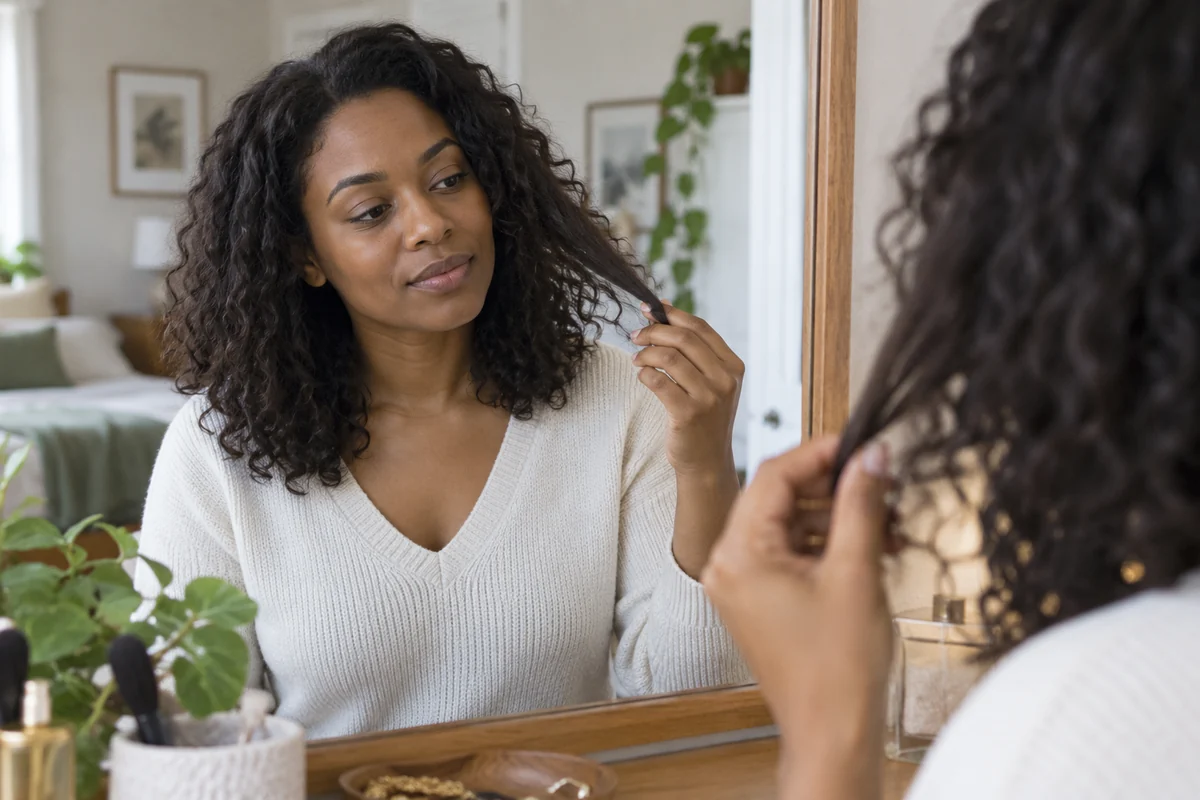
An adult with mixed waves and curls looks at the lengths in an ordinary mirror.
Bends and straighter bits, all in one head.

What is going on

A woman checks her curly front and straighter top layer in a mirror.

Let each region be what it is

After a normal wash, look at how the front, the crown and the ends settle on their own. Older lengths that sit straighter won’t tell you why by looking. Keep your heat and treatment history in mind, especially if any hair was chemically altered.

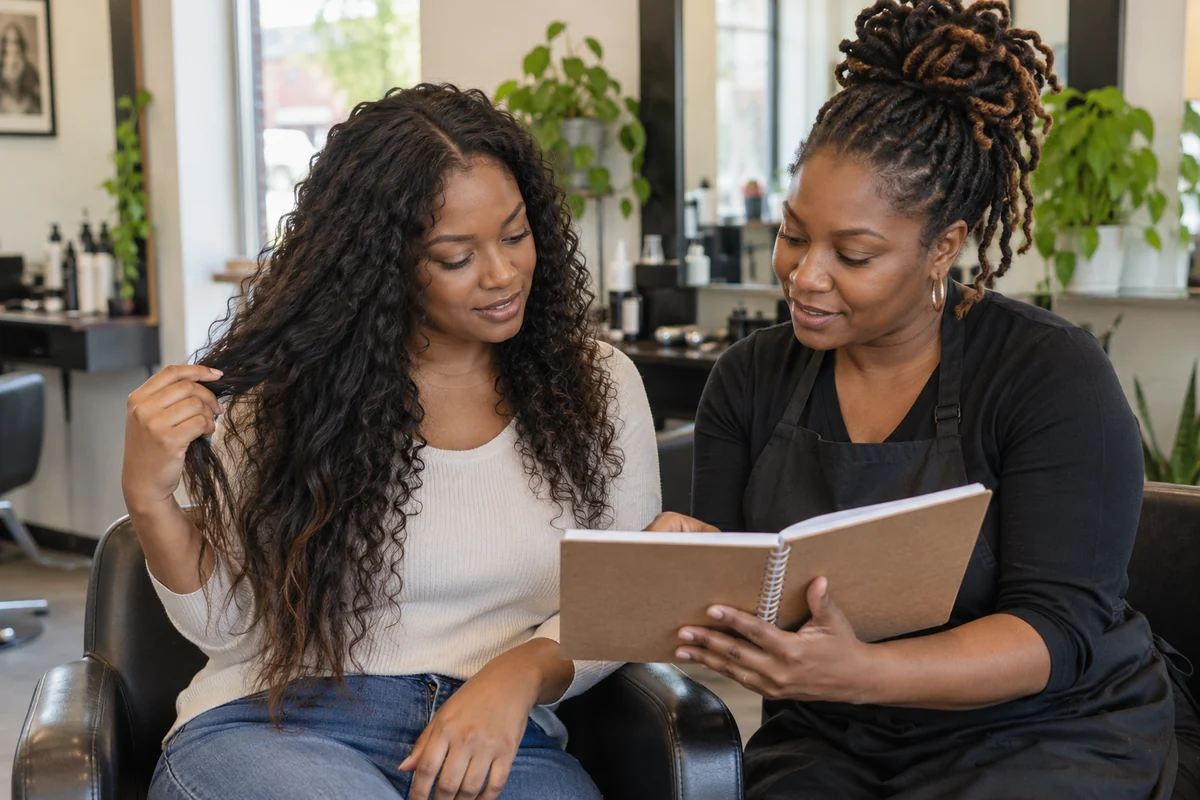
An adult with mixed curls discusses styling options with a stylist.

Pick a transition you can live with

You can wear the mix loose, set a temporary shape, or get a cut you’d actually like. A big chop is optional, not required. Choose the time and effort you can repeat, rather than a difficult style that proves you’ve quit straightening.

What helps, day to day

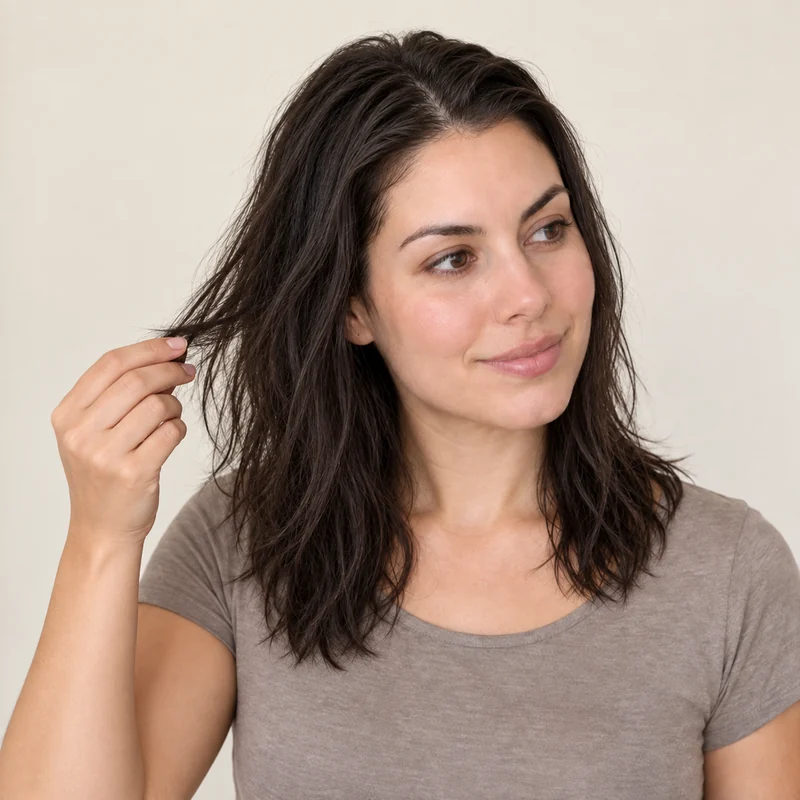
A woman gently feeling a section of her loose hair with her fingers, with no visible product.

The straighter bits still feel rough

  • Condition them as the label says and pause when a tangle fights back.
  • Don’t keep testing the area with more heat or stripping washes.
  • If the ends stay difficult, ask about a trim or a simpler shape, and don’t expect any product to undo their history.
A woman with curls writing a routine note beside her hair-care products.

Every wash turns into a curl test

  • Keep the notes short.
  • What you used, how you handled it and the rough shape of each region once dry.
  • Keep conditioning as normal rather than stripping everything off for a so-called pure test.
  • There’s no set number of washes that proves anything has recovered.
A man seated at a dry dressing table with both forearms resting on a folded towel beside a mirror, comb and bottles.

The new routine is too much work

  • Use fewer styling sections, wear it loose, or book an occasional salon visit if that’s an option.
  • Keep the parts that help day to day and drop the rest.
  • A mixed finish is fine while you learn what your hair and your week can manage.

Products, by the job they do

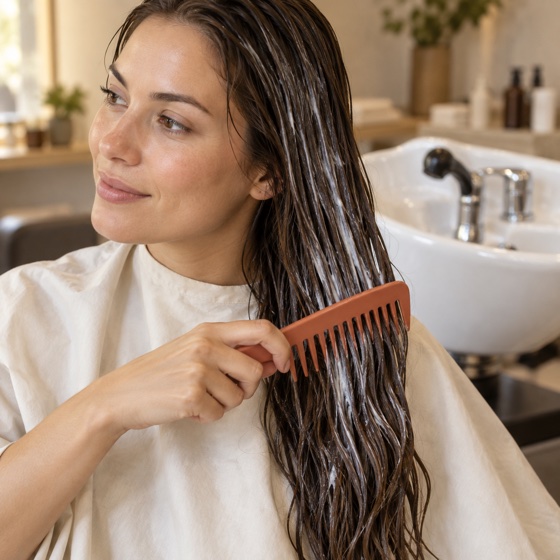
A woman detangling conditioned hair with a wide-tooth comb.

Choose conditioner for how it handles

Think about how the lengths tangle, what treatments they’ve had and how they feel once dry. Keep the slip that helps and rinse as directed. A product sold as repairing or curl-restoring can’t promise your old pattern back.

Browse rinse-out conditioners. For conditioner recommendations, share where your hair tangles and which products you have tried.

A woman cupping a damp curl section with styling gel on her hands.

Use hold to shape what’s there

Pick one styler, use it as the label says, and judge the result once it’s dry. Think about the finish you want and how the curlier and straighter regions each respond. A set changes how the hair looks today. It doesn’t change the hair itself.

Browse styling products. The consultation uses your hair details and styling habits to compare creams, mousses and gels.

How to do it

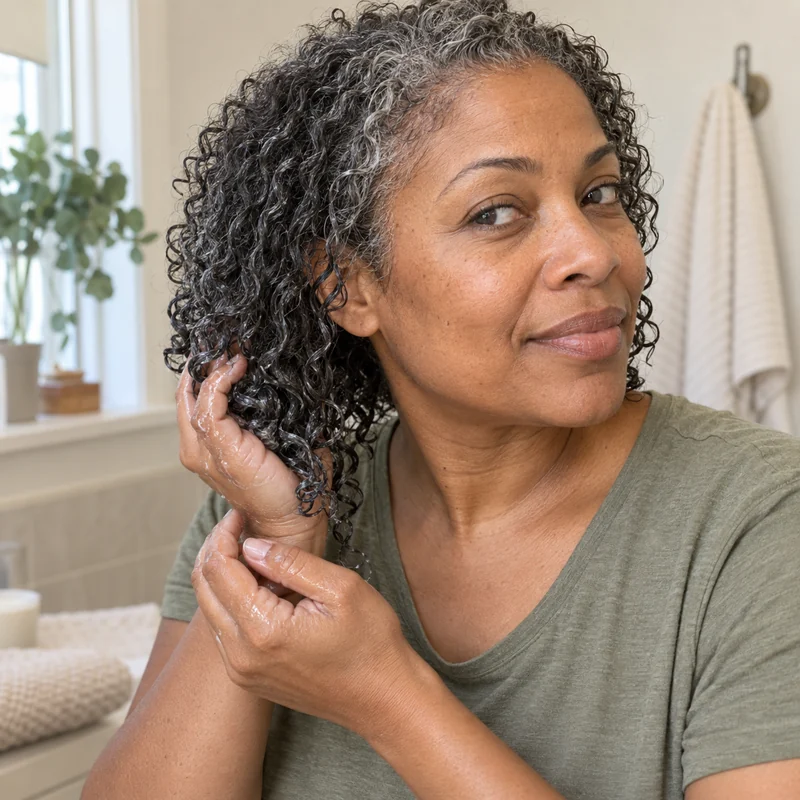
Letting loose curls air-dry without stretching them.

1. Watch it dry without skipping care

Condition as usual and let loose hair air-dry without stretching it. Notice a few regions and what you used on them. This is one wash day’s picture, not a permanent label and not proof of recovery.

Guide: Observe your air-dried pattern
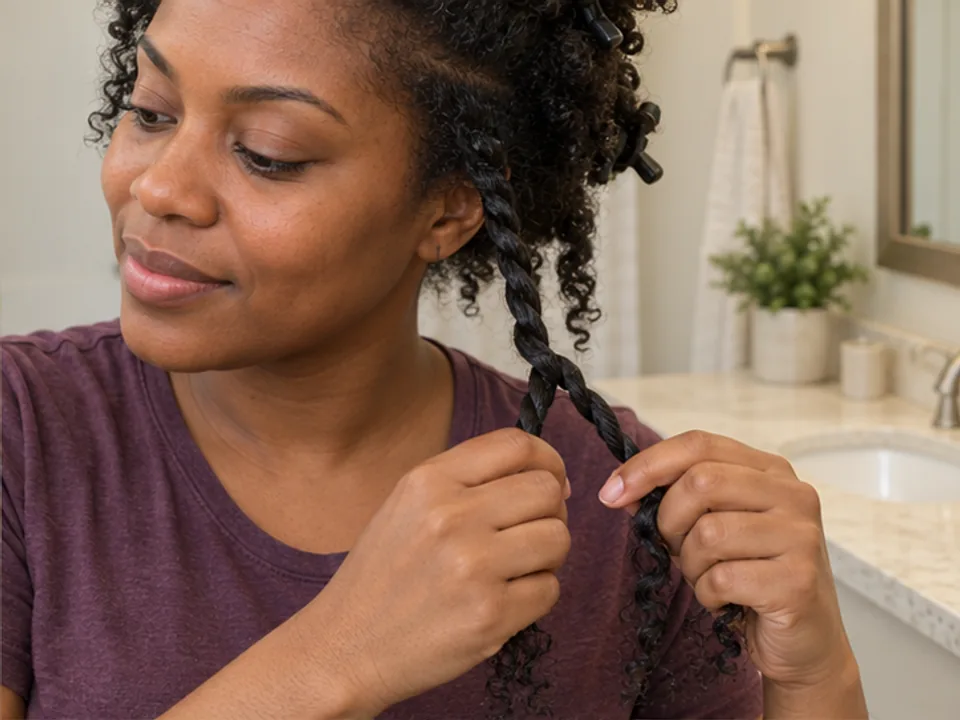
Woman crosses two strands of her own damp coily hair in the same direction to form a hanging twist.

2. Try a twist-out when it fits

For loose curls or coils long enough to twist, start with damp, detangled hair, keep the roots comfortable and let it dry completely before you unravel. Straighter sections may set differently. This isn’t for extensions or installed styles.

Guide: Create a twist-out

Illustrated care examples: before & after

A loose twist on damp hair

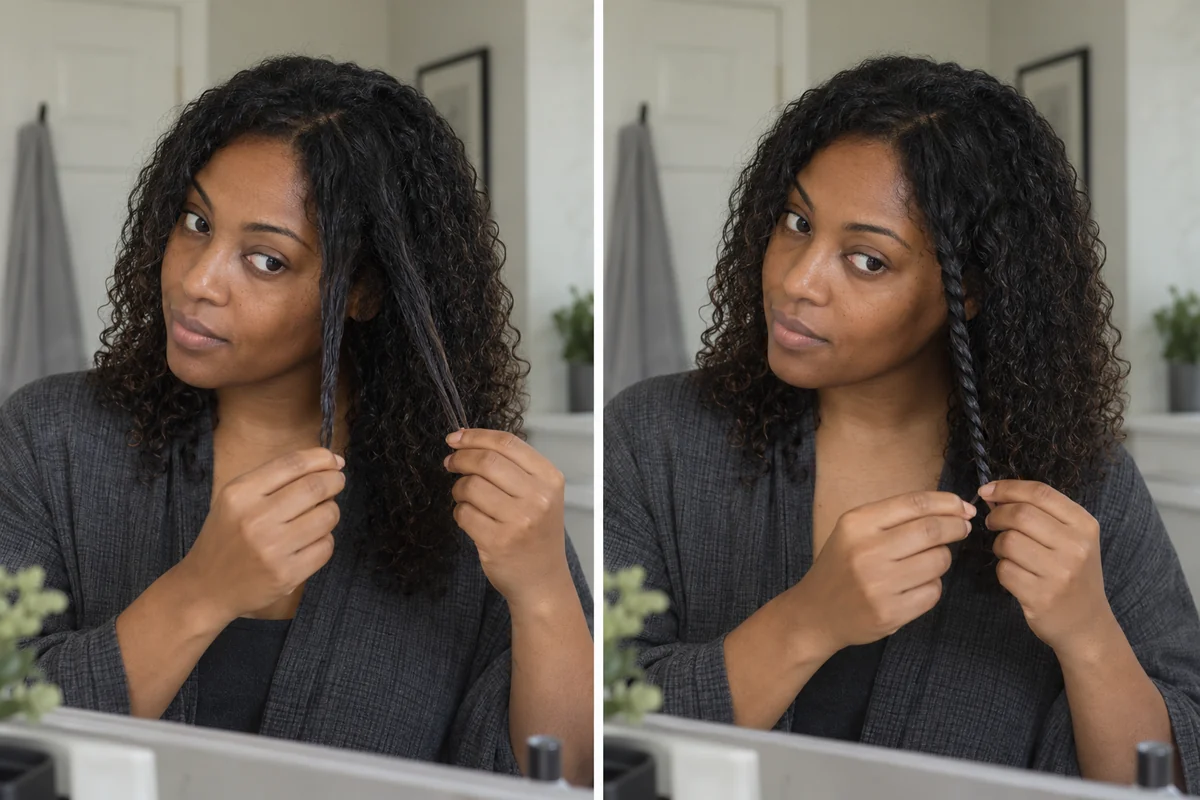
The same adult changes one reachable loose section into a simple two-strand twist.
Before · one damp section hanging looseAfter care · section in a loose twist
One damp section goes into a loose two-strand twist, a temporary set. Let it dry fully before taking it out. The curl pattern itself hasn’t changed.

Put the cooled iron away

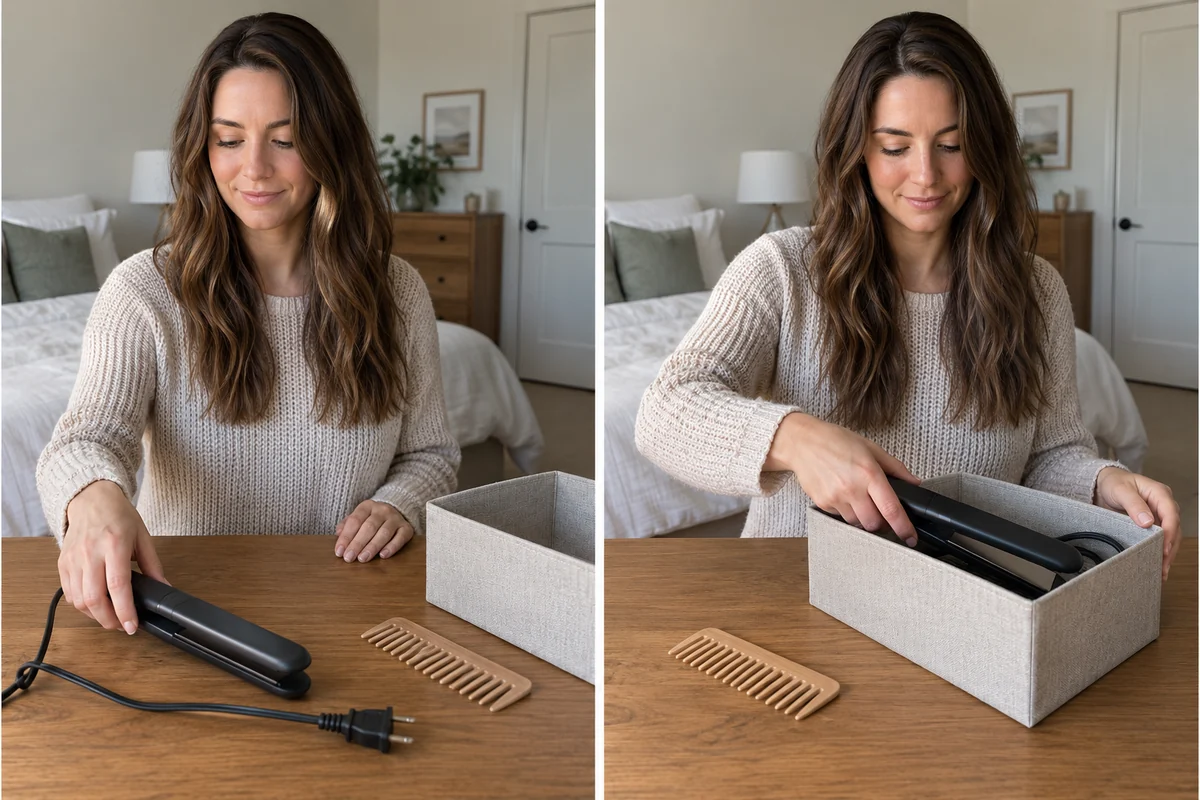
The same adult stores a cooled unplugged flat iron and leaves a wide-tooth comb ready.
Before · cooled iron beside a combAfter care · iron stored, comb ready
The unplugged, fully cooled iron goes into storage and the comb stays out for a no-heat finish. Store it the way the appliance’s instructions say.
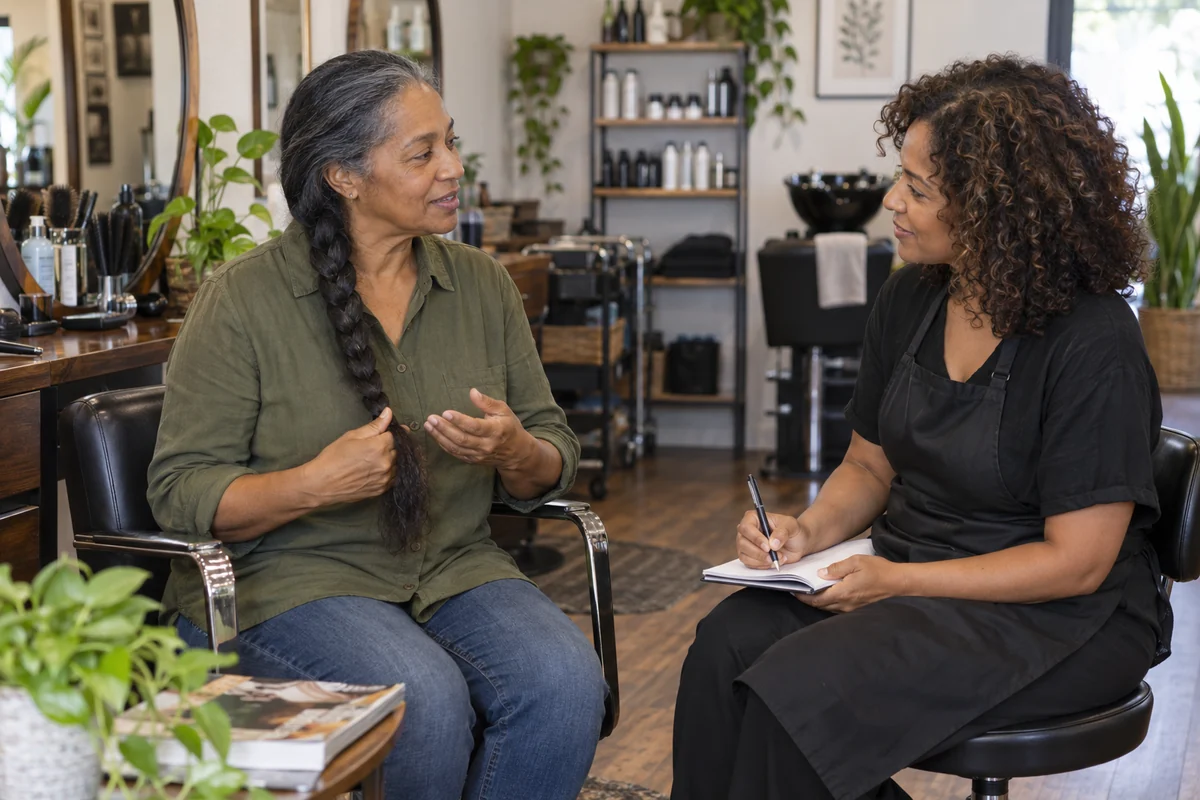
An adult holding a long braid discusses care with a stylist who takes notes in a salon.

Help with your hair-care routine

Bring your hair-care questions to the consultation. You can also read adjusting care when different sections behave differently.

  • Which parts of my old routine still earn their place?
  • What style suits this mix of shapes?
  • Would a small trim make it easier without losing the length I want?

Tell us your heat and chemical history, how each region looks now, what’s hard to handle and how much styling you’re up for. The consultation builds a workable routine for the hair you have today, with no promises about pattern coming back.

The Hair Care Consultation gives you a personal plan with product recommendations, routines and guidance on your hair-care questions.

$49 with 60 days of follow-ups, or $99 with 12 months. Pay once; the year renews only if you choose.