Hair Care Guides

Get to know your own hair again.
Start once the removal is properly finished.

After extensions come out, your own hair can feel like a stranger. Lighter, shorter, maybe a little disappointing at first. Rebuild around the hair you’re holding now. Keep what still helps, rethink the amounts, and choose a finish without rushing into the next install.

Your personal hair-care planProduct choices, routines and answers shaped around your hair.$49one-timeStart my consultation
An adult with loose shoulder-length curls discusses her hair routine with a stylist.
Start once the removal is properly finished.

What is going on

An adult and stylist review a care booklet beside a closed extension case.

Finish the removal properly

Ask the installer whether anything’s left behind, attachments or glue residue, and what follow-up care you need. Don’t pull, cut or dissolve anything unfamiliar yourself. Ordinary loose-hair care starts once the removal is complete and any specific directions are clear.

An adult gently holds her own shoulder-length ends near a mirror.

Plan for the length you can reach now

Notice where your own ends fall and which sections reach a tie without strain. The style you wore with extensions may not work anymore. A loose finish, a different fastening or a chat with your stylist beats pulling shorter sections into the old shape.

What helps, day to day

A woman wearing glasses reads a hair product ingredient panel.

The old amount of product is too much

  • Reread the directions before carrying over the amount you used on added lengths.
  • If the label lets you adjust, start low and finish one section before adding more.
  • Treatments with a fixed dose stay at that dose.
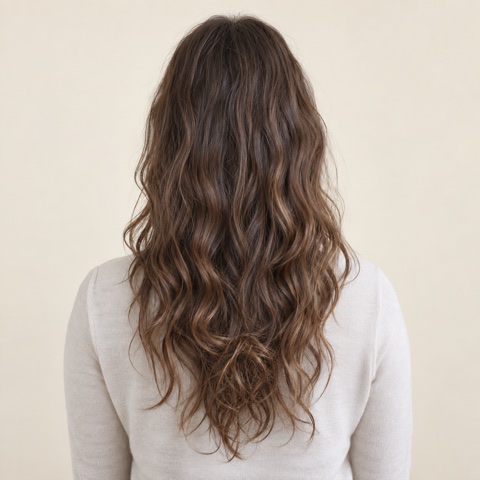
Wavy hair with tangles concentrated near the ends.

The freed lengths catch when you handle them

  • Hold the section and work gently from the ends, damp or dry depending on your pattern.
  • Stop when you meet resistance.
  • Matting that won’t shift, or an attachment still in there, is the installer’s job.
  • Those aren’t ordinary knots to brush through.
An adult holding a long braid discusses care with a stylist who takes notes in a salon.

You want your old volume back right now

  • Decide what you want now, without treating another install as the only route.
  • A cut that suits the length, or a temporary styling choice, might be enough.
  • Less bulk after added hair comes out is the missing hair.
  • A new change at the scalp is something separate.

Products, by the job they do

A woman massaging shampoo lather onto her scalp with her fingertips.

Rebuild the wash from today’s needs

Scalp oil, residue, other treatments and the removal directions decide the shampoo. Go back to an ordinary wash when it’s appropriate. A harsh reset shampoo or repeated stripping washes aren’t needed just because the extensions are out.

Browse cleansing products. Your current shampoo, wash schedule and past treatments help guide a personal recommendation.

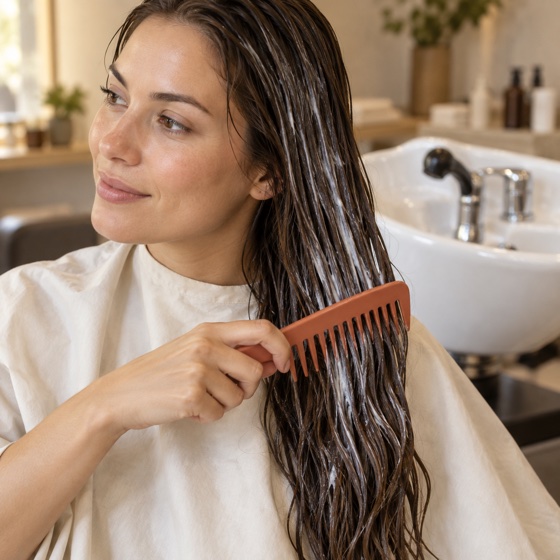
A woman detangling conditioned hair with a wide-tooth comb.

Keep slip for your own lengths

Your tangles, pattern and how much hair you’re handling set the conditioner. Put it where the directions allow and rinse it out fully. Easier combing is a good result in itself. It isn’t a measure of how the hair has recovered from the install.

Browse rinse-out conditioners. Your tangles, past treatments and preferred finish help guide a personal conditioner recommendation.

How to do it

Supporting dry ends while distributing a small amount of styler.

1. Recheck a flexible styling amount

Use this only for a styler you’ve already chosen, whose directions allow a small start and a top-up. Note the amount that works on your own sections. It doesn’t change a treatment with a fixed dose.

Guide: Adjust styling product amount
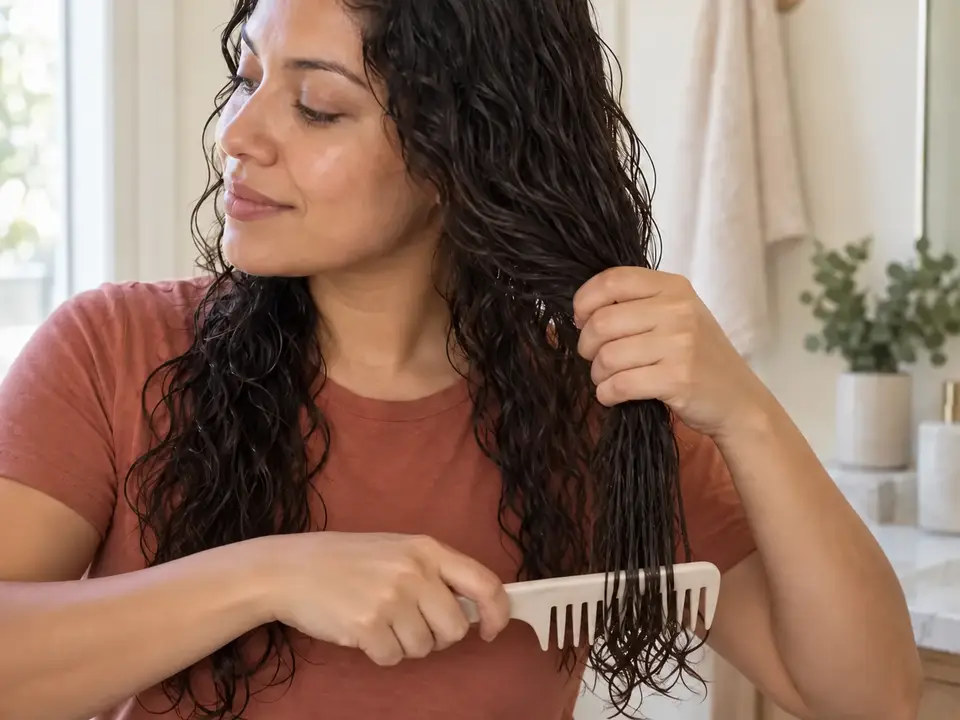
Woman supports a damp wavy-curly section while a wide-tooth comb begins at the lowest hair tips.

2. Detangle loose hair in small sections

Once removal is complete, use this for ordinary snags in loose hair. Pick the state that suits your pattern, hold above the ends and stop at resistance. It won’t remove attachments or a serious mat.

Guide: Detangle with a wide-tooth comb

When to get help

A medical professional examining the scalp where a woman points.

Signs that need more than routine care

  • A scalp that stays sore or irritated after extensions, sores, or new patches of hair loss are worth having a medical professional look at rather than waiting to see. Take down any style that pulls and stop any product that reacts in the meantime.

Illustrated care examples: before & after

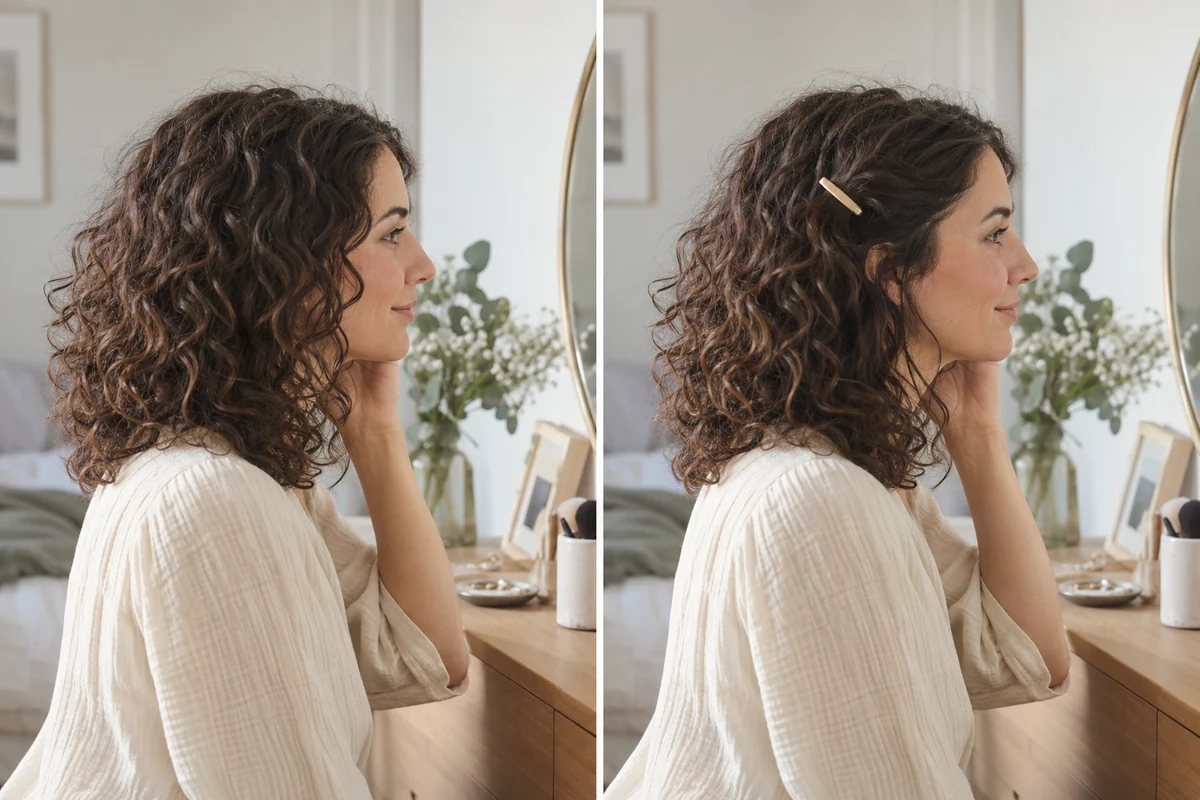
A loose pin where it reaches

The same adult moves one front section into a loose permitted pin while shorter lengths remain free.
Before · front section beside the faceAfter care · section in a loose pin
With the extensions out, a front section is pinned loosely and the shorter ends left free. Pin only what reaches comfortably. Nothing about density has changed.

Put the extra stylers away

The same adult leaves one closed familiar styler ready and stores two optional closed containers.
Before · three styling containers outAfter care · one stays out, two stored
Two of the three stylers go into a drawer and one stays out on purpose. With your own lengths back, check how much the label suggests.
A woman with curls writing a routine note beside her hair-care products.

Help with your hair-care routine

Bring your hair-care questions to the consultation. You can also read keeping installed-extension care separate from care after removal.

  • Which of my old steps still help my own hair?
  • Does the amount I use match the hair I have now?
  • What style works without forcing the shorter sections?

Share the attachment system you had, the removal directions, your length now, how it tangles and the finish you want. A consultation can rebuild product choices and handling around your own hair, without assuming every change is just part of coming out of extensions.

The Hair Care Consultation gives you a personal plan with product recommendations, routines and guidance on your hair-care questions.

$49 with 60 days of follow-ups, or $99 with 12 months. Pay once; the year renews only if you choose.