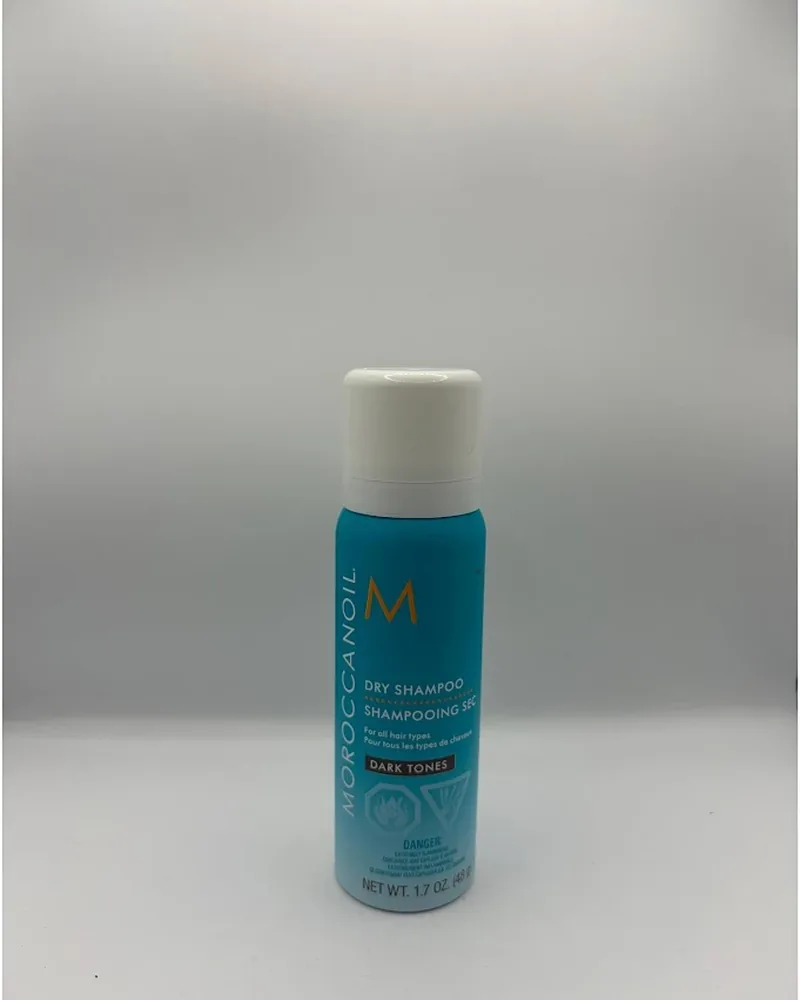
A dry shampoo that dissipates instantly to absorb oil and product buildup while combatting brassiness in light-colored hair
This is a marketing claim; an ingredient list cannot speak to it.
—
Can’t be confirmed from label.
Dry shampoo
Scent:
The ingredient list declares fragrance. What it smells of is not stated, and we do not guess.
Manufacturer page: moroccanoil.com
Not enough priced dry shampoos to place it
We have not priced enough dry shampoos to place this one.
Great for
Maybe skip if
What the formula actually does
Each row says where it comes from: F means we derived it from this product’s own ingredient list, S means it is a claim the brand makes that the formula neither confirms nor contradicts.
Absorbent powders or starches high in the list.
Fast-drying alcohol is present — it speeds drying and can read dry on the hair.
Water-insoluble silicones or waxes: a detergent wash is what removes them.
Fragrance is listed; it sits below the working ingredients.
Ingredients that matter
The workhorse ingredients plus anything lower down that changes a decision. These chips name what an ingredient does — they are not safety scores, and no ingredient here is rated good or bad on its own.
| Ingredient | What it does | Why it matters | Chip |
|---|---|---|---|
| Hydrofluorocarbon 152a | propellant | Pushes the product out of the can | Neutral |
| Butane | propellant | Pushes the product out of the can | Neutral |
| Rice StarchOryza Sativa (Rice) Starch | starch | Soaks up oil and adds grip | Neutral |
| Alcohol Denat.SD Alcohol 40-B (Alcohol Denat.) | drying alcohol | Speeds drying — and can read dry on the hair | Drying |
| Disiloxane | silicone | Smooths the cuticle and adds shine | Buildup |
| Argania Spinosa Kernel OilArgania Spinosa (Argan) Kernel Oil | oil | Coats and softens the strand | Softens |
| PVP | film former | Lays down the film that holds a shape | Holds |
| WaterAqua/Water/Eau | solvent | The base everything else is dissolved in | Neutral |
| FragranceParfum/Fragrance | fragrance | The scent | Fragrance |
US labelling rules put ingredients above 1% in descending order of amount; below 1% they may be listed in any order. Annotations keep three readings separate: the ingredient's general function, its role in this product type, and what its position can support.
A non-flammable aerosol propellant used in dry shampoos and finishing sprays.
Listed in the first three ingredients, it is likely a structural part of this formula.
A pressurised gas that pushes an aerosol out of the can and evaporates immediately.
Listed in the first three ingredients, it is likely a structural part of this formula.
A fine starch that soaks up oil at the roots and adds grip.
Listed in the first three ingredients, it is likely a structural part of this formula.
Adds grip and body with no oil attached, which is what lifts fine hair at the root instead of weighing it down.
Starch gives texture and grip rather than a set film; firm hold usually needs a polymer alongside it.
Fast-drying alcohol used to make sprays set quickly. In leave-on products it can leave hair feeling dry, especially in high position on the list.
Listed in positions 4–8, it likely makes a meaningful contribution alongside the formula's main ingredients.
Evaporates on contact, which is how a spray sets almost instantly and leaves no weight behind it.
Porous hair gives water up easily as it is; a fast-evaporating solvent high on the list accelerates that.
It evaporates quickly and takes some water with it. On hair already short of moisture, a formula built on a lot of it can finish drier than it started.
A very light, fast-evaporating silicone used for weightless slip.
Listed in positions 4–8, it likely makes a meaningful contribution alongside the formula's main ingredients.
It leaves the hair by evaporating rather than by being washed off, so it is not part of what accumulates.
A surface film slows how quickly humidity reaches the cortex, which is what limits swelling-driven frizz in damp air.
A cyclic silicone evaporates after it has spread the formula, so it carries the other ingredients without leaving weight behind.
Argan oil. A medium-weight oil used for shine and softness on the outside of the strand.
Listed in positions 4–8, it likely makes a meaningful contribution alongside the formula's main ingredients.
Coats the surface and slows water leaving the strand, which is usually what coarse hair that dries out fast is missing.
A thin oil layer lowers friction between strands and flattens the raised cuticle that scatters light and catches on its neighbours.
Near the top of a list an oil is weight before it is anything else, and fine hair shows that first at the roots.
A classic hairspray polymer. It gives firm hold but attracts moisture, so humidity can soften the set.
Listed in positions 4–8, it likely makes a meaningful contribution alongside the formula's main ingredients.
Synthetic film formers dry into a continuous film, which is what holds a shape against movement and against humid air.
Some acrylate copolymers rinse with water and some need a detergent; the label alone does not say which one a formula used.
The film takes up water from the air. The patent work that produced the VP/VA copolymers describes a PVP film turning sticky after time in a humid atmosphere, and being dependable only where humidity is low — so hold and feel both move with the weather.
The base of almost every rinse-off and cream hair product. It carries everything else and is normally the first ingredient on the label.
Listed in positions 4–8, it likely makes a meaningful contribution alongside the formula's main ingredients.
An undisclosed blend of scent ingredients. Regulations let it stay unlisted, so a fragrance-free product is the only way to be certain what is not in it.
It appears around or below the estimated 1% line, where label order no longer indicates relative amount; its role may be minor or technical.
Declared fragrance. On a fragrance-sensitive routine this is the line that decides it, wherever it sits on the label.
A fatty ester. Esters give slip and a smooth after-feel; lighter ones read dry and silky, heavier ones read rich.
It appears around or below the estimated 1% line, where label order no longer indicates relative amount; its role may be minor or technical.
A light emollient: it softens the surface with noticeably less weight than an oil or a butter.
Spreads thin and lowers friction between strands without the heaviness of a fixed oil.
A light ester that spreads quickly and helps other oil-soluble ingredients dissolve.
It appears around or below the estimated 1% line, where label order no longer indicates relative amount; its role may be minor or technical.
A light emollient: it softens the surface with noticeably less weight than an oil or a butter.
Spreads thin and lowers friction between strands without the heaviness of a fixed oil.
A quick-acting conditioning agent that reduces static and combing force. It also helps keep the formula stable.
It appears around or below the estimated 1% line, where label order no longer indicates relative amount; its role may be minor or technical.
The C16 quat binds mostly by charge rather than by chain, so it deposits measurably less than the C22 ones. Less deposit is less conditioning and also less weight, which is usually the trade fine hair wants.
A cationic conditioning agent: it binds to the damaged, negatively charged parts of the cuticle and lowers combing friction there.
Substantive by design. A routine with no detergent wash gives it nothing to leave with.
A mild secondary cleanser. It boosts foam and softens the effect of the stronger detergent it is paired with.
It appears around or below the estimated 1% line, where label order no longer indicates relative amount; its role may be minor or technical.
Mild cleansing leaves more surface lubrication in place on hair that dries out quickly.
Sunlight oxidises hair pigment, and on gray, silver or lightened hair that shows up as yellowing. A UV filter on the label absorbs some of the light that drives it.
One of the mildest detergent classes. It is usually there to let a formula lather without a harsher detergent doing the work.
A certified colour that tints the product itself. It does not colour hair.
It appears around or below the estimated 1% line, where label order no longer indicates relative amount; its role may be minor or technical.
A violet or blue colorant sits opposite yellow on the colour wheel, so a trace of it deposited on the surface makes a warm cast read cooler. It washes out over the following few washes.
A certified colour that tints the product itself. It does not colour hair.
It appears around or below the estimated 1% line, where label order no longer indicates relative amount; its role may be minor or technical.
A violet or blue colorant sits opposite yellow on the colour wheel, so a trace of it deposited on the surface makes a warm cast read cooler. It washes out over the following few washes.
Ingredient list captured 2026-09-16. Formulas change — check the package in your hand when an ingredient matters to you.
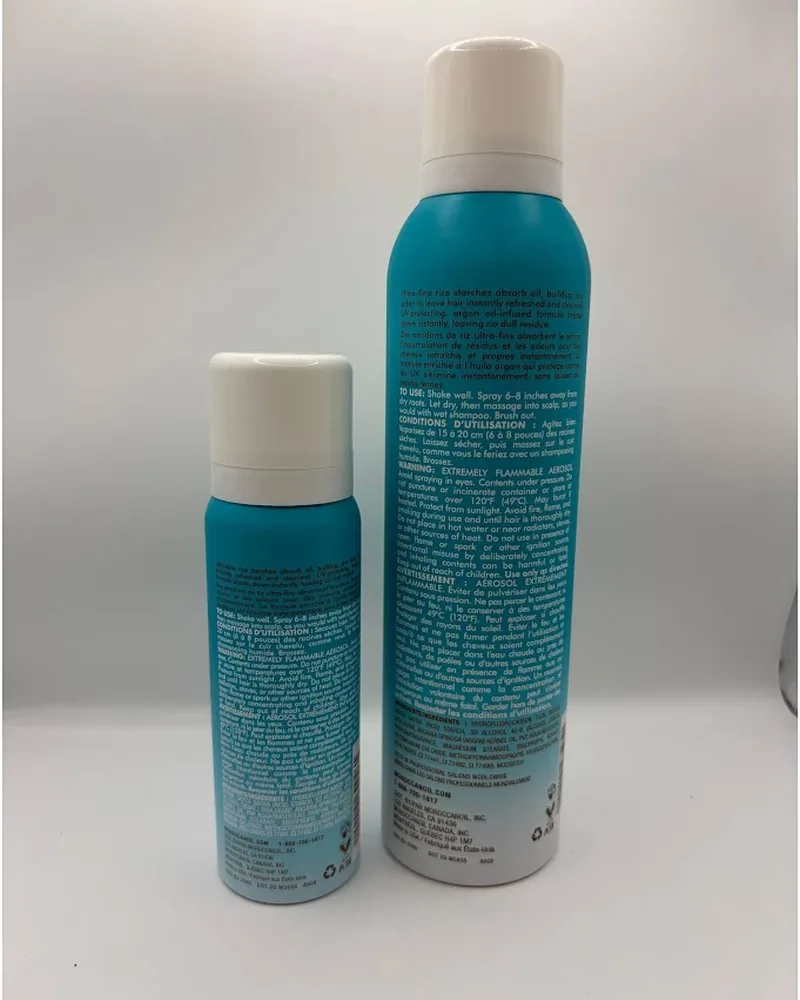
Price · 5.4 oz
Sorted by price per ounce. Dated observations from our research, not live prices. Direct store pages, no affiliate links. We don’t sell this product.
Dry shampoo refreshes hair between washes. We describe its ingredient functions without assigning a formula score.
Does the same job
Same derived functions — what it cleans, conditions, coats or holds — at a lower cost per ounce. Scent, texture and where you buy it can still differ.
See more alternatives in the product library
These are functional neighbours, not personal recommendations — they are close on formula, not chosen for anyone. Get the one that fits your hair, routine, and budget
Final decision
Hair that stiffens on protein who want a protein-free formula and a matte finish
Less suited to anyone sensitive to fragrance, curly-method routines, or very dry or high-damage hair
Nothing in our library matches it closely at a lower price.
We do not sell products or take placement fees. This page states what the formula and the prices show; the consultation is what matches it to a person.
Claims check
Claims are quoted from the brand. We only mark one supported, partly supported, or conflicting when the ingredient list actually speaks to it; everything else stays "stated by the brand", which is not a criticism — most claims simply cannot be read off a label.
A dry shampoo that dissipates instantly to absorb oil and product buildup while combatting brassiness in light-colored hair
This is a marketing claim; an ingredient list cannot speak to it.
—
Can’t be confirmed from label.
We look at the first 10–15 ingredients and what they do in a formula — not marketing. If the list doesn't speak to a claim, we don't assume.
Reviewers
Recurring themes our researchers wrote in their own words from sourced reviews. We do not store or scrape star ratings.
The scent is repeatedly singled out as a favorite feature, described as fresh and long-lasting.
general reviewersMany reviewers say it noticeably extends time between washes by absorbing oil at the roots without looking powdery.
long-time users with oily roots washing hair every few daysA few reviewers report an itchy or dry scalp after repeated use.
reviewers who used it regularly over timeA minority of reviewers with darker or bleached-blonde hair report a visible white or grey residue.
reviewers describing dirty-blonde or bleached hairSeveral reviewers call it expensive for the amount of product in the bottle, even while recommending it.
general reviewers, most still positive overall