Hair Care Guides

Bring what changed, when, and your questions.
A short, honest record is enough.

You don’t have to work out the cause before you book. Noticing a change in your hair or scalp is reason enough. Write down what you’ve seen, when it started and what you’ve been using. Photos help, but don’t delay the visit for them.

Your personal hair-care planProduct choices, routines and answers shaped around your hair.$49one-timeStart my consultation
A man with short salt-and-pepper hair reviews a notebook beside a closed shampoo bottle.
A short, honest record is enough.

What is going on

A woman writes under headings for what changed, when and questions.

Say what changed

Note roughly when it started, where it is and what looks or feels different. Keep what you’ve seen separate from your theory about why. “More hair comes away on wash days” is useful even if you can’t count it.

A man reads a shampoo bottle while making a note, with a second hair-care bottle beside the notebook.

Keep the timeline simple

List the real changes around that time. New products, a chemical service, a different style, a change in washing. Add what you tried and what happened. If several things changed at once, say so. Timing alone doesn’t prove which one did it.


What helps, day to day

A woman wearing glasses reads a hair product ingredient panel.

You can’t remember the product names

  • Take readable photos of the actual labels, or a short list of exact names and variants, with where and how you used each.
  • Don’t decant things into anonymous travel bottles to make the list look tidier.
An adult places small prints face down into a plain folder beside a resting phone.

You already have photos

  • Pick a few clear, dated ones and note the lighting, whether the hair was wet or dry and how it was styled.
  • A photo shows how it looked.
  • It can’t measure density or explain why.
  • Share them the way the practice asks you to, not through a public album.
A man seated at a dry dressing table with both forearms resting on a folded towel beside a mirror, comb and bottles.

You can’t piece every detail together

  • Mark rough dates and unknowns as exactly that.
  • Put the change that worries you most at the top and bring what you have.
  • Nobody needs daily photos, a bag of collected hair or every product you’ve ever bought.
A woman with curls writing a routine note beside her hair-care products.

Keep the health details for the visit

  • Bring your medicines, vitamins, supplements, allergies and the relevant history through whatever route the practice asks for, along with your main questions and any earlier results they want.
  • None of that detail needs to go into a cosmetic consultation note.

Products, by the job they do

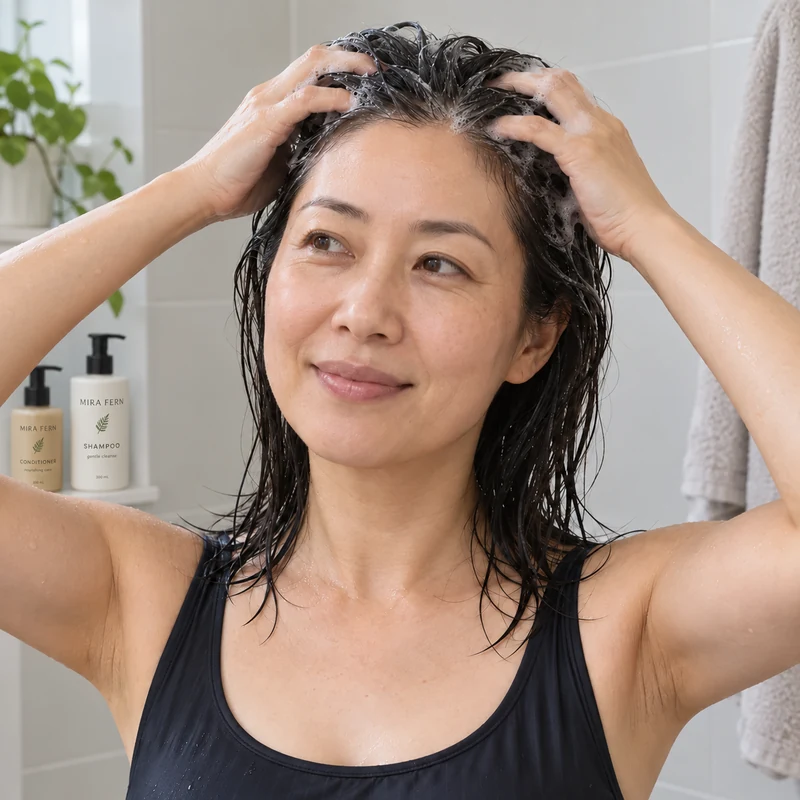
A woman massaging shampoo lather onto her scalp with her fingertips.

Describe how you really wash

Write down how often you wash, the exact cleanser and anything you do differently with it. Don’t switch away from a prescribed wash just to show a tidier baseline.

Browse cleansing products. For shampoo recommendations, share how your roots feel between washes and what you use now.

A woman smoothing conditioner through her mid-lengths and ends.

Include the rest of the routine

Note your conditioner, leave-ins and styling layers, and whether any of them touch the scalp. Everyday products are part of the story even though they aren’t medicines. Which one, if any, caused a symptom is a question for the visit, not for a product search.

Browse rinse-out conditioners. Tell the consultation what you want from a conditioner and what you disliked about previous ones.
Getting ready for the conversation

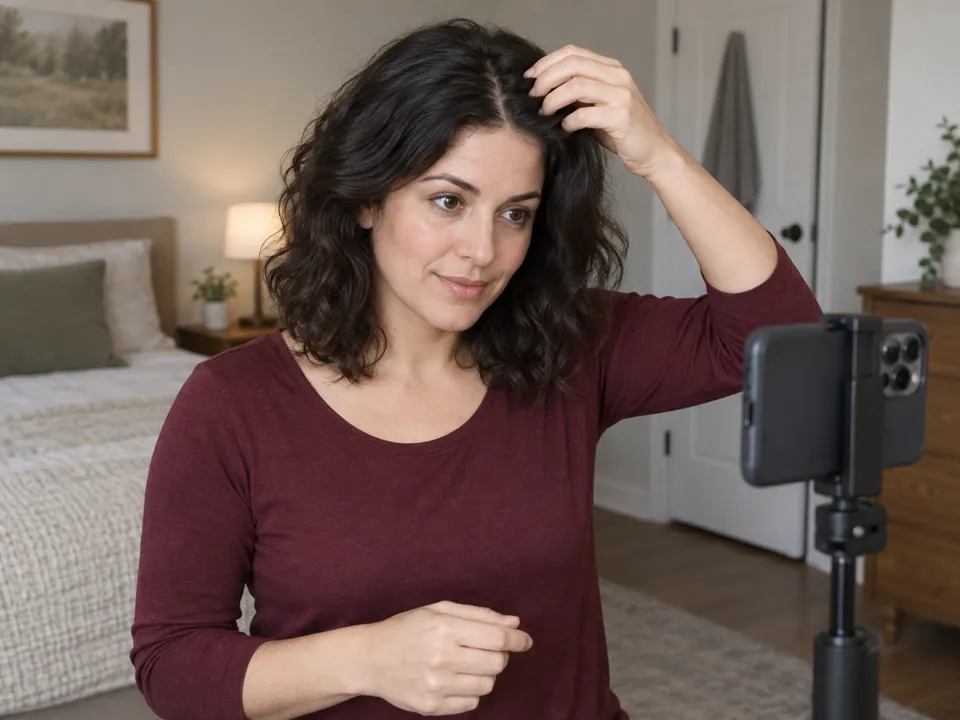
An adult uses a supported phone for a reachable hair-part photograph.

1. Take a clear photo record, if you want one

For loose hair, rest the phone on something steady and shoot the views you can reach in good light. Save the date and the conditions, then stop. Follow the preparation and sharing instructions. Don’t interrupt prescribed care or hold off the appointment for a photo.

Guide: Photograph your hair and scalp


When to get help

A woman and a medical professional seated together, looking at a calendar.

Signs that need more than routine care

  • If you’ve noticed new or patchy loss, a scalp that keeps hurting, sores or a reaction that’s getting worse, contact a medical professional and say so when you book, so they can see you sooner. You don’t need the record finished first. Any difficulty breathing, or swelling of the mouth or throat, needs emergency help right away.

Illustrated care examples: before & after

Loose notes, one record

The same woman gathers loose notes into one concise notebook record.
Before · separate loose notesAfter care · one organized record
Scattered notes become one record with the change, roughly when it started and your questions together. It doesn’t have to be perfect before you book.

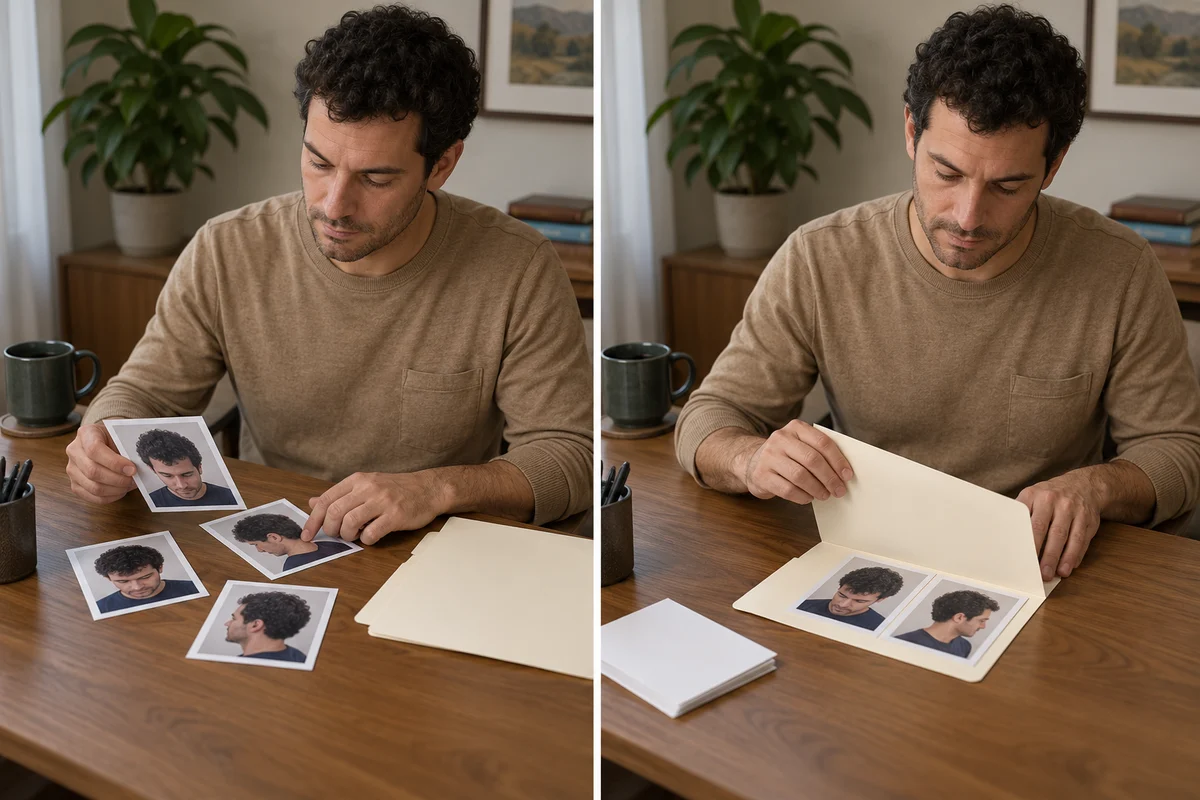
A few photos, kept private

The same man selects two ordinary hair photographs and places them inside a folder.
Before · several loose photographsAfter care · a few in a folder
A handful of useful views go into a folder and the rest stay out. Share them only the way the practice asks, and keep them private otherwise.
A woman with very short hair writing an appointment checklist.

Help with your hair-care routine

Bring your hair-care questions to the consultation. You can also read keeping a modest, useful photo record.

  • What did I notice, and roughly when?
  • Which products, treatments and health details should they know about?
  • What are the two questions I most want answered?

A Hair Care Consultation can work with what you’ve noticed, your current routine and any restrictions you choose to share. Diagnosis, medicines and treatment decisions belong to your visit. You can ask for easier everyday handling without handing over any private records.

The Hair Care Consultation gives you a personal plan with product recommendations, routines and guidance on your hair-care questions.

$49 with 60 days of follow-ups, or $99 with 12 months. Pay once; the year renews only if you choose.