Hair Care Guides

Take the photo, then put the phone down.
A few clear pictures are plenty.

If you’ve started photographing your part every morning, you know how quickly it stops being useful and becomes a worry. A photo helps when you know what it’s for and how you took it. Pick a reachable view, the same light and a reason.
Your personal hair-care planProduct choices, routines and answers shaped around your hair.$49one-timeStart my consultation
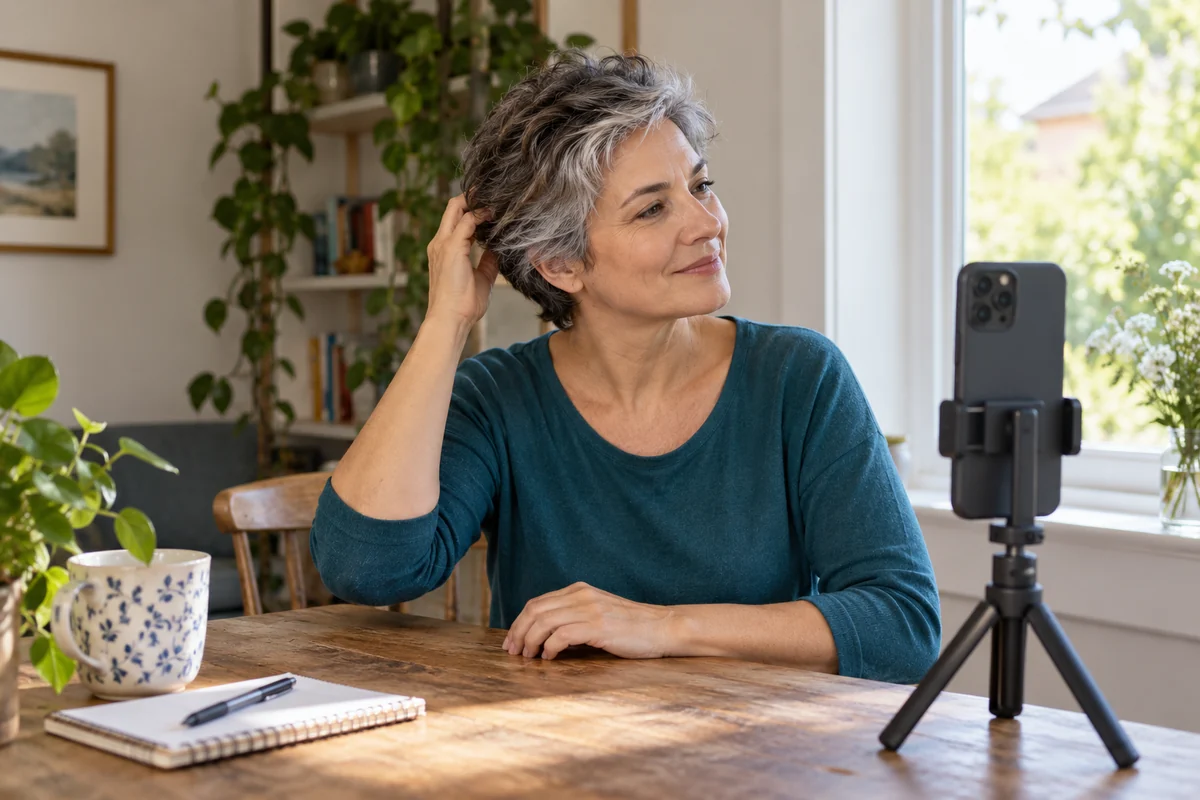
An adult with short gray hair sits near a window beside a phone secured on a tabletop tripod.
A few clear pictures are plenty.

What is going on

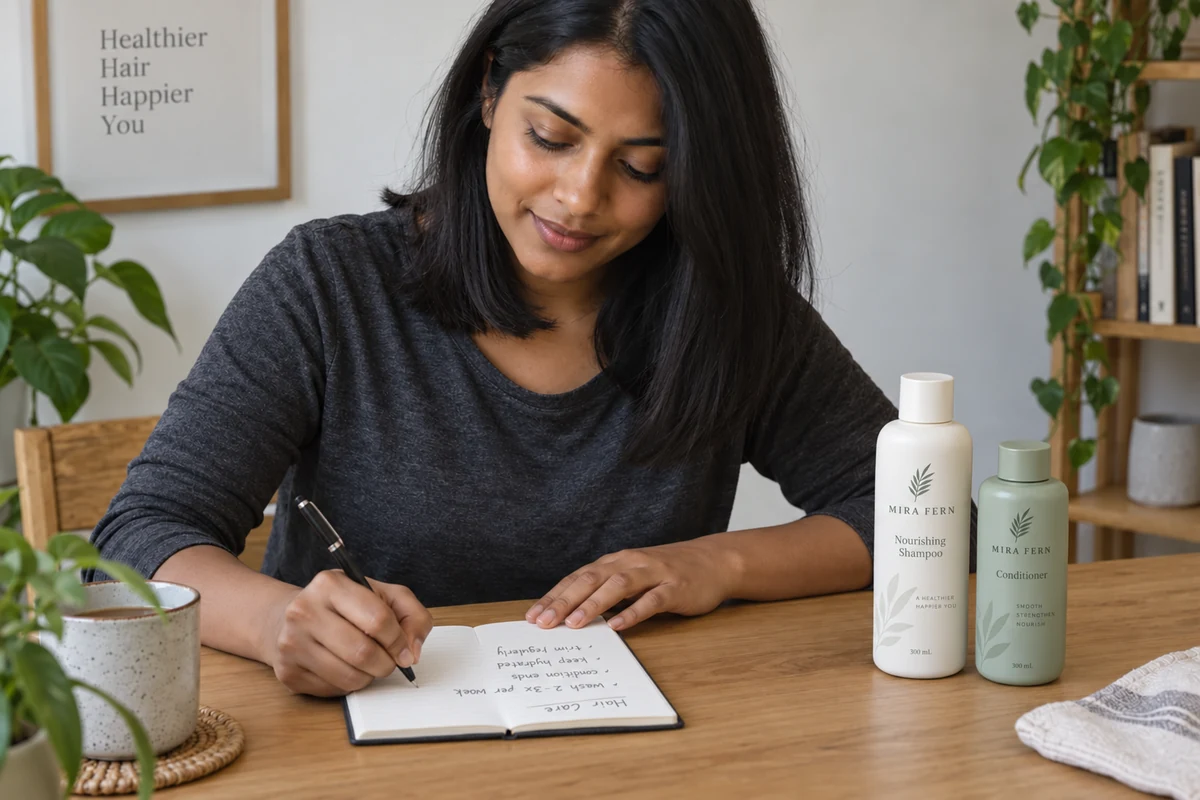
An adult with shoulder-length dark hair writes in a small notebook beside two closed bottles.

Decide what the photo is for

Maybe it’s the shape of a haircut, how a style turned out, or something you want to ask about. Choose the view that shows that one thing. A picture can show you a change, but it can’t tell you why it happened.
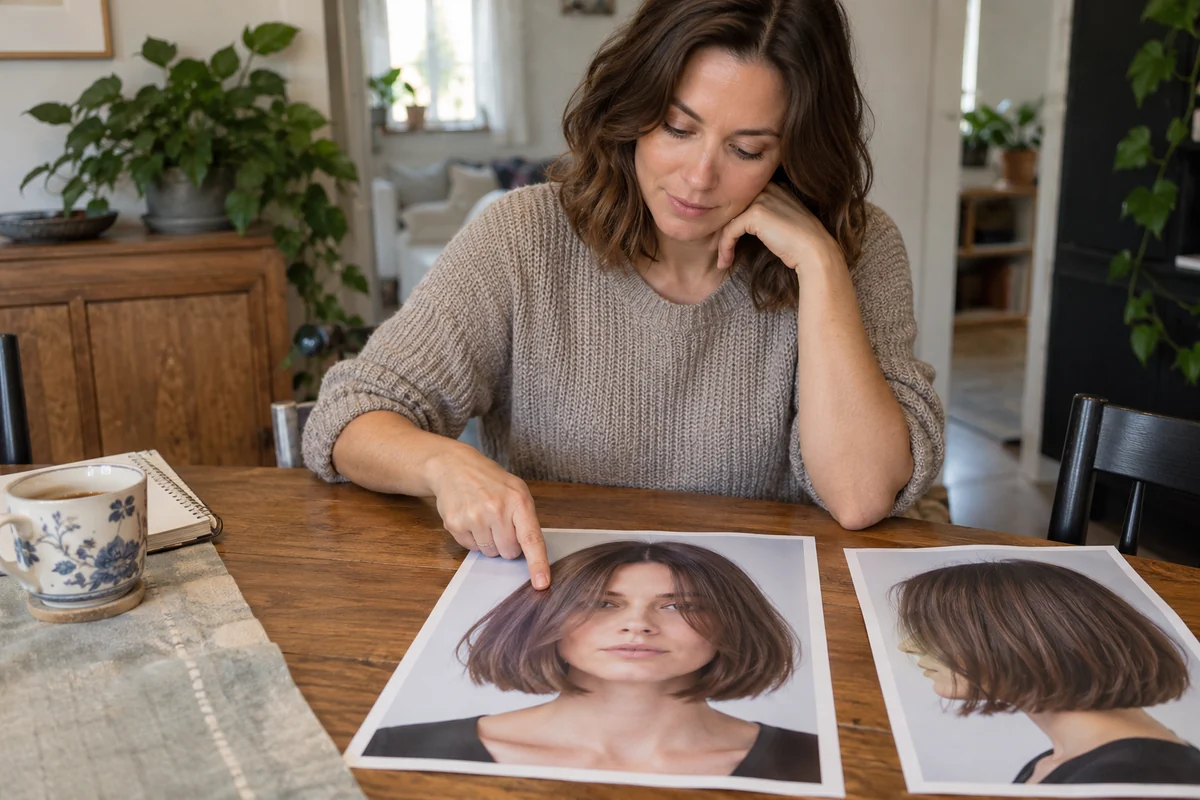
A woman points to a feature on a printed bob reference beside a second view.

Compare like with like

Keep the light, the distance, your part and whether your hair is wet, dry or styled as close to the same as you can. A brighter window or a part moved an inch can make two photos look different when nothing has changed.


What helps, day to day

A man seated at a dry dressing table with both forearms resting on a folded towel beside a mirror, comb and bottles.

The view you want is an awkward reach

  • Prop the phone on something steady and use the timer.
  • Skip a back view that’s hard to get, or ask someone you trust to take it.
  • Don’t crane your neck or balance the phone somewhere it might fall.
An adult places small prints face down into a plain folder beside a resting phone.

Your camera roll is turning into a mess

  • Keep the few clear views that matter and add a one-line note with the date and the conditions.
  • Store them privately, and check whether they’re being backed up to a shared album.
  • Keep other people, paperwork and anything that shows where you live out of the frame.
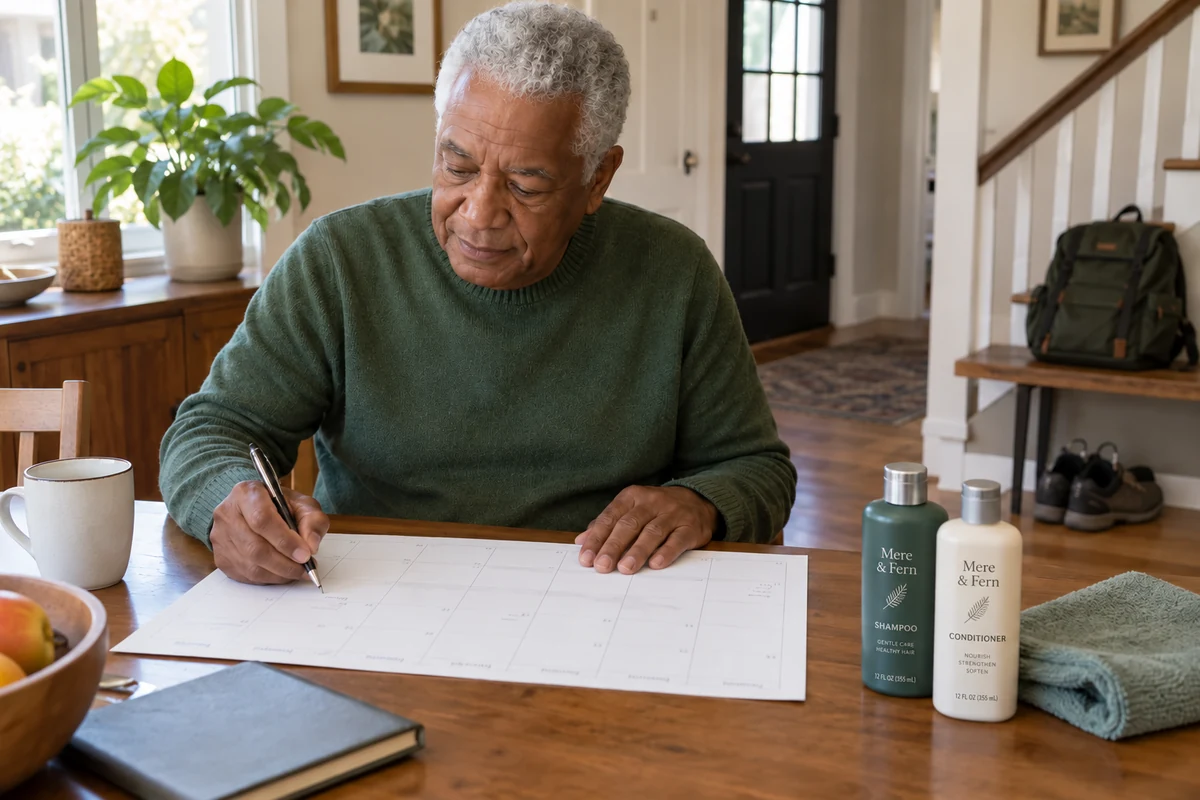
An adult with short silver hair writes on a weekly calendar beside closed hair-care bottles and a towel.

Checking has become a daily habit

  • Only take another photo when it answers the question you started with.
  • There is no schedule you’re supposed to be following.
  • If the photos are making you anxious, stop for a while and talk to someone you trust.

Products, by the job they do

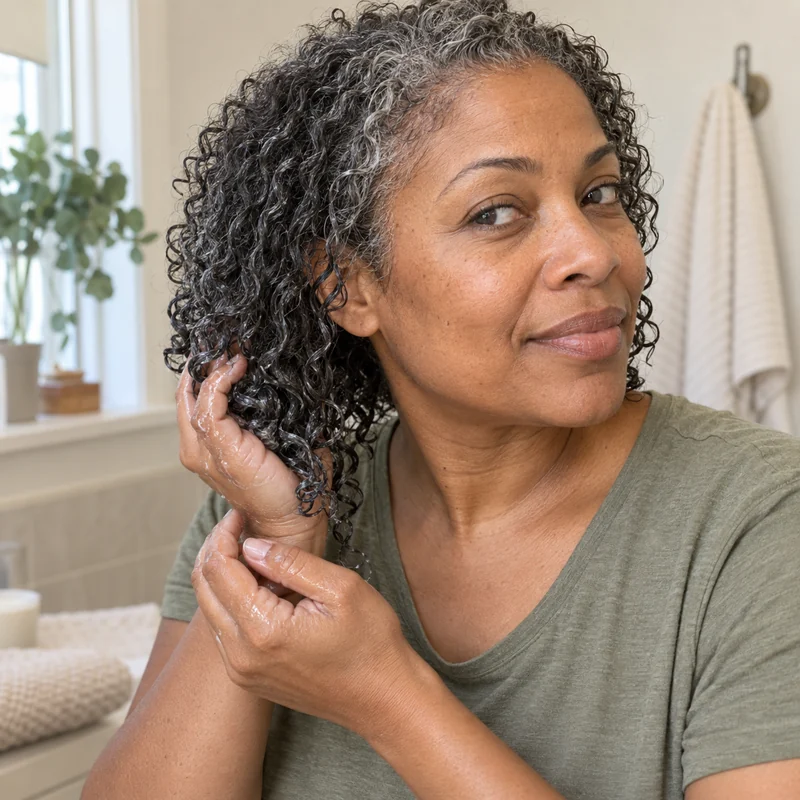
A woman cupping a damp curl section with styling gel on her hands.

Note what’s already in your hair

Write down the products already on your hair rather than adding more for the picture. If you’re comparing a finish, take the photo at the same point in your routine each time.

Browse styling products. For styling recommendations, share the finish you want, how you dry your hair and your budget.
How to do it

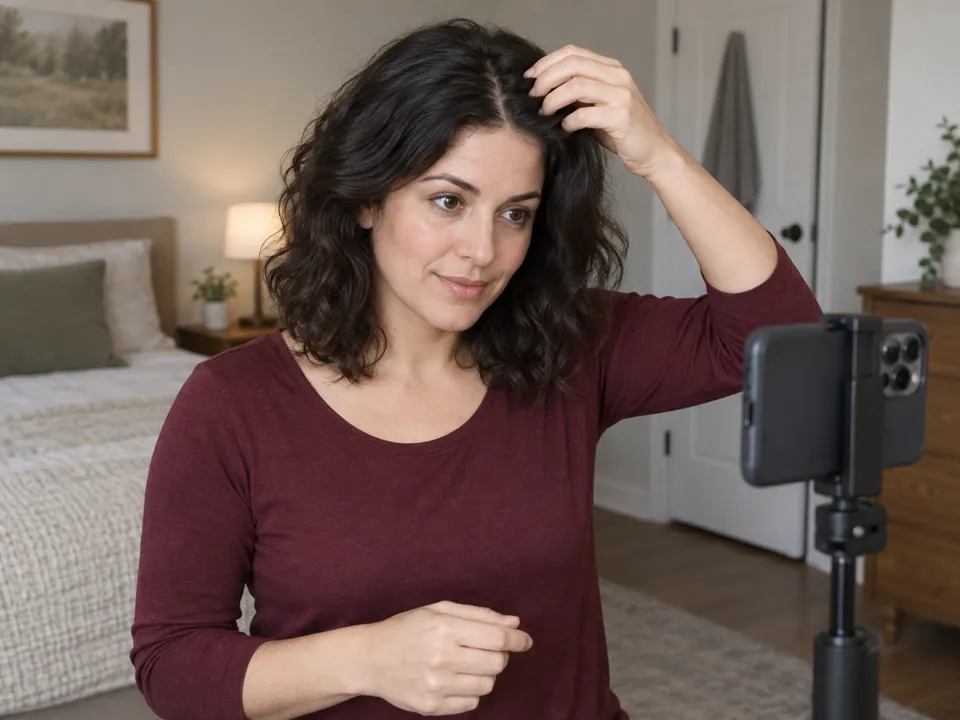
Showing a reachable part to the supported phone camera.

1. Set up once, steady and reachable

For loose hair, use clear light and a plain wall, switch off any beauty filter and check the focus. Keep your notes with the image. Then let your hair down comfortably and put the phone away.

Guide: Photograph your hair and scalp
When to get help

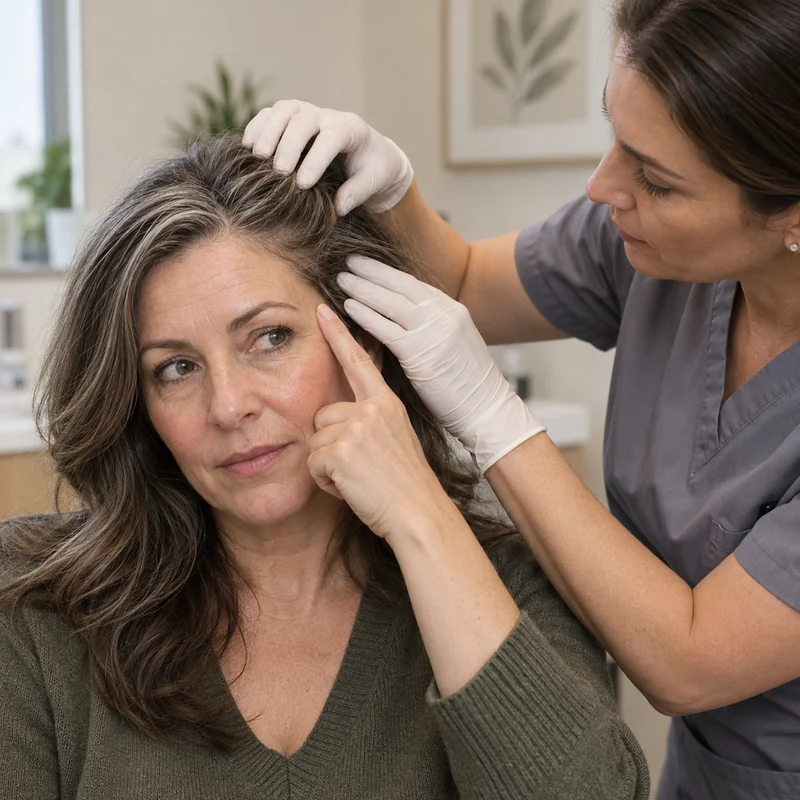
A medical professional examining the scalp where a woman points.

Signs that need more than routine care

  • If you’re seeing new or patchy loss, or a change at the scalp that worries you, go and see a medical professional now rather than waiting until the photo series feels complete. If they ask for photos, take them the way and at the times they suggest, and share them securely.

Illustrated care examples: before & after

A camera you can reach

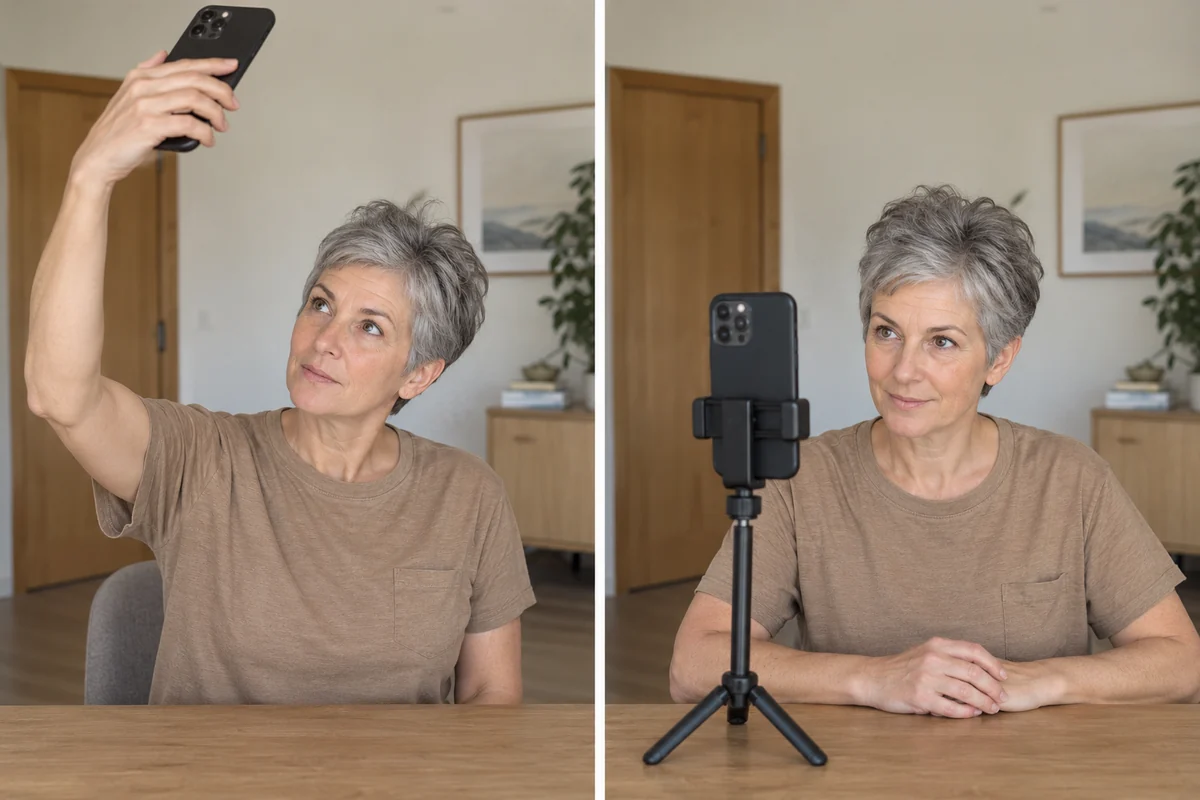
The same adult holds a phone above the head, then sits with hands resting while the phone stands on a tripod.
Before · phone held high overheadAfter this step · phone on a stand
The phone moves from an outstretched arm to a stand at a comfortable height. The hair hasn’t changed, only the way you get the picture.

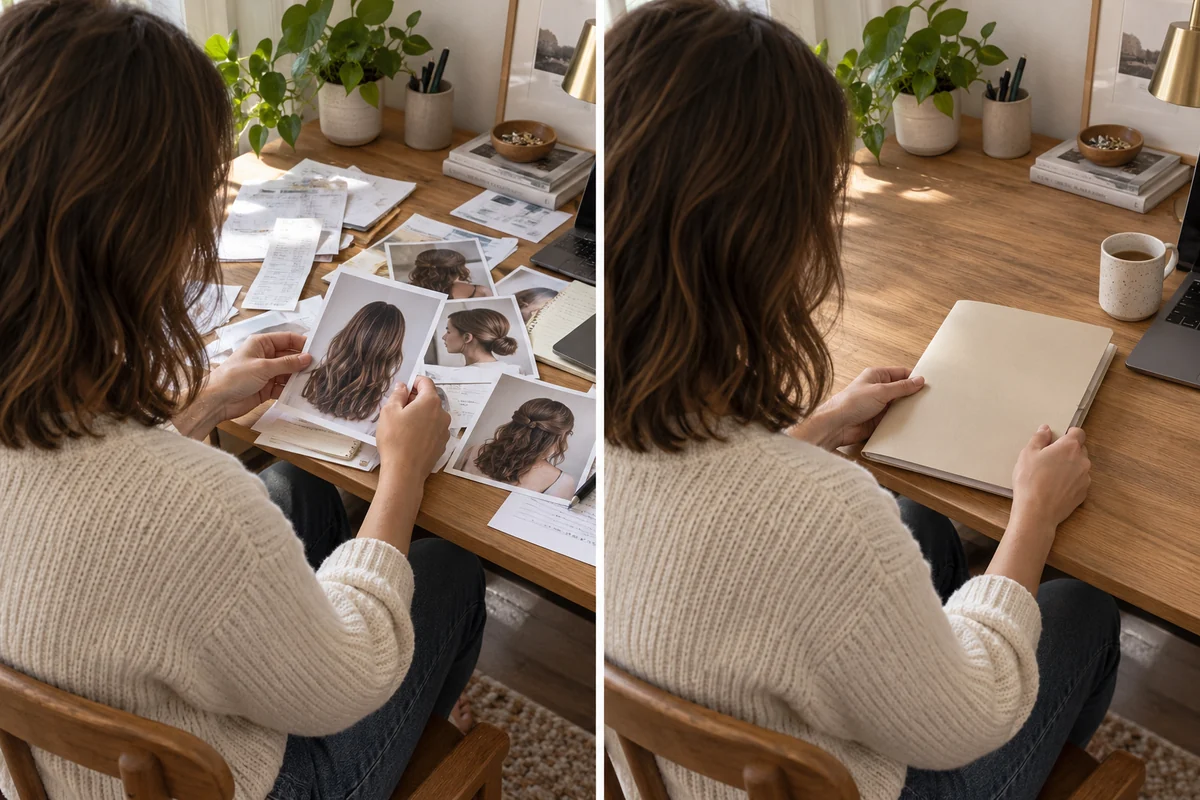
File the prints and close it

Loose hair photographs and paperwork are gathered into a plain closed folder on the same desk.
Before · photos and papers everywhereAfter this step · useful prints in a folder
The few prints worth keeping go into a folder and the desk clears. A folder keeps a small record out of sight, nothing more.
A woman with curls writing a routine note beside her hair-care products.

Help with your hair-care routine

Bring your hair-care questions to the consultation. You can also read understanding shedding observations.

  • Which angle actually shows what I’m wondering about?
  • Was the light the same, and was my hair in the same state?
  • Would one written note tell me more than another photo?

The plan uses the hair and scalp details you share, past treatments, current products, preferences and the time and budget you have.

The Hair Care Consultation gives you a personal plan with product recommendations, routines and guidance on your hair-care questions.

$49 with 60 days of follow-ups, or $99 with 12 months. Pay once; the year renews only if you choose.