Hair Care Guides

Your ends flip where they hit your shoulders.
You can work with the bend, or around it.

Shoulder-length hair has a habit of kicking out where it rests on your collar or shoulders, and it can be maddening. Decide first whether you mind the movement. Then choose a small styling fix, a comfortable clip, or a word with your stylist.

Your personal hair-care planProduct choices, routines and answers shaped around your hair.$49one-timeStart my consultation
A woman in a rust top gently holds the tips of her dark shoulder-length waves above her shoulder.
You can work with the bend, or around it.

What is going on

A woman supports an outward-turning end of her silver bob on an open palm.

Find where it touches

Look at your dry hair in the clothes you normally wear. See whether the ends turn at the spot they meet a shoulder, a collar or a bag strap. Lift the hair clear and compare. That’s the bend showing you where it comes from.

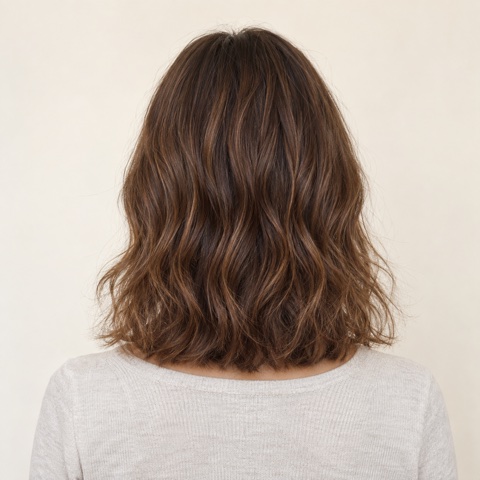
A rear three-quarter view shows the dry nape and side perimeter of a wavy bob.

Decide what shape you want

A soft kick outwards, ends tucked under, and a half-up shape are different looks, and none is wrong. Pick one before you reach for tools. If keeping the shape you want is turning into daily work, show your stylist where your ends sit normally.
What helps, day to day

A rear view of wavy hair with flyaways near the ends.

The flip shows up once you’re dressed

  • Pull any hair out from under your neckline before you fix the ends.
  • Check the side that rests against a higher collar or a bag strap.
  • A smoother neckline is easier to live with than straightening every end that turns out.
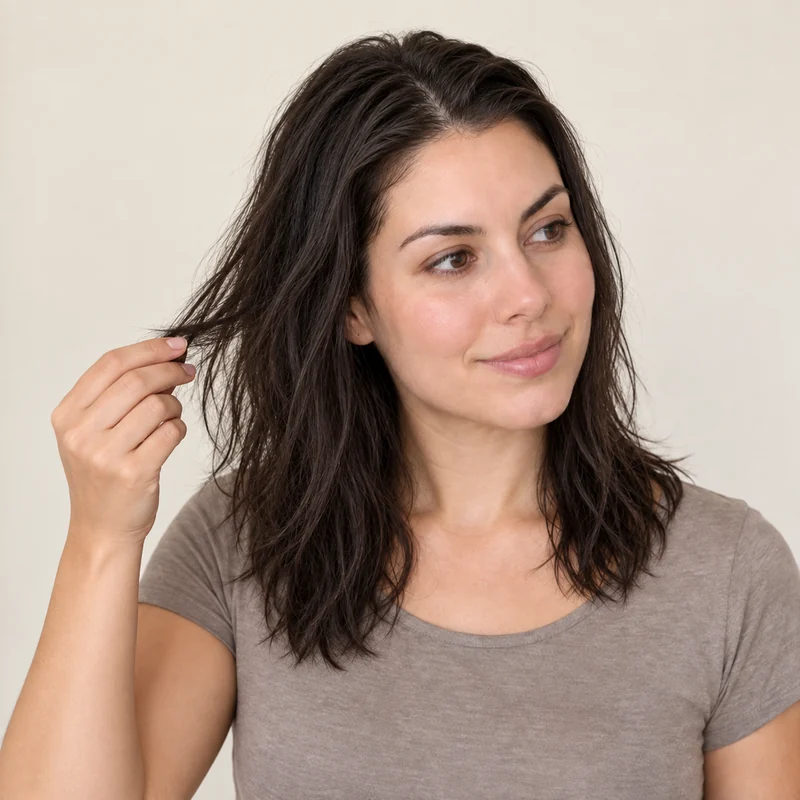
A woman gently feeling a section of her loose hair with her fingers, with no visible product.

Only the ends feel rough

  • How the ends feel and which way they point are two separate things.
  • Conditioner can make them feel better, but it can’t move your shoulders or change the cut.
  • If the tips keep splitting or catching, ask your stylist about a trim.
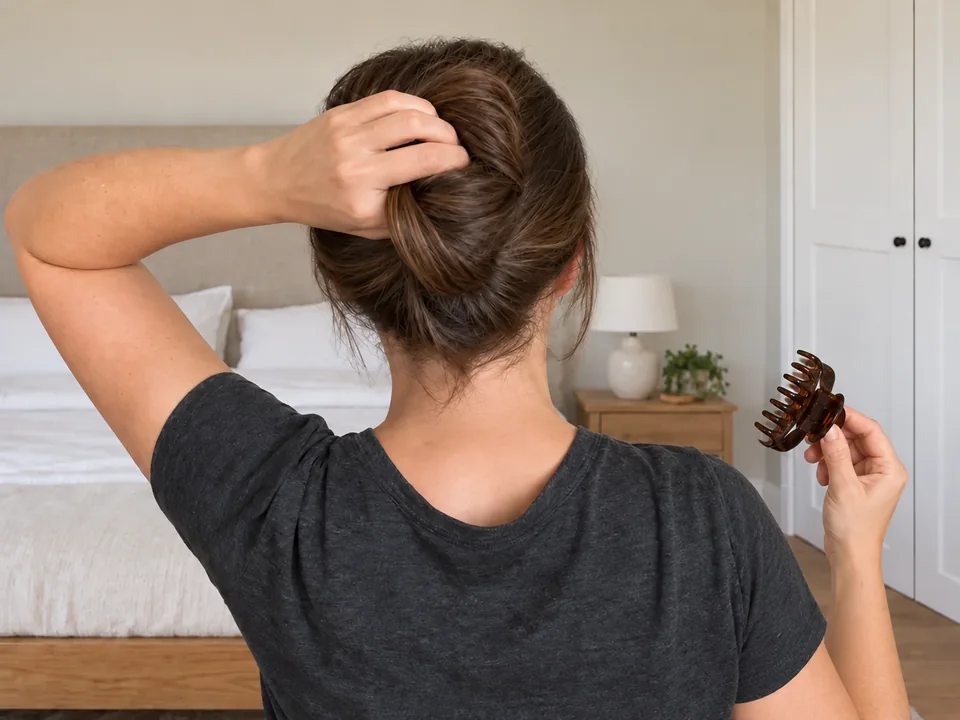
A woman holds a loose upward fold of hair with one hand and an open claw clip clear of the fold with the other.

You just want it off your shoulders

  • Try a loose half-up with only the top pieces, if they’re the only ones that reach the clip.
  • Leave the shorter pieces underneath down rather than dragging them up.
  • If the clip pinches or pulls, take it out.

Products, by the job they do

A woman smoothing leave-in product through her lower lengths.

Smooth the ends, lightly

If rough tips want a finishing layer, use a small amount, just on the tips, as the label suggests. Judge the feel on its own. More product won’t stop the ends turning out where they touch your shoulders.

Browse leave-in conditioners. Tell the consultation which leave-ins felt useful or heavy, and how much you used.
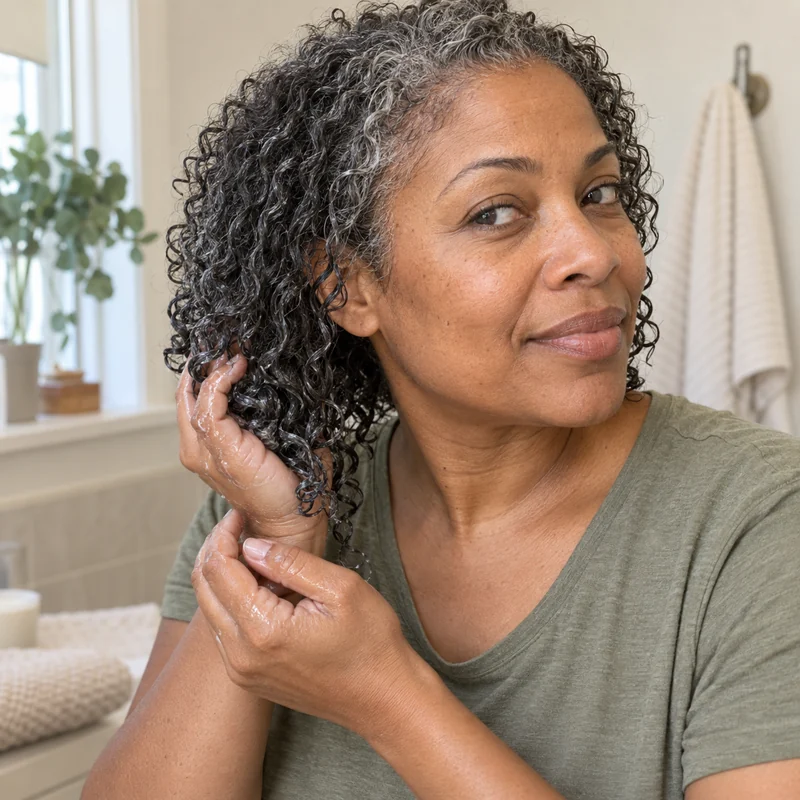
A woman cupping a damp curl section with styling gel on her hands.

Keep the movement you like

If your hair waves or curls, decide whether you want defined groups or a softer shape, and pick a hold for that. Don’t try to make every end point the same way.

Browse styling products. The consultation uses your hair details and styling habits to compare creams, mousses and gels.
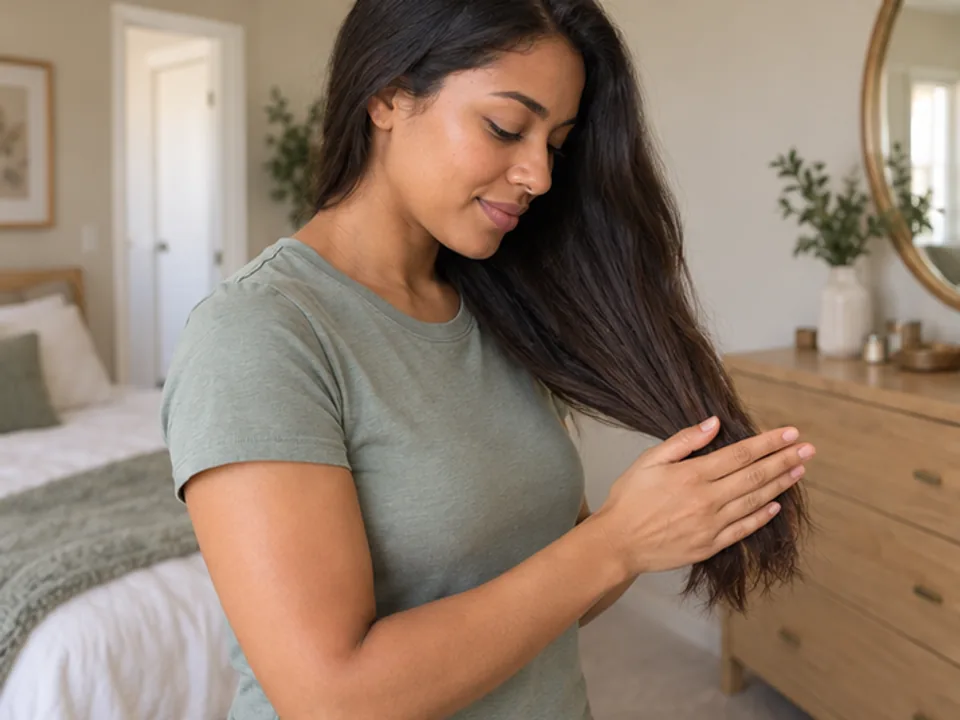
How to do it

A woman brings her own dry hair forward and smooths the ends between relaxed hands.

1. Finish only the tips that need it

Use the amount the label suggests on the tips that feel rough, and stop before the hair feels coated. This is a finish for feel. It won’t repair a split or reshape the cut.

Guide: Apply finishing serum or oil to ends
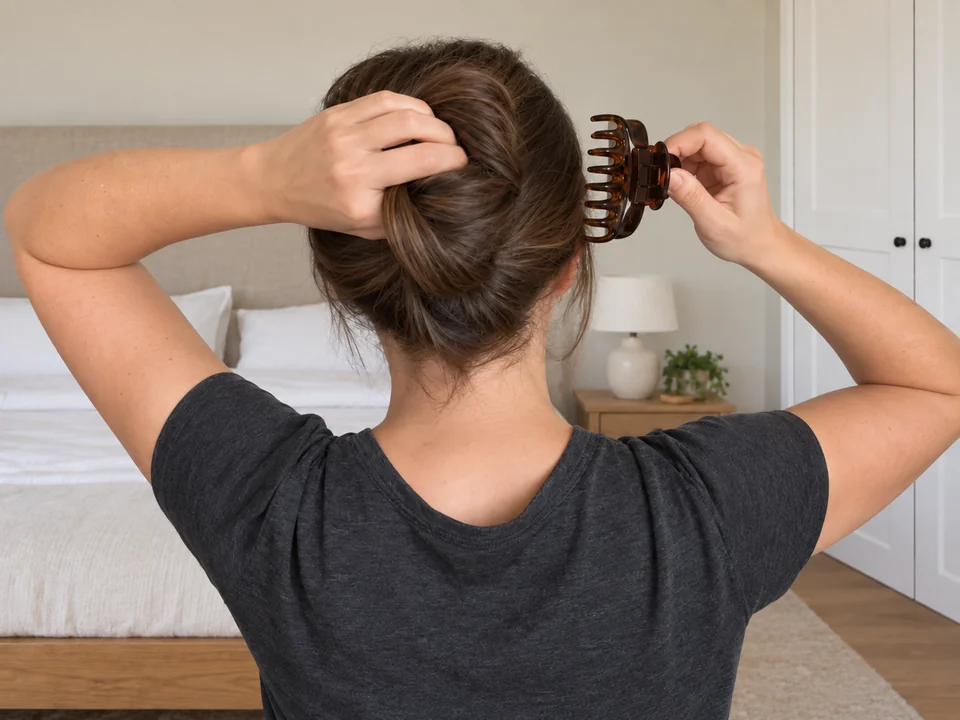
A woman folds gathered hair upward and positions an open claw clip at the fold.

2. Clip up only what reaches

Fold the hair into the clip only if it gets there without pulling. With a shorter cut, gather less and leave the rest down. Open the jaws all the way before you take it out.

Guide: Put your hair up with a claw clip
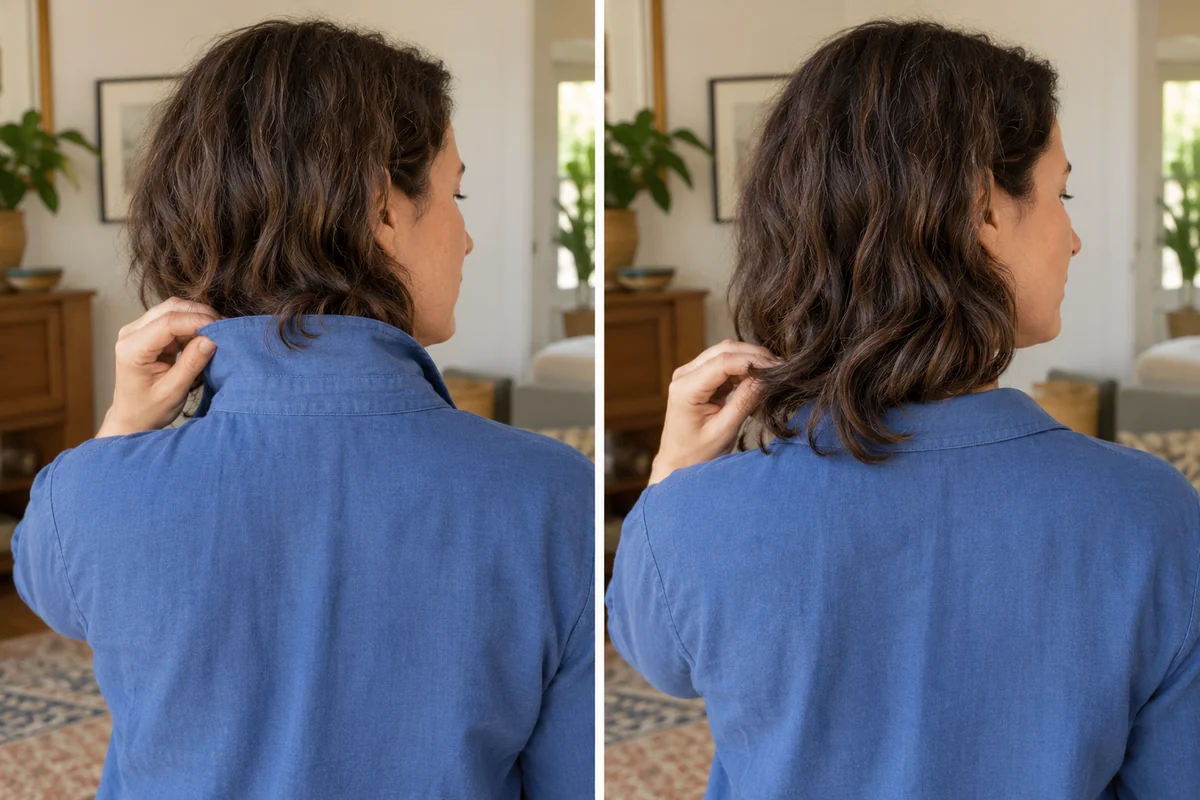
Illustrated care examples: before & after

Check the collar first

Two views of the same shoulder-length waves: a raised blue collar near the ends, then the collar lowered and the ends resting outside.
Before · collar raised near the endsAfter this choice · ends free of the collar
The collar was trapping the ends. Lowering it frees them before you fuss with the shape, and the natural outward bend can stay.

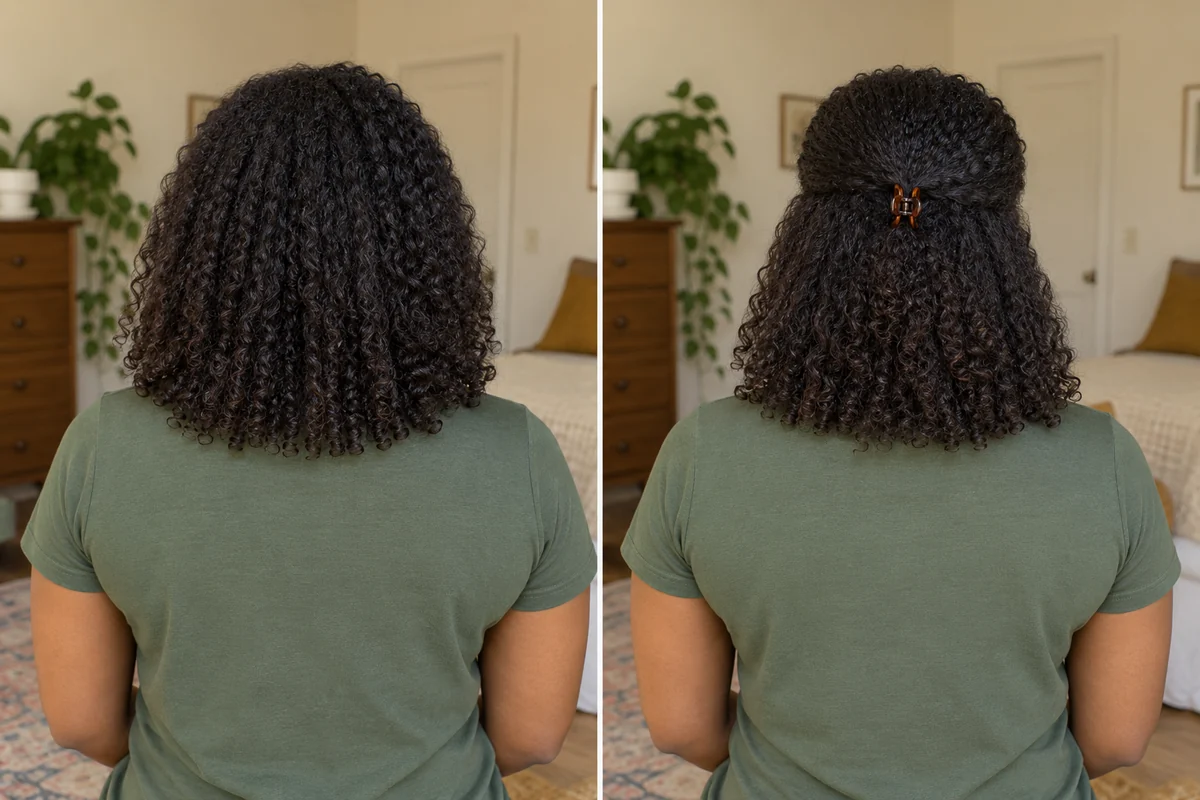
Half up, short pieces free

Rear views of shoulder-length curls worn loose and with the upper portion held in a small claw clip; lower curls remain free.
Before · all curls worn looseAfter this choice · upper portion clipped up
Only the top layer is clipped up. The shorter lower curls stay down, so nothing has to stretch to reach the clip.
A woman with curls writing a routine note beside her hair-care products.

Help with your hair-care routine

Bring your hair-care questions to the consultation. You can also read managing frizz.

  • Would I save time if I just let it flip?
  • What finish smooths my ends without weighing them down?
  • What do I show my stylist if I want a different shape?

The plan uses the hair and scalp details you share, past treatments, current products, preferences and the time and budget you have.

The Hair Care Consultation gives you a personal plan with product recommendations, routines and guidance on your hair-care questions.

$49 with 60 days of follow-ups, or $99 with 12 months. Pay once; the year renews only if you choose.