Hair Care Guides

A double crown has two opinions.
Work with them instead of against them.

Two whorls at the crown send hair off in different directions, leaving a ridge, a split or a stubborn lifted patch. Flattening it every morning gets old. The better question is where you want the hair to sit, and what makes that easy.

Your personal hair-care planProduct choices, routines and answers shaped around your hair.$49one-timeStart my consultation
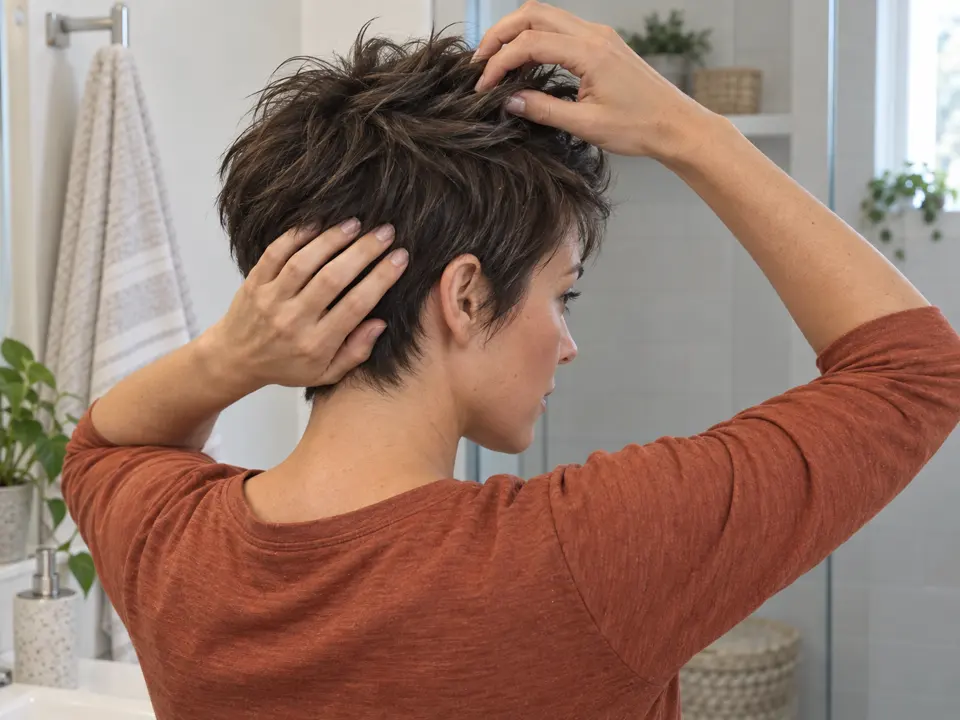
A rear view of short brown hair shows two separate whorl centers and the hair meeting between them.
Work with them instead of against them.

What is going on

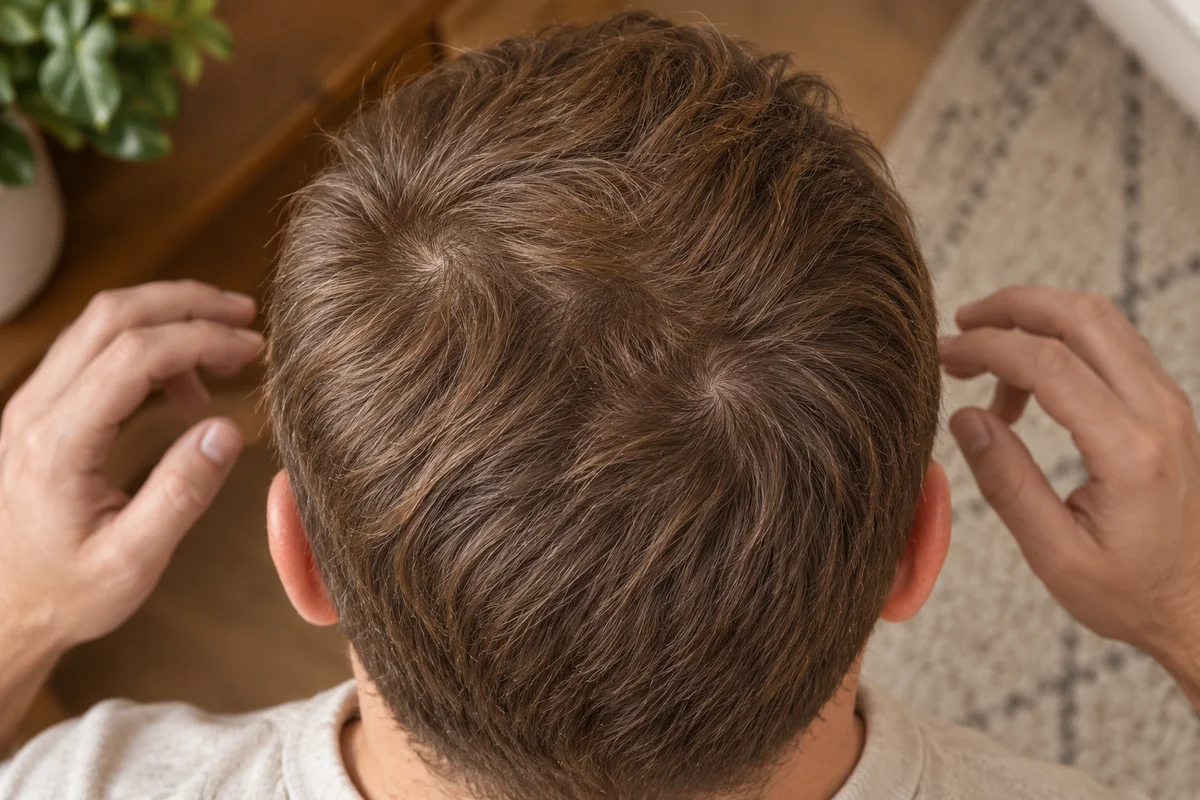
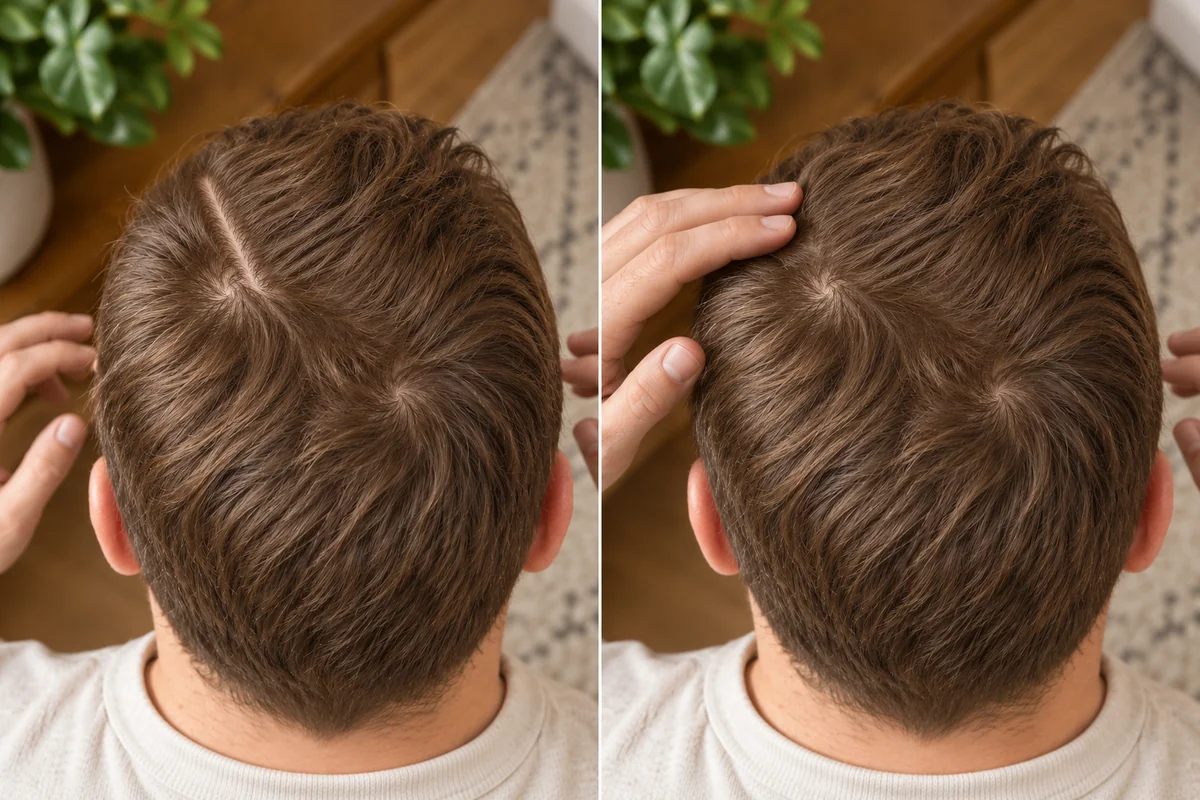
An overhead rear view shows two separate small whorl centers in short sandy-brown hair, with hands held away.

Find both centers and where they meet

A double crown is two whorls. Look at where each one turns and where the hair between them collides, rather than treating the crown as one flat patch. A hand mirror helps, or ask your stylist to show you with the hair relaxed.

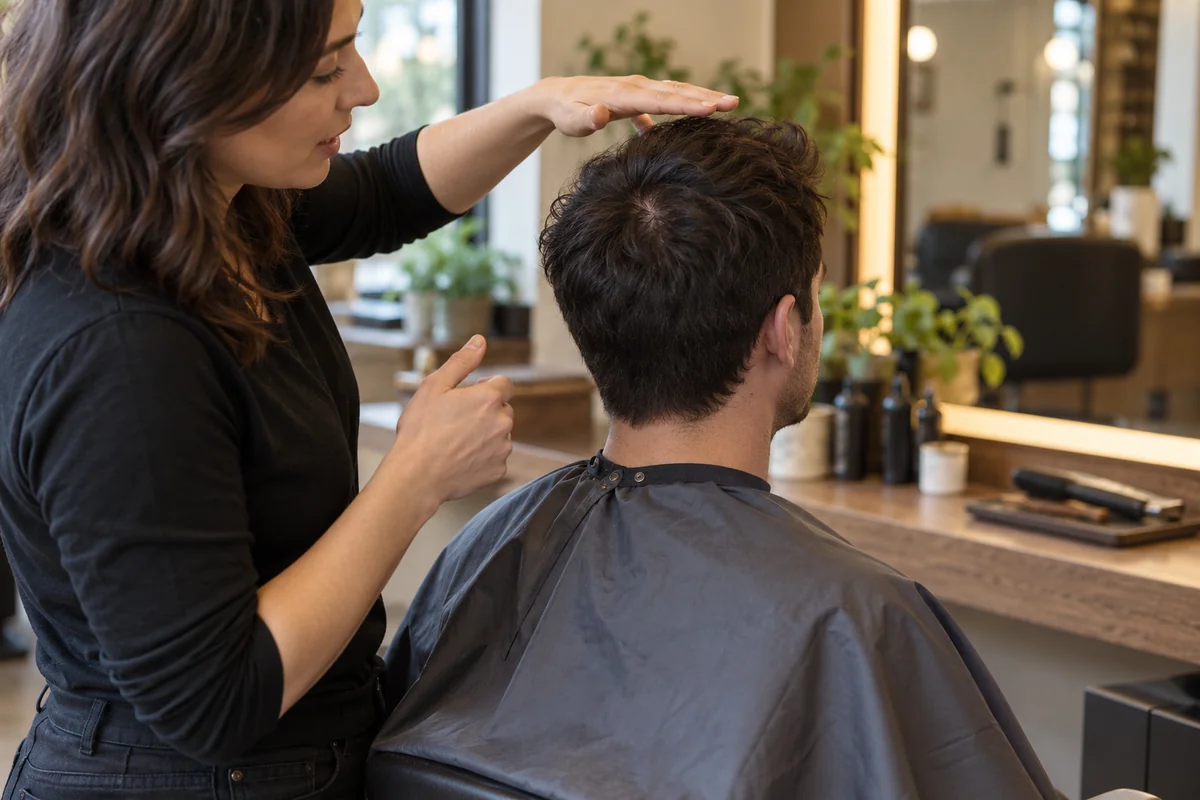
A stylist holds an open hand above a client’s crown while discussing the cut without using cutting tools.

Talk about crown length before it’s cut

Show your stylist how the crown falls when you haven’t forced it. Ask what leaving more length, cutting it shorter or changing the layers around it would mean for your mornings. There’s no one length that makes every double crown disappear.

What helps, day to day

An adult uses relaxed fingers beside a part approaching the crown, with the tail comb resting on the table.

Your part runs straight into the split

  • Try ending the part, or bending it, where the hair already changes direction instead of forcing one straight line through both whorls.
  • On dry, combed hair, settle it with your fingers.
  • Keep the new part only if it lies there without being held.
A rear side view of short salt-and-pepper hair shows a naturally raised crown above a calmer lower outline.

One side lifts and the other lies flat

  • Decide whether you’d rather keep a bit of lift or soften the outline around it.
  • Making both sides match perfectly can take more effort than it’s worth.
  • Look at the whole shape in the mirror before you flatten that side again.
A woman uses a tablet displaying product directions beside a capped hair-care bottle at a dry desk.

The morning fix keeps adding product

  • Ask yourself whether it’s a direction problem or a buildup problem.
  • If yesterday’s styler is still coating the hair, wash it out before adding more.
  • Ask your stylist for a quick reset that suits your cut, instead of reheating the same stubborn spot every day.

Products, by the job they do

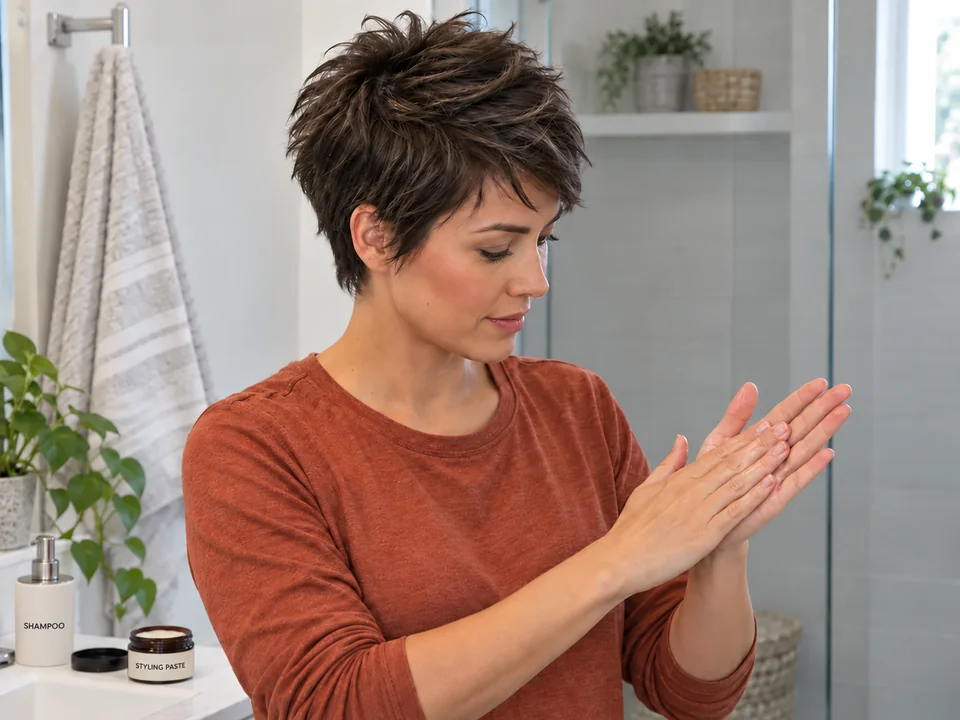
A woman rubs a small amount of styling paste between her palms and fingertips to spread a thin film.

Use hold to steer the pieces you choose

On a short cut, a paste made for dry hair can send a few chosen pieces the way you want without coating the scalp. It won’t move where the whorls sit.

Browse styling products. Bring your styling questions and current products to the consultation for personal recommendations.

A woman massaging shampoo lather onto her scalp with her fingertips.

Wash for the scalp, not the crown

Choose shampoo around how oily your scalp gets, how much you sweat and what stylers you need to wash out. A crown that splits two ways doesn’t need a harsher shampoo or a second lather.

Browse cleansing products. Your current shampoo, wash schedule and past treatments help guide a personal recommendation.

How to do it

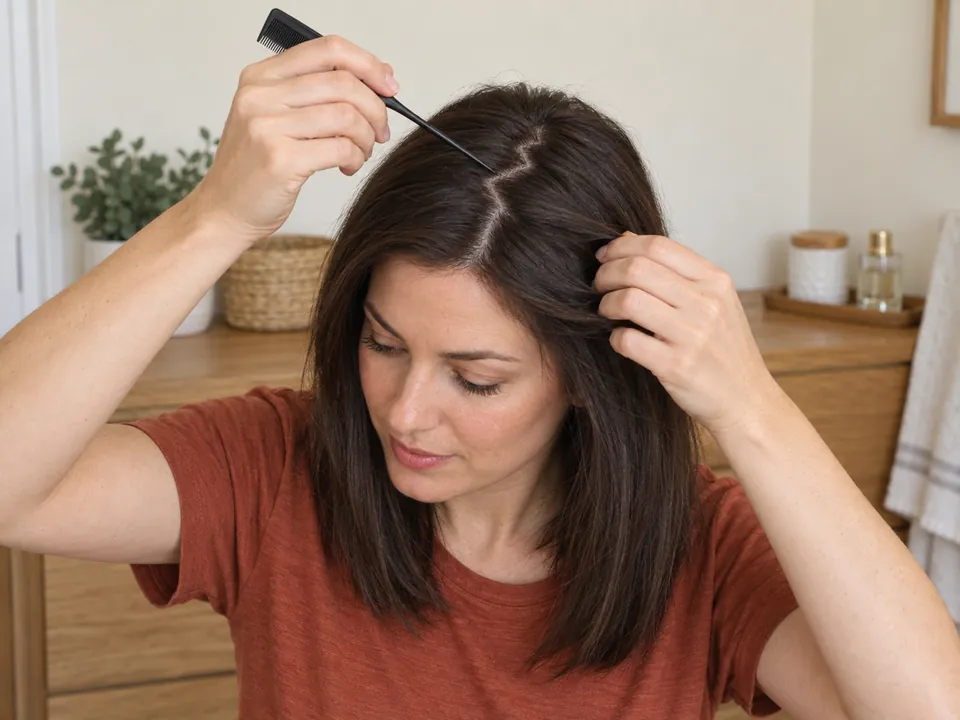
Moving a small section aside while drawing a shallow zigzag part.

1. Test a new part gently

On dry, combed hair, trace a shallow new line with your finger, no scraping. Settle it and look at the crown as well as the front. A small change is enough to tell whether the idea works.

Guide: Change or zigzag your part
A woman uses her fingertips to work styling paste through a small area at the crown of her short hair.

2. Shape a short cut one patch at a time

This is for dry, short loose hair and a paste made for that. Rub a thin film between your palms, guide one area and stop to look before touching the next. Longer hair needs a different approach.

Guide: Shape short hair with styling paste

Illustrated care examples: before & after

Stop the part early

Two panels show the same two whorl centers while fingers soften the end of a part approaching the left center.
Before · part running toward a whorlAfter a small part adjustment · part ended short, fingers settling
The part is ended before it reaches the whorl, and fingers settle the pieces nearby while both centers stay put. Keep it only if it feels comfortable.

A few tips guided, lift kept

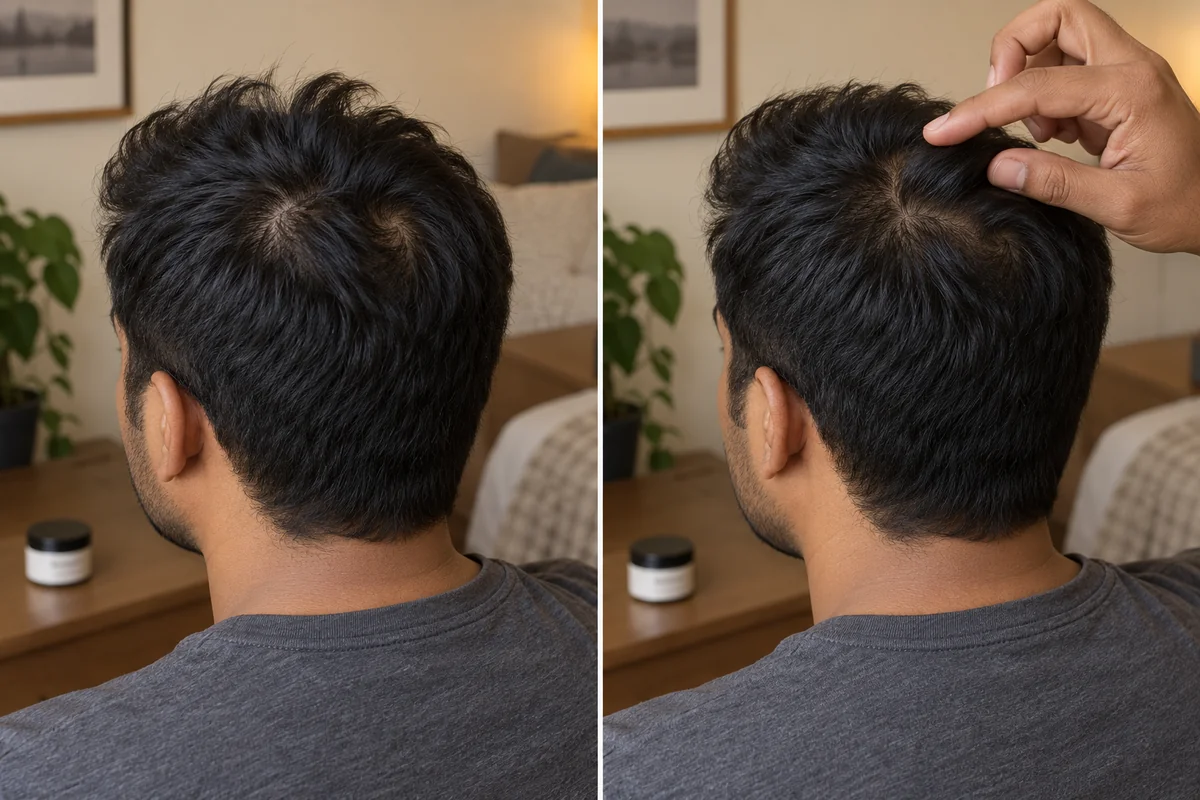
The same adult has two crown whorls and a lifted meeting area, then lightly guides selected upper tips with fingertips.
Before · crown pieces standing liftedAfter guiding selected tips · a few tips eased sideways
Only a few tips are eased sideways, both whorls and the natural lift stay. Step back and judge the whole outline, the crown needn’t be flat.
A woman with curls writing a routine note beside her hair-care products.

Help with your hair-care routine

Bring your hair-care questions to the consultation. You can also read explaining your haircut priorities.

  • Where should my part end so it stops fighting the whorls?
  • Would a different crown length mean less fuss in the morning?
  • Can I keep some lift without a stiff, heavy finish?

The plan uses the hair and scalp details you share, past treatments, current products, preferences and the time and budget you have.

The Hair Care Consultation gives you a personal plan with product recommendations, routines and guidance on your hair-care questions.

$49 with 60 days of follow-ups, or $99 with 12 months. Pay once; the year renews only if you choose.