Hair Care Guides

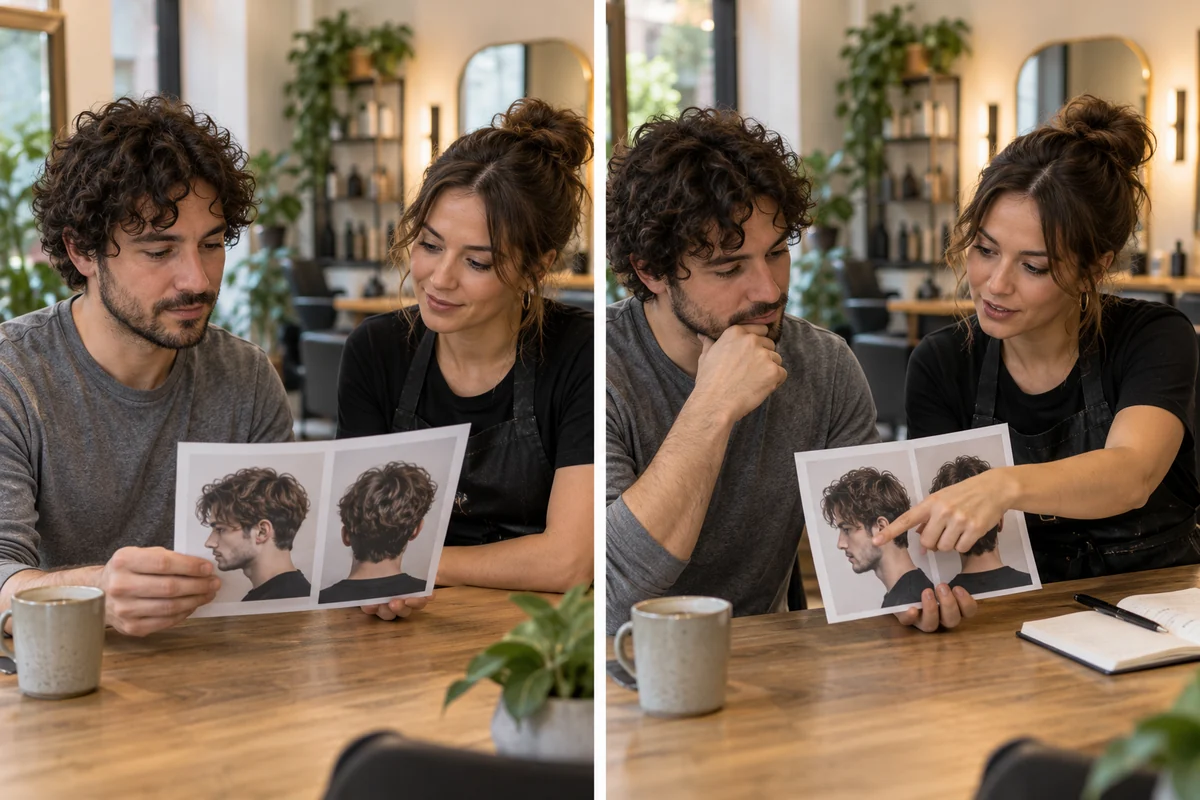
Show the stylist the part you love.
Then say what the photo leaves out.

Leaving a salon with a cut that isn’t what you pictured is a horrible feeling, and it often starts with a photo doing all the talking. Separate the outline, the layers and the styling you like, then say what has to work every day.

Your personal hair-care planProduct choices, routines and answers shaped around your hair.$49one-timeStart my consultation
A client and stylist sit close together looking at a haircut photograph held toward them.
Then say what the photo leaves out.

What is going on

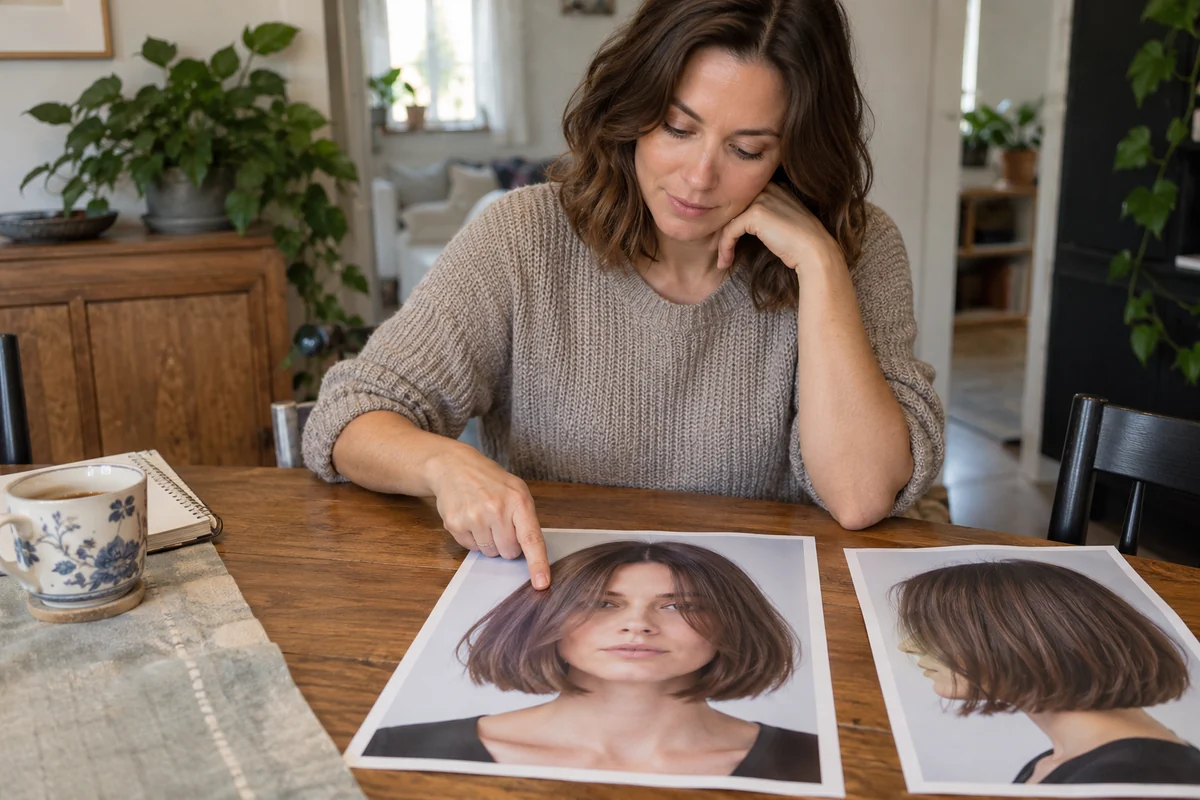
A woman points to a feature on a printed bob reference beside a second view.

Point at the part of the picture

Point to the outer edge, which is the perimeter. Point to the shorter pieces inside it, which are the layers. Point to anything around the face. Say which one drew you to the photo. Loving one detail doesn’t mean you want the whole thing copied.

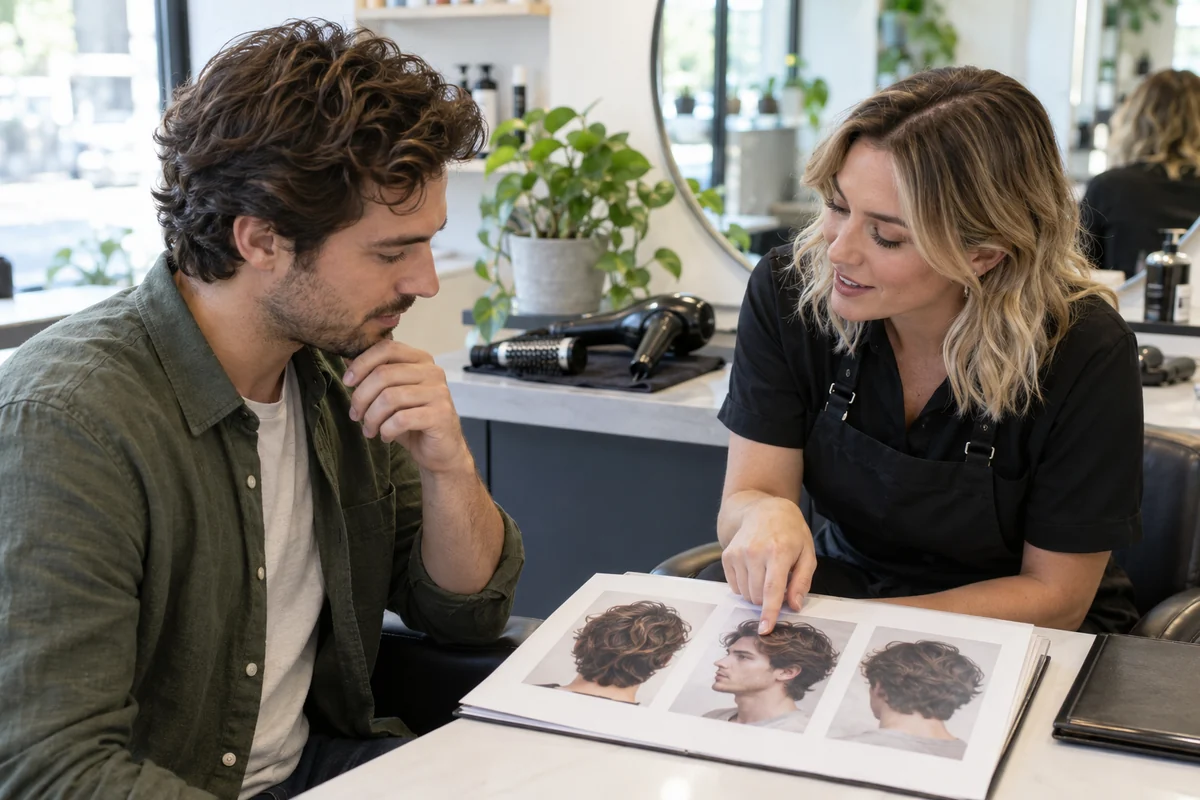
A client and stylist examine reference photographs with idle drying tools on the counter behind them.

Ask how much of it is styling

A photo won’t tell you about the products, tools, extensions or editing behind the finish. Ask your stylist what they can tell from it and what nobody can. Then compare the cut they suggest with how you really dry and wear your hair.

What helps, day to day

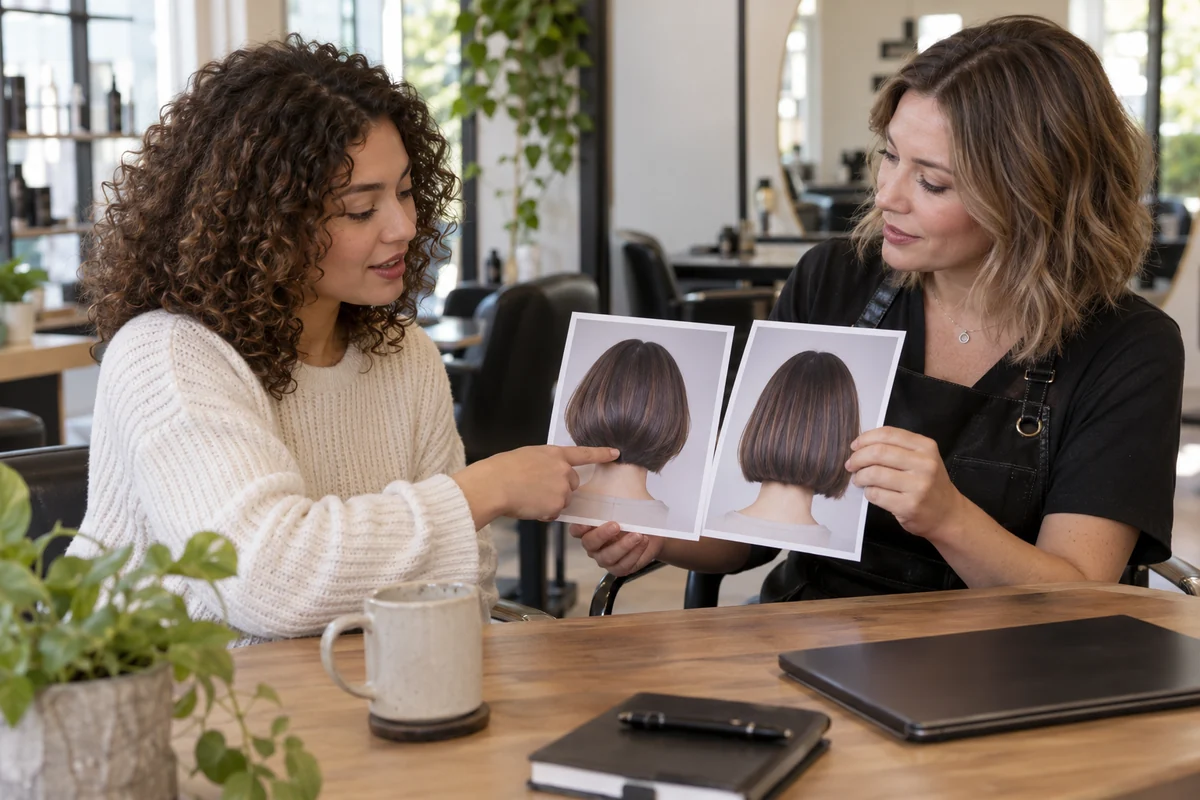
A client points to the lower outline in one of two back-view haircut references held by a stylist.

You like the outline but not the volume

  • Show the edge you like and say whether the height and fullness in the picture are part of the ask.
  • Ask how that outline would fall with your own pattern and thickness.
  • A second photo from another angle can clear up the shape without anyone promising a copy.
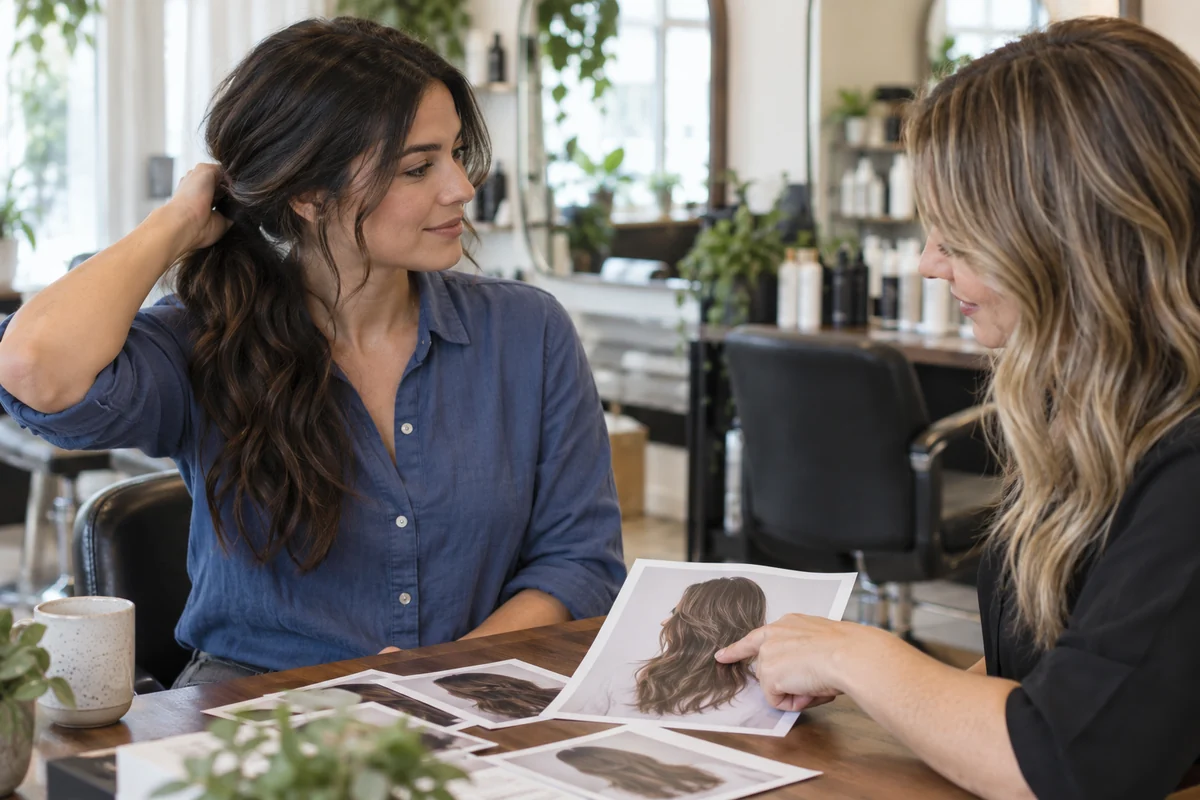
A woman loosely gathers her long hair while discussing a layered haircut reference with a stylist.

You like the layers but need to tie it back

  • Say what still has to work.
  • Tying it up, covering it, keeping it off your face or leaving one section untouched.
  • Ask which shorter pieces would fall out of a ponytail.
  • Settle those limits before you agree to the layers or a fringe.
A person with short straight hair letting damp hair dry without a tool.

You like the finish but not the daily work

  • Be honest about the time, tools and effort you’ll really put in each morning.
  • Ask what an ordinary day with this cut looks like and whether there’s a lower-effort version.
  • The polished photo is still useful even if you take only part of its shape.

Ask what the photographed finish needs

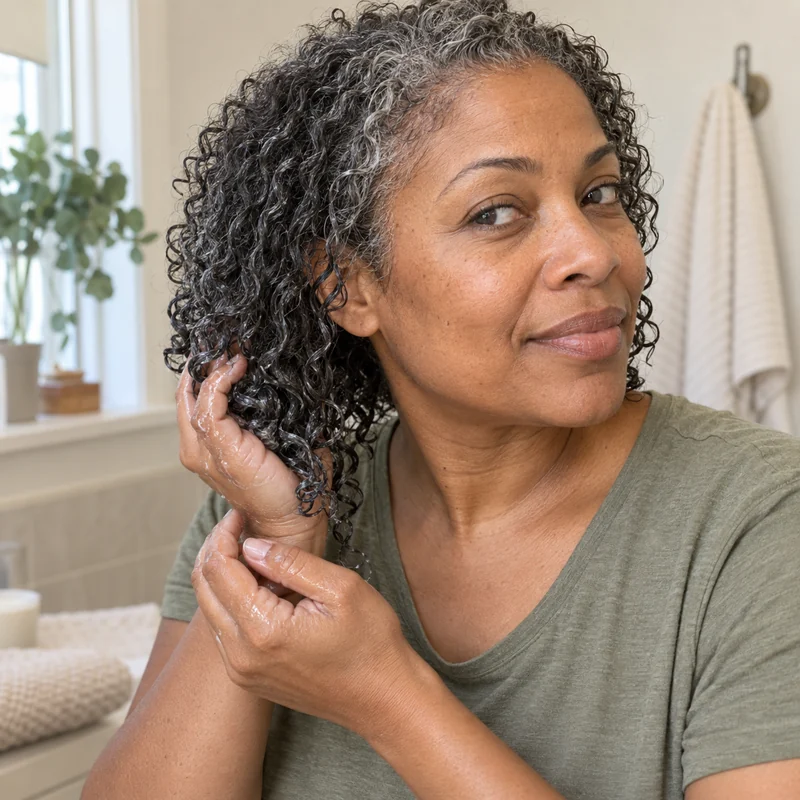
A woman cupping a damp curl section with styling gel on her hands.

Hold is a separate decision from the cut

Ask whether the separation, hold or fullness in the photo comes from product. You can keep the cut feature you love and wear it with a different everyday finish.

Browse styling products. The consultation uses your hair details and styling habits to compare creams, mousses and gels.

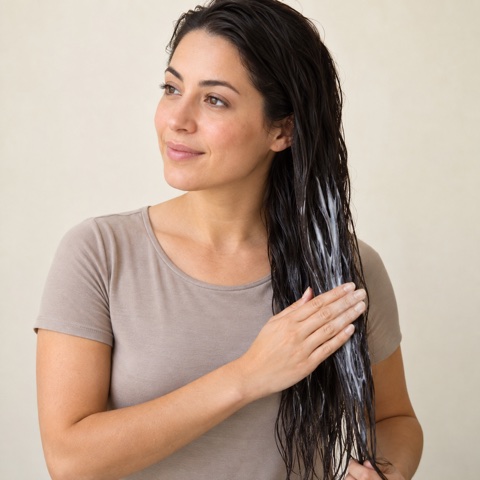
A woman smoothing conditioner through her mid-lengths and ends.

Think about combing it after the cut

Talk through how the new shape changes where you detangle and where conditioner goes. A haircut photo says nothing about the slip your lengths will need. Your remaining length, any treatments and where you tangle decide that.

Browse rinse-out conditioners. Tell the consultation what you want from a conditioner and what you disliked about previous ones.

Build a short visual conversation

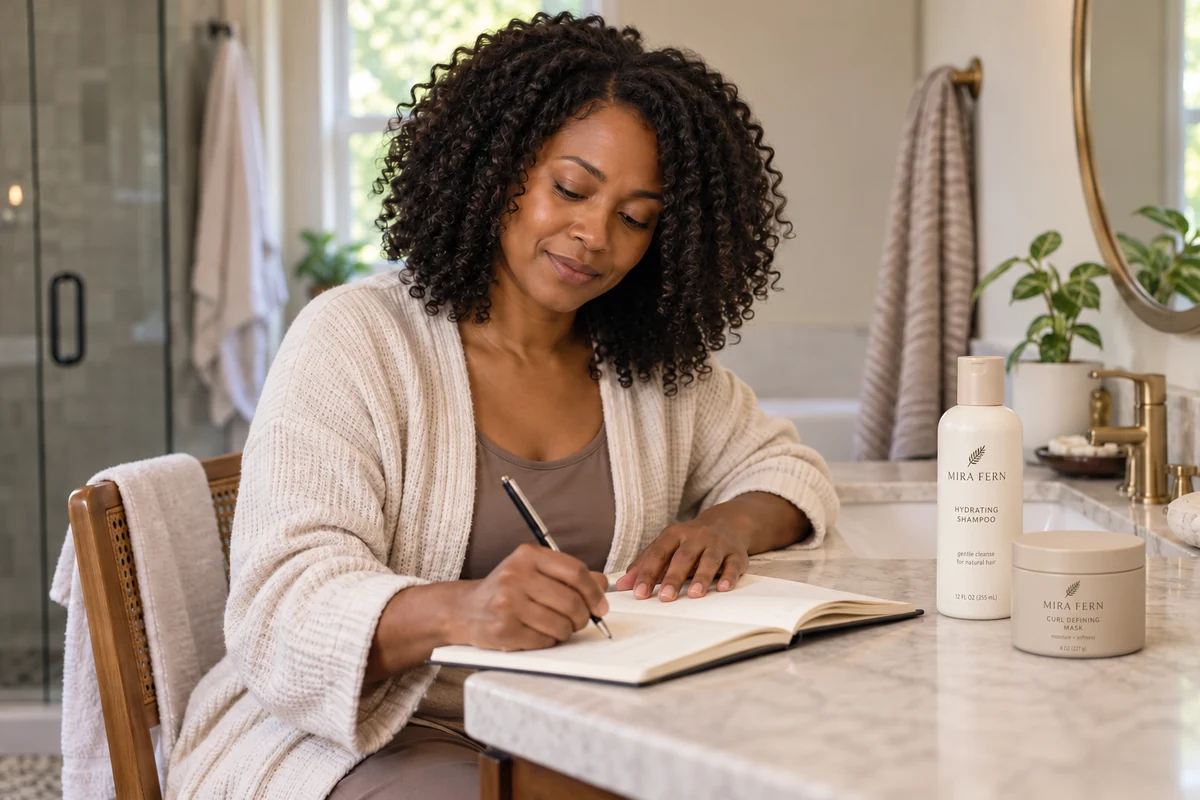
A woman with curls writing a routine note beside her hair-care products.

Give each photo a job

Pick a small handful of pictures. Next to each one, note what to keep, what to change and what not to copy. A photo of your own old haircut can explain a preference better than a stranger’s. Don’t share other people’s personal photos without asking.

A woman with very short hair writing an appointment checklist.

Check you’ve both heard the same thing

Before the scissors come out, ask the stylist to say back the shape, the limits and the everyday styling plan. Fix any mismatch while you can still change the request. If you’re still describing two different haircuts, it’s fine to pause and talk again.

Illustrated care examples: before & after

Fewer pictures, clearer point

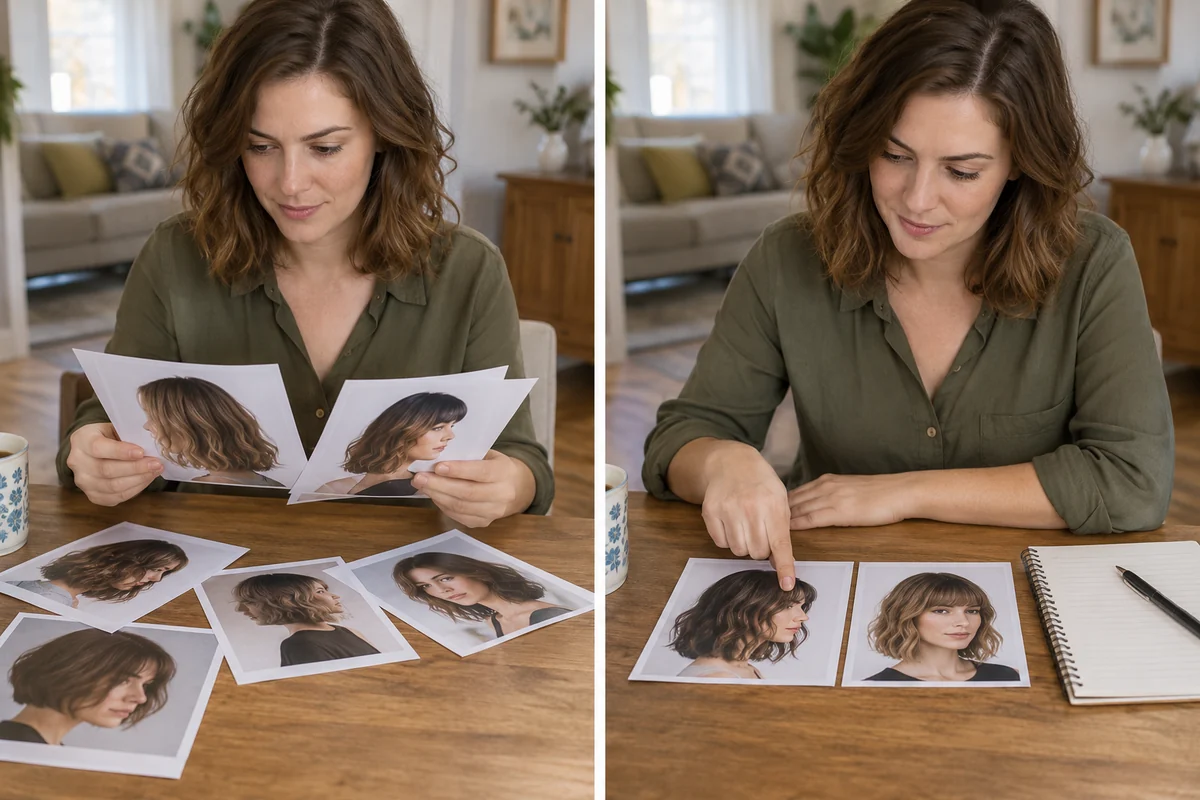
The same woman selects two haircut references from a larger set and points to a feature.
Before · many mixed reference picturesAfter selecting references · a few, one feature each
A smaller set of pictures, each picked to show one feature you mean. Your own hair is unchanged, and the cut is still a conversation to have.

Check they heard you

The same client and stylist move from sharing a haircut photograph to discussing a specific feature together.
Before · the reference photo shownAfter clarifying the request · stylist asked to repeat it
Showing the photo is half of it, the other is asking the stylist to say back the feature you want and how you’ll wear it. No cutting yet.
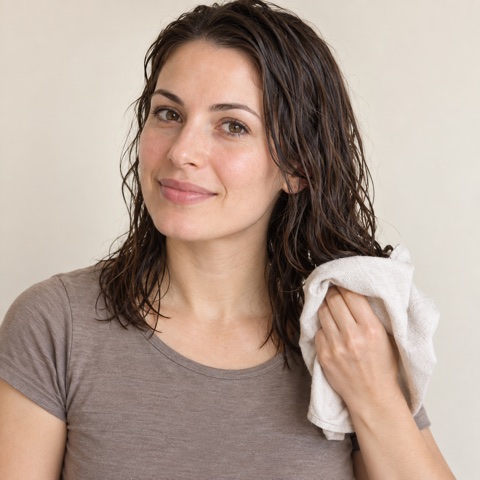
A woman gently squeezing damp hair with a towel.

Help with your hair-care routine

Bring your hair-care questions to the consultation. You can also read caring for hair while growing it longer.

  • Which part of this photo am I actually asking for?
  • What do I still need to be able to do with my hair afterwards?
  • How much work would this finish take me every morning?

Your pattern, thickness, length, treatments, how you like to style and the limits of your day all shape the questions worth taking to the salon. Daily care can be planned around those. The cut itself is judged with the stylist, in person.

The Hair Care Consultation gives you a personal plan with product recommendations, routines and guidance on your hair-care questions.

$49 with 60 days of follow-ups, or $99 with 12 months. Pay once; the year renews only if you choose.