Hair Care Guides

Living with vivid color between refreshes.
Keep it, let it fade, or move on.

Pink, blue or purple hair is a joy, up until the pillowcase turns lilac and the shade starts drifting. That’s the deal with direct dyes. Decide whether to hold the color, enjoy how it changes or move on, and keep washing your scalp either way.

Your personal hair-care planProduct choices, routines and answers shaped around your hair.$49one-timeStart my consultation
An adult with magenta curls holds a clean dark towel.
Keep it, let it fade, or move on.

What is going on

An adult with teal hair checks a closed color jar and its original carton.

Know exactly what’s on your hair

Keep a note of the shade, the brand and how it went on, including any bleaching underneath. Vivid is a look, not one chemistry. This guide covers direct color. Anything mixed with developer, or an unknown salon service, needs its own instructions.

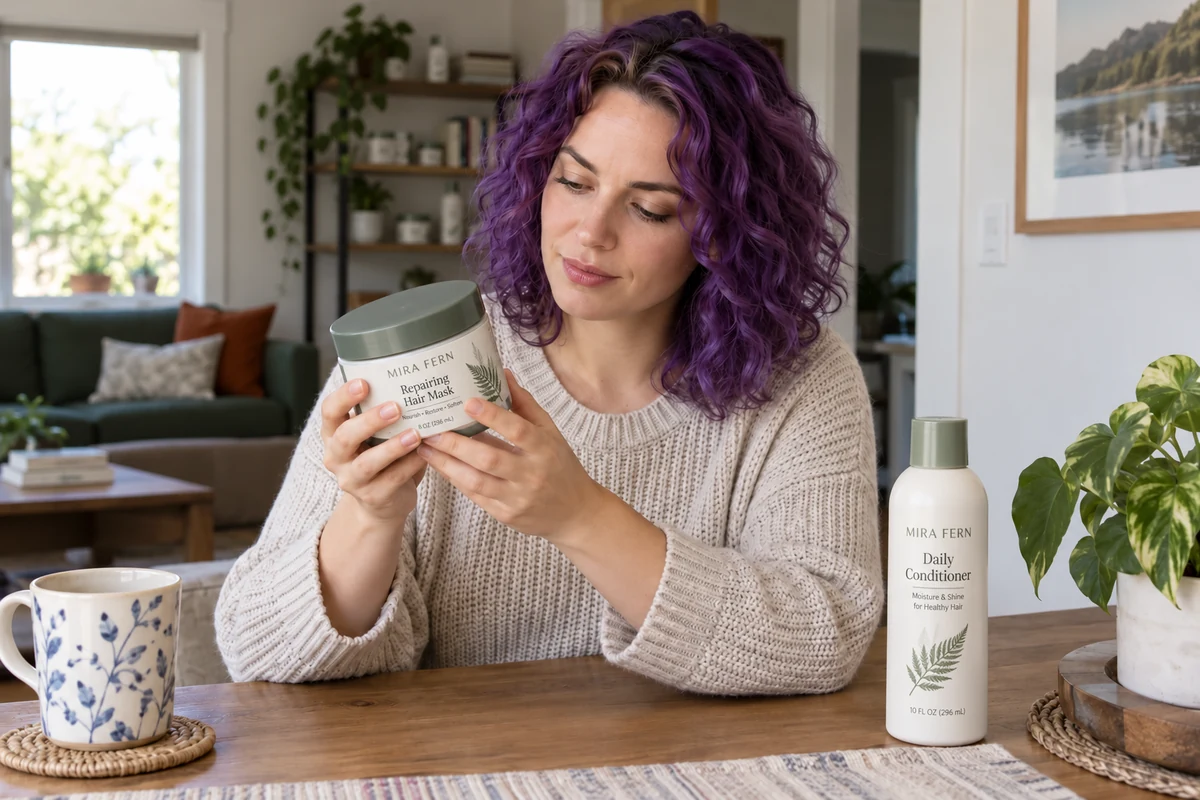
An adult with violet curls reads a closed mask jar beside an ordinary conditioner bottle.

A refresh is a new color decision

A color-depositing conditioner can shift the shade rather than bring back the original. Read what starting colors it’s meant for, how to apply it and what to check first. If you’re unsure what’s underneath, ask the maker or your colorist before adding more pigment.

What helps, day to day

An adult with pink hair considers a white collared shirt beside a dark towel.

It’s getting on everything

  • Some direct dyes mark towels, collars and sheets.
  • Use a towel you don’t mind staining and check what the maker says about transfer.
  • Think ahead before a special outfit or borrowed bedding.
  • Dry hair can still leave color behind.
A woman massaging shampoo lather onto her scalp with her fingertips.

Your scalp needs washing before the color wants it

  • Wash when your scalp is oily, sweaty or uncomfortable, rather than putting it off to keep the color bright.
  • Follow the dye’s aftercare and its advice on cleansers.
  • Notice how your own shade changes with each wash instead of trusting a promised number of washes.
A woman wearing glasses reads a hair product ingredient panel.

You’re done with it

  • Stop topping up the pigment while you decide what comes next.
  • Some direct dyes fade out gently, but fading won’t take a bleached base back to your natural color.
  • Talk to a colorist before a big change, or if the color just won’t let go.

Products, by the job they do

A man checks a bottle label beside his written ingredient avoidance note.

Cleansing and color removal are different jobs

A clarifying shampoo isn’t a routine step, and no shampoo category suits every direct dye.

Browse cleansing products. Bring the shampoos you are choosing between to the consultation, along with what you liked or disliked about them.

A woman applying conditioner to her damp lengths and ends.

Let conditioner do its own job

Choose conditioner for how your lengths feel and detangle. Check whether it carries added pigment, because that’s a color decision, not a conditioning one. An ordinary conditioner keeps the hair easy to handle without committing you to another shade.

Browse rinse-out conditioners. For conditioner recommendations, share where your hair tangles and which products you have tried.

How to do it

Hands gently pressing cotton fabric around the lower lengths of wet hair.

1. Blot the color-treated lengths, don’t rub

Use clean, soft fabric you’re willing to stain, following the dye’s aftercare. Press and squeeze the lengths rather than scrubbing them together. Blotting takes out water. It won’t seal the pigment in or keep your collars clean.

Guide: Dry hair gently with a cotton T-shirt
Gently distributing shampoo through loose wet hair.

2. Use the fading wash only if fading is the goal

This method is for a semi-permanent dye whose maker allows a clarifying wash. It is not a way to keep color. Do one wash, following its directions, then see where you are. Don’t repeat it over and over, and don’t use it on permanent dye.

Guide: Wash semi-permanent color gently

When to get help

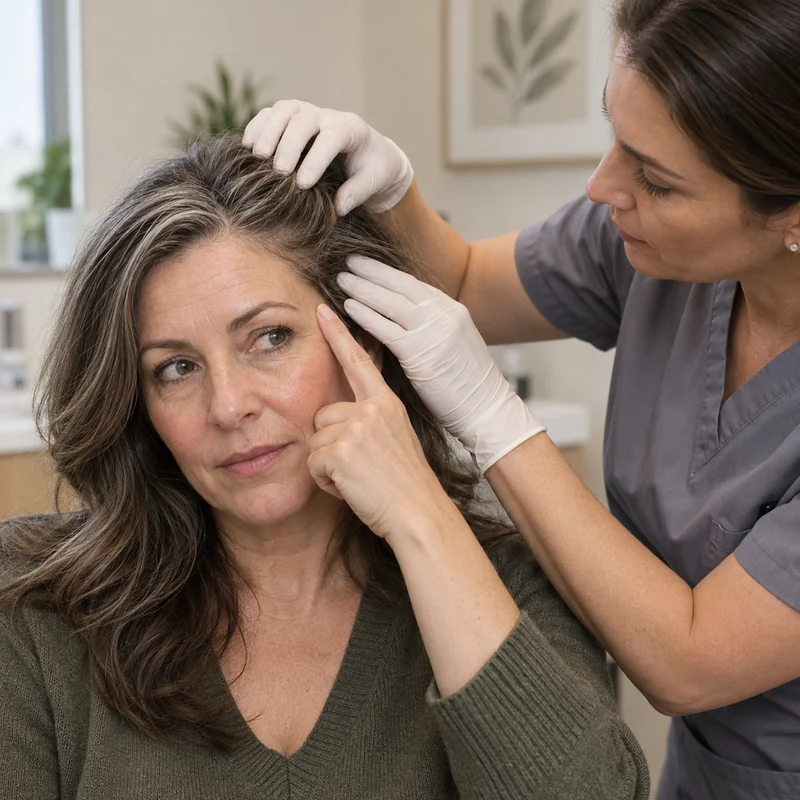
A medical professional examining the scalp where a woman points.

Signs that need more than routine care

  • If a dye or refresh leaves your scalp burning or with a rash that doesn’t settle, stop using it and see a medical professional rather than waiting for the next wash. Keep the packaging so you can say exactly what went on. Having used it before without trouble doesn’t mean the next application will be fine.

Illustrated care examples: before & after

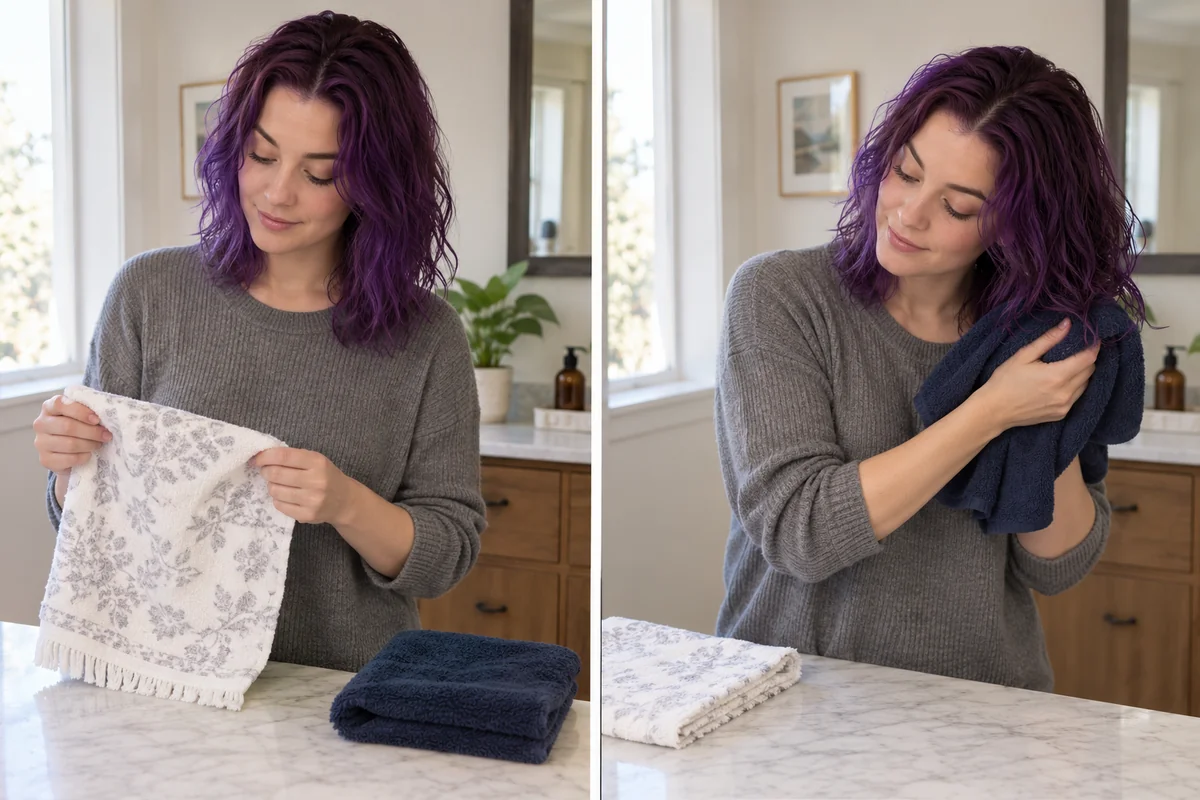
A towel you can stain

The same adult sets aside a pale towel and gently presses damp purple lengths in a dark towel.
Before · a pale towel consideredAfter care · a clean dark towel
A clean dark towel you don’t mind staining, pressed rather than rubbed. This is about the mess, it won’t keep the color in.

Decide before you top up

The same adult sets a closed color jar aside and writes a plan.
Before · a refresh being consideredAfter care · next color goal written down
Before another pigment product is opened, the goal gets written down. Hold the color, refresh it or let it fade, and which exact dye you used.
A woman with curls writing a routine note beside her hair-care products.

Help with your hair-care routine

Bring your hair-care questions to the consultation. You can also read planning care where different colors meet.

  • Do I want to keep this shade, refresh it or let it fade?
  • How much staining on towels and clothes can I live with?
  • What do I actually know about the bleach and pigment already on my hair?

How your scalp behaves, what bleaching is underneath, how your lengths feel and how much upkeep you’re willing to do shape the plan. The exact dye matters, and whether fading is welcome. The maker’s instructions and your colorist have the final say on pigment.

The Hair Care Consultation gives you a personal plan with product recommendations, routines and guidance on your hair-care questions.

$49 with 60 days of follow-ups, or $99 with 12 months. Pay once; the year renews only if you choose.