Hair Care Guides

Plan wash day around the line.
Two colors, one head, one routine.

Split dye, a bright underlayer or contrasting panels take more thought than one shade, and the first wash can feel risky. Map the broad areas and learn what each needs before you get it wet. No barrier or rinse order reliably stops color moving.

Your personal hair-care planProduct choices, routines and answers shaped around your hair.$49one-timeStart my consultation
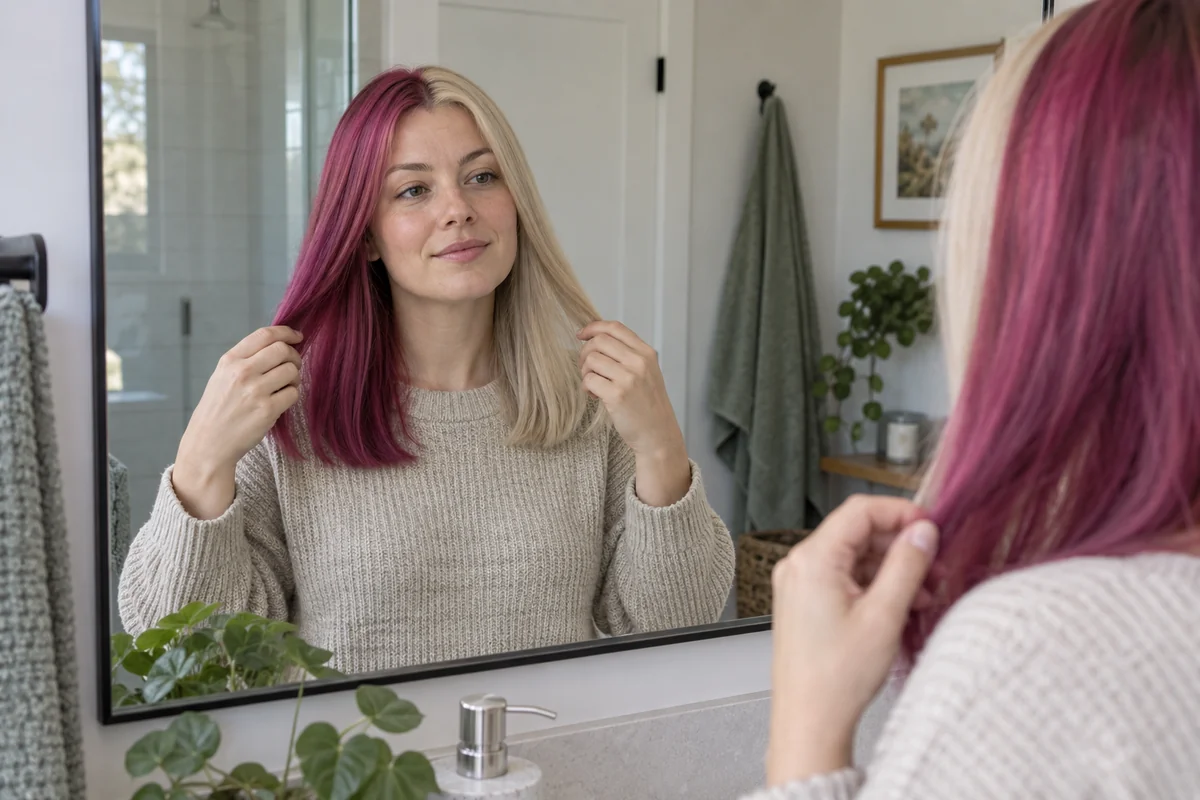
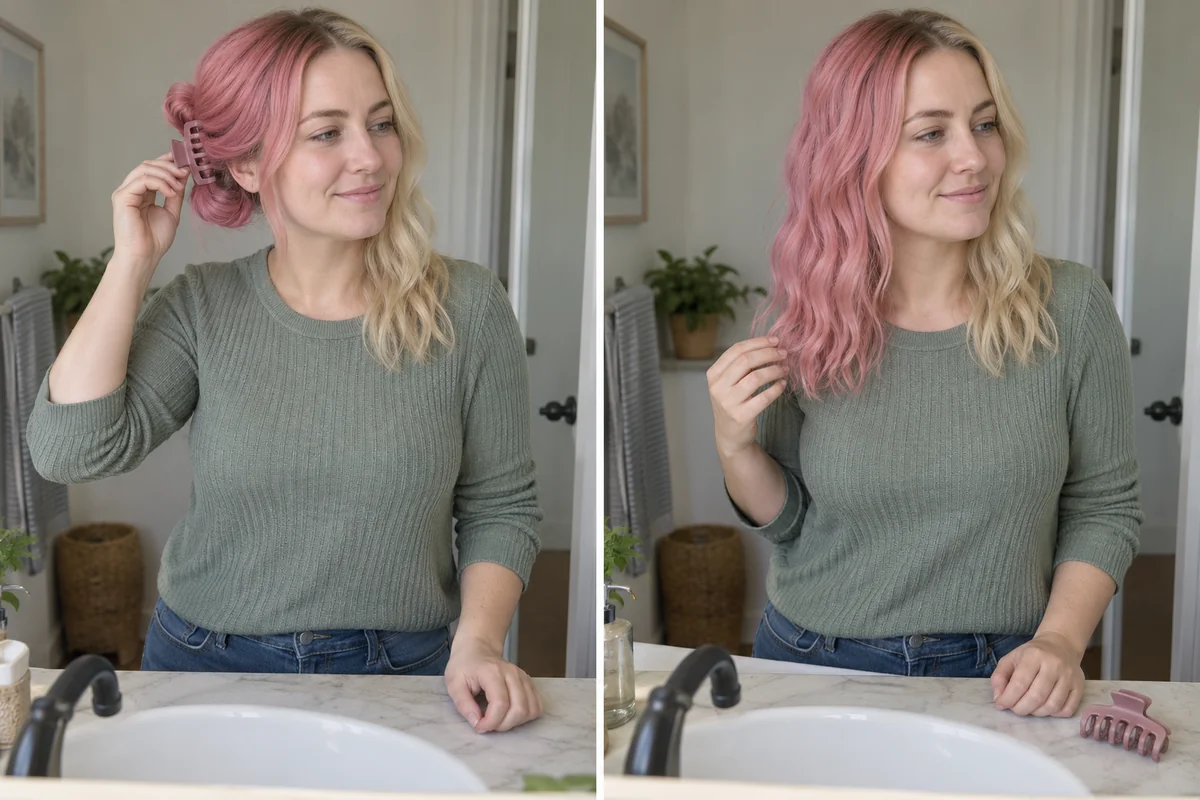
An adult brings magenta and pale blonde halves forward to see where they meet.
Two colors, one head, one routine.

What is going on

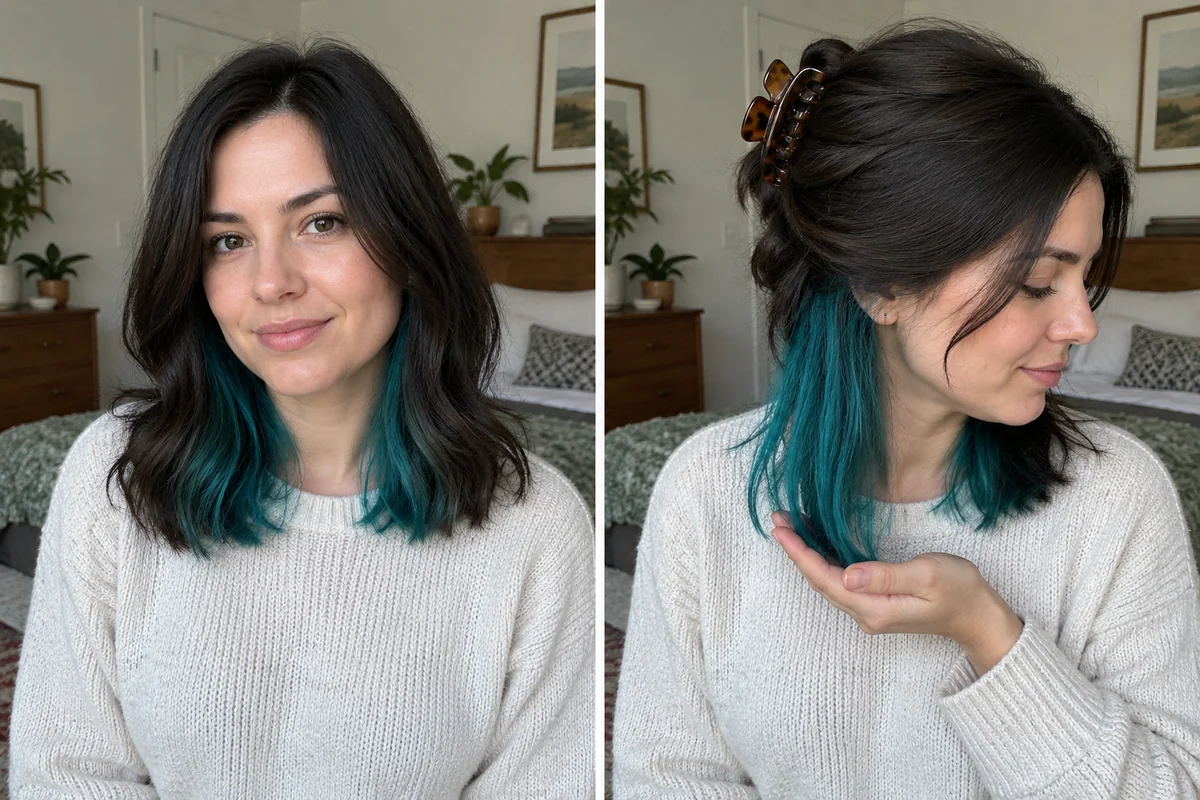
An adult loosely lifts a dark top layer to show a teal underlayer.

Map the zones you can actually manage

Work out the broad panels, the underlayer or the face frame, and where they meet. Note which parts were lightened and what gave each its color. It’s a rough map for washing, not a reason to separate every strand along the line.

An adult reads a leaflet beside a single capped bottle and a separate open carton holding two capped components.

Keep each product’s directions with it

Two colors don’t always mean two systems that get on with each other. Keep the exact product names and directions, especially if one side is a direct dye and the other had a different service. Ask your colorist to square the washing advice for both.

What helps, day to day

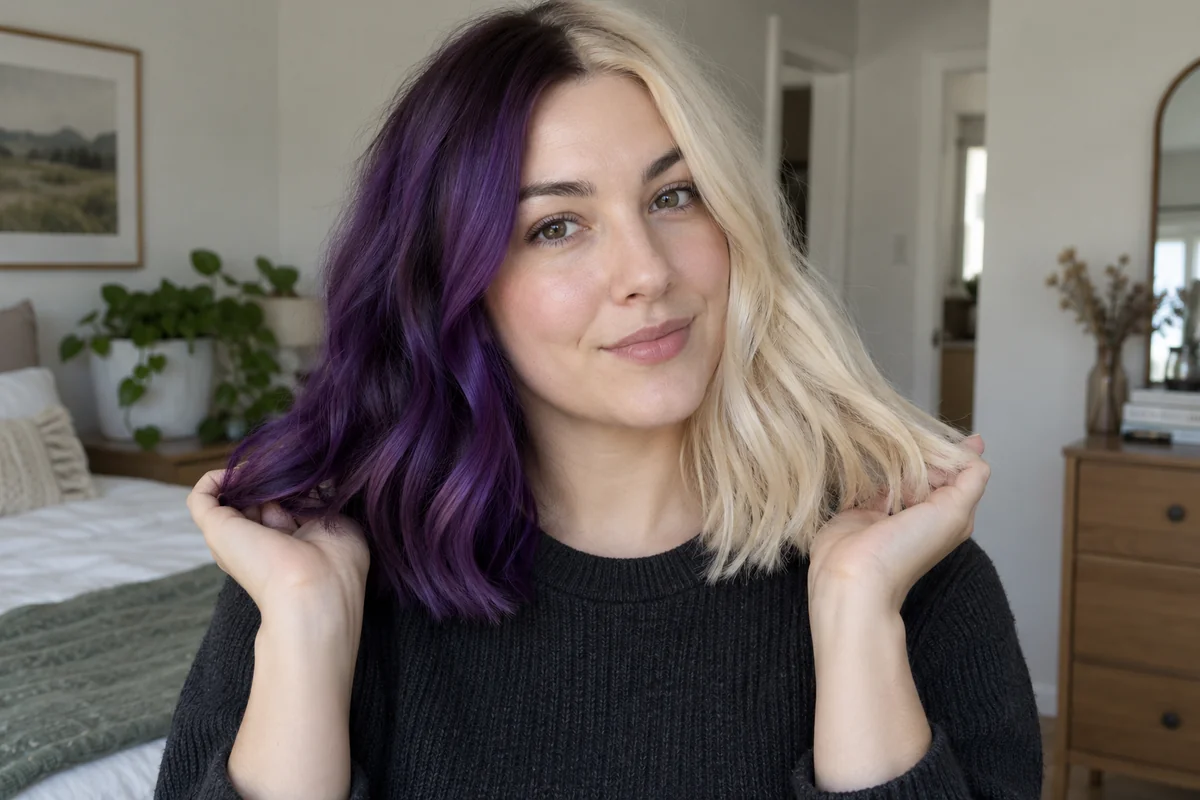
An adult supports violet and pale blonde sections separately to inspect their boundary.

One color seems to be creeping into the other

  • Stop adding any more pigment and ask your colorist about the specific dyes and the lighter area.
  • Take a photo of it dry and write down what was used.
  • Cold water, a conditioner barrier or a particular head angle can’t be promised to stop transfer between every pair of colors.
An adult supports one turquoise section while smoothing ordinary conditioner onto its lower length.

A treatment is only for one zone

  • Bring the section you’re treating forward and hold the rest comfortably out of the way, as long as the product directions allow it.
  • If you can’t apply and rinse it accurately on your own, get a professional to do it.
  • A whole-head toner can change a contrasting panel you wanted to keep.
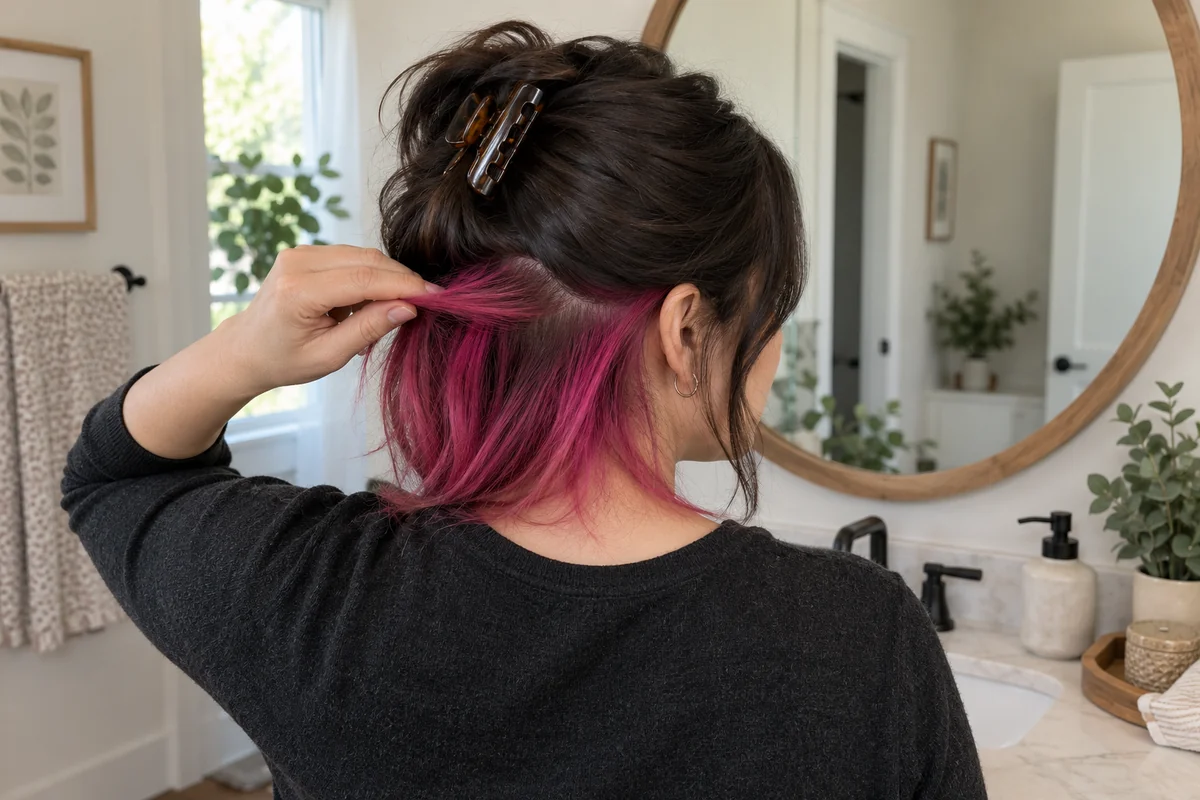
An adult loosely holds the upper layer aside to reach a pink underlayer.

The underlayer is hard to get to

  • Make only as many loose sections as you need to reach the scalp and the part you’re washing.
  • Let each one down fully to rinse, because folded hair is easy to miss.
  • Don’t pull the line tight or leave clips in just to keep a perfect divide.

Products, by the job they do

A woman massaging shampoo lather onto her scalp with her fingertips.

One scalp, one cleanser if you can

Oil, sweat and styling buildup happen across the whole head, whatever color sits on top. One cleanser that works with both services may be simpler than two products, but check that against the services.

Browse cleansing products. Bring the shampoos you are choosing between to the consultation, along with what you liked or disliked about them.

A woman applying conditioner to her damp lengths and ends.

Condition by feel, not by the dividing line

Rougher lengths and areas that coat easily don’t always follow the painted line, so put conditioner where the hair needs it. If a product deposits pigment, where it’s allowed to go matters too. A general conditioner isn’t a zone-specific toning product.

Browse rinse-out conditioners. Tell the consultation what you want from a conditioner and what you disliked about previous ones.

How to do it

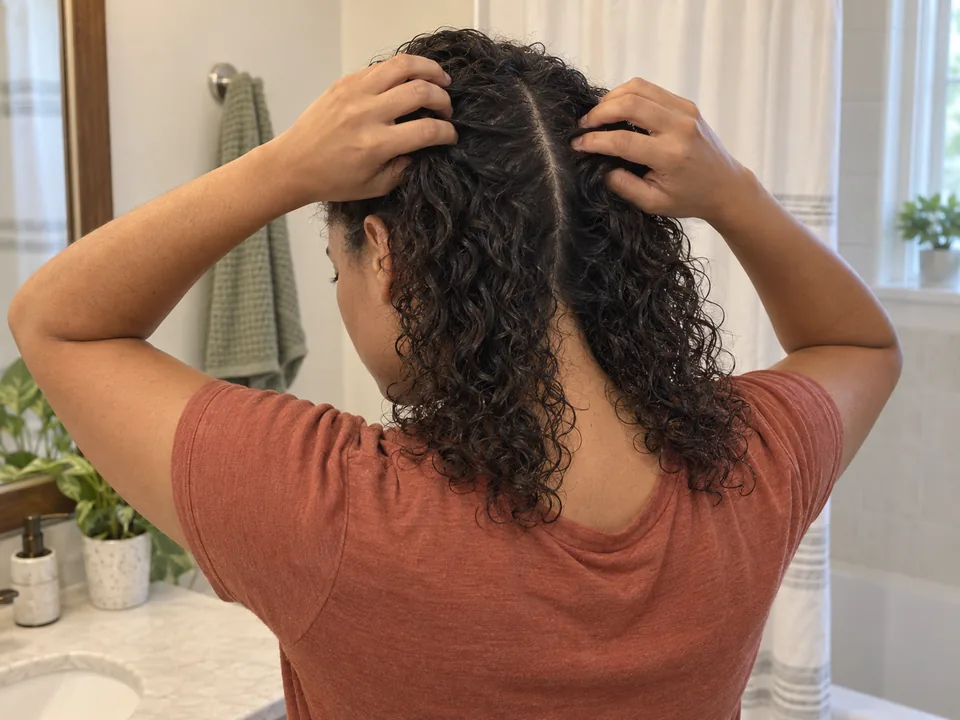
A woman uses both hands to separate her own damp curls along a rough part toward the back of her head.

1. Section loosely for access

Follow the hair’s natural splits without tugging, and hold back only the hair that’s in your way. Let each section down completely for washing and rinsing. Sections get you to the hair. They’re not a waterproof wall between two colors.

Guide: Section your hair for washing and styling
Checking appointment preparation instructions on a phone.

2. Bring the whole color map

Write down every dye, lightening service and home refresh by area. Say whether you’re worried about transfer, uneven fading or changing the design. Ask how the zones will be kept up together, including the parts you can’t reach well on your own.

Guide: Prepare for a color appointment

When to get help

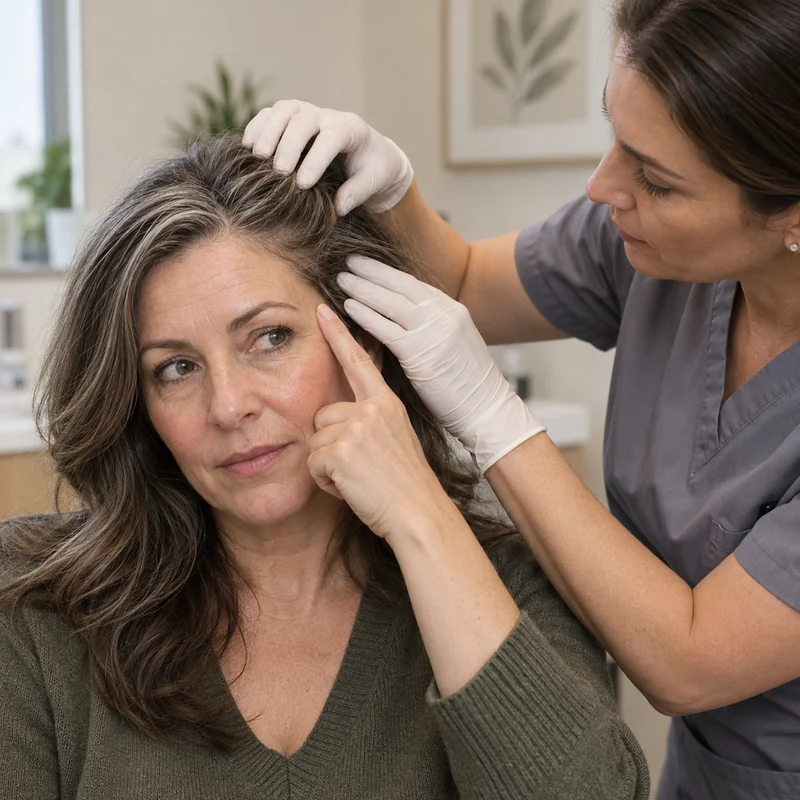
A medical professional examining the scalp where a woman points.

Signs that need more than routine care

  • If your scalp burns, comes up in a rash or stays sore after a color product, stop using it, keep the packaging, and see a medical professional rather than waiting to see if it settles. One trouble-free use in the past doesn’t mean the next application will be fine, so take a new reaction seriously.

Illustrated care examples: before & after

Reach the color underneath

The same adult first wears all hair loose, then holds the upper layer aside so the underlayer hangs freely.
Before · top layer over the undersideAfter care · underlayer reachable, no tight part
Only the hair in the way is held back, so the color underneath is reachable without a tight part. That is access, not a barrier between the colors.

Unclip before you rinse

The same adult removes a loose sectioning clip so the held color panel hangs freely.
Before · one panel held asideAfter care · panel fully released
Clip off, color panel let down, then that section is washed and rinsed. Check under where it was held, water reaching everything beats a neat parting.
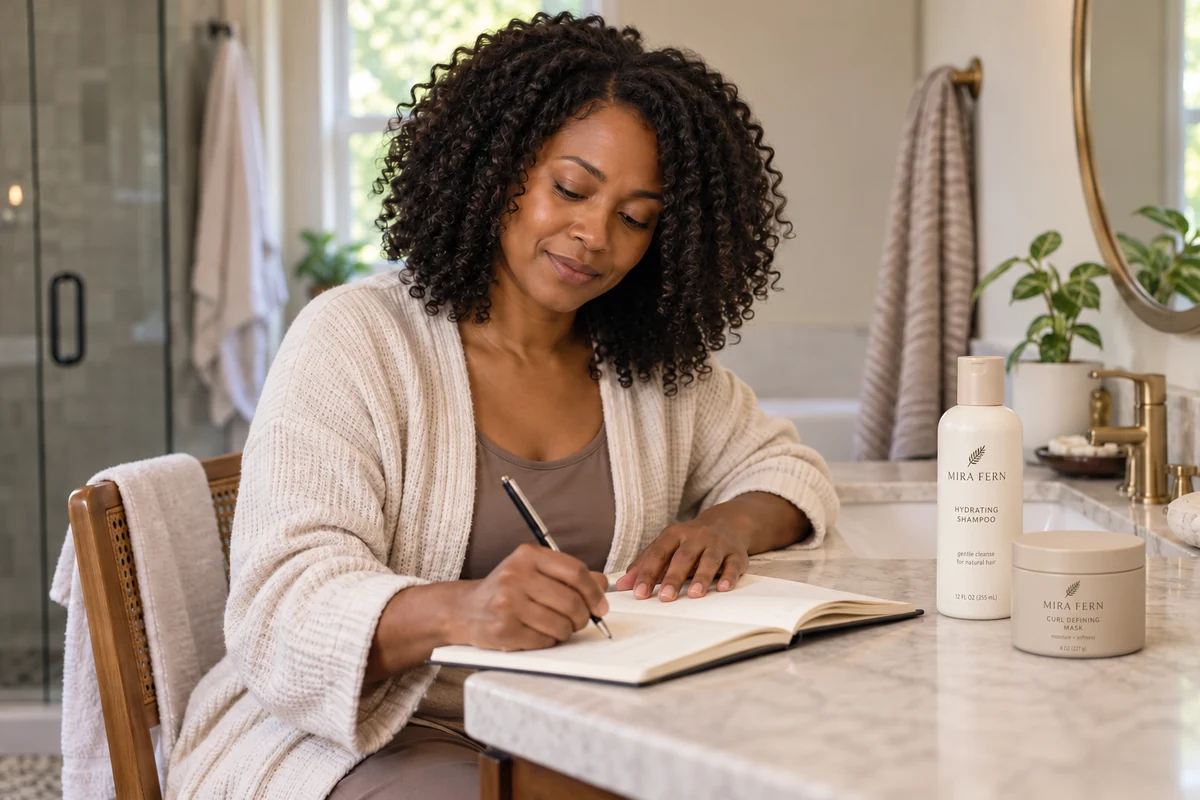
A woman with curls writing a routine note beside her hair-care products.

Help with your hair-care routine

Bring your hair-care questions to the consultation. You can also read caring for fine highlights mixed among untreated strands.

  • Where do my colors meet, including underneath?
  • Do both sides have the same washing instructions?
  • Which parts of this can I realistically do myself?

The consultation can organize your color map, your scalp’s needs, the rougher areas and the time and reach sectioned washing takes. Share the exact products where you know them. Clashing color-system instructions and any corrective work are for your colorist or the manufacturer.

The Hair Care Consultation gives you a personal plan with product recommendations, routines and guidance on your hair-care questions.

$49 with 60 days of follow-ups, or $99 with 12 months. Pay once; the year renews only if you choose.