Hair Care Guides

Keep long hair from getting trapped under you.
Move the lengths clear before settling down.

Long hair can end up beneath your shoulder or arm when you turn in bed. Hard clips can press against the pillow, and bonnet bands can catch the ends. Start by freeing the hair, then choose whether you want it loose or covered.

Your personal hair-care planProduct choices, routines and answers shaped around your hair.$49one-timeStart my consultation
An adult seated on a bed supports waist-length waves over one shoulder before resting.
Move the lengths clear before settling down.

What is going on

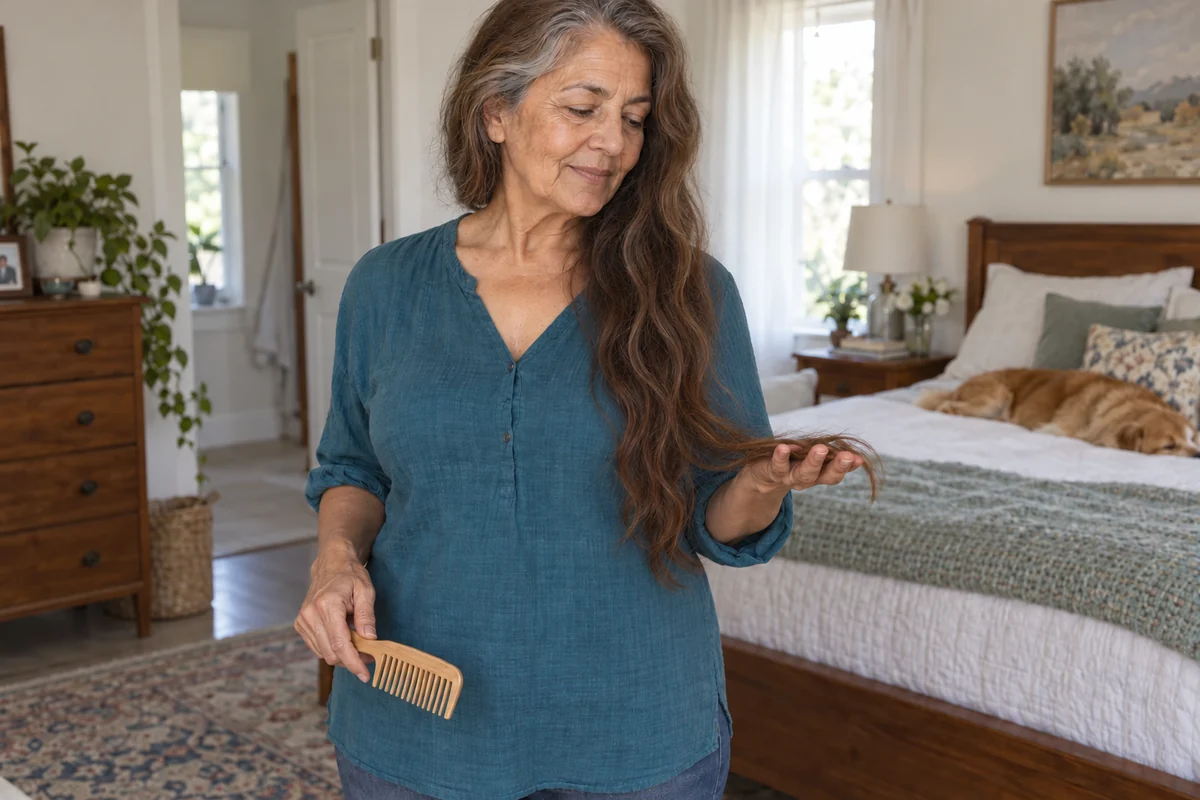
An older woman supports the ends of her long chestnut and silver hair while holding a wide-tooth comb.

Give loose lengths space on the pillow

Lift your shoulder or arm off any trapped hair before moving it. Gather the loose lengths gently and lay them on the open pillow space beside or above your head. Turn your head to check that you can move without pulling.

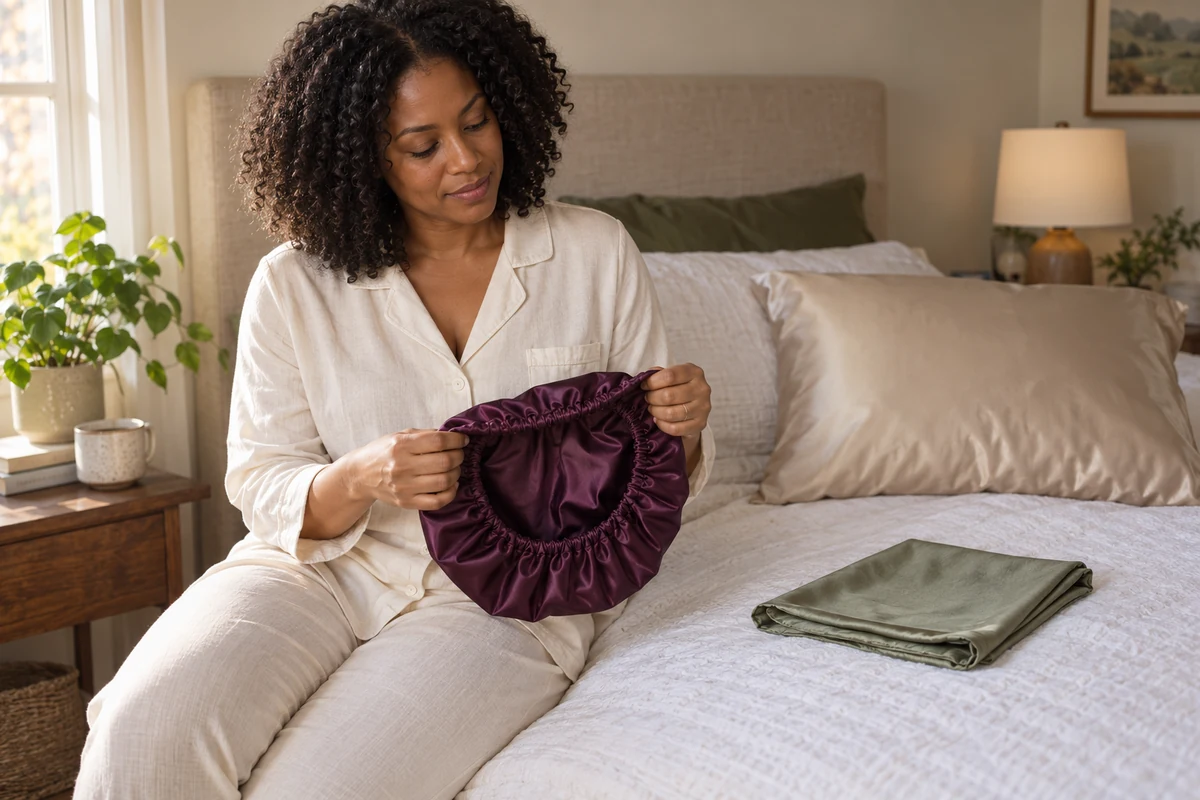
A woman considers a roomy bonnet beside a folded scarf and a pillow in a smooth pillowcase.

Use a roomy bonnet if hair keeps sliding back

A bonnet can keep loose lengths together when they keep slipping under you. Choose enough depth to hold them without packing or twisting tightly. Keep the roots loose. If you prefer uncovered hair, use a smooth pillowcase and move the lengths clear.

What helps, day to day

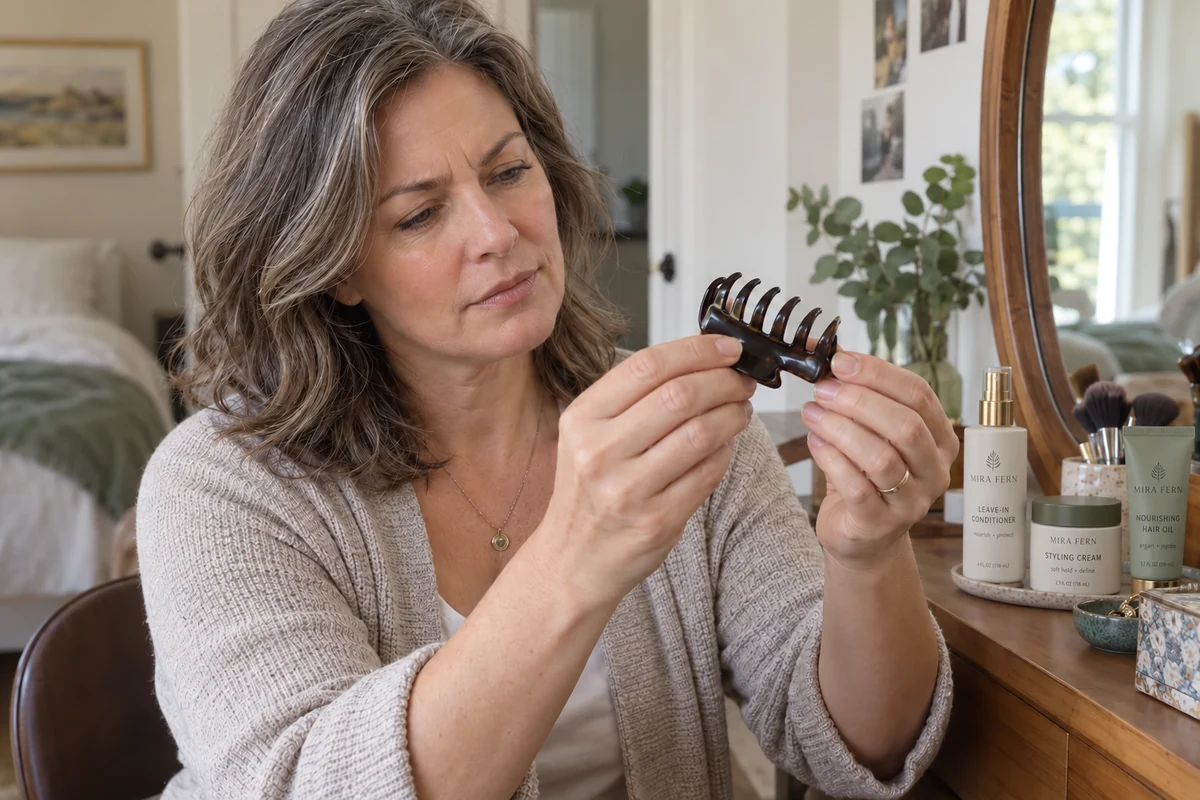
A woman examines a claw clip away from her hair, holding its solid body.

Remove hard clips before lying down

  • Squeeze a claw clip fully open before lifting it away from your hair.
  • Take out pins one at a time, supporting the hair while you release the style.
  • Feel around the back and sides of your head for any fasteners left where you will rest.
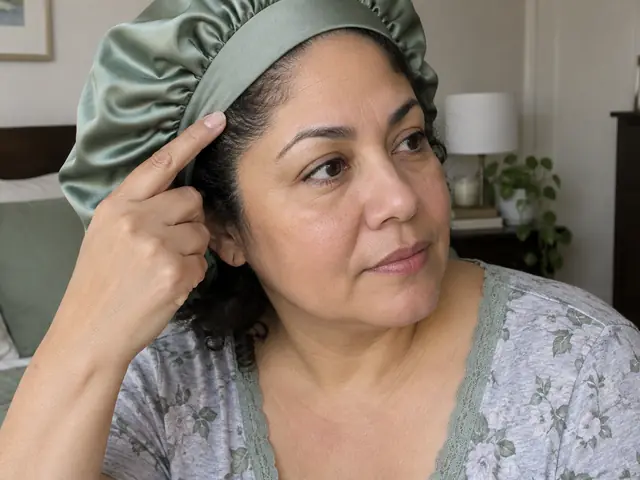
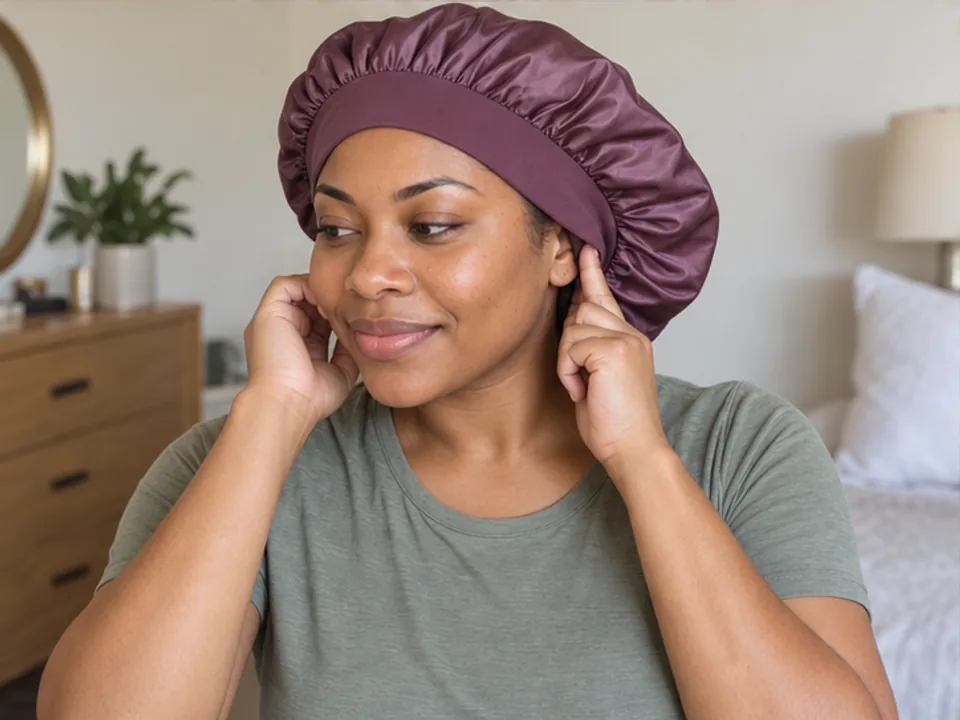
A woman touches the edge of her bonnet band at the temple.

Check the bonnet against your pillow

  • Lie in your usual sleeping position and turn your head.
  • If the band pulls, pinches or presses, take the bonnet off. Free trapped strands and smooth any folded band before trying again.
  • If it still feels tight, use a roomier bonnet or leave it off. Extra tightening will not make a crowded bonnet fit.
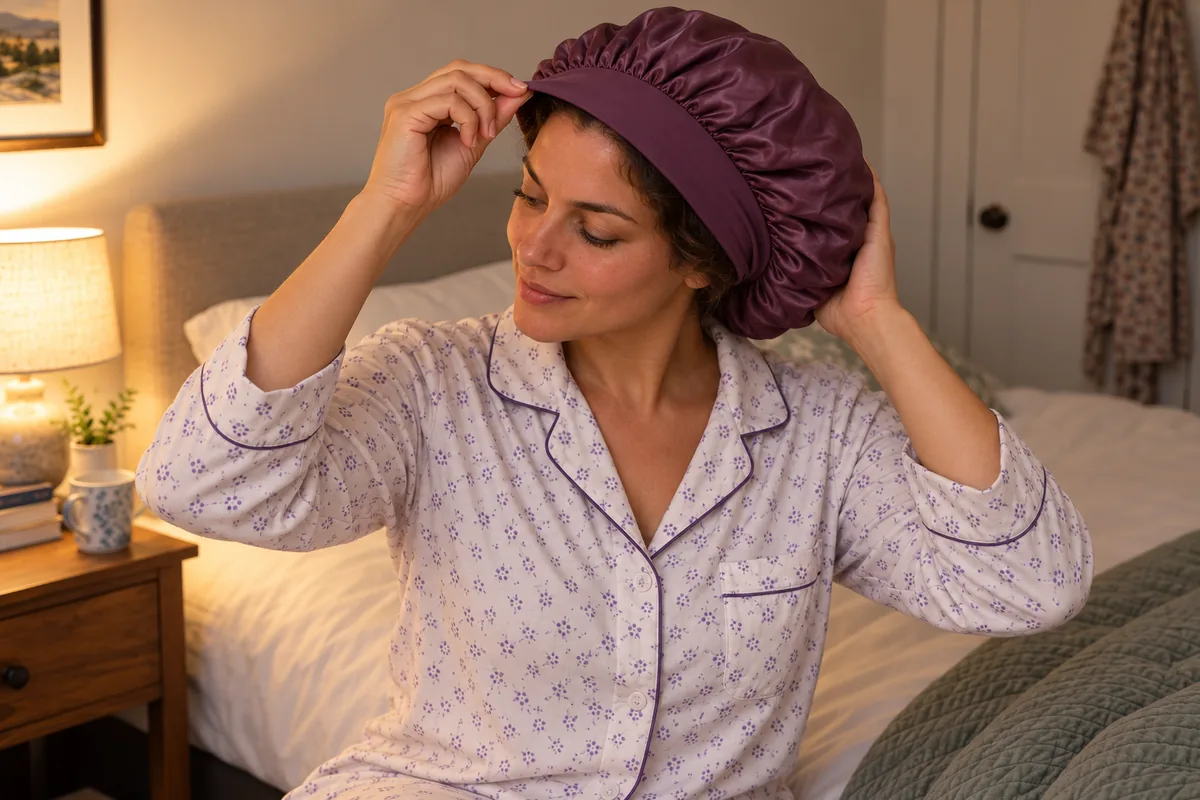
A seated woman lifts the front band of a roomy bonnet away from her hairline while her other hand supports the back of the cap.

Free the hair before pulling the bonnet away

  • Support the loose hair while you gently lift the band clear of your hairline. Stop if any strands catch.
  • Free caught strands before moving the bonnet farther. Once the edge is clear, hold the opening with both hands and lift the cap away, letting the hair fall free.
  • Use the full illustrated bonnet method below for the fitting and removal sequence. Leave any remaining knots for your usual gentle detangling method.

Products, by the job they do

A woman compares a conditioner tube and hair mask jar beside a leave-in bottle.

Condition tangled lengths on wash day

Rinse-out conditioner helps your hair slip apart when you detangle. Spread it through the lengths that need it, especially the ends, using the amount on the bottle. Rinse it out after the stated time. Keep using one that already leaves your hair manageable.

Browse rinse-out conditioners. Tell the consultation what you want from a conditioner and what you disliked about previous ones.

A woman smoothing leave-in product through her lower lengths.

Use a little leave-in on rough ends

If your ends still feel rough or catch together after washing, try a small amount of leave-in there. Check whether the product goes on damp or dry hair. Let damp lengths dry before covering them, and skip extra product when your hair feels comfortable.

Browse leave-in conditioners. For help choosing a leave-in, describe where your hair feels rough and what you already apply.

Choose the method you need

A woman checks both sides of a sleep bonnet band resting flat around her hairline and ears.

Put loose, dry hair inside a bonnet

The illustrated method shows how to place the bonnet, tuck the ends, check the band against your pillow and release it in the morning. Use a clean, dry bonnet with room for your loose hair. Installed braids and twists need their own care.

Guide: Put on a loose sleep bonnet
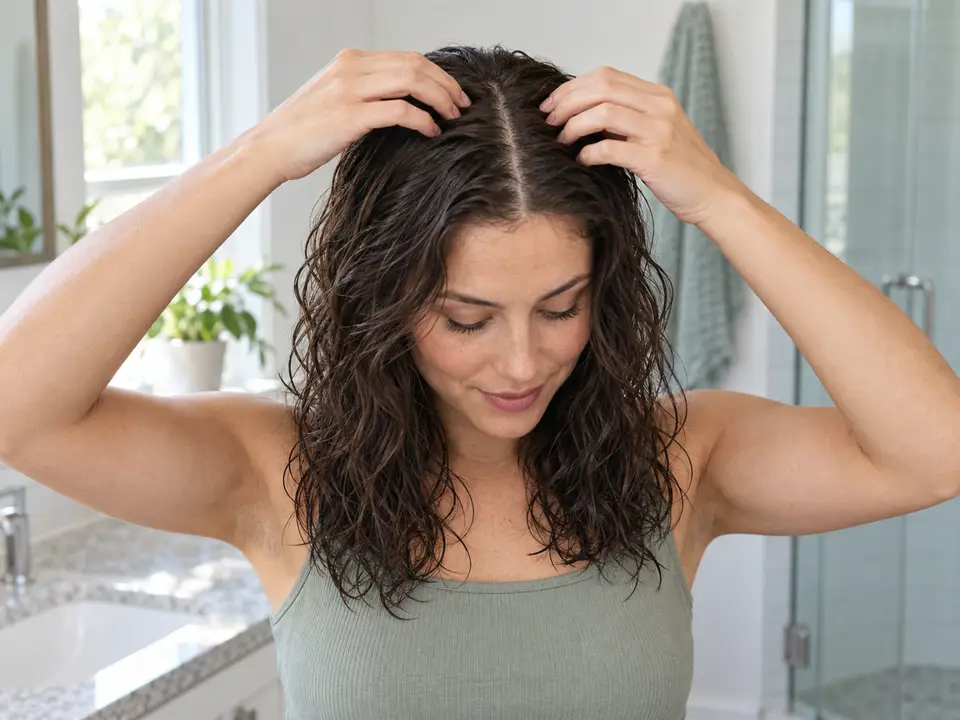
A woman places her fingertips on either side of the part in her damp hair, with the lengths hanging loose.

Dry roots and inner lengths before covering

After washing, leave the bonnet off while your hair dries. Check the roots, nape and inner lengths as well as the surface. If evening drying regularly runs past bedtime, move the wash earlier so those areas have time to dry.

Guide: Air-dry your hair

Illustrated care examples: before & after

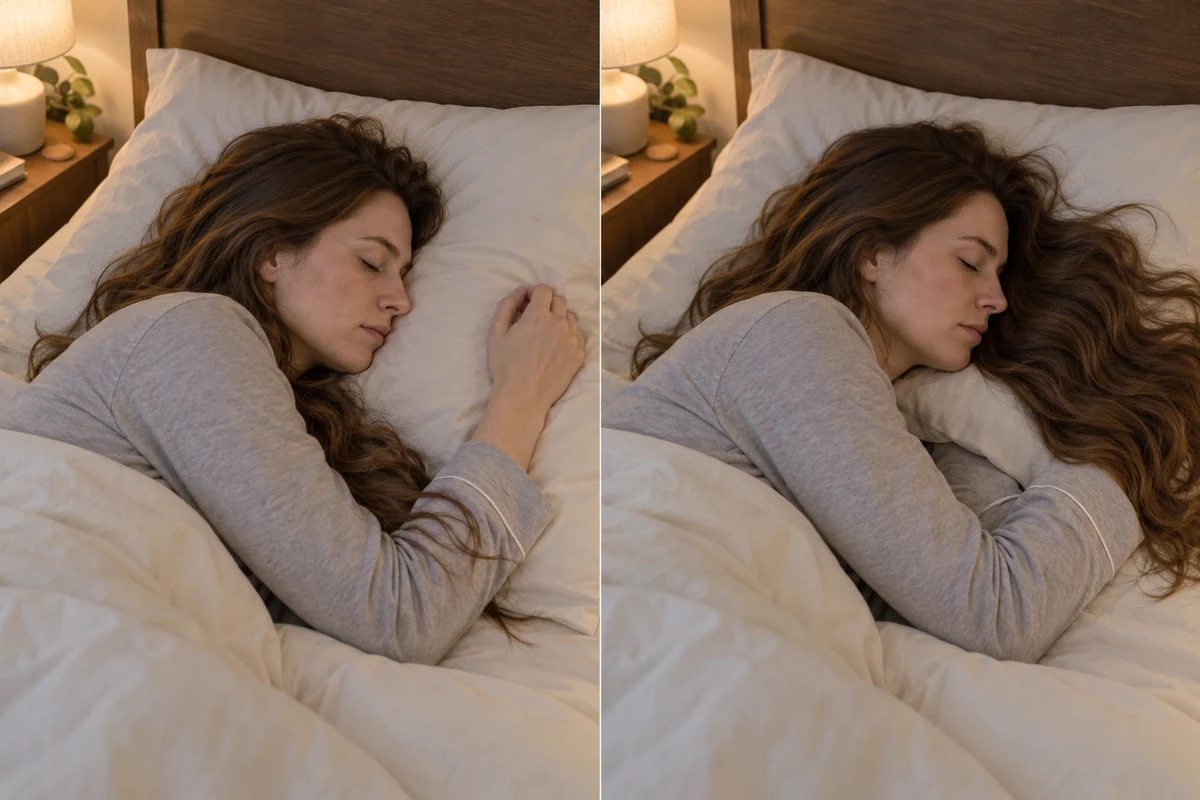
Move the lengths onto the pillow

Two panels show a woman on her side with long hair across her forearm, then spread onto the pillow beside her head.
Before · hair lying across the forearmAfter the change · hair spread beside the head
The loose lengths are lifted from across the arm and spread onto the pillow. Move any hair that feels trapped before you settle again.

Take the hard clip out

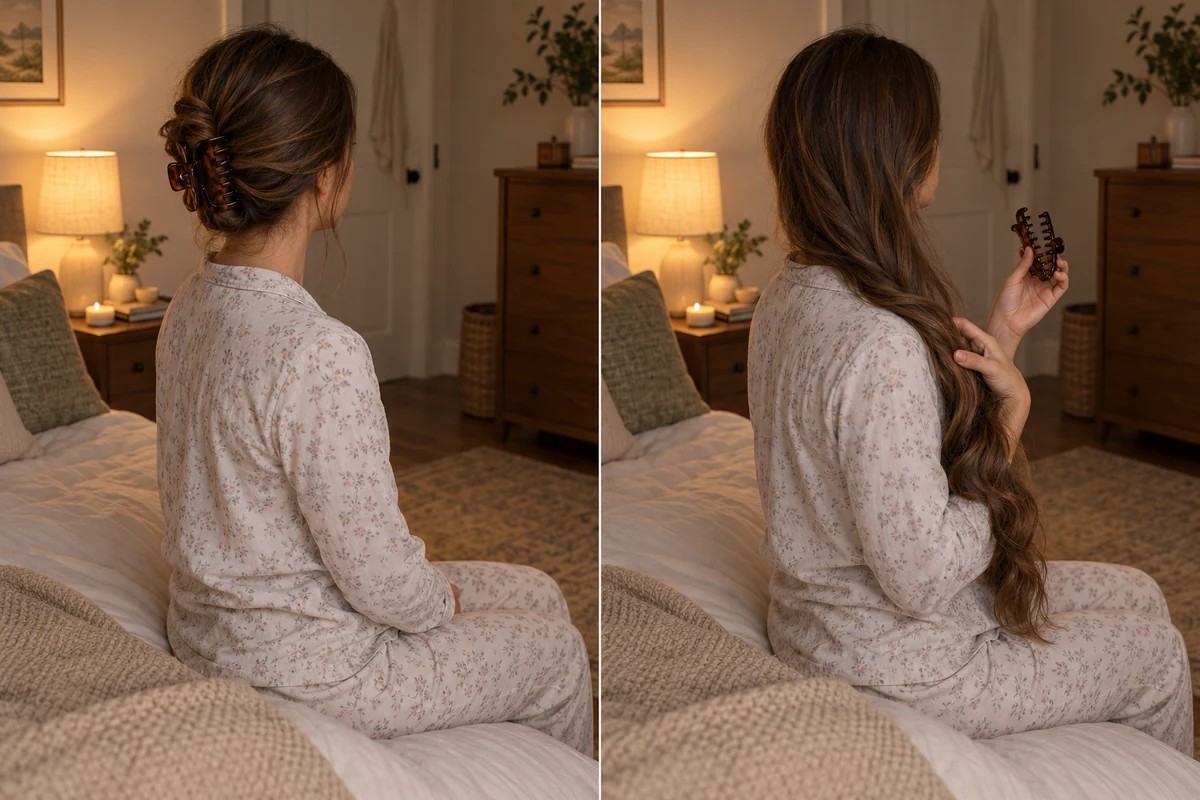
Two panels show a seated woman with a claw clip in her hair, then holding the removed clip while supporting the loose lengths over one shoulder.
Before · claw clip holding the hairAfter the change · clip removed and lengths supported
Open the claw clip fully before lifting it away. Support the loose lengths as they fall, then put the clip aside before lying down.
A satin pillowcase on a bed with a folded bonnet beside it.

Help with your hair-care routine

Bring your hair-care questions to the consultation. You can also read comparing sleep coverings and pillowcases.

  • How can I stop my hair getting trapped when I roll over?
  • What should I change if a bonnet feels tight or keeps slipping?
  • Would leave-in help the tangles I wake up with?

Tell us where your hair gets trapped, whether you prefer it loose or covered, and how it feels in the morning. The consultation can help you choose a comfortable sleep routine and conditioning products for the tangles you deal with.

The Hair Care Consultation gives you a personal plan with product recommendations, routines and guidance on your hair-care questions.

$49 with 60 days of follow-ups, or $99 with 12 months. Pay once; the year renews only if you choose.