Hair Care Guides

Your hair feels rough or coated.
Check the water before buying a filter.

Rough ends and a coated finish can make you wonder about your water, especially after a move. Check the water you wash with, keep conditioning, and try a thorough rinse before buying a filter or a stronger cleanser.

Your personal hair-care planProduct choices, routines and answers shaped around your hair.$49one-timeStart my consultation
A woman reading a water-quality report beside a tap.
Check the water before buying a filter.

What is going on

A woman holds a tap-water hardness strip beside its color chart, with a glass of water on the counter.

Check the water you actually use

Hardness describes dissolved calcium and magnesium. Ask your water supplier for local hardness information. A tap-water hardness test can help with a private supply or a home softener. Use the kit’s own timing and color chart to read the result.

A woman gently feeling a section of her loose hair with her fingers, with no visible product.

Treat hair feel as a starting point

Hair can take up minerals from water, and uptake depends partly on the hair’s condition. Dry ends, chemical treatments and product residue can also affect how hair feels. Use water information alongside your recent care history when deciding what to change.

What helps, day to day

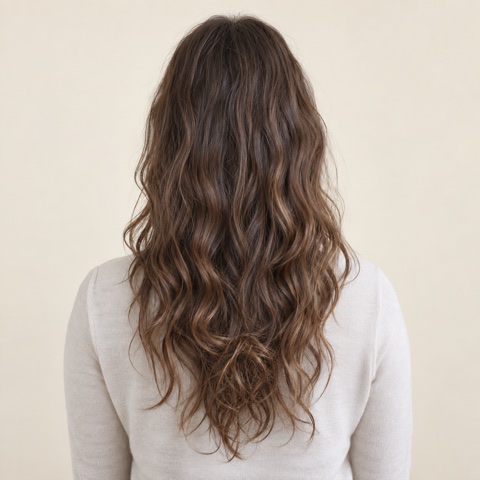
Wavy hair with tangles concentrated near the ends.

The ends keep catching

  • Keep rinse-out conditioner on the lengths that tangle.
  • Ease loose knots apart from the ends and stop pulling when a comb catches.
  • Keep the rest of your routine familiar while you try one change, so you can judge whether handling improves.
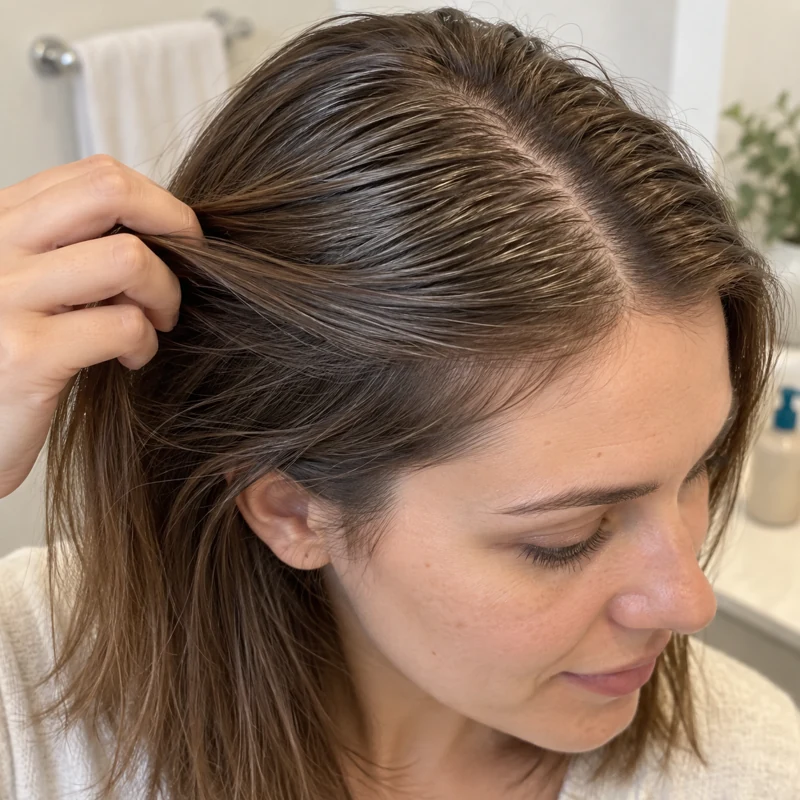
A woman lifting a section beside a part with shiny, grouped roots.

It feels coated as soon as it dries

  • Rinse underneath the crown, behind the ears and through the nape.
  • At the next wash, leave out an optional styling cream or oil while keeping conditioner that helps you detangle.
  • If the coated feel persists, compare the cleanser’s stated purpose with your product use and water information.
A woman smoothing conditioner through her mid-lengths and ends.

A stronger wash left the ends rough

  • Stop repeating the stronger wash to chase a softer feel.
  • Return to your familiar shampoo and condition the tangly lengths.
  • Before another mineral-removal treatment, check its frequency and any restrictions for your color or salon service.
A woman reads the chlorine-reduction panel on a shower-filter box beside an uninstalled filter.

Before buying a shower filter

  • Check whether the exact model reduces hardness or only chlorine.
  • A chlorine-reduction claim does not mean the water will be softened.
  • Water softeners remove hardness minerals, but involve different equipment and upkeep.
  • Ask about the measured hardness, installation and replacement costs before choosing a system.

Products, by the job they do

A woman massaging shampoo lather onto her scalp with her fingertips.

Choose the stated cleansing purpose

For minerals, look for a shampoo that explicitly names hard-water deposits. Some clarifying shampoos address these too. Check where it goes, how often to use it and any color restrictions. Use that full wash sequence instead of adding several strong cleansers together.

Browse cleansing products. The consultation uses your wash frequency and scalp concerns to recommend a shampoo.

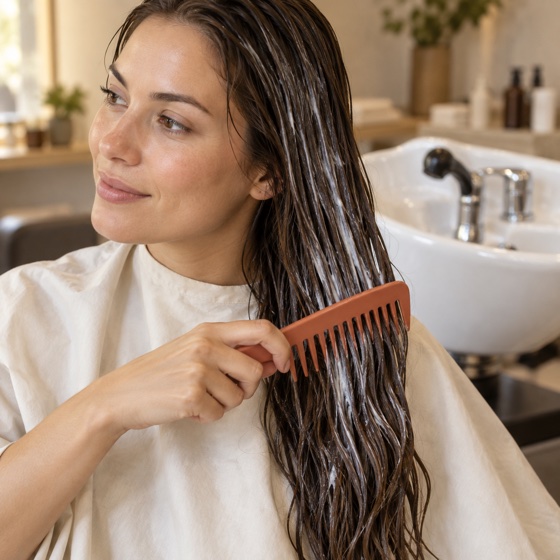
A woman detangling conditioned hair with a wide-tooth comb.

Condition for easier detangling

Work rinse-out conditioner through the lengths that catch, with enough slip to handle them gently. Allow its stated waiting time, then finish the rinse. Keep useful conditioning even when you are reducing other product layers.

Browse rinse-out conditioners. The consultation uses your hair details and treatment history to compare conditioner options.

How to do it

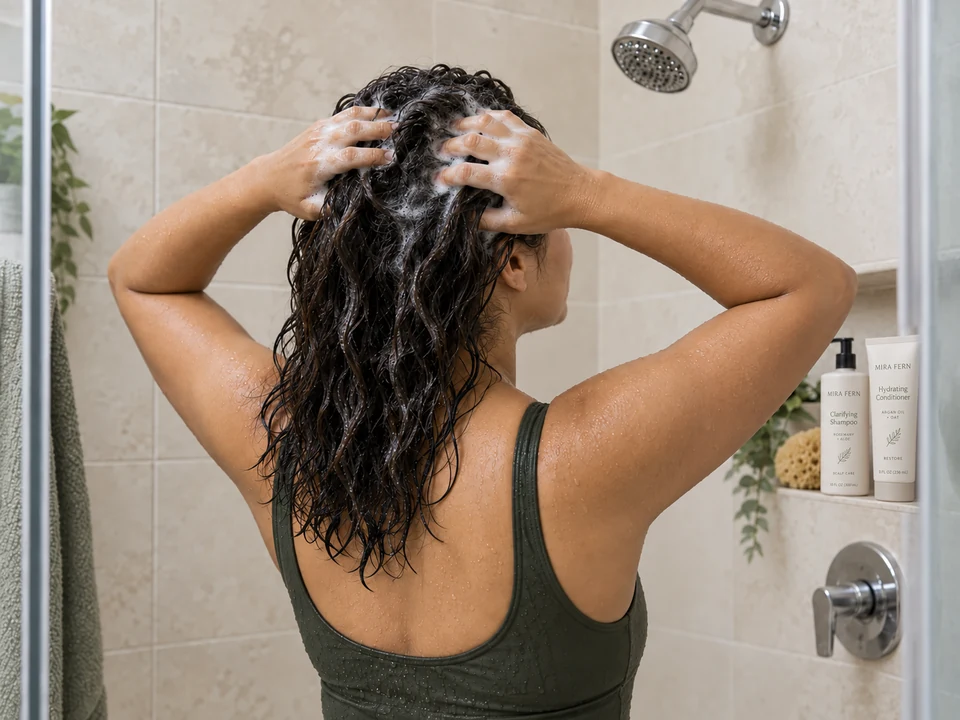
A woman uses both hands to gently work shampoo at the back and sides of her scalp, with the lengths hanging loose.

1. Wash with your selected shampoo

Wet the roots underneath the hair, then massage with your finger pads. For a specialist mineral-removal product, use its placement and full wash sequence. Keep household cleaners and improvised acid mixtures out of your hair routine.

Guide: Shampoo your scalp
One hand holds a sprayer above long wet hair while the other supports the lengths over a deep basin.

2. Rinse every scalp area

Move hair aside at the crown, nape and behind the ears. Guide water through the lengths until visible lather is gone. Softness alone is not a reason to keep washing.

Guide: Rinse shampoo and conditioner completely
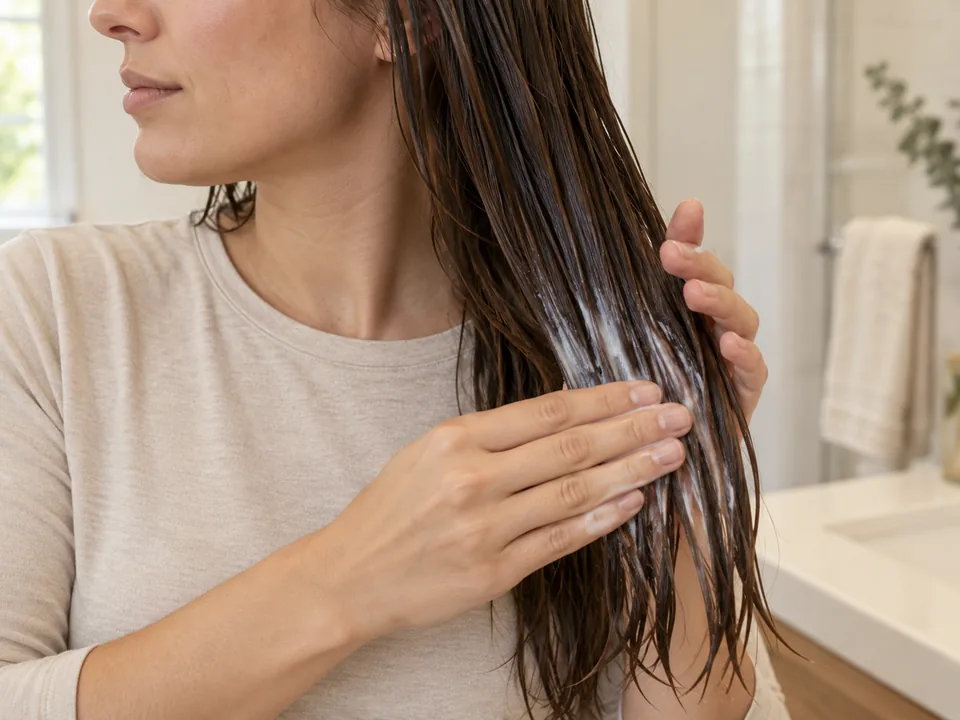
A thin coating of conditioner being smoothed over the lower lengths and ends, away from the scalp.

3. Condition the tangly lengths

Smooth conditioner through the lengths that catch and allow its waiting time. For curls, use the detangling method below while conditioner is in, then rinse. For straight hair, rinse and let it dry a little before combing.

Guide: Apply conditioner to the lengths and ends
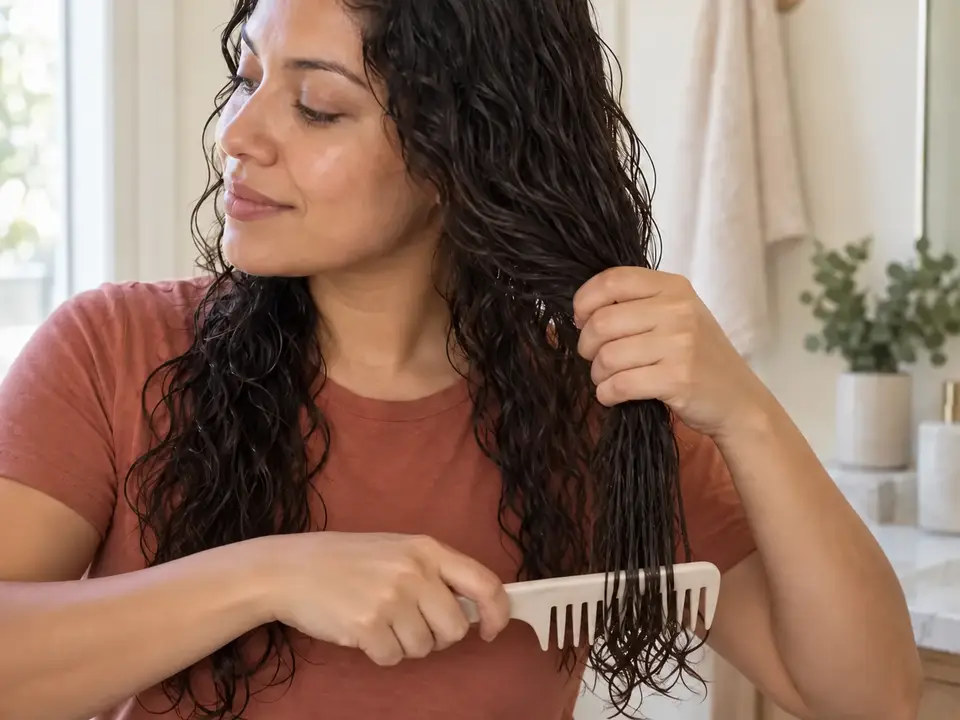
Woman supports a damp wavy-curly section while a wide-tooth comb begins at the lowest hair tips.

4. Detangle at the right point

Use this during conditioning for curls, or once straight hair has dried a little. Support above the tangle and comb down toward the tips. Start each pass higher only when the ends are clear. Stop when it catches.

Guide: Detangle with a wide-tooth comb

Illustrated care examples: before & after

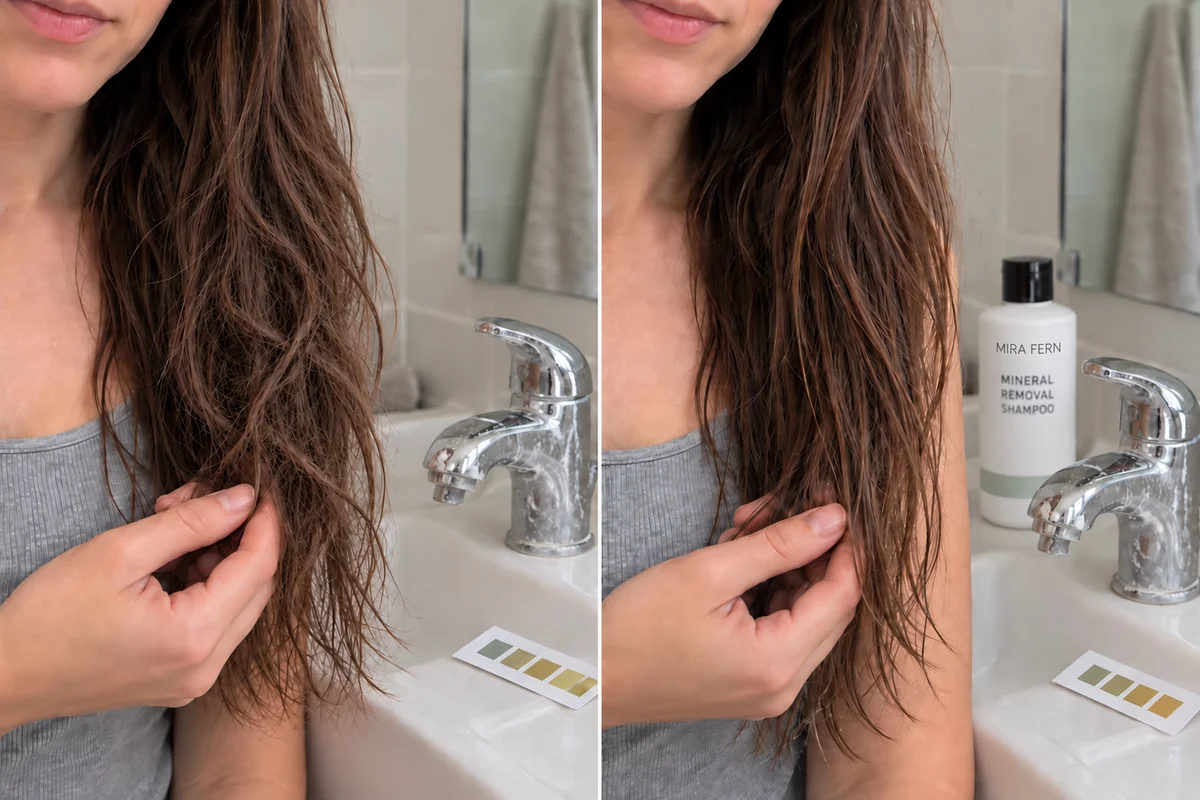
Check how the ends separate

The same woman holds tangled brown ends on the left and more separated ends on the right beside unchanged tap marks.
Before · tangled lengthsAfter care · more separated lengths
Look for lengths that separate more easily after care. Judge your own dry finish before deciding whether to repeat a mineral-removal wash.

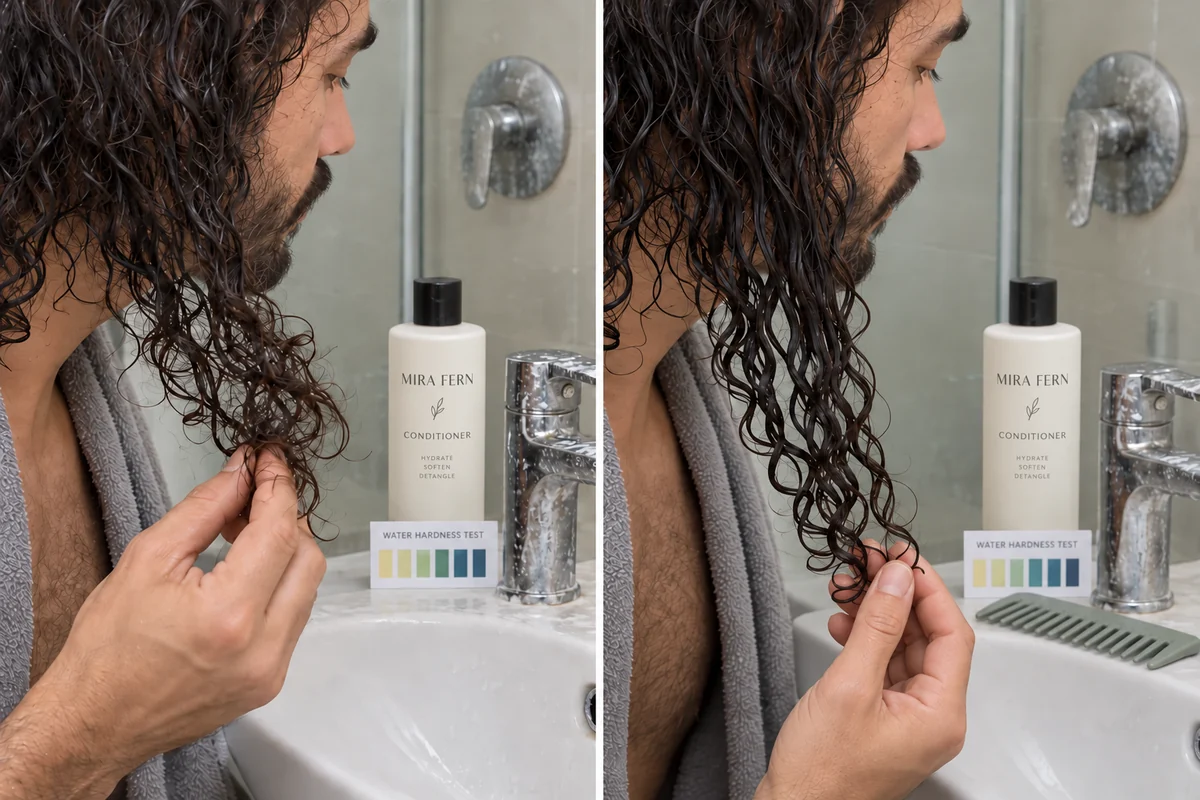
Keep conditioning in the routine

The same man holds grouped wet ends on the left and more separated curl ends on the right beside conditioner and a comb.
Before · ends caught togetherAfter care · curl ends separated
Conditioner and gentle detangling can help the ends separate. Start at the tips and stop pulling if they catch.
A woman gently squeezing damp hair with a towel.

Help with your hair-care routine

Bring your hair-care questions to the consultation. You can also read understanding product buildup.

  • What should I try before buying a shower filter?
  • Does my shampoo remove minerals, product buildup, or both?
  • How can I cleanse my treated hair without making it harder to detangle?

Bring your water information, the products you use and any recent color or salon treatment. Your consultation can help choose a cleanser and conditioning routine for your hair, while a water-treatment supplier can explain equipment and upkeep.

The Hair Care Consultation gives you a personal plan with product recommendations, routines and guidance on your hair-care questions.

$49 with 60 days of follow-ups, or $99 with 12 months. Pay once; the year renews only if you choose.