Hair Care Guides

Your hair routine is yours now.
Keep what works, then learn the rest.

Moving out means the shampoo doesn’t just appear, towels don’t wash themselves and nobody else notices the bottle running low. It’s a lot of small jobs at once. Start with what already works, fit the chores around your week, then decide what to change.

Your personal hair-care planProduct choices, routines and answers shaped around your hair.$49one-timeStart my consultation
A young adult writes beside two hair-care bottles, a moving box and a basket of folded towels.
Keep what works, then learn the rest.

What is going on

A woman with curls writing a routine note beside her hair-care products.

Write down what you were already using

Before the old bottles are out of reach, note the exact products, who picked them and the steps you want to keep. Photograph the directions. Then be honest about which ones you liked and which you used only because they were in the bathroom.

A woman writes notes beside a manual and a visibly unplugged dryer on a dry desk.

Count the time beyond the shower

Rinsing, drying, cleaning the brush and dealing with a wet towel all take time a quick wash doesn’t show. Find a slot that repeats around work, study and when you can do laundry. Then wash sooner whenever your scalp asks for it.

What helps, day to day

A man placing a clean folded towel beside a bathroom sink.

Nobody told you about the towels

  • Keep enough clean towels to get you from one laundry day to the next.
  • Hang each one somewhere it can dry, and wash it the way its label says.
  • Put towels on the same list as clothes so you’re not discovering the problem mid-wash.
A woman considering several hair-care bottles and jars on her bathroom counter.

Every bottle feels like a decision now

  • Keep anything that’s still doing a useful job while you work out what you like.
  • Replace one thing at a time and notice why the new one earned its spot.
  • A new home doesn’t mean you need a mask, an oil and a styling routine all at once.
An adult with short gray curls arranges a small group of products on a narrow bedroom shelf beside a comb.

You keep running out between shopping trips

  • When something’s getting low, put its exact name on the shopping list straight away.
  • Buy the size you can afford and have room to store.
  • Keep lids closed and store it the way the label says. The giant bottle isn’t what makes you organized.

Products, by the job they do

A woman massaging shampoo lather onto her scalp with her fingertips.

Choose your own shampoo

Start with a cleanser that suits your scalp and the products you actually use. You don’t have to copy a parent’s shampoo or how often they washed.

Browse cleansing products. Your current shampoo, wash schedule and past treatments help guide a personal recommendation.

A woman smoothing conditioner through her mid-lengths and ends.

Judge conditioner by how your hair handles

The test is how the lengths feel and comb through after washing, not what the bottle promises. Keep a rinse-out conditioner as the one reliable step before you add any extras. Tangles, color or treatments, and the finish you like all shape which one.

Browse rinse-out conditioners. The consultation uses your hair details and treatment history to compare conditioner options.

How to do it

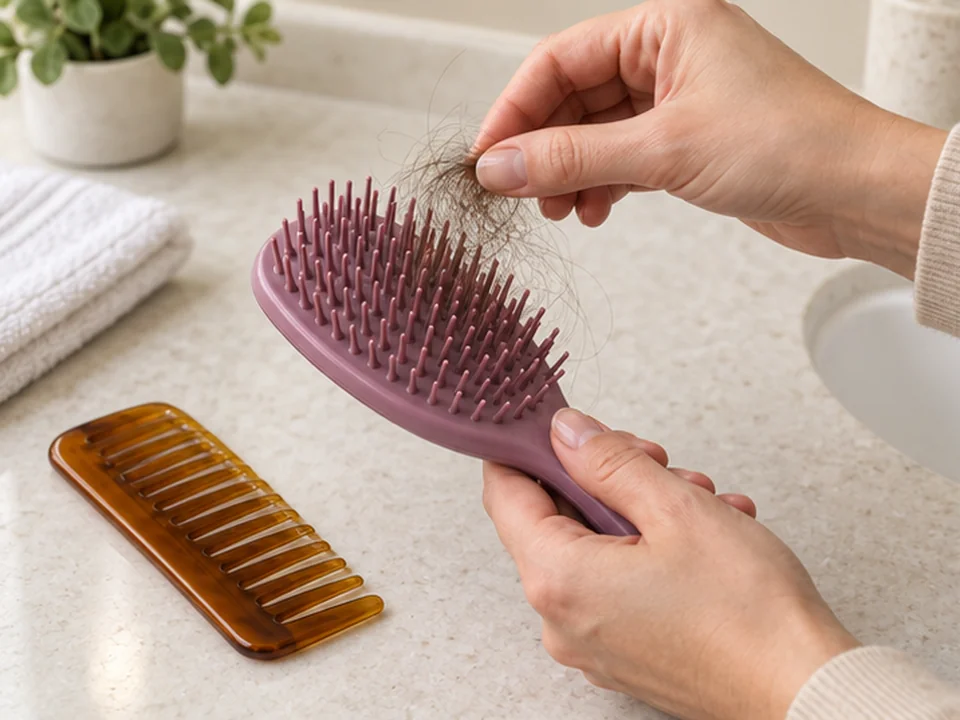
Hands lift caught hairs gently from the teeth of a detached plastic hairbrush.

1. Clean the brush as part of the week

Check how your brush or comb is meant to be cleaned. Pull out the caught hair, clean it the permitted way and let it dry fully before it goes back. A wooden or cushioned brush can need gentler care than a plastic one.

Guide: Clean your hairbrush and comb

Illustrated care examples: before & after

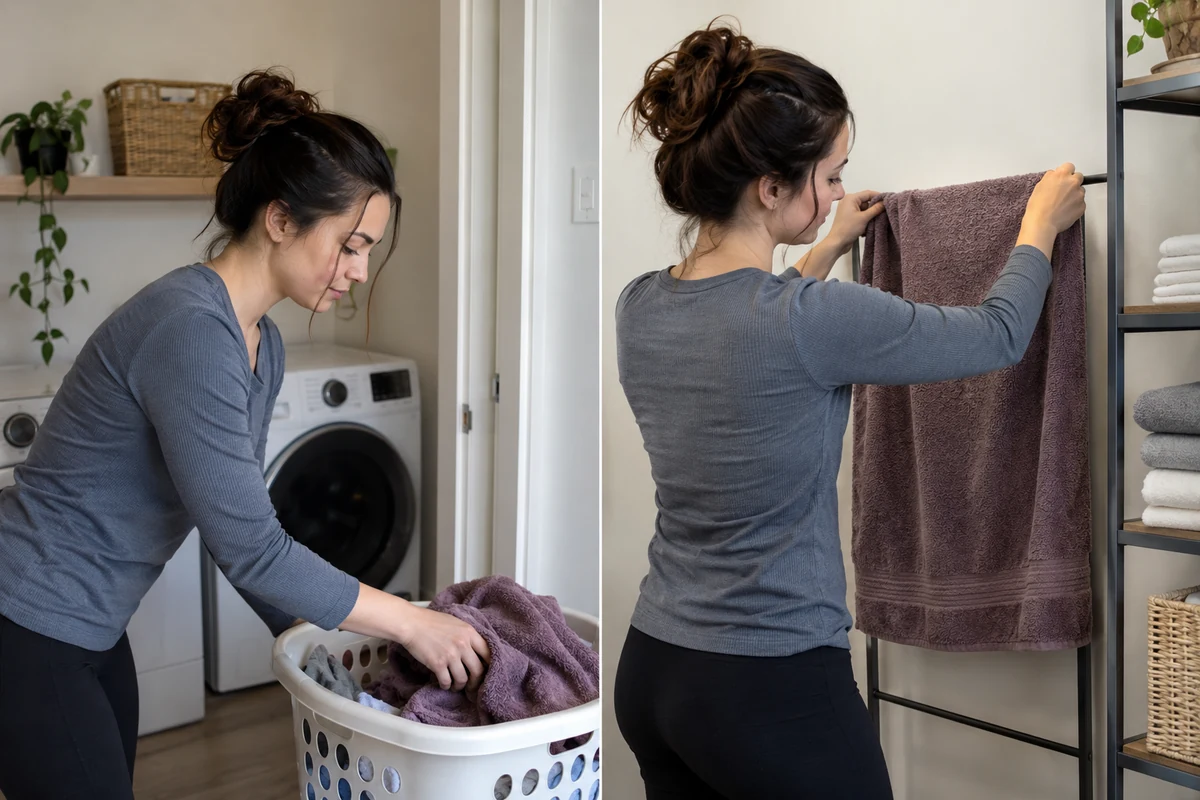
The towel gets a rail

The same adult lifts a towel from a laundry basket, then spreads it over a rail beside clean folded towels.
Before · used towel in the basketAfter the change · towel spread over a rail
The used towel moves from the basket to a rail so it can dry between uses. Washing it still follows the fabric’s own care directions.

One new thing at a time

A young adult considers several bottles, then keeps two on the table while setting the extras aside and writing a note.
Before · several swaps at onceAfter the change · one new bottle, one familiar
Swapping one product while the rest stays familiar makes it easier to tell what the new one did. These are shopping plans, not results.
A woman uses a tablet displaying product directions beside a capped hair-care bottle at a dry desk.

Help with your hair-care routine

Bring your hair-care questions to the consultation. You can also read building a simple hair-care routine.

  • Which bits of my old routine do I actually want to keep?
  • How do I stay on top of towels, drying and restocking?
  • What’s the first product worth changing?

Bring the products you inherited, what you like about the results, your budget and when you can actually use the bathroom and laundry. With those, a familiar routine can turn into one you run yourself.

The Hair Care Consultation gives you a personal plan with product recommendations, routines and guidance on your hair-care questions.

$49 with 60 days of follow-ups, or $99 with 12 months. Pay once; the year renews only if you choose.