Hair Care Guides

Sort the hair, not the hard hat.
Your employer and the maker decide the protective setup.

Thick or long hair under a hard hat all shift is uncomfortable, and a bun that won’t fit under the shell is a real problem. Take it to your supervisor before the task. Plan an allowed style and leave the hat as it was made.

Your personal hair-care planProduct choices, routines and answers shaped around your hair.$49one-timeStart my consultation
A worker reads instructions with an industrial hard hat on a training-office table.
Your employer and the maker decide the protective setup.

What is going on

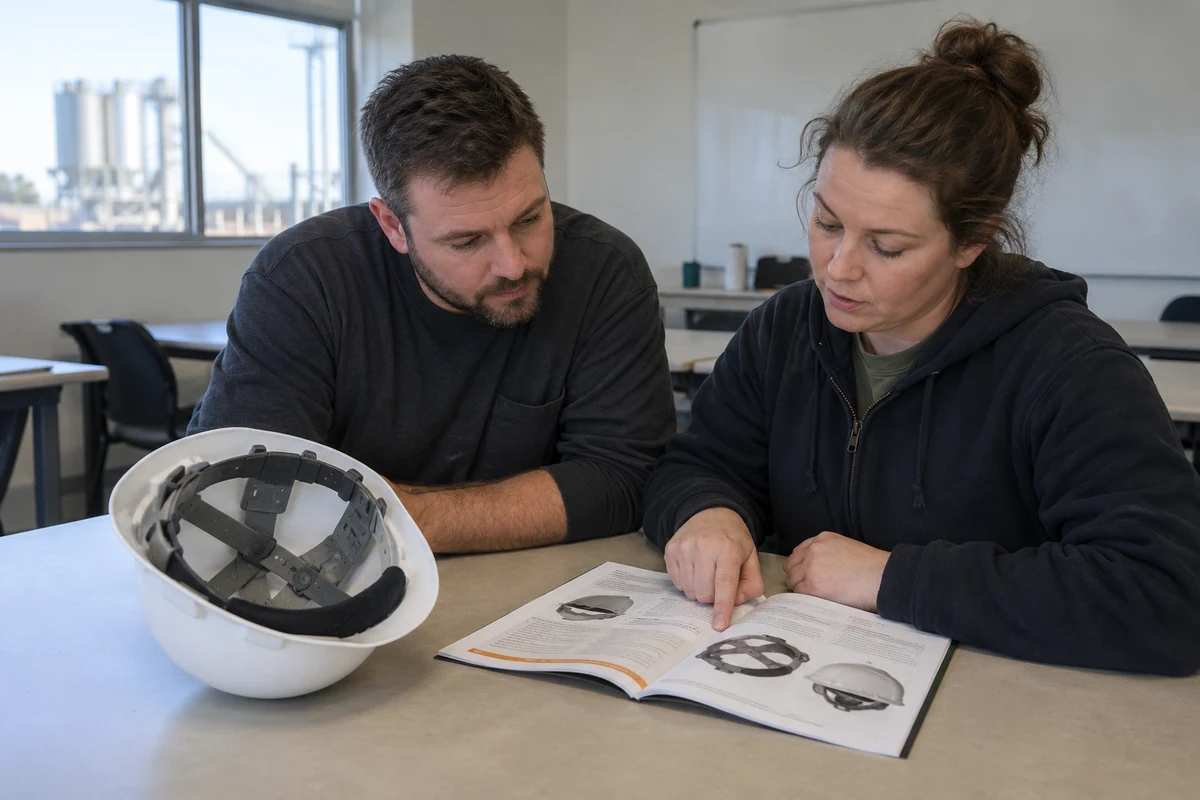
A worker and supervisor review a booklet beside an intact hard hat and its visible suspension.

Know your exact model and what the site requires

Read the hard hat’s instructions and ask your employer which accessories, fittings and checks are approved. Models differ. Don’t cut padding, change the suspension, add a homemade liner or tuck anything between the shell and the suspension to make room for hair.

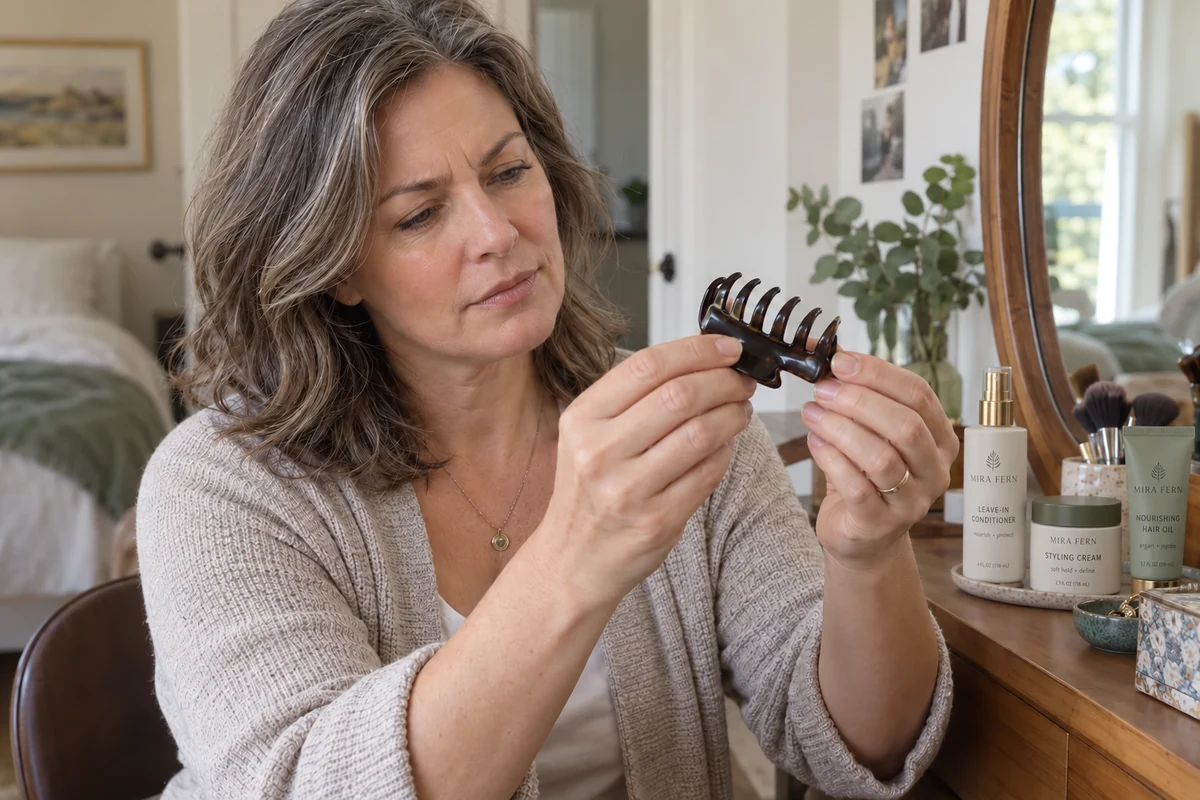
A woman examines a claw clip away from her hair, holding its solid body.

Sort out anything that gets in the way before the shift

A hard clip or a bulky knot can stop the hat sitting right. Take the accessory out in a safe area and ask about a style that’s allowed instead. Loosening the hat to fit a hairstyle is never the fix.

What helps, day to day

A worker discusses a hair-fit concern with a supervisor while the hard hat stays on the desk.

A new hairstyle changes how the hat fits

  • Get the fit checked again with the hairstyle you’ll actually wear and the real equipment.
  • If no approved setup is comfortable, talk to your supervisor before you go into the work area.
  • A photo or a braid tutorial can’t sign off head protection.
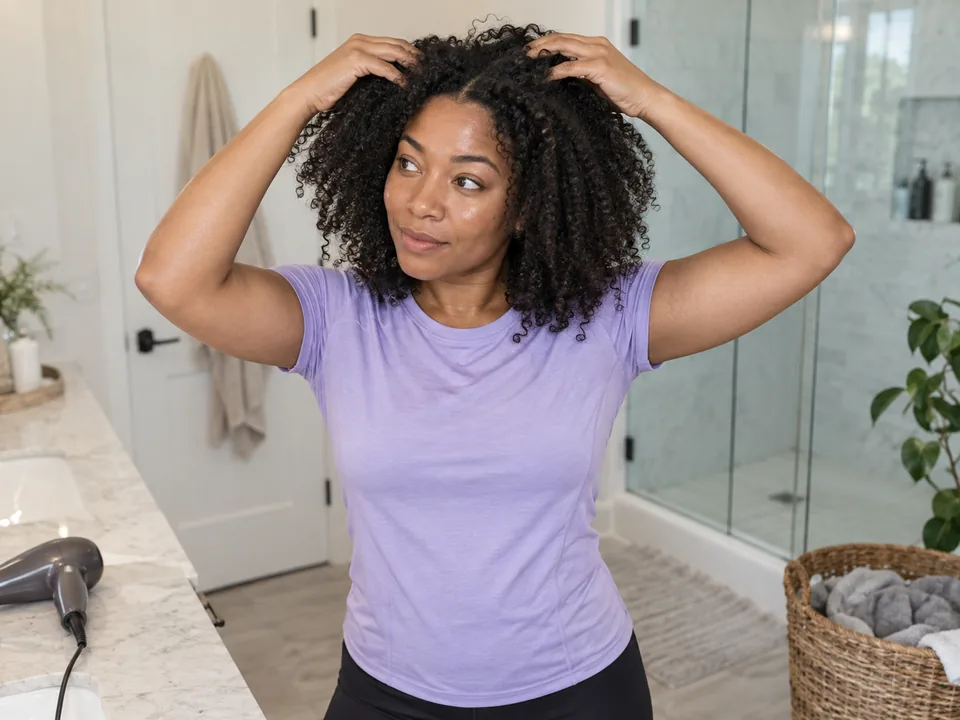
A woman checks the roots of her loose curls with her fingertips; the dryer rests on the counter.

Sweat builds up under the hat

  • At a proper break or after work, follow the site’s rules for taking the hat off before you touch your hair.
  • Let the style down and wash when your scalp actually needs it.
  • If hazardous material might be involved, the workplace’s exposure and decontamination process comes first, not shampoo.
A woman uses a tablet displaying product directions beside a capped hair-care bottle at a dry desk.

The sweatband or liner is getting grubby

  • Follow the maker’s instructions for inspecting, cleaning and replacing that exact part.
  • Use only replacement parts and accessories the maker allows.
  • Hair products, a bit of cloth or makeshift padding are not an approved fix.

Products, by the job they do

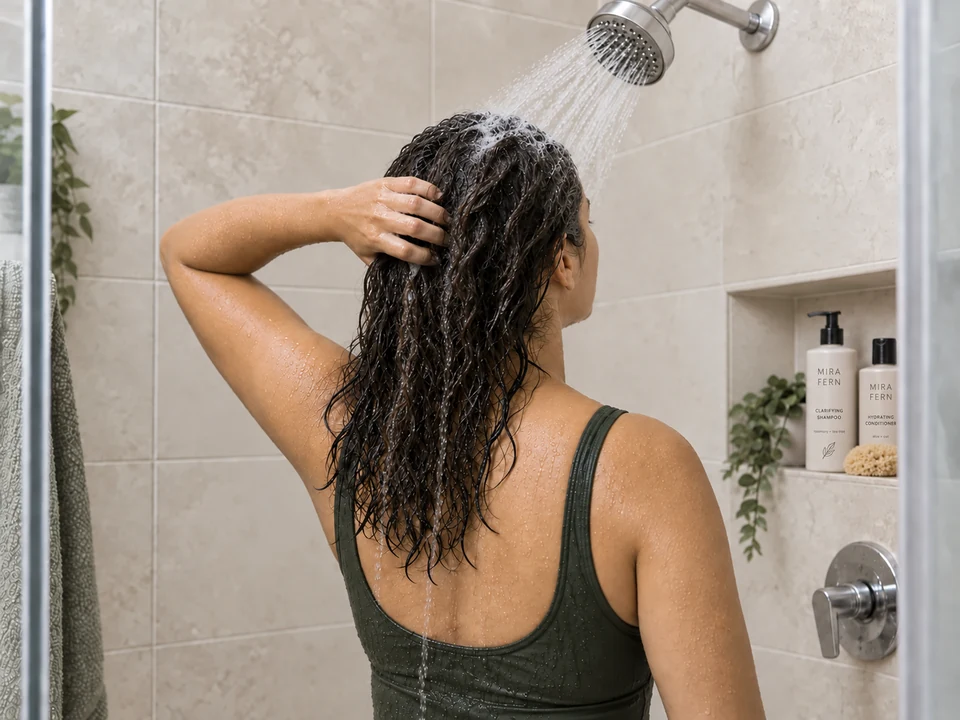
A woman lifts her own wet hair at the back while water from a fixed showerhead reaches her crown.

An everyday wash for everyday sweat

After a normal shift, sweat, oil and styling residue come off with a familiar shampoo at a proper facility. Contaminants are your employer’s procedure.

Browse cleansing products. The consultation uses your wash frequency and scalp concerns to recommend a shampoo.

A woman smoothing conditioner through her mid-lengths and ends.

Conditioner that makes taking the style down easier

Your length, pattern and any treatments decide where conditioner goes so the style comes down without a fight. Keep the routine in step with the style that’s approved. Stronger hold or more conditioner has nothing to do with how the hat fits.

Browse rinse-out conditioners. The consultation uses your hair details and treatment history to compare conditioner options.

How to do it

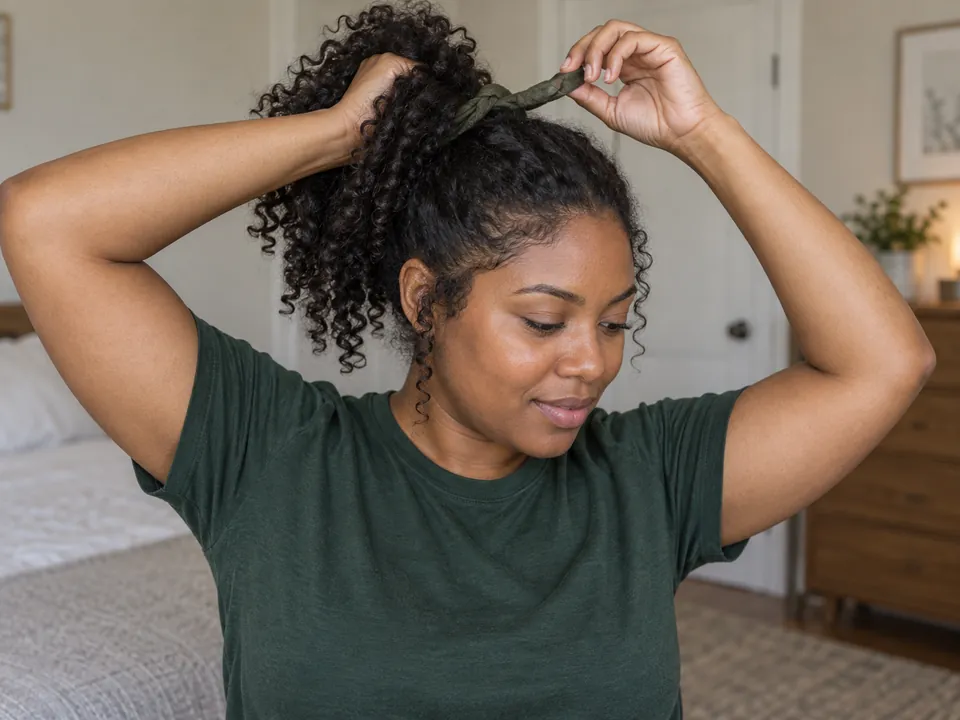
Supporting the ponytail while loosening its fabric tie.

1. Check the style for pulling before the hat goes on

Loosen anything tugging at the hairline or the anchor point before the full equipment fitting. The two checks are separate. Comfortable hair tells you nothing about whether the hat is protecting you.

Guide: Loosen a hairstyle that pulls
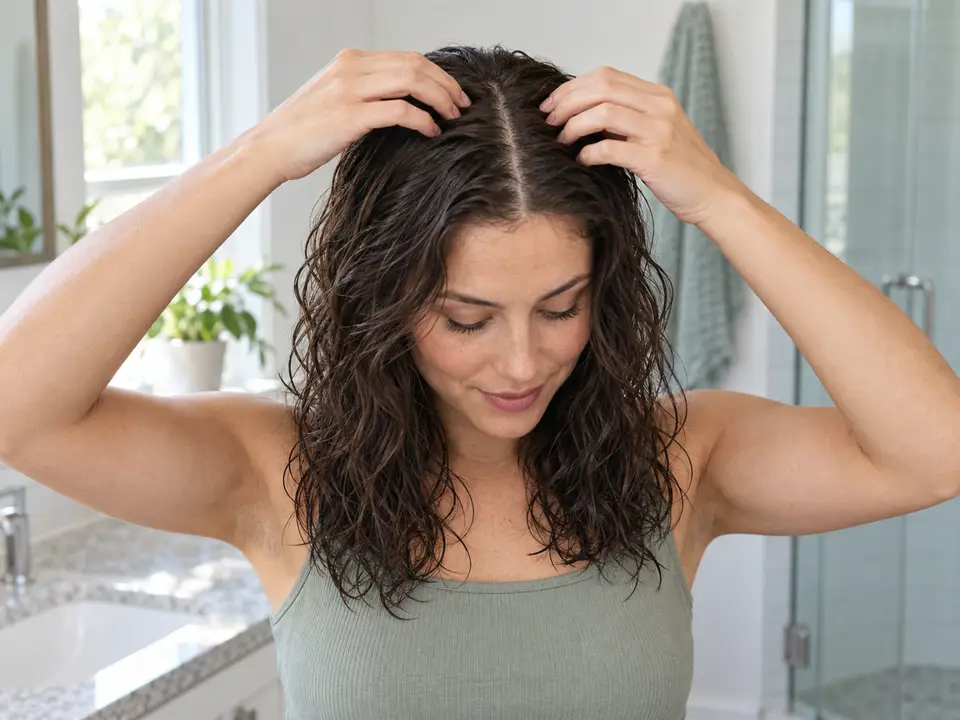
A woman places her fingertips on either side of the part in her damp hair, with the lengths hanging loose.

2. Give it time to dry after washing

Blot gently and let your hair dry somewhere off duty, with enough time before the hat goes back on. The hard hat has its own cleaning and drying instructions for its approved parts.

Guide: Air-dry your hair

Illustrated care examples: before & after

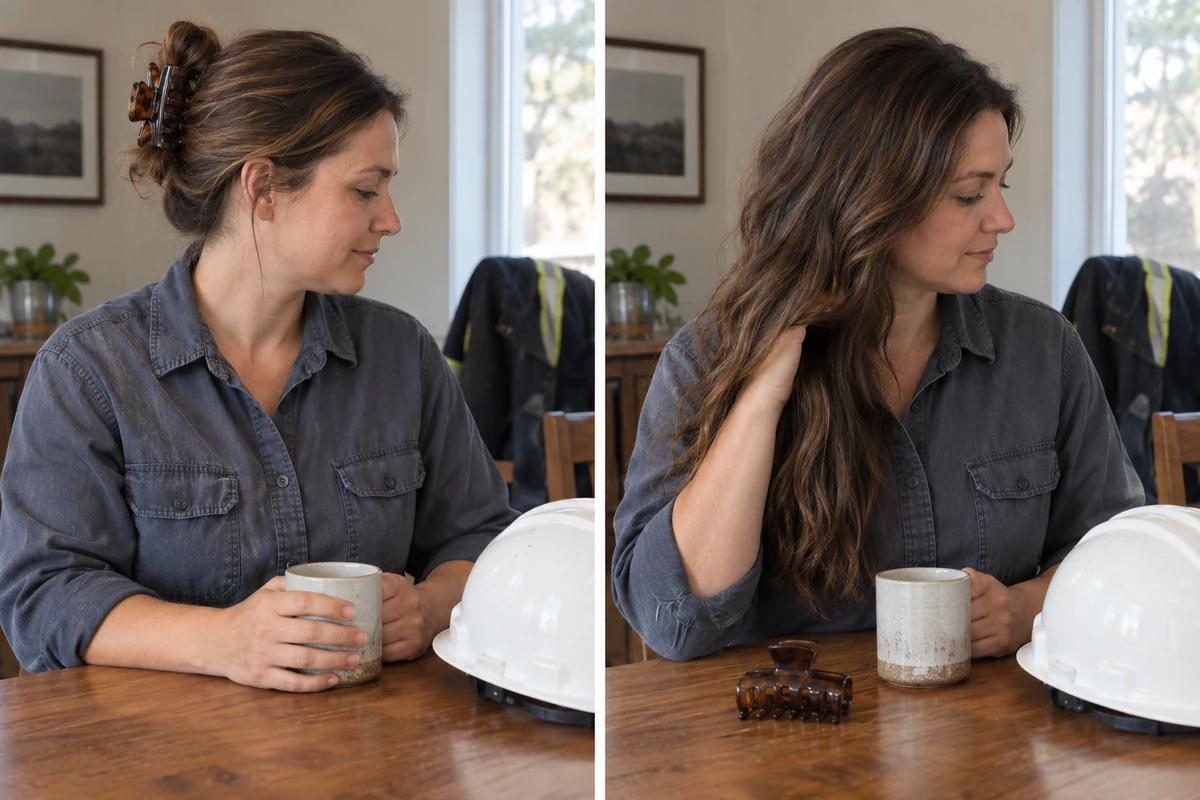
Clip out before the fit talk

The same worker removes a claw clip while the hard hat remains off the head and unchanged.
Before · bulky clip in the hairAfter care · clip out, lengths supported
The bulky clip comes out and the lengths are held before any talk of fit. Approved hairstyles, accessories and the fitting itself stay with employer and maker.

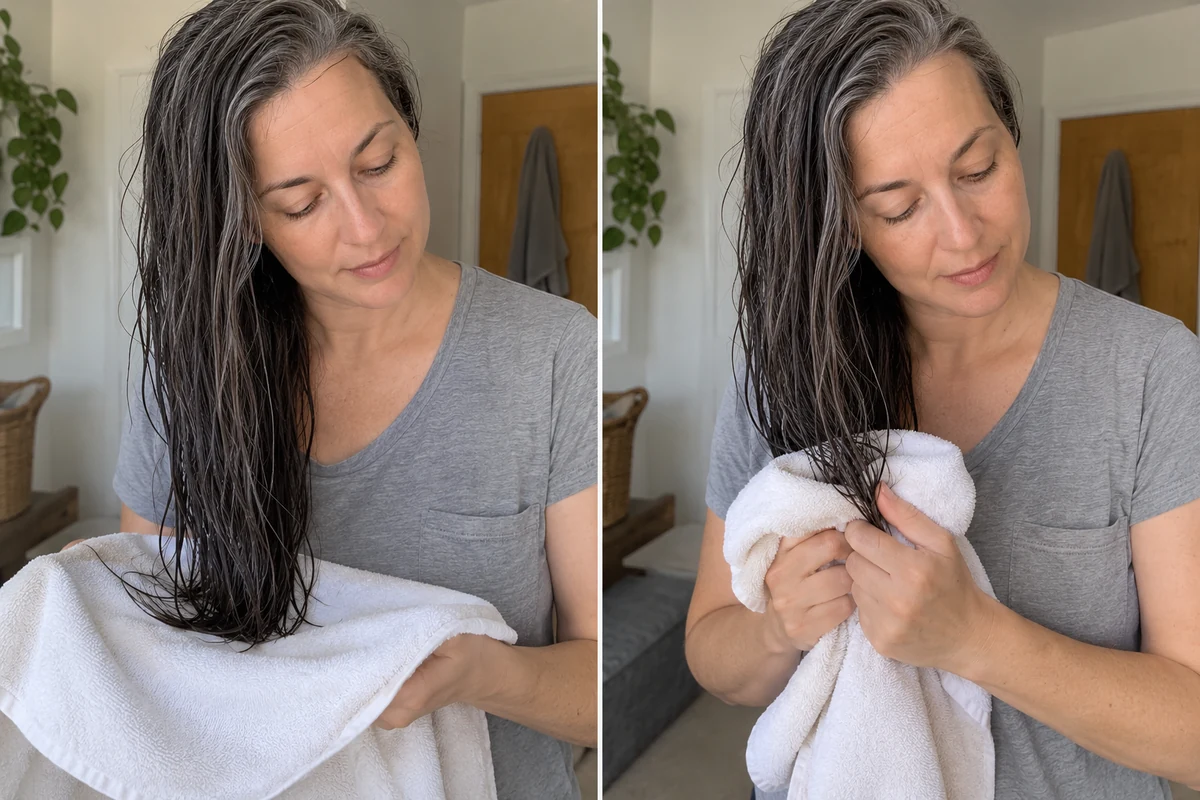
Blotting after an ordinary wash

An adult holds a towel beneath damp ends, then gently presses the towel around them.
Before · towel under the endsAfter care · ends pressed gently in it
This is ordinary after-wash handling, the ends pressed gently into a towel. Anything picked up on site is a separate matter altogether.
A woman with curls writing a routine note beside her hair-care products.

Help with your hair-care routine

Bring your hair-care questions to the consultation. You can also read planning everyday care around an authoritative grooming policy.

  • Which instructions and site rules apply to the hat I actually wear?
  • Who can check an alternative style if my hair gets in the way?
  • Is this an ordinary after-work wash or an exposure procedure?

Share the hard hat model, the accessories that are approved, your shifts, your hair length and where the hat catches or presses. Ordinary care can then be planned around the approved setup. Your employer and the maker decide what counts as protection.

The Hair Care Consultation gives you a personal plan with product recommendations, routines and guidance on your hair-care questions.

$49 with 60 days of follow-ups, or $99 with 12 months. Pay once; the year renews only if you choose.