Hair Care Guides

Winter gives your hair two problems.
Static, and rubbing. Here’s what to do about each.

Dry, heated rooms make hair cling and crackle, and every hat, scarf and coat collar rubs the same lengths all day. Both are fixable. One needs the right products and a little moisture in the air. The other needs smoother fabrics and a few habits.

Your personal hair-care planProduct choices, routines and answers shaped around your hair.$49one-timeStart my consultation
A woman gently lifts a section of her attached brown hair clear of a winter scarf at her entryway.

Two different problems

An adult holds a removed knit hat and looks at a few lifted strands of loose hair.

Static: dry air plus friction

Heated rooms pull moisture out of the air and out of your hair. Dry hair picks up a charge every time a knit hat or plastic brush drags across it, and the strands push apart and float. It shows the moment the hat comes off.

A woman with long gray-streaked waves holds the lengths forward, clear of the open front of her winter coat.

Rubbing: the same lengths worn down all day

A scarf, a collar and a coat lining rub one section of hair for hours. Over a winter that roughens the surface, frays the ends and knots the nape. The fix is changing what the hair rubs against, and how you take the layers off.

What actually helps

Lowering a soft beanie gently over dry hair.

Static when the hat comes off

  • Before the hat goes on, smooth a thin film of leave-in or a drop of serum through the mids and ends. Charge builds on dry hair, and conditioned hair holds much less of it.
  • Putting it on matters too. Smooth the hair the way you want it to lie and lower a lined hat straight down over it, rather than pulling it on from the back.
  • Lift the hat straight up and off rather than dragging it back. Give the hair a moment to settle before you touch it.
  • Arrange with your fingers or a wide-tooth comb. A plastic brush is the quickest way to make static worse.
  • Run a humidifier in the room you spend the most time in. A little moisture in the air takes the edge off static for everyone in it.
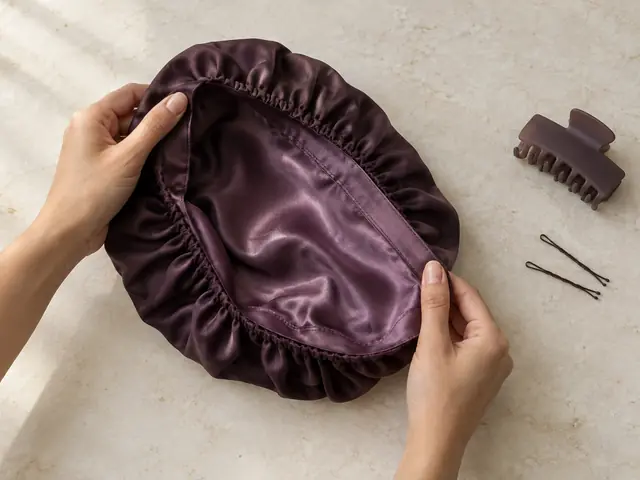
Two hands hold open a bonnet to show its lining and seams, with a hair clip and two pins set beside it.

Hats and scarves: the material matters

  • Wool, acrylic and fleece knits rub hardest and build the most charge. Satin, silk and smooth, tightly woven cotton rub far less.
  • A beanie or hood with a satin or silk lining, or a satin liner worn under a knit hat, removes most of the friction at the crown.
  • Choose a scarf with a smooth side and wear that side against your hair, knit side out.
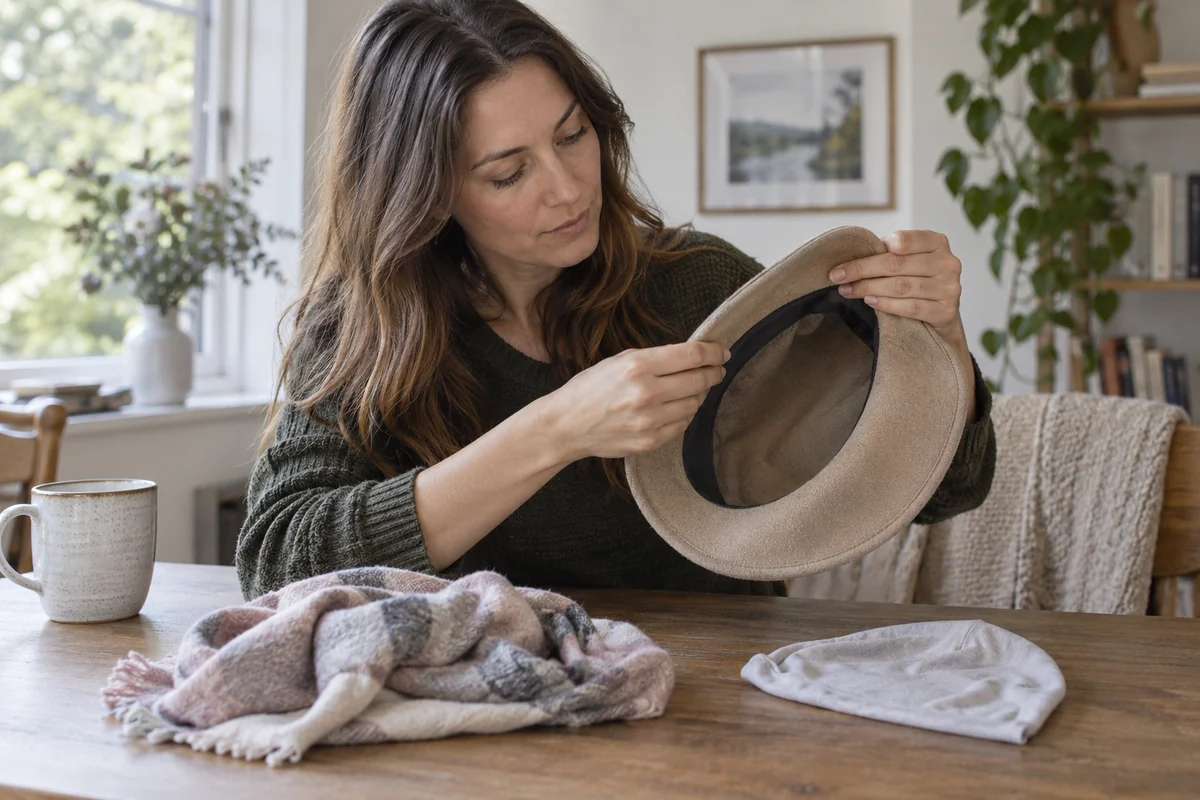
An adult checks the inside edge of a soft everyday hat beside a scarf and liner.

How to wear the layers

  • Scarf first, then coat. Let the lengths rest on top of the scarf rather than trapped between the scarf and your neck.
  • Long hair goes either fully inside the coat, lying flat before you zip, or fully outside over the collar. Half in and half out is what knots the nape.
  • A hood rubs the whole back of the head every time you turn. A close-fitting lined hat is kinder on an ordinary cold day; save the hood for rain.
  • A loose low braid or a soft low ponytail keeps the lengths from sweeping across the collar all day.
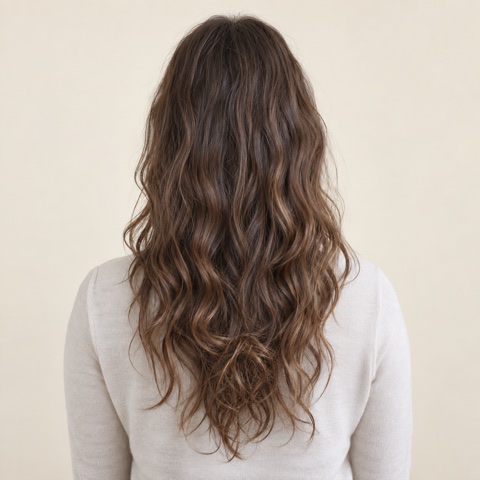
Wavy hair with tangles concentrated near the ends.

Rough ends and a knotted nape

  • This is rubbing damage. The surface of the hair roughens, the ends fray, and strands catch on each other at the collar.
  • Finish the ends with a little serum or oil before you dress. A smooth, lightly coated end slides over fabric instead of catching on it.
  • Take the coat off before the scarf, lifting the hair clear of each as you go. Detangle the nape gently in the evening rather than in the morning rush.
  • A trim takes off ends that have already frayed. Conditioner makes the rest easier to handle.

Products that help

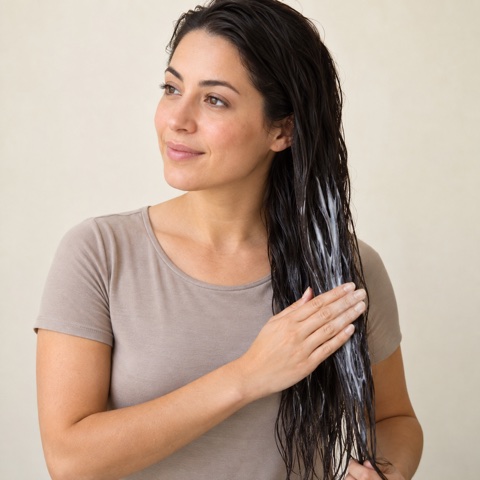
A woman smoothing conditioner through her mid-lengths and ends.

Conditioner on the lengths, every wash

Dry hair holds static and catches on fabric. A conditioner with good slip, worked through the mids and ends and rinsed well, leaves the surface smoother for everything that rubs against it.

Browse rinse-out conditioners. Tell the consultation what you want from a conditioner and what you disliked about previous ones.

A woman smoothing leave-in product through her lower lengths.

A leave-in or anti-static spray before you dress

A thin layer of leave-in on the lengths adds a little weight and moisture, which is exactly what static hates. Light sprays made for flyaways do the same job in seconds. Keep it off the roots and stop before the hair looks wet.

Browse leave-in conditioners. Your drying routine and preferred finish help guide a leave-in recommendation.

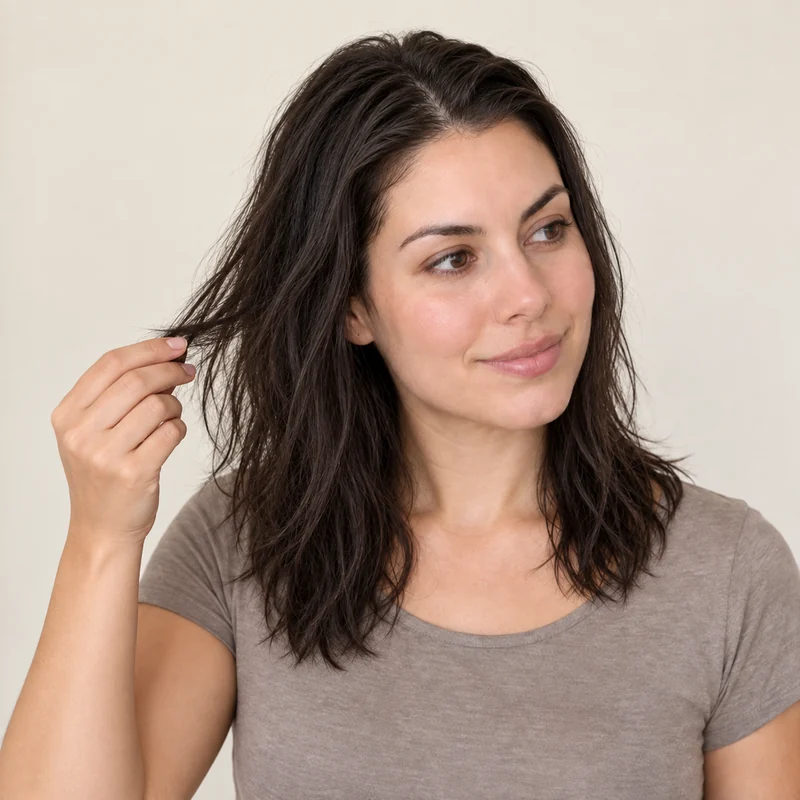
A woman gently feeling a section of her loose hair with her fingers, with no visible product.

A serum or oil for the ends

A drop of serum or hair oil warmed between your palms and smoothed over the last few inches coats the part that rubs most. It won’t mend a split end, but it stops the next one catching.

Browse finishing serums and oils.

How to do it

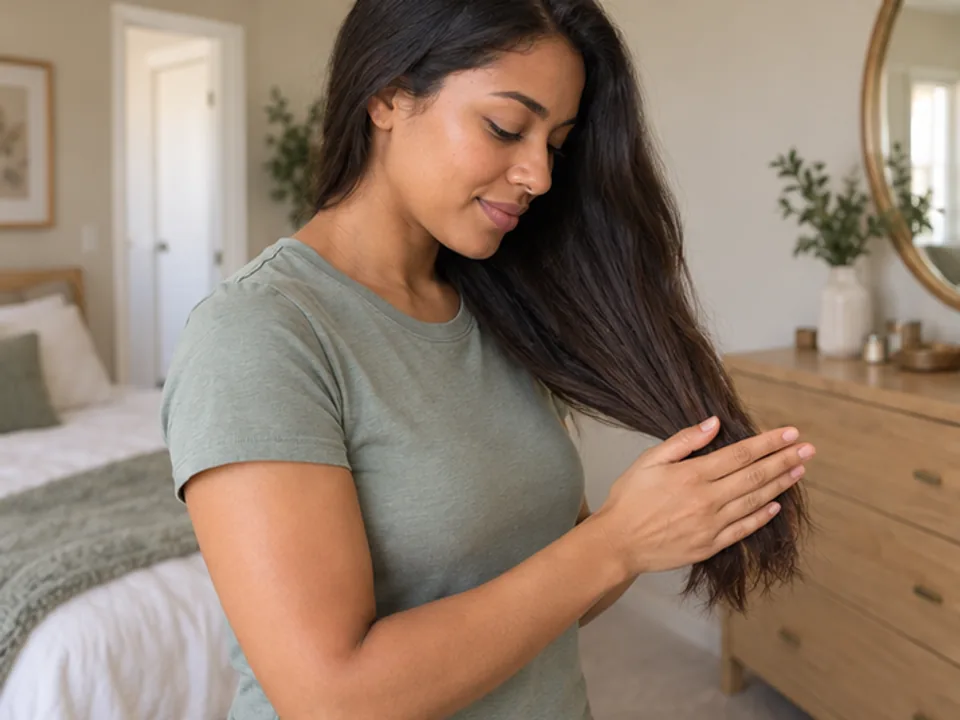
A woman brings her own dry hair forward and smooths the ends between relaxed hands.

1. Finish the ends before you dress

Warm a drop of serum or oil between your palms and smooth it over the last few inches only. Do it before the scarf and coat go on, so the ends that rub are the ends that are coated.

Guide: Apply finishing serum or oil to ends
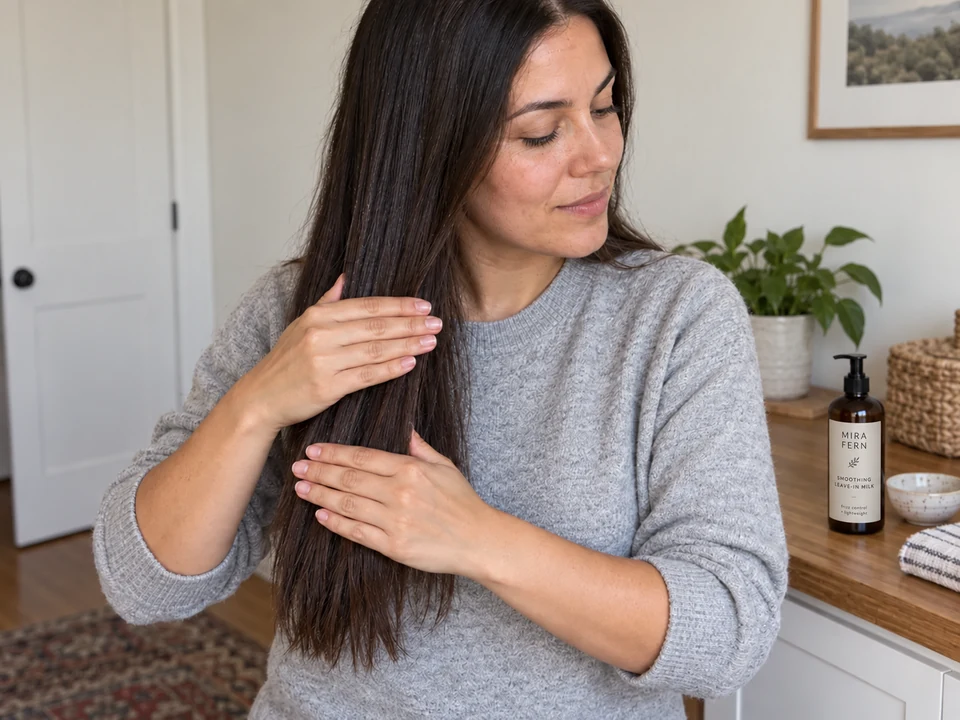
Gliding a thin leave-in film over dry mids and ends with palms.

2. Reset static when you come indoors

Set down the hat or scarf that set it off, then smooth a thin film of leave-in through the mids and ends with your palms. Lower your hands and wait. More brushing is more friction.

Guide: Reduce static in dry weather
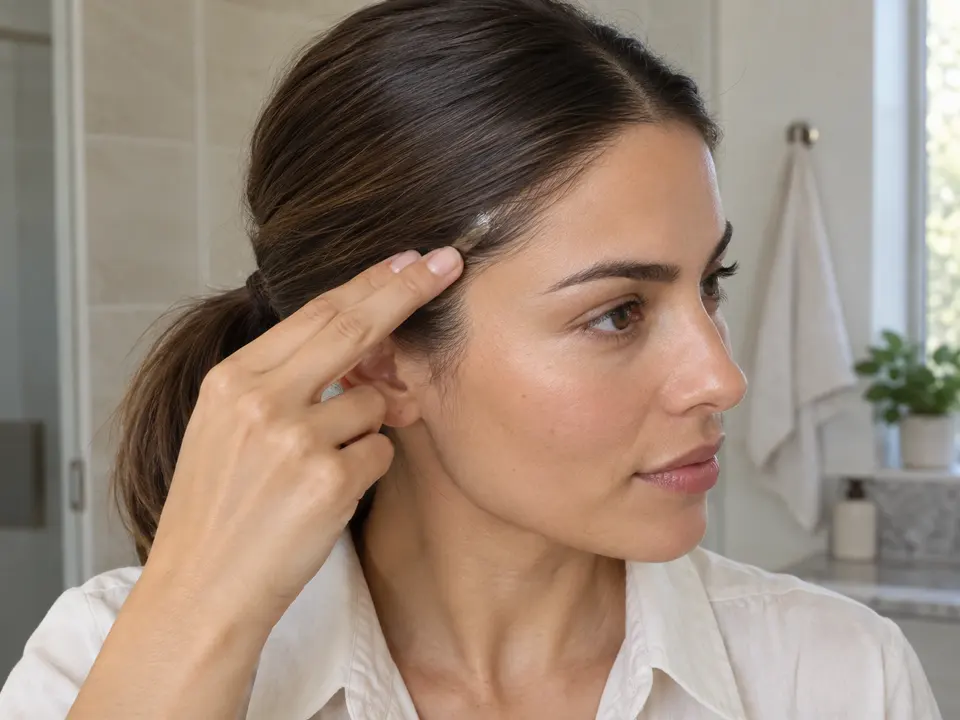
A woman uses two fingertips to guide one small hairline flyaway toward her low ponytail.

3. Tidy the few that still float

Put a tiny amount of finishing product on two fingertips and guide only the strands that are standing up back into the style. Then stop. Smoothing the whole head just coats it.

Guide: Smooth flyaways with a finishing product

Illustrated care examples: before & after

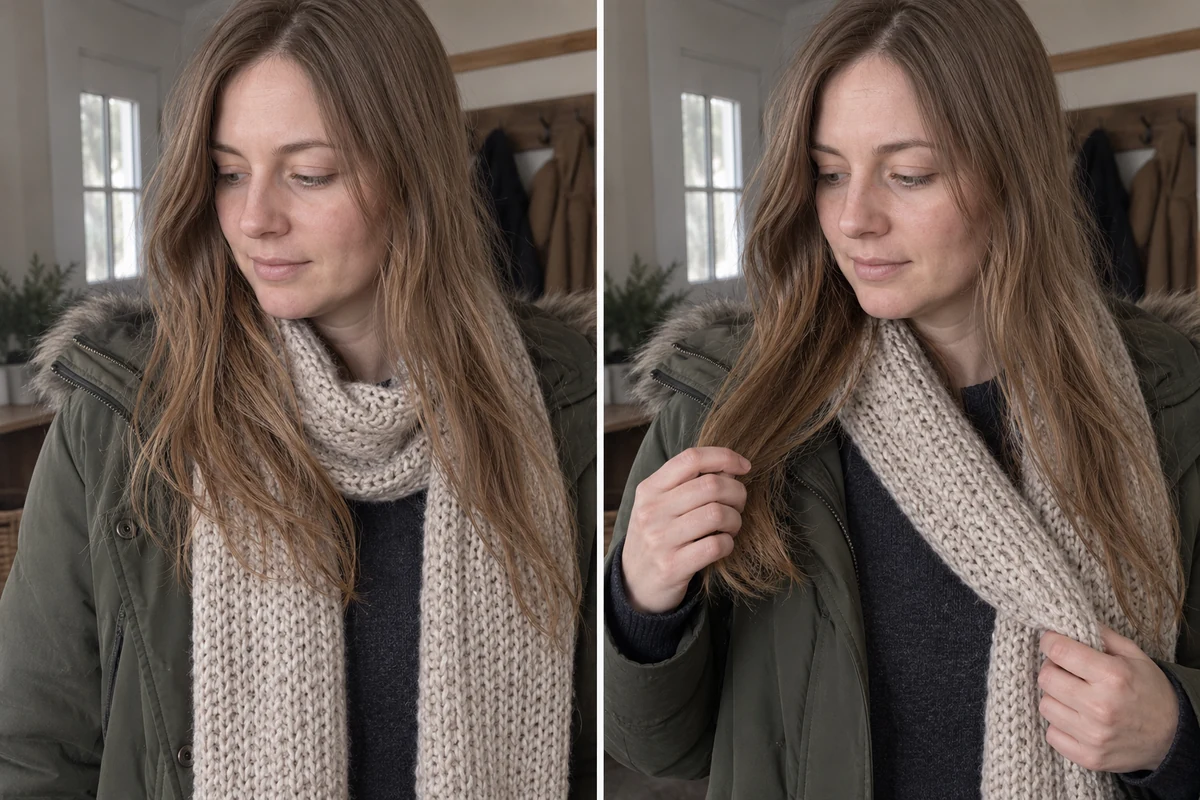
Lengths off the scarf

The same adult first has long hair across a knit scarf, then supports the hair clear while moving the scarf aside.
Before · lengths across the scarfAfter care · lengths held clear
The lengths are lifted clear before the scarf comes off, so the hair never drags across the knit. A little static can still show, which is what the leave-in is for.

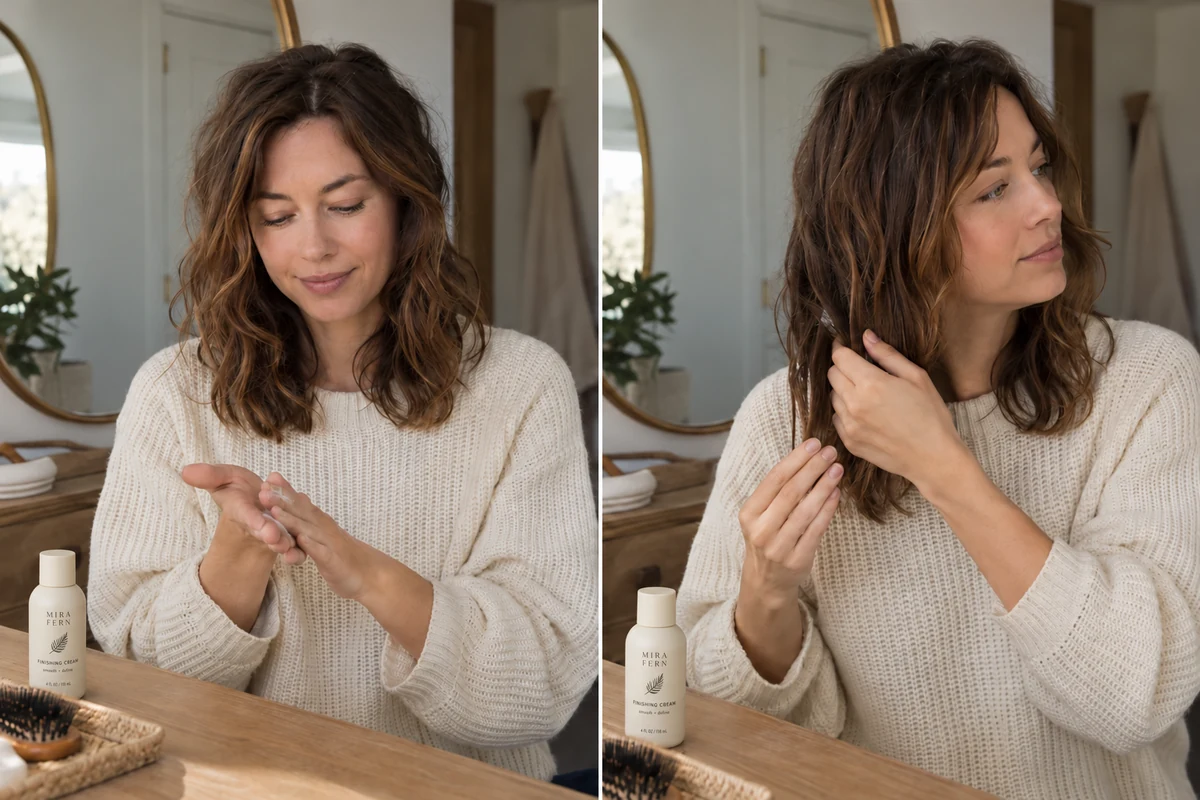
A little, just on the ends

The same adult spreads a little finishing product between fingertips, then guides a small section of lower lengths.
Before · a little on the fingertipsAfter care · one lower section smoothed
A small amount from the fingertips goes onto one dry lower section and nowhere else. Follow the product’s directions and go easy on the brushing.
A woman with curls writing a routine note beside her hair-care products.

Help with your hair-care routine

Bring your hair-care questions to the consultation. You can also read caring for persistently dry-feeling lengths.

  • Is it the hat, the scarf or the brush that sets off the static?
  • What should I put on my ends so they stop catching on my coat?
  • Would a lined hat or a different scarf make a real difference for my hair?

Tell us how your hair behaves in winter, what it rubs against, what you already use and how it feels when dry. The plan picks the conditioning and the finish for your texture, and the habits worth changing first.

The Hair Care Consultation gives you a personal plan with product recommendations, routines and guidance on your hair-care questions.

$49 with 60 days of follow-ups, or $99 with 12 months. Pay once; the year renews only if you choose.