Hair Care Guides

Plan every change coming off, not just going on.
Know who handles each piece.

Three wigs, two hats and a dozen pins over the same head, show after show, is hard on hair and on nerves. Work out the whole sequence with the production team, taking off included. Rehearse the handoffs, and keep your own care in the schedule.

Your personal hair-care planProduct choices, routines and answers shaped around your hair.$49one-timeStart my consultation
An adult performer and hair-department colleague review a change sequence beside wigs and headpieces.
Know who handles each piece.

What is going on

A performer and colleague compare a notebook with a detached headpiece on the dressing table.

Map the changes with the team

List every headpiece, attachment, mic contact and costume neckline in show order. Agree who takes what off and where it goes. Ask for a hair base and fasteners that suit your texture. What works for the performer next to you may not work for you.

A dancer and teacher discuss a notebook and a headpiece at a studio table.

Rehearse taking it off, not just putting it on

Run the agreed sequence with the real costume and the person who’ll be helping before opening night. Notice anything that catches, presses or needs more time. Take it to the team. Pulling harder is not a solution to a change that doesn’t work.

What helps, day to day

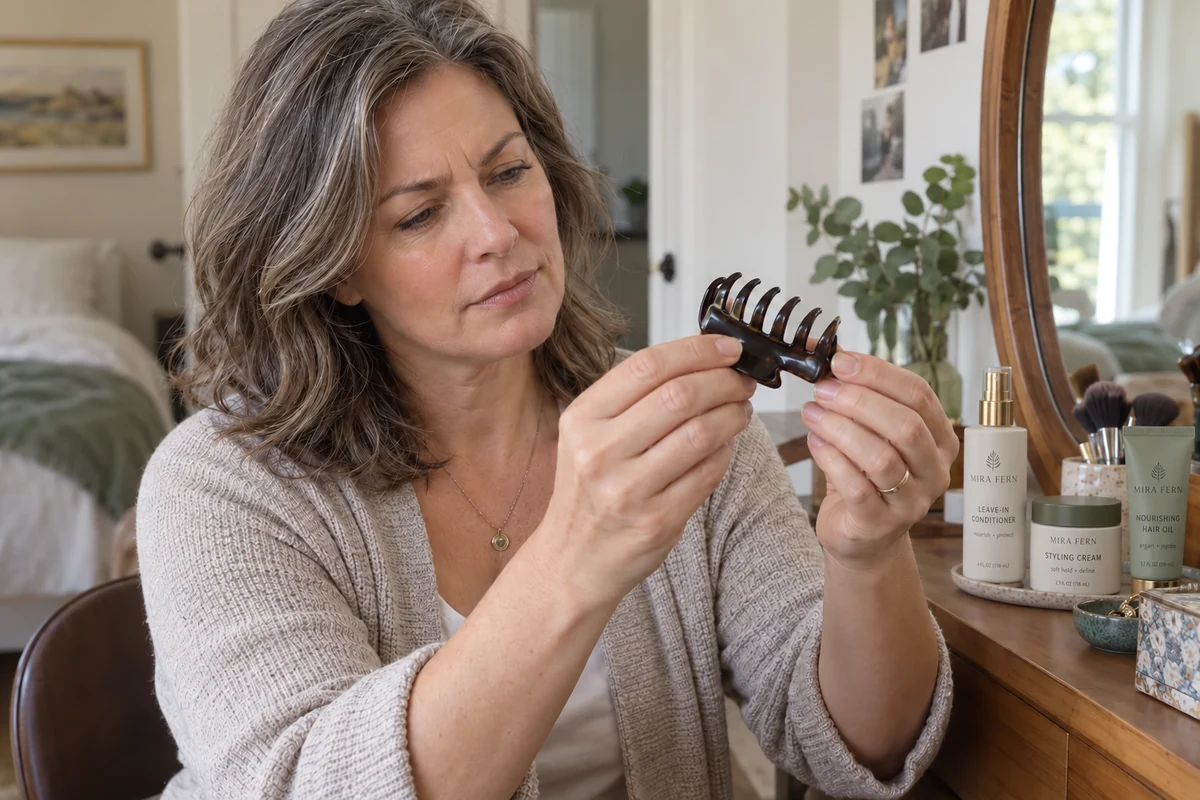
A woman examines a claw clip away from her hair, holding its solid body.

A pin from the last look is still in

  • Stop before the next piece goes on and run through the removal list.
  • Count the clips and pins back into their tray.
  • A missed pin changes how the next piece sits.
  • Never cover a sore spot you can’t explain with another layer.
An adult performer checks separate trays and wig stands at a dressing table.

Pieces get mixed up between changes

  • Give every performer and every look its own clearly labeled spot.
  • Follow the production’s rules on cleaning and sharing, including any disinfection they require.
  • A piece that’s been stored dry, or that you washed yourself, isn’t automatically ready for someone else to wear.
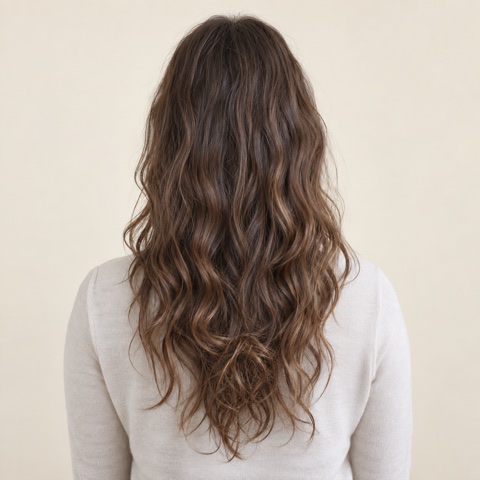
Wavy hair with tangles concentrated near the ends.

The final styling layer won’t come out

  • Take it off the way the product says and the way the production agreed.
  • Don’t force a brush through stiff hair or peel at an adhesive you can’t identify.
  • Say so promptly if something pulls or catches, and leave time for your own wash and dry afterwards.

Products, by the job they do

A woman wearing glasses reads a hair product ingredient panel.

Agree the styling products before the run

Tell the hair department about any past reactions and read the directions on what they use. Don’t add your own product to their system without asking, especially near adhesives.

Browse styling products. Bring your styling questions and current products to the consultation for personal recommendations.

A woman lifts her own wet hair at the back while water from a fixed showerhead reaches her crown.

Your wash is separate from costume cleaning

Plan your own shampoo around residue, scalp comfort and your next call time. The production looks after cleaning each piece. Shampoo isn’t a disinfectant and it isn’t an adhesive remover.

Browse cleansing products. The consultation uses your wash frequency and scalp concerns to recommend a shampoo.

How to do it

A man adjusts a removable short curly wig by the ear tabs with both hands.

1. Use the glueless method only for the piece it suits

This covers a properly fitted removable full wig made for glueless wear. Follow the handler assigned by the production and the exact fitting order. It doesn’t stand in for professional attachment, mic placement or adhesive removal.

Guide: Put on and remove a glueless wig
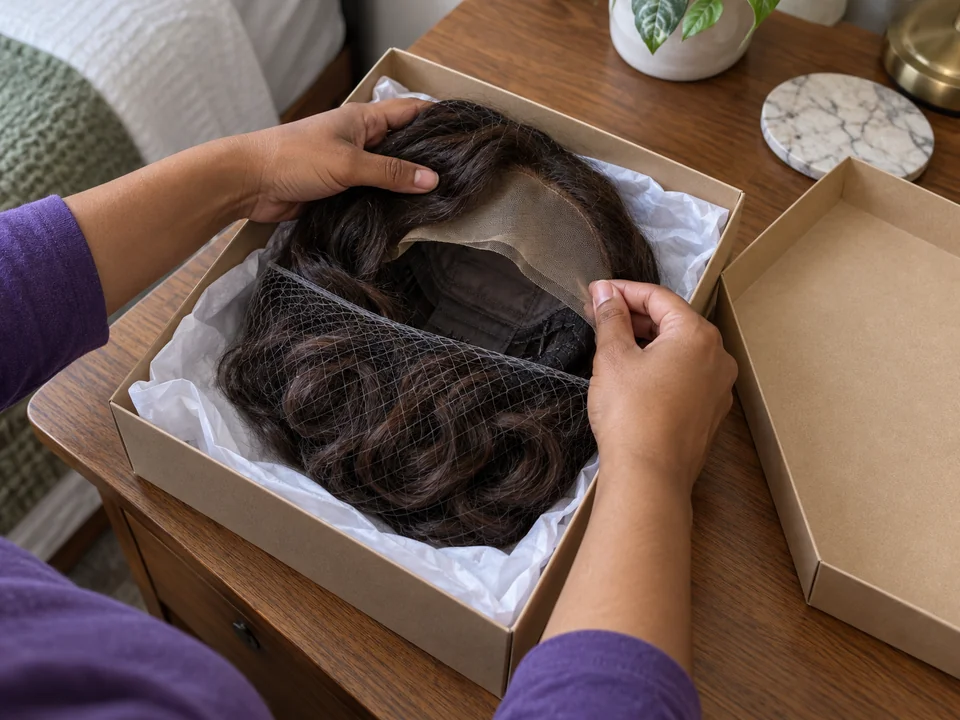
Hands support a dry removable wig in its box while laying the front lace flat.

2. Store a fully dry piece the approved way

Box it only after the production’s required care is done, and only in the storage the supplier allows. Support the cap, keep the rim clear and avoid pressure. Label the storage, not the lace or the hair.

Guide: Pack a removable wig

Illustrated care examples: before & after

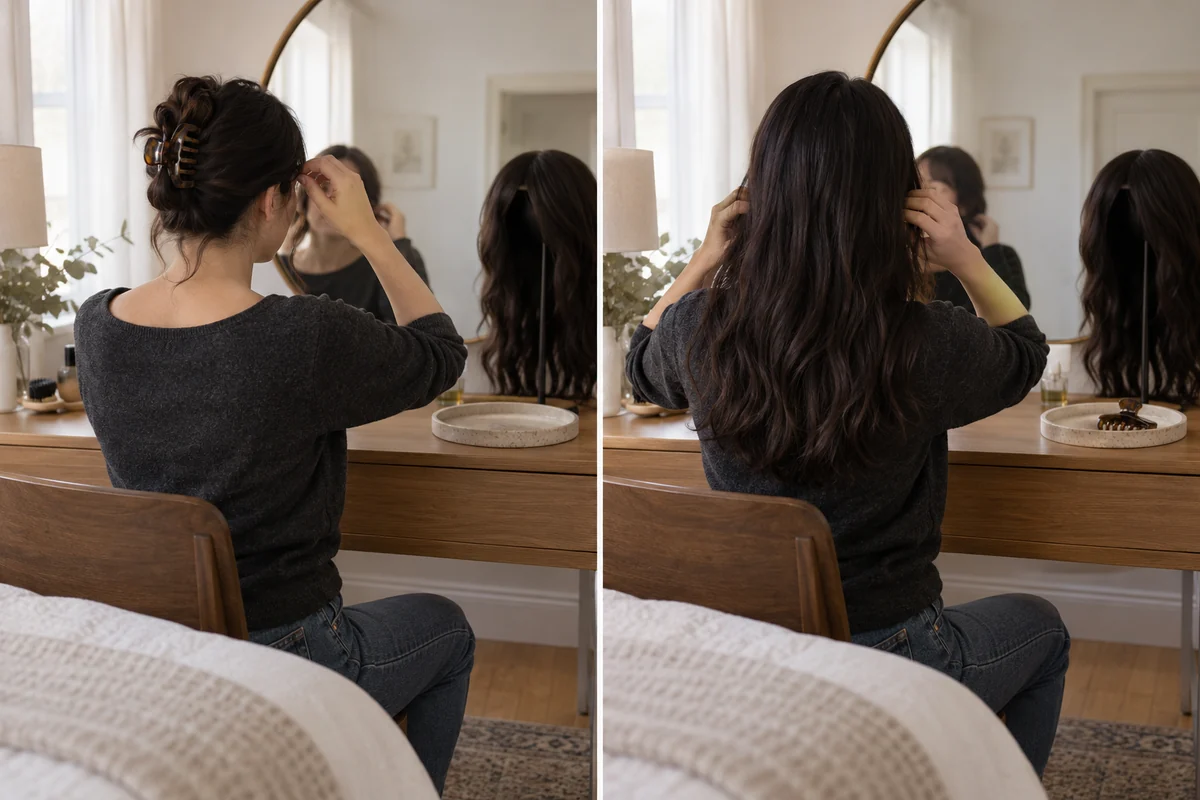
Last clip out first

The same performer removes a claw clip and places it in a tray before handling the next piece.
Before · claw clip still inAfter care · clip removed into its tray
Last look’s clip goes into its tray before the next piece goes in, so nothing is left behind. Fitting and hygiene stay with the production team.

Hair clear of the lid

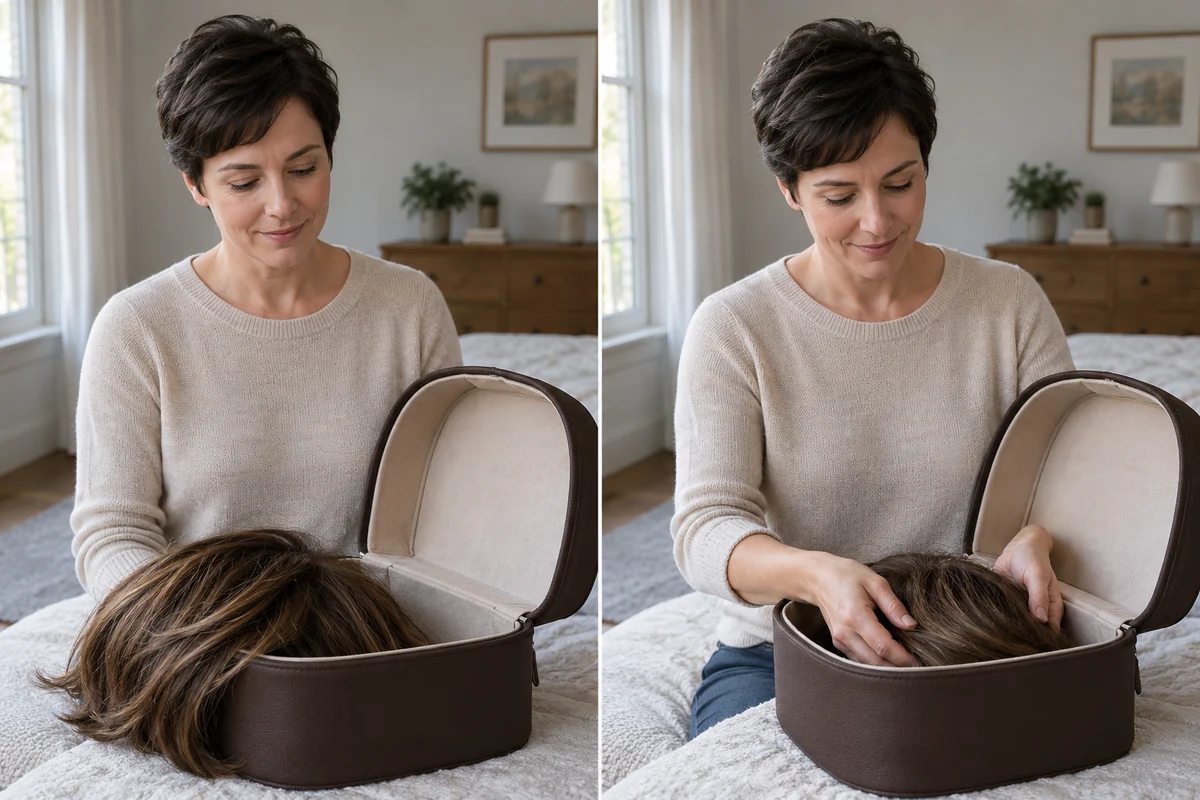
The same performer tucks detached wig lengths inside a roomy open storage case.
Before · piece lengths over the rimAfter care · lengths resting clear of rim
Cared for and fully dry, the piece sits supported in its storage with no hair across the edge the lid closes on. Use the storage the production approves.
A woman with curls writing a routine note beside her hair-care products.

Help with your hair-care routine

Bring your hair-care questions to the consultation. You can also read separating rehearsal containment from a performance finish.

  • What has to come off before the next look goes on?
  • Who handles each piece and checks the reset?
  • Where do cleaning, drying and my own wash fit between calls?

Share the change sequence, how your own hair is worn underneath, the pieces you’re required to wear and what help you have. Your ordinary care can be planned around that workload. Attachments, equipment and hygiene stay with the production team.

The Hair Care Consultation gives you a personal plan with product recommendations, routines and guidance on your hair-care questions.

$49 with 60 days of follow-ups, or $99 with 12 months. Pay once; the year renews only if you choose.