Hair Care Guides

Hair that gets through a healthcare shift.
Check the rules first, then make it comfortable.

A long shift in a tight bun under a cap, with a mask strap sawing across one spot, is hard on a scalp. Your workplace’s uniform, infection-control and protective-equipment rules come first. Within those, there’s room to make the style kinder and the takedown gentler.

Your personal hair-care planProduct choices, routines and answers shaped around your hair.$49one-timeStart my consultation
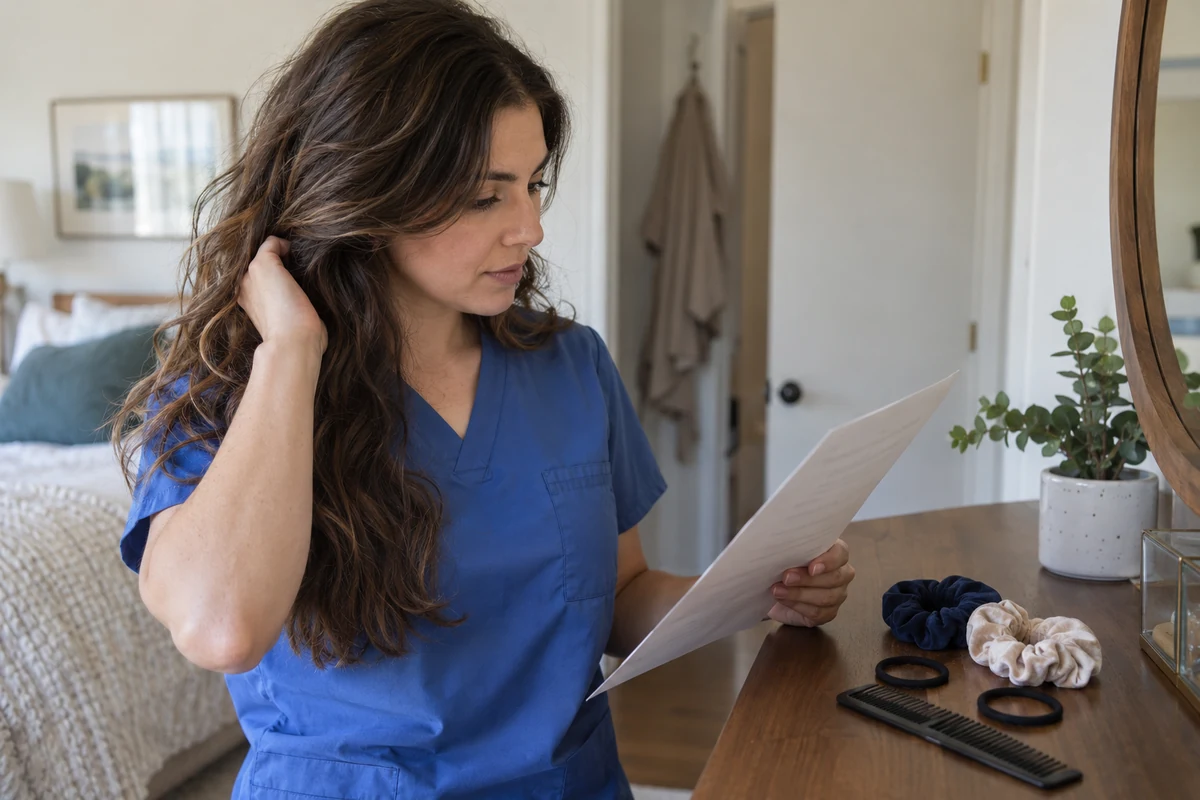
A healthcare worker reviews printed instructions at home beside familiar hair tools.
Check the rules first, then make it comfortable.

What is going on

A healthcare worker and educator review written guidance in an office away from patient care.

Find out what your area actually requires

Ask which styles, coverings and accessories are allowed for your duties. The rules can change between areas and tasks. If anything is unclear, including how a personal or religious covering fits the local policy, ask your supervisor or the infection-control team before the shift starts.

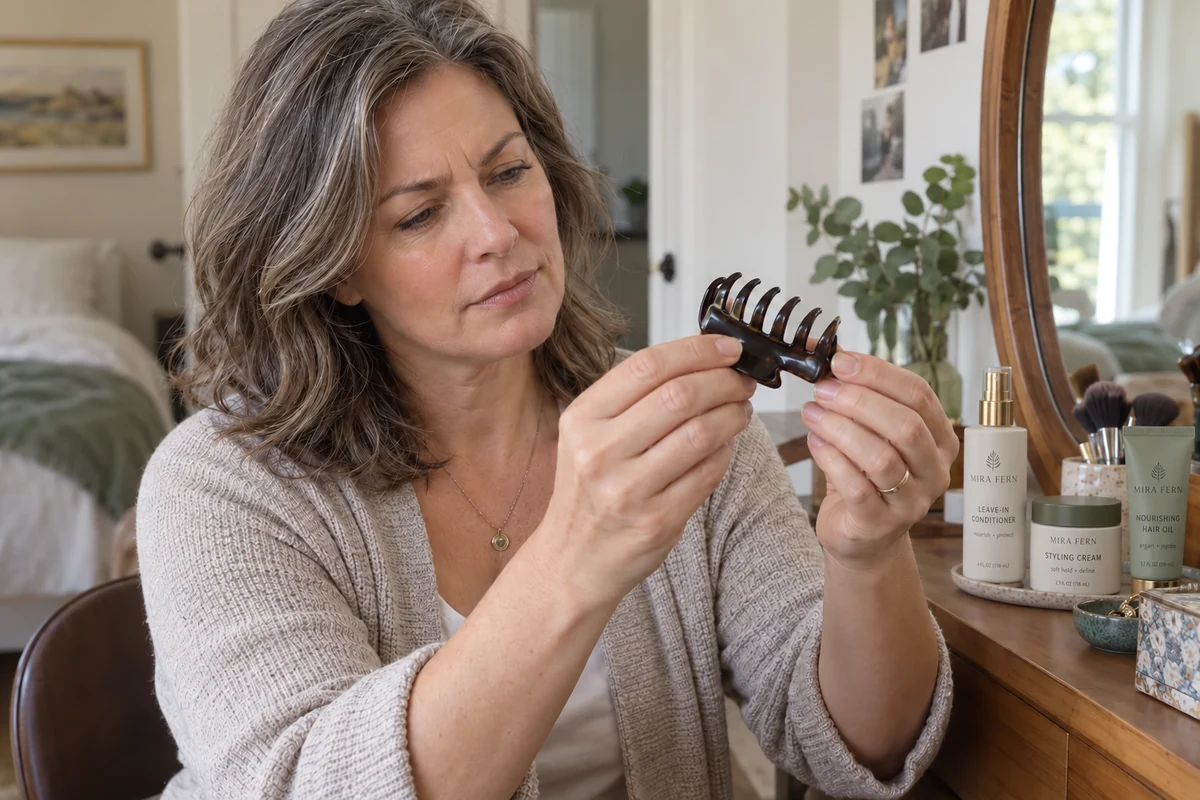
A woman examines a claw clip away from her hair, holding its solid body.

Try the style with the equipment on

If a clip or pin gets in the way of a mask or cap, move or swap it as the workplace and equipment instructions allow. Don’t pad or alter protective equipment for comfort. If the style won’t work, ask for an approved fix first.

What helps, day to day

An adult checks a packaged spare head covering beside printed instructions before packing.

Your covering needs changing mid-shift

  • Keep the approved spare somewhere you’re allowed to reach it.
  • Change, handle and dispose of or launder it the way your workplace instructs.
  • Your home hair routine has nothing to say about contaminated PPE, so don’t improvise there.
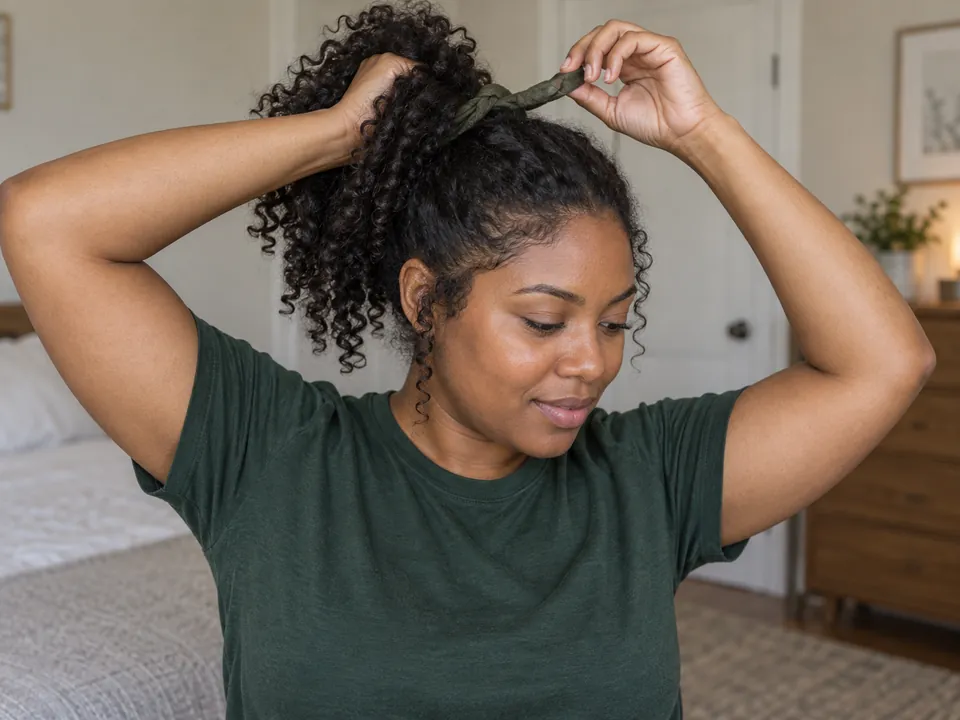
Supporting the ponytail while loosening its fabric tie.

Your hair is pulling halfway through the shift

  • Use the proper break and changing process before you touch it.
  • Loosen the style somewhere you’re allowed to, then put the required containment back.
  • If the same style keeps hurting, stop pulling the roots tighter and find a different one.
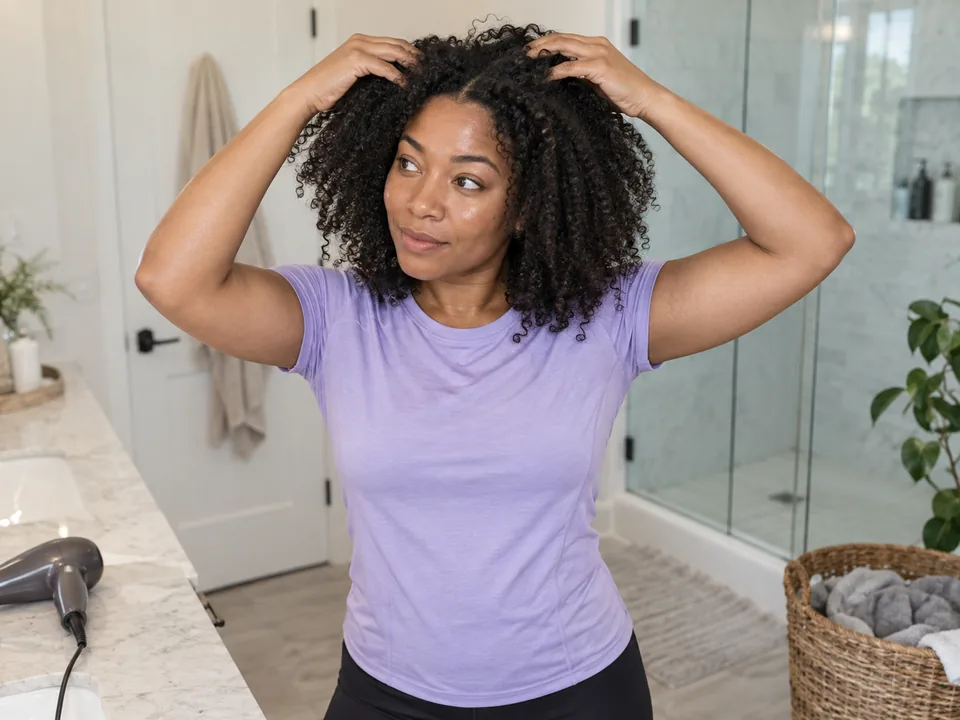
A woman checks the roots of her loose curls with her fingertips; the dryer rests on the counter.

You come home sweaty and flattened

  • Once you’ve finished the workplace’s removal steps, take the style down and see what your hair actually needs.
  • Wash for sweat, scalp oil and product, not out of reflex with something harsher.
  • If there was an exposure at work, follow your employer’s reporting process. A shampoo at home isn’t the answer to that.

Products, by the job they do

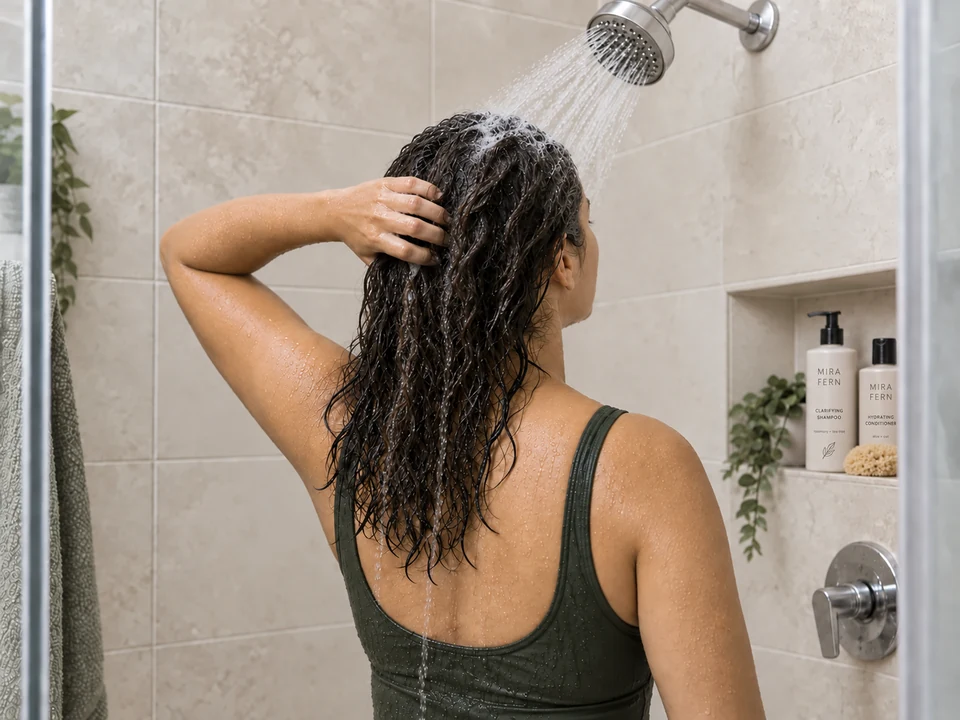
A woman lifts her own wet hair at the back while water from a fixed showerhead reaches her crown.

Home washing is its own thing

Choose shampoo for your scalp after long shifts, the sweat under a cap and whatever you use to keep your hair contained. No shampoo is part of infection protection.

Browse cleansing products. The consultation uses your wash frequency and scalp concerns to recommend a shampoo.

A woman smoothing conditioner through her mid-lengths and ends.

Conditioner for a takedown that doesn’t hurt

Use the conditioner you know, where your lengths need slip, so the bun comes down without a fight at the end of a long day. A bigger dose or a stronger hold product doesn’t make a style meet workplace rules.

Browse rinse-out conditioners. Your tangles, past treatments and preferred finish help guide a personal conditioner recommendation.

How to do it

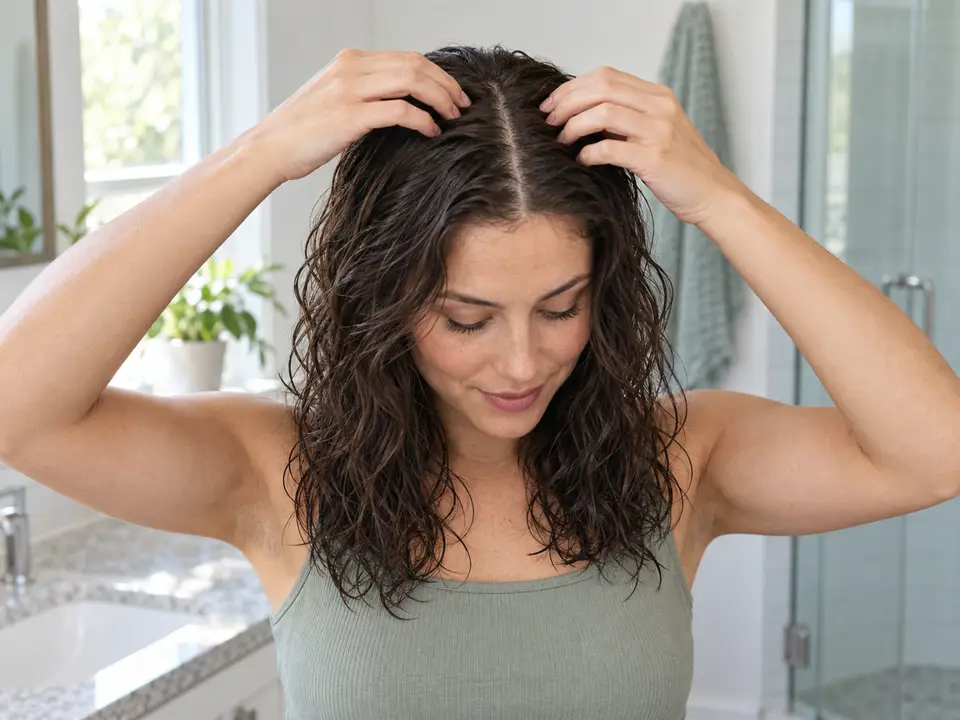
A woman places her fingertips on either side of the part in her damp hair, with the lengths hanging loose.

1. Dry properly before the next covering goes on

After an ordinary wash at home, blot gently and give your hair a realistic drying window. A workplace covering isn’t a drying wrap. Follow its own instructions for the next shift.

Guide: Air-dry your hair
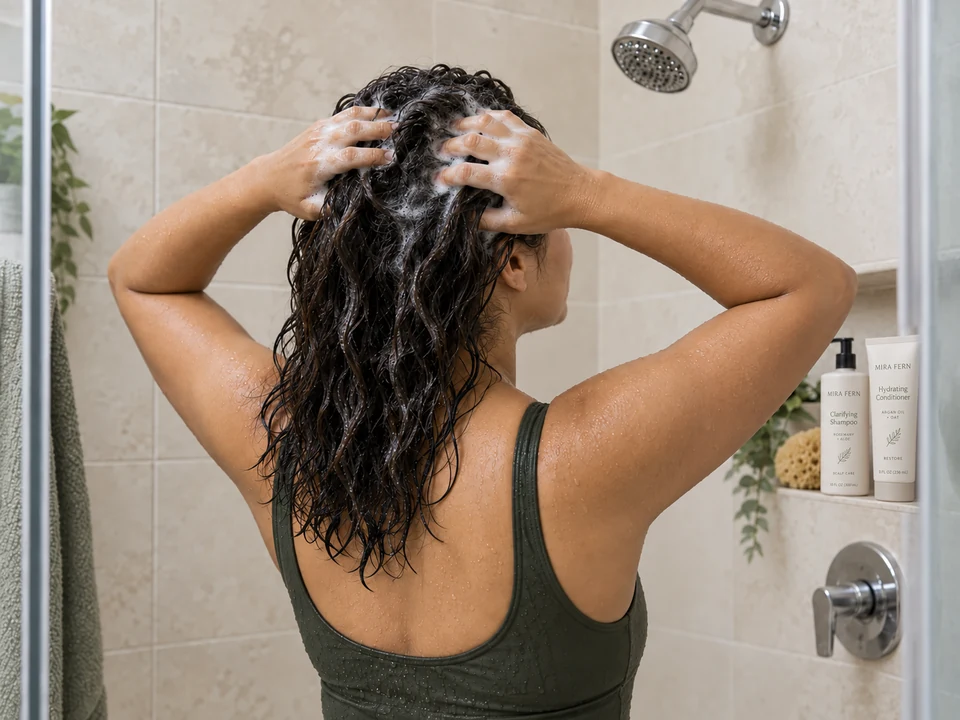
A woman uses both hands to gently work shampoo at the back and sides of her scalp, with the lengths hanging loose.

2. Wash the scalp the normal way

Wet, cleanse and rinse at home when your scalp needs it. This is everyday care. It has nothing to do with handling PPE, decontamination or what to do after an exposure, which are the workplace’s instructions.

Guide: Shampoo your scalp

Illustrated care examples: before & after

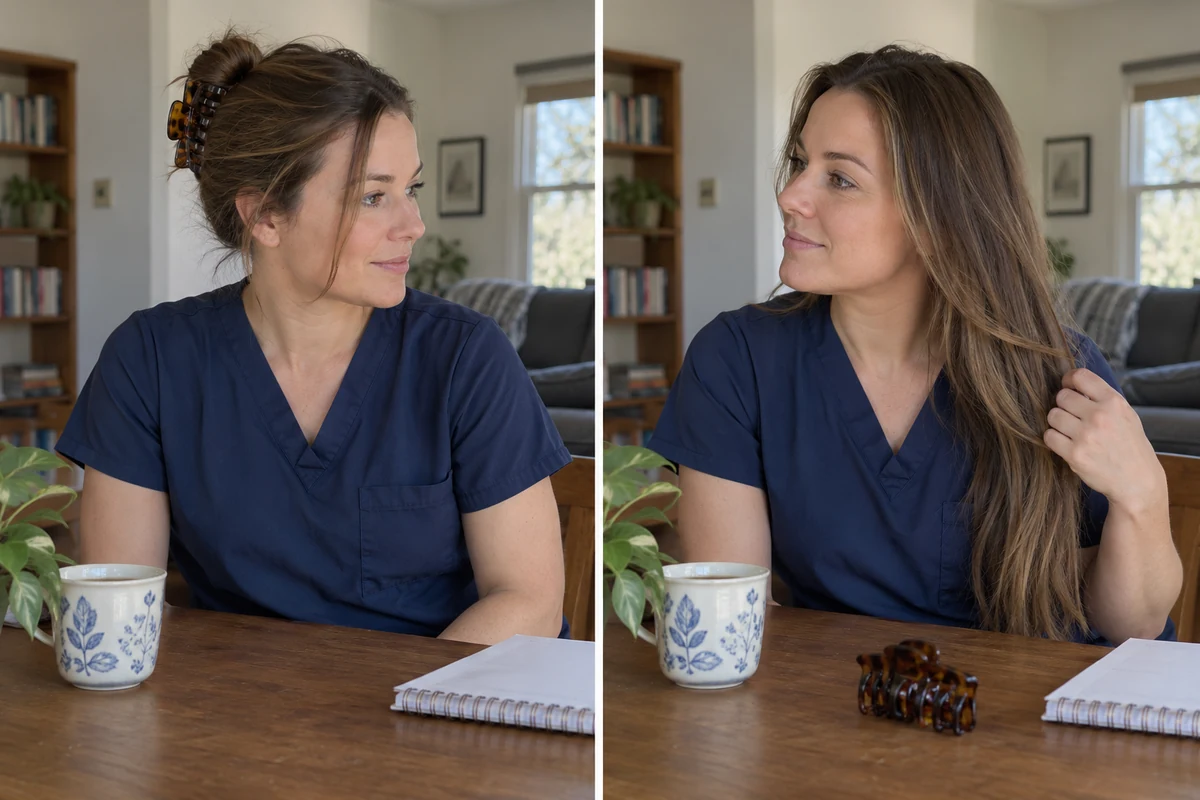
Clip out before the fitting

The same worker removes a claw clip at home and supports the released lengths.
Before · bulky clip in placeAfter care · clip out, ready for fitting
The bulky clip comes out, and that is all these pictures show. What you can wear underneath is set by your workplace and the equipment’s own instructions.

Take the style down gently

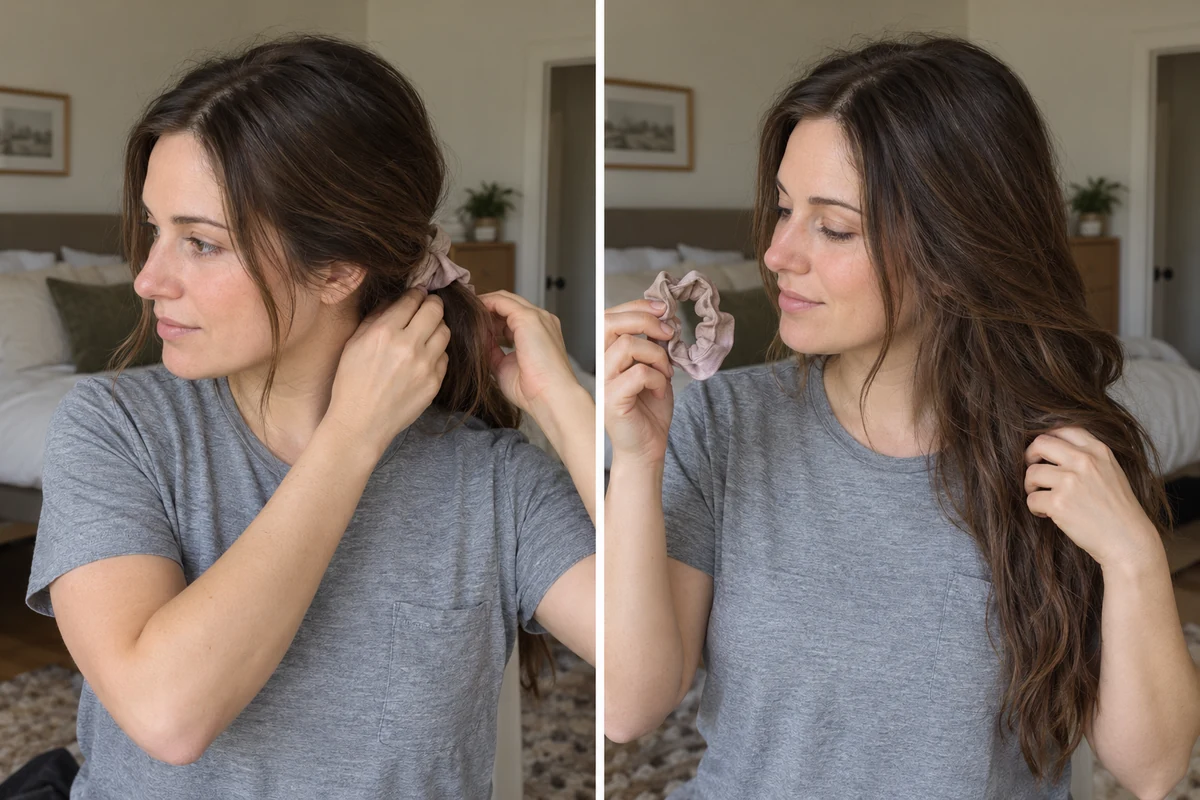
An adult supports a ponytail, then holds the removed soft tie while the lengths fall loose.
Before · style ready for takedownAfter care · tie out, lengths supported
At home, the tie comes out and the lengths are held while they loosen. This is the ordinary takedown after whatever your workplace asks you to do first.
A woman with curls writing a routine note beside her hair-care products.

Help with your hair-care routine

Bring your hair-care questions to the consultation. You can also read planning washing around a changing shift timetable.

  • What does my unit actually require for hair and coverings?
  • What can I do when the style pulls or gets in the way of my mask?
  • What has to happen at work, and what can wait until I’m home?

The style your workplace allows, the equipment you wear, how long your shifts run, your hair pattern and what starts to hurt by the end all shape the plan. Home care fits around those. The workplace’s infection-control and PPE instructions always come first.

The Hair Care Consultation gives you a personal plan with product recommendations, routines and guidance on your hair-care questions.

$49 with 60 days of follow-ups, or $99 with 12 months. Pay once; the year renews only if you choose.