Hair Care Guides

A damp night doesn’t have to mean a wash.
Make mornings easier to handle.

Waking with a damp hairline and a wet pillow is miserable, and it can happen at any age. Have a dry swap ready before bed, then decide in the morning whether your scalp needs washing or just drying and a quick tidy.

Your personal hair-care planProduct choices, routines and answers shaped around your hair.$49one-timeStart my consultation
Adult with salt-and-pepper wavy hair checks a damp pillowcase with a dry spare within reach.
Make mornings easier to handle.

What is going on

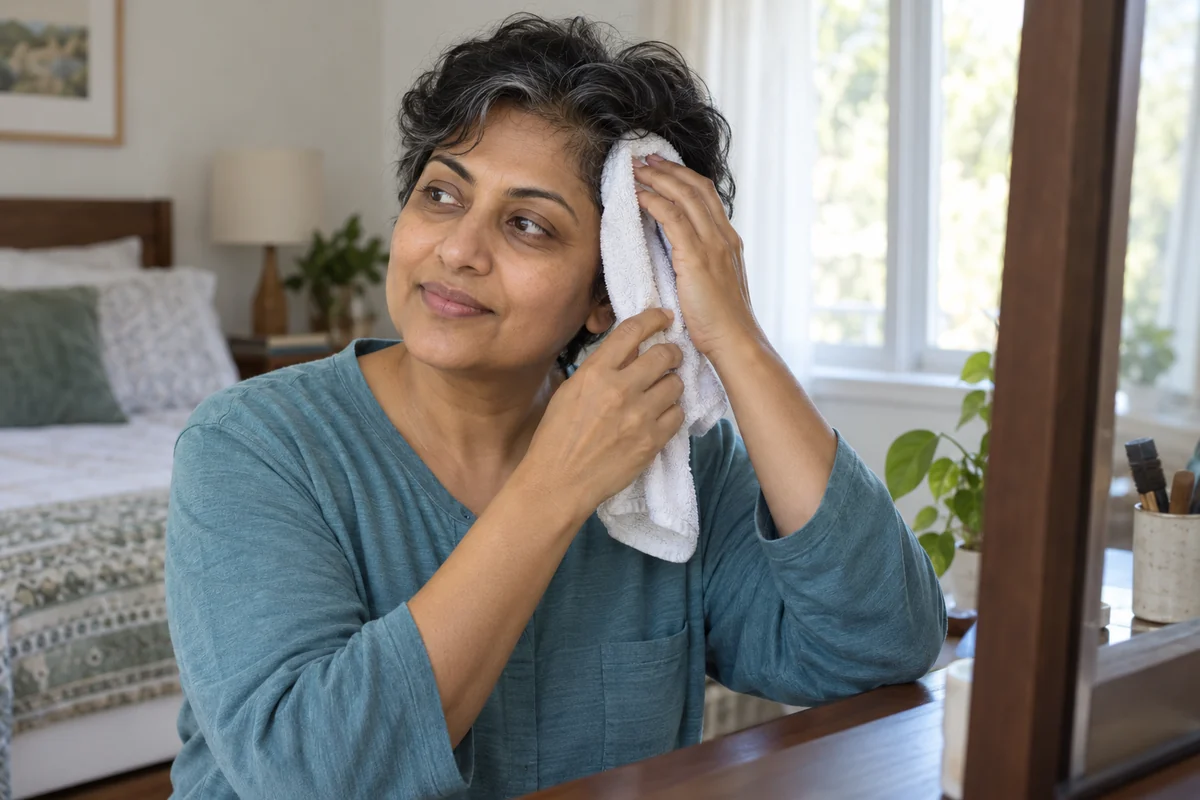
Adult with short salt-and-pepper wavy hair gently holds a clean towel against the temple hairline.

Check the scalp and the lengths separately

Feel for damp roots and a wet nape, and notice which lengths stayed dry. Blot the surface gently with a clean towel. Drying off and changing the pillowcase makes things better, but neither takes oil or product off a scalp that’s due a wash.

A woman with curls writing a routine note beside her hair-care products.

Work out what the real problem is

Is it the damp sheets, roots that stay wet, morning tangles or lost sleep? Write it down for a few nights and plan the next one around it. Your hair can’t tell you why you’re sweating, and not every episode needs a new product.

What helps, day to day

Adult with a loose silver braid puts a clean case on a pillow beside a basket holding the used case.

The pillowcase is damp

  • If this happens a lot, keep a clean, dry spare where you can reach it half asleep.
  • Swap the damp one out when you can and put it aside for the wash.
  • Make the room and bedding as comfortable as you can.
  • No bonnet or special fiber treats sweating or promises a dry night.
A woman lifts loose hair at the crown and feels underneath near the nape after putting the dryer down.

A bonnet or scarf traps the damp

  • Take an optional covering off when you can comfortably manage it and let loose hair open up to dry.
  • Check underneath, not just the top, before you put it back.
  • If you wear a covering for medical or protective reasons, follow those instructions instead.
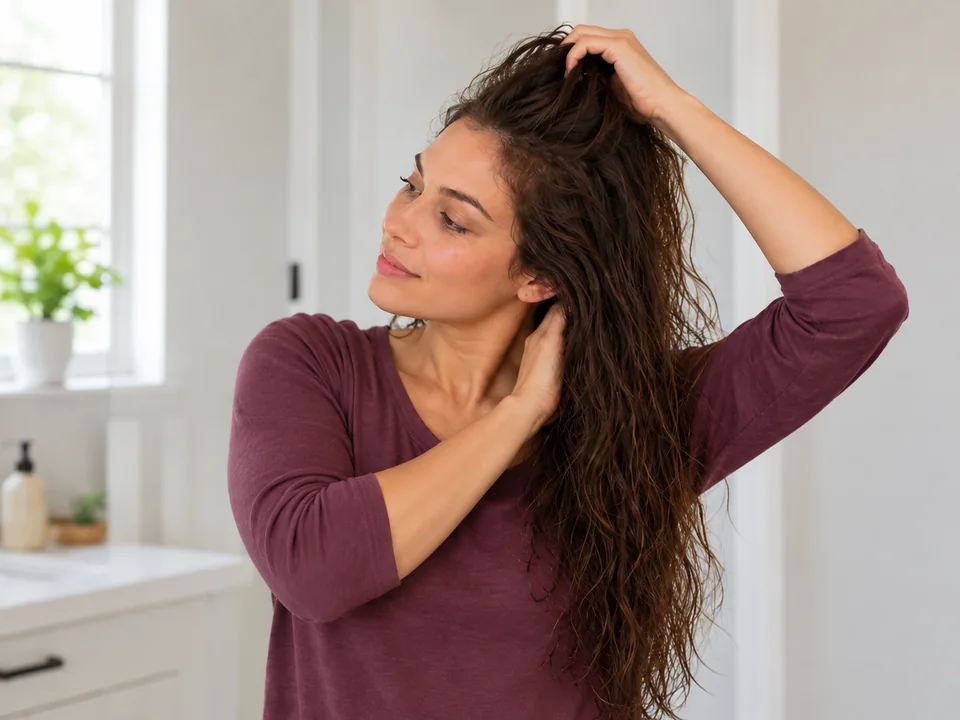
An adult looks at and lightly holds one section of shoulder-length wavy hair after waking.

Only one patch looks odd in the morning

  • Let the hair settle before you brush everything or add another product.
  • Dry the damp bits, then fix only the area that bothers you.
  • If your scalp feels comfortable, a small local tidy is often all it needs.

Products, by the job they do

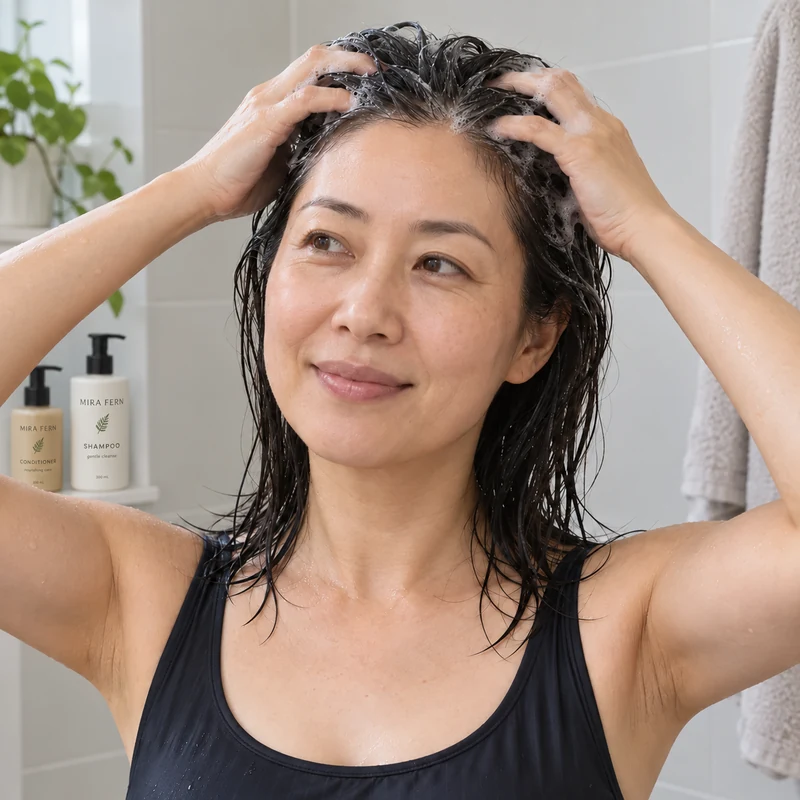
A woman massaging shampoo lather onto her scalp with her fingertips.

Wash when the scalp needs it

Choose a shampoo for how oily your scalp gets, what’s on it and what else you use, then rinse it out well. Sweating at night doesn’t set an extra-wash schedule on its own.

Browse cleansing products. The consultation uses your wash frequency and scalp concerns to recommend a shampoo.

A woman smoothing conditioner through her mid-lengths and ends.

The lengths still need their care

Keep conditioning the lengths where it helps with tangles and handling. Your pattern, length and any treatments decide that, not a damp hairline. There’s no need to make every length richer or re-wet the whole head just because the roots were sweaty.

Browse rinse-out conditioners. Your tangles, past treatments and preferred finish help guide a personal conditioner recommendation.

How to do it

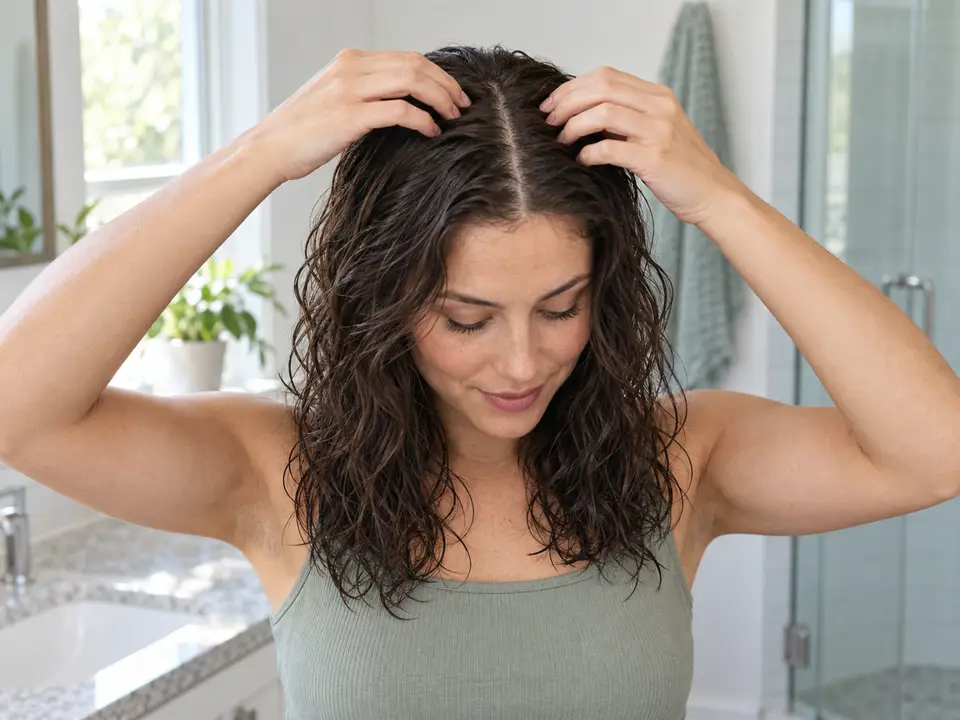
A woman places her fingertips on either side of the part in her damp hair, with the lengths hanging loose.

1. Give the damp bits time

Spread loose hair so air reaches the damp roots and the hair underneath. Check the spots that were wet before you cover or style. Air-drying takes time and doesn’t clean anything, so use a familiar quicker method when that suits you better.

Guide: Air-dry your hair
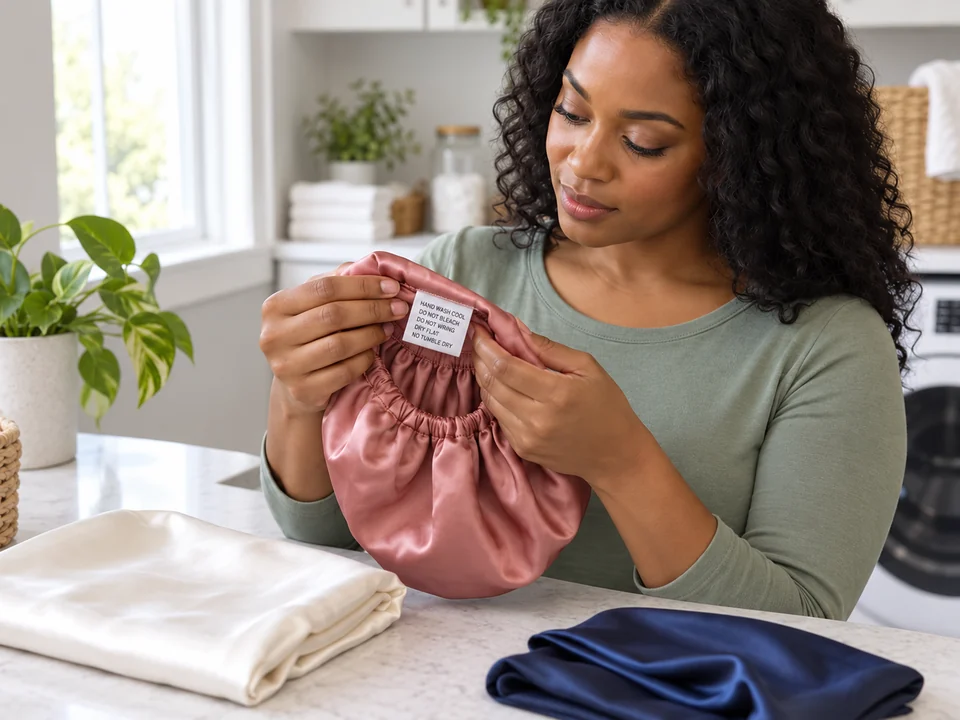
A woman reads the printed washing and drying directions on a sleep bonnet’s care label.

2. Get the next dry swap ready

Wash and dry the pillowcase or covering the way its own care label says, and let it dry right through before it goes back on. Fabrics that look alike can need different care. You don’t need anything expensive to keep a clean spare ready.

Guide: Wash your bonnet, scarf or pillowcase

When to get help

A woman and a medical professional seated together, looking at a calendar.

Signs that need more than routine care

  • Night sweats that keep waking you, or that worry you, are worth a visit to a medical professional, especially if they come with a fever, a cough, diarrhea or weight loss you can’t explain. Getting it looked at is better than putting up with it. If a product stings or your scalp stays sore, stop it and mention that too.

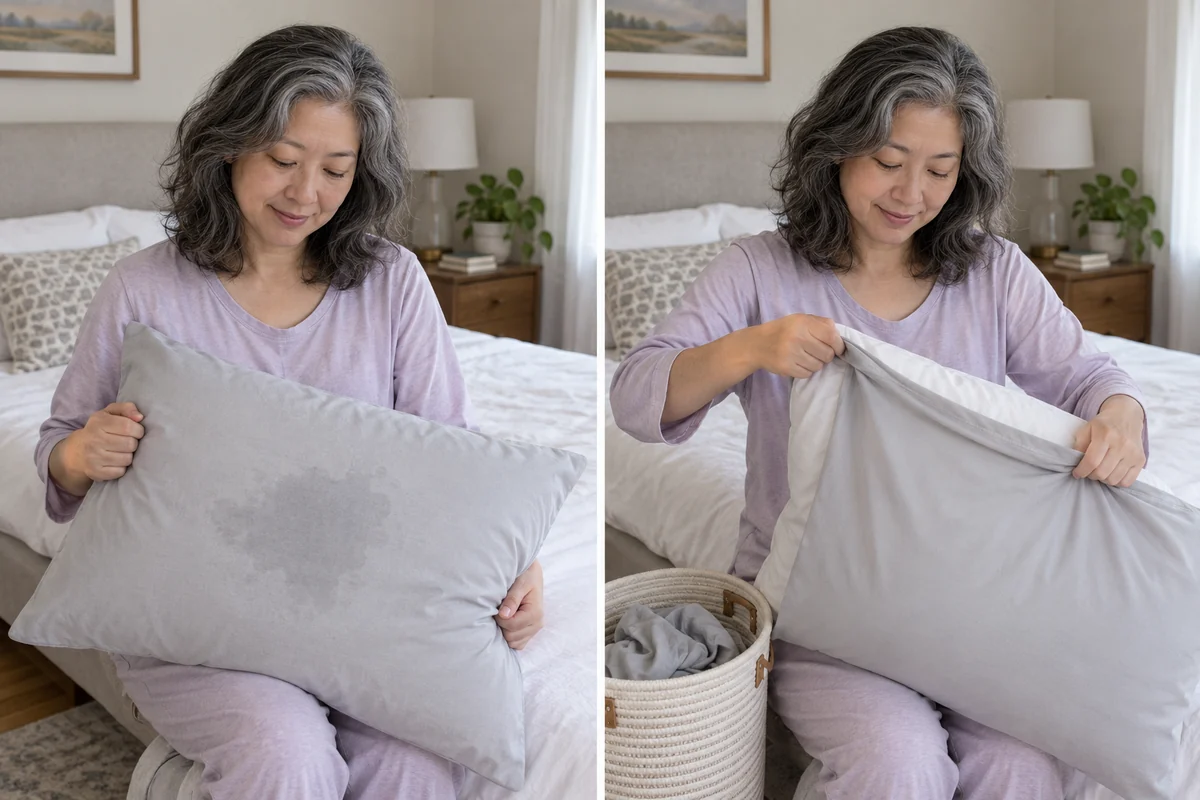
Illustrated care examples: before & after

A dry pillowcase

Two illustrated panels show the same adult replacing a damp pillowcase with a dry case while their hair remains unchanged.
Before · a damp pillowcase after wakingAfter changing the case · a clean, dry case
The damp case comes off and a clean dry one goes on. A fresh surface to sleep on, nothing more, nothing about the sweating itself.

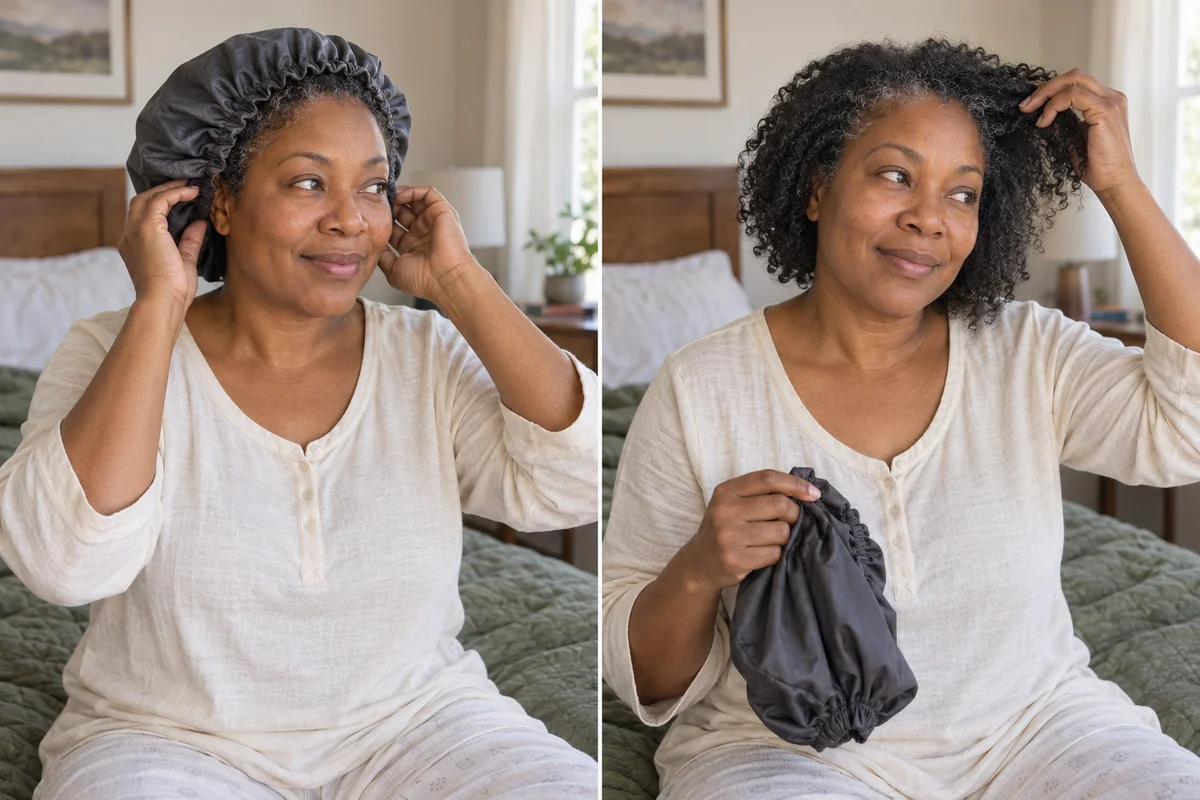
Open the covering for air

Two illustrated panels show the same adult removing an optional sleep bonnet and gently lifting a section of coiled hair for air access.
Before · hair under a sleep coveringAfter opening the hair · covering off, section opened
The optional sleep covering comes off and a damp section is lifted so air can get in. A covering worn for medical reasons has its own instructions.
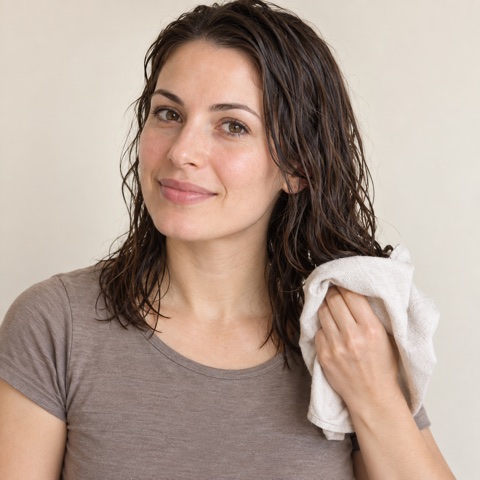
A woman gently squeezing damp hair with a towel.

Help with your hair-care routine

Bring your hair-care questions to the consultation. You can also read handling hair that is still damp at bedtime.

  • Is my problem damp sheets, wet roots or morning tangles?
  • When does my scalp really need a wash?
  • What can I set up before bed without making a whole routine of it?

Tell us what gets damp, what you wear to bed on your hair, when you usually wash and what your hair is like. The consultation can fit the products and the handling around what actually happens at night.

The Hair Care Consultation gives you a personal plan with product recommendations, routines and guidance on your hair-care questions.

$49 with 60 days of follow-ups, or $99 with 12 months. Pay once; the year renews only if you choose.