Hair Care Guides

Find out what’s on your hair first.
A plant name isn’t the whole story.

Henna and henna-looking dyes don’t all tell you the same things. Keep the packaging and write down what was mixed and put on before you think about another service. If you don’t know, say so. A guess is worse than a gap.

Your personal hair-care planProduct choices, routines and answers shaped around your hair.$49one-timeStart my consultation
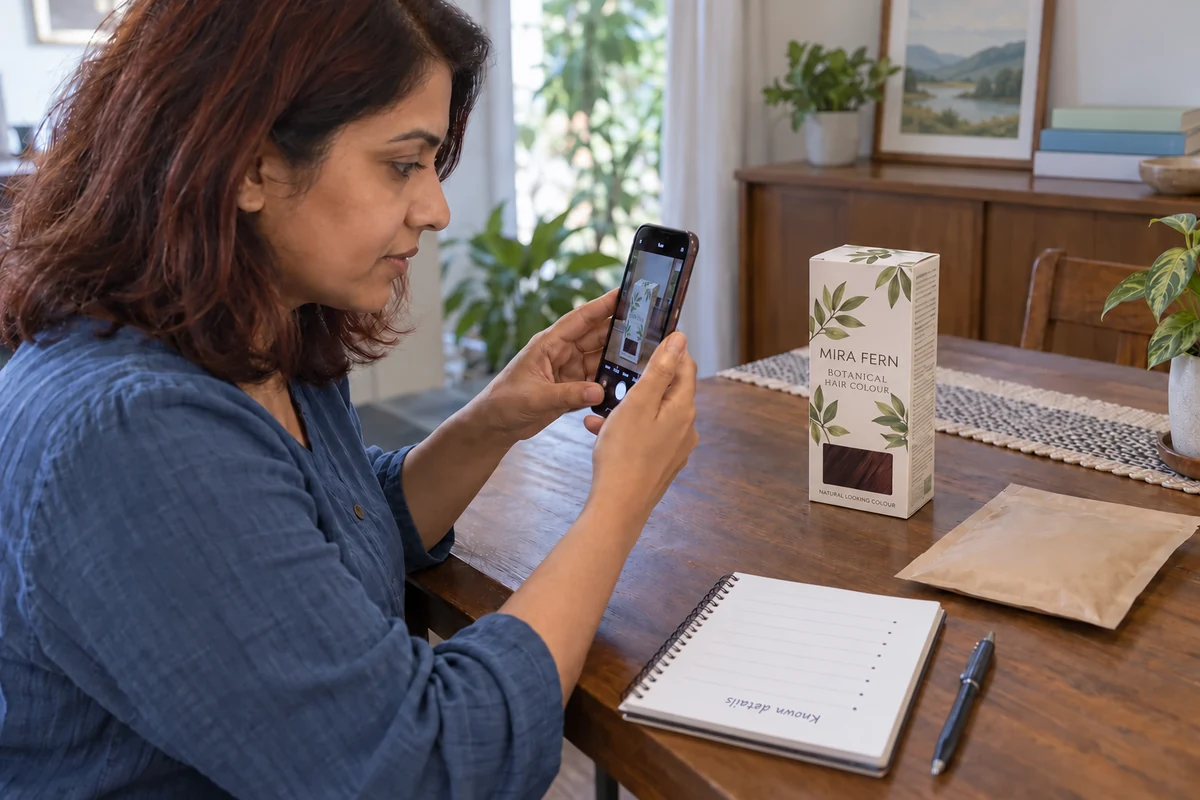
An adult reads a closed original hair-color carton beside a sealed unidentified pouch and notebook.
A plant name isn’t the whole story.

What is going on

An adult photographs closed hair-color packaging beside a sealed unlabelled pouch and known-details notebook.

Separate what you know from what you don’t

Keep the full product name, the ingredient list, the shade and any mixing instructions from the box. Note anything that was added and how many times it went on. An unlabeled bag, a familiar color or the word natural doesn’t tell you what it was.

An adult with blond curls and a colorist compare brown swatches.

Tell the next colorist before you book

Show them the package or photos, the dates and which parts of your length still carry it. Ask whether they want more information or to check the hair themselves first. A faded shade doesn’t mean what’s in the hair has stopped mattering.

What helps, day to day

A woman wearing glasses reads a hair product ingredient panel.

You’re filling the gaps with a general idea

  • Not every botanical dye has the same ingredients, not every henna mix has metallic salts in it, and plant-derived doesn’t mean fine for your hair.
  • Ask the maker what was in the exact product.
  • Trying to identify a mystery powder at home doesn’t work.
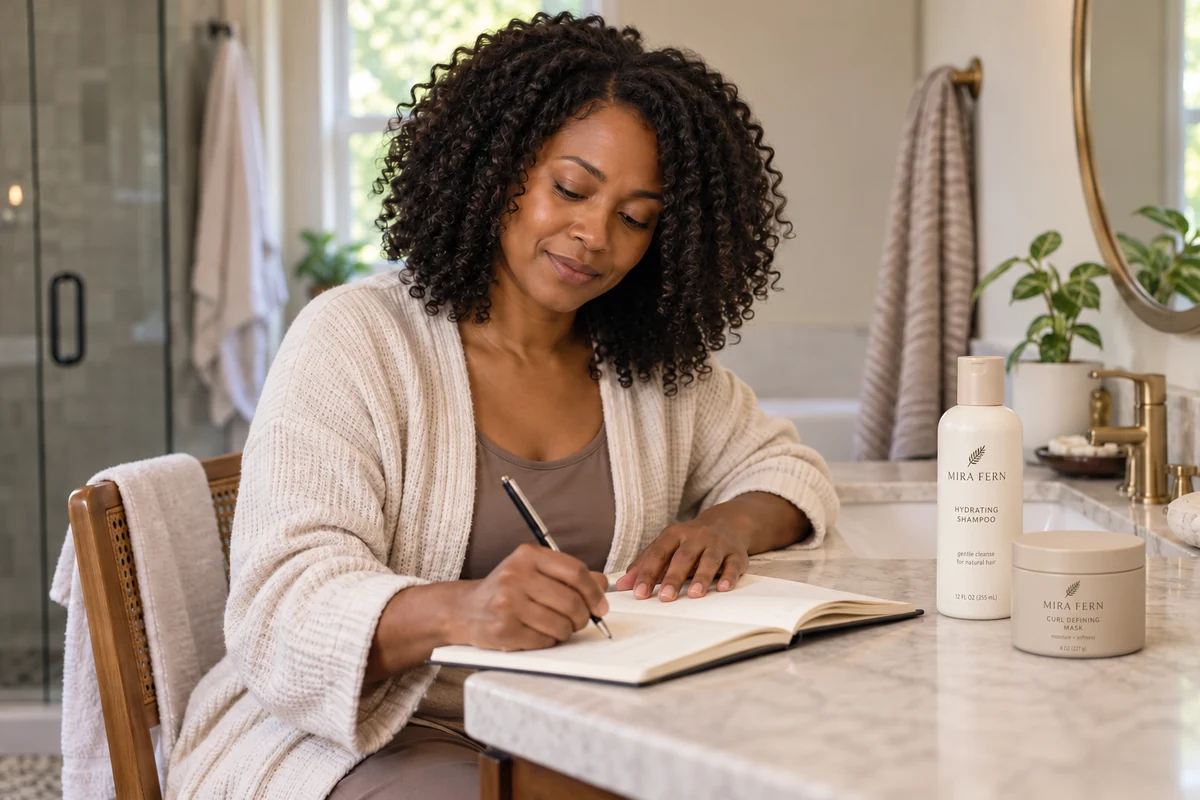
A woman with curls writing a routine note beside her hair-care products.

You want to go lighter or change the texture

  • Talk the change through with a professional, with the whole history in front of them.
  • If part of it is uncertain, keep it marked uncertain.
  • Don’t use bleach, a color remover or a kitchen experiment to find out what the earlier product contained.
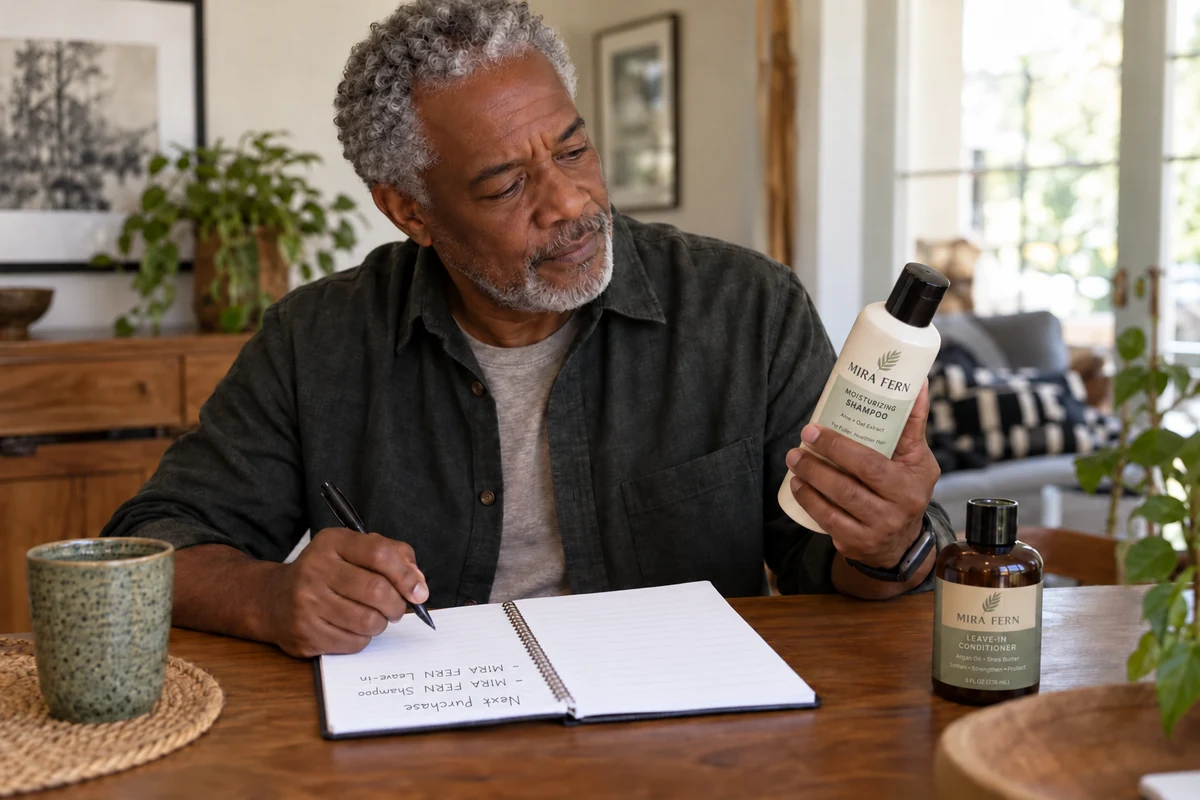
A man reads a shampoo bottle while making a note, with a second hair-care bottle beside the notebook.

The only option offered is out of budget

  • Ask what can be checked now and what alternatives avoid another chemical change.
  • Keeping the shade, or changing the cut, might be on that list.
  • Decide which result and which upkeep you can live with.
  • A staged plan is a conversation, not a promised fix.

Products, by the job they do

A woman massaging shampoo lather onto her scalp with her fingertips.

Ordinary shampoo for ordinary buildup

Choose a cleanser for the oil and residue you have now, and follow any directions you were given with a product or a service. A shampoo won’t identify or neutralize an unknown mixture, and it isn’t meant to.

Browse cleansing products. Bring the shampoos you are choosing between to the consultation, along with what you liked or disliked about them.

A woman smoothing conditioner through her mid-lengths and ends.

Conditioner to keep the lengths workable while you decide

Put conditioner where the hair needs slip, as the label says. Soft, faded hair isn’t proof that a later dye, bleach, relaxer or perm will be fine on it.

Browse rinse-out conditioners. Tell the consultation what you want from a conditioner and what you disliked about previous ones.

How to do it

Checking appointment preparation instructions on a phone.

1. Take the history to the color appointment

Use the appointment checklist to gather the packaging, what was added, the dates and where on your hair it went. Tell the colorist where the gaps are. Follow their preparation instructions, and don’t add a home stripping step to tidy the history up.

Guide: Prepare for a color appointment
Writing separate pre-use checks and waiting periods in a notebook.

2. Keep any test specific to the product proposed

Be clear on the exact instructions and on who does any strand test. A good result on a strand isn’t a guarantee against a skin reaction. Never retry a product that reacted on you, and don’t invent a test mixture for an unknown dye.

Guide: Plan product skin and strand checks

When to get help

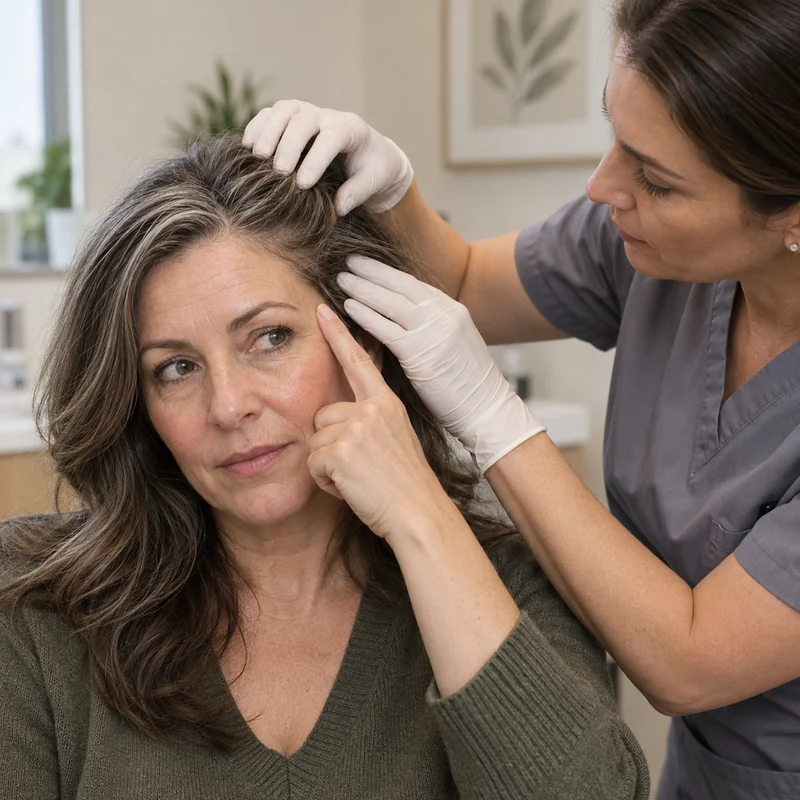
A medical professional examining the scalp where a woman points.

Signs that need more than routine care

  • If a dye stings, burns or brings up a rash, rinse it off, don’t retry it, and see a medical professional if the scalp stays sore or the reaction keeps going. Keep the package or the mixture details, because they’ll want to know what it was.
  • Any difficulty breathing, or swelling of the lips, mouth or throat, needs emergency help straight away.

Illustrated care examples: before & after

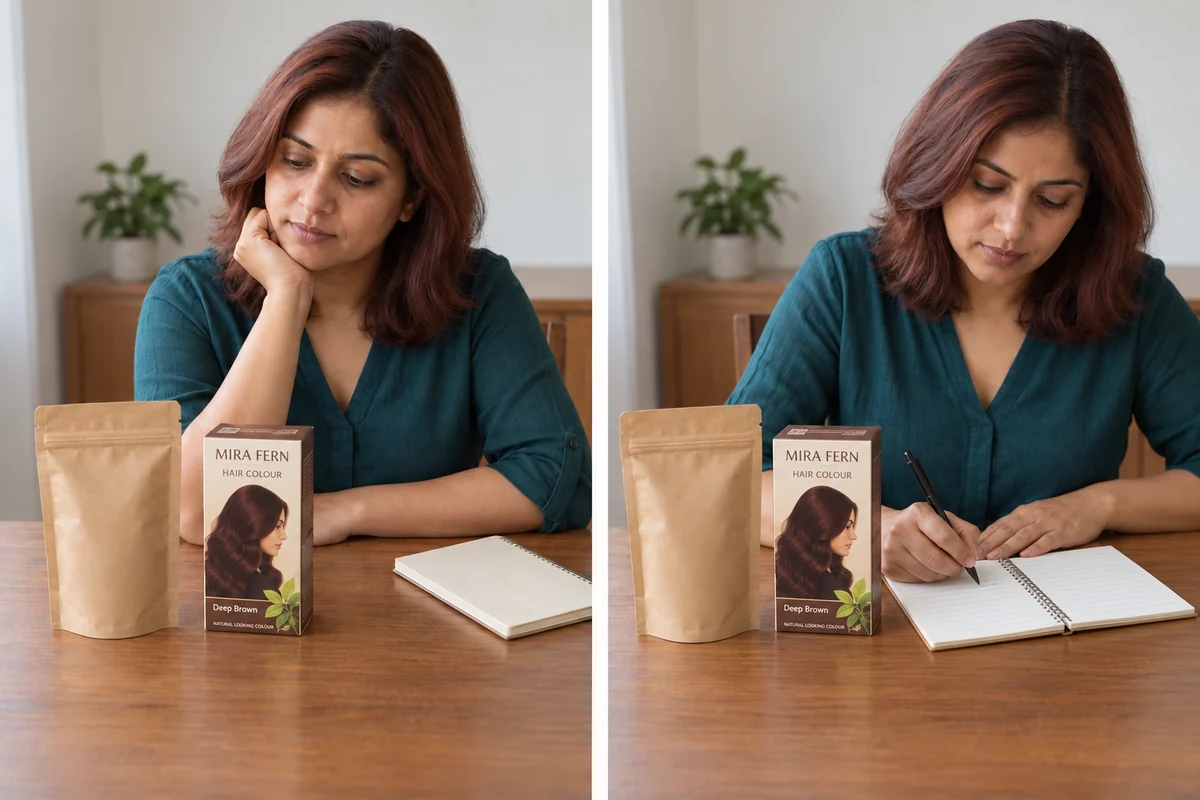
Known and unknown, written down

The same adult moves from closed dye packaging to a known-and-unknown history record while the unidentified pouch stays sealed.
Before · packaging, history missingAfter care · details and unknowns noted
What is known goes on the page and what is missing is marked unknown rather than guessed. The package and pouch alone say nothing about what was used.

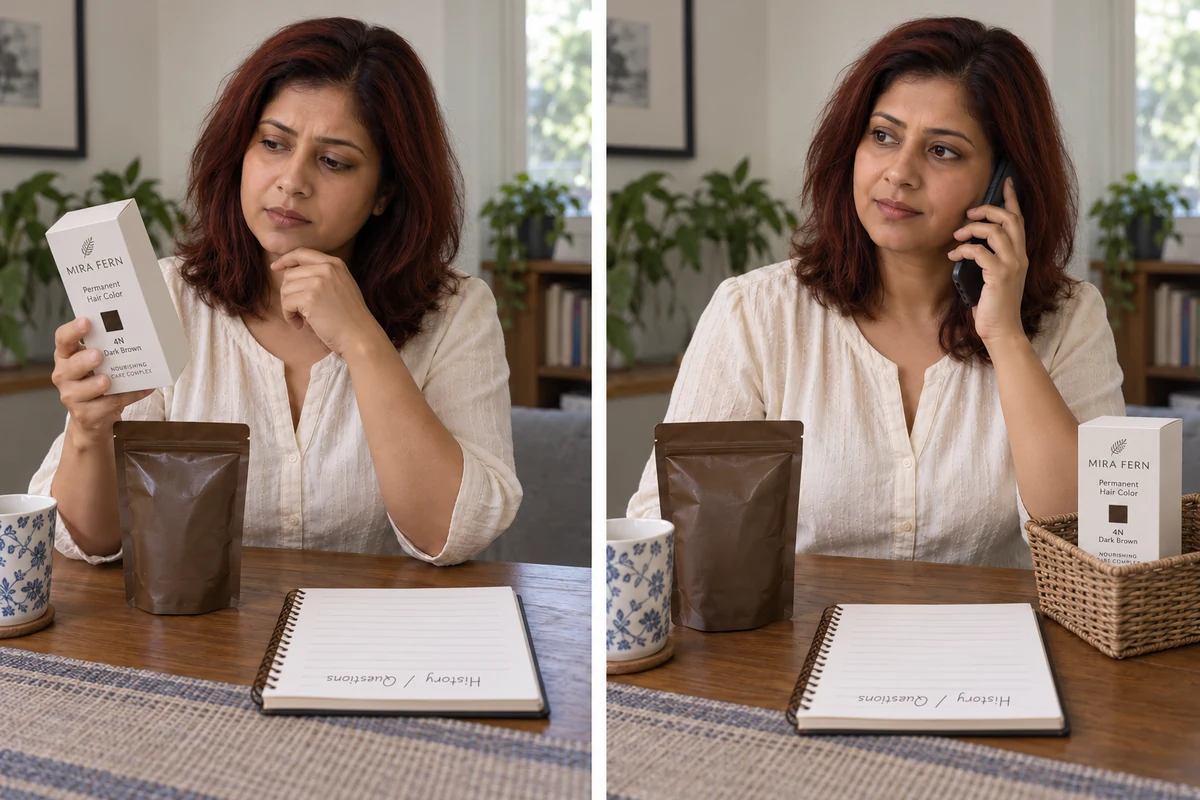
Ask first, color later

The same adult sets a new closed color carton aside and contacts a professional with the earlier sealed pouch and history notes available.
Before · weighing another color productAfter care · product set aside to talk
The next color product is set aside until the uncertain history has been talked through. No test mix, no application and no corrected color appear here.
A woman with very short hair writing an appointment checklist.

Help with your hair-care routine

Bring your hair-care questions to the consultation. You can also read ordinary care for hair with retained treatments.

  • What do I actually know about the product and what went in it?
  • Could some of it still be in my lengths?
  • What does the colorist need to know before I ask for anything new?

Tell us the packaging, the ingredients or additions you know of, when it went on and what change you’re thinking about. The consultation can sort out everyday care while the unknowns get resolved. It can’t name a mystery mixture from how the hair looks.

The Hair Care Consultation gives you a personal plan with product recommendations, routines and guidance on your hair-care questions.

$49 with 60 days of follow-ups, or $99 with 12 months. Pay once; the year renews only if you choose.