Hair Care Guides

Grow out the relaxer, keep your length.
You can change the plan as you go.

Stopping relaxers doesn’t mean cutting off all the treated hair at once. You can keep some length while you learn how the new growth behaves. It’s easier when the handling is gentle and the trim plan is one you can revisit as things change.

Your personal hair-care planProduct choices, routines and answers shaped around your hair.$49one-timeStart my consultation
An adult with coily new growth and straighter retained lengths considers care notes at home.
You can change the plan as you go.

What is going on

An adult rests retained straighter ends on an open palm while observing hair with coily new growth.

Two textures, two sets of needs

The new growth and the relaxed lengths can behave quite differently in the wash and under a brush. Notice where they meet, without stretching the hair to test the line. Both parts need looking after. The newest roots don’t tell you what the ends want.

A client and stylist examine reference photographs with idle drying tools on the counter behind them.

Decide what keeping length means to you

Tell your stylist which length and which styles you want to hang on to. Small regular trims, one bigger cut or keeping it all for now are genuinely different choices. Talk through what each would mean for detangling time and the styles you wear.

What helps, day to day

A woman with curls writing a routine note beside her hair-care products.

The routine is eating your whole evening

  • Work out which part takes longest.
  • Separating the roots, untangling the ends or getting a finish you like.
  • Simplify that one part before buying a whole new routine.
  • If keeping the relaxed ends costs more time than you want to give, it’s fine to revisit the trim plan.
An adult with brown waves writes notes beside a phone.

The two textures won’t match

  • They don’t have to.
  • Don’t keep adding heat or pulling the roots tighter to make the whole length look the same.
  • A mixed texture you can live with, a loose style or a chat with your stylist about other options are all better than forcing it.
A woman wearing glasses reads a hair product ingredient panel.

A product says it can reverse the relaxer

  • No cosmetic product turns relaxed hair back into new growth.
  • If something makes the lengths softer or easier to detangle, that’s a handling win and nothing more.
  • Skip any extra treatment you’re only buying because its wording hints at erasing the service.

Products, by the job they do

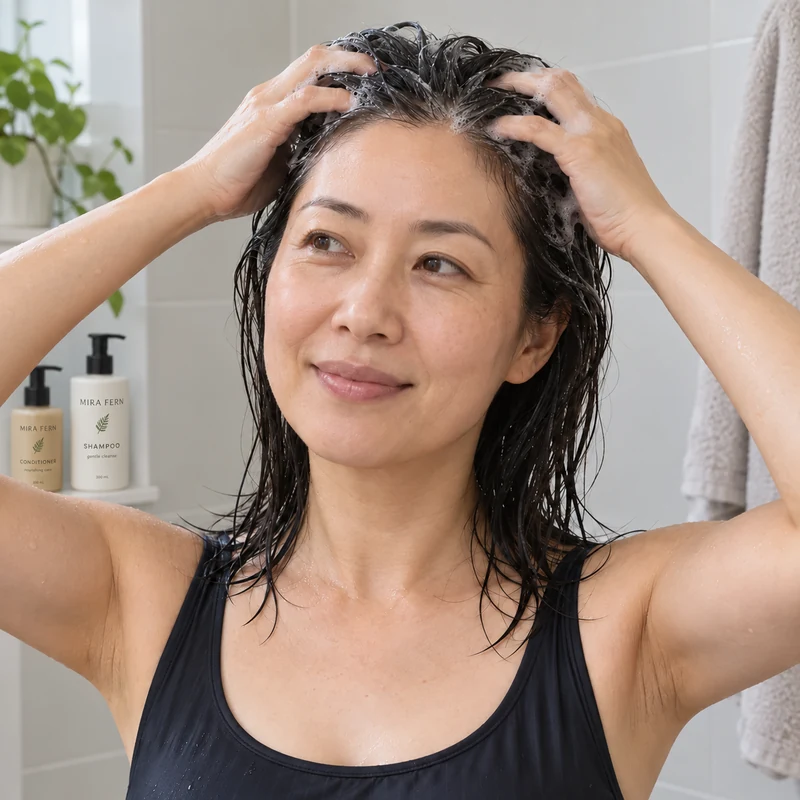
A woman massaging shampoo lather onto her scalp with her fingertips.

Wash the scalp without matting the lengths

Wash when the scalp is oily or has product on it, not on a fixed schedule. Keep the handling gentle and follow any directions from your last service.

Browse cleansing products. Bring the shampoos you are choosing between to the consultation, along with what you liked or disliked about them.

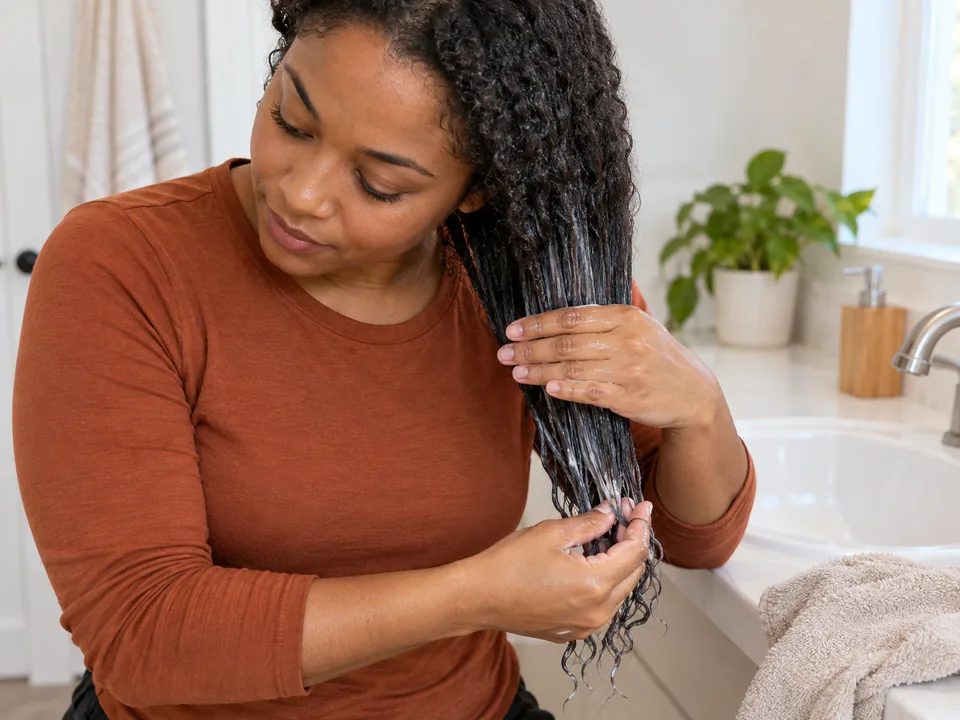
A woman smoothing conditioner through her mid-lengths and ends.

Put the slip where it catches

Use conditioner where detangling needs help, including the relaxed lengths. Weigh slip against heaviness, because more product isn’t a better transition plan. Conditioner can’t take the treated ends away either, only make them easier to handle.

Browse rinse-out conditioners. Tell the consultation what you want from a conditioner and what you disliked about previous ones.

How to do it

One hand supports conditioned lengths while the other finger-detangles gently from the ends upward.

2. Don’t let the wash make new tangles

If the lengths are fragile, keep them hanging straight down through the cleanse and the rinse rather than piling them on top. Gentle handling is enough. A transition doesn’t call for harder washing.

Guide: Wash fragile over-processed hair with less friction

When to get help

A medical professional examining the scalp where a woman points.

Signs that need more than routine care

  • If you notice patchy loss, a sore scalp or irritation that doesn’t settle, that’s worth showing a medical professional. Breakage that keeps increasing deserves a proper look too, rather than another chemical service to force the textures to match. For the cut and the day-to-day handling, a good stylist is your person.

Illustrated care examples: before & after

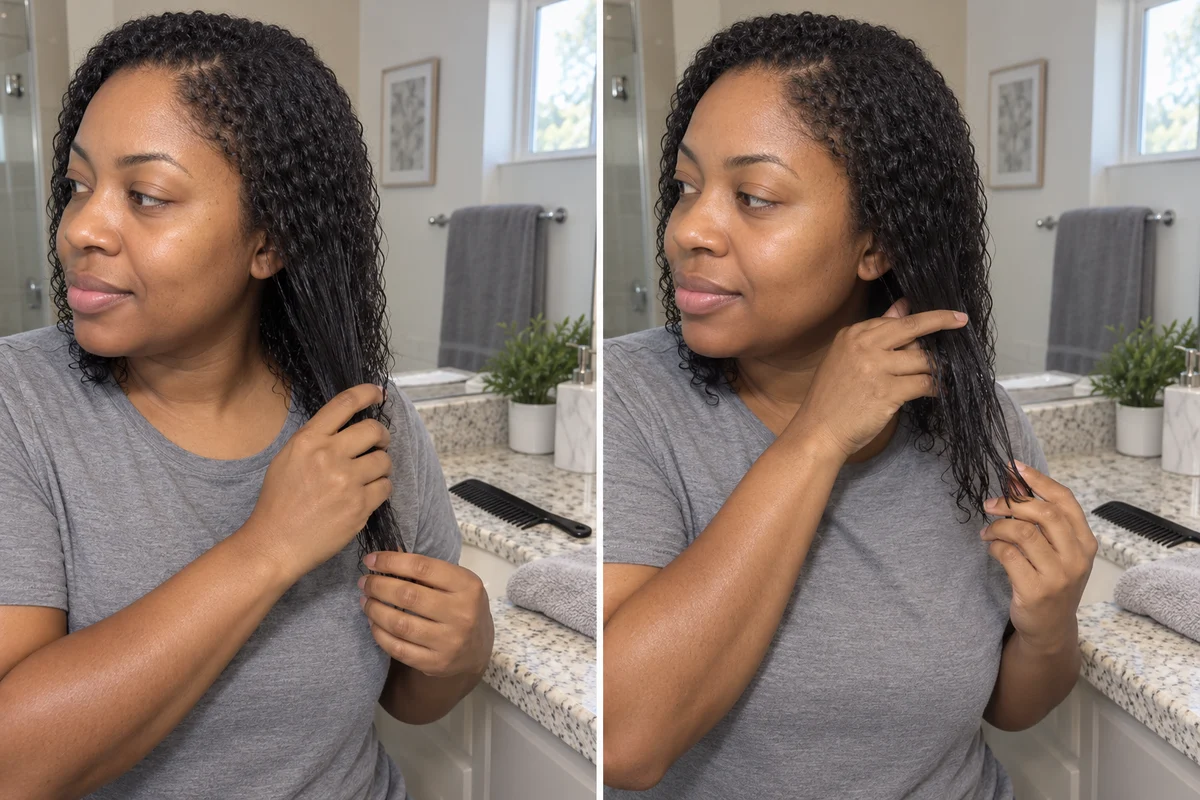
Hold above, ease below

The same adult changes from holding a damp section to supporting above it while gently separating its ends, with mixed texture unchanged.
Before · damp section readyAfter care · section held, ends separated
The damp section is held above the spot being worked while a few ends are eased apart. The two textures stay as different as they were.

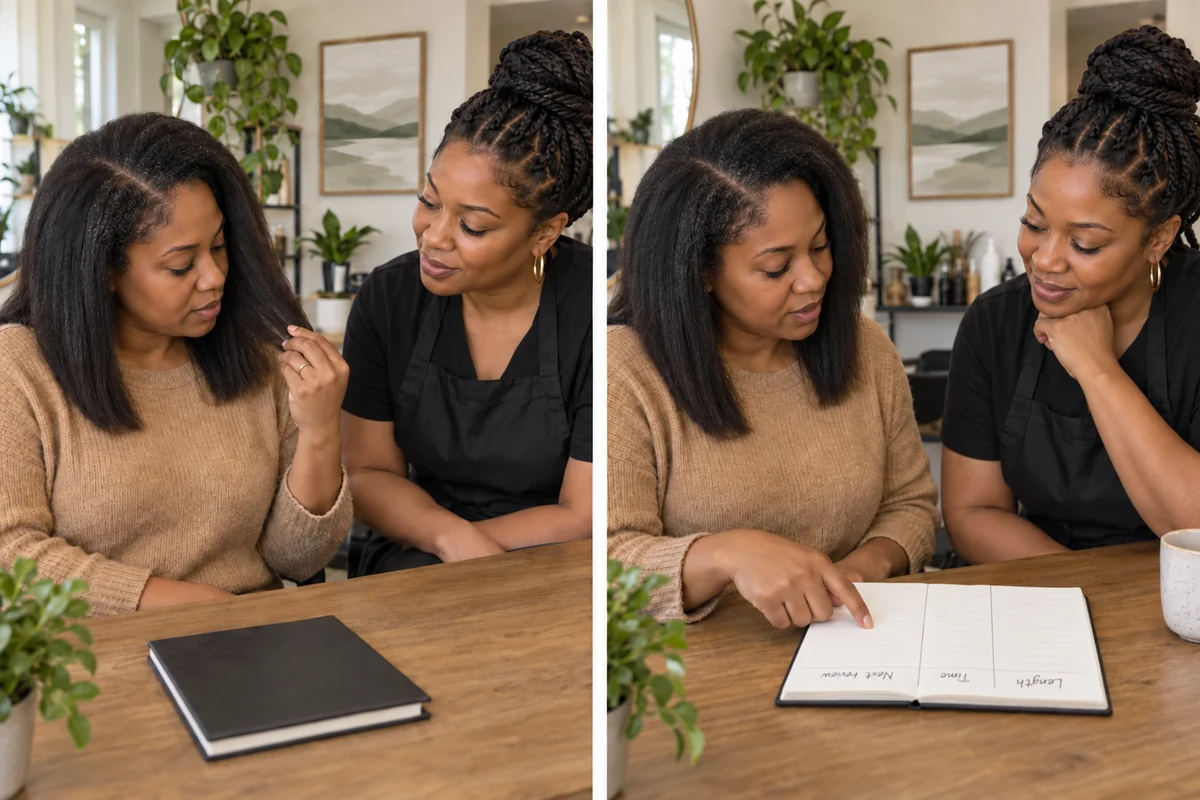
Your length, your plan

The same client and stylist move from discussing retained length to recording length, time and a next review in a notebook.
Before · length question still openAfter care · length and care priorities written
The open question about length becomes a written plan around the length you want and the care time you have. No cutting here, just deciding.
A woman with very short hair writing an appointment checklist.

Help with your hair-care routine

Bring your hair-care questions to the consultation. You can also read caring for sections with different textures.

  • How much length do I want to keep right now?
  • Which part of the routine is making this hard?
  • What would make me change my mind about the trim plan?

Tell us where the new growth meets the relaxed hair, where it catches, how much length you want to keep and the time you have. The plan can organize washing and conditioning around both textures while you decide how slowly to let the ends go.

The Hair Care Consultation gives you a personal plan with product recommendations, routines and guidance on your hair-care questions.

$49 with 60 days of follow-ups, or $99 with 12 months. Pay once; the year renews only if you choose.