Hair Care Guides

Care for the length you’re growing.
Make tangles and daily snags easier to manage.

It is frustrating to grow your hair out while the ends keep catching or snapping. Give rough areas their conditioner, make detangling gentler and move the lengths clear of the straps, collars and tools that repeatedly catch them.

Your personal hair-care planProduct choices, routines and answers shaped around your hair.$49one-timeStart my consultation
A woman supporting the ends of her long hair.
Make tangles and daily snags easier to manage.

What is going on

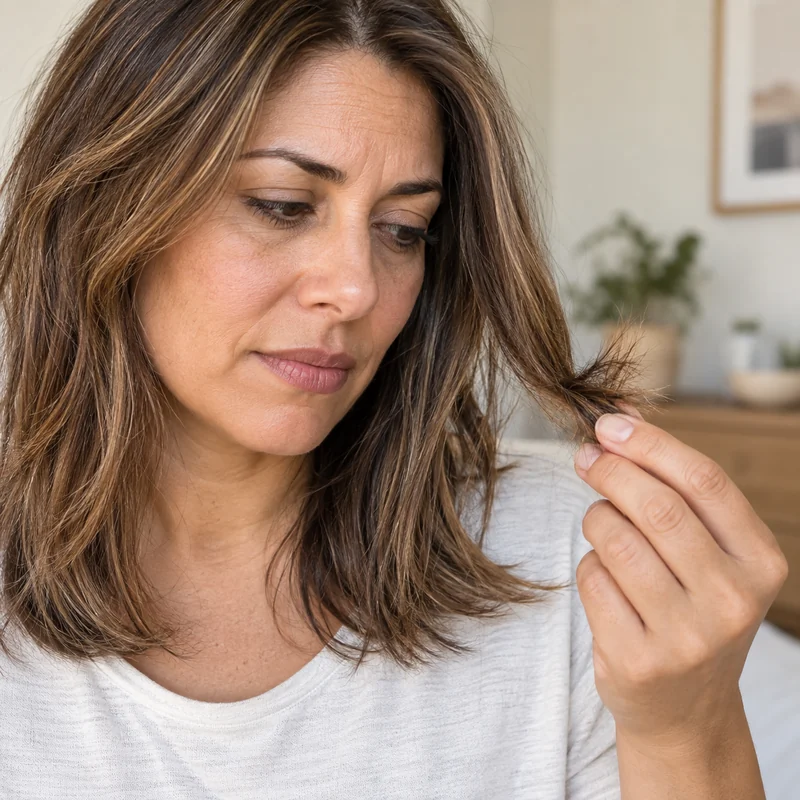
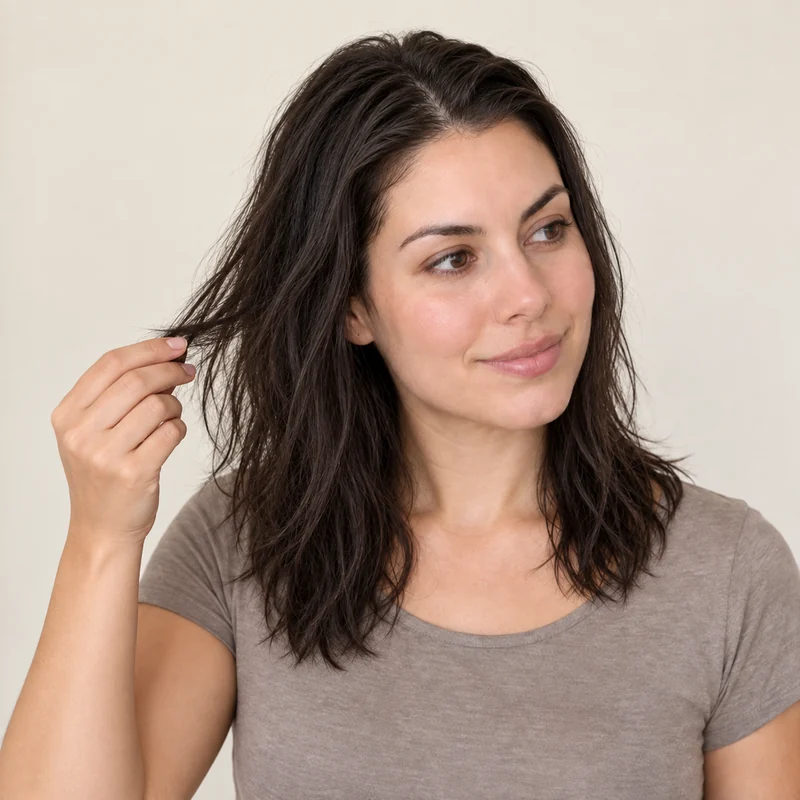
A woman examining rough, uneven ends in a section of highlighted hair.

Start with the places that keep breaking

Rough handling, repeated heat and chemical services can leave lengths more prone to breaking. Work on the part of the routine that catches those areas. Use conditioner through rough sections, support them while combing and avoid repeated passes with a hot tool.

A seated woman writes a note beside shampoo and hair-mask containers.

Compare length in the same hair state

Wet, stretched and curled hair can look different in length. If you want a progress photo, use a similar hairstyle, pose and light each time. Occasional comparisons are more useful than checking every day. Keep a care routine that already works.

What helps, day to day

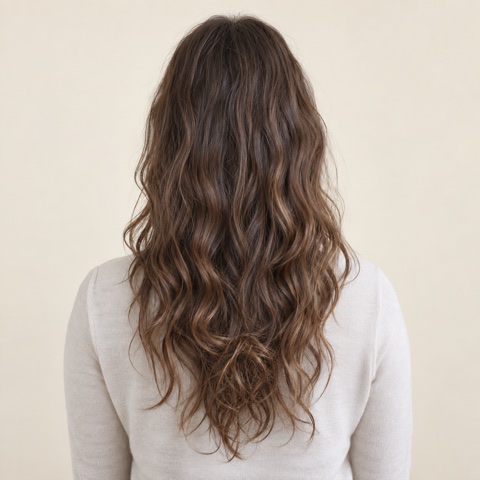
Wavy hair with tangles concentrated near the ends.

The same ends keep knotting

  • Smooth rinse-out conditioner through rough wet lengths and underneath each section.
  • Detangle curls damp with conditioner, then rinse.
  • For straight or loosely wavy hair, rinse and let it partly dry first.
  • Support above a snag, clear the tips with downward strokes and stop at a tight mat.
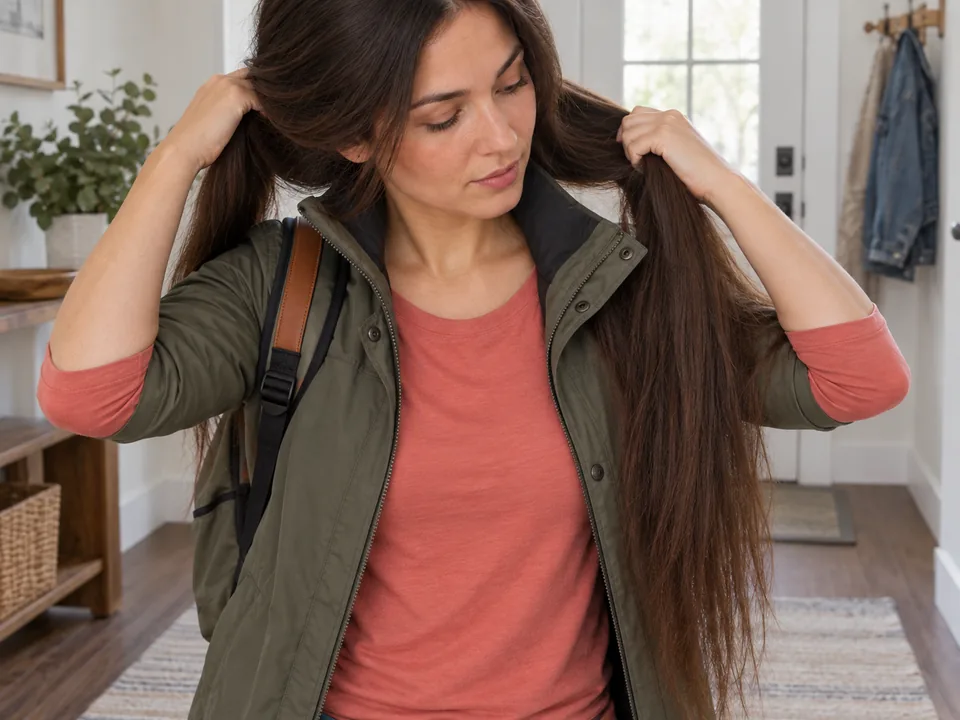
Both hands lift long hair clear before a collar and backpack strap touch the nape.

Hair catches under straps or on collars

  • Begin with dry, detangled loose hair and lift the lengths clear before putting on a bag or coat.
  • Wear the smooth side of a scarf against the hair, or keep loose lengths outside it.
  • A comfortable tie or loose braid can keep hair together.
  • Release it if it pulls.
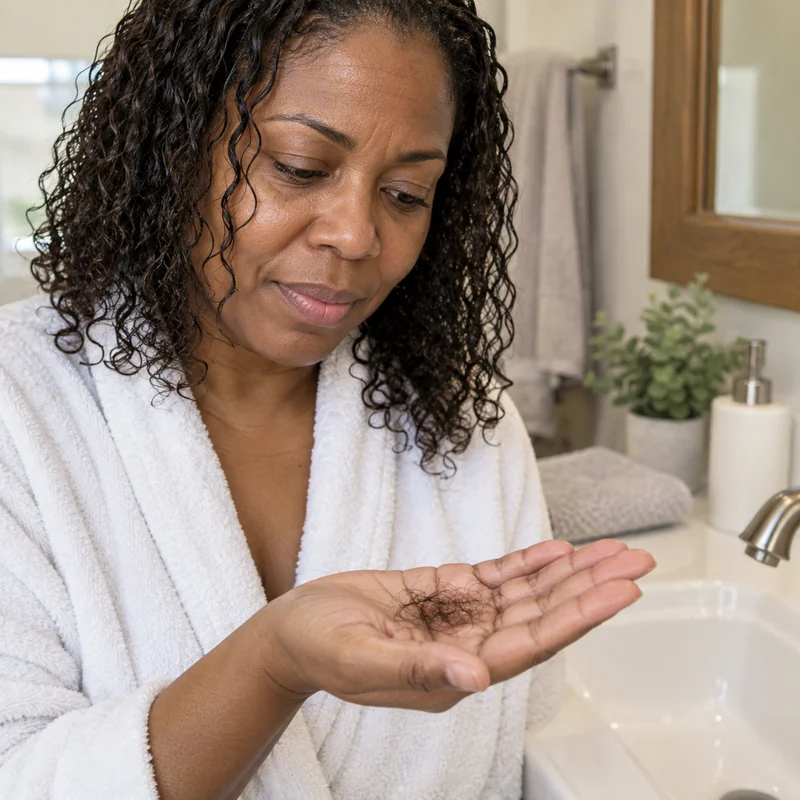
A woman looking at loose shed hairs in her palm after washing.

Long loose hairs look worrying at wash time

  • Some daily shedding is normal.
  • Keep washing when the scalp is oily or dirty, then loosen tangles in small supported sections.
  • If the amount you shed has clearly increased, keep the timing with any other recent changes so you can explain what changed.
A woman gently feeling a section of her loose hair with her fingers, with no visible product.

Split tips keep catching after conditioning

  • A trim removes split tips and also removes some length, so tell your stylist how much you want to keep.
  • Use hot tools less often and avoid repeated passes over the same ends.
  • Discuss fragile bleached or straightened lengths before another chemical service.

Products, by the job they do

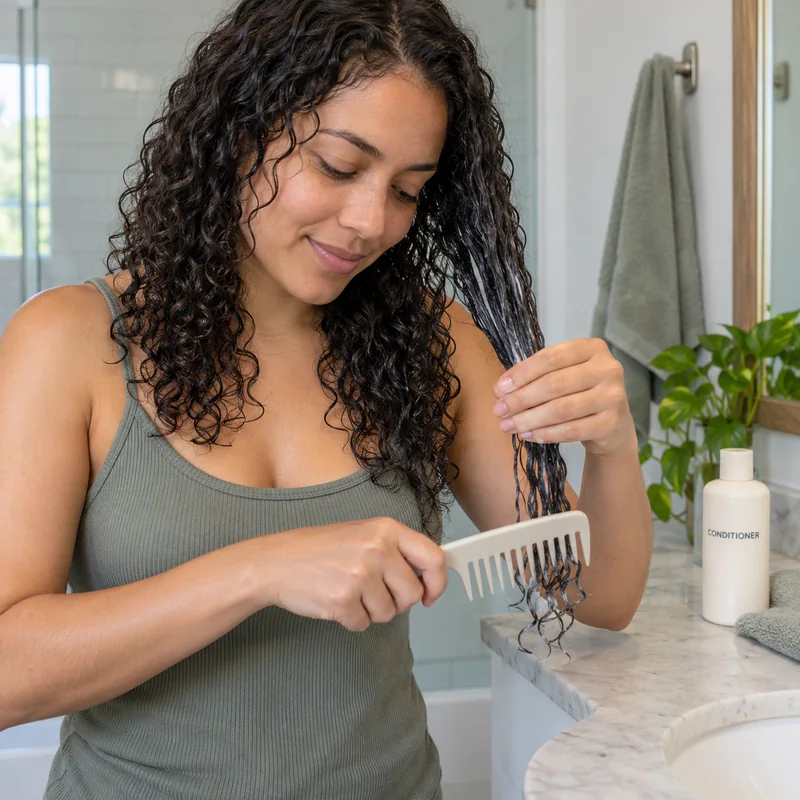
A woman supports one damp curl section above a wide-tooth comb at the tips beside a conditioner bottle.

Conditioner that helps you detangle gently

Work a wet-use rinse-out conditioner through reachable sections after shampooing. Share its total amount between them and reach the underside. Follow its waiting and rinsing steps. Judge both gentle detangling and the dried feel before trying another treatment.

Browse rinse-out conditioners. Tell the consultation what you want from a conditioner and what you disliked about previous ones.

A woman smooths the lower part of her loose wavy hair between her palms.

An optional leave-in for rough areas

If the ends still feel rough after washing, try a little leave-in there at the next wash. Use the wet, damp or dry starting state on its bottle. Check the dried finish before adding more, and use less next time if it feels coated.

Browse leave-in conditioners

Illustrated methods for longer lengths

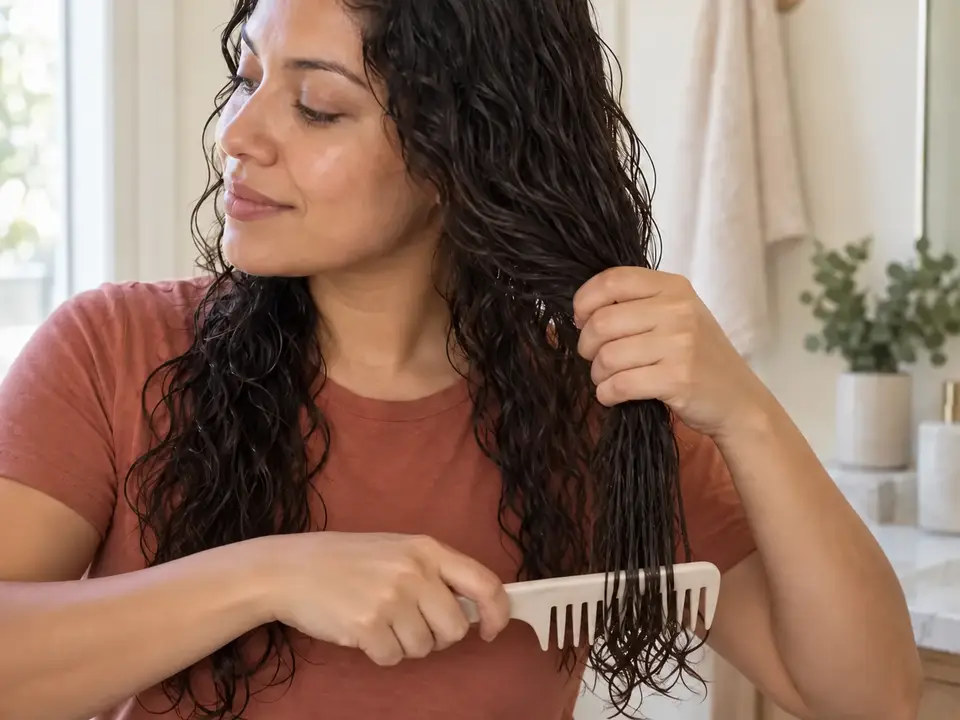
Woman supports a damp wavy-curly section while a wide-tooth comb begins at the lowest hair tips.

Support the section and clear the tips first

For curls, detangle damp with conditioner. For straight or loosely wavy hair, rinse out conditioner and let it partly dry. Support above a knot and comb the tips downward. Start higher only after the lower hair is clear, and stop if it hurts.

Guide: Detangle with a wide-tooth comb
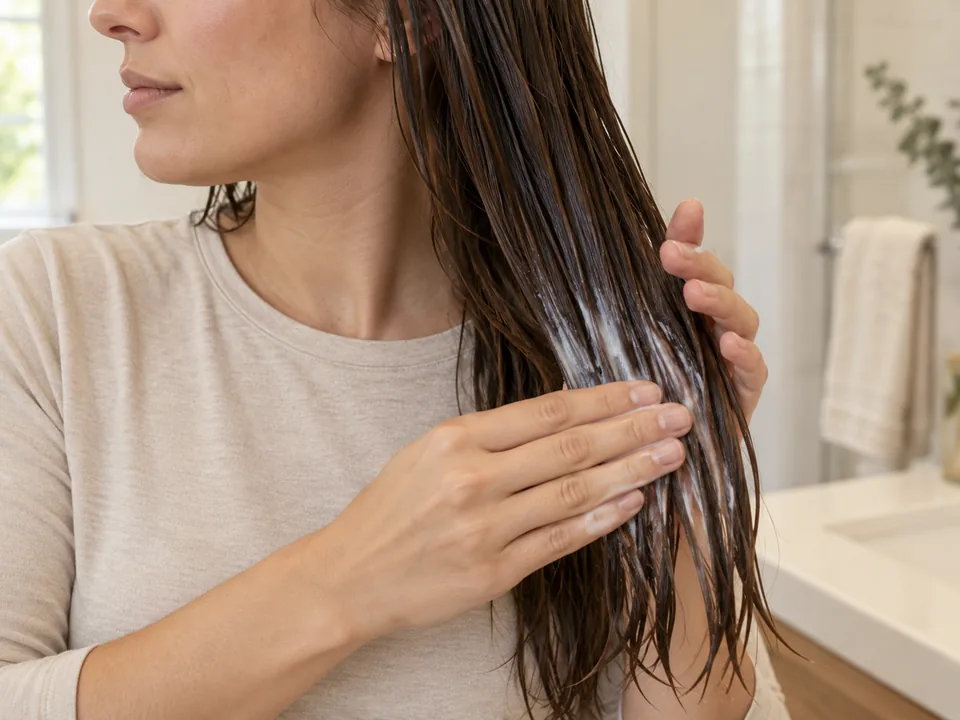
A thin coating of conditioner being smoothed over the lower lengths and ends, away from the scalp.

Reach underneath as well as the ends

After rinsing shampoo, separate wet hair into reachable sections. Smooth rinse-out conditioner through rough areas and their underside. The linked guide shows application and rinsing with a conditioner used on wet hair.

Guide: Apply conditioner to the lengths and ends
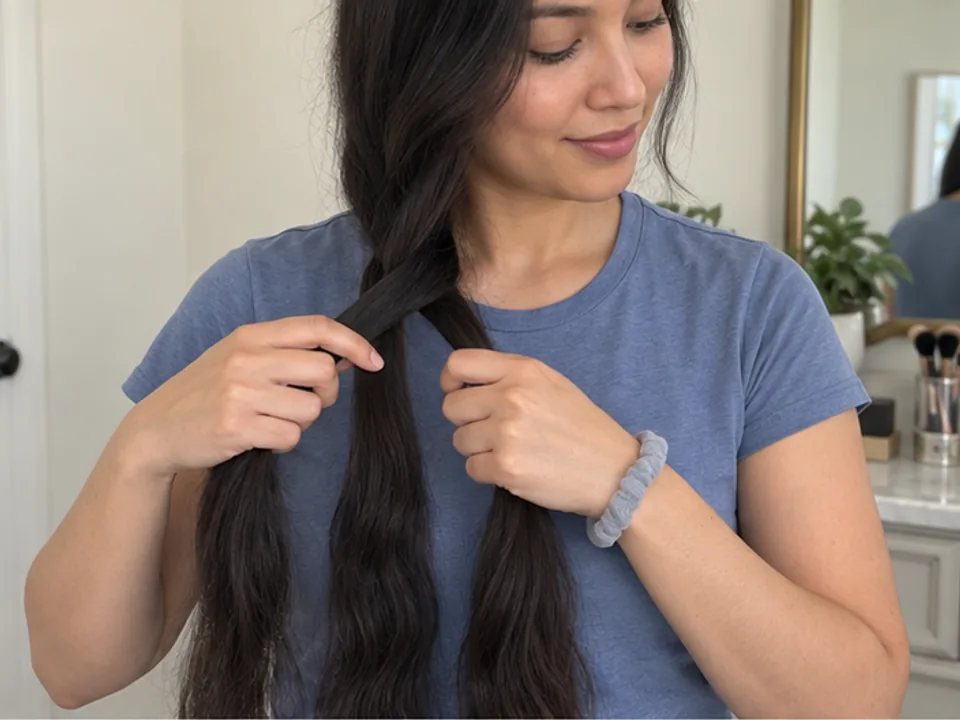
A woman begins a side braid by moving one outside section over the middle, keeping three sections separate.

Keep reachable lengths loosely together

Start with dry, detangled hair that reaches over one shoulder comfortably. Divide it into three sections, cross the outside sections over the middle and use a soft tie. Undo it if it pulls. Support the hair and remove the tie before unbraiding from the bottom.

Guide: Make a loose everyday braid
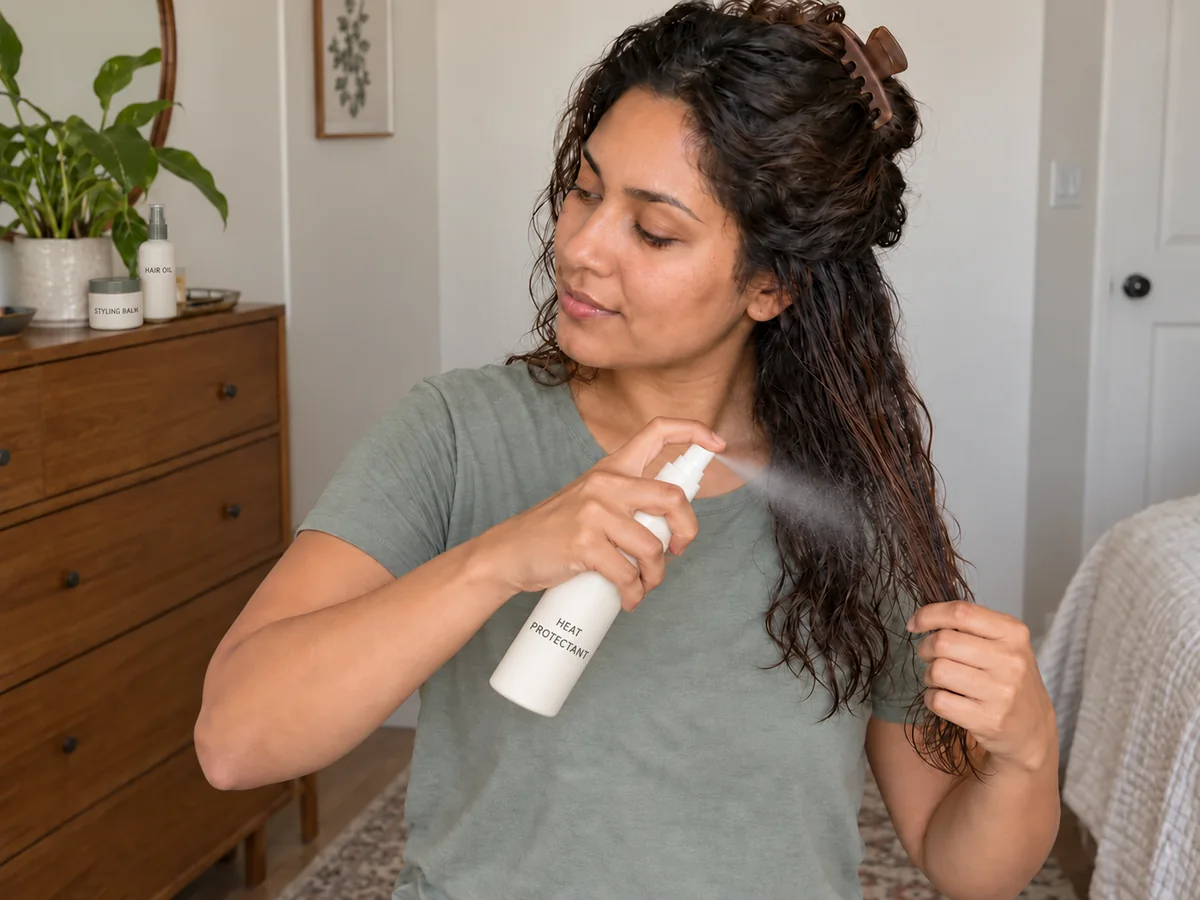
A woman pumps heat-protectant spray toward a held damp section, away from her face.

Prepare damp hair for a blow-dry

Use the pictured pump spray on damp, detangled loose hair before blow-drying, if its directions allow that. Reach inner sections and keep spray away from your face. Flat and curling irons need their own preparation on fully dry hair.

Guide: Apply heat protectant evenly

When to get help

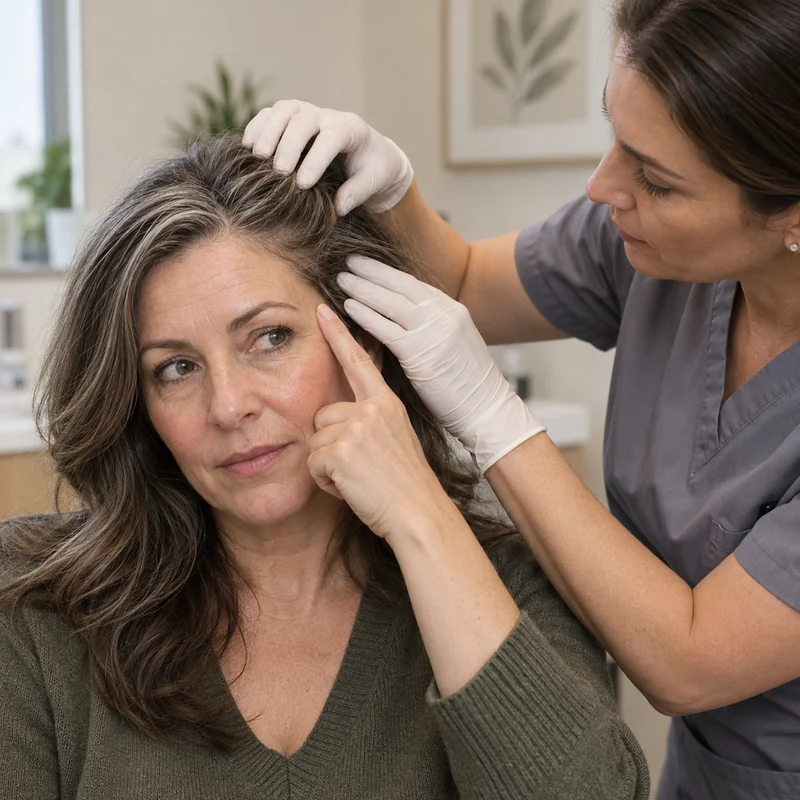
A medical professional examining the scalp where a woman points.

Signs that need more than routine care

  • Speak with a medical professional if your part becomes wider or shedding clearly increases while you are growing your hair out. Bring when it changed and any recent changes in medicines or health. Ask before changing how you take a suspected medicine.

Illustrated care examples: before & after

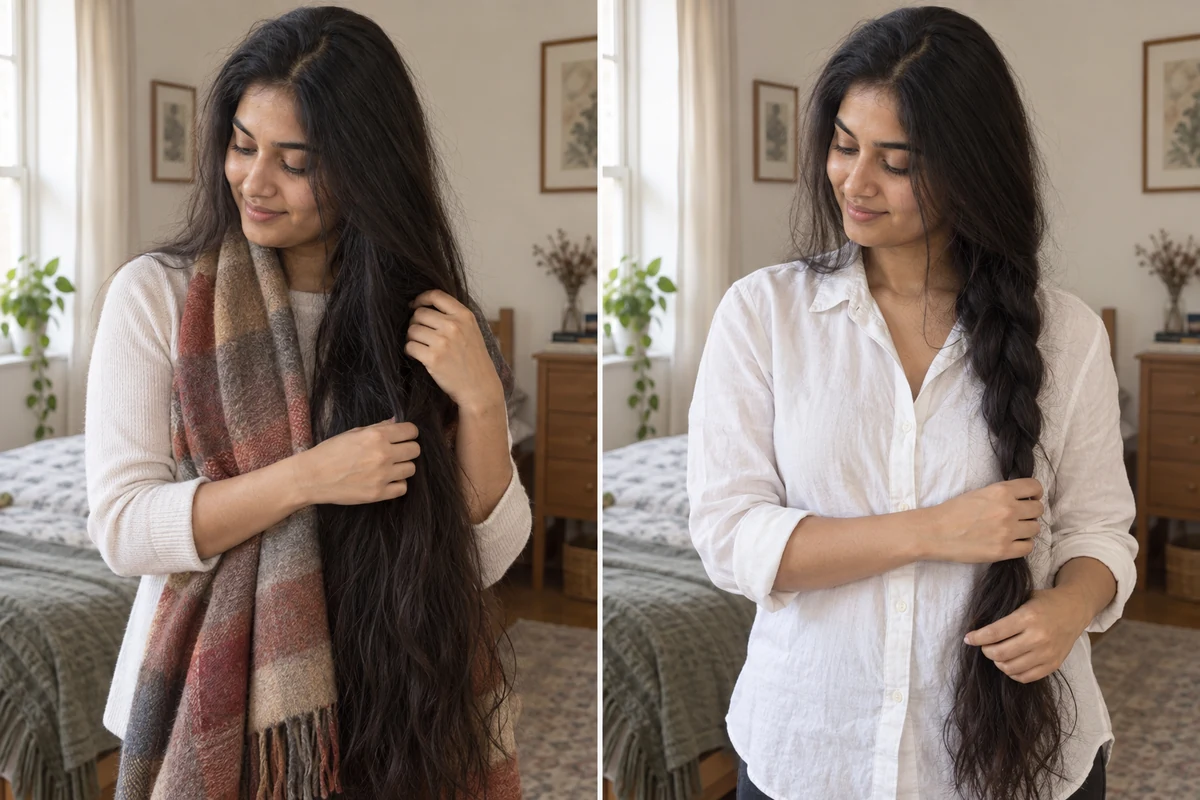
Lengths away from the scarf

Illustrative handling comparison: loose long hair beside a scarf and a loose braid held over a white shirt.
Before · loose hair beside a scarfAfter styling · a braid over a shirt
Loose hair lies beside a scarf on the left. On the right, the braid is held together over a shirt.

More grouped ends

Illustrative styling comparison: separated auburn ends beside waves arranged in larger groups.
Before · rougher separated endsAfter styling · ends in larger groups
The lower waves sit in more separated strands on the left and form larger groups on the right.
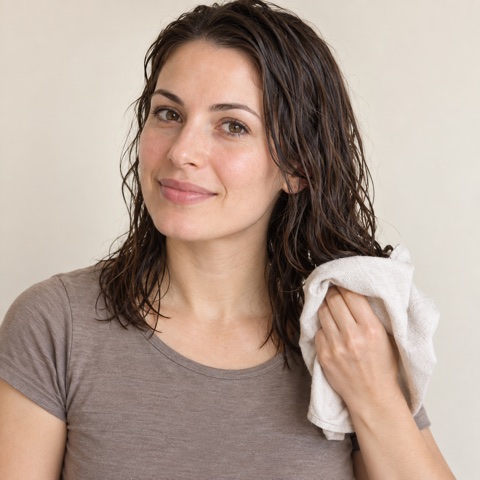
A woman gently squeezing damp hair with a towel.

Help with your hair-care routine

Bring your hair-care questions to the consultation. You can also read Care for breakage and split ends.

  • How can I make my ends easier to detangle?
  • Which conditioner suits the length I’m growing?
  • How could I keep my hair clear of straps?

Tell us where the hair catches, how you wash and dry it, and which lengths have been bleached or straightened. The plan can fit your texture, scalp needs and the time you have for longer hair.

The Hair Care Consultation gives you a personal plan with product recommendations, routines and guidance on your hair-care questions.

$49 with 60 days of follow-ups, or $99 with 12 months. Pay once; the year renews only if you choose.