Hair Care Guides

Make room in the cap for all of it.
Comfort first, then the seal.

Long hair needs space inside a swim cap, not just a bigger opening. Practice at home first, not on the side of the pool. And plan for wet hair afterward, because no cap keeps every strand dry.

Your personal hair-care planProduct choices, routines and answers shaped around your hair.$49one-timeStart my consultation
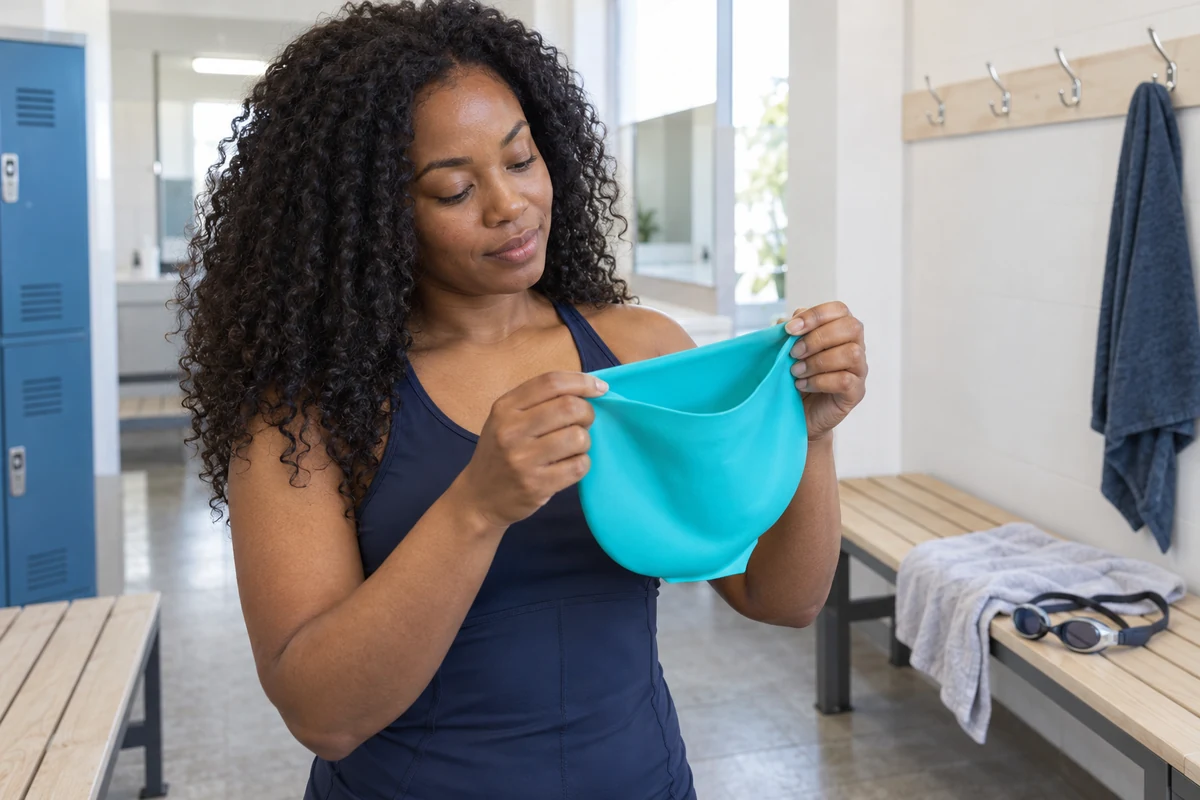
An adult swimmer with long dense curls holds a roomy silicone swim cap open in a dry changing area.
Comfort first, then the seal.

What is going on

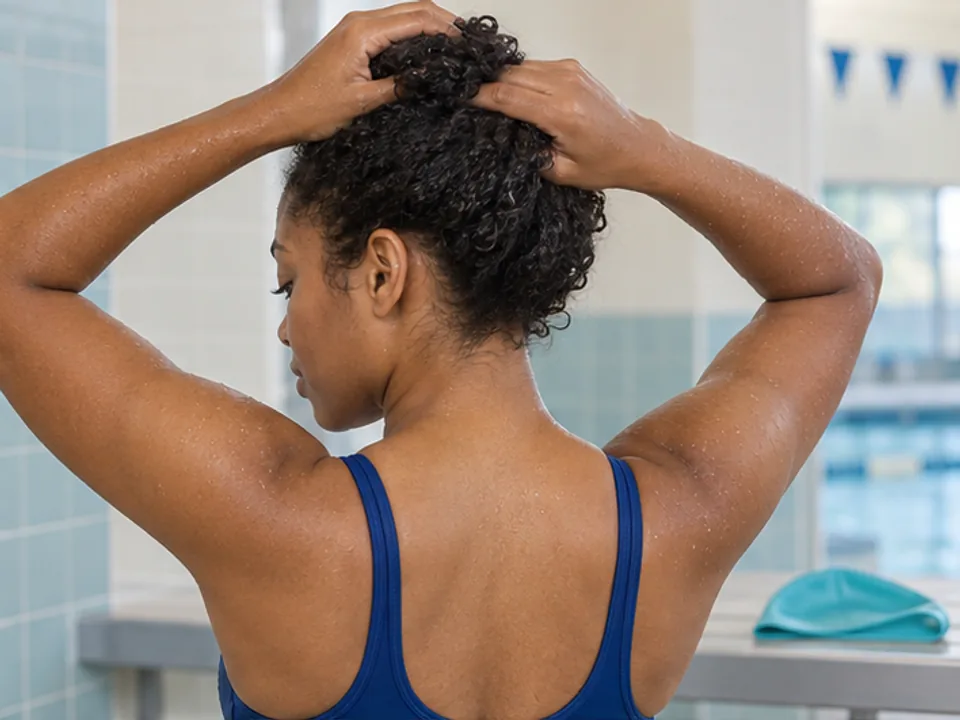
The same woman uses both hands to gather her wet curls broadly near the crown without a tie or pin.

Match the cap to how much hair you have

Think about the amount of hair you’re packing in, not just how long it is. Caps made for long hair give more room, but sizes vary. If a loose gather still won’t go in, you need a roomier cap, not a tighter hairstyle.

A woman wets her loose curly hair under a fresh-water shower before putting on a swim cap.

Rehearse before the first lap

Try the cap on dry at home to learn how it moves. For the real thing, wet your loose hair with fresh water first and gather it the way the linked method shows. Take out sharp clips and use the pads of your fingers.

What helps, day to day

After swimming, the same woman lifts the opening of the wet swim cap up and away while her damp curls release.

The edge catches when you take it off

  • Out of the water, lift one edge away from the hair before you ease the cap off.
  • Free any caught strands with your fingers instead of dragging the cap over them.
  • If the same spot pulls every time, change the cap or the way you gather before the next swim.
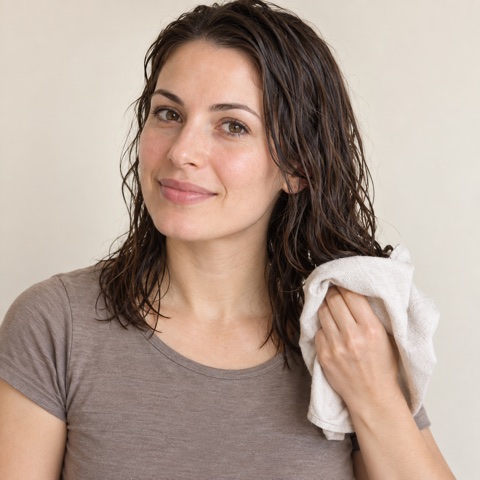
A woman gently squeezing damp hair with a towel.

Your hair is wet anyway

  • Some water always gets in around the edges, even with a careful fit.
  • Don’t keep tightening a comfortable cap to chase dry hair.
  • Bring a towel and leave time to rinse and dry afterward.
  • Wet hair after a swim is normal, not a sizing problem.

Products, by the job they do

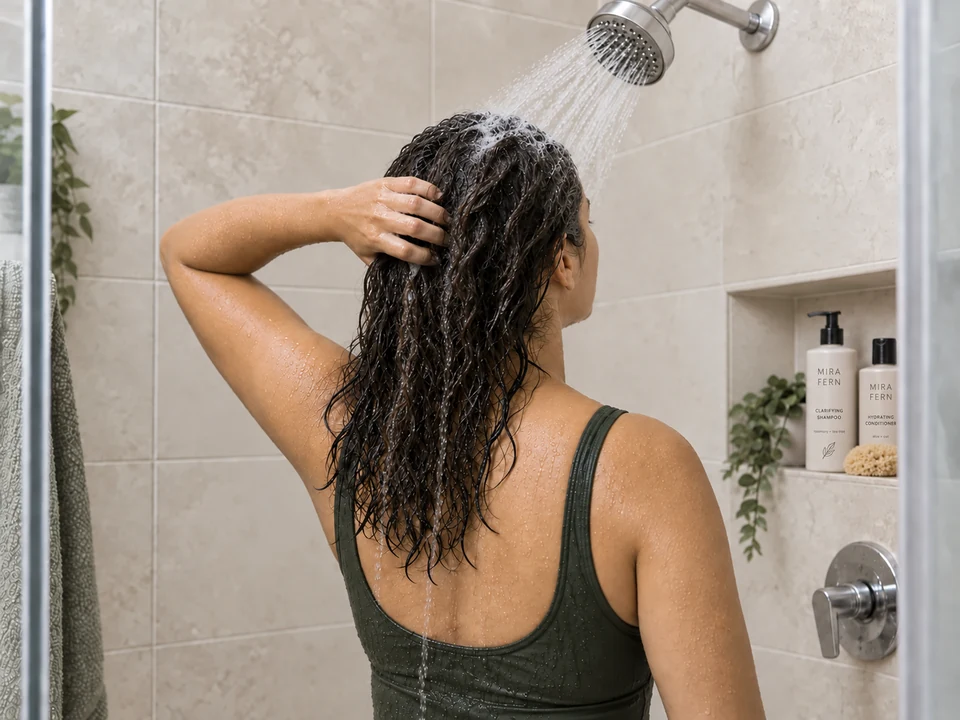
A woman lifts her own wet hair at the back while water from a fixed showerhead reaches her crown.

Plan the wash for after the swim

Choose your shampoo for your scalp and how often you’re in the pool, not for the cap. There’s no need to put extra product under the cap.

Browse cleansing products. The consultation uses your wash frequency and scalp concerns to recommend a shampoo.

A woman smoothing conditioner through her mid-lengths and ends.

Condition the lengths after swimming

After a swim is when the lengths want slip, so condition and rinse then. Don’t leave a rinse-out conditioner in under the cap, and don’t add a slippery layer to squeeze more hair in. Room comes from the cap, not the product.

Browse rinse-out conditioners. Your tangles, past treatments and preferred finish help guide a personal conditioner recommendation.

How to do it

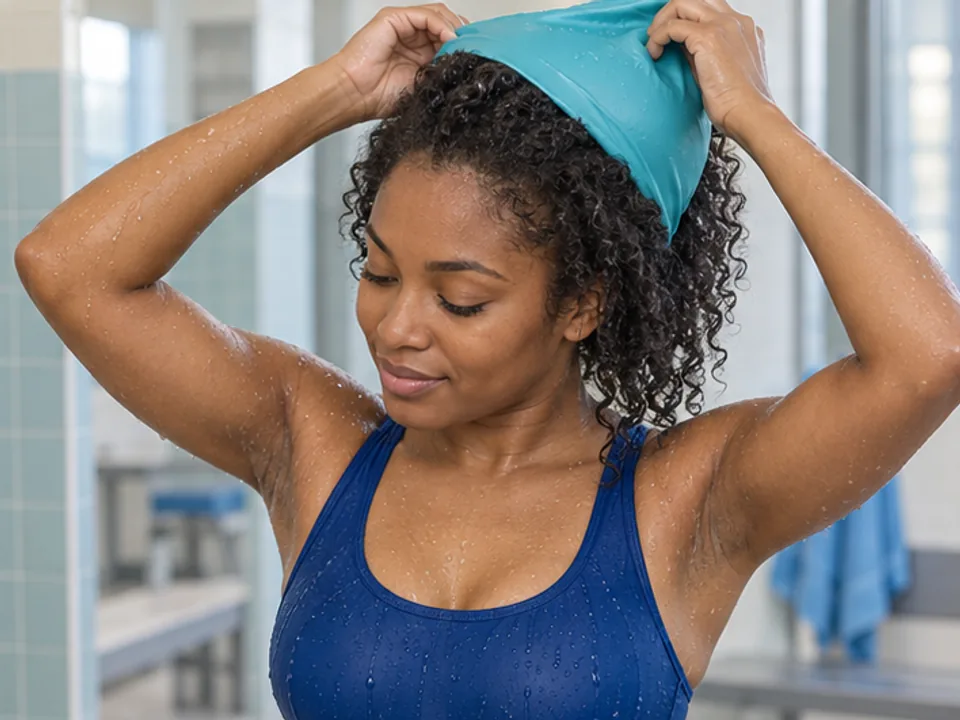
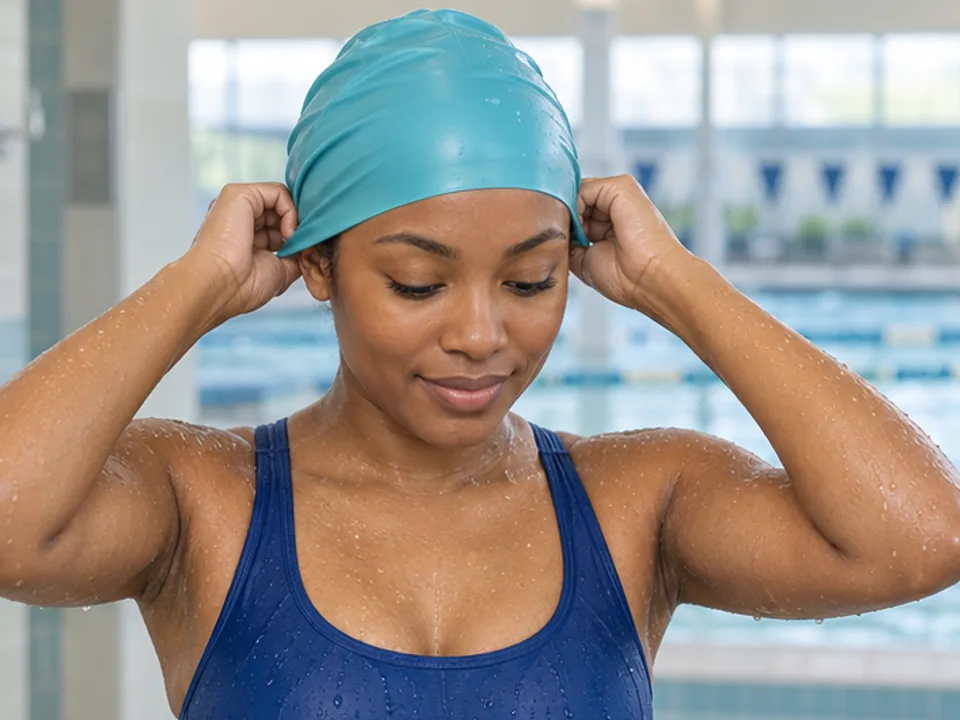
The same woman adjusts the lower edges of a turquoise swim cap with her fingertips after covering her hair.

1. Gather, place and release without forcing

This method covers wetting with fresh water, a wide loose gather, placing the cap and taking it off, all for loose hair. Locs, braids, extensions and hairpieces need a cap and a routine chosen for them.

Guide: Prepare your hair for swimming
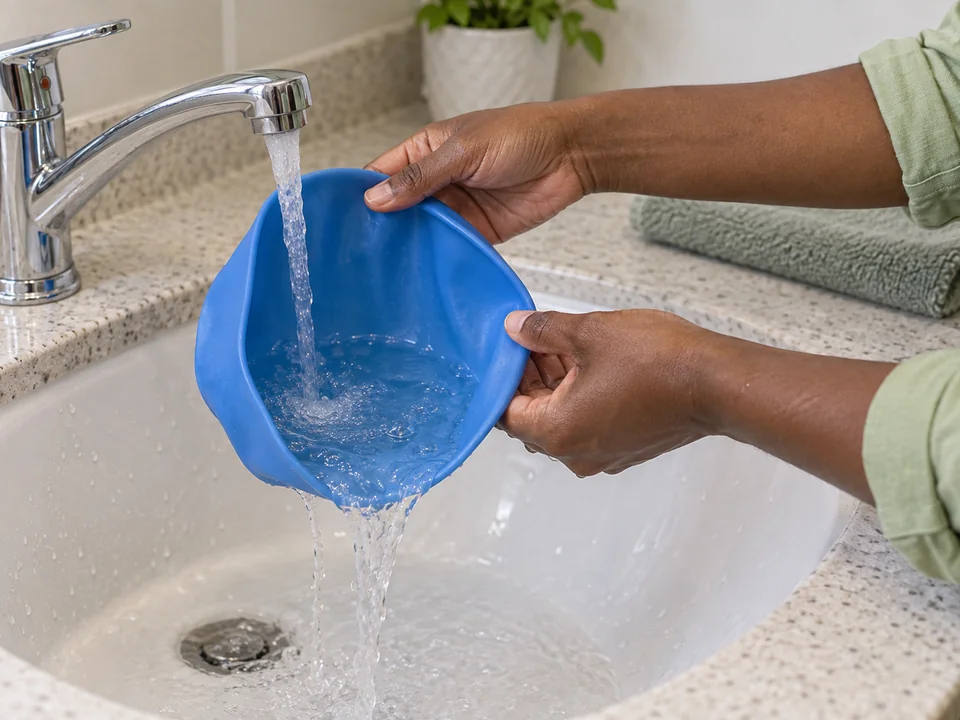
Hands gently hold a silicone swim cap under fresh water to rinse the inside.

2. Look after the cap too

If your cap is silicone, rinse both sides after each swim and let it dry before it goes in the bag. Keep nails and anything sharp away from it. Other materials have their own care, so check the cap’s instructions.

Guide: Rinse and dry a silicone swim cap

Illustrated care examples: before & after

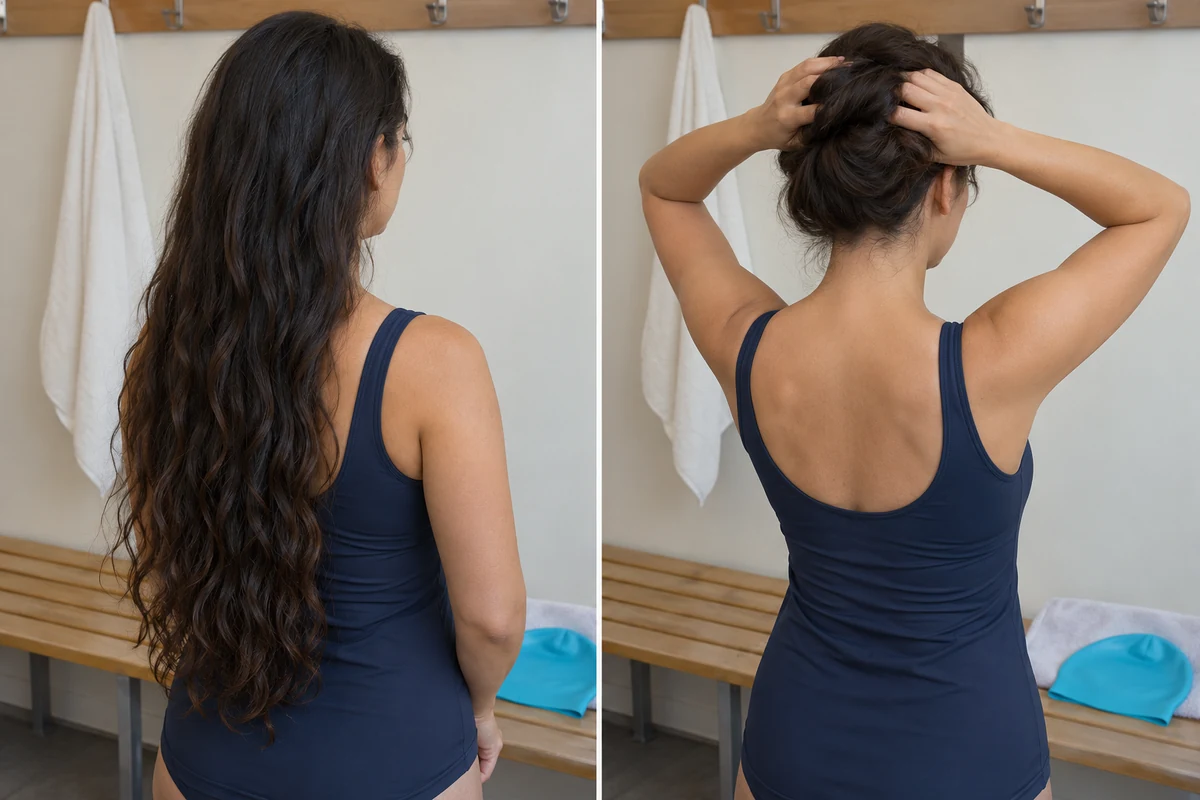
Gathered before the cap

Two panels show long loose hair, then the same lengths gathered broadly against the head with both hands while the cap remains off.
Before · long lengths hanging looseAfter the change · lengths gathered wide and flat
The lengths are gathered into a broad shape ready for the cap, which is still off. How it seals is a separate question for your own cap.

Cap off, hair out

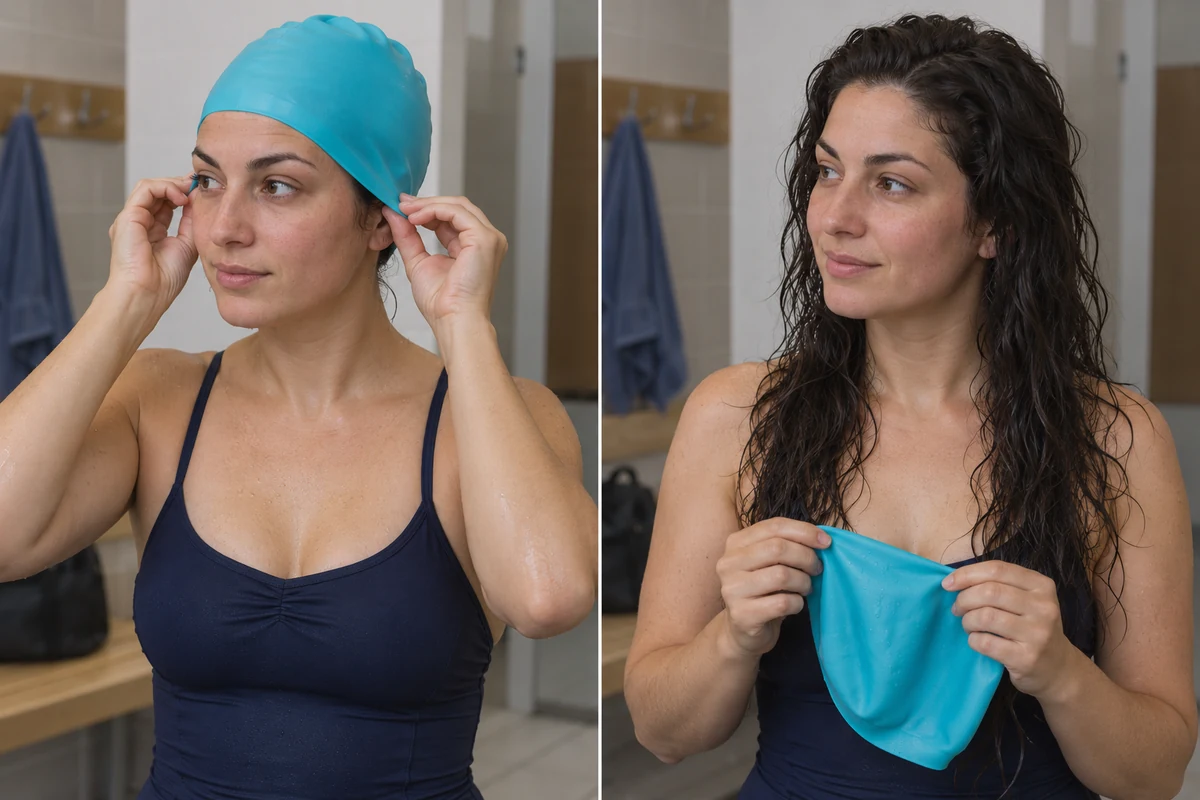
Two panels show a swimmer lifting the cap edge away from hair, then holding the removed cap while damp hair is released.
Before · lifting the cap edgeAfter the change · cap off, damp hair loose
Out of the water, the cap edge is eased up first, then the damp hair comes free. It is still damp, as you can see.
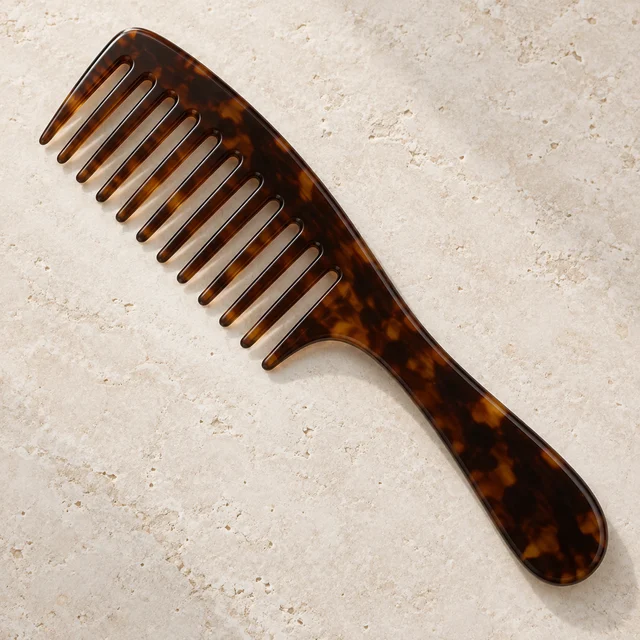
Wide-tooth comb

Help with your hair-care routine

Bring your hair-care questions to the consultation. You can also read Care for breakage and split ends.

  • Does my cap need more room, or do I need to gather my hair differently?
  • How do I stop hair catching when I pull the cap off?
  • What should I do with my hair after a swim?

Tell us how much hair you have, its length, whether it’s loose or installed, how your scalp feels and how often you swim. Say what happens when the cap goes on and comes off. Equipment rules stay with the cap maker and the pool.

The Hair Care Consultation gives you a personal plan with product recommendations, routines and guidance on your hair-care questions.

$49 with 60 days of follow-ups, or $99 with 12 months. Pay once; the year renews only if you choose.