Hair Care Guides

Is a protective style right for your life?
Plan for washing, drying and takedown before you book.

Braids or twists may reduce daily styling, but they still need washing, drying and eventual removal. Before choosing a style, check whether you can manage that care alongside work, exercise and sleep.

Your personal hair-care planProduct choices, routines and answers shaped around your hair.$49one-timeStart my consultation
A woman with loose coils looks at her phone beside an open calendar, notebook, towel and hair ties.
Plan for washing, drying and takedown before you book.

What is going on

A woman with curls writing a routine note beside her hair-care products.

Add up the time and cost

Ask about the appointment, added hair, upkeep and removal costs. Include wash days, complete drying and takedown help in your plans. If those do not fit, choose a simpler style or keep your hair loose.
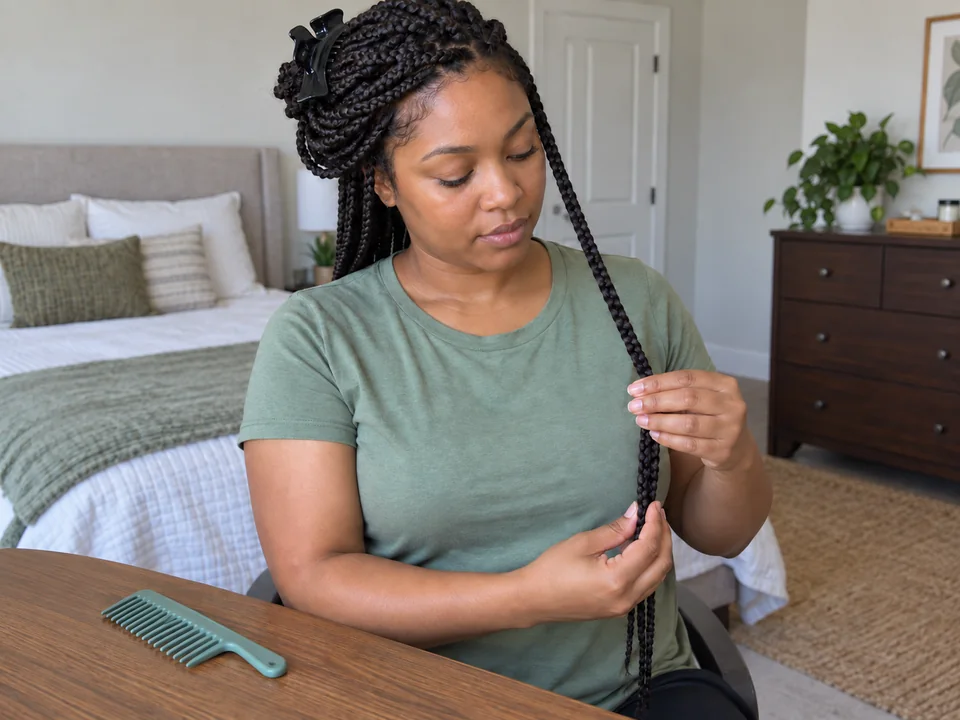
Supporting a single reachable braid while the remaining braids are held aside.

Discuss length, weight and removal

Ask how much hair will be added and how the finished lengths will feel and hang. Check that you can reach them for care. Ask how the ends and roots are secured, and who will remove them.
What helps, day to day

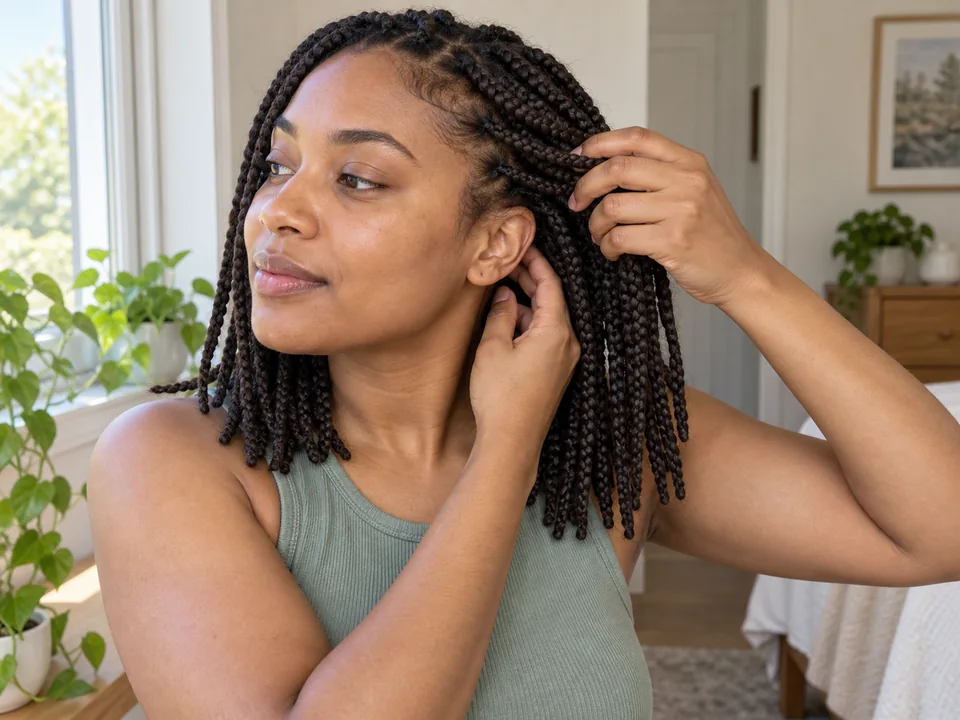
A woman with uncovered braids moves a small group aside and checks the roots behind her ear with her fingertips.

The roots pull or sting

  • Release an extra bun or ponytail without tugging.
  • If the installed roots still pull, contact the installer promptly to loosen or remove them.
  • Do not wait for pain to settle or try to cover it with oil.
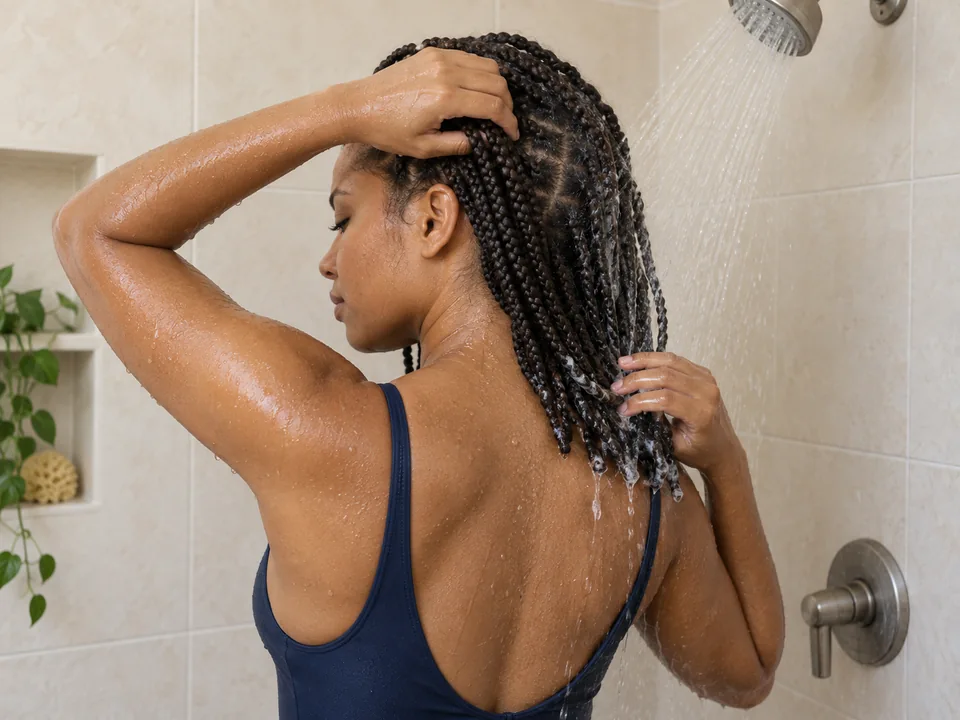
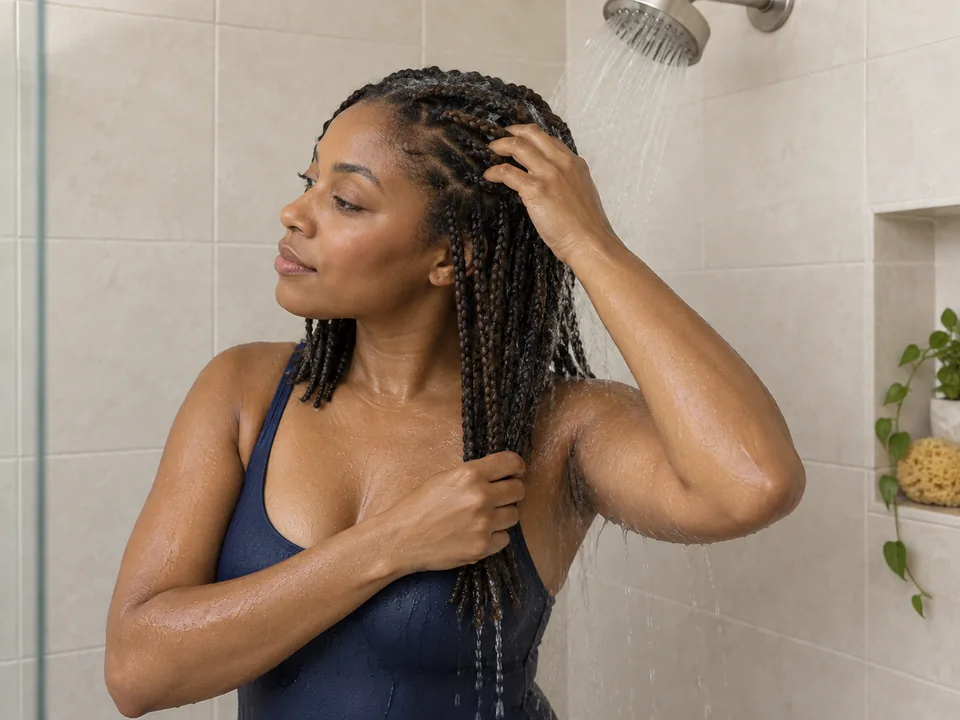
A woman in a navy swimsuit moves her own braids aside while a fixed shower wets the scalp and her other hand supports the lengths.

You swim or wash often

  • Tell the installer about swimming, workouts and how often you wash.
  • Confirm that the construction and added hair suit that care.
  • Choose a style you can rinse underneath and dry fully afterward.
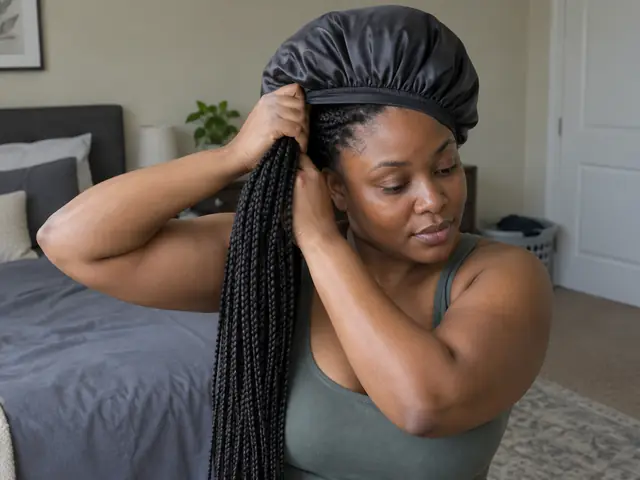
A woman pushes long braids into a small, overstuffed bonnet.

Your bonnet or helmet feels crowded

  • Choose a sleep bonnet that holds the style without squeezing or tugging.
  • Check any work or sports helmet using its fit instructions.
  • If the style prevents a proper fit, change the hairstyle; do not alter the safety gear.

Products, by the job they do

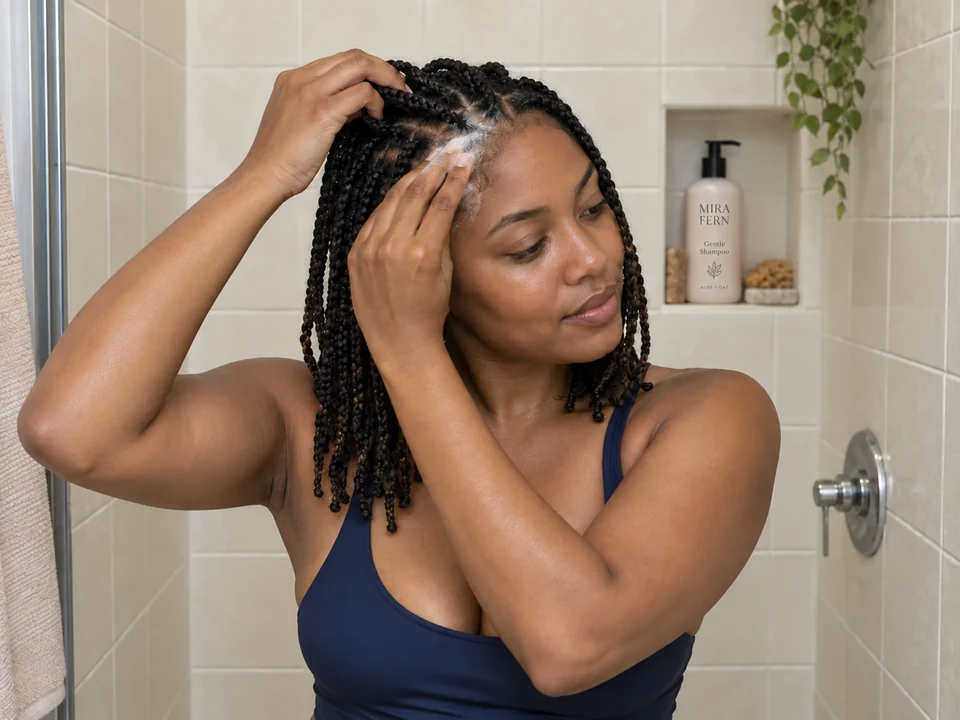
A woman in a navy swimsuit lifts braids beside her head while a fixed shower rinses through the roots and hanging lengths.

Keep the scalp reachable

Use a shampoo whose directions suit the installation and added hair. Move small groups aside along existing parts so you can wash the scalp and rinse between the roots.

Browse cleansing products. The consultation uses your wash frequency and scalp concerns to recommend a shampoo.
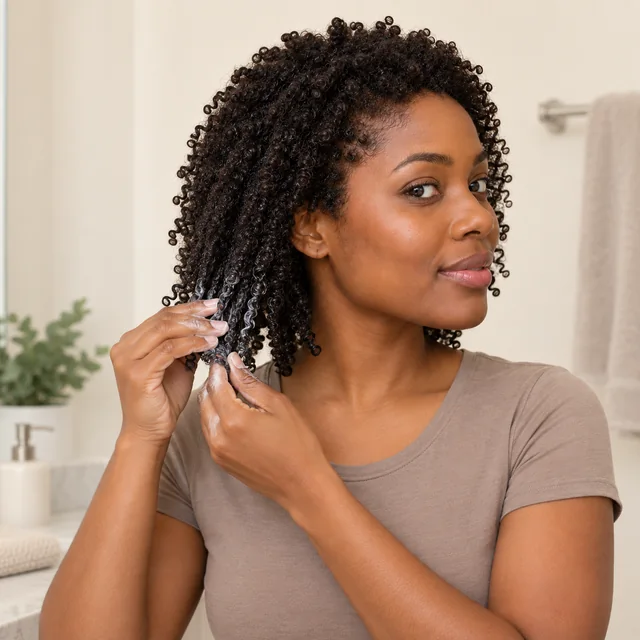
A person with medium coily hair applying conditioner to the ends.

Plan conditioning around the installation

Ask which products to use or avoid before installation and while the style is in. After takedown, gently detangle and resume washing and conditioning your own hair as needed. Conditioner cannot loosen a tight installation.

Browse rinse-out conditioners. Your tangles, past treatments and preferred finish help guide a personal conditioner recommendation.
Care to plan for while the style is in

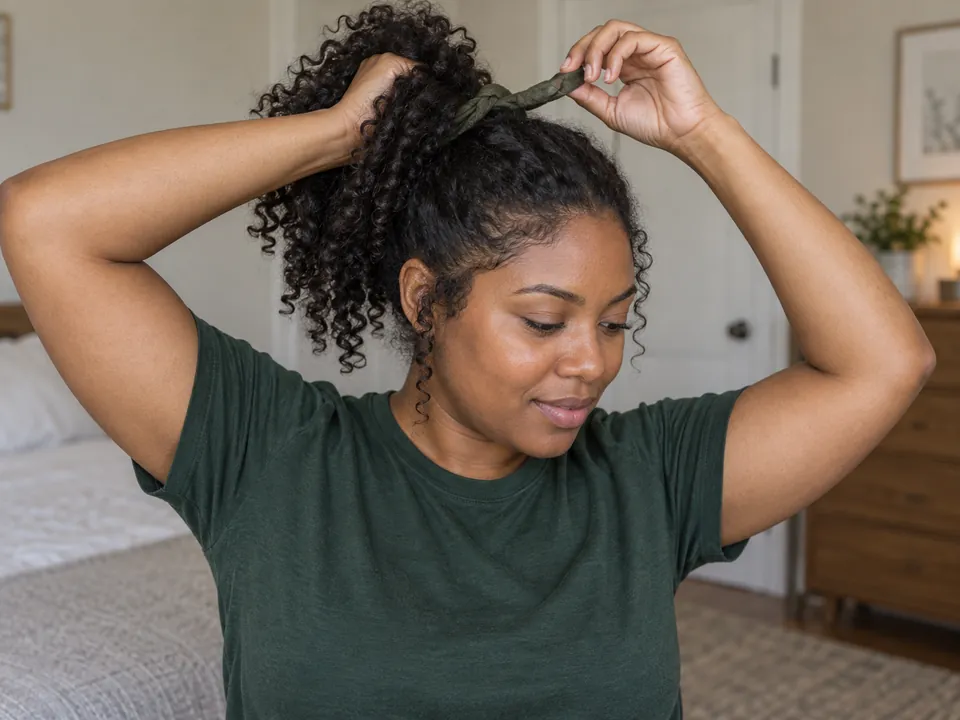
Supporting the ponytail while loosening its fabric tie.

Release a tie that pulls

This method removes a reachable tie or pins. Letting down a bun of braids does not loosen the installed roots; those need the installer’s attention if they pull.

Guide: Loosen a hairstyle that pulls
A woman outside the shower presses a light gray towel around her own braid lengths with both hands.

Dry after every thorough wetting

Press out water, blot and leave groups loose. Check roots, thick lengths and ends before tying, covering or bed. The linked method also shows optional unheated airflow.

Guide: Dry braids or twists after washing
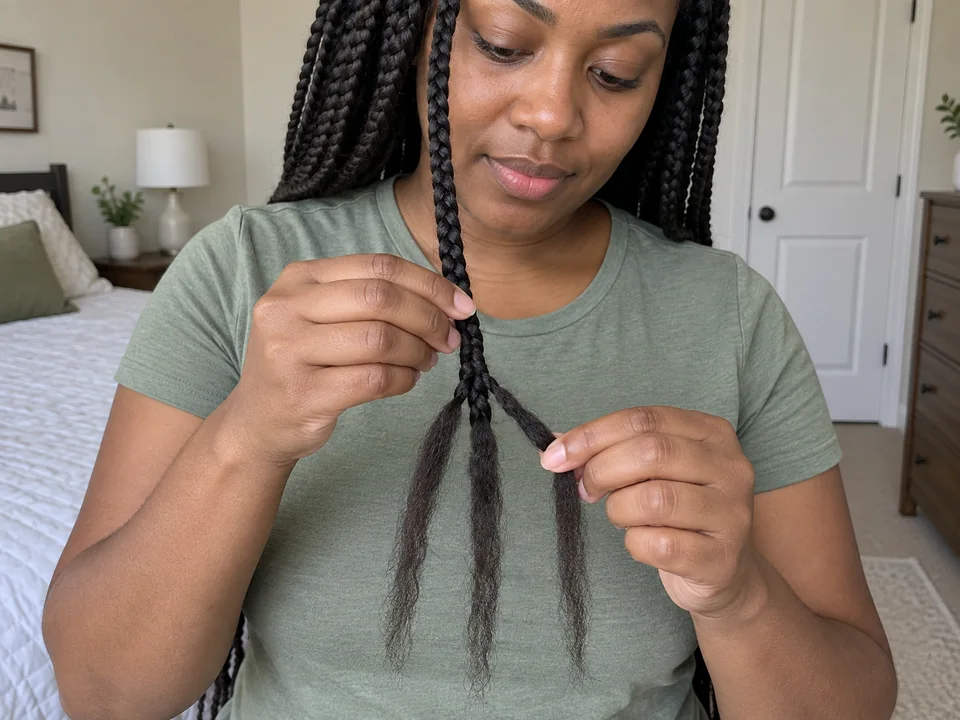
Separating the lowest crossing of a braid into three loose strand bundles.

Check how removal will work

The finger method is for reachable three-strand braids with open ends that separate freely. Sealed ends, crochet attachments, matting or unfamiliar construction need experienced takedown help. Never cut at a guessed natural-hair length.

Guide: Take down extension braids at home
When to get help

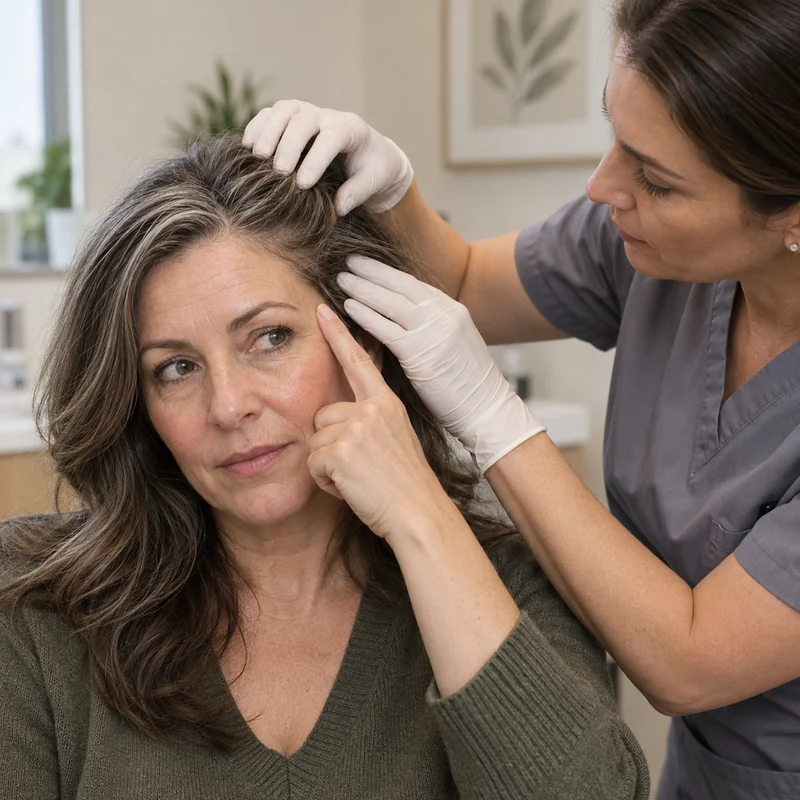
A medical professional examining the scalp where a woman points.

Signs that need more than routine care

  • Ask a medical professional about lasting scalp soreness, sores or hairline changes such as short broken hairs or thinning. Stop wearing a style that pulls, and arrange suitable help to loosen or remove it.

Illustrated care examples: before & after

Bun let down, braids stay

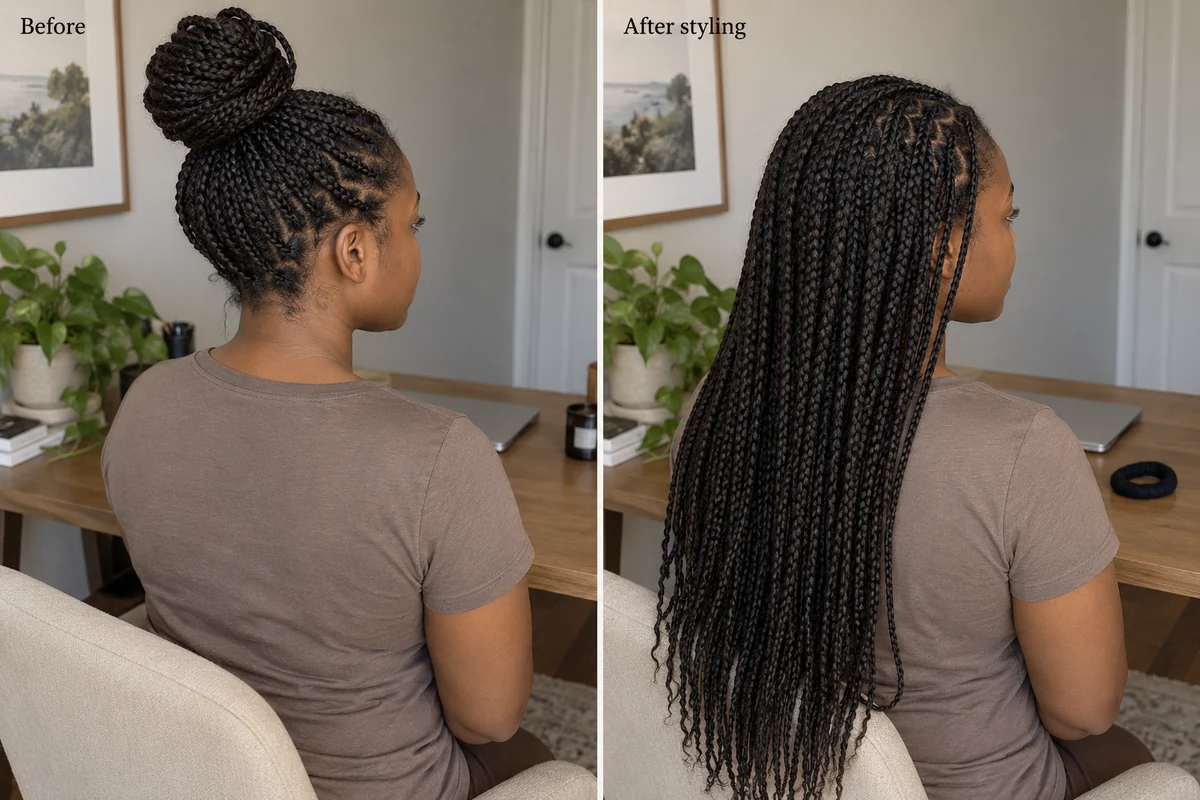
The same installed braids gathered in a high bun and then released to hang loose.
Before · installed braids in a bunAfter styling · bun untied, braids down
Release an extra bun or ponytail if it pulls. This lets the braid lengths hang loose. It does not loosen the installed roots.

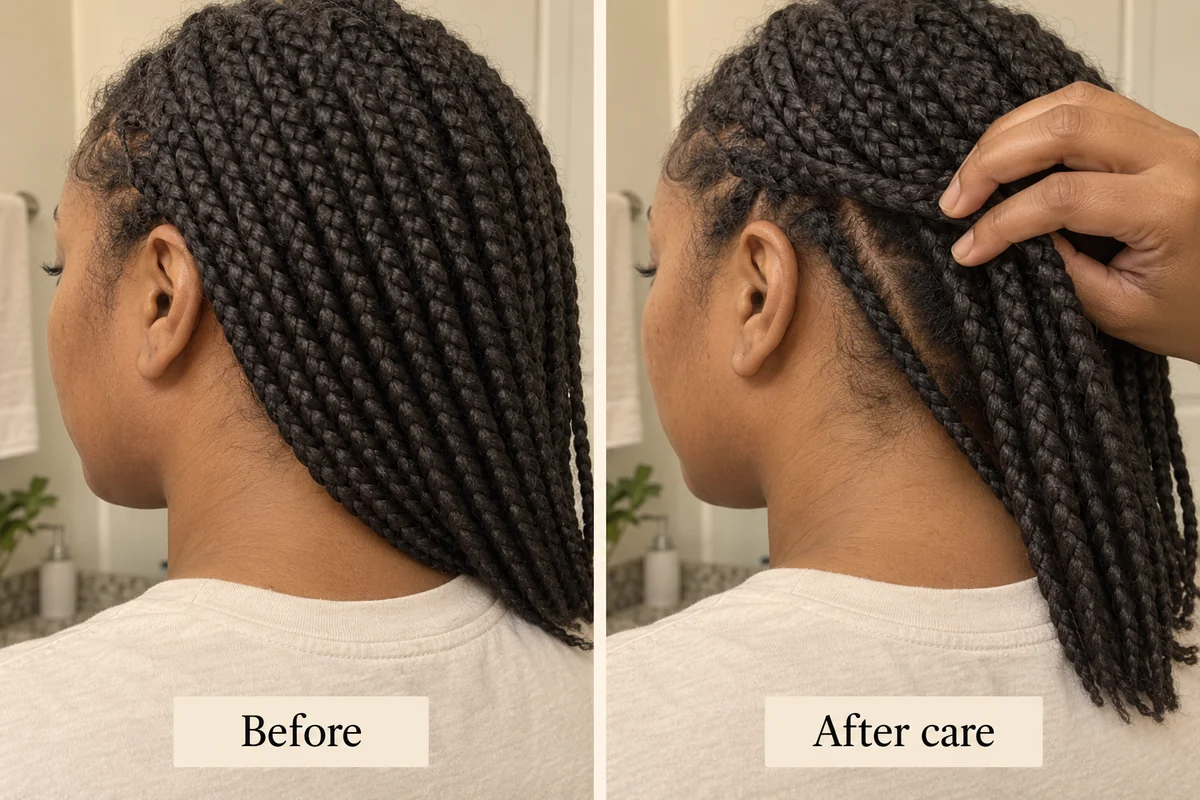
Reaching the scalp behind the ear

The same braids resting over a scalp part and gently moved aside to reveal it.
Before · braids over the earAfter care · a few braids moved aside
Move a few braids aside along an existing part to reach the scalp. Do not pry apart roots or make a new part through the installation.
A woman gently squeezing damp hair with a towel.

Help with your hair-care routine

Bring your hair-care questions to the consultation. You can also read choosing a curl routine.

  • Will braids or twists fit around my washing and workouts?
  • What should I ask about weight, length and takedown?
  • What care do I keep up while the style is in?

The plan uses the hair and scalp details you share, past treatments, current products, preferences and the time and budget you have.

The Hair Care Consultation gives you a personal plan with product recommendations, routines and guidance on your hair-care questions.

$49 with 60 days of follow-ups, or $99 with 12 months. Pay once; the year renews only if you choose.