Side by side
Paul Mitchell Tea Tree Lemon Sage Thickening Shampoo vs Paul Mitchell Tea Tree Special Shampoo
94% function match · 11 of the 13 functions we compared match Formula overlap 62%. Paul Mitchell Tea Tree Lemon Sage Thickening Shampoo and Paul Mitchell Tea Tree Special Shampoo share 4 ingredients among each other's most prominent.
Which of these fits your hair?
We check your pattern, moisture need, scalp, fragrance tolerance, weight sensitivity and more against each formula — and say which one lines up.
Your profile at a glance
- Your answers appear here
- Your answers appear here
- Your answers appear here
- Your answers appear here
When each one is the right call
What each formula is built for, from its own ingredient list.
- Tea Tree Lemon Sage Thickening Shampoo — protein-sensitive hair
- Tea Tree Special Shampoo — protein-sensitive hair
Side by side
Every trait, aligned
One row per trait, read from each product’s own ingredient list and record. A dash means we have not researched that field for that product — it is not a “no”.
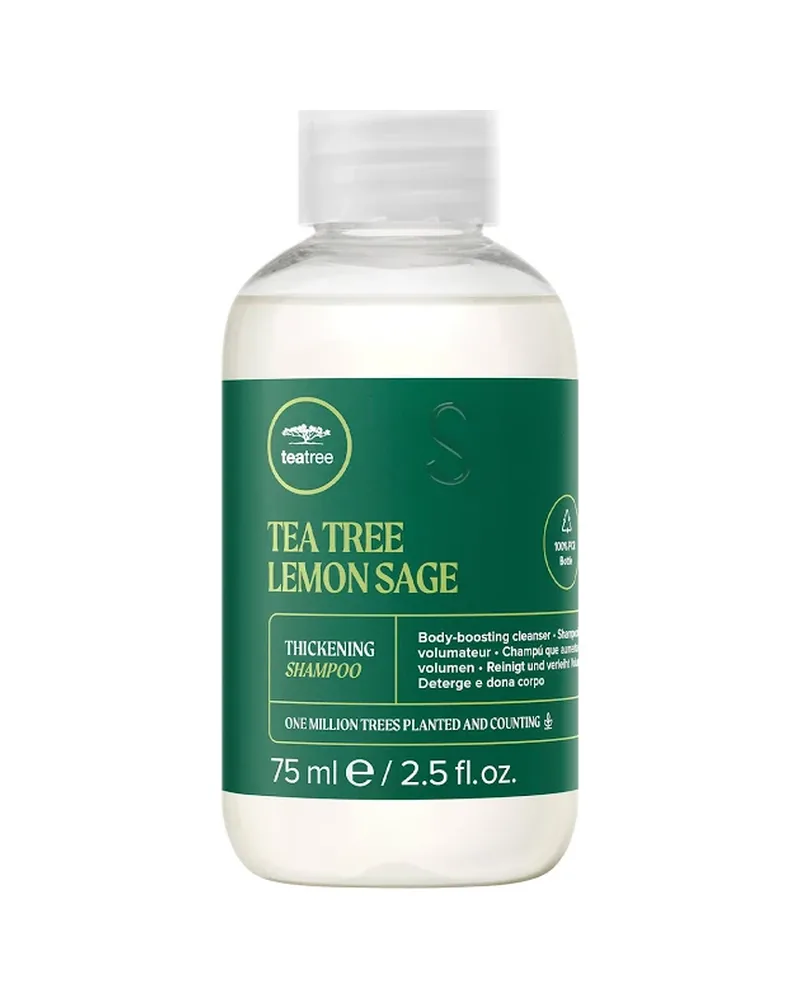
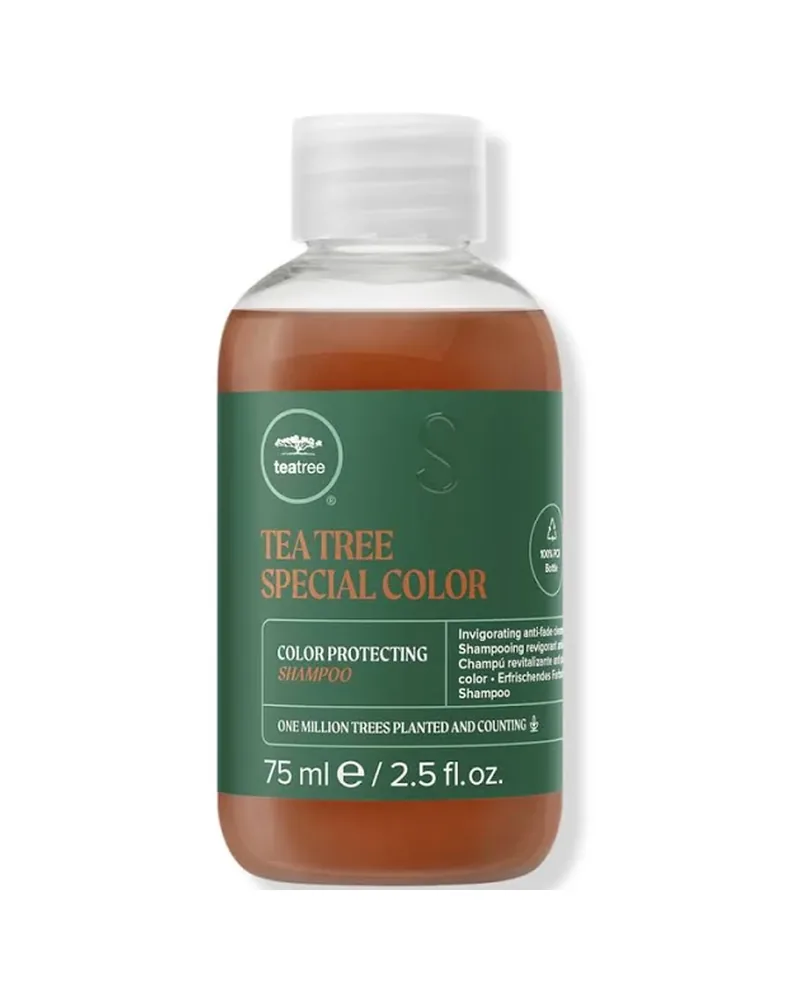
Compared at different sizes — 10.14 oz against 2.5 oz. Per-ounce prices favour the larger bottle.
- Protein-sensitive hairthat stiffens when protein is added
- Fast-oiling scalpsthat need a real reset wash
- Hard waterand swimmers dealing with mineral deposit
- Fine hairthat flattens under most products
- Protein-sensitive hairthat stiffens when protein is added
- Fast-oiling scalpsthat need a real reset wash
- Maximum slipfor hair that tangles the moment it is wet
- Hard waterand swimmers dealing with mineral deposit
- Scents bother youthis product carries a scent
- Sulfate-free routinesit uses a sulfate detergent
- Dry or damaged haira strong detergent system strips as it cleans
- Scents bother youthis product carries a scent
- Sulfate-free routinesit uses a sulfate detergent
- Dry or damaged haira strong detergent system strips as it cleans
More facts about each one
- silicone-free
- protein-free
- silicone-free
- protein-free
Facts as we recorded them. A dash means we have not researched that field for that product — it is not a "no".
The bottom line
The bottom line depends on your hair
Which of these two suits you is a question about your hair, not about them. The consultation answers it — and tells you what your routine needs around it.
$49.00 once, for your consultation and hair profile. No subscription, no required purchases.
The detail behind the table
Where the readings above come from: the ingredient lists themselves, each brand’s claims checked against them, what owners report, and cost per ounce in context.
Shared and distinct ingredients
Shared and distinct ingredients
Computed from the ingredient lists as printed. "Shared" means both lists carry it; where it sits on each label is stated, because position is what tells you how much.
What both formulas carry
What only one of them carries
Tea Tree Lemon Sage Thickening Shampoo
Tea Tree Special Shampoo
Full ingredient list — Tea Tree Lemon Sage Thickening Shampoo (27)
-
1
Water
- solvent
-
2
Sodium C14-16 Olefin Sulfonate
- olefin sulfonate cleanser
- cleanser
-
3
Sodium Lauryl Sulfate
- sulfate cleanser
- cleanser
-
4
Cocamidopropyl Hydroxysultaine
- amphoteric cleanser
- secondary cleanser
- cleanser
-
5
Cocamide MIPA
- secondary cleanser
- nonionic cleanser
- thickener
-
6
Melaleuca Alternifolia (TEA Tree) Leaf Water
- botanical extract
-
7
Citrus Limon (Lemon) Fruit Extract
- botanical extract
-
8
Salvia Officinalis (Sage) Extract
- botanical extract
-
9
Panthenol
- humectant
- conditioning agent
- vitamin
-
10
Sodium Chloride
- salt
- thickener
-
11
Panthenyl Ethyl Ether
- humectant
- conditioning agent
-
12
Magnesium Nitrate
- salt
-
13
Glycerin
- humectant
- Below about this point, order stops being meaningful — these are typically used at 1% or less.
-
14
Citric Acid
- pH adjuster
- hard-water chelator
-
15
Sodium Hydroxide
- pH adjuster
-
16
Polyquaternium-10
- conditioning agent
- film former
- polymer
-
17
Disodium EDTA
- hard-water chelator
-
18
Magnesium Chloride
- salt
-
19
Tetrasodium EDTA
- hard-water chelator
-
20
Methylchloroisothiazolinone
- isothiazolinone
- preservative
-
21
Methylisothiazolinone
- isothiazolinone
- preservative
-
22
Fragrance
- fragrance
- declared fragrance
-
23
Tetramethyl Acetyloctahydronaphthalenes
- fragrance
-
24
Hexyl Cinnamal
- fragrance
- named fragrance allergen
-
25
Limonene
- fragrance
- named fragrance allergen
-
26
Linalool
- fragrance
- named fragrance allergen
-
27
Citrus Limon (Lemon) Peel Oil
- botanical extract
- essential oil
- fragrance
Full ingredient list — Tea Tree Special Shampoo (35)
-
1
Water
- solvent
-
2
Sodium C14-16 Olefin Sulfonate
- olefin sulfonate cleanser
- cleanser
-
3
Cocamidopropyl Betaine
- amphoteric cleanser
- secondary cleanser
- cleanser
-
4
Sodium Lauryl Sulfate
- sulfate cleanser
- cleanser
- Below about this point, order stops being meaningful — these are typically used at 1% or less.
-
5
Fragrance
- fragrance
- declared fragrance
-
6
Melaleuca Alternifolia (TEA Tree) Leaf Water
- botanical extract
-
7
Panthenol
- humectant
- conditioning agent
- vitamin
-
8
Polyquaternium-7
- conditioning agent
- film former
- polymer
-
9
Acrylates/C10-30 Alkyl Acrylate Crosspolymer
- thickener
- polymer
- film former
-
10
Glycol Stearate
- opacifier
- emollient
-
11
PEG-150 Distearate
- thickener
- emulsifier
-
12
Menthyl Lactate
- fragrance
- active
-
13
Citric Acid
- pH adjuster
- hard-water chelator
-
14
Tetrasodium EDTA
- hard-water chelator
-
15
Magnesium Nitrate
- salt
-
16
Magnesium Chloride
- salt
-
17
Sodium Hydroxide
- pH adjuster
-
18
Sodium Benzoate
- preservative
-
19
Methylchloroisothiazolinone
- isothiazolinone
- preservative
-
20
Methylisothiazolinone
- isothiazolinone
- preservative
-
21
Menthol
- fragrance
- active
-
22
Lavandula Oil/Extract
- botanical extract
- essential oil
-
23
Linalool
- fragrance
- named fragrance allergen
-
24
Linalyl Acetate
- fragrance
- named fragrance allergen
-
25
Terpineol
- fragrance
-
26
Pinene
- fragrance
-
27
beta-caryophyllene
- fragrance
-
28
Citronellol
- fragrance
- named fragrance allergen
-
29
terpinolene
- fragrance
- 30 Turpentine
-
31
Geraniol
- fragrance
- named fragrance allergen
-
32
Coumarin
- fragrance
- named fragrance allergen
-
33
Limonene
- fragrance
- named fragrance allergen
-
34
Yellow 5
- colourant
-
35
Blue 1 (CI 42090)
- colourant
- direct dye
- blue dye
Claims check
What each brand says, against what each formula shows
Claims are quoted from each brand. We only mark one supported, partly supported, or conflicting when that product’s ingredient list actually speaks to it.
Tea Tree Lemon Sage Thickening Shampoo
Plumps up fine strands so hair looks and feels clean, full and healthy
Stated by brandCan’t be confirmed from label.Color Safe
Potential conflictLikely to pull colour faster.Vegan
SupportedMatches our researched record.Paraben Free
SupportedPreserved without parabens.Made Without Gluten
Stated by brandCan’t be confirmed from label.
Tea Tree Special Shampoo
#1 best-selling tea tree shampoo
Stated by brandPopularity, not performance.#1 Scalp Care Shampoo Sold in Salons
Stated by brandPopularity, not performance.Color safe, vegan, paraben-free, gluten-free
SupportedPreserved without parabens.
What owners say
What people report
Recurring themes our researchers wrote in their own words from sourced reviews. We do not store or scrape star ratings, and we never balance one product’s themes against another’s by inventing them.
Both praised for the scent. Paul Mitchell Tea Tree Lemon Sage Thickening Shampoo draws complaints about the scent and volume.
Tea Tree Lemon Sage Thickening Shampoo
Many reviewers with fine or thinning hair say it adds noticeable volume and body without weighing hair down.
fine or thinning-haired reviewersReviewers frequently call out the citrus and herbal scent as invigorating and pleasant.
general reviewers commenting on fragranceA large cluster of long-time users are upset about a reformulation, saying the scent shifted from a fresh lemon-sage-tea-tree tingle to a more perfume-like smell, with several also reporting less volume, lift and the original cooling tingle.
long-time repeat buyers reacting to a formula/scent changeA couple of reviewers say it otherwise works well but leaves fine hair slightly dry.
fine-haired reviewers, one following a stylist's recommendationTea Tree Special Shampoo
Long-time repeat purchasers describe it as their go-to everyday shampoo, citing years of consistent use
multi-year repeat customersThe tea tree scent and tingling menthol sensation is called out as the standout feature at 4.4/5 average across 326 ratings
Reviewers with itchy or flaky scalp report the cooling, tingling sensation and reduced flaking feel
self-reported scalp itch/flaking, cosmetic sensation onlyPrice check
Cost per ounce, in context
Cost per ounce against every product of this type we have priced, each at the size it is most often sold in. Value labels are computed from that percentile and from how many products that do the same job cost less; they are comparisons, not judgements about a brand.
$1.98/oz vs $3.64/oz — Paul Mitchell Tea Tree Special Shampoo costs about 1.8× more per ounce than Paul Mitchell Tea Tree Lemon Sage Thickening Shampoo.
Every mark sits on one distribution because these are compared against the same set: 817 shampoos with a computable unit price.
Computed from cost per ounce against every product of this type we have priced, and from how many products that do the same job cost less. It is a comparison, not a judgement about the brand.
Compare with something else
Close formulas to each of these, as their own comparison pages.
Tea Tree Lemon Sage Thickening Shampoo · Tea Tree Special Shampoo · All shampoos in the library
How this page was made
- This page is assembled from the same researched records the individual product pages render: identity, each ingredient list as printed, each brand's own claims, dated price observations, and review themes written in our researchers' own words. Nothing on it is written per comparison.
- We do not rank these against each other. Which of them suits you depends on your hair, and that is what the consultation works out.
- The formula similarity percentage is a stored, precomputed number: position-weighted overlap of the two ingredient lists blended with agreement on the attributes we derive. It measures how alike two formulas are, not how well either works.
- The value band is a fixed label over two stored numbers: this product’s cost per ounce as a percentile of every product of this type we have priced, each at the size it is most often sold in, and how many products we score as doing the same job cost at least a quarter less per ounce.
- The "Is this right for you?" panel reads only your own consultation answers, and it applies exactly the filters our recommendation engine applies. It is computed when you load the page and is never stored on it.
- 11 sources were consulted across the products on this page.
- Ingredient order tells you relative amount only above roughly 1%. Prices are observations on the dates shown and change without notice. We do not sell these products and take no placement fees.
- This is cosmetic information, not medical advice, and nothing here diagnoses or treats a health condition.
Still unsure? Take your consultation or browse more products.
Your personalized hair plan
Tell us what’s going on with your hair, see what we understand, and get a plan built around it — with the reason behind every recommendation.
Free to start · $49.00 for your consultation and hair profile · No subscription · Nothing you must buy
Start your consultation