Hair Care Guides

Caring for a human hair wig.
Plan for washing, drying and gentle handling.

A human-hair wig needs care for both the hair and the cap that holds it. Keep the instructions for your exact piece and check the drying method before washing. Leave enough time for the cap to dry before you need to wear it.

Your personal hair-care planProduct choices, routines and answers shaped around your hair.$49one-timeStart my consultation
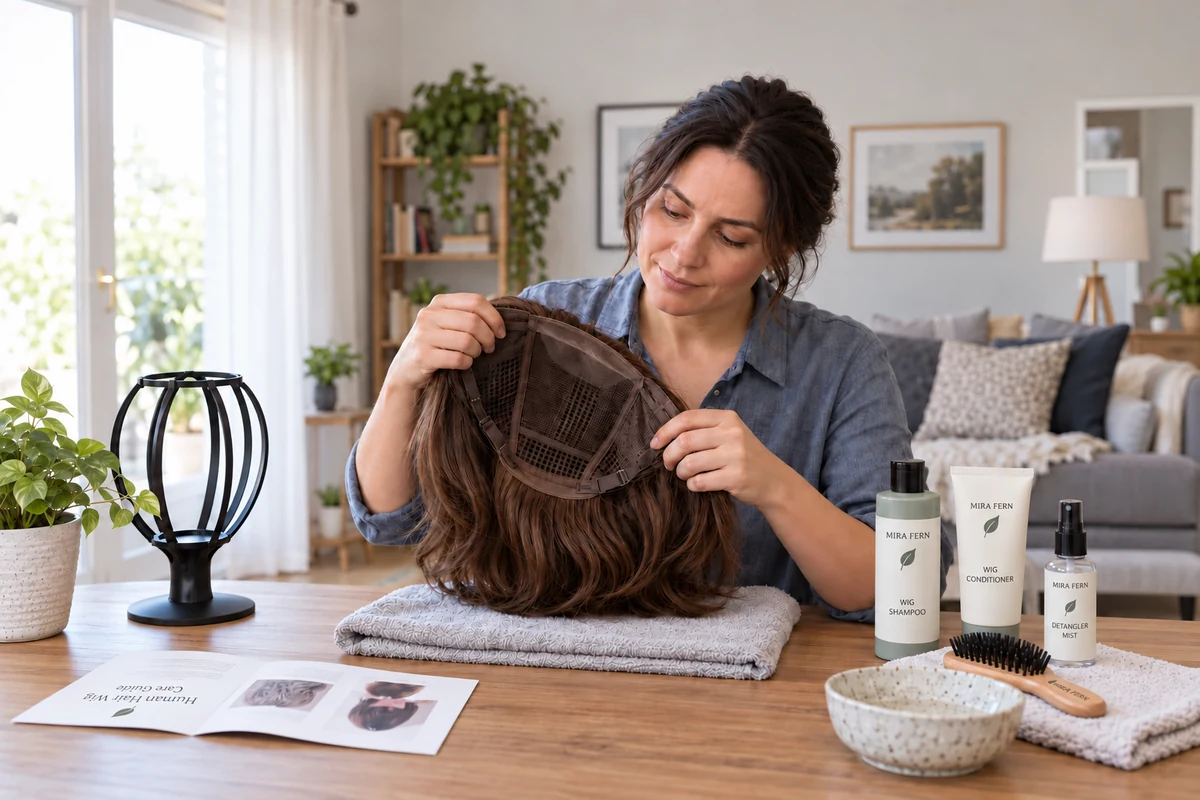
A woman inspects a human-hair wig beside a care leaflet oriented toward her.
Plan for washing, drying and gentle handling.

What is going on

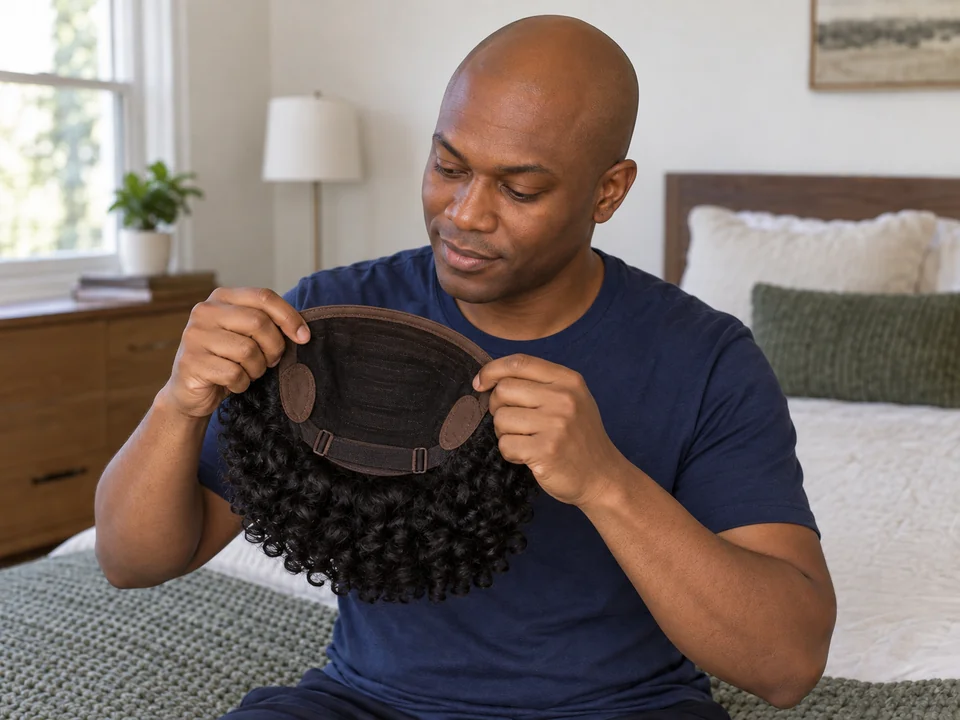
A man holds a short curly wig by its sturdy cap before putting it on.

Find the delicate parts before handling

Look inside for lace, knots, seams and fasteners. Keep the model name and care instructions together, including directions added after coloring or customization. Ask which cap areas can be held and cleaned, and where conditioner belongs.

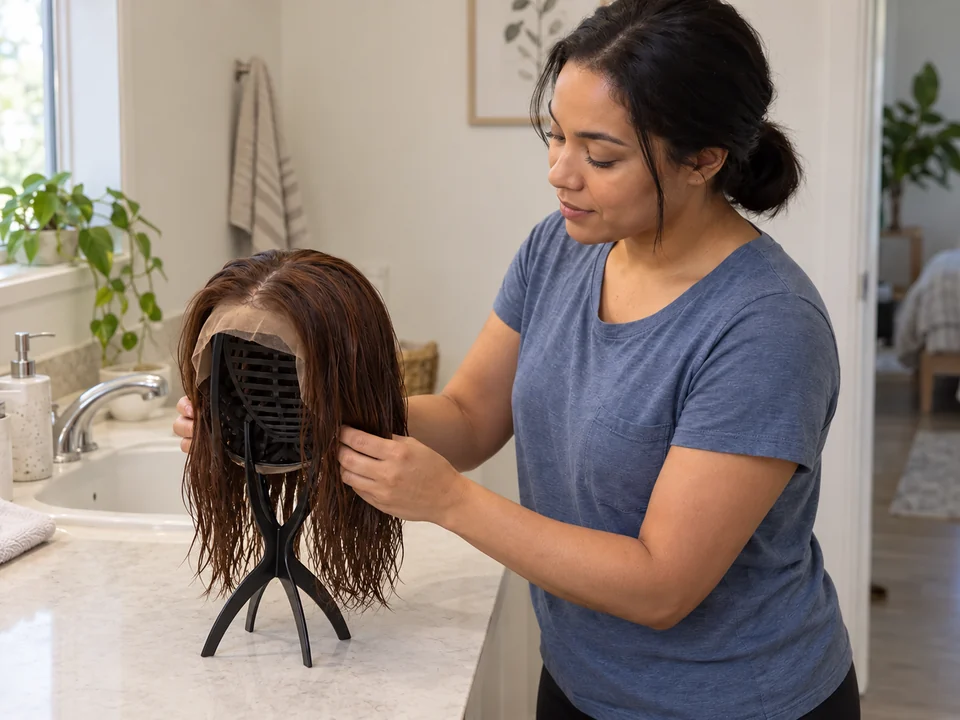
A woman steadies the sides of a wig on an open plastic stand, with its damp lengths hanging freely.

Check the drying method before washing

Some human-hair wigs allow air-drying. Others have a specific blow-drying and styling routine. Set out the required support and tools first. The wash method below is only for an already removed, adhesive-free wig whose instructions permit its air-dry finish.

What helps, day to day

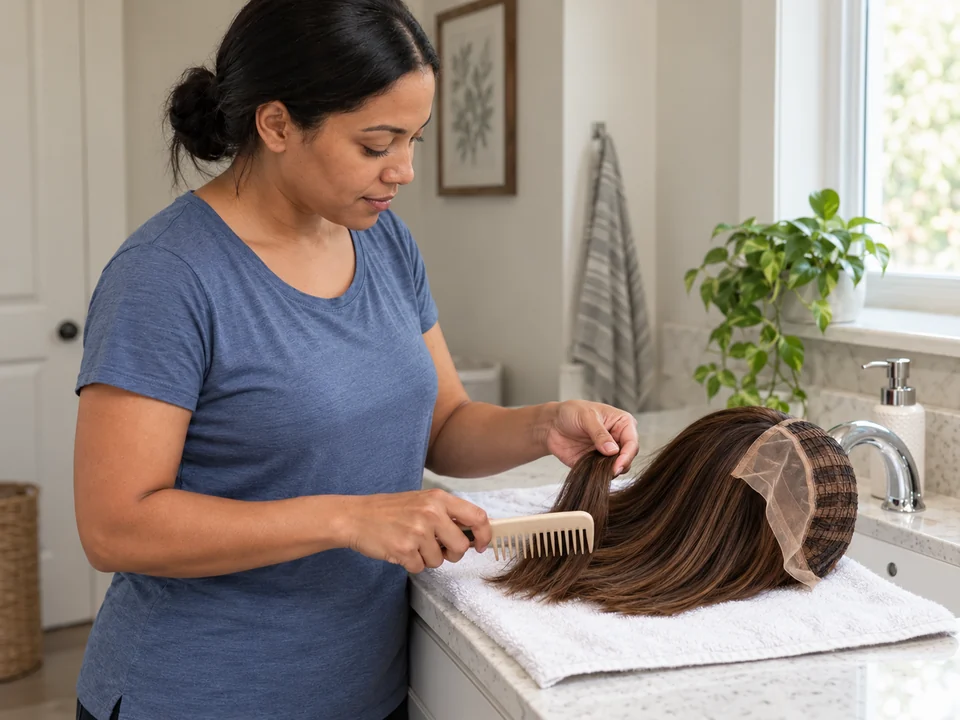
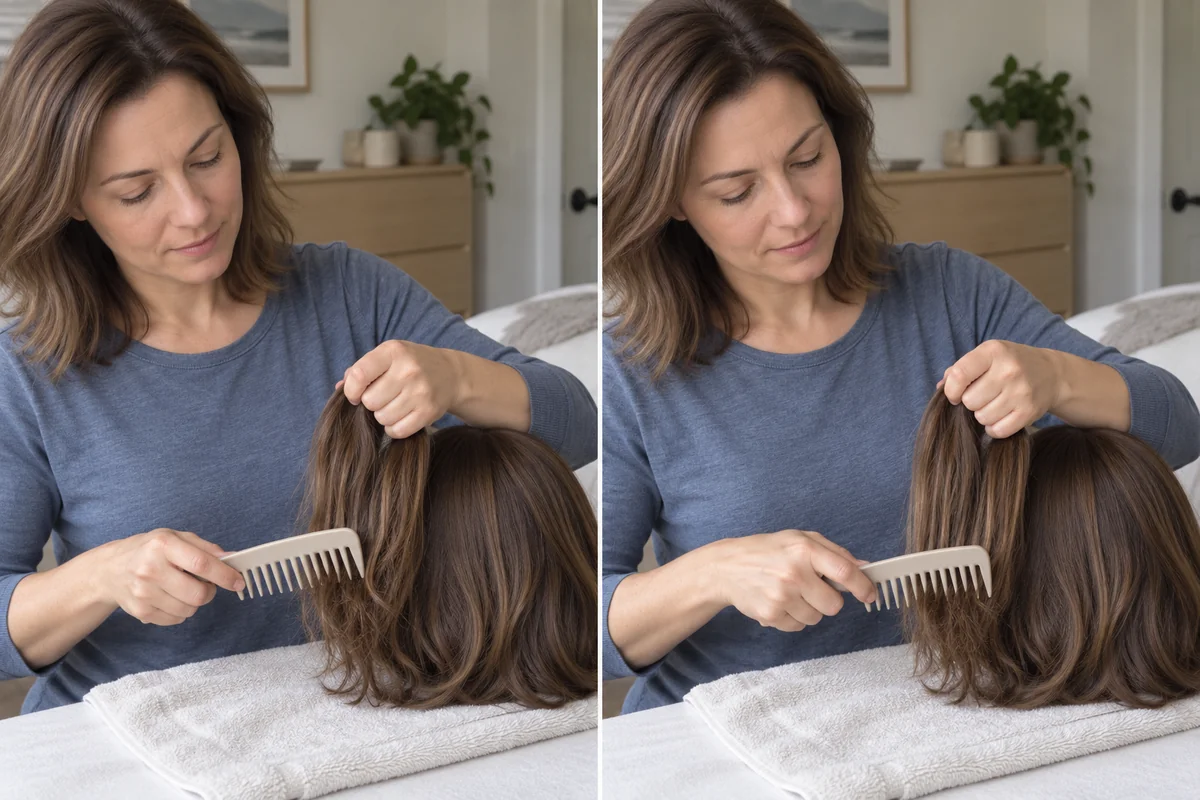
A woman holds a section of dry wig hair above its ends while combing the tips; the rest of the wig rests on a towel.

Tangles keep forming at the nape

  • Notice where the wig rubs a collar or scarf.
  • With it removed, support a section above its ends and comb toward the tips using its permitted tool.
  • Stop at a firm mat or loose knots and ask the supplier for help.
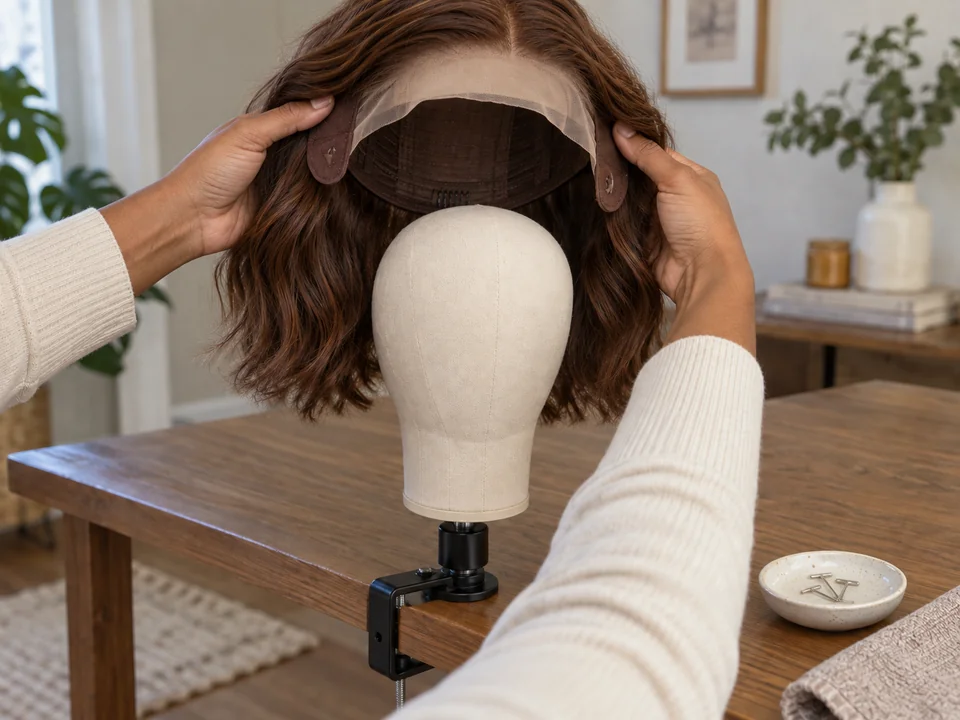
Adult hands lift the unpinned wig from the block with all T-pins set in a dish.

You need a steady support for styling

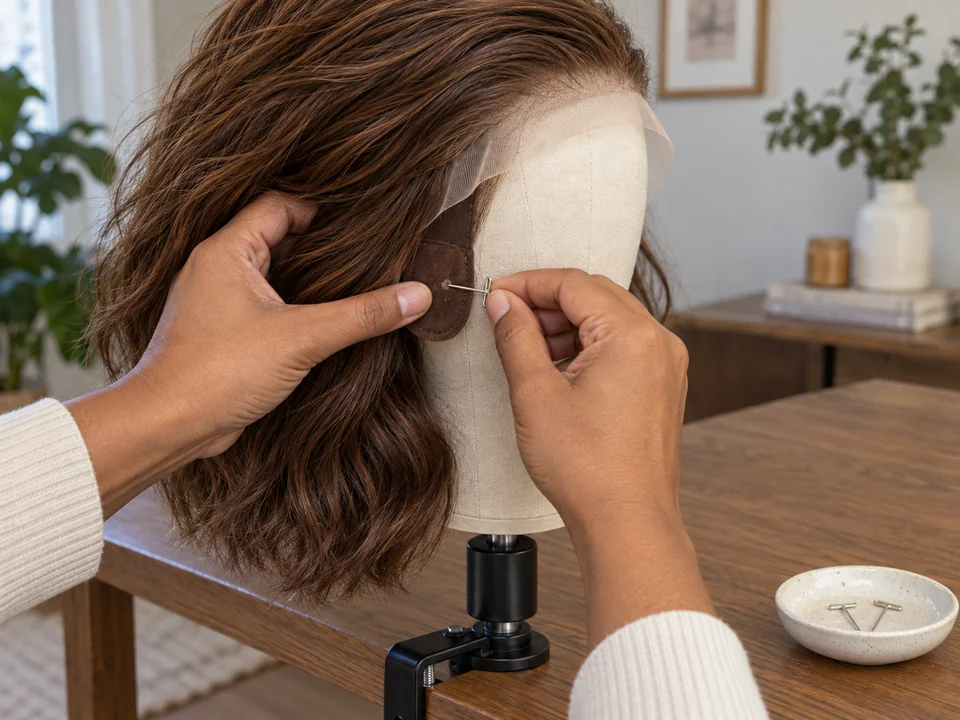
  • If your wig permits pinning to a canvas block, use the correct size and only the approved sturdy pinning points.
  • Keep pins out of delicate lace.
  • Count and remove every pin before lifting it off.
  • Ask for a demonstration if placement is unclear.
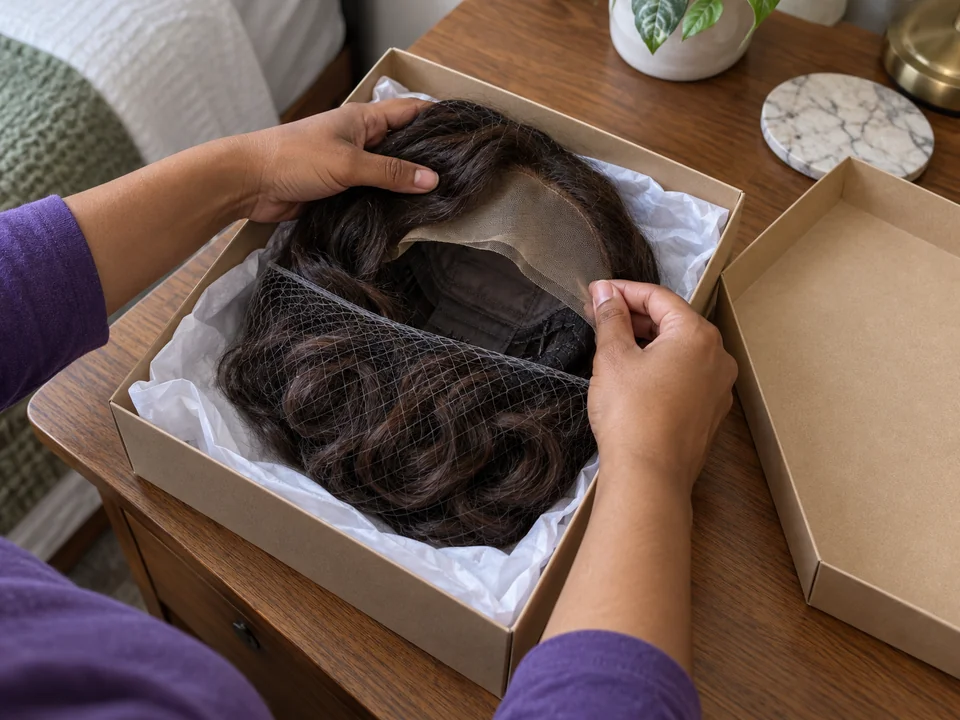
Hands support a dry removable wig in its box while laying the front lace flat.

The wig is still damp when you need it

  • Move the next wash earlier so the hair and inside cap have time to dry.
  • Keep it on its approved drying support while damp, rather than sealing it in a box.
  • Check the nape and thicker areas before wearing or packing.

Products, by the job they do

A woman massaging shampoo lather onto her scalp with her fingertips.

Wash your own scalp separately

With the wig removed, wash your own hair according to scalp oil, dirt and product buildup. Keep those products separate from the wig’s approved supplies. A shampoo you like on your scalp may not suit the cap or processed wig hair.

Browse cleansing products. The consultation uses your wash frequency and scalp concerns to recommend a shampoo.

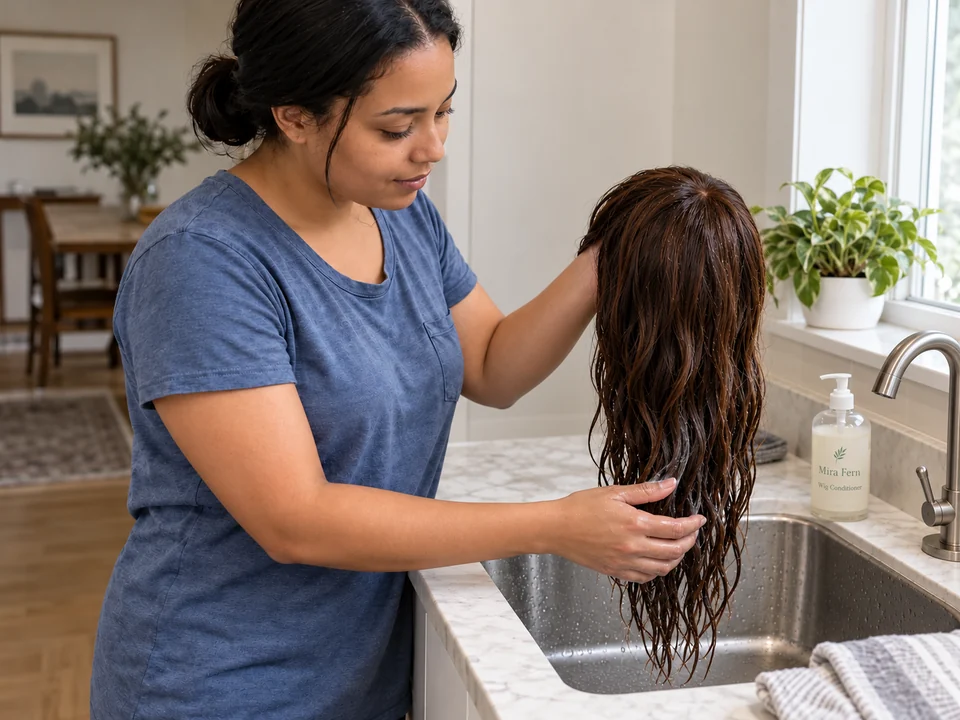
A woman smooths a small amount of conditioner through the lower lengths of a supported wet wig, away from the cap.

Keep conditioner on the permitted lengths

Use the conditioner specified for your wig, in the stated amount and for the stated time. In the rinse-out method below, keep it away from roots, lace and knots, then rinse thoroughly. Do not leave it in overnight unless your exact instructions call for that.

Browse conditioners for your own hair.

Washing and supporting your wig

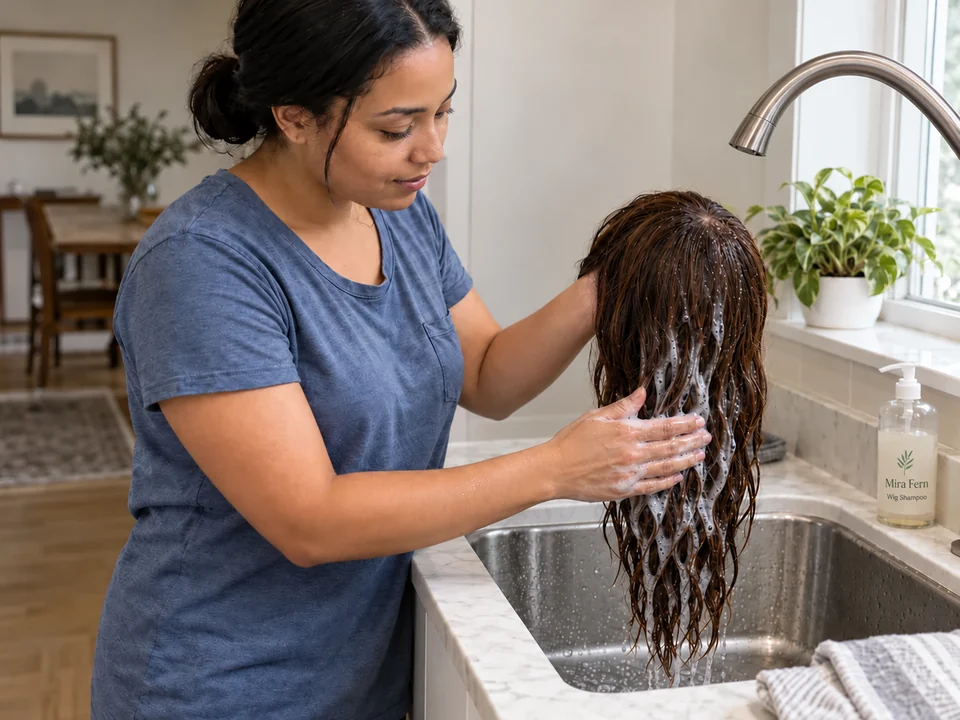
With the tap off, a woman supports the wig from inside the crown and smooths a small amount of shampoo down the hair.

Wash a wig that permits air-drying

Start with an already removed piece free of adhesive. The method separates shampooing, rinsing, conditioning, a second rinse, towel pressing and drying. If your wig requires blow-drying or another finish, use its complete instructions instead.

Guide: Wash and dry a removable human-hair wig
Adult hands hold a reinforced wig ear tab against the canvas while placing a T-pin through that approved area.

Secure a dry wig to a canvas block

Use this only when the wig’s instructions allow a block and identify sturdy pinning points. Start with a completely dry cap and the correct block size. Check the wig’s own heat and color instructions before any styling.

Guide: Secure a dry wig to a canvas block

Illustrated care examples: before & after

Support the section while combing

Two panels show a supported detached wig section before and during gentle ends-first combing.
Before · a supported sectionCombing the ends · combing below the support hand
Support the hair above the ends and comb toward the tips. Start higher only when the hair below is clear.

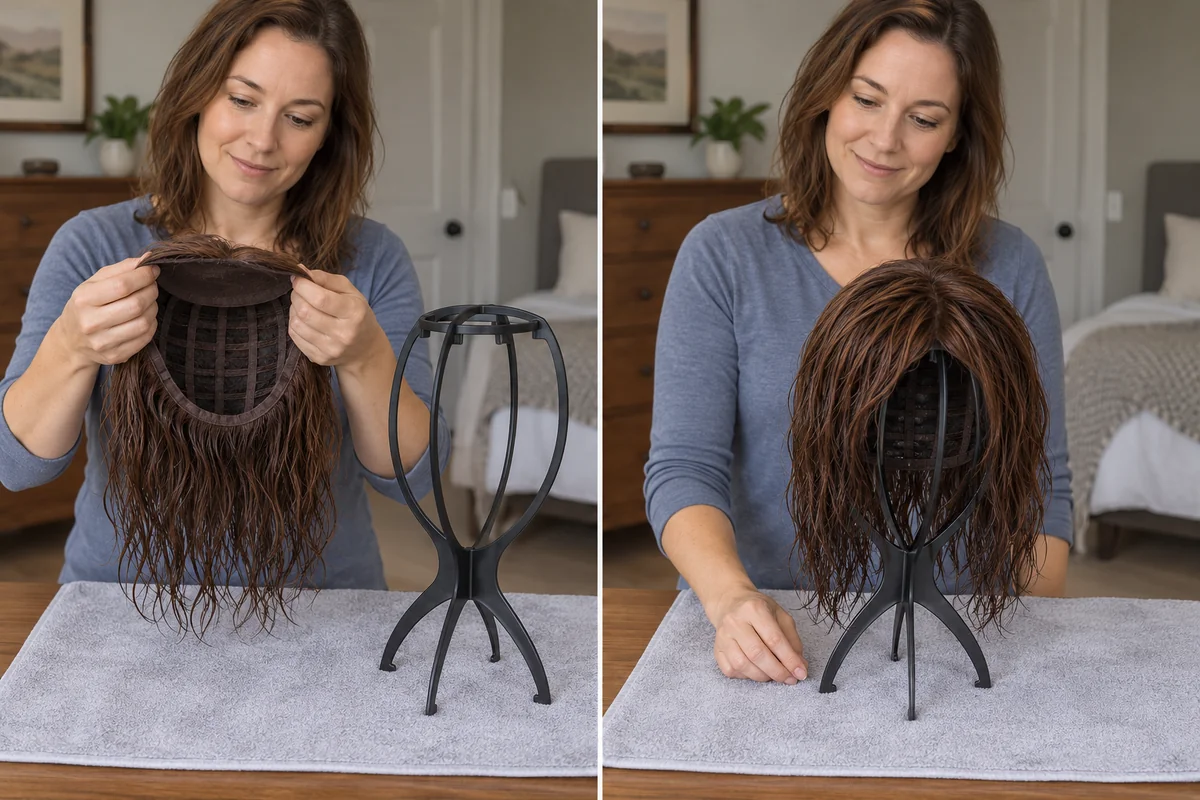
Room to air-dry

Two views show a detached wig held above a towel, then resting on an open stand.
Before · held above the towelOn the stand · resting on the open stand
For wigs that permit air-drying, leave space around the open stand. Let the cap and hair dry completely before wearing or storing.
A woman with curls writing a routine note beside her hair-care products.

Help with your hair-care routine

Bring your hair-care questions to the consultation. You can also read choosing an everyday wig.

  • How can I fit my own wash days around wearing a wig?
  • Which of my products suit the hair underneath?
  • How can I detangle my own hair more gently?

The consultation helps with your own scalp and hair routine. Share your current products, wash days and preferences. For wig fit, repairs, fiber identification or wig-product compatibility, ask the supplier or a wig specialist.

The Hair Care Consultation gives you a personal plan with product recommendations, routines and guidance on your hair-care questions.

$49 with 60 days of follow-ups, or $99 with 12 months. Pay once; the year renews only if you choose.