Hair Care Guides

Less hair to do before the bell.
A small plan you agree on together.

School mornings are short and nobody is at their most patient. Move the long jobs out of the rush, agree on an everyday style your child is happy with, and keep one easy backup. Ready for the day doesn’t have to mean freshly styled.
Your personal hair-care planProduct choices, routines and answers shaped around your hair.$49one-timeStart my consultation
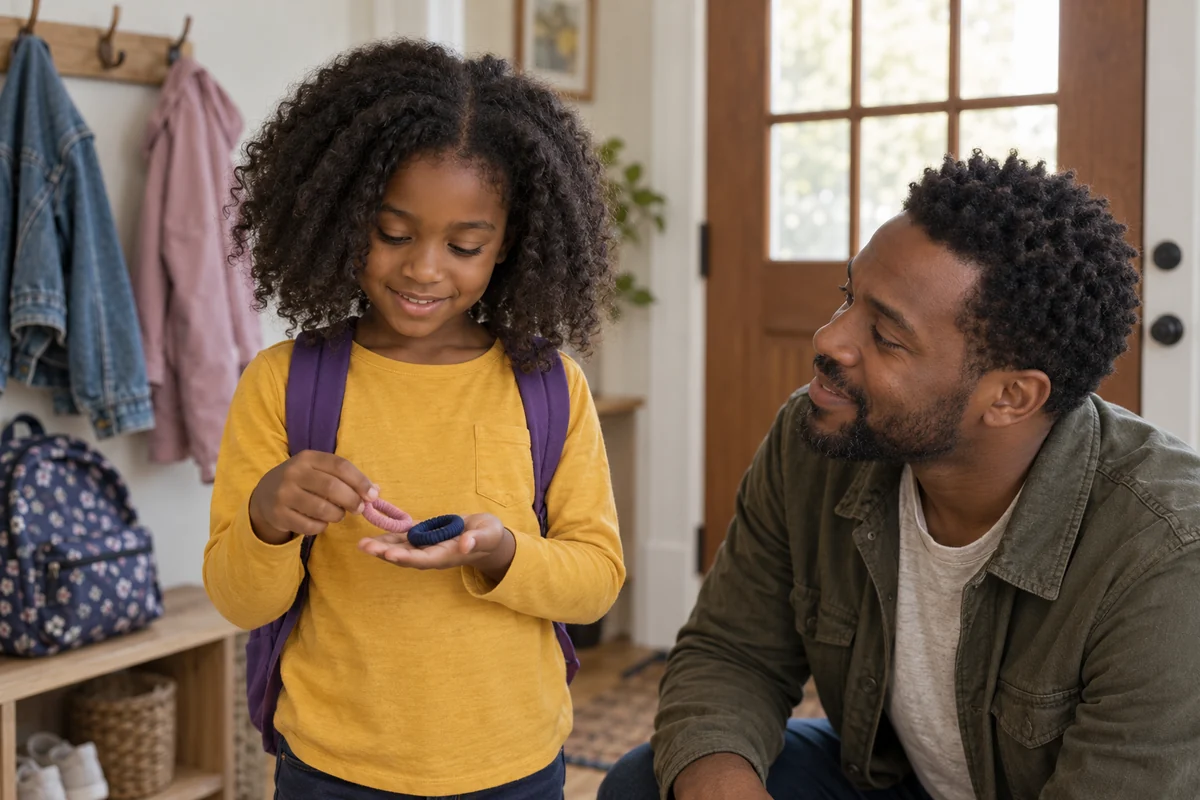
A child with coily hair chooses between two soft hair ties beside a listening adult and school bags.
A small plan you agree on together.

What is going on

A woman with curls writing a routine note beside her hair-care products.

Move the long jobs out of the morning

Washing and a proper detangle belong in a slot with room to finish, usually the evening. Let the hair dry in its own time rather than against the clock. Put the comb and a familiar soft tie out the night before.
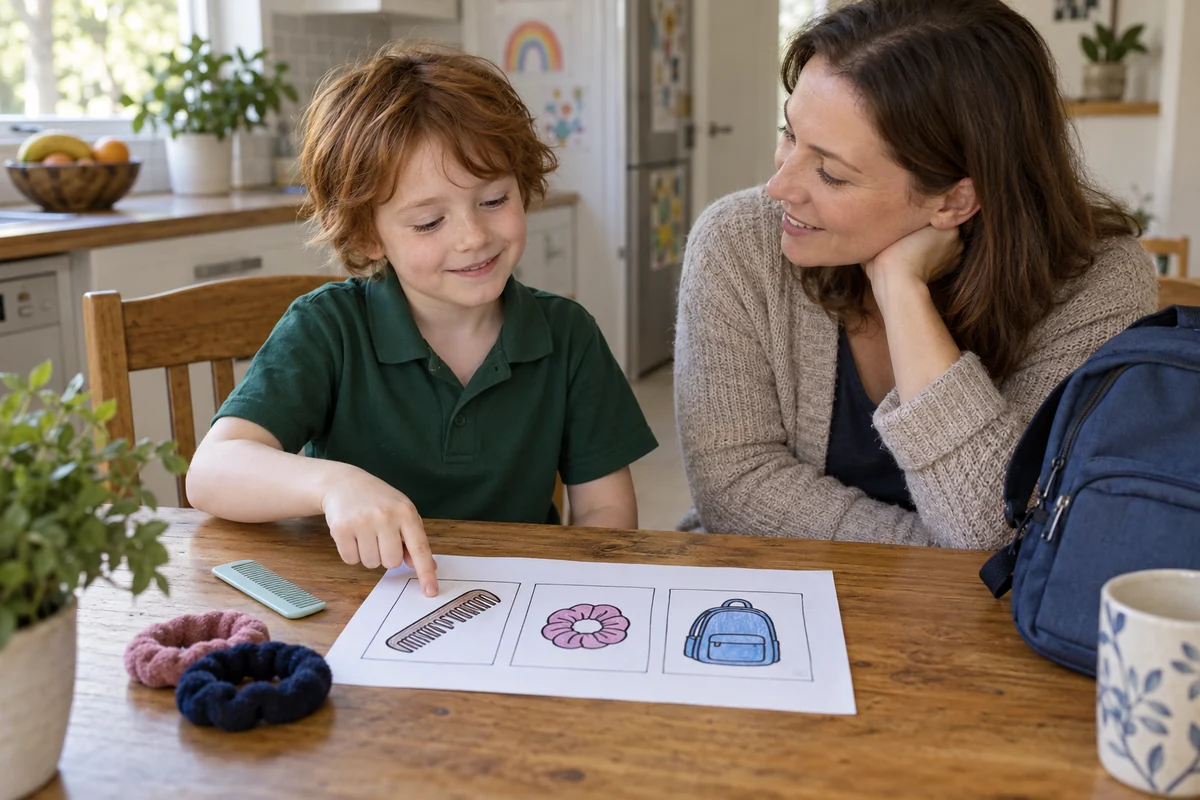
A child with short auburn hair points to a picture checklist while an adult listens beside a school bag.

Agree on the smallest plan that works

Offer two styles your child finds comfortable and ask before you touch their hair. A short picture checklist shows what comes next. Let them do any step they can manage. Show whoever else does mornings the same plan and the pause signal.
What helps, day to day

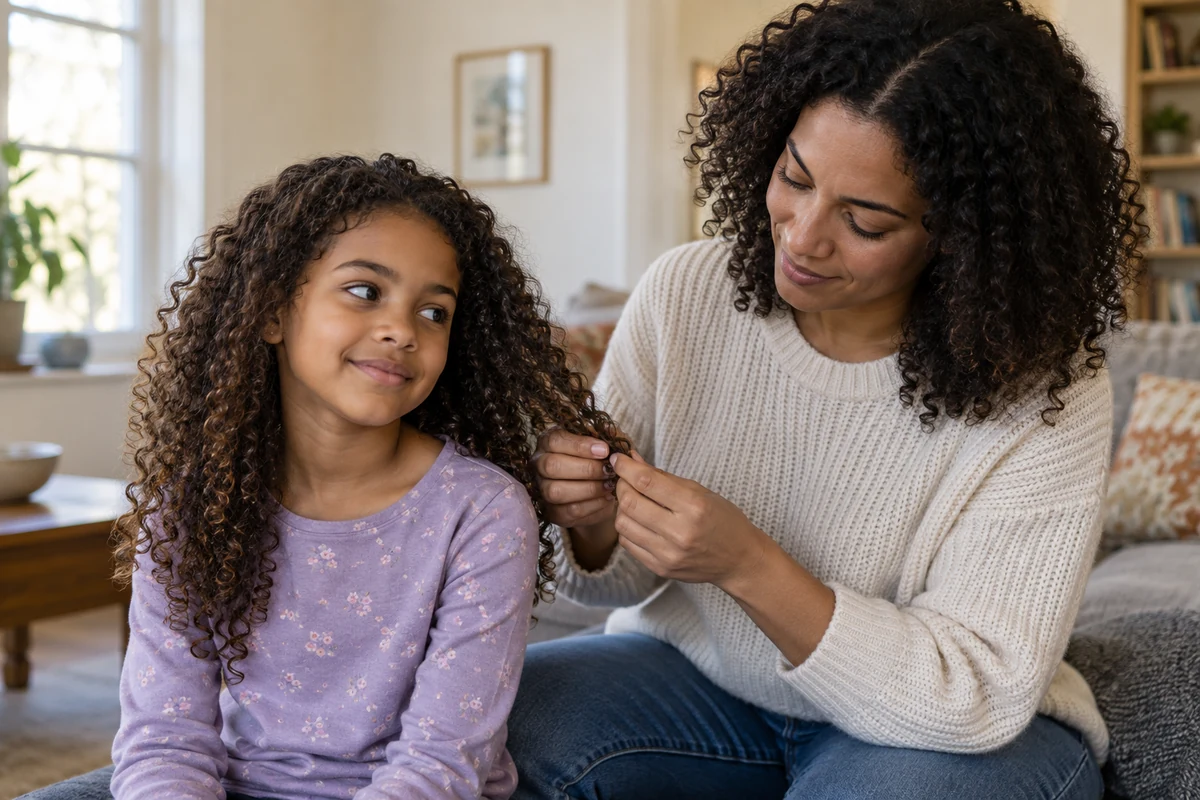
A caregiver supporting a small section of a child’s curly hair during gentle detangling.

Only fix what needs fixing

  • Ask how it feels first.
  • Hair that’s comfortable can be left alone, or you can tidy the front and loosen one small snag.
  • Stop if the comb catches or your child asks you to.
  • A real knot needs time in the evening, not faster brushing at the door.
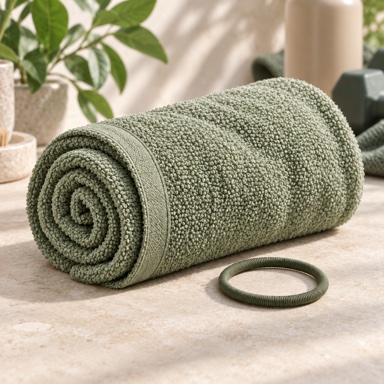
A soft fabric-covered hair tie beside a folded green towel.

Keep a backup your child will wear

  • If the hair is dry, loose and gathers without pulling, a low ponytail or loose braid is the easy fallback.
  • Leave short layers free.
  • Short hair may need no tie at all.
  • Check what the school asks for sport, and make sure someone there can take the tie out if it starts to hurt.

Products, by the job they do

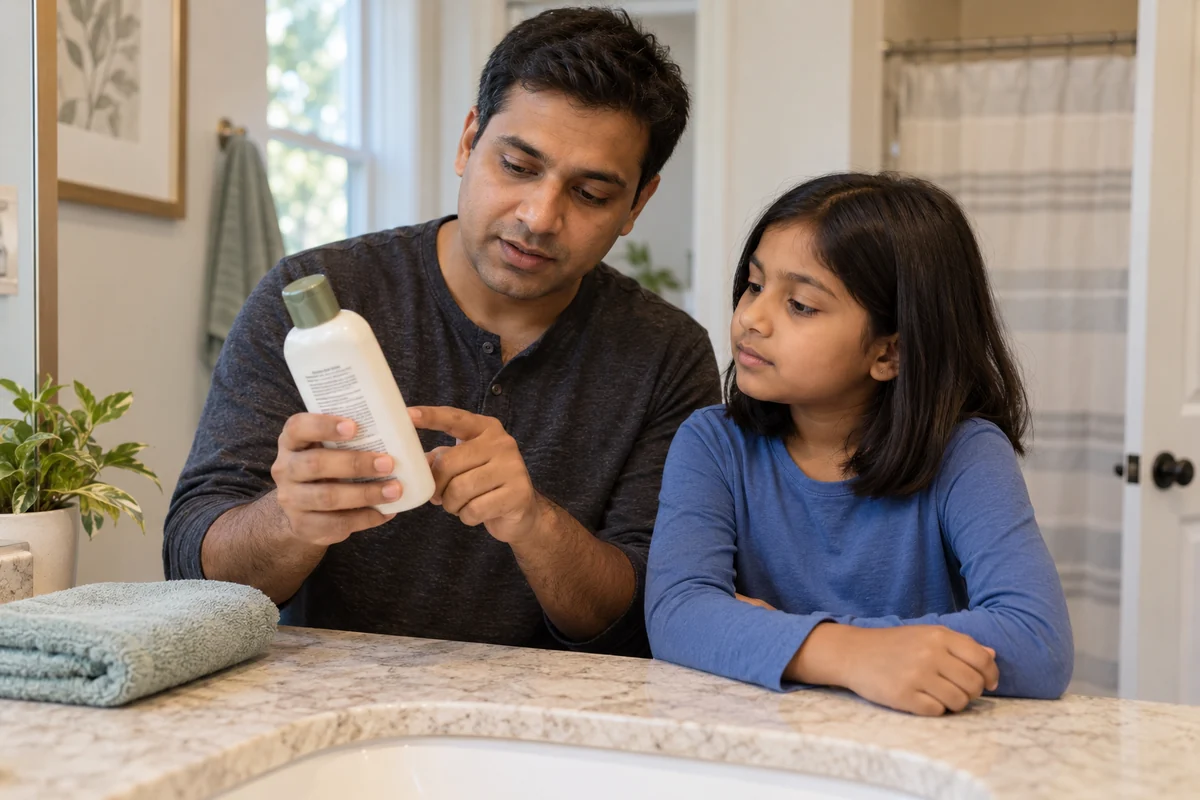
An adult and child look at the back label of a hair-care bottle together at a dry vanity.

A shampoo for the evening wash

Use a shampoo made for children, in the evening wash. Morning styling doesn’t need another wash.

Browse cleansing products. For shampoo recommendations, share how your roots feel between washes and what you use now.
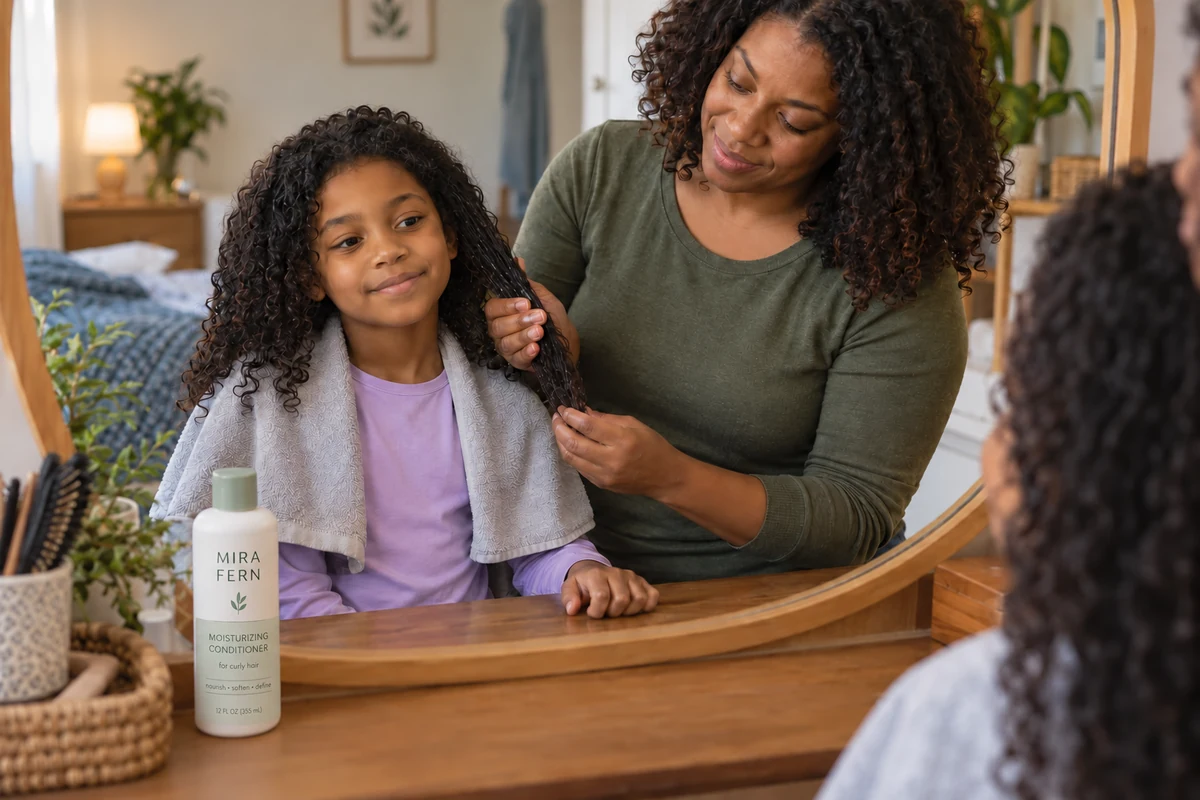
An adult supports a damp section of a child’s curly hair while smoothing conditioner through its lower lengths.

A conditioner that makes the detangle easier

On dry or curly hair, conditioner gives the comb somewhere to go. Use the amount and rinse the bottle suggests for your child’s age. It belongs in the evening wash, not in every school morning.

Browse rinse-out conditioners. Tell the consultation what you want from a conditioner and what you disliked about previous ones.
How to do it

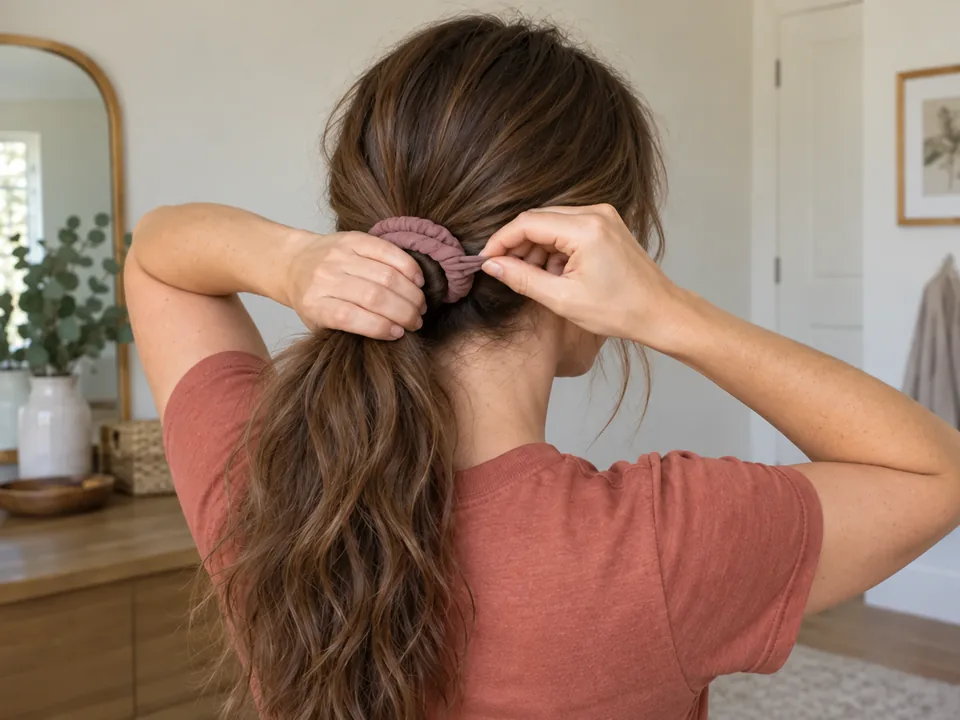
A woman supports her low ponytail with her left hand while her right fingers release the opened loop of a mauve fabric scrunchie around the base.

1. The everyday loose ponytail

This works on dry, loose hair that reaches the tie without strain. Help with fastening and taking it out, and let your child say whether it’s comfortable. Loosen it or take it out if it pulls, hurts or stings.

Guide: Tie a loose ponytail
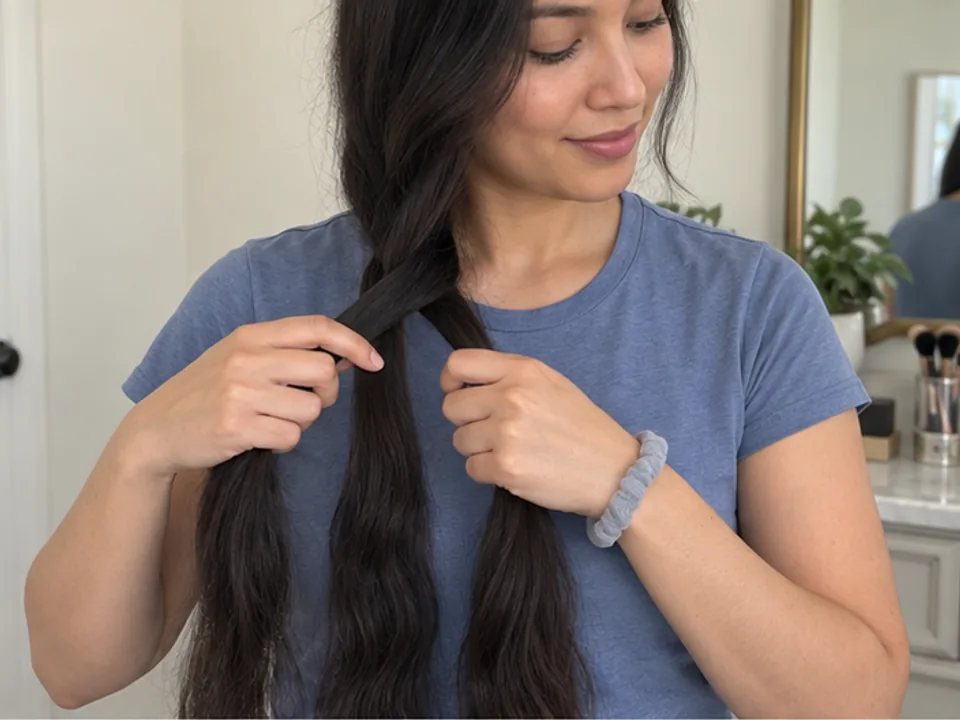
A woman begins a side braid by moving one outside section over the middle, keeping three sections separate.

2. A braid you learned on a weekend

Practice together when there’s no clock. It needs dry, detangled hair long enough to bring over a shoulder. Show the crossings yourself first, and pick a different style if your child can’t manage it comfortably or would rather you did it.

Guide: Make a loose everyday braid
Illustrated care examples: before & after

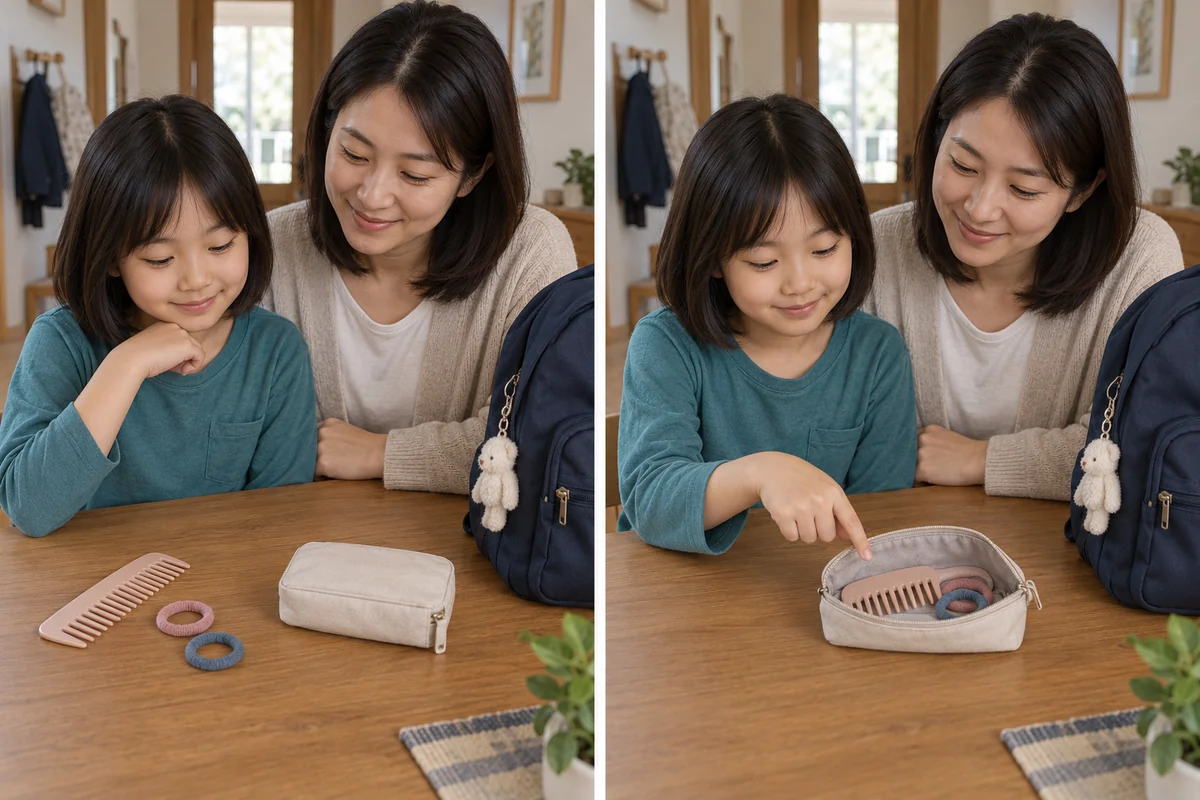
The small kit, together

Illustrative preparation comparison: the same child and adult look at a comb and soft ties, then the items gathered into an open pouch beside a school bag.
Before · comb and ties beside pouchAfter preparation · everything in the open pouch
The same comb and ties, now sitting together in the pouch so whoever does hair next knows where to start.

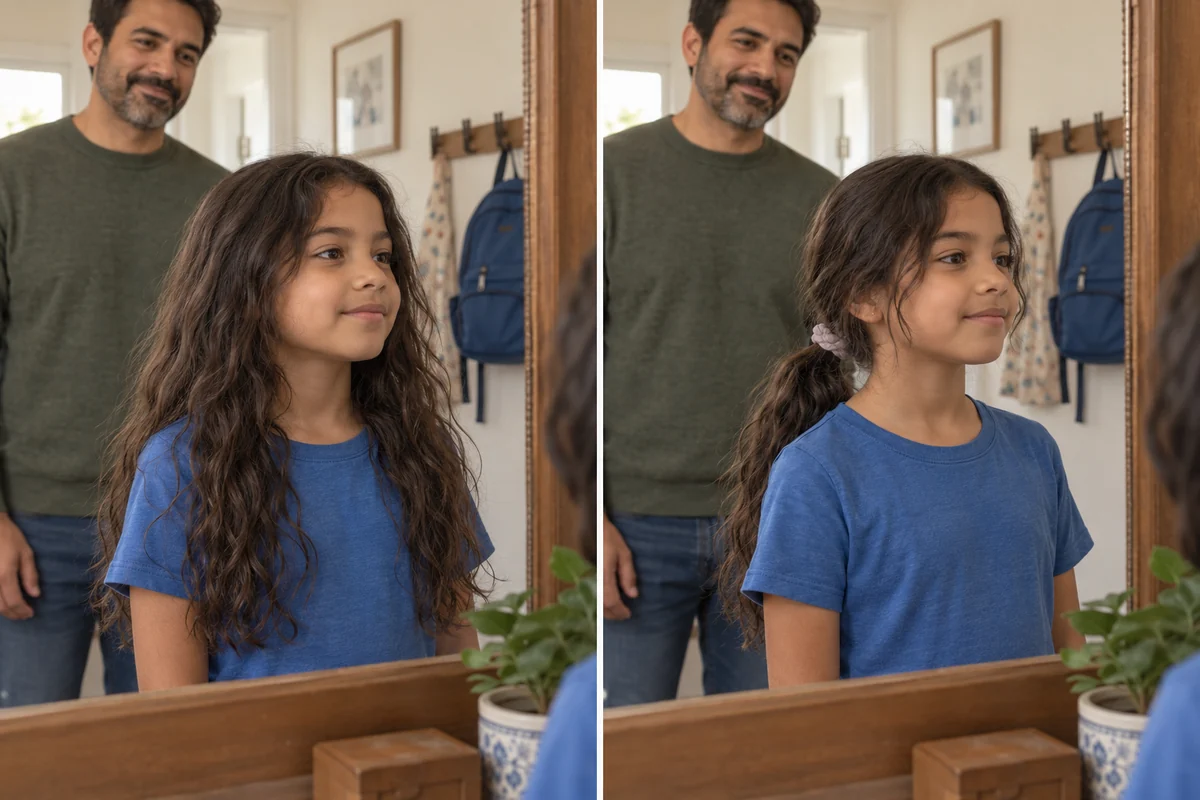
A soft low ponytail

Illustrative styling comparison: the same child’s dry wavy hair hangs loose, then is gathered into a low ponytail with relaxed roots and loose shorter strands.
Before · dry waves looseAfter styling · low, softly tied ponytail
The same waves gathered into a low ponytail, nothing pulled tight. A photo can’t tell you how it feels, so ask the child.
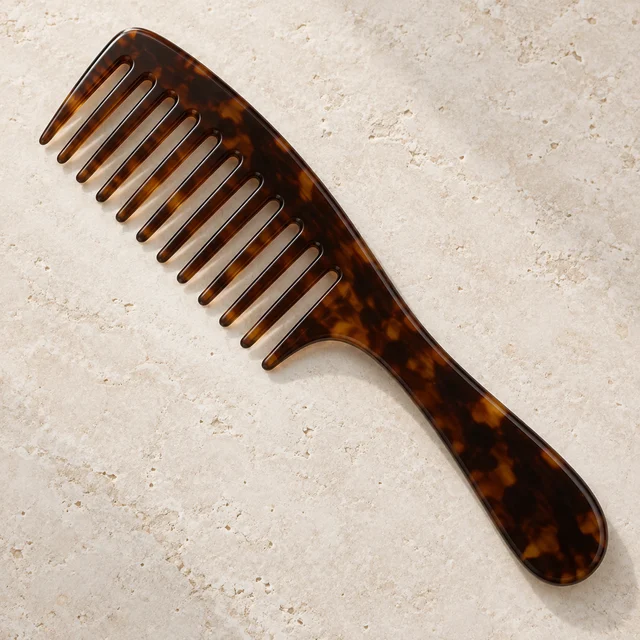
Wide-tooth comb

Help with your hair-care routine

Bring your hair-care questions to the consultation. You can also read gentle detangling for children.

  • Which bits of hair care can we move out of the morning?
  • What’s the least we can do and still have hair ready for school?
  • What’s the backup plan when someone else is doing the morning?

Your child’s age, hair pattern, length and scalp, and what they will put up with, all shape a workable plan. Share the time you really have, the steps they enjoy or dread and any help they need, so what’s suggested fits real family mornings.

The Hair Care Consultation gives you a personal plan with product recommendations, routines and guidance on your hair-care questions.

$49 with 60 days of follow-ups, or $99 with 12 months. Pay once; the year renews only if you choose.