Hair Care Guides

Let the fabric make the shape.
The hair underneath shouldn’t have to work for it.

A headwrap can change your whole look while the hair underneath does nothing. Choose how much fabric, where the knot sits and how much you cover, then turn your head and check it still feels fine. Style wraps only, not safety gear or prescribed coverings.

Your personal hair-care planProduct choices, routines and answers shaped around your hair.$49one-timeStart my consultation
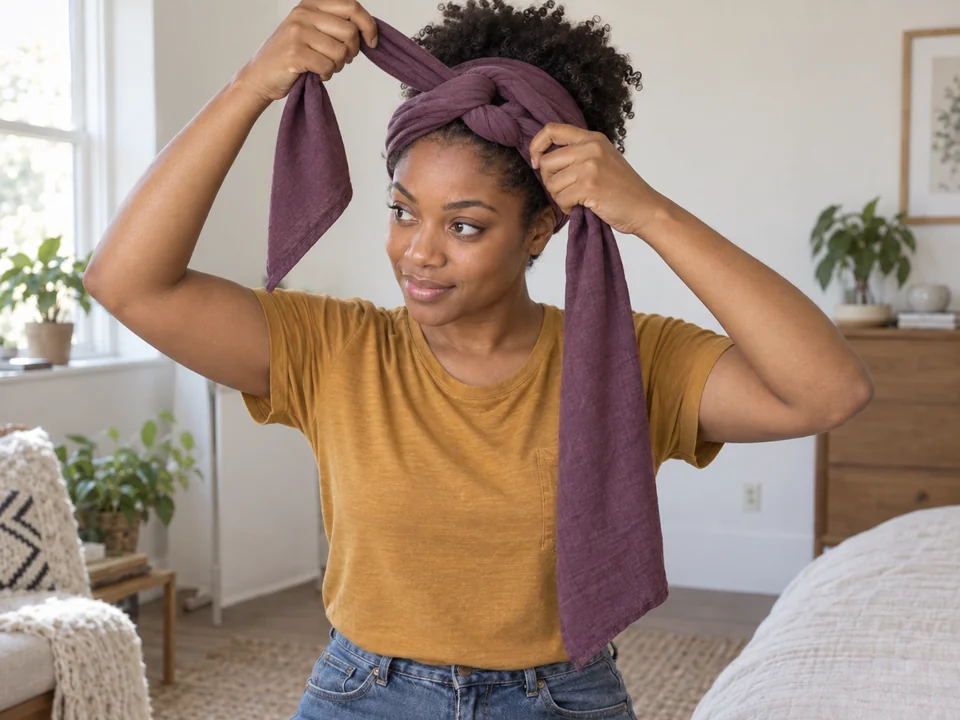
An adult gently checks the side edge of a patterned headwrap with a front fabric knot.
The hair underneath shouldn’t have to work for it.

What is going on

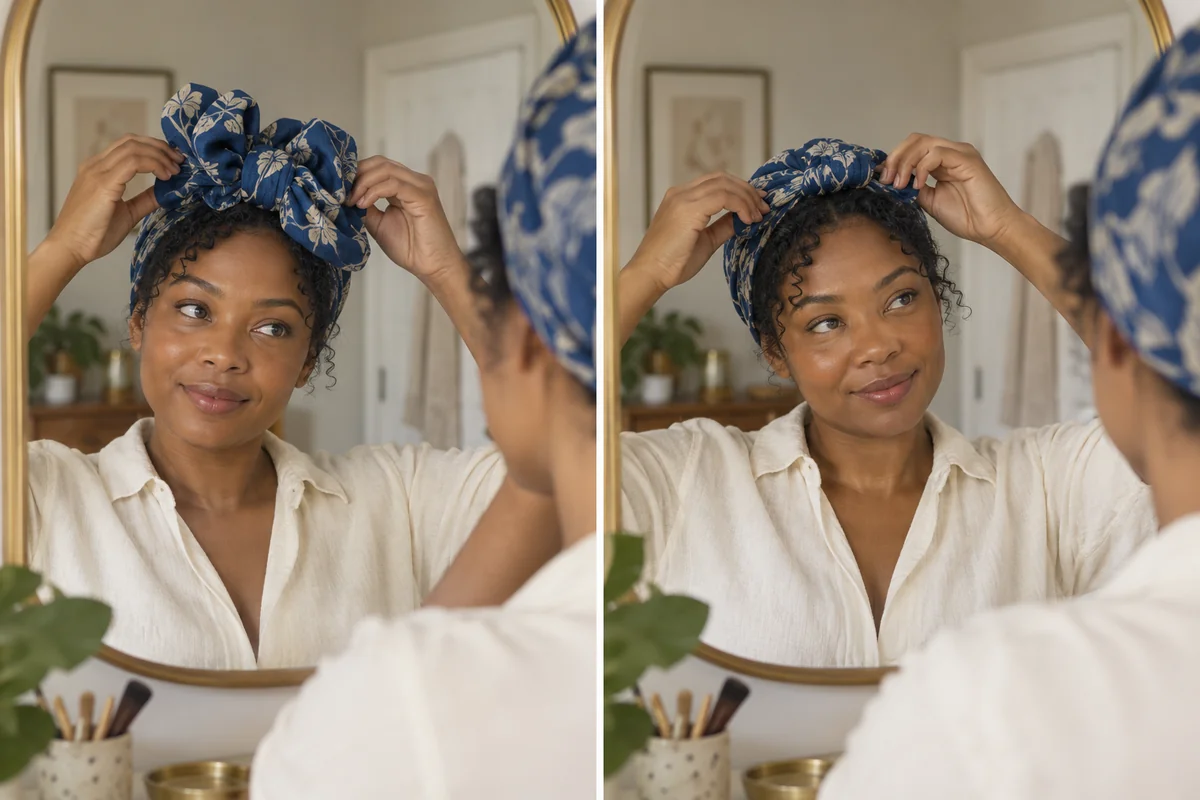
An adult holds a patterned rectangular wrap loosely over dry coils before tying.

Height comes from fabric, not from pulling

A fuller wrap should come from more fabric, never from cinching the hair tighter to hold a taller shape up. Start with dry hair sitting comfortably. If the finished wrap feels heavy or lopsided, use less fabric or drop the knot lower.

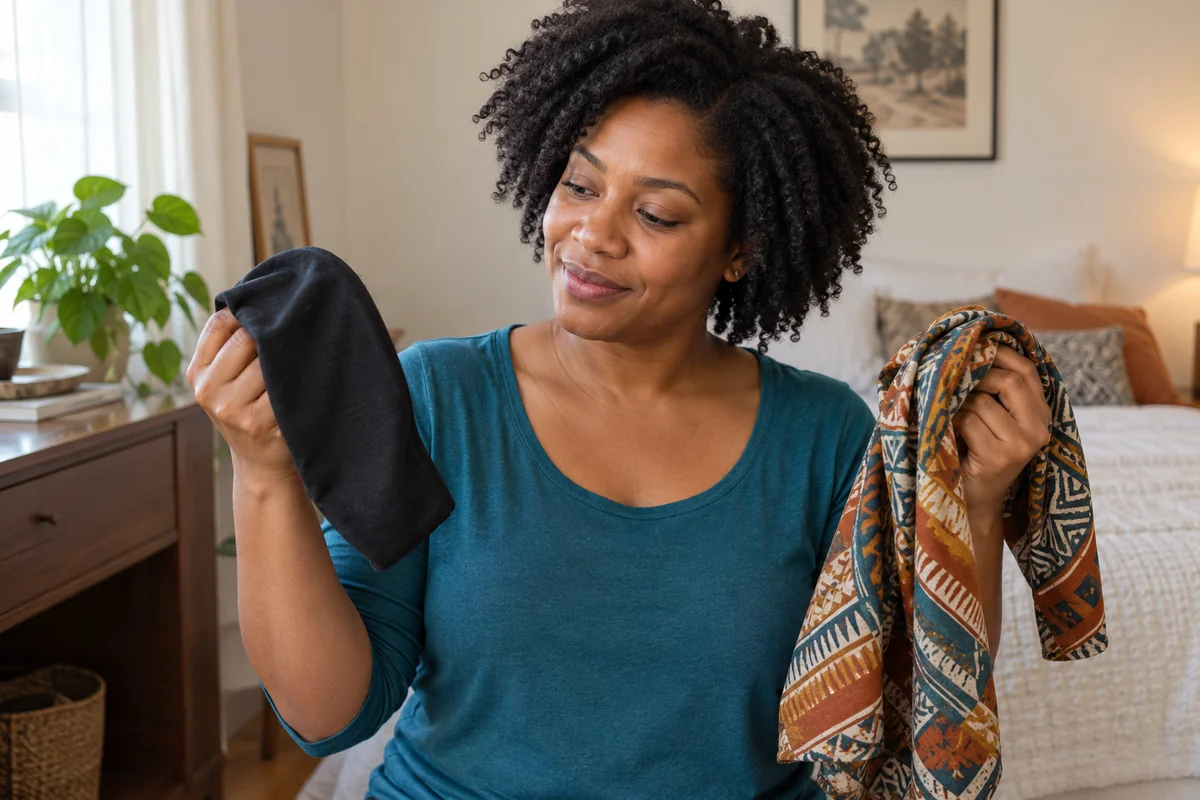
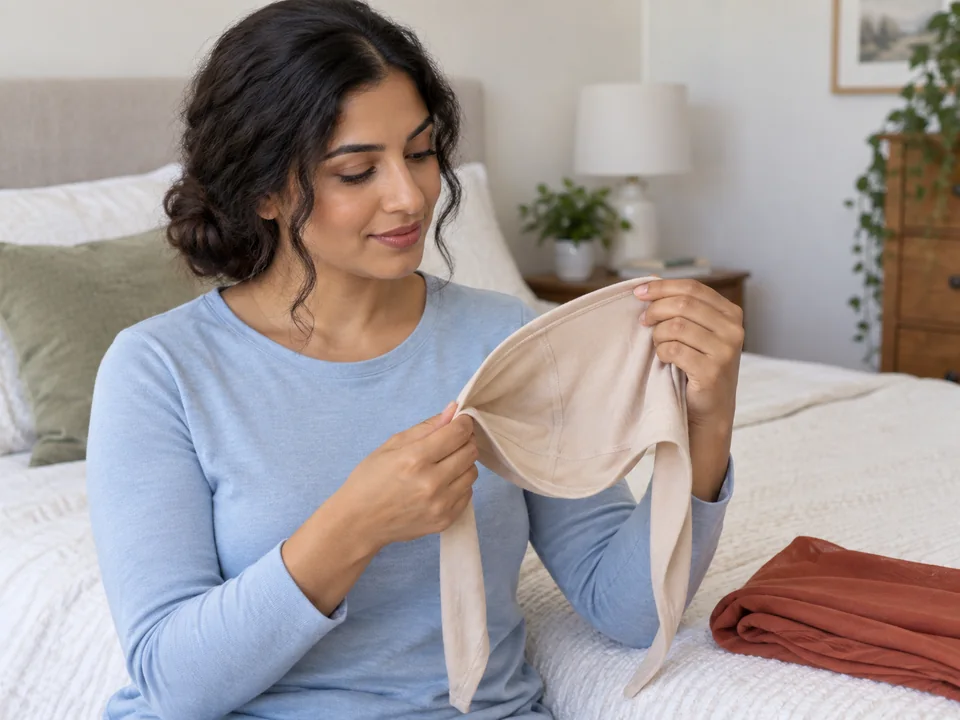
An adult holds an unworn soft liner and a decorative wrap separately beside loose hair.

Add a liner only if it solves something

A liner can help hold loose hair in place under some wraps, but it’s another edge and another layer against your head. Try the wrap on its own first. Keep the liner only when both pieces sit without bunching or crowding the hair.

What helps, day to day

An adult wearing a front-knot decorative wrap turns their head beside an armchair headrest.

The knot digs in when you turn or lean back

  • Move the knot or use less fabric before you tighten anything.
  • Test the movements you’ll actually make, and the seat or headrest you’ll be leaning on.
  • A knot that looks balanced in the mirror can still be in the wrong place for the day.
An adult checks the folded edge of a removed patterned wrap while the hair stays loose.

You keep retightening a wrap that slips

  • Take it off and look at how the hair underneath is sitting and what the fabric is meant to do.
  • Try a different fold, a smaller wrap or a simpler shape instead of yanking harder at the hairline.
  • A wrap that needs constant fixing probably isn’t the one for that day.
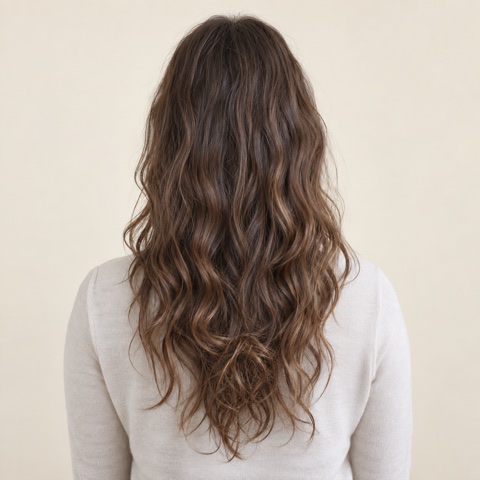
Wavy hair with tangles concentrated near the ends.

Your hair catches when you take it off

  • Undo the knots and tucks in the reverse order you made them, holding the loose hair as you go.
  • Never drag a still-tied wrap over a caught section.
  • When something snags, stop, loosen the fabric around it, and sort the tangle out separately.

Products, by the job they do

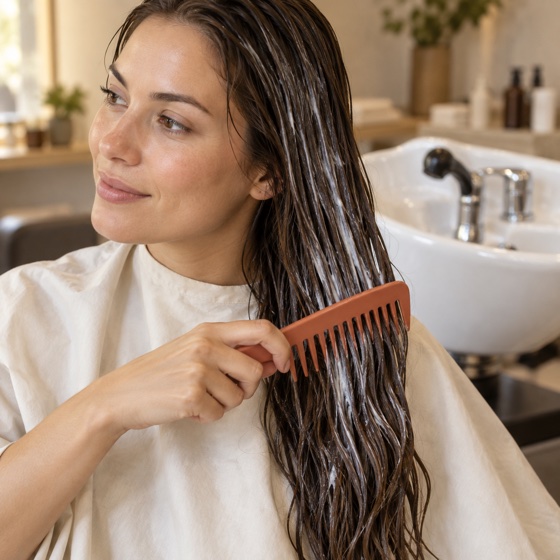
A woman detangling conditioned hair with a wide-tooth comb.

Get the hair comfortable before it goes under fabric

Keep your usual conditioning so the hair goes under the wrap smooth and comes out without knots. Extra product won’t fix a fold that pinches or an edge that rubs.

Browse rinse-out conditioners. For conditioner recommendations, share where your hair tangles and which products you have tried.

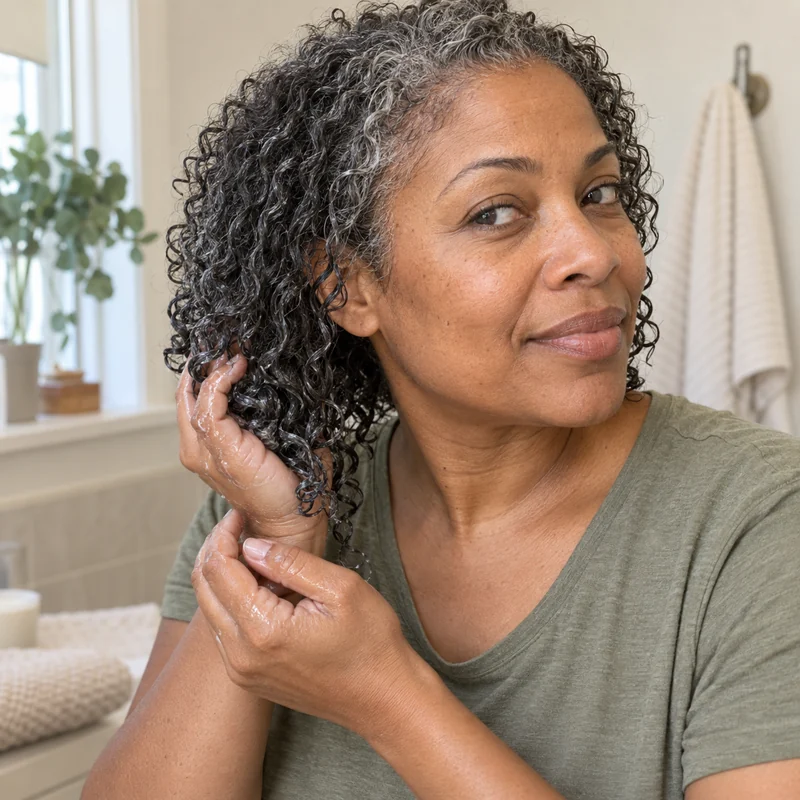
A woman cupping a damp curl section with styling gel on her hands.

Styling under the wrap is optional

Use a styler only for how you want the hair to look once the wrap comes off. Don’t add gel just to force the hair into a tighter base for the fabric to sit on.

Browse styling products. Bring your styling questions and current products to the consultation for personal recommendations.

How to do it

An adult ties a second fabric knot above a loose first knot at the forehead.

1. Build a stacked knot out of fabric alone

The linked method uses a roomy rectangular wrap over dry hair that’s sitting comfortably. The loose front knots are made from the fabric, with the ends tucked so nothing presses on the scalp. If the stack feels bulky, choose another shape.

Guide: Tie a stacked-knot headwrap
A woman holds open a soft tie-back undercap and checks its seams and orientation.

2. Fit a liner on its own first

Put a clean, dry, soft liner on the way its maker shows, under an ordinary fabric covering. Check both edges, and take both pieces off to reset any bunching. This isn’t for rigid, adhesive, medical or safety coverings.

Guide: Fit a hair-covering liner

Illustrated care examples: before & after

Less fabric up front

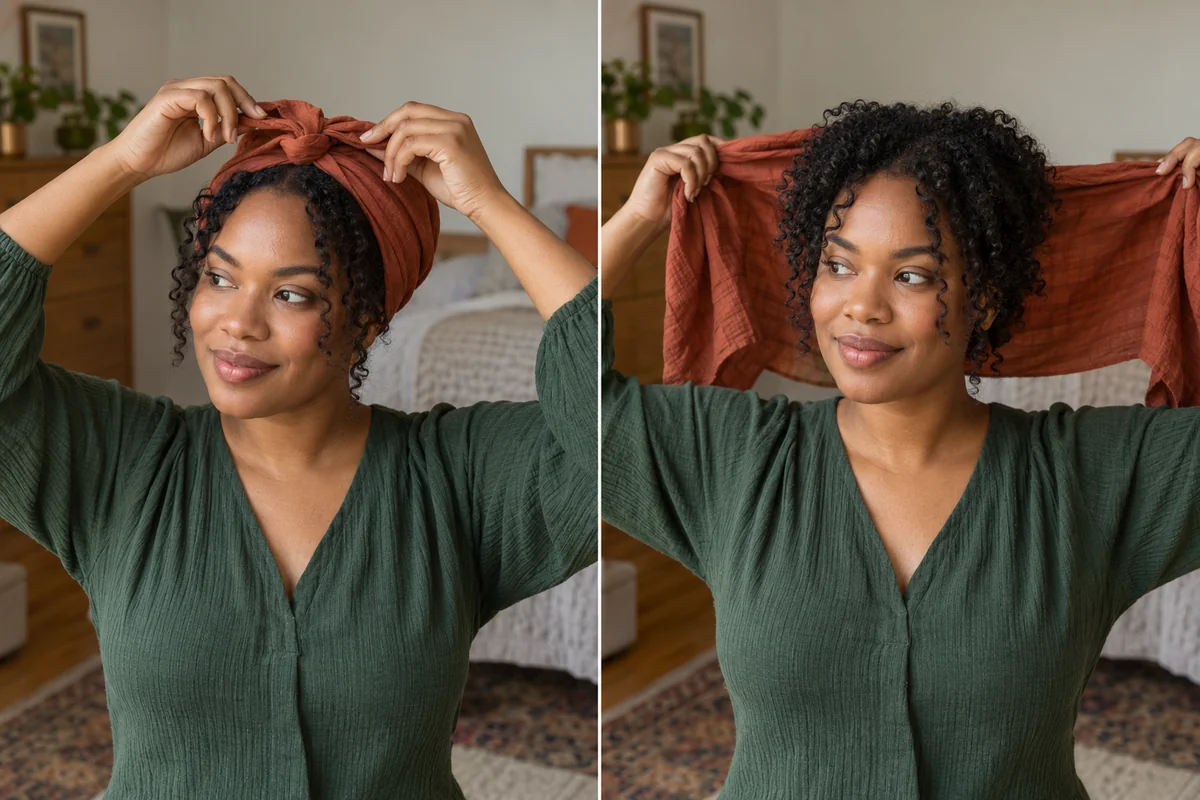
The same adult changes a large front fabric stack into a smaller lower knot while the visible hair remains relaxed.
Before · a bulky front fabric stackAfter styling · a smaller, lower knot
The same fabric refolded into a smaller, lower knot. To support a shape, change the fold or the amount of fabric rather than pulling the hair tighter.

Knot undone before lifting

The same adult undoes a front fabric knot, then holds the opened wrap behind loose curls.
Before · wrap still knotted in frontAfter care · knot open, fabric lifted away
The knot is undone first, so the fabric opens away from the hair instead of dragging across it. Undo the tucks in reverse and pause if anything catches.
A woman with curls writing a routine note beside her hair-care products.

Help with your hair-care routine

Bring your hair-care questions to the consultation. You can also read adjusting hair when changing coverings.

  • How much height do I actually want from the fabric?
  • Where will the knot sit when I’m sitting, driving or lying back?
  • Is a liner worth another layer, or is the wrap enough on its own?

The plan uses the hair and scalp details you share, past treatments, current products, preferences and the time and budget you have.

The Hair Care Consultation gives you a personal plan with product recommendations, routines and guidance on your hair-care questions.

$49 with 60 days of follow-ups, or $99 with 12 months. Pay once; the year renews only if you choose.