Hair Care Guides

Read what the breakage number measures.
The test conditions belong next to the headline.

An anti-breakage label can mean fewer broken fibers in one lab test, easier combing, or something vaguer about strength. Before you buy, find the measured result, what it was compared with and the exact products used. Buy for a real job, not for a percentage.

Your personal hair-care planProduct choices, routines and answers shaped around your hair.$49one-timeStart my consultation
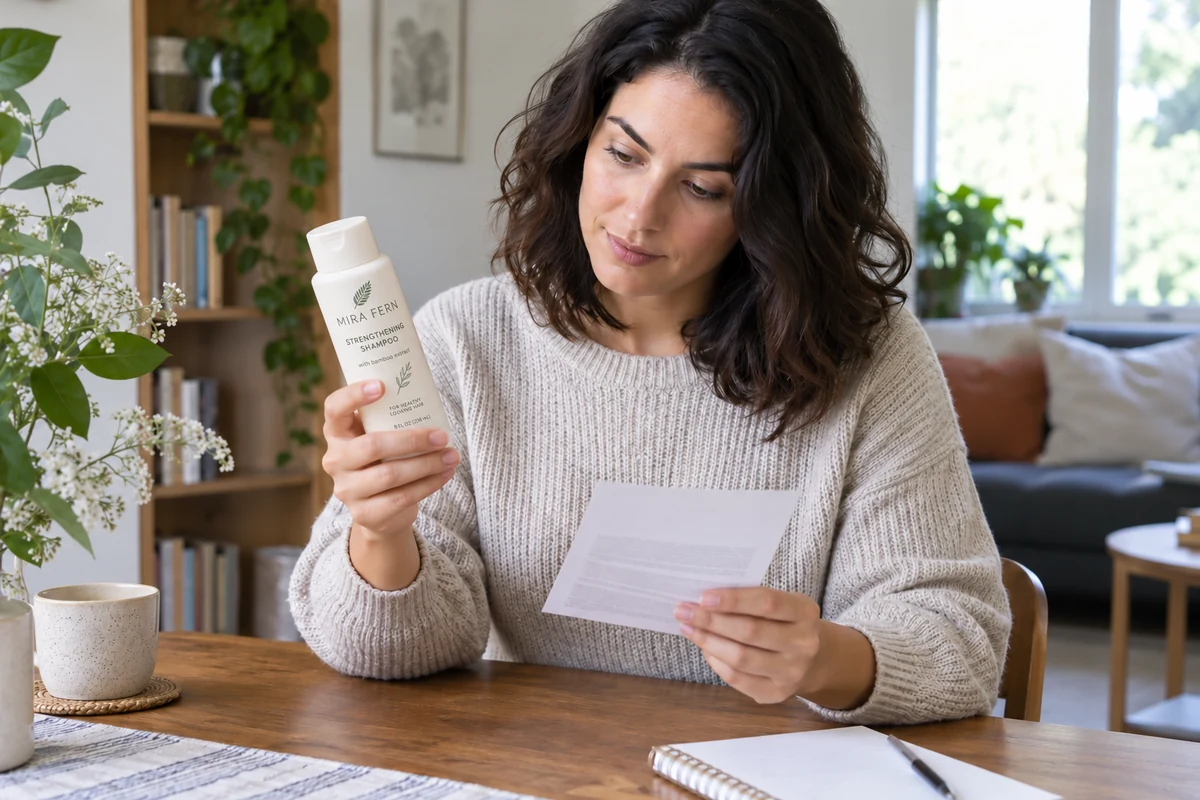
An adult compares a product label and printed information at a home table.
The test conditions belong next to the headline.

What is going on

An adult reads a printed product-information sheet beside a notebook.

Find out what the test actually measured

Did they count broken fibers, measure combing force or measure how hard it was to snap a strand? Those are three different things. None of them means thicker hair at the scalp, new growth or a fiber restored along its whole length.

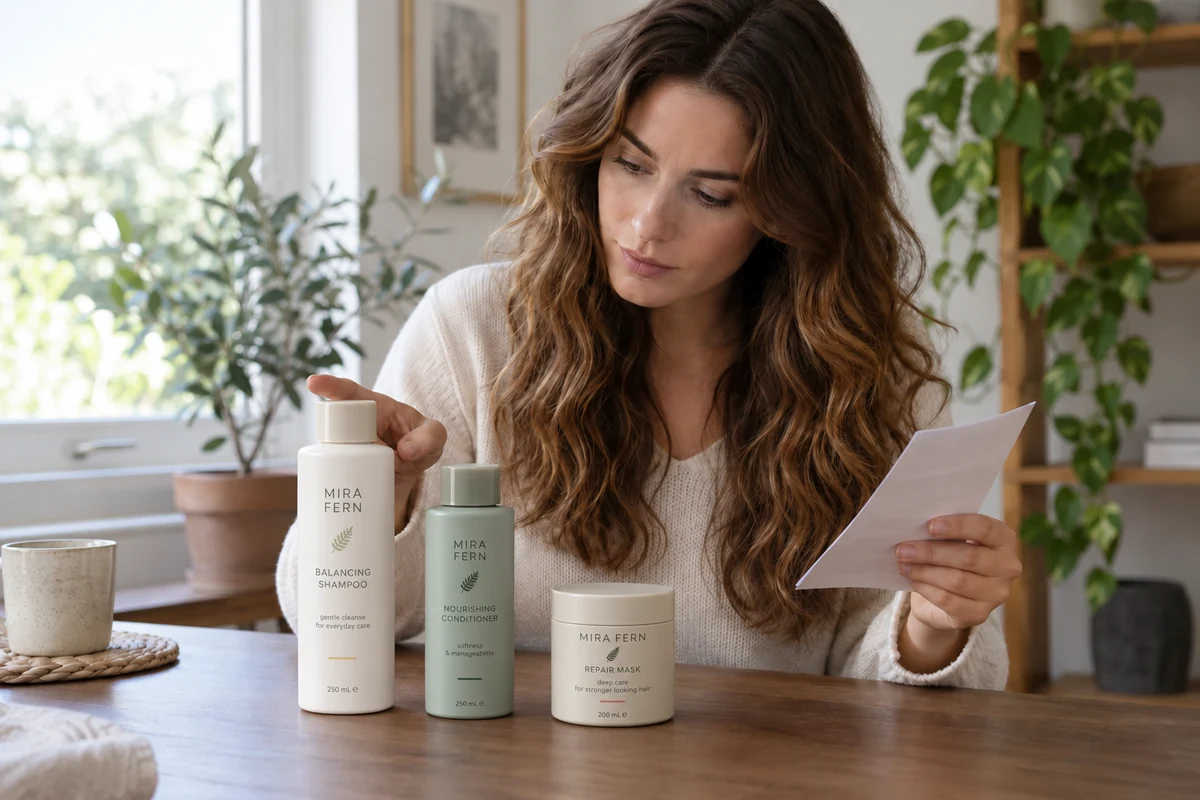
An adult compares three closed care products with a printed instruction sheet.

Check the evidence covers the bottle in your hand

Look at the named formula, the products used together and the order they went on. A result from shampoo plus conditioner doesn’t describe the shampoo alone. Evidence for one ingredient, an older formula or a different product has to be tied to this bottle first.

What helps, day to day

An adult compares two printed product-information sheets at a desk.

Two big percentages use different baselines

  • Find out what each product was compared with, whether that was untreated hair, a shampoo with no conditioning or another whole routine.
  • Check the hair’s state and the test conditions too.
  • A bigger number from a different comparison can’t rank the two products fairly.
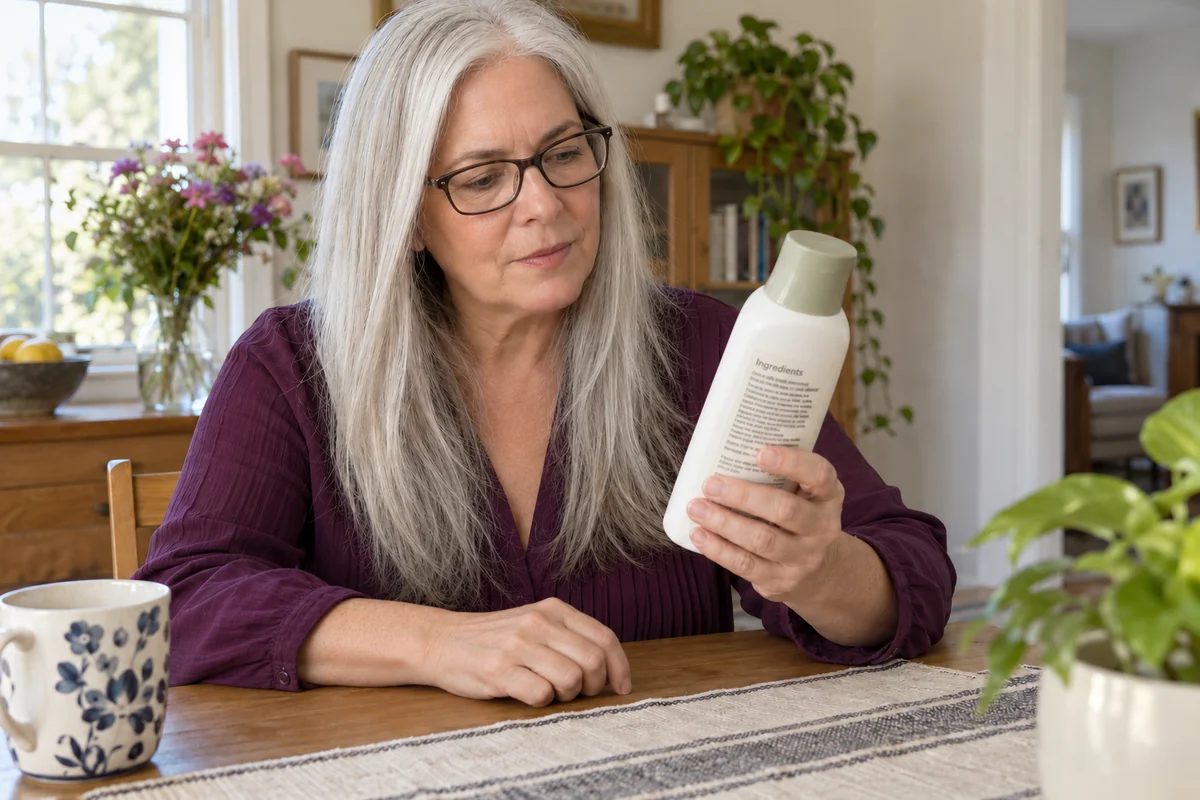
A woman wearing glasses reads a hair product ingredient panel.

The small print is missing or buried

  • Hunt for the footnote or the full claim explanation, and ask the brand for anything that’s missing.
  • Write down what you still don’t know.
  • You can buy a product for a plain conditioning job without taking an unexplained strength number on trust.
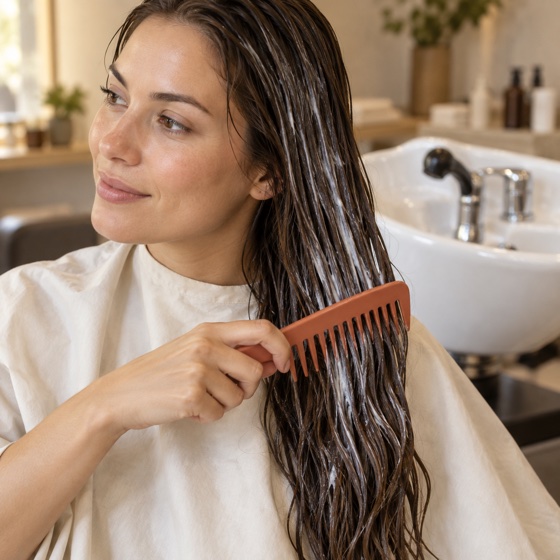
A woman detangling conditioned hair with a wide-tooth comb.

Your hair does feel easier to comb

  • That’s a real and useful thing to notice.
  • Just keep it separate from a claim about the fiber being stronger.
  • Note the comfort, the snagging and the routine you used, and resist pulling or over-brushing strands to test them.
  • Your bathroom can’t reproduce a controlled breakage test.

Products, by the job they do

A woman smoothing conditioner through her mid-lengths and ends.

Buy slip for a real handling problem

Compare the thing you’re tempted by with the conditioner that already works. An anti-breakage headline doesn’t mean you need more product or another step.

Browse rinse-out conditioners. For conditioner recommendations, share where your hair tangles and which products you have tried.

An adult reads a closed mask jar beside two closed companion products.

Count the whole routine, not one bottle

Look at the directions, the companion products it expects, the time and the cost against what you actually want. If the claim depends on a system you wouldn’t use, one bottle from it won’t give you the same result. Keep any treatment restrictions in place.

Browse rinse-out masks. For mask advice, share your treatment history and where your usual conditioner falls short.

How to do it

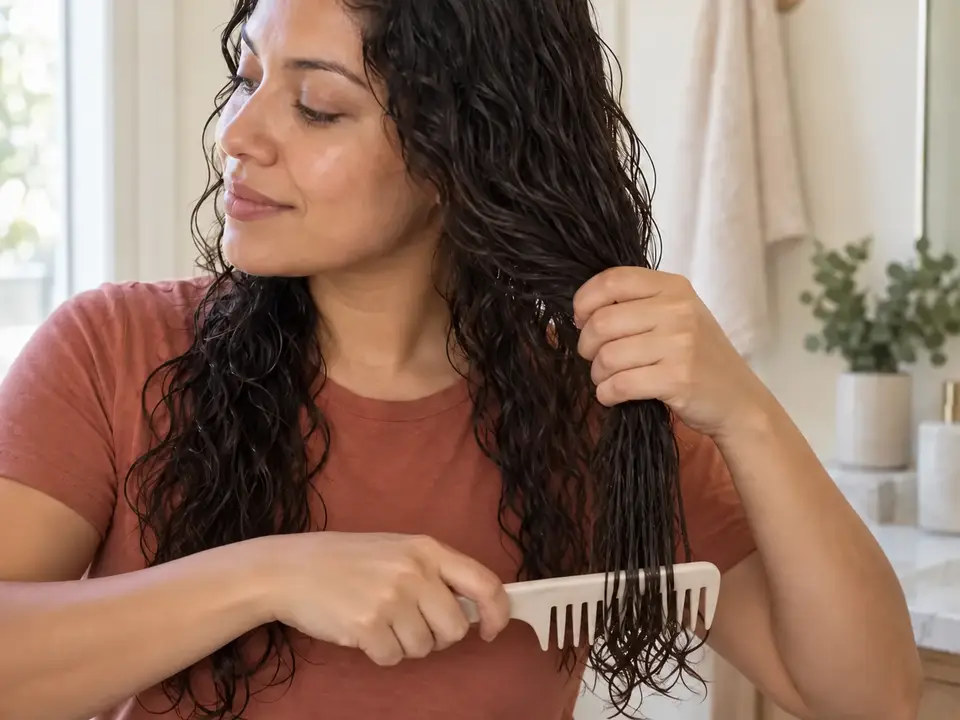
Woman supports a damp wavy-curly section while a wide-tooth comb begins at the lowest hair tips.

1. Handle gently instead of testing strength

For ordinary snags in loose hair, get it to the wetness that suits your pattern and hold a section you can manage. Start at the ends and stop at resistance. Don’t add comb strokes to count breaks or pull strands until they snap.

Guide: Detangle with a wide-tooth comb

Illustrated care examples: before & after

The claim and its small print

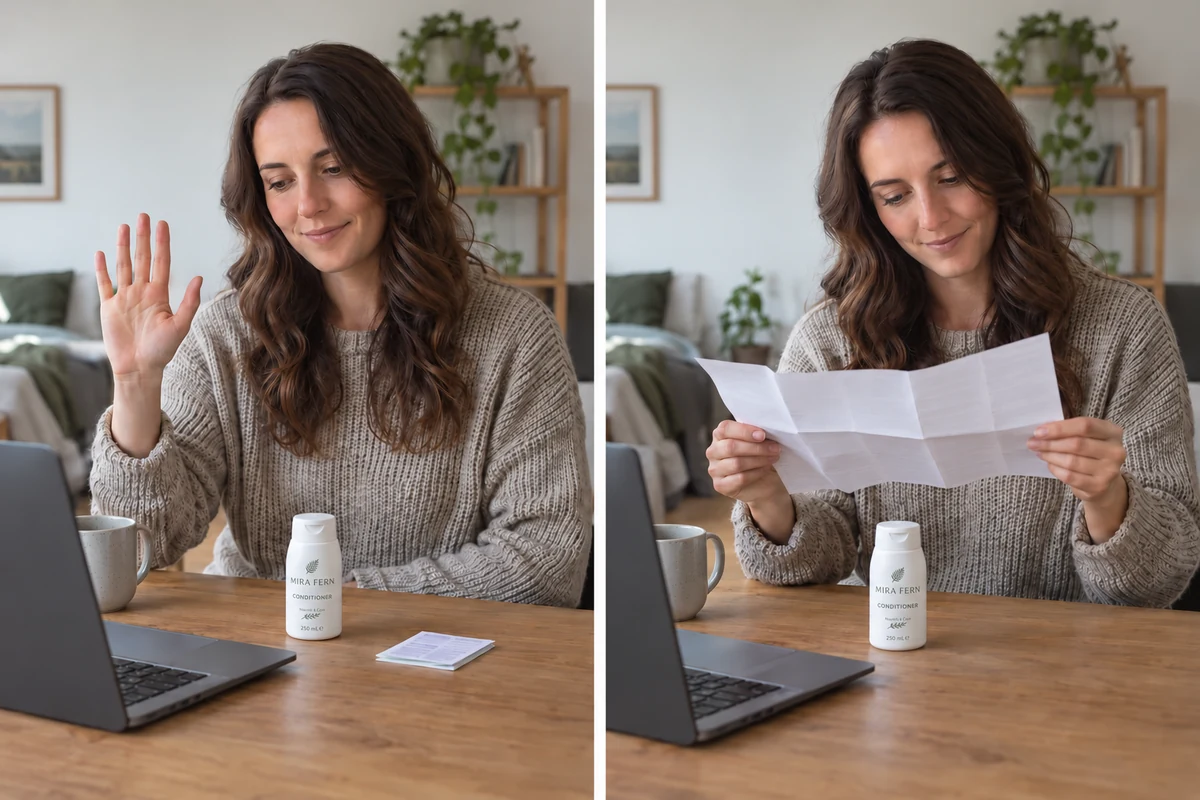
The same adult opens a folded leaflet beside a closed cosmetic bottle.
Before · leaflet folded beside the bottleAfter care · leaflet open beside the bottle
The leaflet is unfolded so the full explanation sits next to the headline claim. Reading it is the point, it doesn’t make the claim true.

The whole system behind the claim

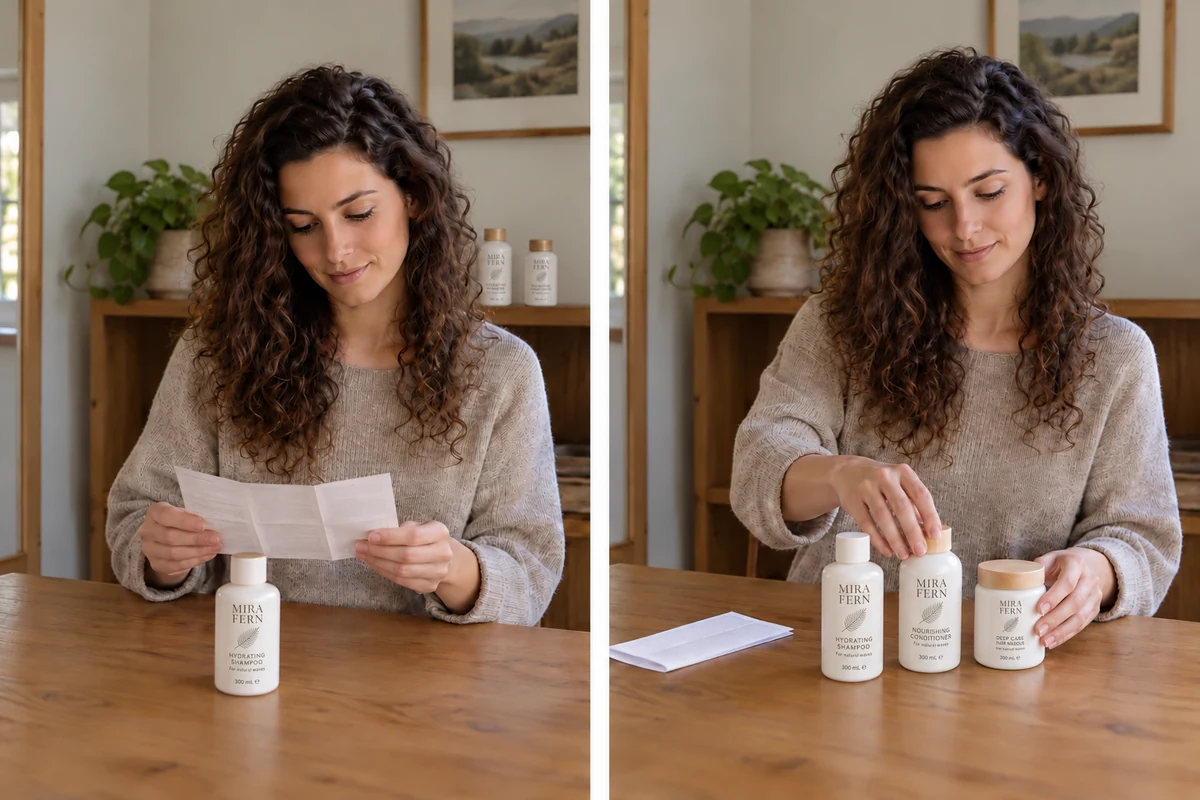
The same adult brings two closed companion products beside a bottle and instruction leaflet.
Before · one bottle beside the leafletAfter care · three products beside the leaflet
The leaflet’s claim rests on three products used together, so all three are set out before deciding. More bottles on the counter is not a better result.
A woman with curls writing a routine note beside her hair-care products.

Help with your hair-care routine

Bring your hair-care questions to the consultation. You can also read deciding whether a specific bond-care step fits your routine.

  • What did the test actually measure?
  • Which products, and compared with what?
  • Does the routine it needs fit a job my hair actually has?

Share the exact claim wording and its small print, your current routine, what breakage you’re seeing and your budget. The consultation can compare the practical job and the directions, and say plainly what evidence is missing. It can’t test your hair’s strength at home.

The Hair Care Consultation gives you a personal plan with product recommendations, routines and guidance on your hair-care questions.

$49 with 60 days of follow-ups, or $99 with 12 months. Pay once; the year renews only if you choose.