Hair Care Guides

Share the shopping, not the bottle.
Everyone keeps their own routine.

Several people in one house can use the same shampoo without needing the same routine. Compare what each of you needs, buy together if it helps, then give everyone their own sealed bottle. Shared shopping simplifies the list. It needn’t flatten anyone’s care.

Your personal hair-care planProduct choices, routines and answers shaped around your hair.$49one-timeStart my consultation
Two adults with long curls and short salt-and-pepper hair each hold a separate matching bottle beside personal trays.
Everyone keeps their own routine.

What is going on

Two adults compare a bottle's directions and a hair-care shopping note, with separate closed products in front of them.

Agree on a formula only if it suits you both

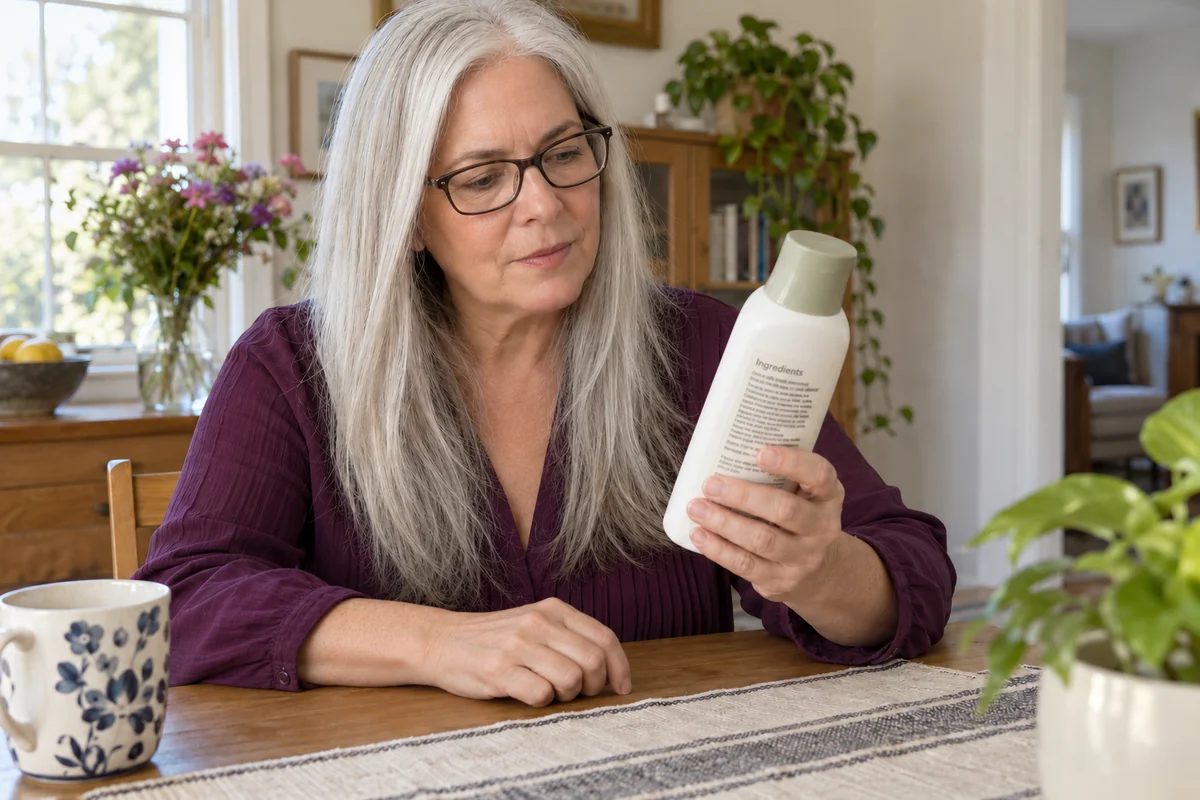
Compare the product, its directions and what each of you found before. One person’s good result doesn’t prove it suits the other. If scent, ingredients you avoid, treatments or scalp needs differ, keep separate choices. Matching bottles was never the point.

A woman wearing glasses reads a hair product ingredient panel.

Buying together isn’t sharing an opened bottle

Germs pass between people through shared cosmetics, which is why safety guidance says not to share them. Buy separate bottles, or a sealed multipack, so each person has their own. A pump doesn’t change that, and neither does decanting one bottle into little refill containers.

What helps, day to day

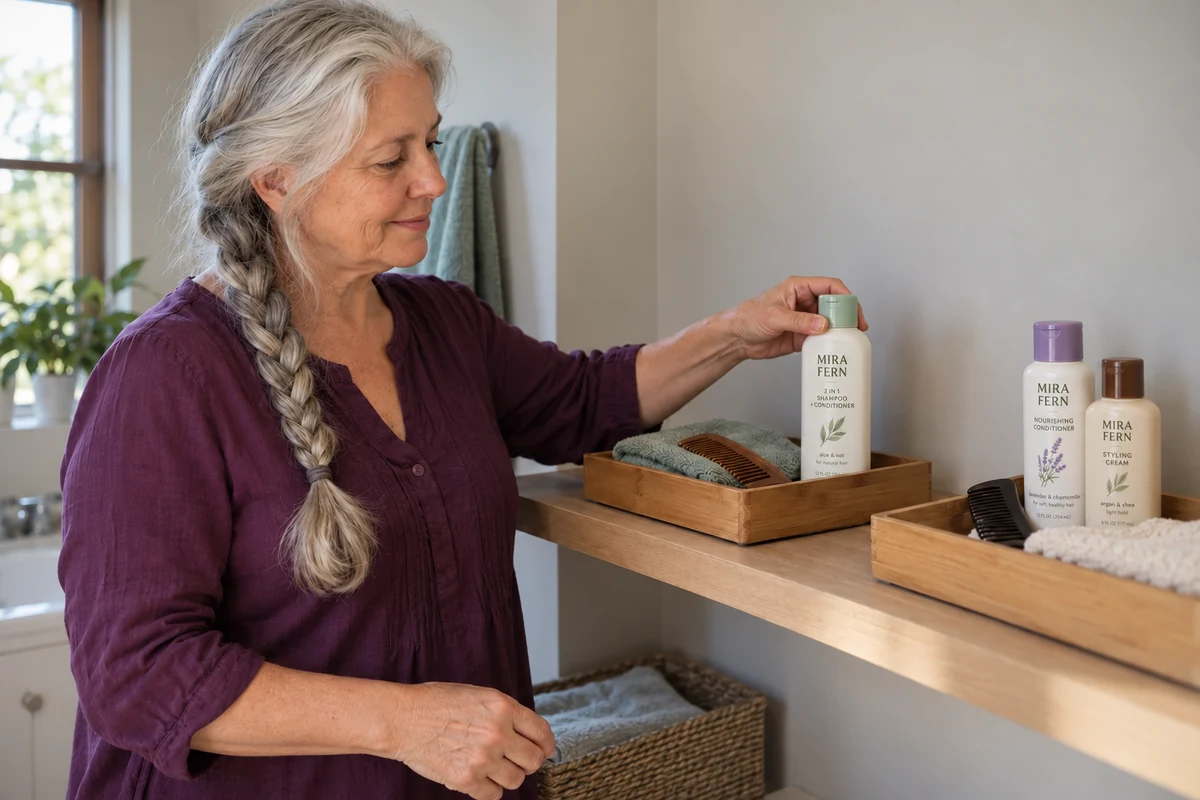
A woman with a long silver braid places a bottle marked Lee in her own tray beside a separate tray of products and tools.

Give everyone a recognizable spot

  • Put a name or a sticker on each person’s bottle without covering the directions.
  • Keep it in an agreed place and close it after use.
  • Plan replacements together, but let each person say when their own is running low.
A woman smoothing conditioner through her mid-lengths and ends.

The same conditioner does different jobs

  • One of you might use it only on the ends, while another needs it through longer or curlier lengths.
  • Each person follows the directions for their own hair.
  • Same brand doesn’t mean the same amount, the same placement, the same wait or the same wash day.
A woman uses a tablet displaying product directions beside a capped hair-care bottle at a dry desk.

Keep the exceptions easy to respect

  • Anyone’s special treatment or restricted product stays theirs, with its own instructions.
  • The household favorite doesn’t stand in for something a professional has told someone to use.
  • For children, check the age directions and supervise rather than assuming an adult formula fits.

Products, by the job they do

A woman massaging shampoo lather onto her scalp with her fingertips.

Agree on cleansing before buying together

Compare how oily each scalp gets, how active you each are and how often you wash. The same shampoo can simplify the list, but everyone keeps their own bottle and their own wash schedule.

Browse cleansing products. For shampoo recommendations, share how your roots feel between washes and what you use now.

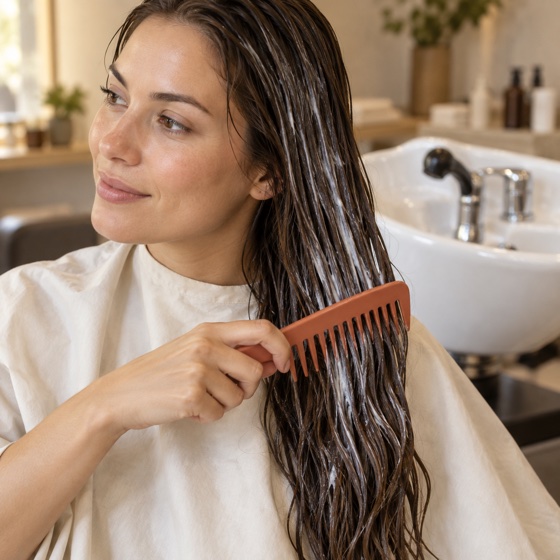
A woman detangling conditioned hair with a wide-tooth comb.

Keep different conditioning needs different

Compare how easily each person’s hair detangles and whether it feels heavy once dry. Length, pattern and treatments differ, so buy different conditioners when they do. Keeping useful slip matters more than a matching set of bottles.

Browse rinse-out conditioners. Tell the consultation what you want from a conditioner and what you disliked about previous ones.

A household agreement that stays simple

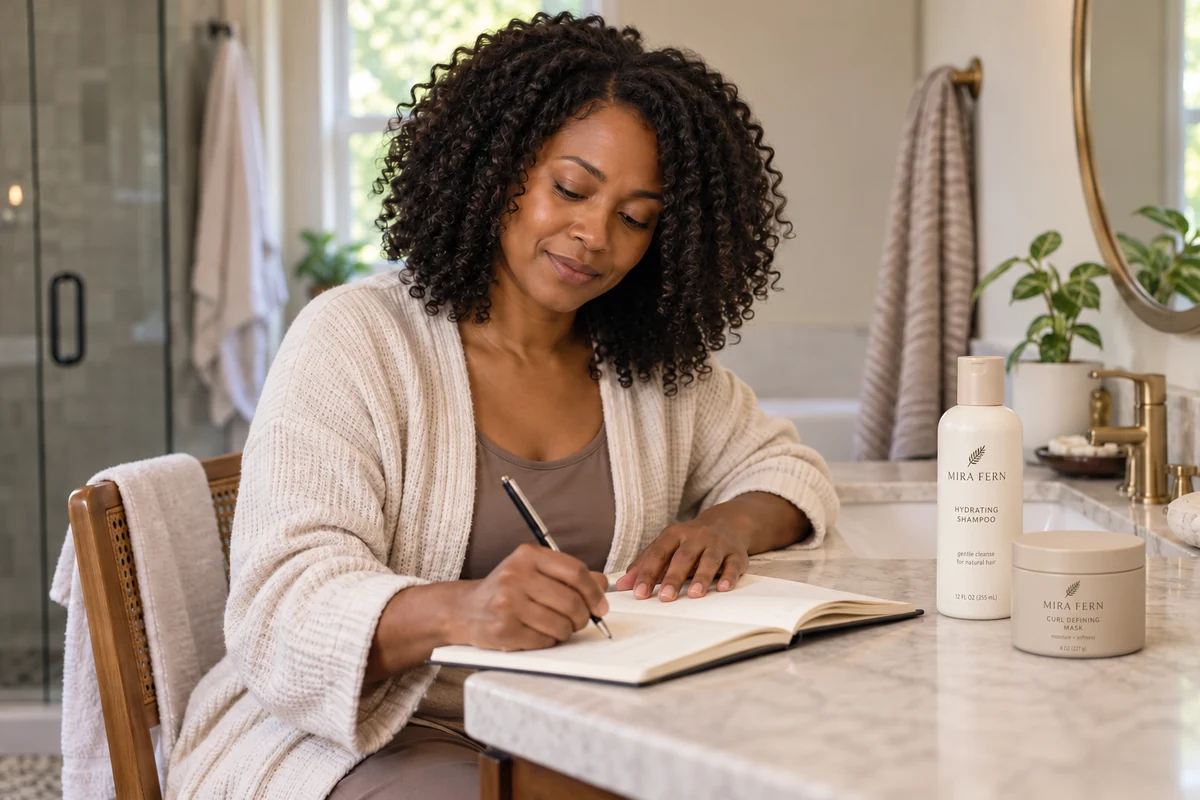
A woman with curls writing a routine note beside her hair-care products.

Keep a short shared shopping note

List the exact products and whose bottle needs replacing. Keep reactions and preferences attached to the person, not stamped on the product as good or bad for everyone. Look at the list again when a product changes or someone’s needs do.

A man holds a used brush by its handle and examines the bristles.

Tools and dispensing stay personal too

Brushes, combs and applicators stay labeled and personal. Wash your hands before using your own products and store them the way the label says. Buying the same brush doesn’t mean swapping brushes mid-wash.

Illustrated care examples: before & after

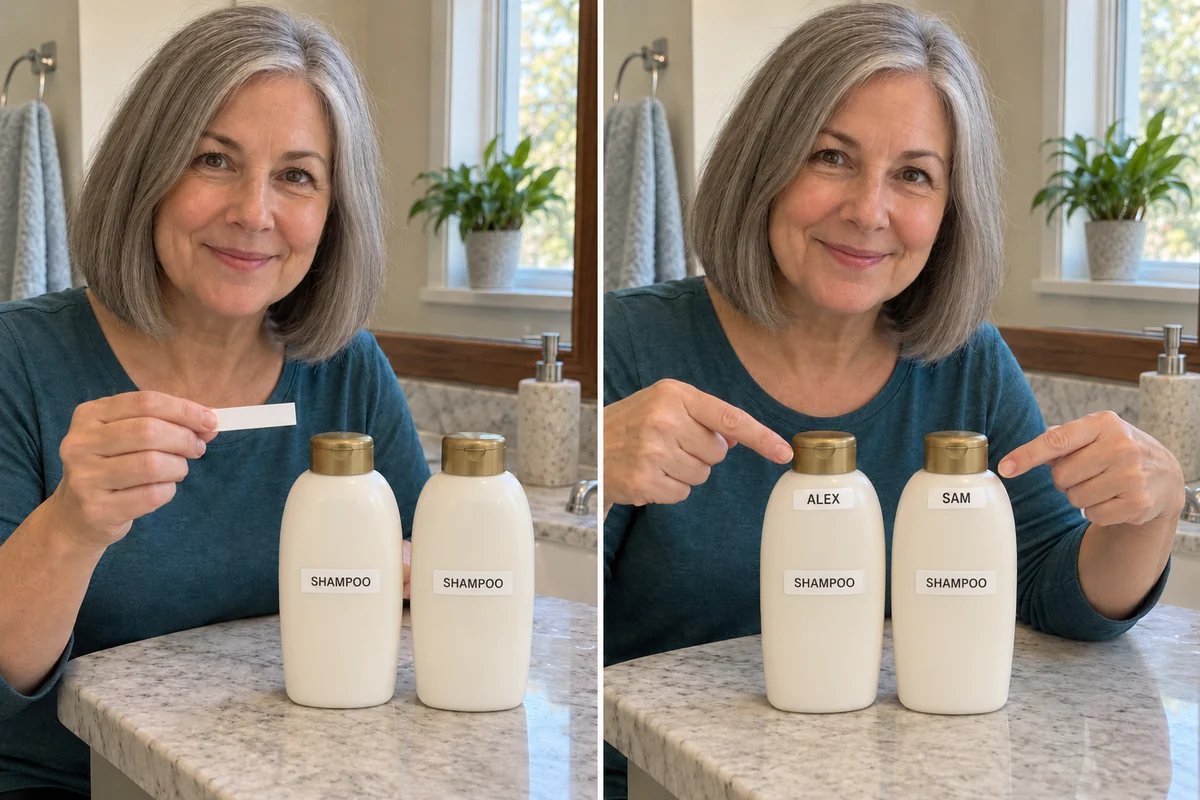
A name on each bottle

The same gray-haired woman shows two shampoo bottles before and after separate Alex and Sam name strips are added above their product labels.
Before · matching bottles, no namesAfter care · name strips, labels still visible
A small name strip marks whose bottle is whose, placed so the product label still shows. Same look does not mean the same product is right for both.

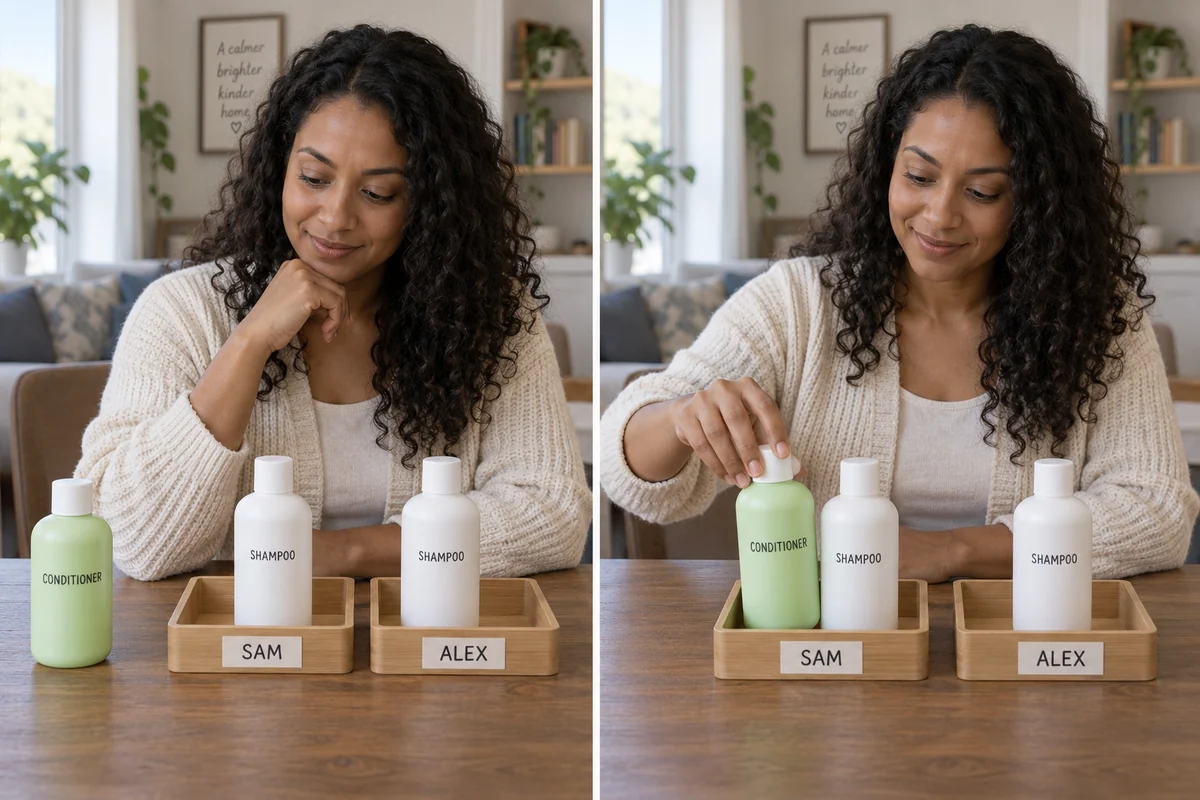
One extra step, one kit

The same curly-haired woman moves a separate conditioner into Sam's personal tray while Alex's own shampoo stays in its separate tray.
Before · conditioner not in a kitAfter care · in one kit, other unchanged
The separate conditioner joins the kit of the person who uses it, and the other kit stays as it was. Each person keeps what they need.
A woman gently squeezing damp hair with a towel.

Help with your hair-care routine

Bring your hair-care questions to the consultation. You can also read keeping a child’s care information consistent across homes.

  • Which products genuinely suit more than one of us?
  • Which bottles, tools and special products need a name on them?
  • How do we coordinate replacements without forcing one routine on everyone?

Share each person’s hair, favorite products, anything they avoid and the household budget, one person at a time. A consultation can spot where the choices overlap while keeping the steps and amounts that belong to each of you.

The Hair Care Consultation gives you a personal plan with product recommendations, routines and guidance on your hair-care questions.

$49 with 60 days of follow-ups, or $99 with 12 months. Pay once; the year renews only if you choose.