Hair Care Guides

Find the real claim behind the picture.
Fuller-looking hair isn’t the same as regrowth.

When your hair feels thinner, a bottle with growth on the front is hard to walk past. A cosmetic can change how hair looks and handles without growing anything new. Before you buy, find out what’s promised and whether that’s what you want.

Your personal hair-care planProduct choices, routines and answers shaped around your hair.$49one-timeStart my consultation
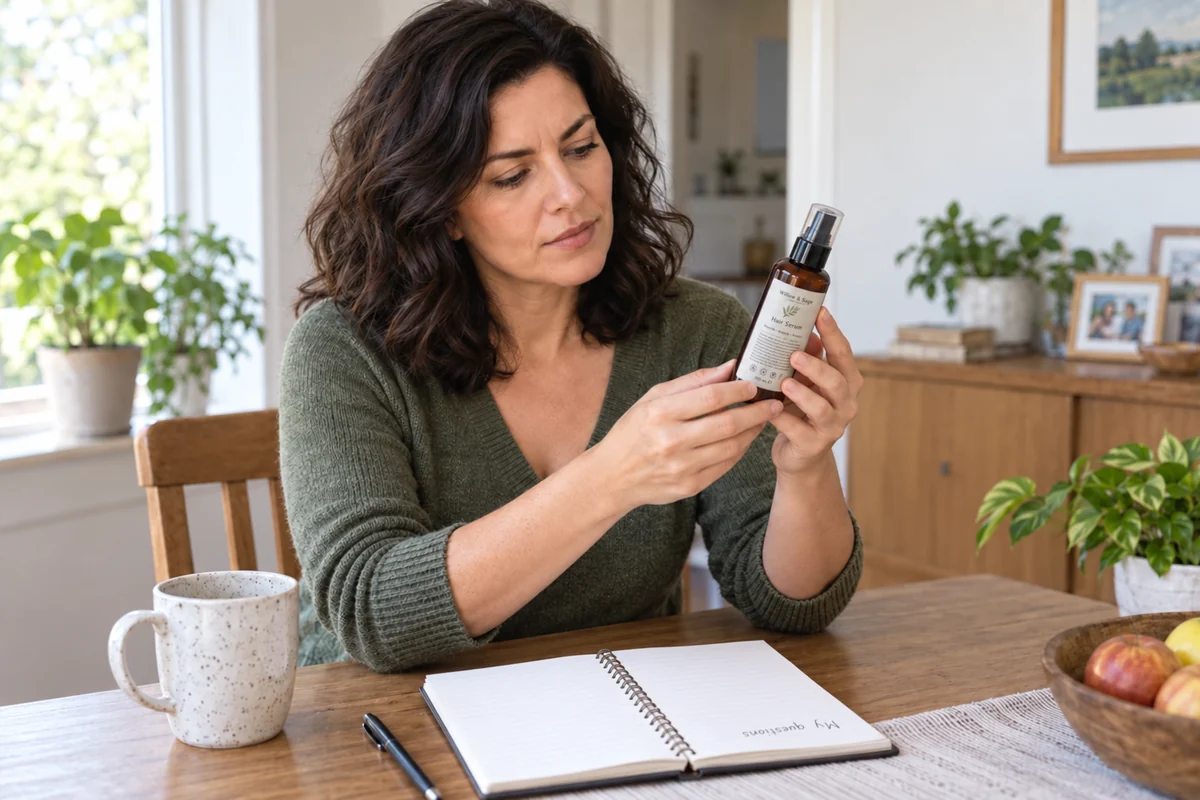
A woman with dark wavy hair reads the back of a closed serum bottle beside a notebook.
Fuller-looking hair isn’t the same as regrowth.

What is going on

A woman reviews a notebook with separate appearance, length and growth headings beside a closed bottle.

Name the outcome

Does the claim mean a fuller-looking style, fewer snapped hairs, keeping more length, or new hair growing from the scalp? Those are four different things. A model with long hair and the word growth on the label don’t tell you which one was measured.

A woman wearing glasses reads a hair product ingredient panel.

Read what kind of product it is

In the United States, a product that claims to restore hair growth can count as a drug because of what it’s meant to do, even when it’s sold as a cosmetic. Cosmetic packaging, and the word cosmeceutical, don’t mean FDA approval or proof of regrowth.

What helps, day to day

A woman uses a tablet displaying product directions beside a capped hair-care bottle at a dry desk.

The evidence is about an ingredient, not the bottle

  • Look for evidence on the finished product used the way the label says.
  • A study of one ingredient, a lab dish or an animal doesn’t show that this bottle grows hair on a person’s scalp.
  • Keep that gap in mind, because the marketing won’t.
A woman points to a feature on a printed bob reference beside a second view.

The proof is a dramatic photo

  • Check whether the before and after used the same lighting, parting, styling and camera angle.
  • Testimonials and photos can’t separate the product from everything else that changed.
  • A fuller style or longer ends might be a real benefit, but they aren’t new follicles growing.
A man reads a shampoo bottle while making a note, with a second hair-care bottle beside the notebook.

A study headline sounds conclusive

  • Ask what was measured, in whom, compared with what, and how the product was used.
  • Check whether the tested product is the one being sold.
  • If the result is about appearance or breakage, don’t quietly read it as regrowth.

Products, by the job they do

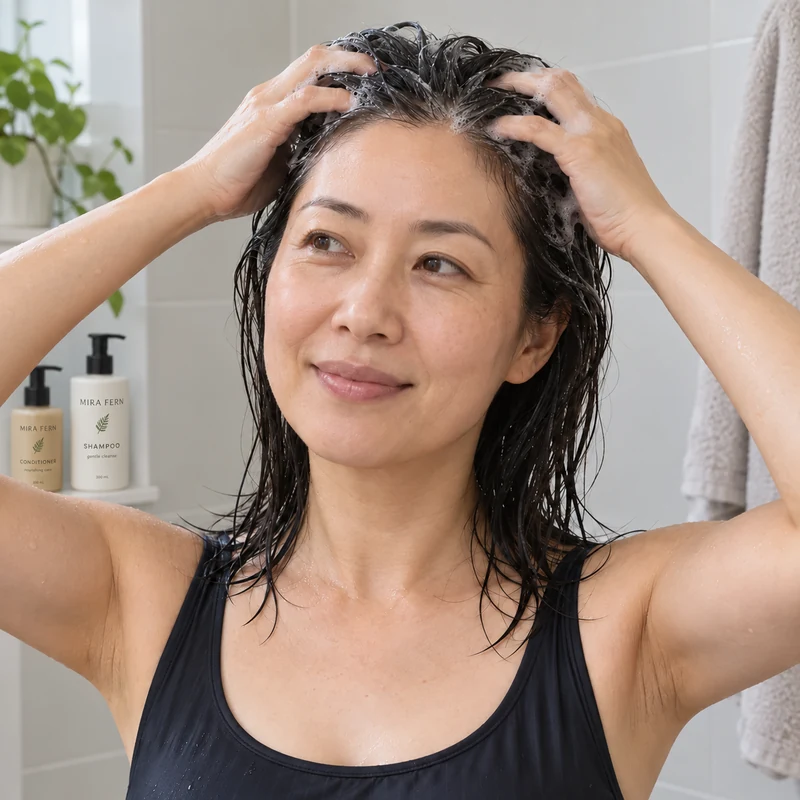
A woman massaging shampoo lather onto her scalp with her fingertips.

Buy a shampoo to clean, not to grow

A growth theme on the label tells you nothing about how well a shampoo cleans or how it feels on your scalp. Keep ordinary cleansing separate from the question of unexplained hair loss.

Browse cleansing products. The consultation uses your wash frequency and scalp concerns to recommend a shampoo.

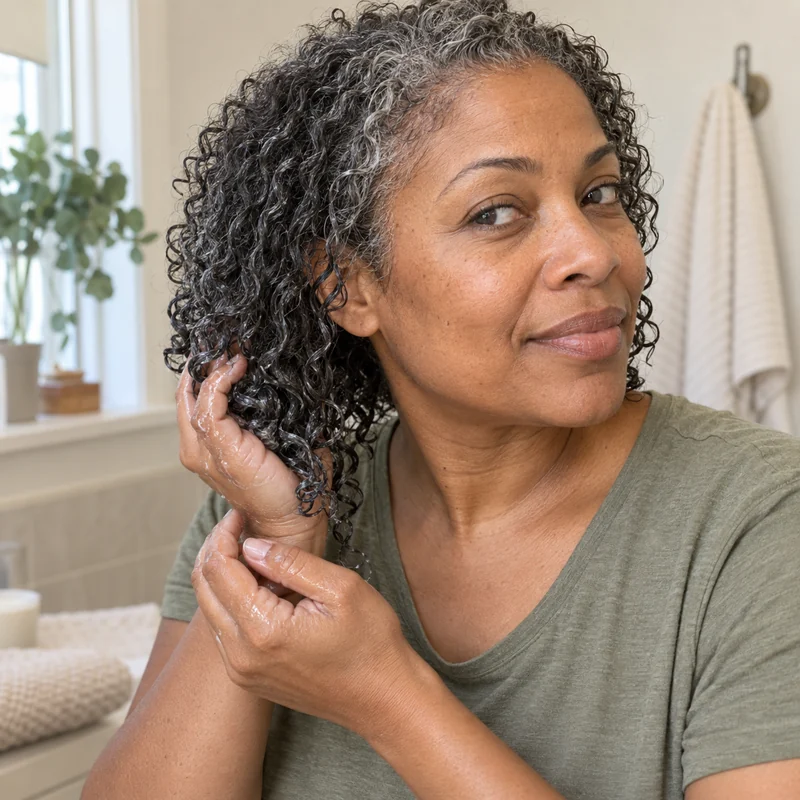
A woman cupping a damp curl section with styling gel on her hands.

Choose fullness as styling, and say so

If what you want is a fuller-looking style, a styling product can give you that, honestly. Pick it for the finish, the weight and the effort you’re happy with. Judge it as styling. It isn’t evidence that more hairs are growing.

Browse styling products. Bring your styling questions and current products to the consultation for personal recommendations.

Make a decision you can explain

A woman with curls writing a routine note beside her hair-care products.

Write the claim next to the gap

Three short lines. The outcome I want, what this product claims, and what its evidence actually measured. If they don’t line up, you can leave the product on the shelf without having to prove it’s worthless.

A woman with shoulder-length twists reviewing her hair-care containers beside an open notebook.

Set a budget before you shop

Decide what you’re willing to spend on an appearance result that’s actually backed up. A string of hopeful purchases can eat that money without ever answering your real question. A deadline or a discount doesn’t make the evidence any better.

When to get help

A woman and a medical professional seated together, looking at a calendar.

Signs that need more than routine care

  • If you’re losing fullness steadily, see new or patchy loss, or your scalp stays uncomfortable, see a medical professional and take the timing and the products you’ve used with you. Hair loss has causes that need working out in person, so please don’t stop a prescribed treatment or pick medicines and supplements from cosmetic marketing.

Illustrated care examples: before & after

From the claim to a question

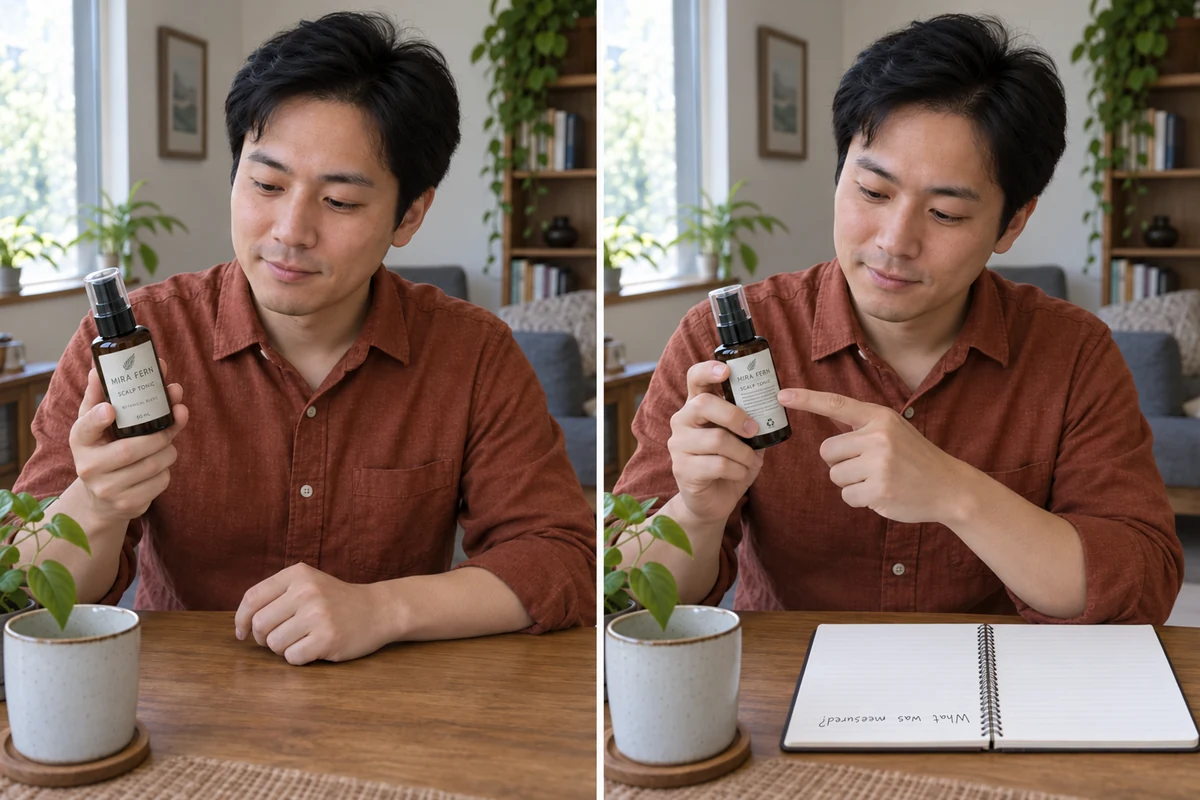
The same man turns a closed bottle around and opens a notebook asking what was measured.
Before · front of the bottleAfter care · back label, one specific question
Turn from the front to the back label, then ask what outcome the claim is actually about. The hair in these pictures is exactly the same.

Goal, claim and evidence apart

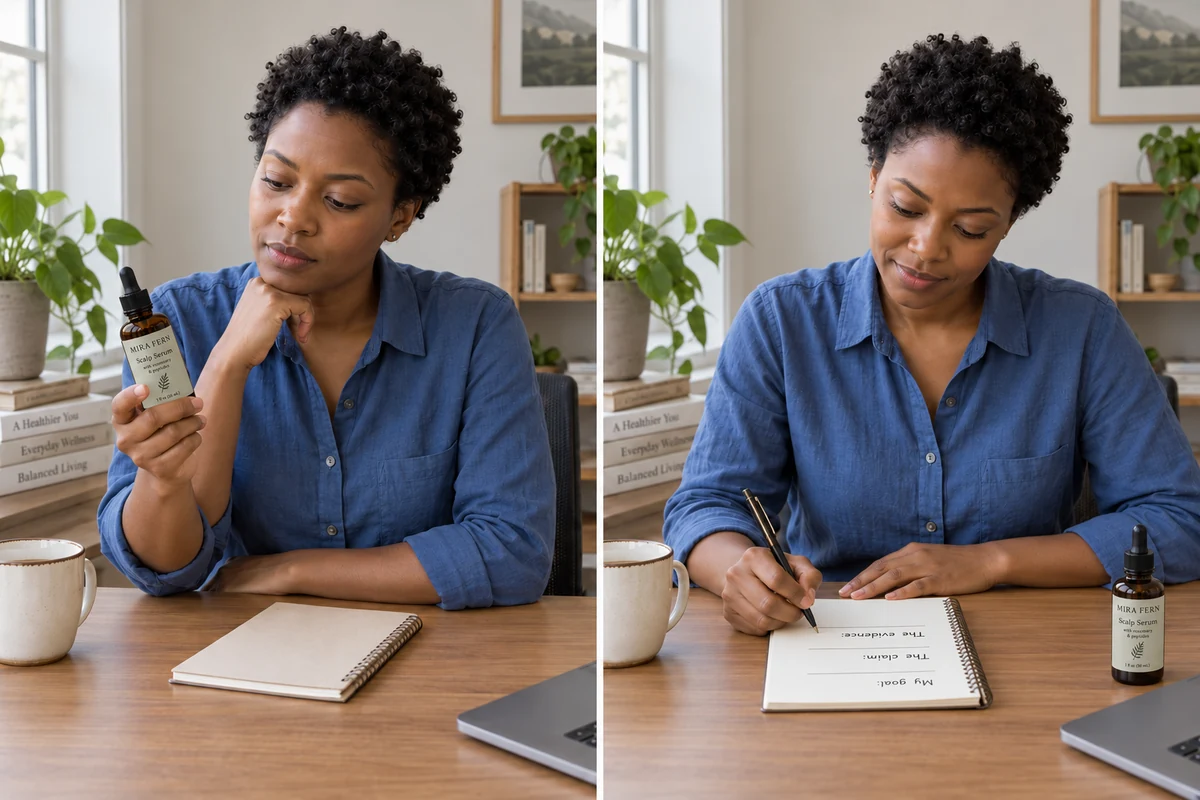
The same woman sets a closed bottle aside and writes under goal, claim and evidence headings.
Before · considering the bottleAfter care · goal, claim and evidence written
Before buying, three things get written on separate lines, what you want, what the seller claims and what was actually measured. Keeping them apart makes the decision clearer.
A woman with very short hair writing an appointment checklist.

Help with your hair-care routine

Bring your hair-care questions to the consultation. You can also read ordinary care and cosmetic fullness when hair feels thinner.

  • Do I want it to look fuller, keep its length, or actually grow more?
  • Does the evidence match this product and that outcome?
  • Would I still buy it without the growth wording on the front?

The consultation can help with everyday cleansing, handling and the look you prefer, while keeping a claim’s limits in plain sight. Tell us what you’ve noticed and what matters most to you. It doesn’t work out why hair is thinning or rank regrowth treatments.

The Hair Care Consultation gives you a personal plan with product recommendations, routines and guidance on your hair-care questions.

$49 with 60 days of follow-ups, or $99 with 12 months. Pay once; the year renews only if you choose.